-
-
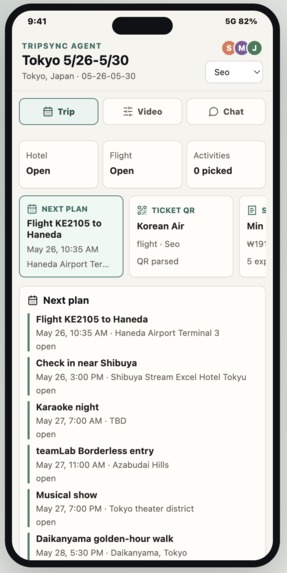
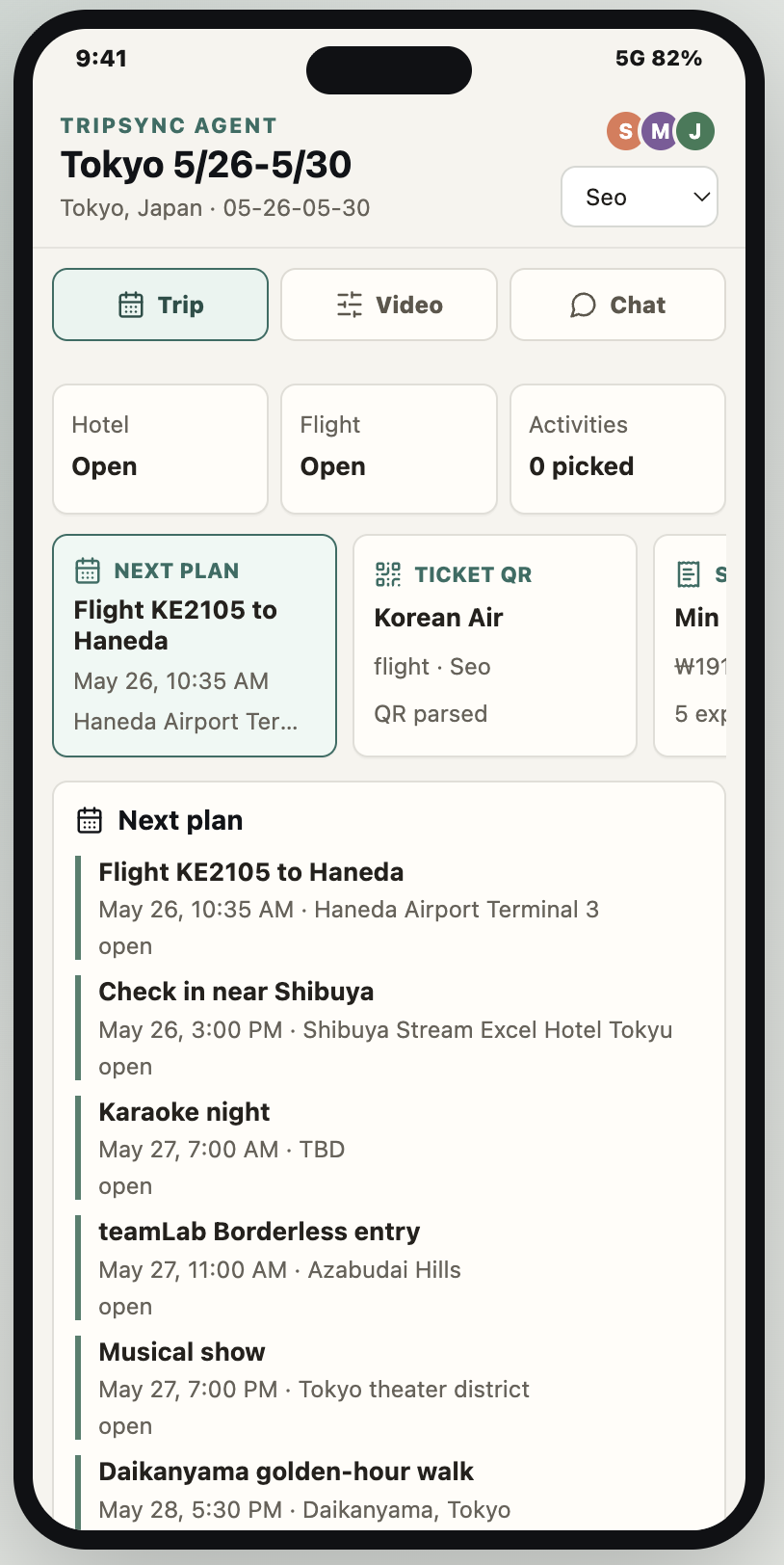
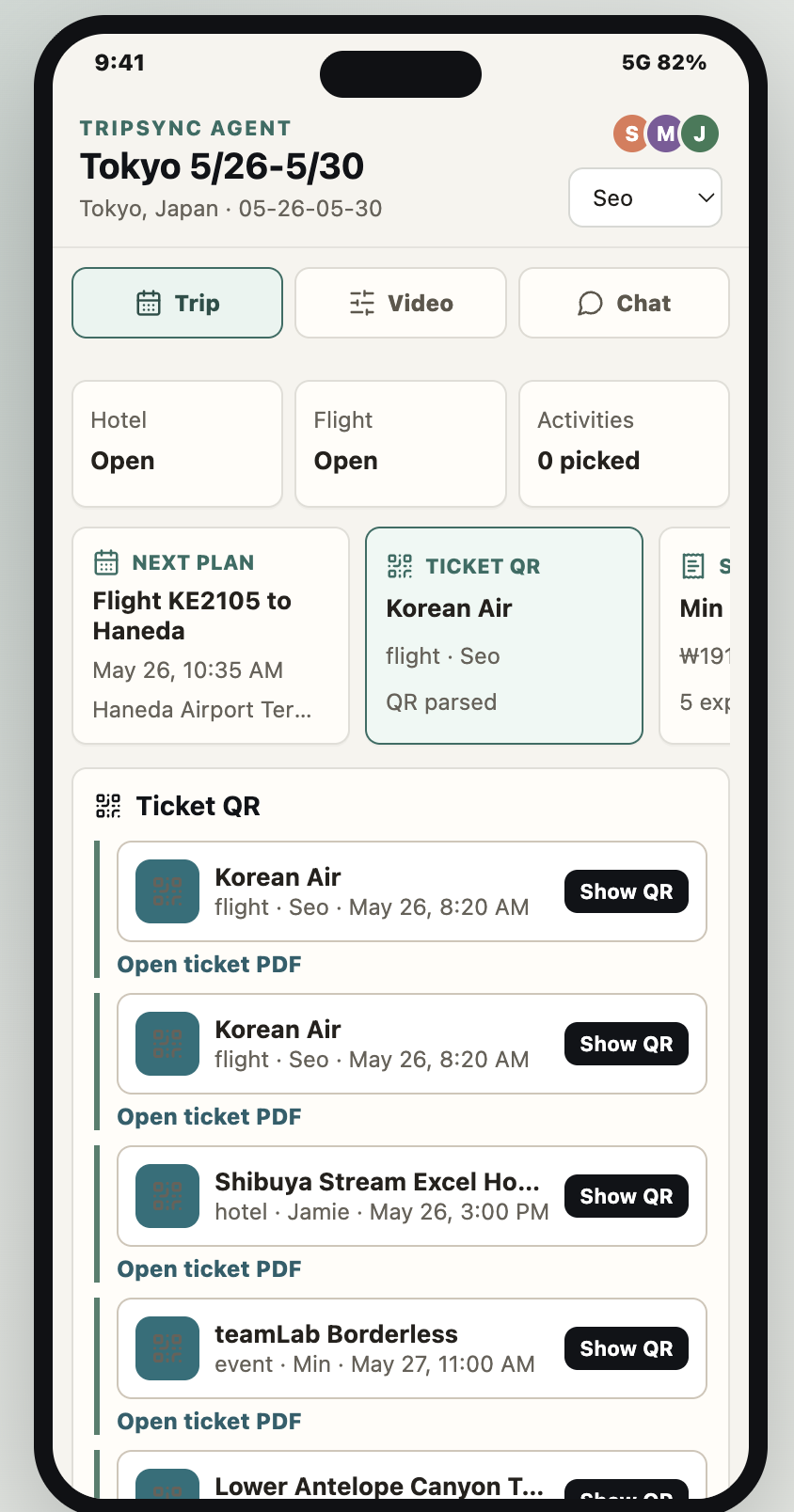
Live trip memory updates the next plan
-
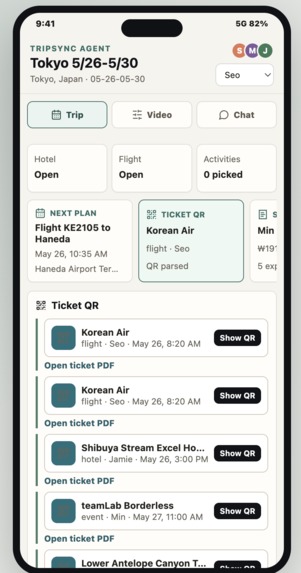
Uploaded tickets become instant QR cards
-
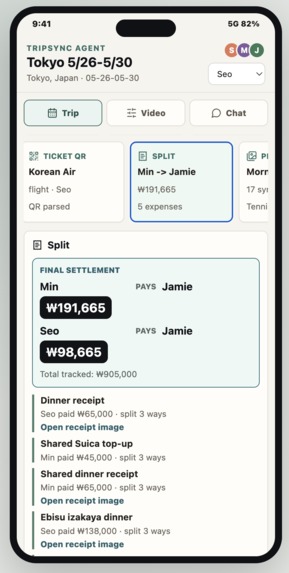
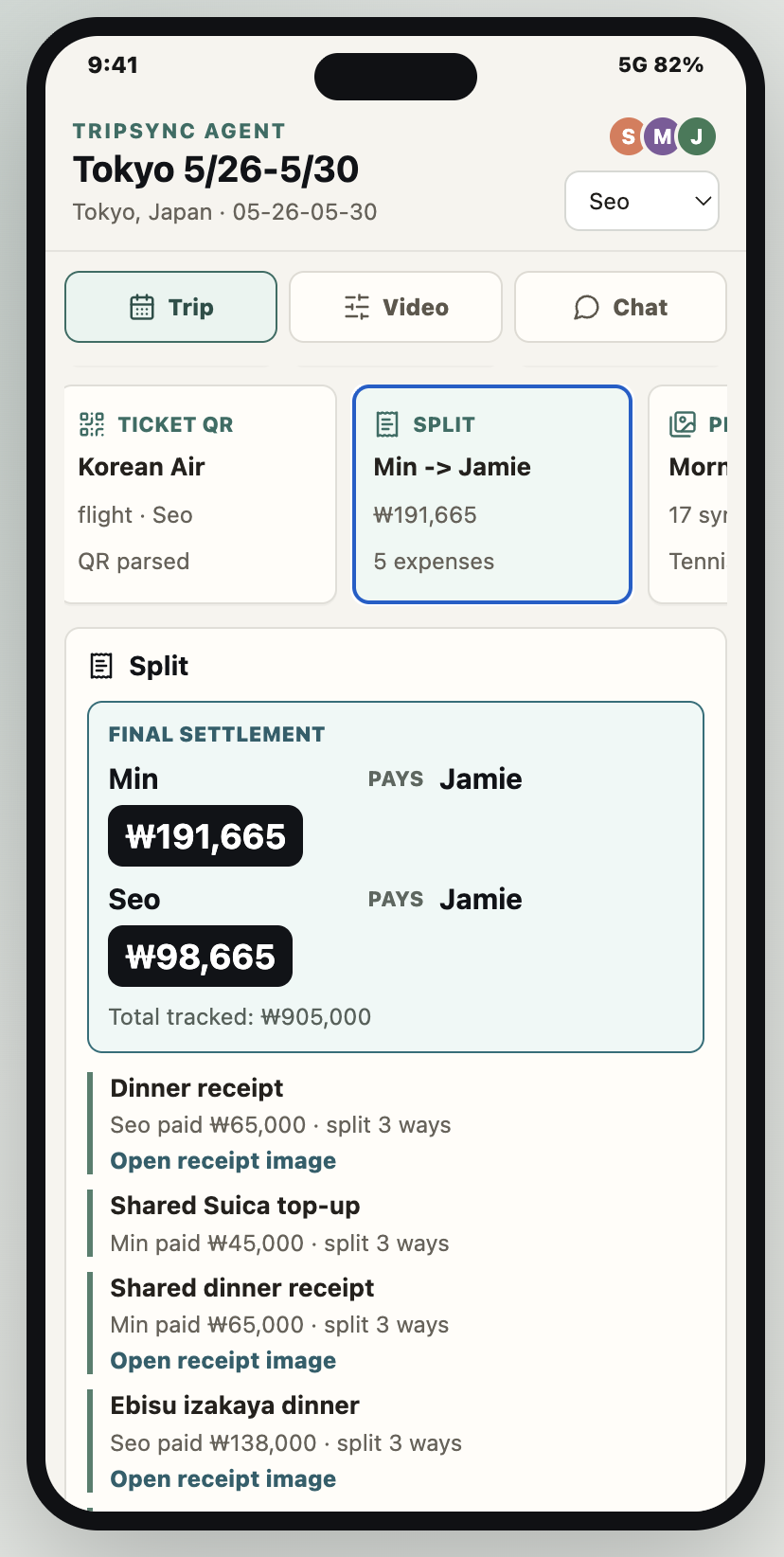
Receipt uploads turn into final split settlements
-
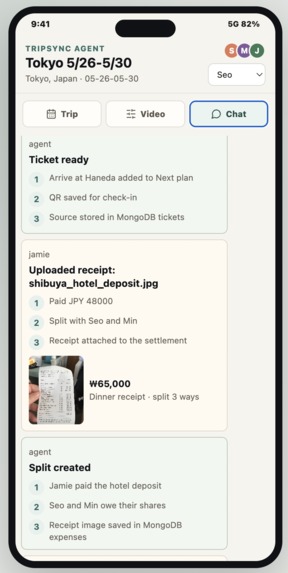
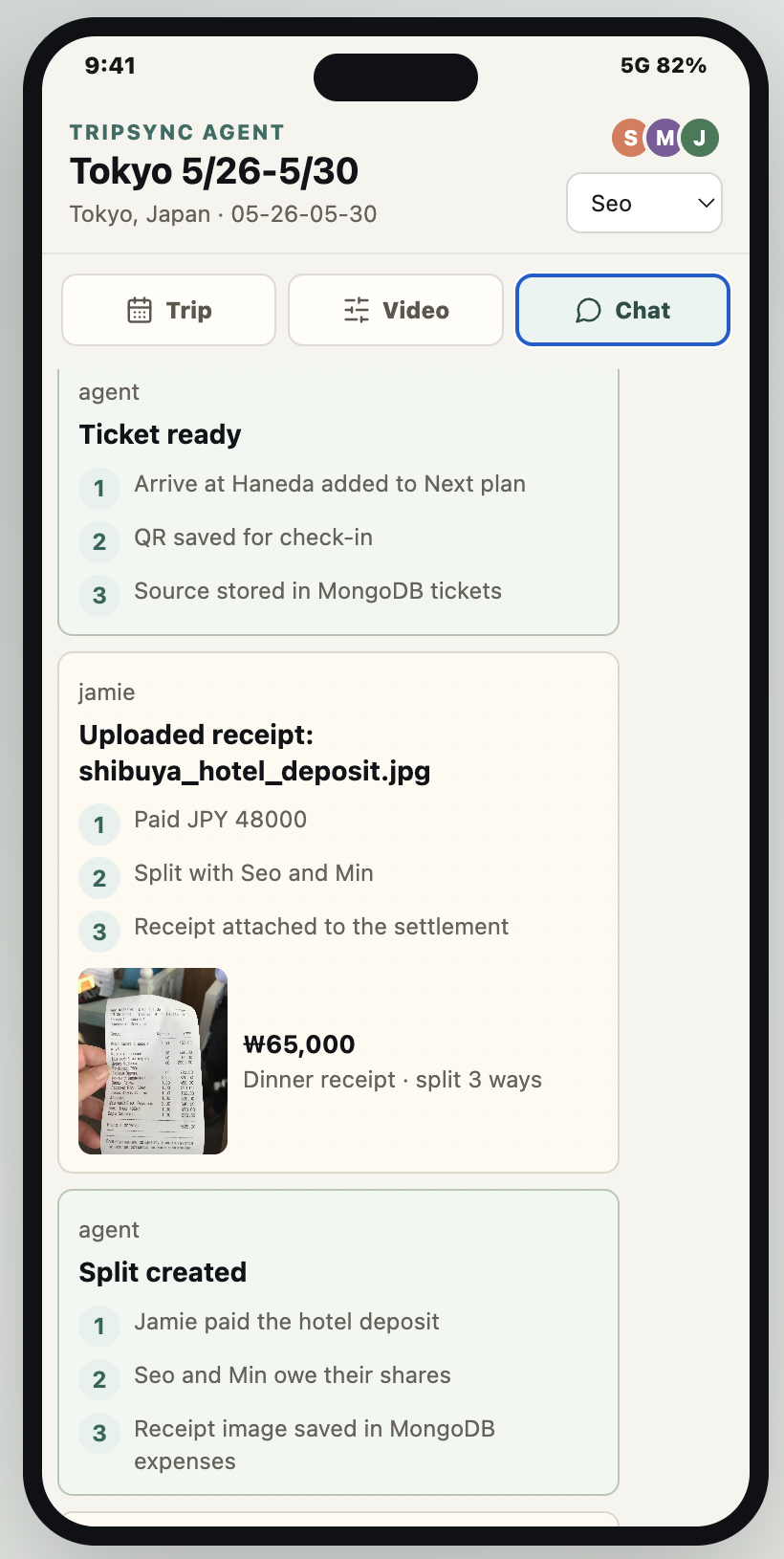
Chat uploads trigger structured MongoDB trip updates
-
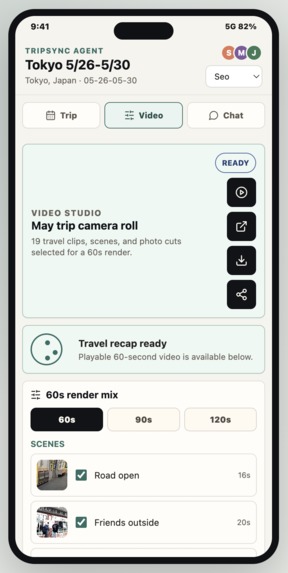
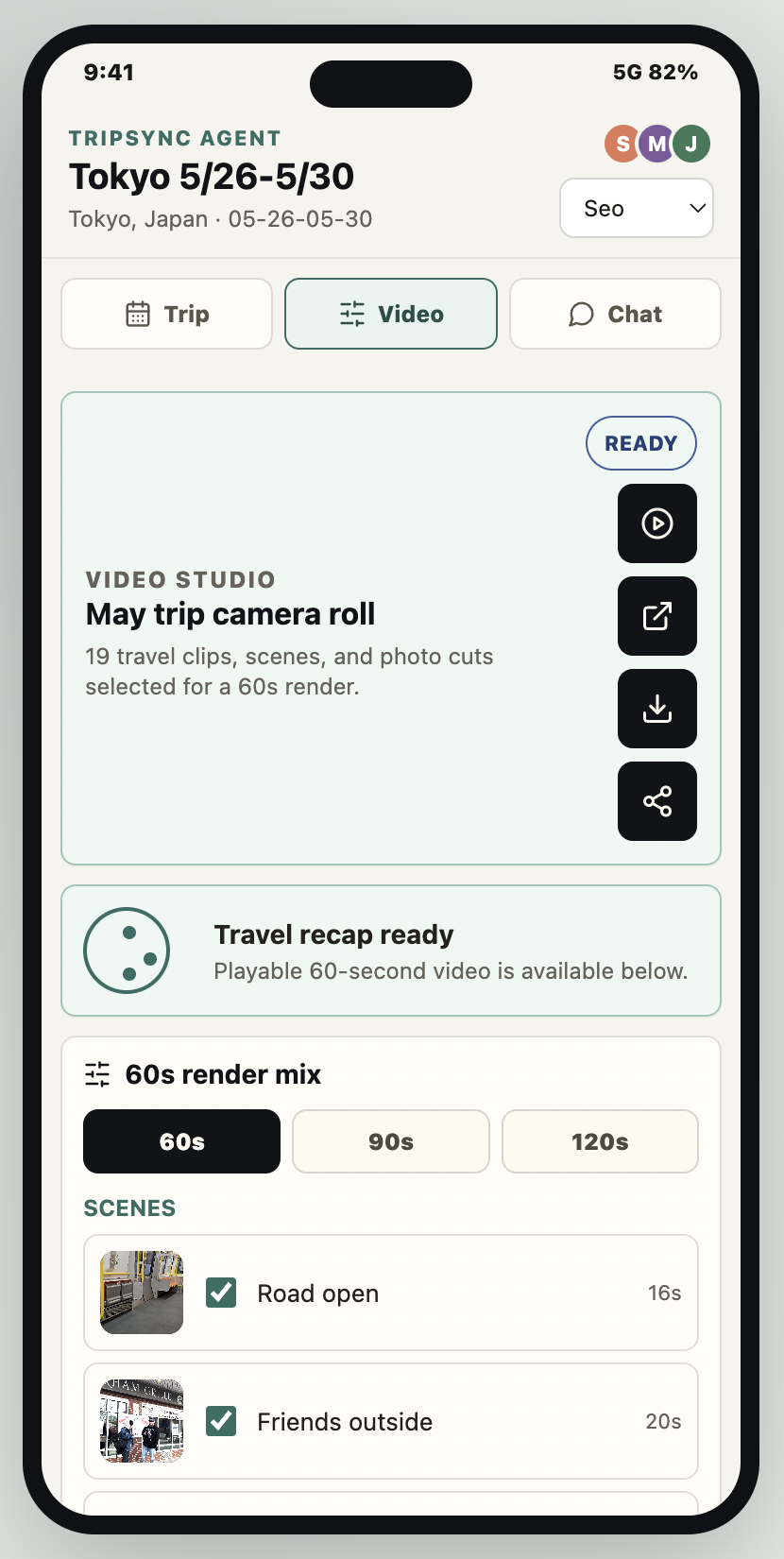
Video studio selects clips, photos, and duration
-
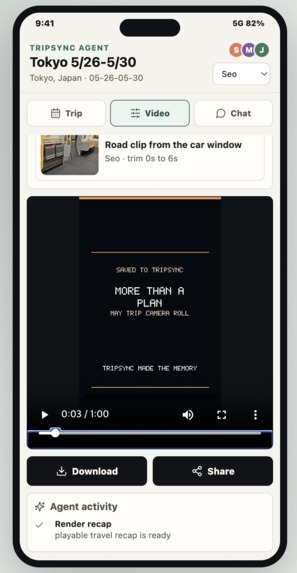
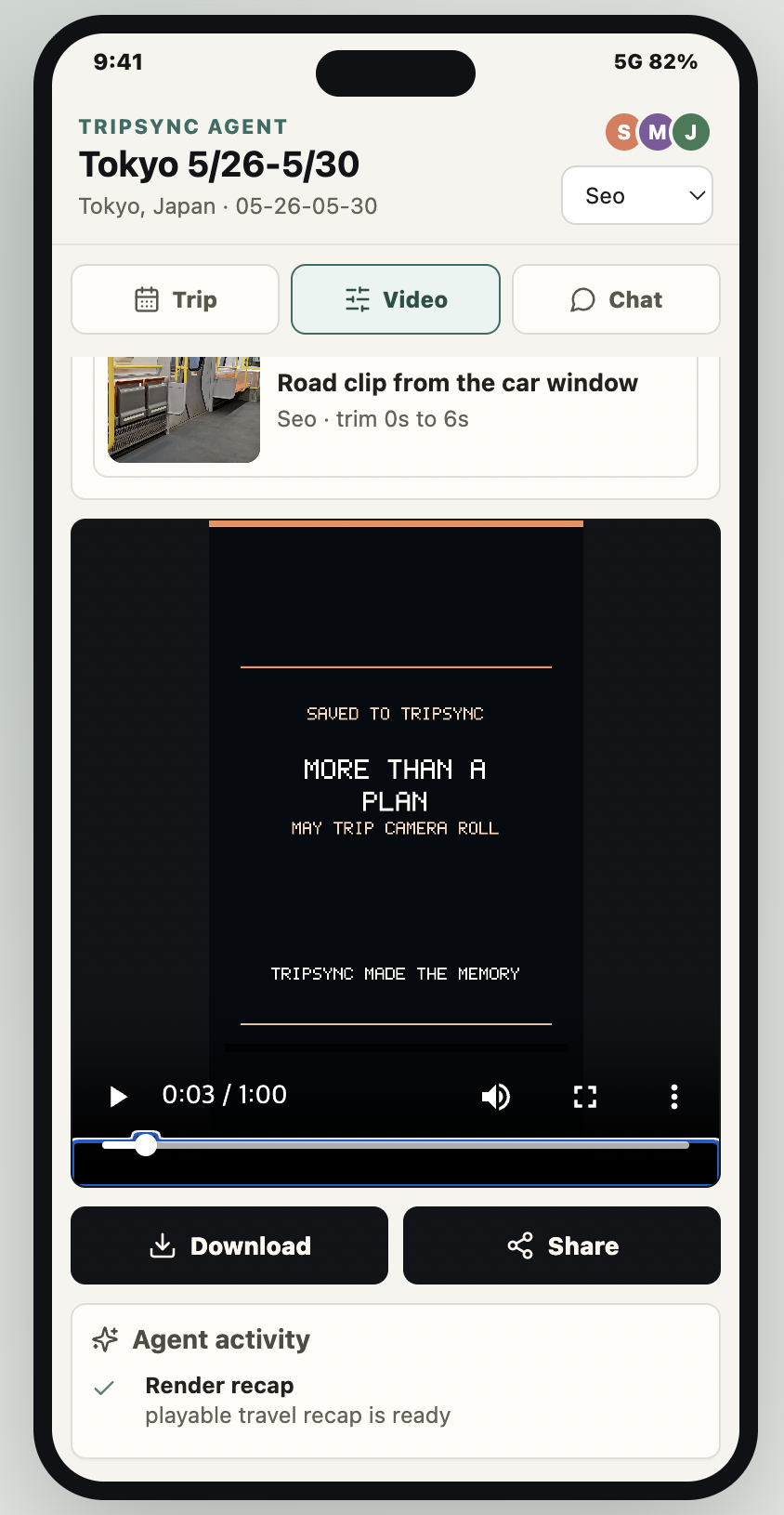
Generated travel recap is playable, downloadable, and shareable
-
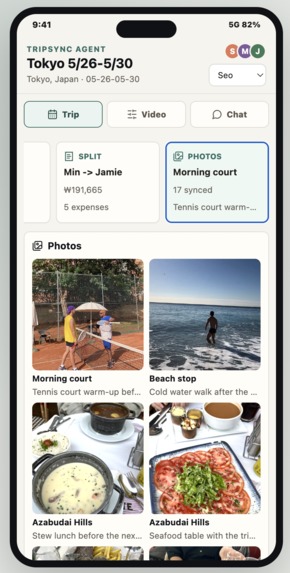
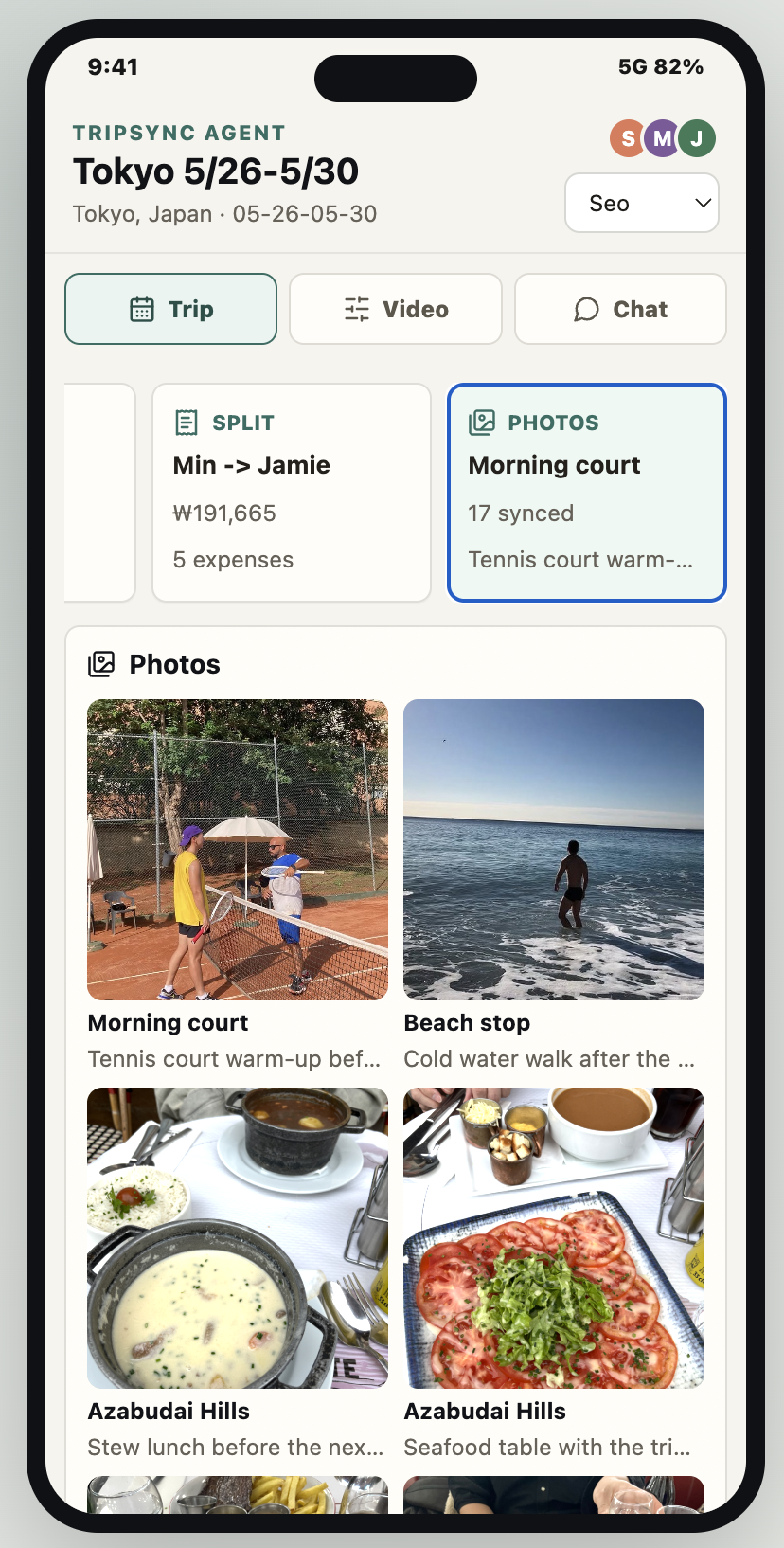
Trip photos are organized into shared memory
Inspiration
Group trips are messy because the important details live everywhere: arrival changes in chat, tickets in email, receipts in photos, plans in someone’s notes, and videos left unedited after the trip.
We built Tripsync to turn that messy group chat into an agent-powered trip room. The idea is simple: Gemini understands the conversation, MongoDB becomes the shared trip memory, and the final output is not just an answer, but a usable travel recap video.
What it does
Tripsync is a mobile-first group travel agent for friends planning and documenting a trip together.
It can:
- Update the next plan from chat messages, like “Haneda arrival moved to noon.”
- Parse uploaded boarding passes into structured ticket data and show a QR card directly in the app.
- Turn receipt uploads into split expenses and a final settlement summary.
- Keep trip photos and video clips attached to the shared trip memory.
- Let users choose recap ingredients and generate a vertical travel video.
- Provide download and share controls for the generated video.
The app is designed so the agent’s work is visible: users can see tool activity, structured trip panels, MongoDB-backed state changes, and the final playable MP4.
How we built it
Tripsync uses a React mobile web UI, a Node/Hono API, Gemini function calling on Google Cloud, and MongoDB Atlas as the shared operational memory.
MongoDB stores the trip, members, messages, events, tickets, expenses, photos, media assets, history, and video jobs. The agent uses typed tools to read and write that state. The MongoDB MCP server is enabled in the deployed runtime, so the agent can interact with MongoDB through the MCP tool path.
Gemini handles the reasoning layer: deciding when a chat message should become an itinerary update, when an uploaded ticket should become a QR card, and when trip memory should become a video brief.
For the recap, Tripsync renders a vertical MP4 from real trip assets: uploaded clips, photos, chat highlights, tickets, plans, split summaries, and music.
Challenges we ran into
The biggest challenge was making the demo prove that Tripsync is more than a chatbot. We had to make every agent action visible in the UI and backed by real persisted state.
We also had to keep the experience realistic for judges. A fresh app with no data is hard to evaluate quickly, so we prepared a live hosted trip room with tickets, photos, videos, split data, and a generated recap already available.
Another challenge was video generation. A static preview was not enough, so we built the flow around a real playable MP4 with audio, download, and share controls.
Accomplishments that we're proud of
We are proud that Tripsync connects everyday travel problems into one coherent agent workflow.
A receipt upload updates Split. A schedule message updates Next Plan. A boarding pass becomes a QR card. Photos and clips become recap ingredients. The final artifact is a real video users can play, download, and share.
We are also proud that MongoDB is not just a database in the background. It is the product memory: the source of truth that makes the agent useful across multiple people, multiple turns, and multiple trip artifacts.
What we learned
We learned that agent demos need visible proof. It is not enough for an agent to say it did something. The UI needs to show what changed, where it was stored, and how the user benefits.
We also learned that MongoDB is a strong fit for agentic travel workflows because the data is naturally mixed: messages, tickets, expenses, media, itineraries, and generated artifacts all need to live together and evolve over time.
Finally, we learned that the most compelling agent output is often not another text answer. For Tripsync, the strongest moment is the generated travel video.
What's next for Tripsync
Next, we want to improve real-world ingestion and sharing.
Planned next steps:
- Stronger OCR and multimodal parsing for tickets and receipts.
- Real QR generation from extracted ticket payloads.
- More advanced photo and video understanding for automatic recap scene selection.
- Collaborative controls so friends can vote on what goes into the final video.
- Deeper Atlas Search and Vector Search memory so past rated trips influence future recommendations.
- Direct sharing workflows for Instagram, TikTok, and other social platforms.
- A production deployment with user authentication and per-trip permissions.


Log in or sign up for Devpost to join the conversation.