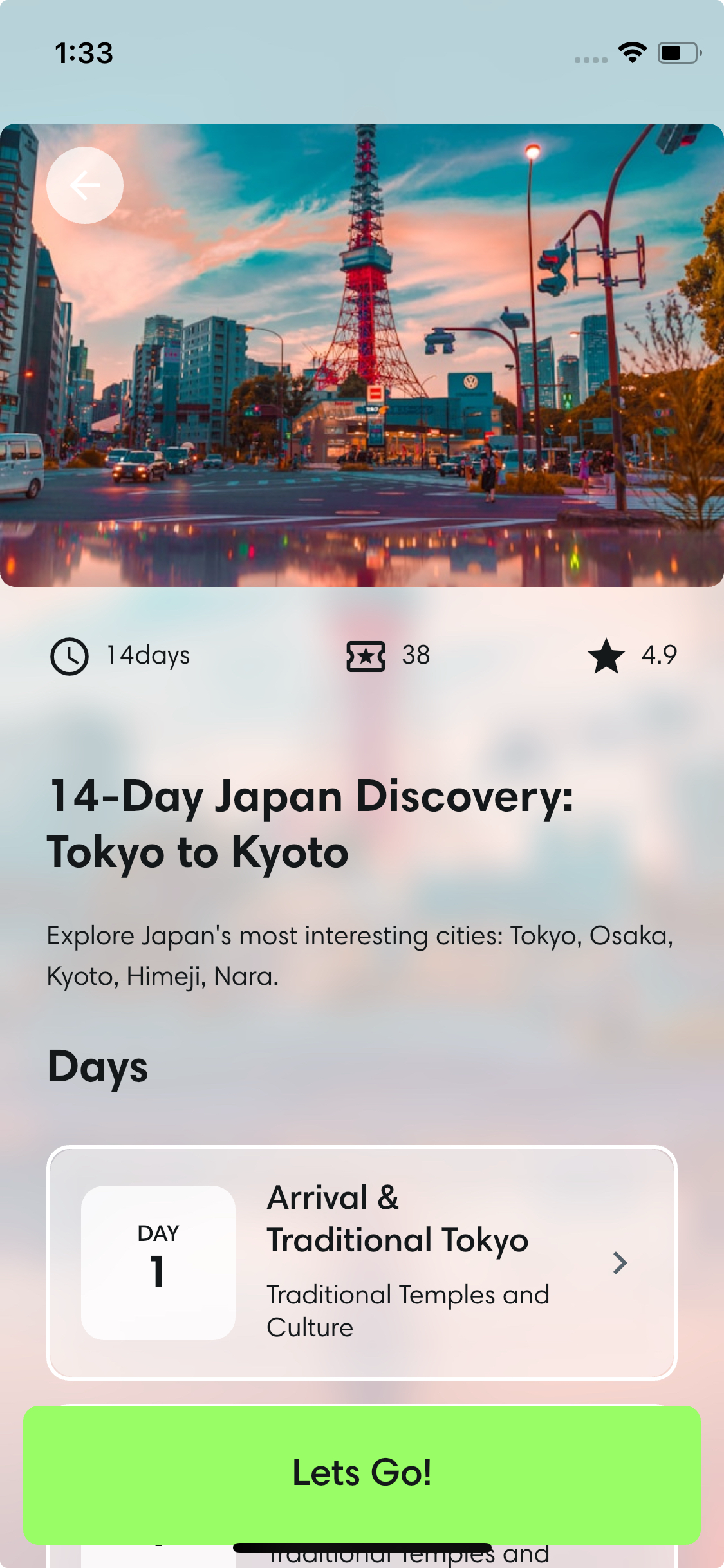
Travel Plan App
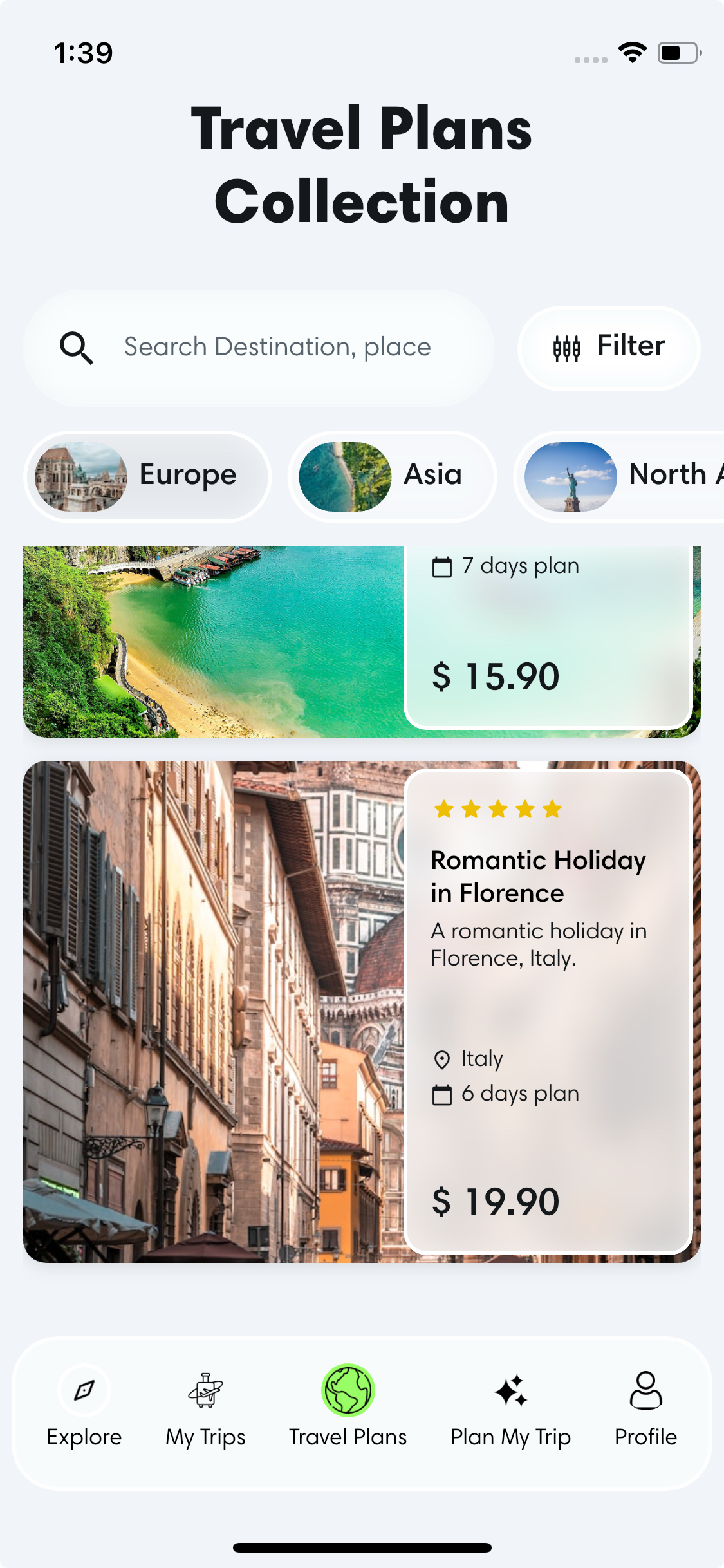
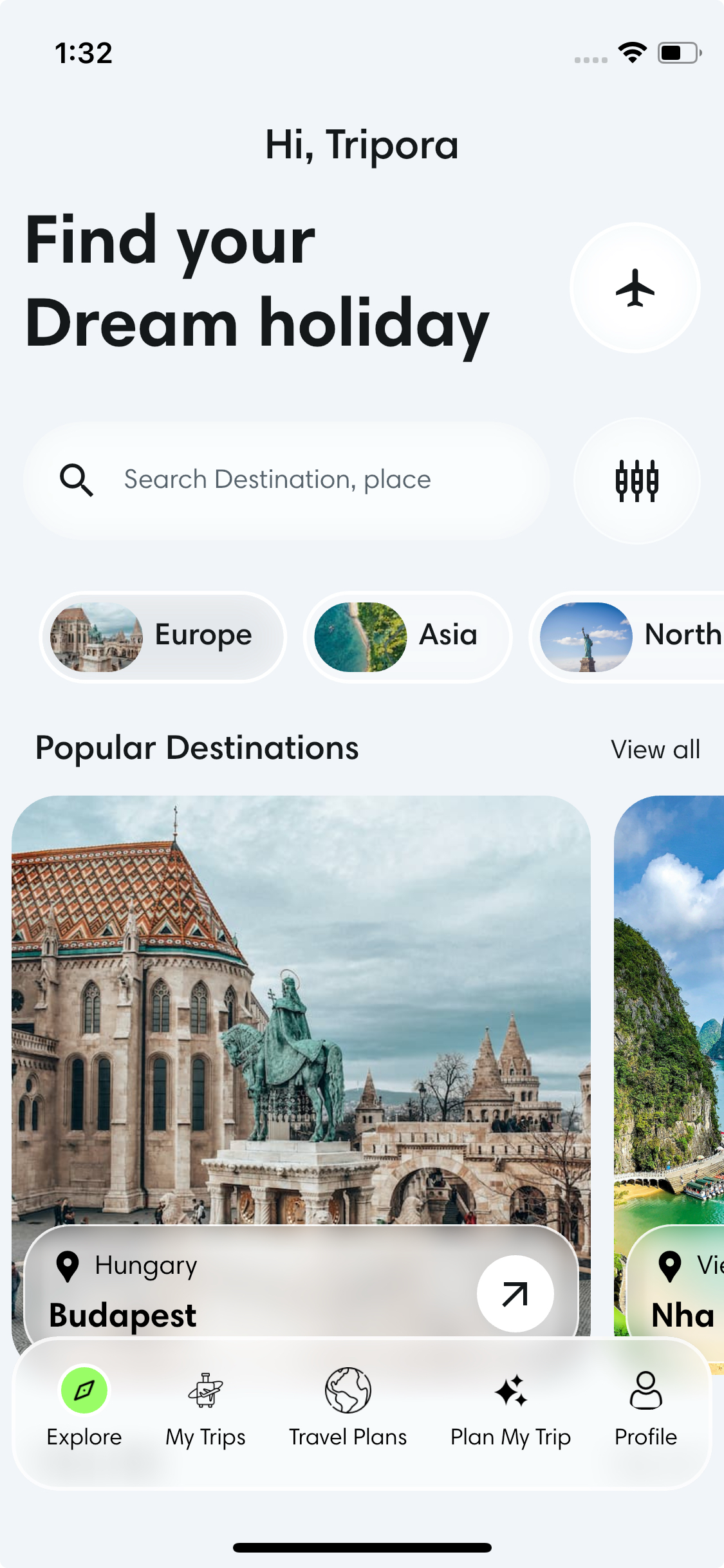
Inspiration The idea came from my own travel experiences. Planning trips often felt overwhelming — too many tabs, too many reviews, too much decision fatigue. I wanted a way to make travel simple again: choose your destination, unlock a plan, and go. This inspired me to build an app that delivers curated travel itineraries in just a few taps.
What I Learned Building this project taught me the importance of balancing user experience with monetization strategy. I explored the psychology of purchasing:
Do users prefer paying for each trip directly? Or do credits/coins (bundled purchases) lead to higher conversions?
I also learned how critical it is to design for scalability. By mapping dozens of trips to only a few entitlements in RevenueCat, I avoided having to manage hundreds of separate in-app purchases.
How I Built It The tech stack combined FlutterFlow, Supabase, and RevenueCat:
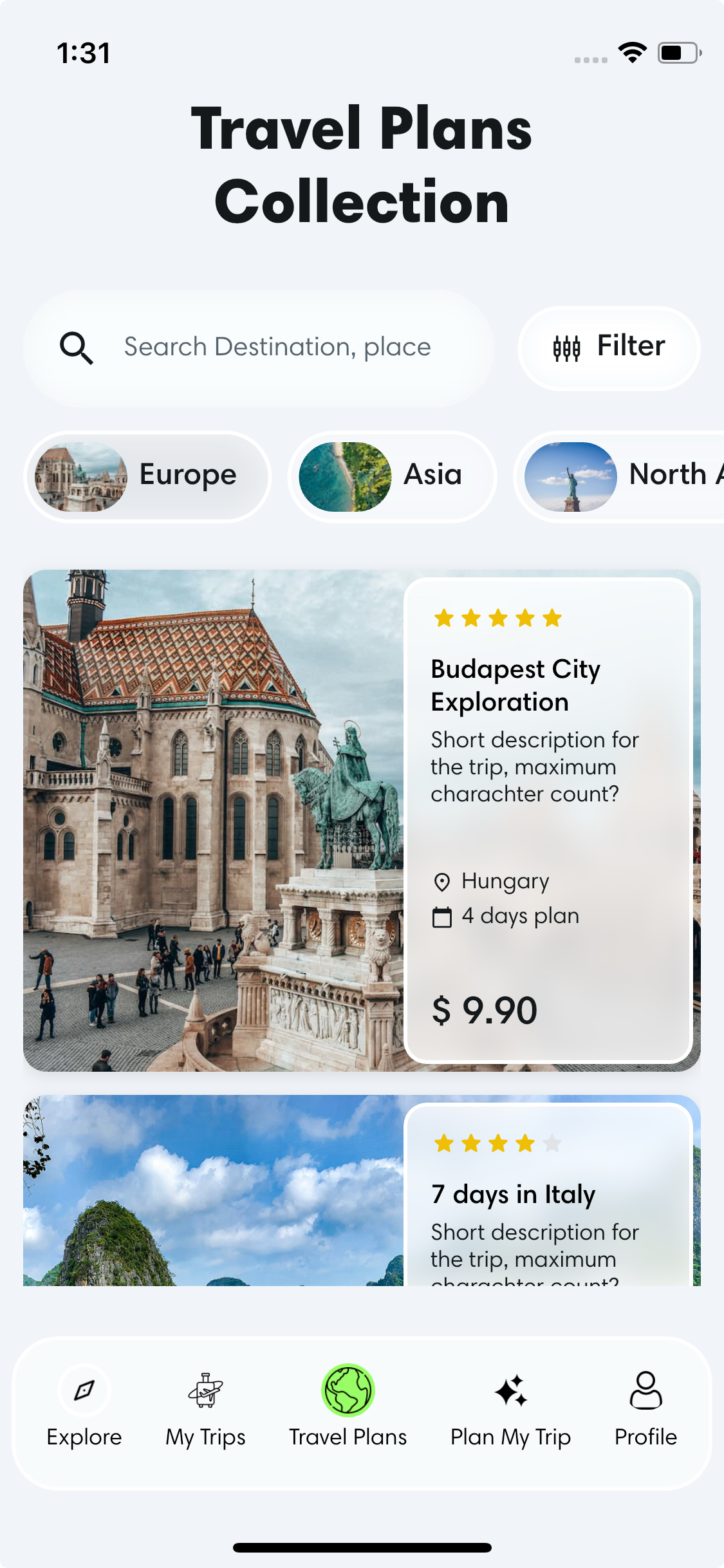
FlutterFlow handled the app’s front-end and user flows. Supabase stored trip data (name, description, duration, tier mapping). RevenueCat integrated with App Store / Play Store to manage entitlements and offerings.
Each trip entry in Supabase is linked to a tier (e.g., travel_plan_small for 2–4 day itineraries). In FlutterFlow, purchase buttons dynamically reference this field, so the app can scale without needing hundreds of products.
Challenges Pricing strategy: Finding the sweet spot between direct product pricing and credit bundles. App Store guidelines: Writing clear, compliant product names and descriptions like “Travel Plan 2–4 days”. Scalability: Making sure adding new trips didn’t mean reconfiguring new IAPs each time. User flow clarity: Ensuring travelers understand they’re buying a digital itinerary, not flights or hotels.
Through these challenges, I built not just a product, but a framework for delivering curated digital travel content at scale.
Built With
- chatgpt
- claude
- figma
- flutter
- flutterflow
- revenuecat
- supabase

Log in or sign up for Devpost to join the conversation.