## About Tripmatch

Whenever I travel, choosing flights and hotels is usually the most stressful part.

Thinking about a destination is exciting, but when it is time to book, I have to start filling in forms: airports, dates, cabin classes, prices, stops, and many other constraints. Hotel search has the same problem. The more things I want to compare, the harder it becomes to know where to begin.

Tripmatch came from that experience.

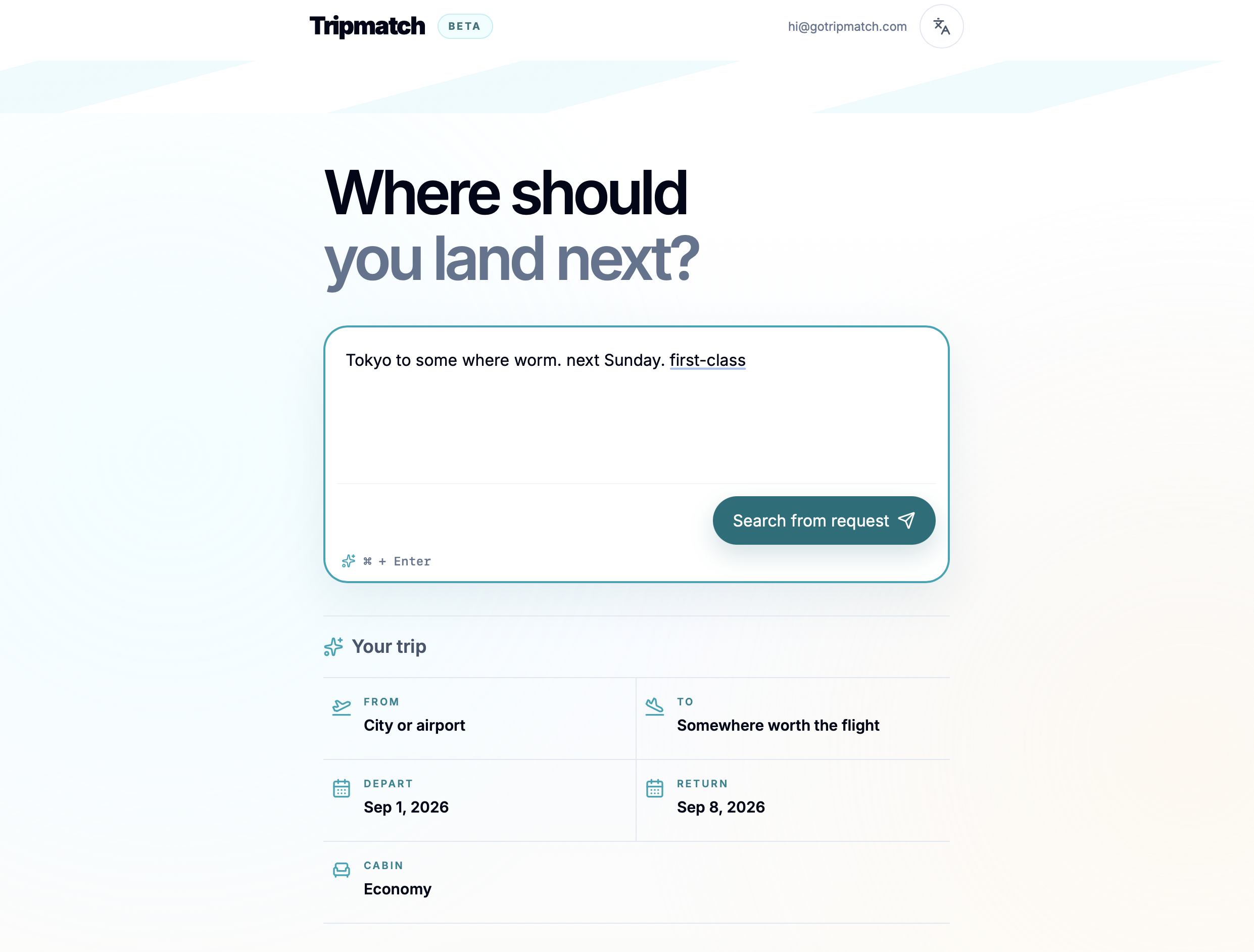
For this project, I focused first on flight search: the part of travel planning with the most constraints and the most difficult comparisons. Instead of requiring travelers to know an exact airport code or destination from the start, Tripmatch lets them describe what they want in everyday language, then asks only for the information needed to create a real flight search.

For example, a traveler can start with an incomplete idea like this:

> “Next Saturday, fly from Tokyo to somewhere warm and return on the third of next month. Economy or premium economy.”

## How it works

Tripmatch uses GPT-5.6 to turn a natural-language travel idea into a structured, editable itinerary.

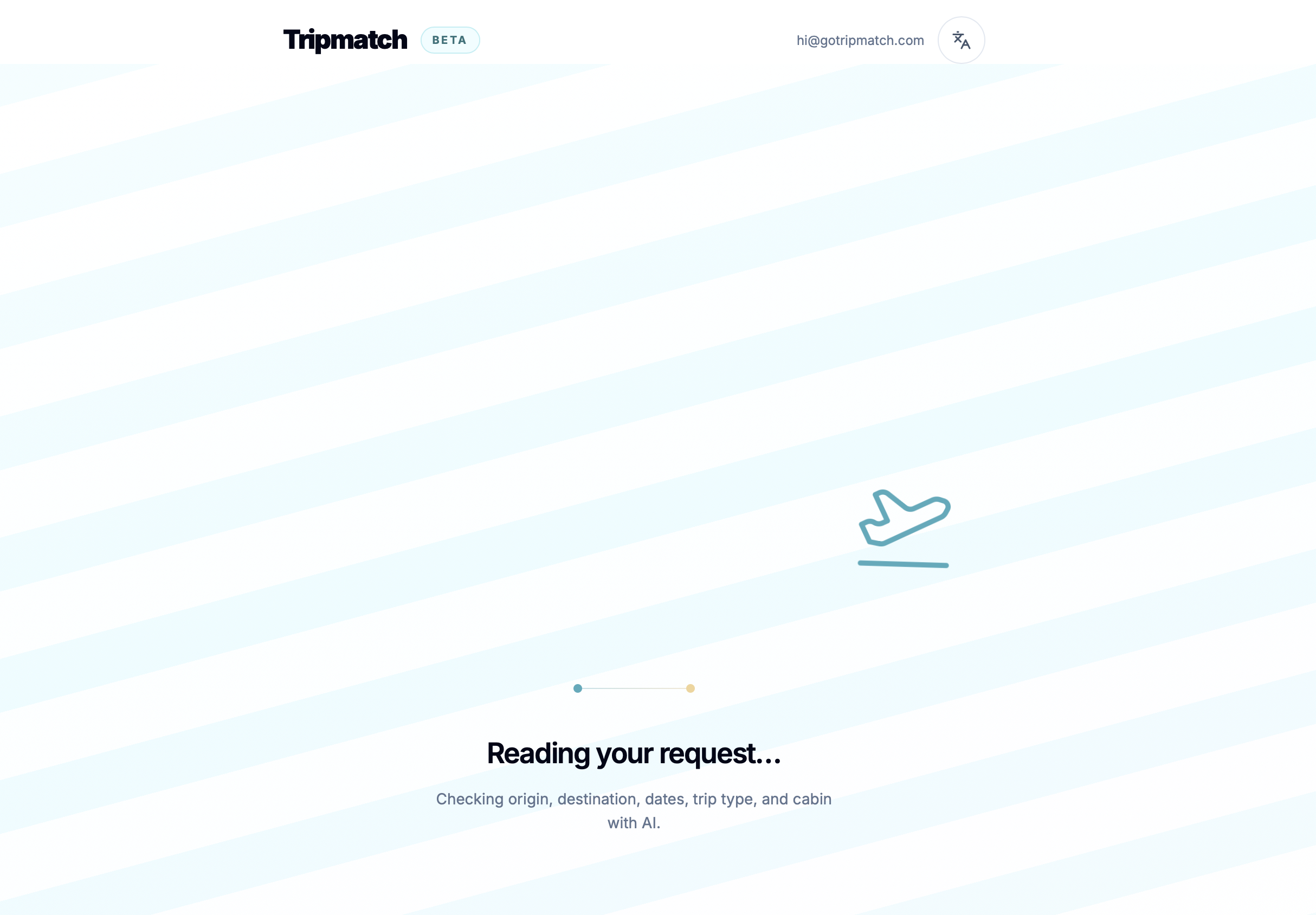
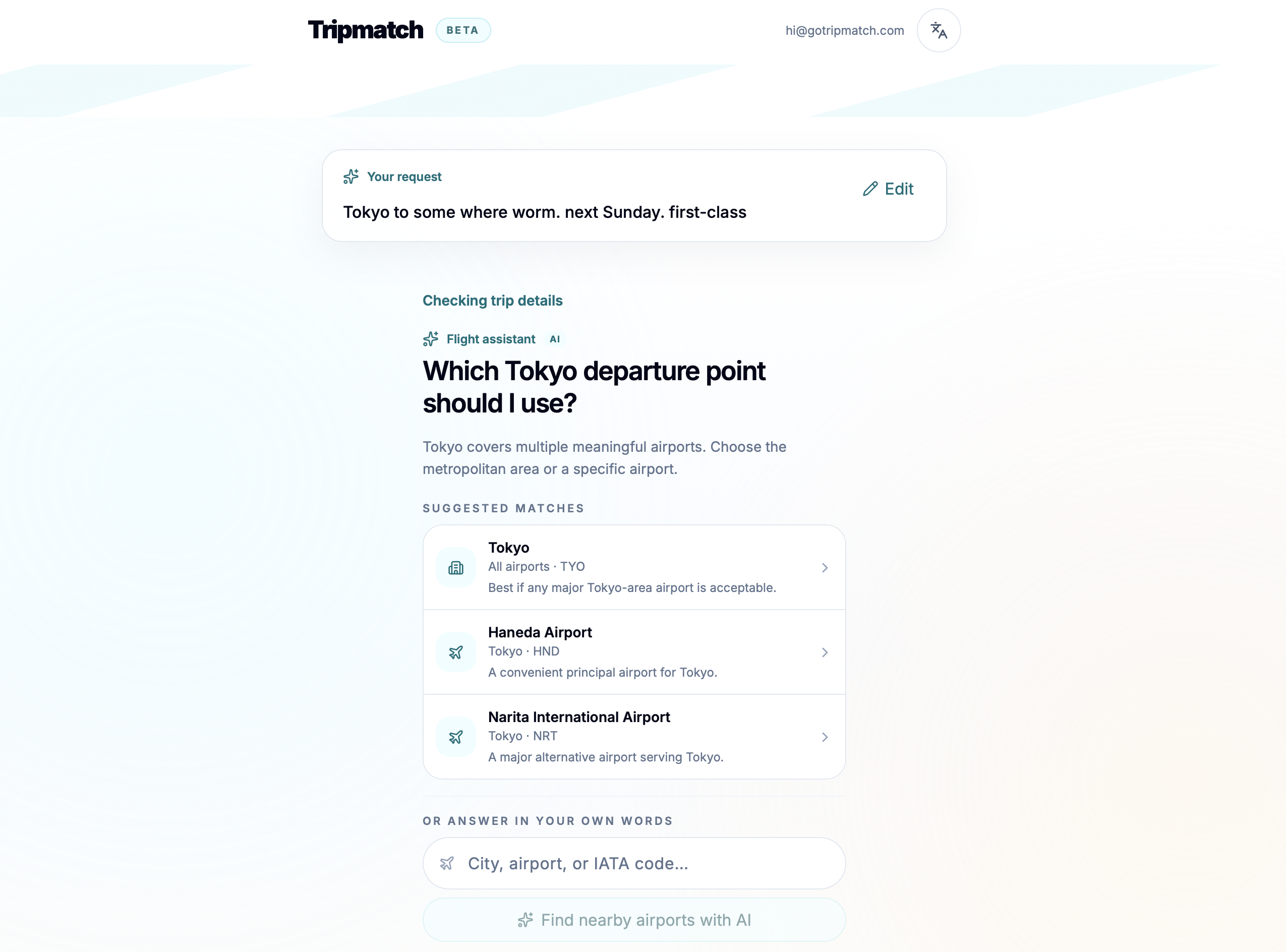
It extracts the details it can understand, including dates, trip type, cabin preferences, and route intent. When important information is missing or ambiguous, it asks focused follow-up questions instead of silently making decisions for the traveler.

For example, if someone says they are leaving from Yokohama, Tripmatch does not treat Yokohama as an airport. It asks the traveler to choose a nearby departure airport, such as Haneda or Narita. If someone asks to go “somewhere warm,” the assistant suggests possible destinations with short reasons, while always leaving a free-text option available.

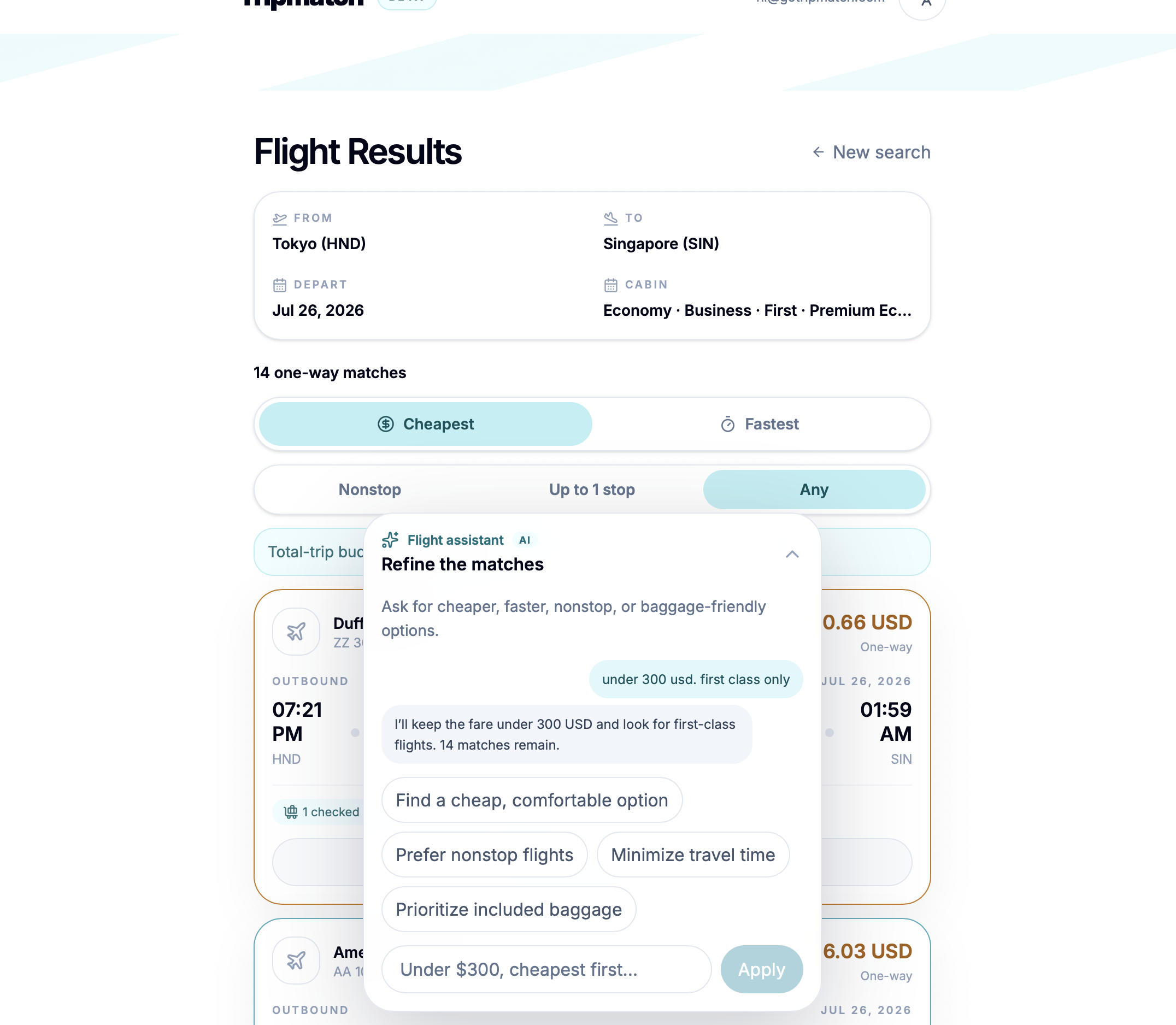
Once the traveler confirms the itinerary, Tripmatch searches Duffel test offers for one-way or round-trip flights. The AI assistant remains available after search, so the traveler can continue refining the results in natural language—for example, by asking for nonstop flights, a budget limit, or the fastest options first.

## How I built it

I built the mobile-first interface with Next.js, React, TypeScript, and Tailwind CSS, deployed on Cloudflare. The API is built with Hono.

GPT-5.6 powers four main parts of the experience:

1. Extracting trip details from multilingual natural-language requests.
2. Asking focused clarification questions for missing or ambiguous information.
3. Suggesting destinations for qualitative requests such as “somewhere warm.”
4. Turning post-search chat requests into explicit filters and sorting rules.

Every AI response is validated before it can update the itinerary or result list. Flight schedules, fares, availability, baggage, and stop information come from Duffel. The AI does not invent flight data; it interprets traveler intent and helps control the search.

I intentionally removed accounts, persistent traveler storage, and voice input from this version. They did not improve the core demo experience, and removing them made the product faster and easier for judges to try.

## Challenges and what I learned

The hardest challenge was balancing AI flexibility with traveler trust.

It is easy to make an AI assistant sound confident when the input is ambiguous. It is much harder to make it useful without letting it make important travel decisions on the traveler’s behalf. I learned that the assistant should clearly explain what it does not know, offer useful suggestions, preserve a free-text option, and ask the traveler to confirm important details before searching.

Another challenge was making the post-search conversation actually affect the results. A chat box that only gives a text response is not enough. When someone asks for flights under a certain budget or wants the fastest options first, Tripmatch needs to apply visible filtering and sorting, explain what changed, and make the remaining alternatives understandable.

Codex was a major part of the development process. I used it to iterate on the mobile flow, AI schemas, round-trip support, multilingual UI, Duffel integration, result refinement, testing, documentation, and deployment. The product improved through repeated cycles of building, testing it in a browser, finding unclear moments, and simplifying them.

## What I want to build next

In the future, I would like to add accounts so that Tripmatch is not only a tool for searching alone, but a place where friends and family can plan a trip together.

People could share flight and hotel options, discuss details such as “this departure time works better” or “can we lower the budget?”, and adjust the plan together before deciding.

Travel planning should not feel like filling out a form. It should be an enjoyable part of deciding where to go and who to go with. I want Tripmatch to become the first step in that experience.

Tripmatch is currently a demo, and the fares shown in the app come from Duffel’s test environment rather than bookable production inventory. But the core experience is working: start with an incomplete travel idea, clarify only what matters, and arrive at a flight search that the traveler can understand and control.

Log in or sign up for Devpost to join the conversation.