-
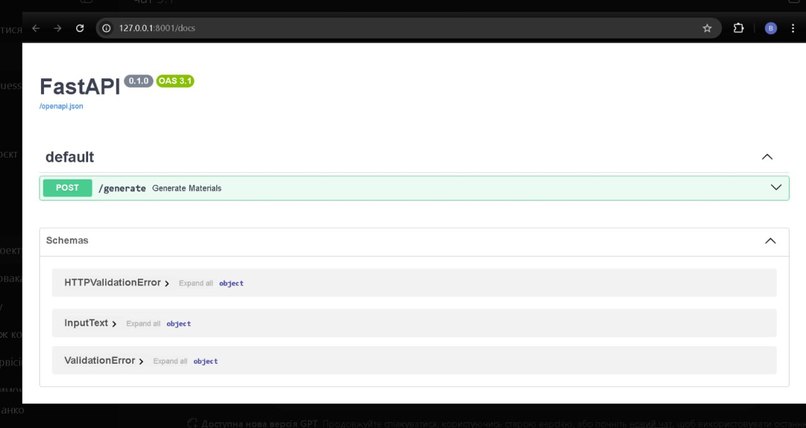
API web

Inspiration
We were inspired by how often students struggle with transforming messy lecture notes into something actually useful — flashcards, quizzes, and short study plans. We wanted to build a small but powerful assistant that saves time, reduces stress, and helps people study smarter, not harder.
What it does
StudyBuddy takes any block of text and automatically generates: 🎴 Five clean flashcards ❓ A short multiple-choice quiz 📝 A quick study plan summarizing the most important points
How we built it
We built a lightweight pipeline consisting of:
- A minimal backend that receives user input
- A prompt-engineered LLM that produces structured study materials
- A simple UI that displays flashcards, quizzes, and the study plan clearly Tech stack includes a small API server (FastAPI/Node), an LLM endpoint, and SQLite for minimal state storage. ## Challenges we ran into
- Keeping LLM outputs consistent (fixed number of items, correct structure)
- Handling extremely long or extremely short notes
- Avoiding hallucinated answers in quizzes
- Making the UI intuitive under tight time constraints
- Balancing simplicity and functionality in a hackathon setting ## Accomplishments that we're proud of
- Delivering a fully working MVP in a short time
- Creating clean, structured study materials from unstructured text
- Building a tool that our teammates already started using during the hackathon
- Designing a minimal UI that feels fast and friendly ## What we learned
- Better prompt engineering and output validation
- How to design an AI tool with real users in mind
- Working effectively in a fast, iterative workflow
- Using Markdown and LaTeX formatting consistently
- Communicating clearly inside a small team ## What's next for InvalidError-01
- Adding OCR for handwritten notes
- Exporting to PDF and Anki
- Personalized analytics and spaced repetition
- Gamification (streaks, progress levels)
- A mobile-friendly interface

Log in or sign up for Devpost to join the conversation.