-
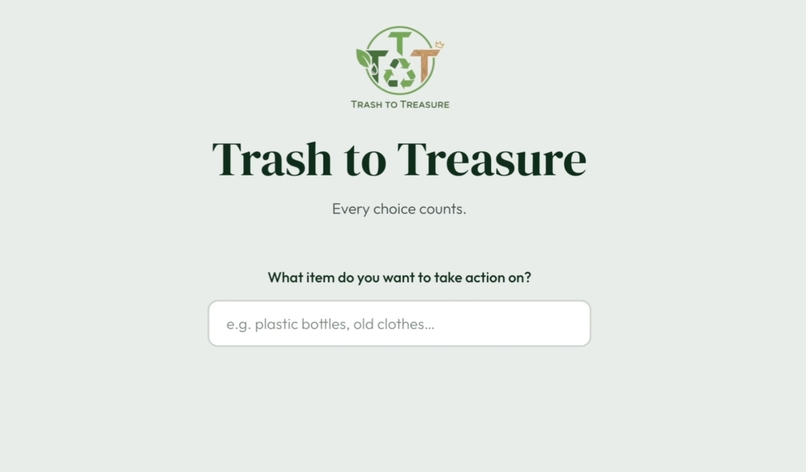
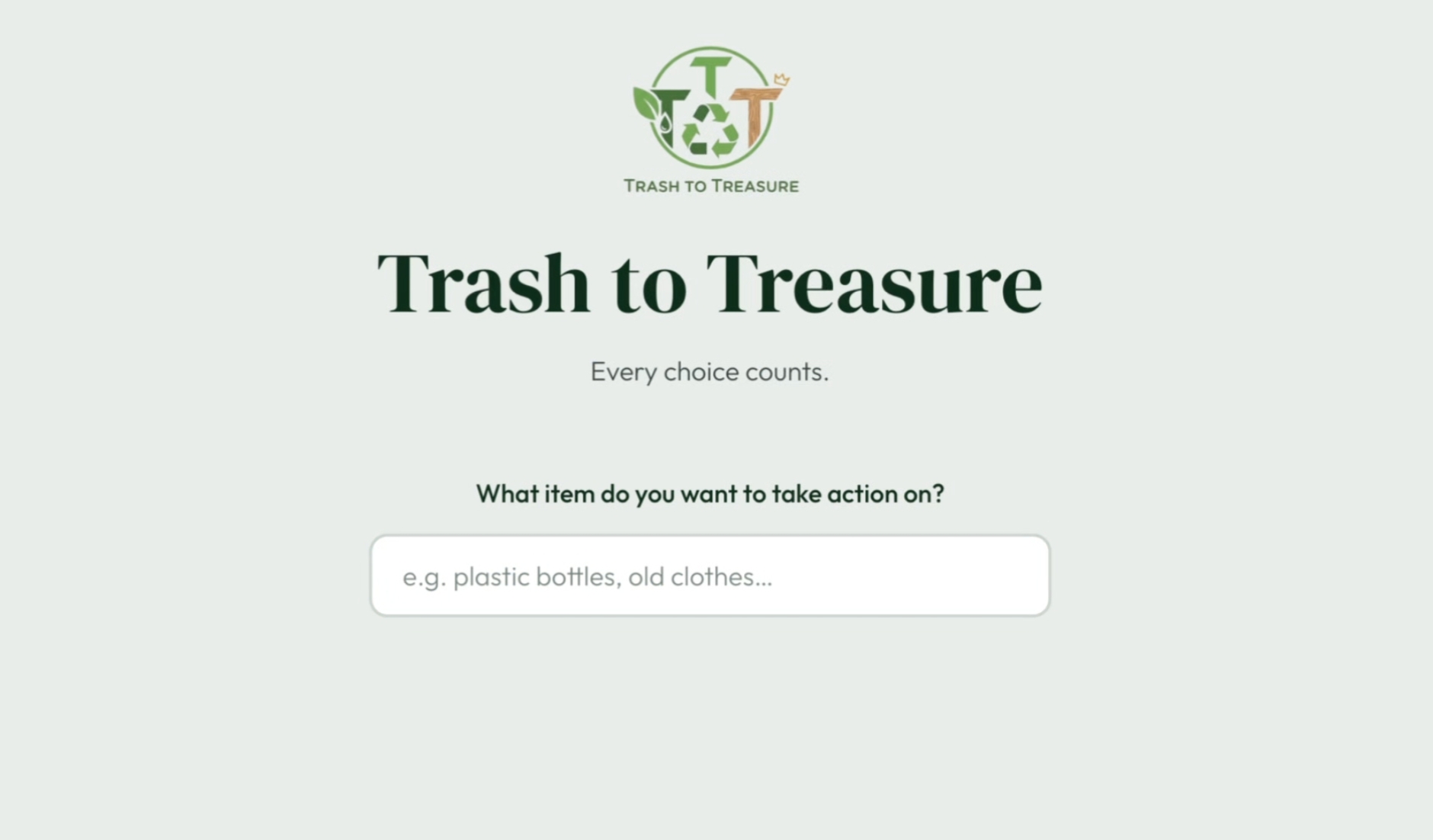
Website landing page
Inspiration
Our inspiration for this project came from the issues we’ve seen in daily life. For example, when my mouse runs out of battery, I don’t know where I should dispose of the dead battery. We also built our idea on the inherent good-nature of humanity. This is because we know that people don’t want to intentionally throw away their E-waste or clothes to contribute to the pollution issue, but they just don’t have an easy way of knowing where it goes. Therefore, we used this idea to provide an easy way for people to repurpose, dispose, or mend their items that they would have otherwise thrown away.
What it does
Trash to Treasure has three main components: Reuse, Reduce, and Recycle. Reuse: Users can post items that they don’t want taking up space in the garage for other users to borrow. They can also look for specific items that they want to lend from other people. This is to attempt to limit consumerism. For example, people don’t have to buy a tent when they’re going camping that they won’t use for years and store in their garage if they can borrow it from other people Reduce: Users can find locations where they can repair their clothes, electronics, etc. instead of having to buy new ones (reduces fast-fashion/tech trends), hence, reducing the amount of waste produced. Recycle: If reduce and reuse don’t apply, users can find sustainable disposal locations, such as Bestbuy for batteries, to make sure that they aren’t contributing to horrible landfill waste from misdisposed products.
How we built it
Our project mainly uses Javascript and HTML. We integrated AI into automating key components of our project, such as categorizing user-input items into sections such as fashion, E-waste, etc. AI was also used to solve complex issues such as generating needed links and to code up functions that we weren’t familiar with.
Challenges we ran into
Combining the code that all three of us worked on together was an issue, though this was resolved with VSCode server codeshare.
Accomplishments that we're proud of
We are very proud of our planning, as we took the first 45 minutes to map out a plan that incorporated all of our ideas. This is how we got to solving E-waste, fast-fashion, and consumeristic trend waste instead of just settling on a single issue. We are also proud of having coded this up in such a short amount of time, and our AI integration, as we used AI as a tool to expand on our ideas, but still retained our original ideas to modify and improve on it.
What we learned
This Hackathon allowed us to learn more about each other’s skills, as well as the ability to delegate tasks based on each one of us’s strengths.
What's next for Trash to Treasure
We plan to acquire a domain for public use on a global scale. We also want to convert the website into an app on the app store. This would mean converting the code into Xcode for IOS or other languages for Android. This will all start with pitching this idea for the local community, and having our family and friends giving feedback to help improve the app before we expand larger.

Log in or sign up for Devpost to join the conversation.