-
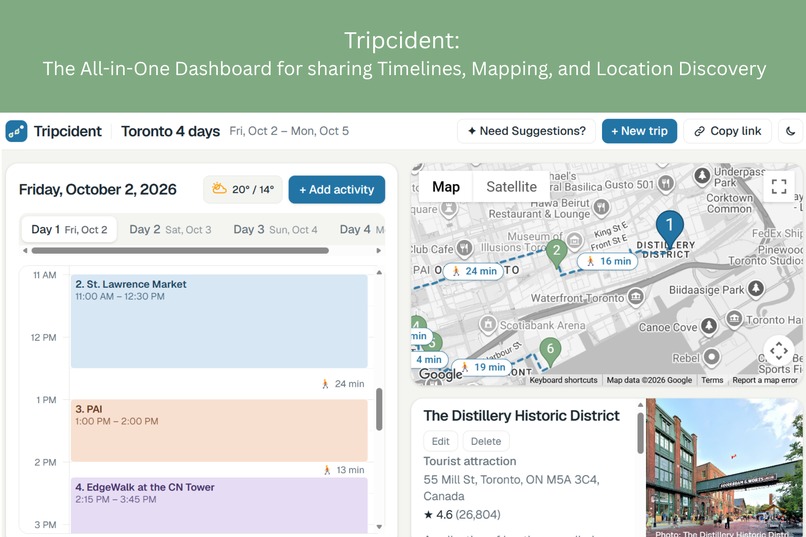
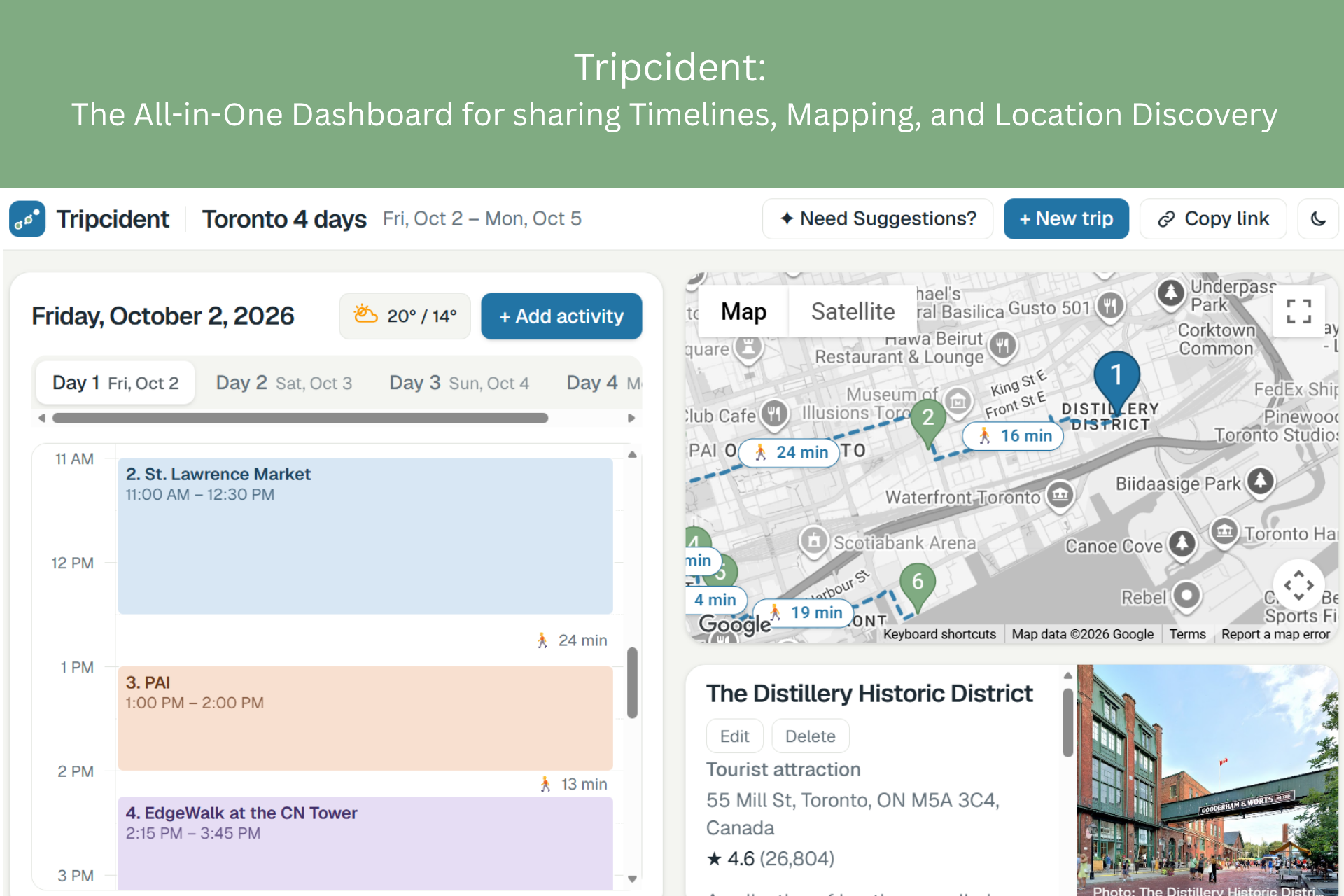
Dashboard
-
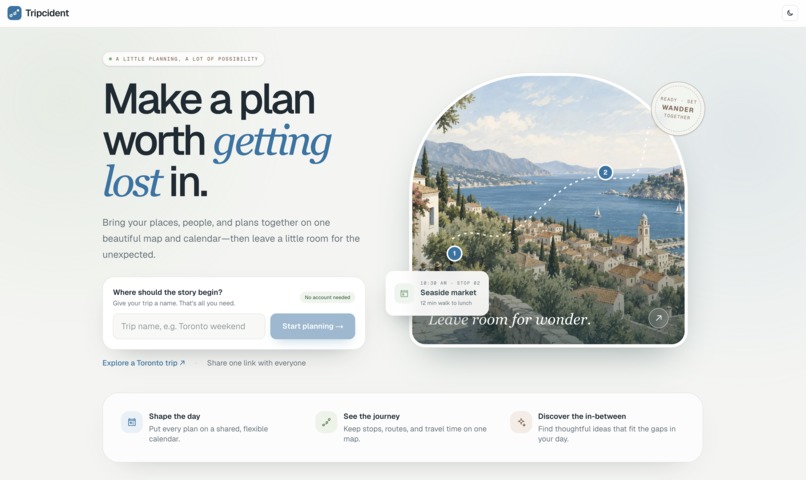
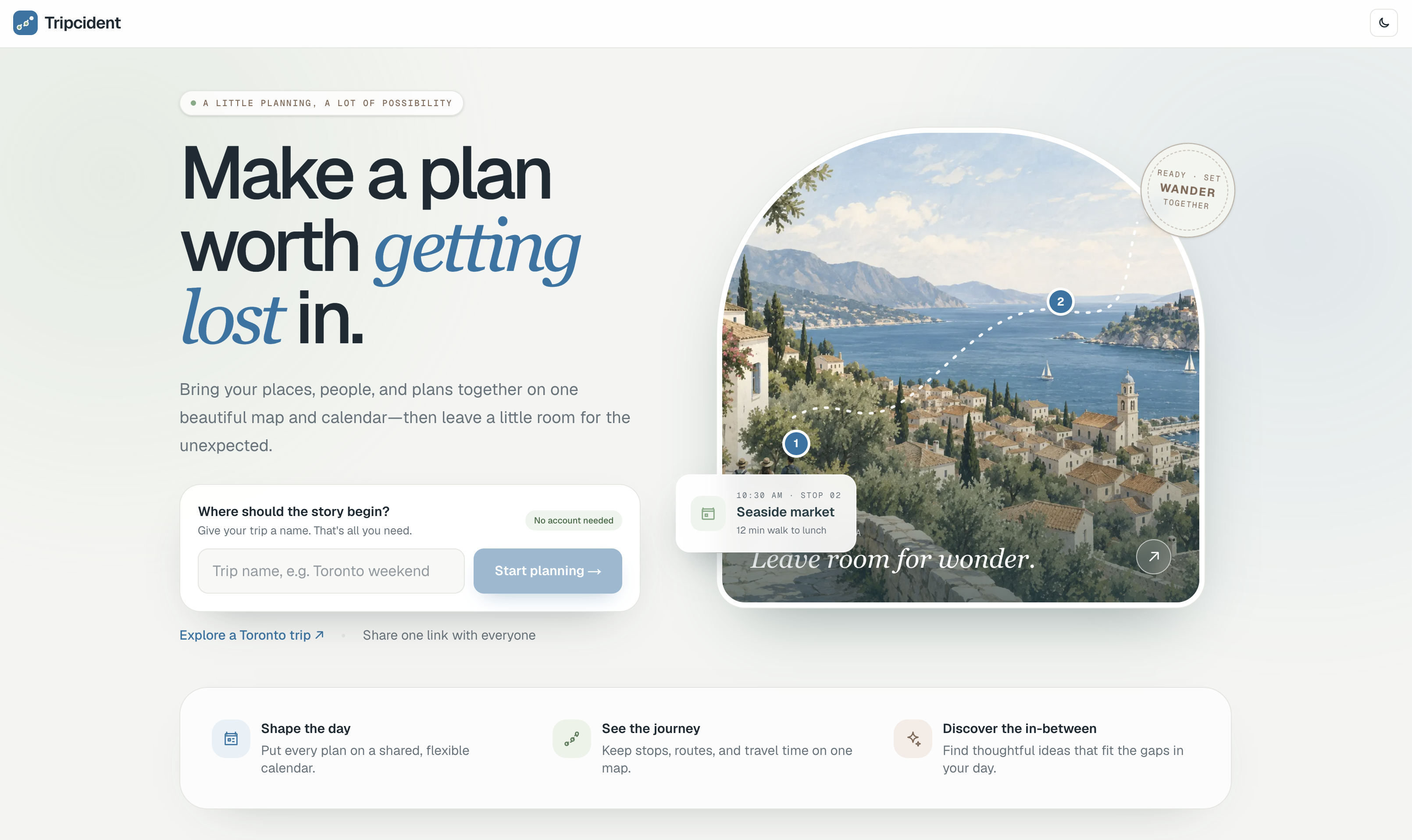
Landing
-
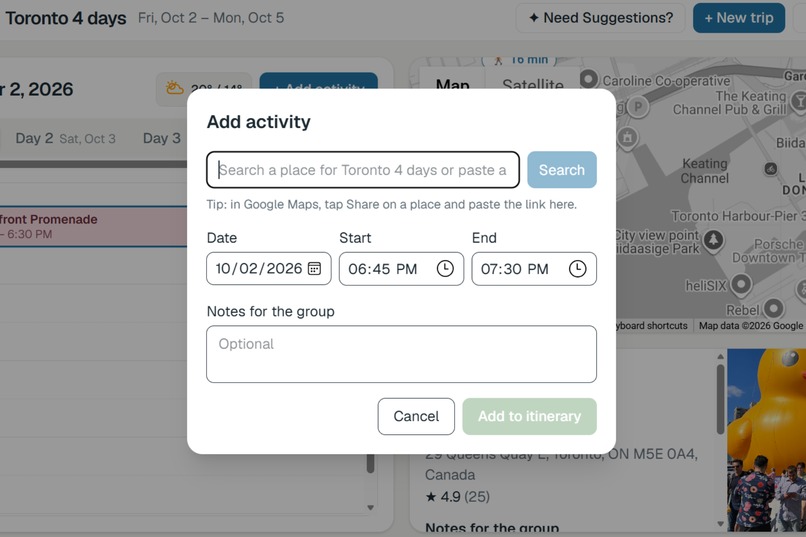
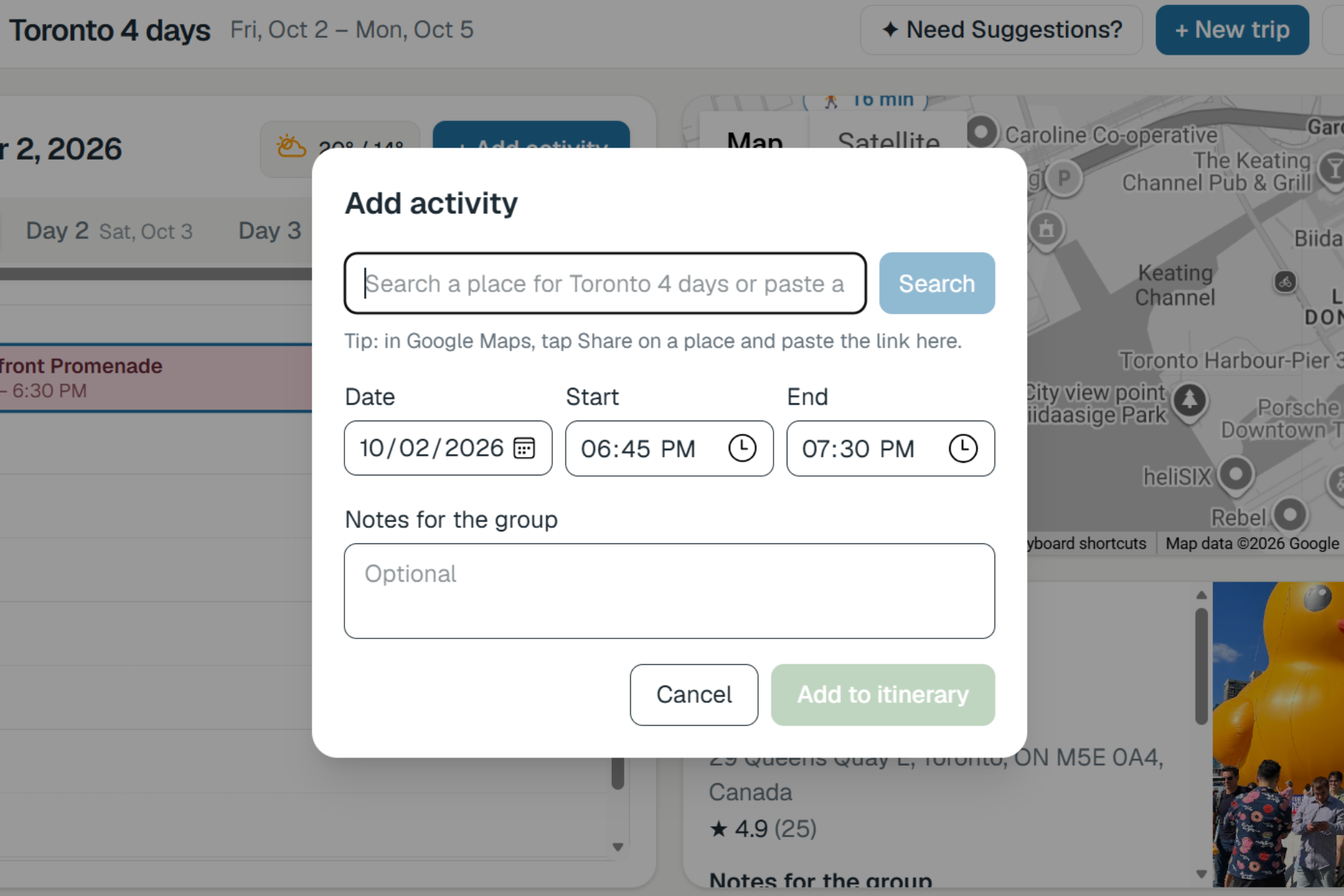
Add an activity
-
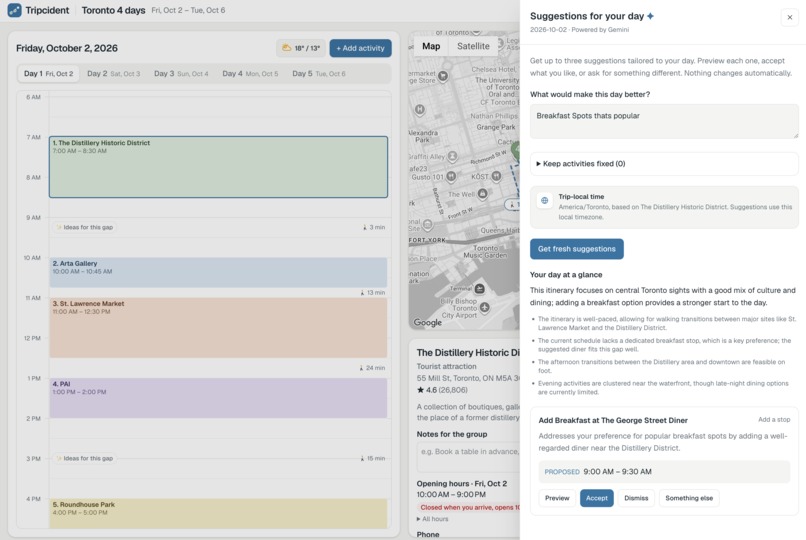
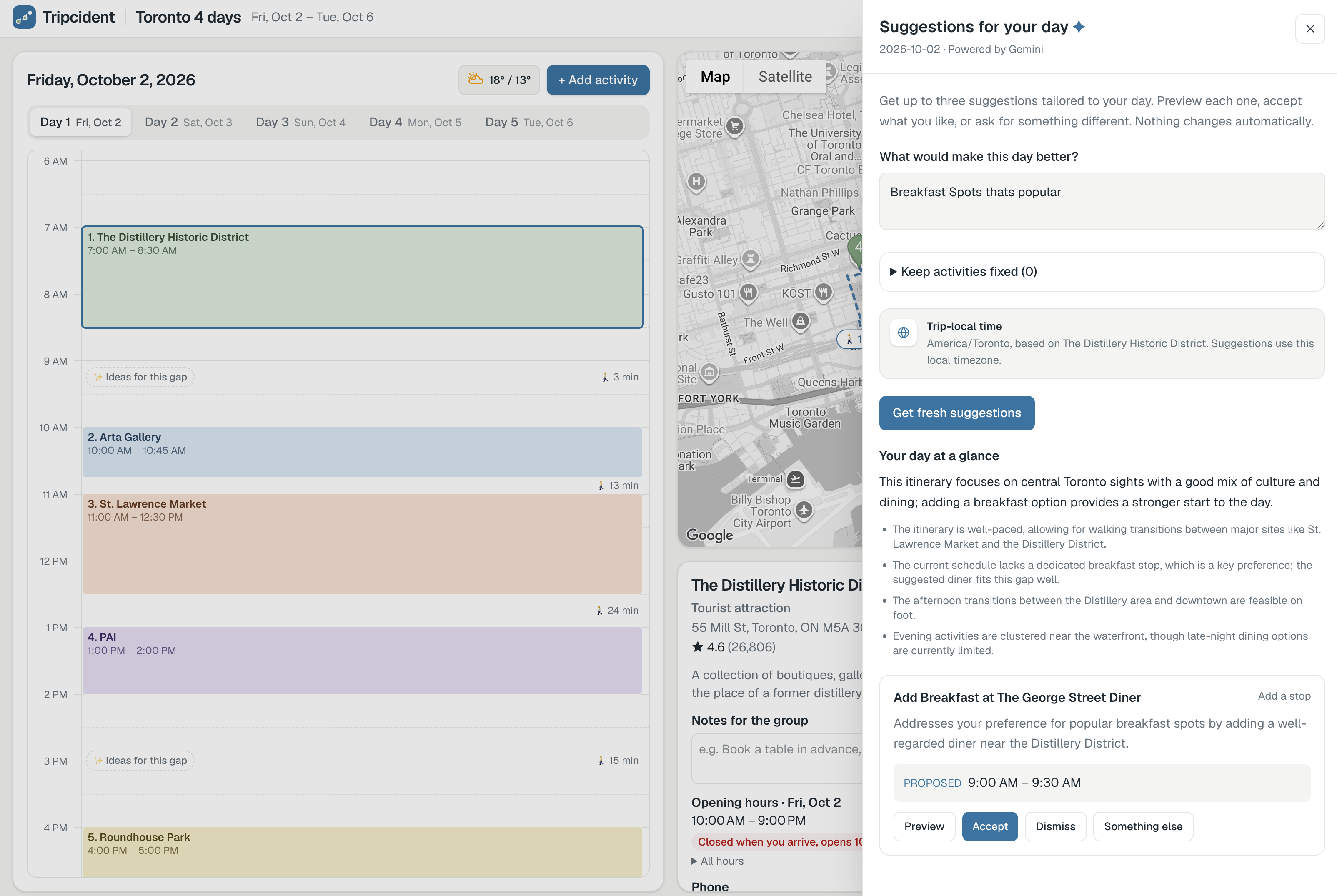
Get suggestions for your planned day
-
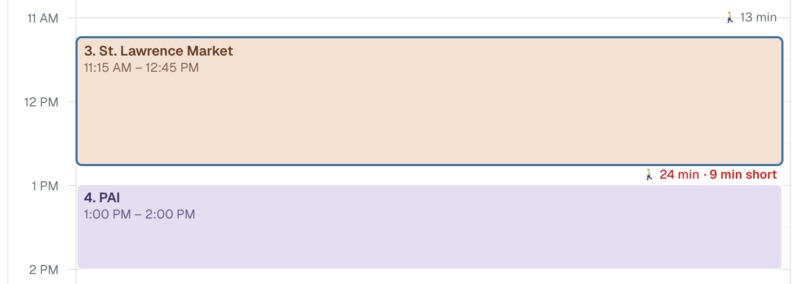
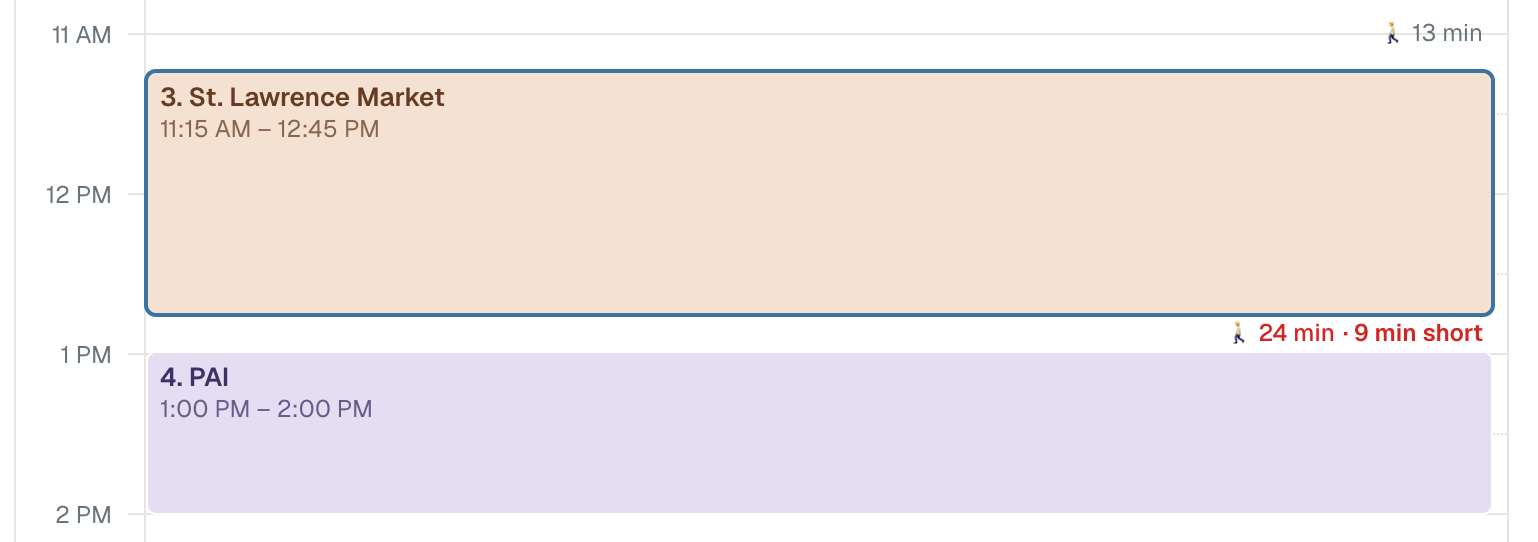
Get to know in advance about recommended time gaps between attractions
Inspiration
Planning trips with friends and family is often chaotic. Important details get scattered across group chats, spreadsheets, notes, calendars and other apps, making it difficult to keep everyone aligned. We were inspired to build Tripcident, a collaborative itinerary management platform designed to simplify travel planning from start to finish.
What it does
Tripcident allows users to create and manage travel itineraries in one centralized location. Travelers can organize destinations, schedule activities, manage trip details, and share itineraries through unique links. The platform makes it easy for groups to stay synchronized, reducing confusion and helping everyone access the latest travel information.
How we built it
Tripcident was designed with simplicity and usability in mind. We focused on creating a clean, intuitive experience that allows users to quickly create, view, and manage travel itineraries while bringing together real places, routes, weather, and collaborative planning in one place.
We built Tripcident using Next.js, React, TypeScript, and Tailwind CSS for the frontend, with Supabase handling itinerary storage and sharing. We integrated the Google Maps Platform for interactive maps, place search, routing, and travel-time information. Working with the Google Maps JavaScript API was especially enjoyable because of its flexibility and extensive tooling, which allowed us to dynamically customize the map around our needs and create a more useful trip-planning experience using real locations, routes, and travel details.
We also integrated the Google Gemini API to complement the user's planning process. Gemini can review a user's schedule and suggest optional improvements or relevant places without automatically creating or changing the entire itinerary, keeping users in control of their plans. Open-Meteo provides weather forecasts so travelers can better plan their activities around expected conditions.
For deployment, Tripcident was hosted on a Vultr instance and made publicly available at tripincident.surf, with the domain registered through GoDaddy(A huge thanks to MLH for the domain promo)
Challenges we ran into
- Making suggestions actually fit. A good place isn't useful if it's closed or 40 minutes away. We had to combine the opening hours for the right weekday, the travel time from the previous stop and to the next one, and the length of the gap. When two stops are far apart, we search around both ends instead of the midpoint, which is often in the middle of nowhere.
- A calendar that feels like Google Calendar. Dragging, resizing, snapping to 15 minutes, overlapping events side by side, and long-press dragging on touch screens without breaking scrolling took far more work than expected.
Accomplishments that we're proud of
- Making it intuitive and easy to use.
- Include AI as a helping assistant that gives you single personalized suggestions instead of a generic travel plan.
- No (annoying) signup needed as for most apps today.
What we learned
- Combined several API platforms and deals with their costs and limits.
- Structured the project in many small, distinct work packages to avoid conflicts when merging later.
What's next for Tripcident
- Live collaboration: see your friends' edits instantly through Supabase Realtime, with presence indicators
- Group decisions: vote on suggested activities and leave comments on stops
Built With
- gemini
- maps
- nextjs
- open-meteo
- react
- supabase
- typescript


Log in or sign up for Devpost to join the conversation.