-
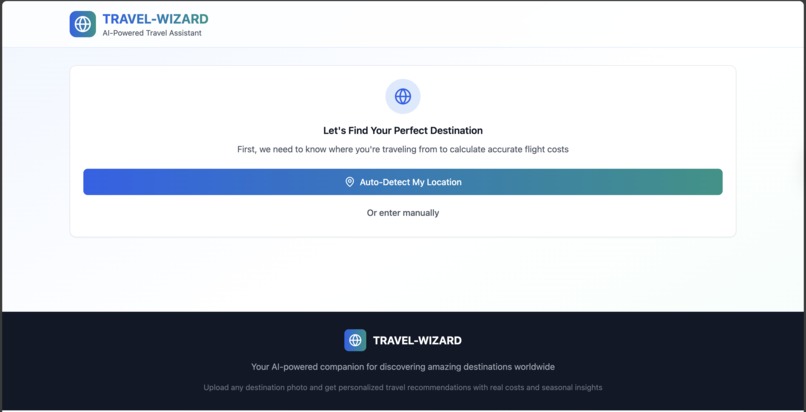
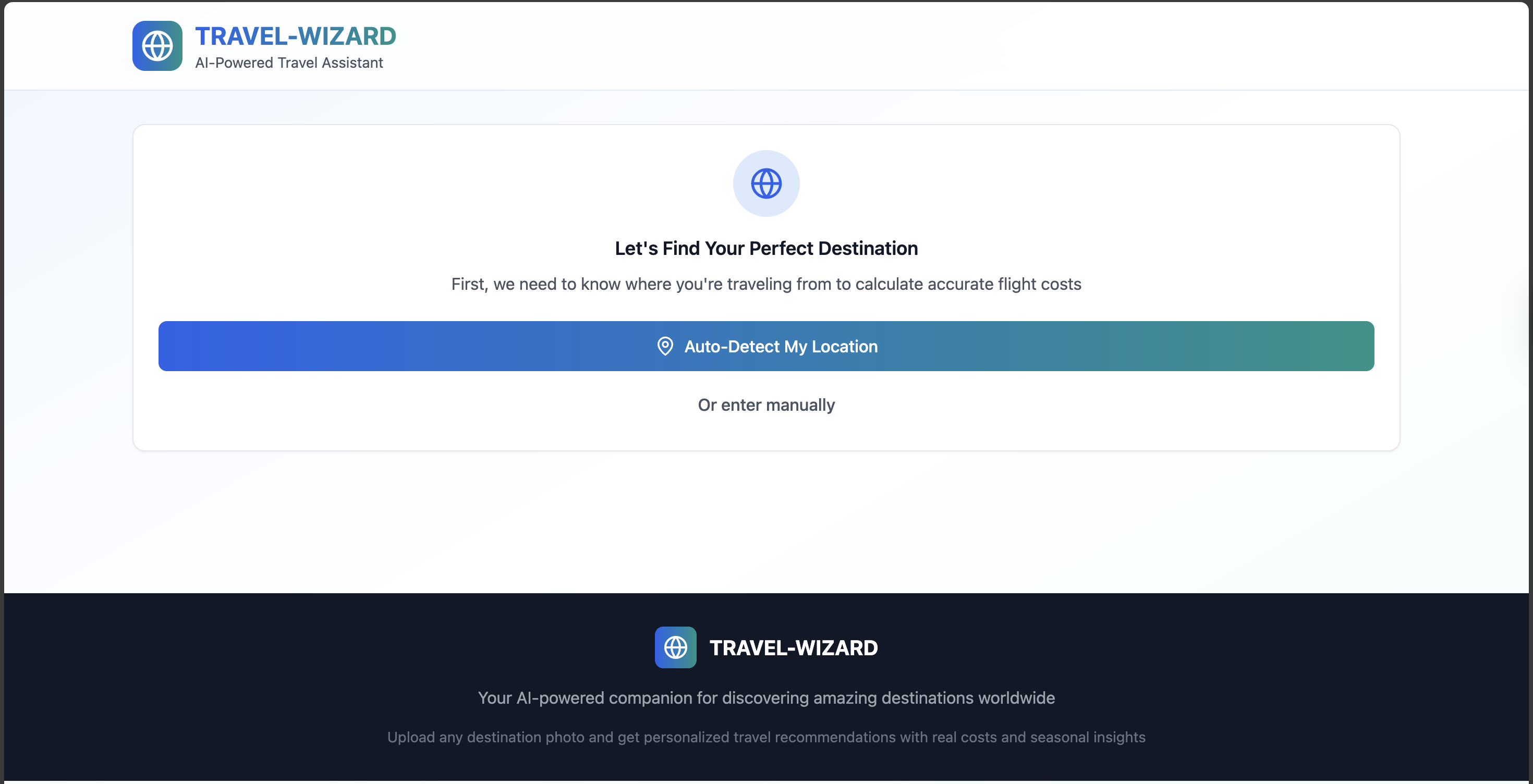
It will first ask you for your location as it is very important to find out how much will the flight cost for travel
-
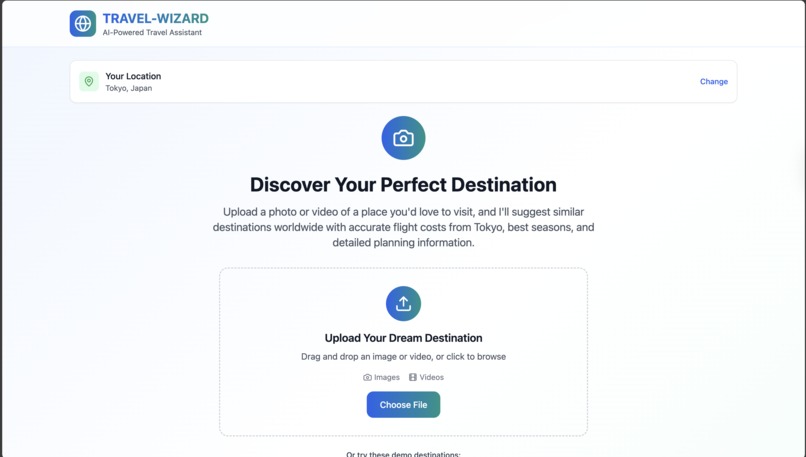
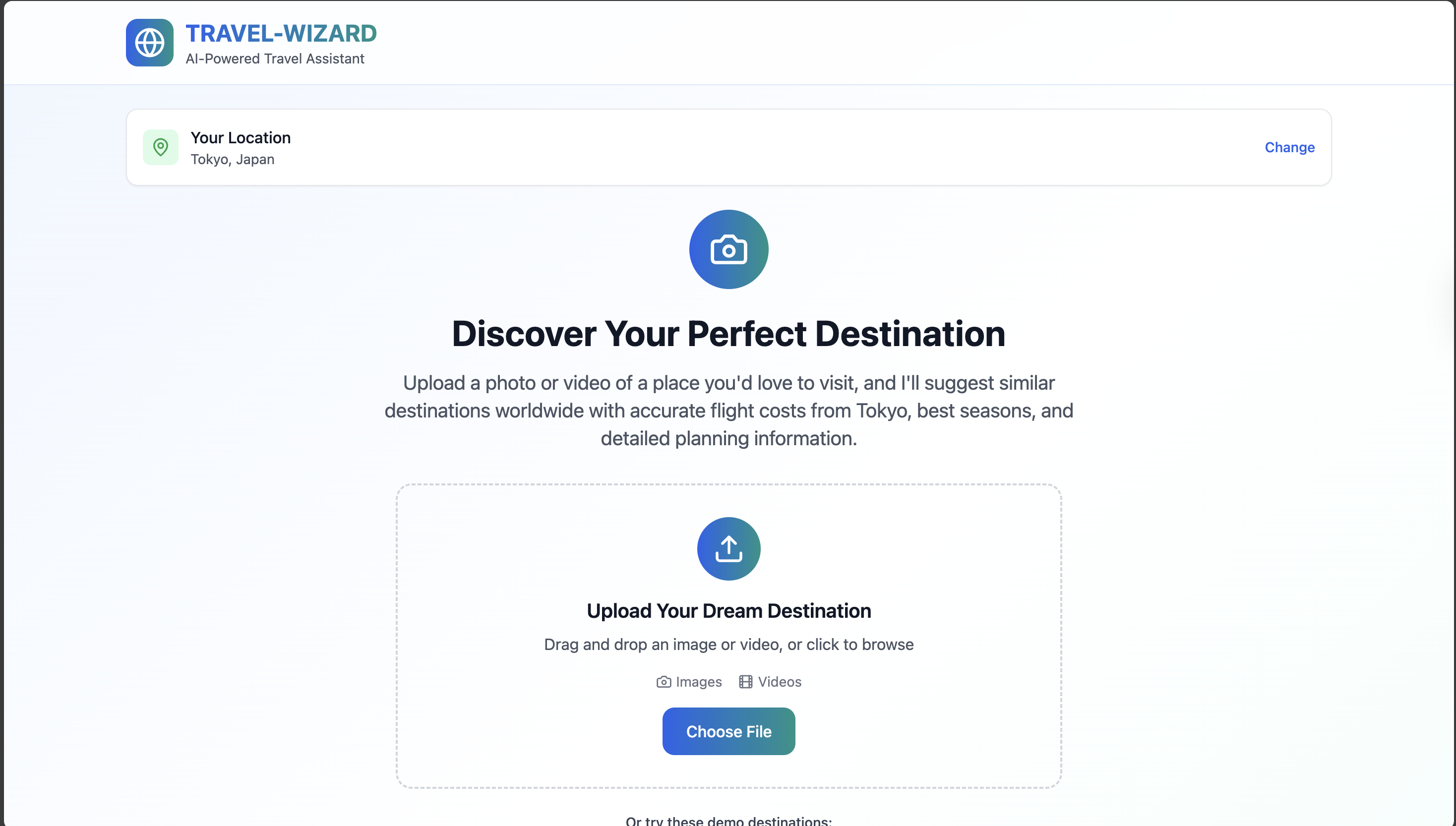
then it will ask you to uploade a image of teh place where you would like to visit or someplace that is simelar to the image
-
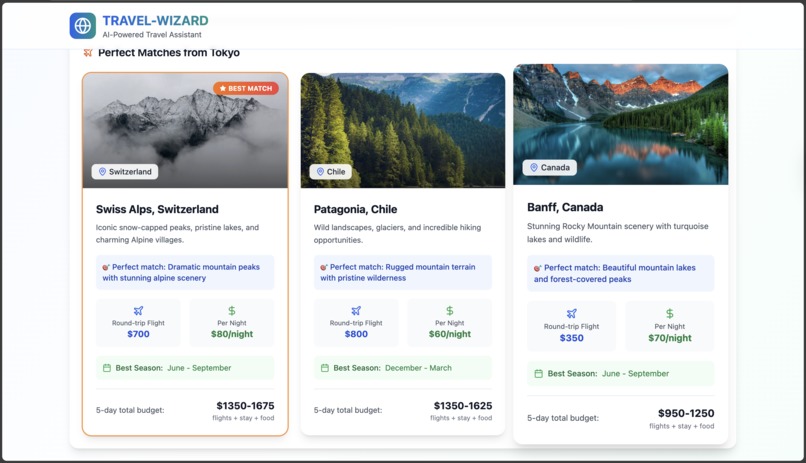
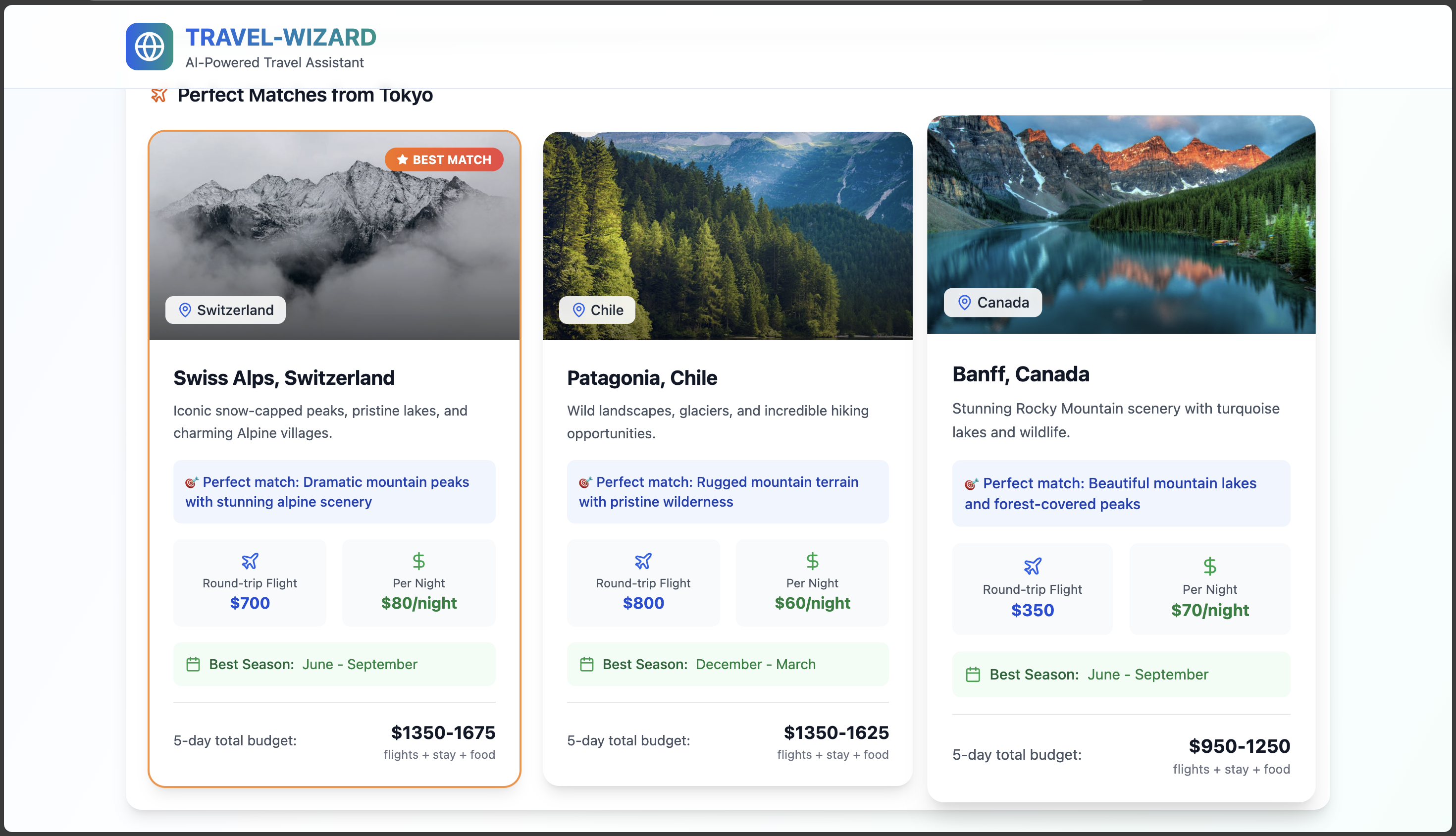
after you uploade the the backend will analyse the image and then find the places simelar to the image and then will give you three places
-
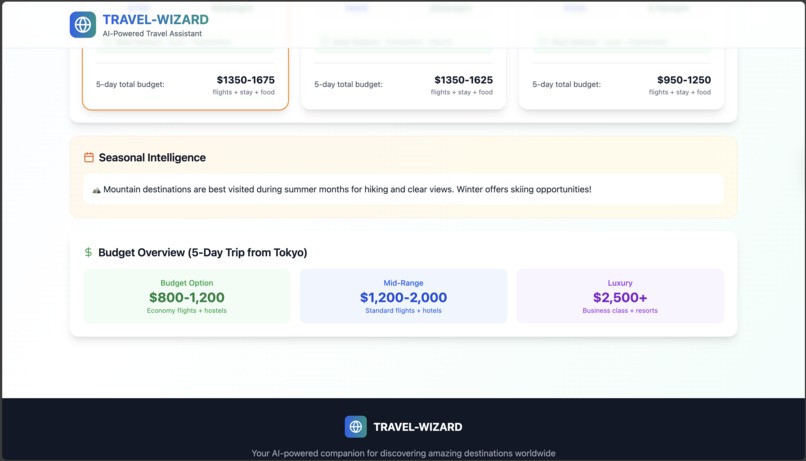
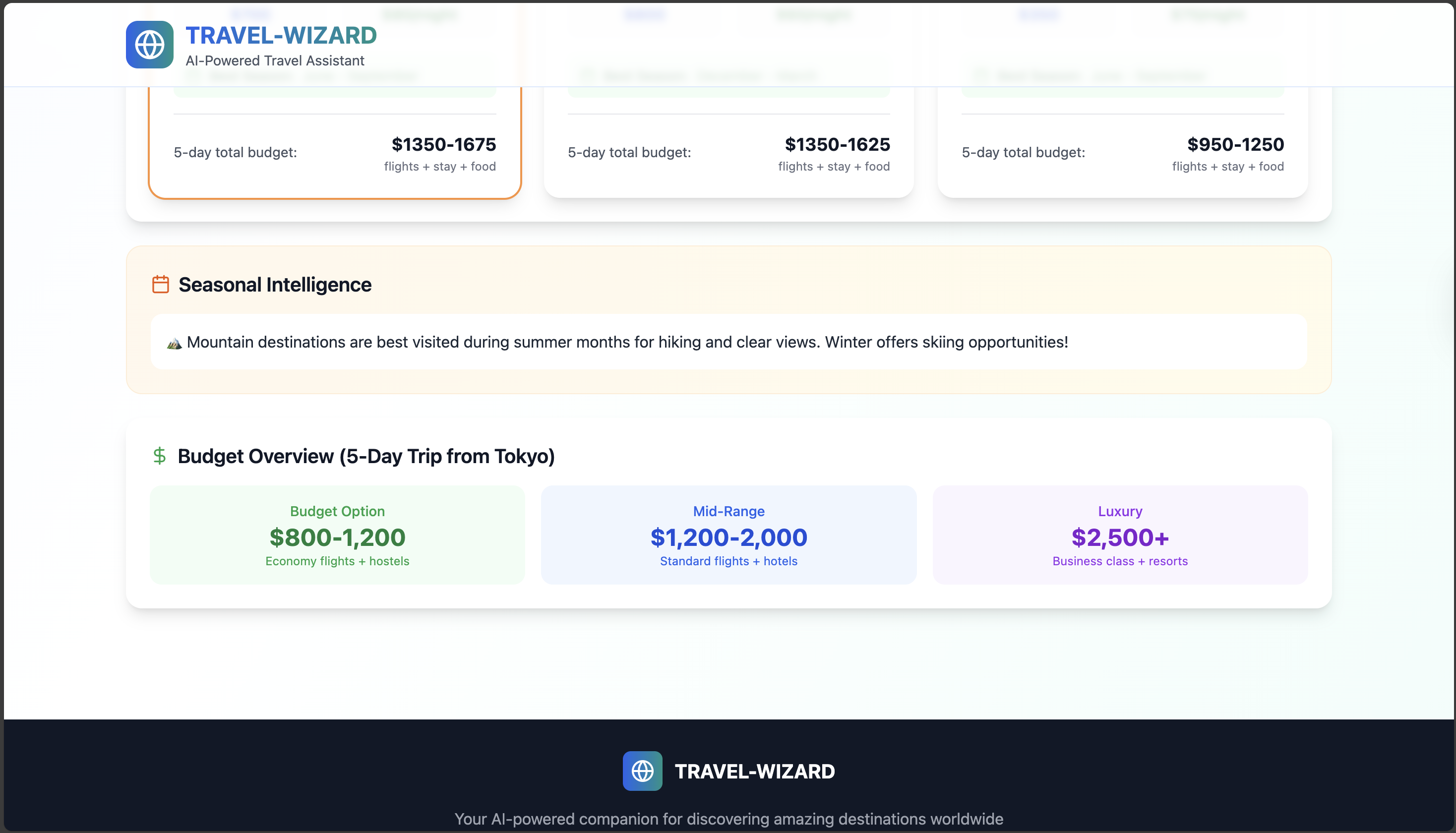
Then there is this section which will help you find out how much budget will you need for the trip as per your range
✨ About the Project: Trip Genie
🌍 Inspiration
Planning trips usually means juggling dozens of tabs — Google searches, blogs, cost comparisons, weather checks. We wanted to imagine something more magical: what if you could simply show a photo of your dream destination, and instantly know where it is, the best time to go, and how much it would cost?
That idea became Trip Genie — a conversational AI assistant that transforms an uploaded photo or short video into real travel suggestions with budgets, seasonal tips, and alternative recommendations.
🛠️ How We Built It
We designed Trip Genie as a lightweight but powerful demo for AI-powered travel discovery: 1. Multi-Modal Analysis • Used BLIP / CLIP models to turn images (or video frames) into semantic text descriptions. • Example: A beach photo → “tropical beach with palm trees and turquoise water”. 2. Destination Matching • Queried travel APIs (TripAdvisor, Google Places) and open datasets. • Matched the image description with famous destinations using embeddings. 3. Context-Aware Suggestions • Integrated Weather API to check if a destination was currently in off-season. • Example: If Bali = monsoon, recommend Phuket instead. 4. Budget Estimation • Modeled simple trip costs: \text{Trip Cost} = \text{Flights (round-trip)} + (\text{Stay/night} \times \text{N nights}) + \text{Daily Expenses} • Provided three tiers: budget, mid-range, luxury. 5. Conversational UX • Built a chat-like interface with Next.js + Tailwind, so the AI responses feel natural and easy to explore.
📚 What We Learned • Multi-modal AI is magical: Image-to-text models can spark instant inspiration for travel planning. • Simplicity matters: Instead of building heavy databases, we could rely on APIs + on-the-fly reasoning. • AI needs context: Adding seasonal/weather awareness made suggestions far more trustworthy. • Hackathon speed tips: Pre-curating a small set of 100–200 destinations let us demo faster without losing impact.
🚧 Challenges We Faced • Image ambiguity: A beach photo could be Maldives, Bali, or Hawaii. Balancing accuracy with helpfulness was tricky. • API limitations: Some travel APIs had request limits, so we had to cache or simplify queries. • Balancing wow factor vs feasibility: We wanted to avoid over-engineering and instead deliver a polished end-to-end demo. • Budget estimation realism: Costs vary wildly; we had to normalize with broad ranges rather than precise numbers.
🌟 The Future
Trip Genie could evolve into: • Group travel voting tools (friends pick from suggested destinations). • Ethical travel filters (low-emission routes, eco-hotels). • Personalized memory (“Plan me a trip like my Tokyo ramen-hike adventure”).
In short, Trip Genie is the first step towards reimagining travel discovery — where inspiration meets instant, intelligent planning.
Built With
- next.js
- restapi
- typescript


Log in or sign up for Devpost to join the conversation.