-
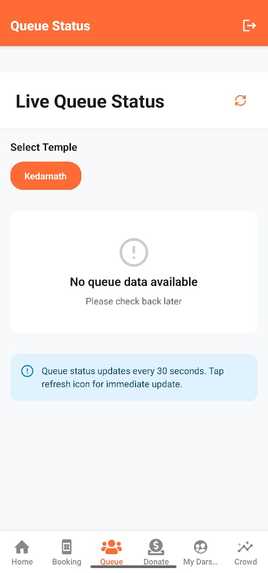
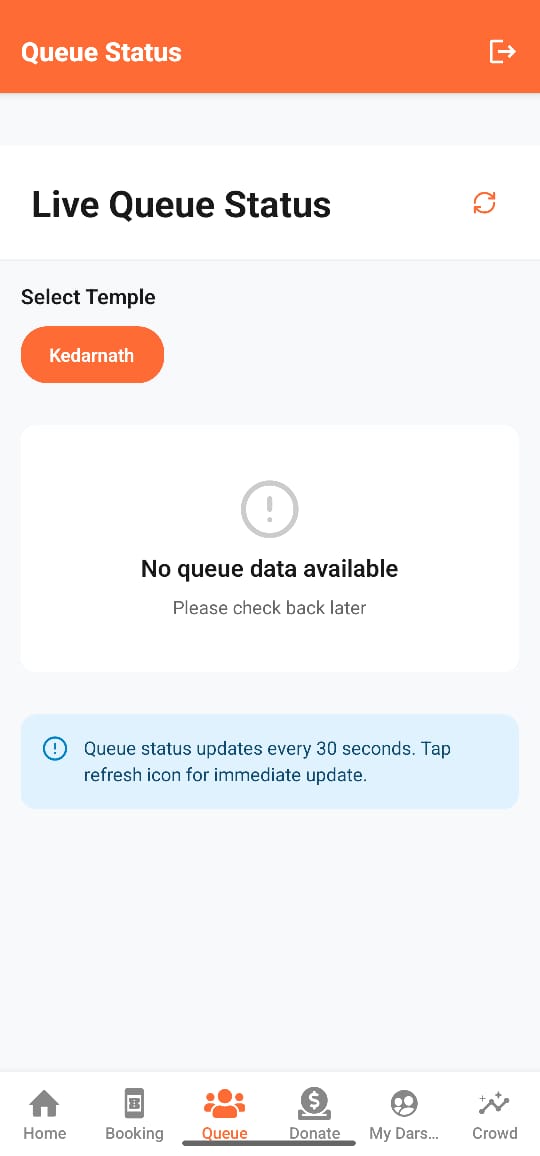
queue status
-
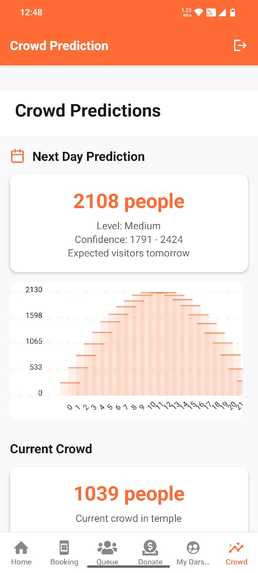
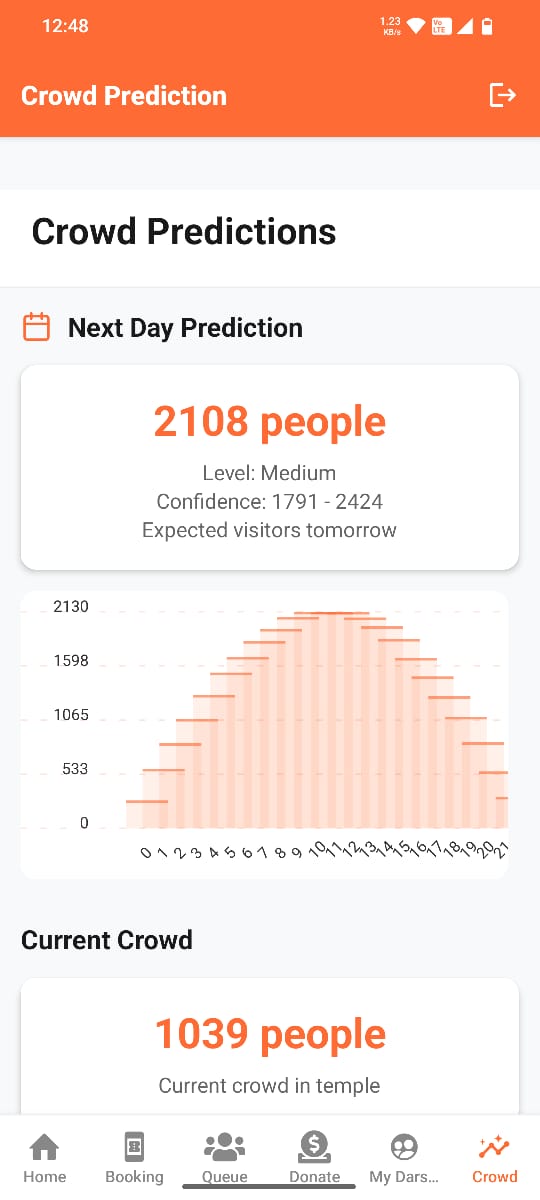
crowd prediction
-
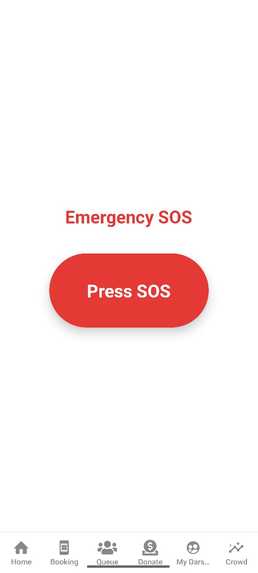
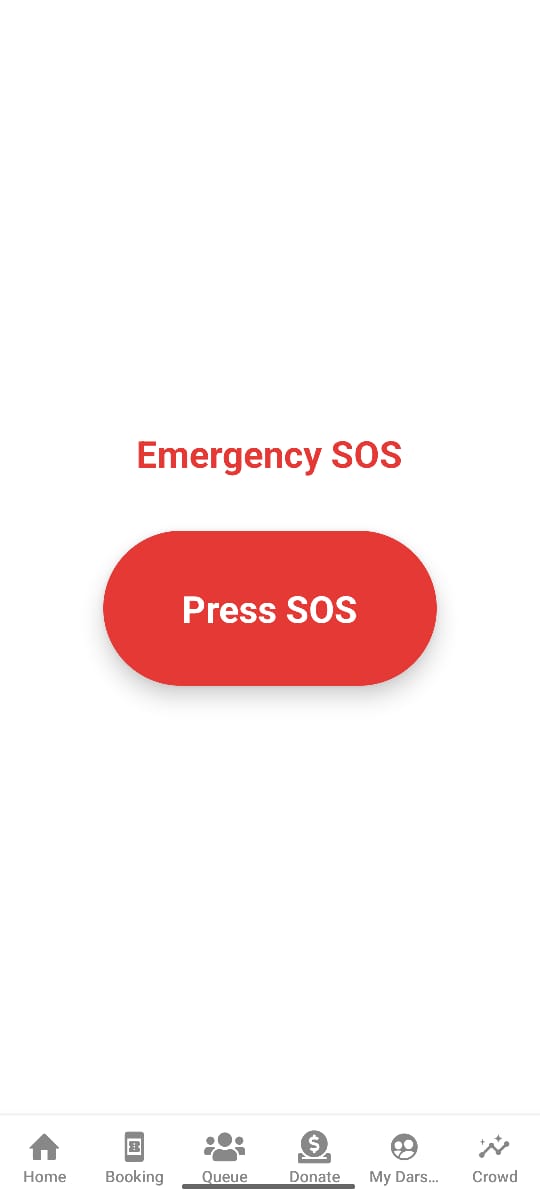
sos
-
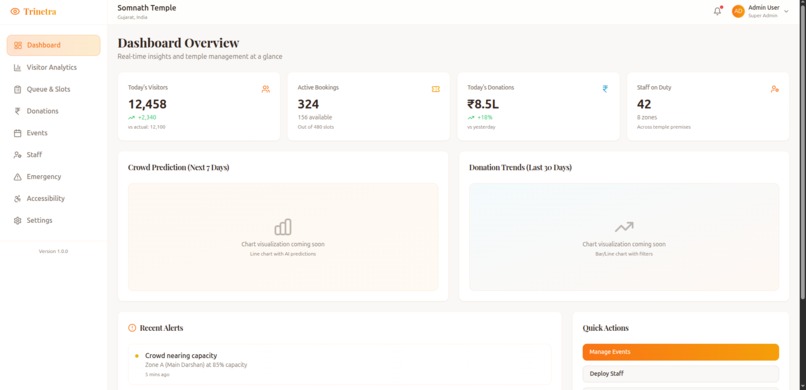
dashboard of temple trust
-
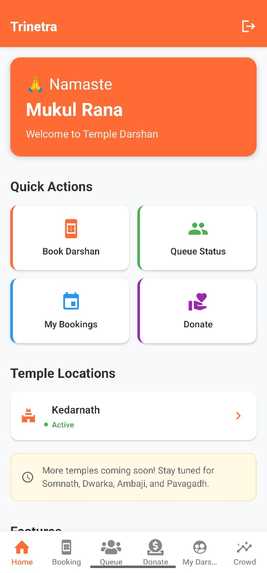
home pageque


🧡 About the Project — Trinetra: AI Crowd Safety System
🌟 Inspiration
Every year, major Indian temples see massive crowd surges—especially during festivals and peak seasons. These unmanaged crowds often lead to:
- Long, confusing queues
- Unpredictable wait times
- Stampede-like situations
- Slow response during emergencies
We were inspired to build Trinetra after reading multiple reports of overcrowding incidents and realizing how little real-time intelligence exists in Indian pilgrimage management. Our idea: Use AI + ML + Computer Vision to prevent crowd disasters before they happen.
We wanted to build something meaningful, deployable, and socially impactful—not just another hackathon prototype.
🔍 Problem We Are Solving
Temples face three major challenges:
- Unpredictable daily footfall — Devotees don’t know the right time to visit safely.
- Lack of real-time queue visibility — People stand for hours without any clarity.
- Poor emergency response — No centralized SOS system for rapid action.
These challenges collectively increase crowd stress and risk.
💡 What We Built
Trinetra is a full-stack crowd safety intelligence system featuring:
🧠 1. Next-day crowd prediction (ML + XGBoost)
- Uses 80+ engineered features
- Predicts temple footfall for the next day
- Helps authorities plan resources ahead of time
- Gives devotees safer, lower-crowd visiting slots
🎥 2. Real-time crowd detection (Computer Vision + ResNet)
- Counts people from video feeds
- Alerts when density crosses thresholds
- Achieved 85%+ detection accuracy
📱 3. Mobile App (React Native)
- Quick actions: Queue Status, Bookings, Emergency SOS
- Clean, intuitive interface for all age groups
- Multi-lingual support
🗣️ 4. Nandi AI – Temple Voice Assistant (Gemini Flash)
Devotees ask:
“When should I plan my darshan?”
Nandi AI analyzes:
- Footfall predictions
- Live queue data And responds in Hindi/English in a short, polite tone.
🚨 5. SOS Emergency System
- 5-second countdown
- Sends alert to server
- Vibrates device
- Notifies helpdesk
🛠️ How We Built It
Tech Stack:
- ML: Python, XGBoost, Pandas, Scikit-learn
- Computer Vision: ResNet pretrained model
- Backend: Node.js, Express
- Mobile App: React Native + Expo
- AI Assistant: Google Gemini Flash
- Database: MongoDB
- Hosting: Appwrite Cloud (Auth + Storage + Realtime) (planned)
Pipeline Overview:
- Trained ML models on historical pilgrimage, weather, and seasonal data
- Converted CV model outputs into real-time crowd metrics
- Created REST APIs for prediction, queue, SOS, and AI assistant
- Integrated Gemini to make Nandi AI conversational
- Built a clean admin dashboard + user mobile app
📚 What We Learned
- How to convert a chaotic real-world crowd problem into a structured ML pipeline
- How to design multi-modal AI flows (voice → language → prediction → response)
- Efficient API design for mobile apps
- Managing state + navigation in React Native
- Importance of KISS (Keep It Simple) for emergency systems
- Optimization of ML models for latency-critical applications
🚧 Challenges We Faced
- Getting reliable prediction accuracy with noisy real-world data
- Integrating CV outputs into real-time dashboard
- Handling mobile permissions for microphone + SOS
- Gemini API errors during multi-lingual responses
- Ensuring UI simplicity for older age groups
- Debugging Expo networking (local IP changes, routing issues)
🚀 What’s Next
- Integrating full Appwrite Cloud stack (Auth, DB, Storage, Realtime)
- Adding geofencing alerts for crowd density
- Deploying on actual temple CCTV feeds
- Adding triage-level emergency categories in SOS
- Voice-controlled darshan booking
- Multilingual support for all major Indian languages
Built With
- fastapi
- inference-learning
- machine-learning
- node.js
- python
- react
- react-native
- sasnet

Log in or sign up for Devpost to join the conversation.