Inspiration -
Modern security systems suffer from a fatal flaw: they are biologically blind.
A standard CCTV camera sees pixels, not truth. It cannot distinguish between a swaying tree branch, a janitor cleaning a desk, or a masked intruder. This leads to "Alert Fatigue"—security operators are overwhelmed by false positives, causing them to miss the one real threat that matters.
We asked a simple question: What if a security camera didn't just record the crime, but understood it?
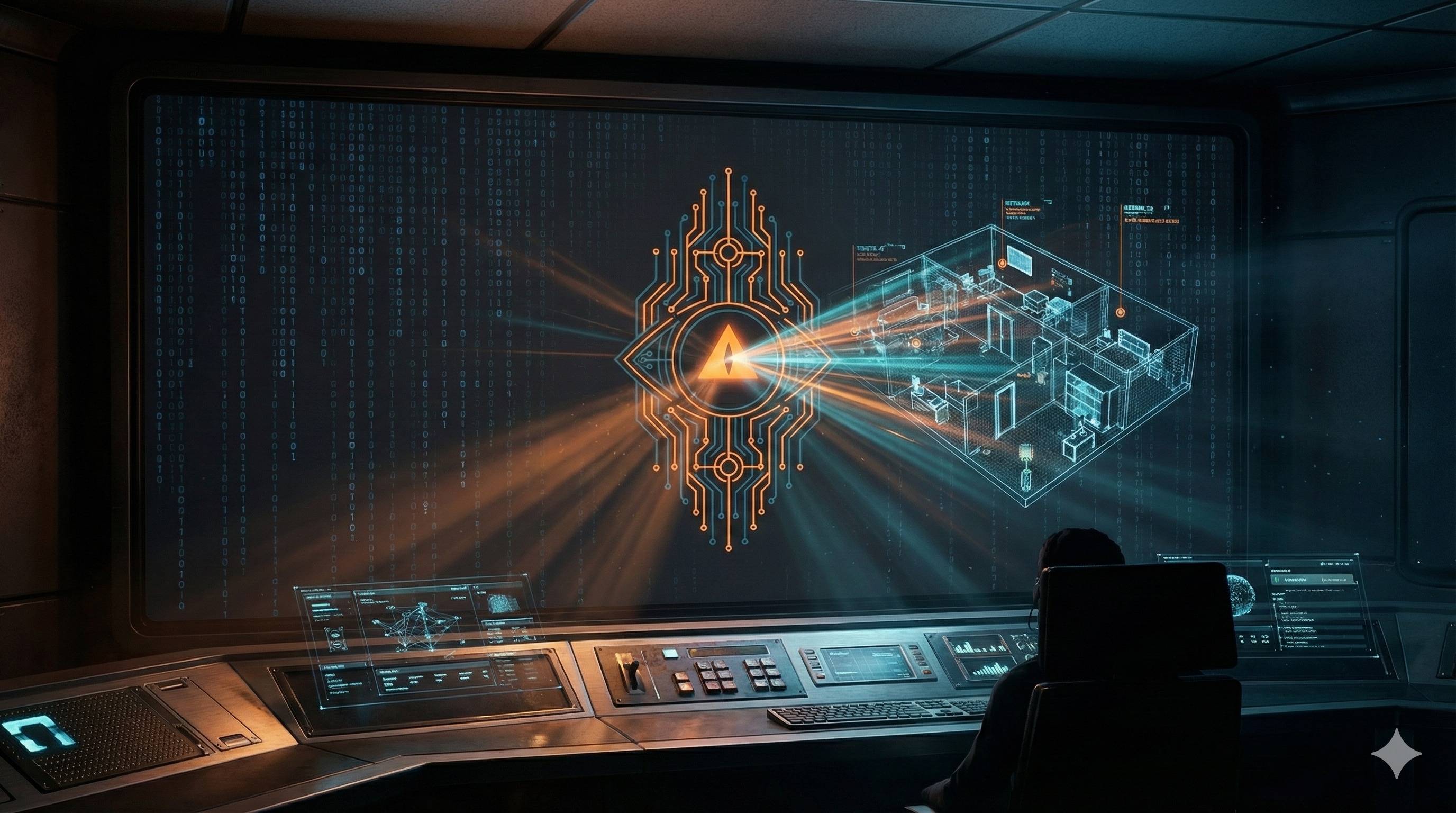
Inspired by the concept of Trinetra (the "Third Eye" that sees beyond the visible) and modern principles of Geospatial Intelligence (GEOINT), we set out to build an autonomous watchtower that uses Multimodal AI to perceive intent, not just motion.
What it does - TRINETRA is an active defense system powered by Gemini 1.5. Unlike passive cameras that just record footage for later review, TRINETRA acts as a real-time sentinel.
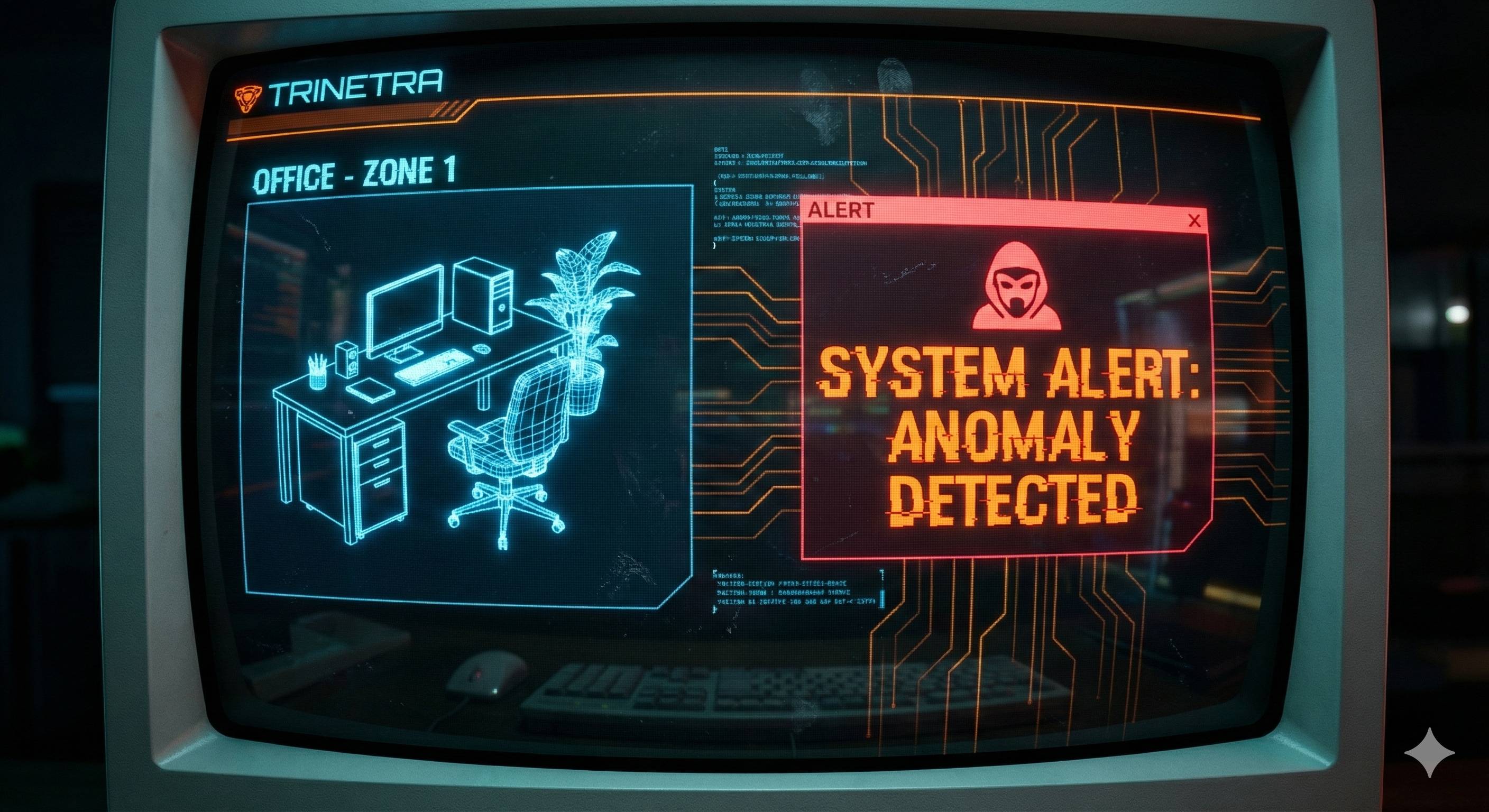
Semantic Anomaly Detection: The system establishes a "Baseline Reality" (a safe state) and constantly compares it against live feeds. It ignores benign changes (lighting shifts, shadows) and hyper-focuses on specific threat vectors: masks, weapons, and unauthorized human presence.
Instant Threat Identification: Utilizing Gemini's vision capabilities, it identifies specific attributes of an intruder (e.g., "Male subject, grey hoodie, wearing a Guy Fawkes mask").
Active Voice Deterrence: Upon verifying a threat, it uses Text-to-Speech synthesis to vocalize a detailed description of the intruder to the intruder themselves. This psychological deterrent converts the system from a passive observer into an active guardian.
How we built it - We architected a Python-based "Logic Gate" system integrating three core technologies:
The Brain (Gemini Robotics): We utilized the Gemini Robotics Perception Model (gemini-robotics-er-1.5) for its advanced ability to interpret physical environments and human-object interactions. We engineered specific system prompts to force the model to act as a security analyst, prioritizing threat detection over general image description.
The Voice (gTTS): We built a pipeline that strips the AI's visual analysis and converts it into clear, spoken warnings using Google Text-to-Speech.
The Logic (Python): A custom "Event-Driven" script handles the "Sentinel Loop," manages API rate limits with intelligent backoff, and maintains the state between "Safe" and "Threat" modes.
Challenges we ran into - Prompt Engineering for Security: Early versions of the AI were too descriptive—it would poetically describe the furniture instead of flagging the intruder. We had to rigorously tune the prompts to force a "Security First" mindset.
Model Availability: We encountered API constraints with standard models but successfully engineered an "Auto-Discovery" protocol that autonomously routed our request to the specialized Gemini Robotics endpoint, proving the system's adaptability.
The "Hallucination" Problem: Ensuring the AI didn't invent threats that weren't there. We solved this by implementing a "Baseline Comparison" method, where the AI must justify its alert by comparing the new frame to the safe frame.
Accomplishments that we're proud of : The "Guy Fawkes" Test: We successfully trained the system to recognize specific, high-contrast threat indicators (like a Guy Fawkes mask) and vocalize them instantly.
Zero-Latency Feel: By optimizing our image compression and API calls, we achieved near-real-time analysis, making the "Voice of God" warning feel immediate and responsive.
The UI Aesthetic: We built a custom "Command Terminal" interface with ASCII art and "Typewriter" effects that gives the operator a true "Cyberpunk/Intelligence Agency" feeling.
What we learned : Prompt Engineering is the new Coding: The logic of the system didn't live in if/else statements, but in the English instructions we gave the model.
Multimodal is Ready for Edge: We learned that large language models are no longer just for chatbots; they are viable engines for real-time visual interpretation in security contexts.
What's next for TRINETRA : Integration with Project Astra (Smart Glasses): TRINETRA is designed to leave the server room. We plan to deploy this logic to AR/Smart Glasses. Imagine a police officer looking at a crowd; TRINETRA whispers warnings directly into their ear ("Suspect at 2 o'clock matched in criminal database"), creating a seamless "Heads-Up Display" for the real world.
Edge Deployment: Porting the Python logic to a Raspberry Pi + Camera Module for a standalone $50 intelligent security device.
RTSP Stream Support: Upgrading the system to ingest live IP camera feeds rather than static image uploads.
Built With
- computer-vision
- gemini-1.5-pro
- generative-ai
- google-cloud
- google-colab
- googlegemini
- gtts
- python
- robotics

Log in or sign up for Devpost to join the conversation.