-
-
-
-
-
-
-
-
-
-
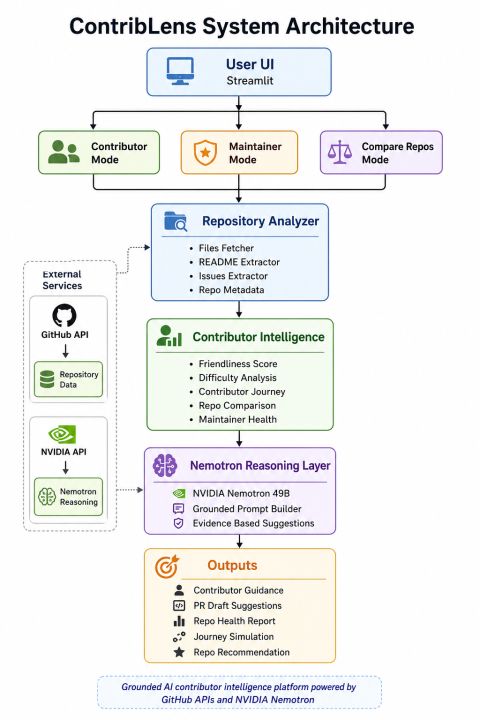
Architecture
Inspiration
Open-source software powers much of today's technology ecosystem, yet contributing to large repositories remains difficult for many developers. New contributors often struggle with unfamiliar codebases, unclear onboarding processes, missing contribution guidance, and uncertainty about where to begin. We wanted to reduce these barriers by building a system that helps contributors understand repositories faster and make informed decisions about where and how to contribute.
This led to the creation of ContribLens, an AI-powered contributor intelligence platform that combines repository analytics with grounded generative AI reasoning to improve the contributor experience.
What it does
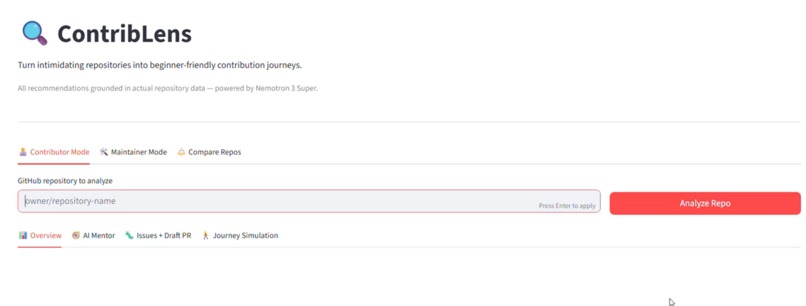
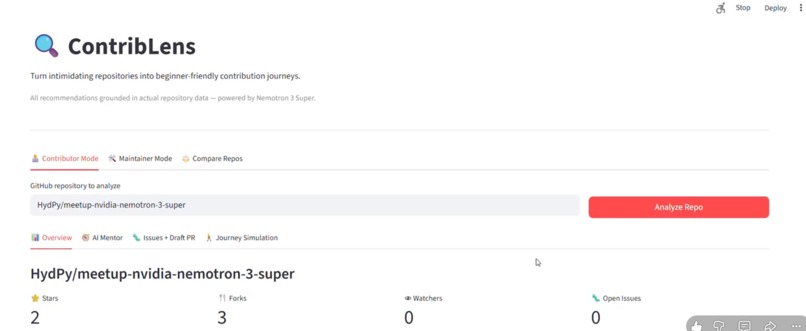
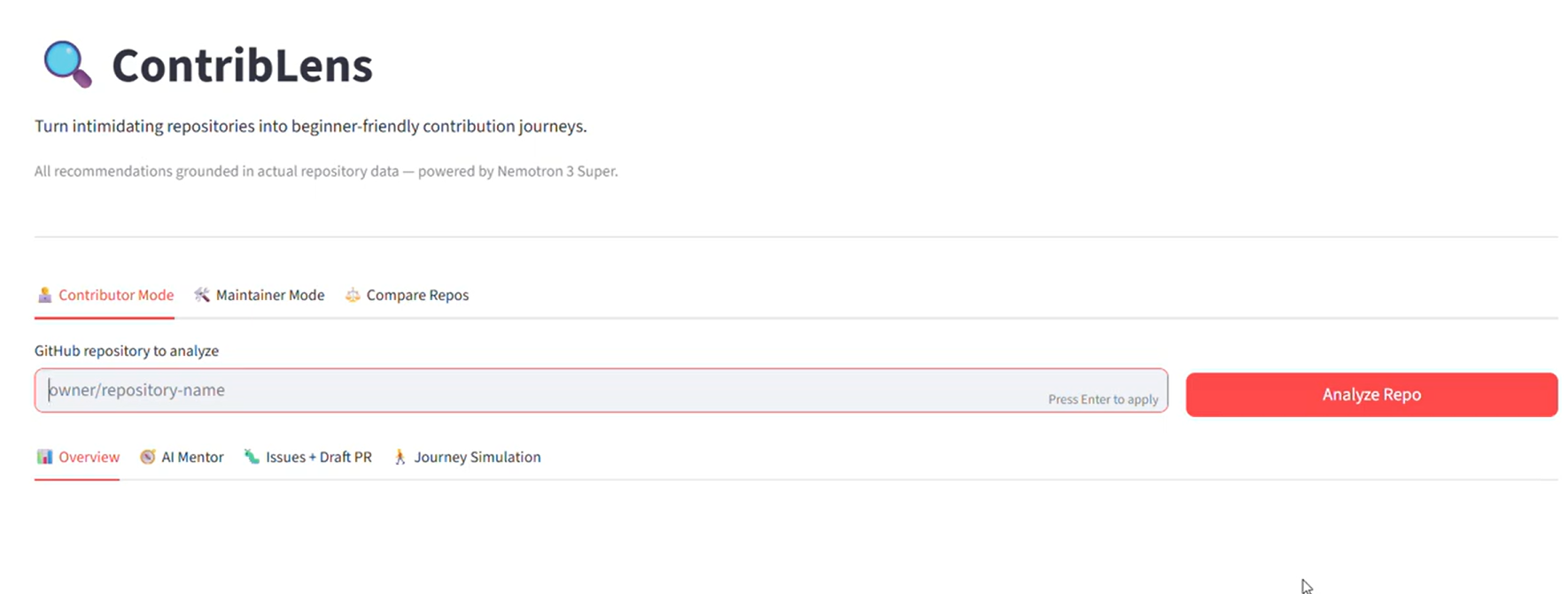
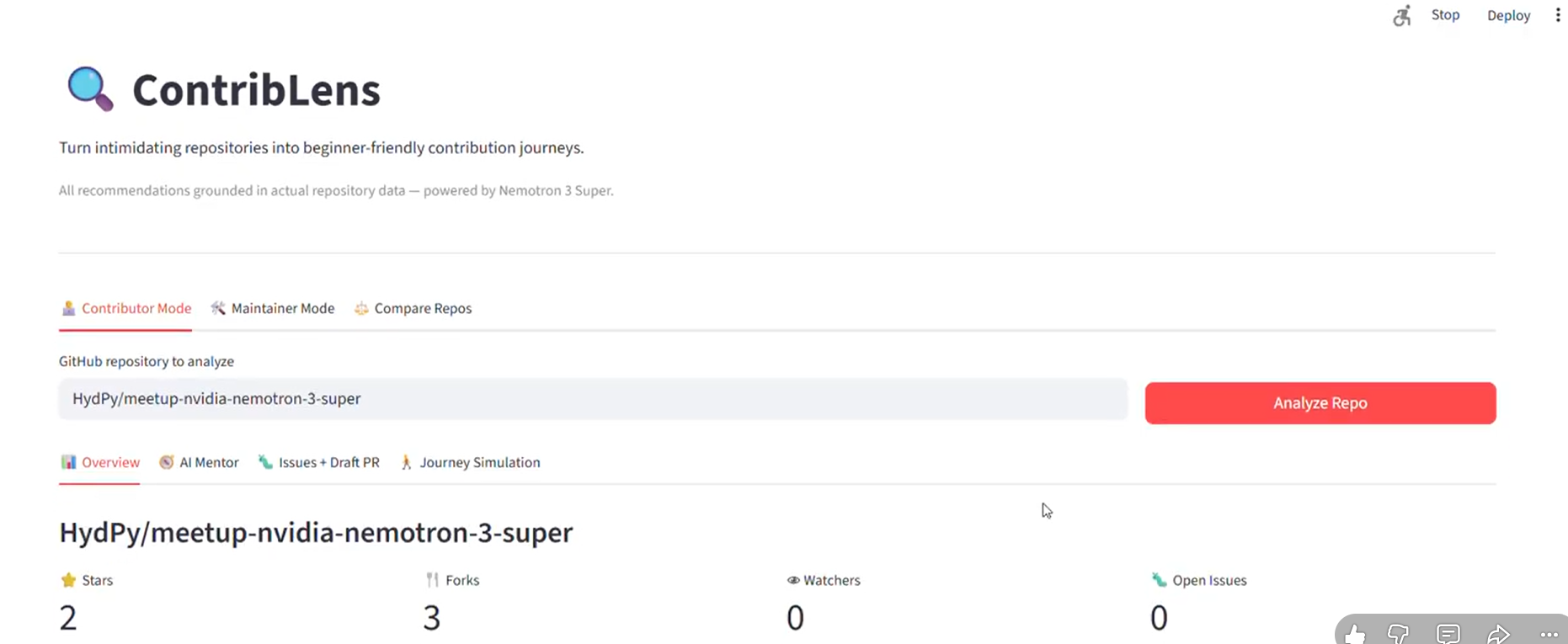
ContribLens analyzes GitHub repositories and transforms repository data into actionable contributor insights.
Key capabilities include:
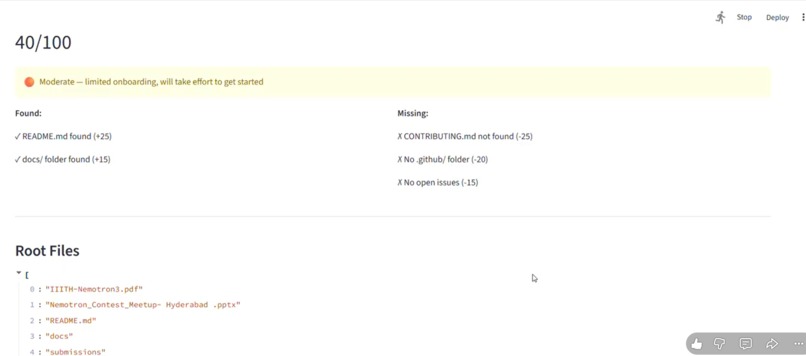
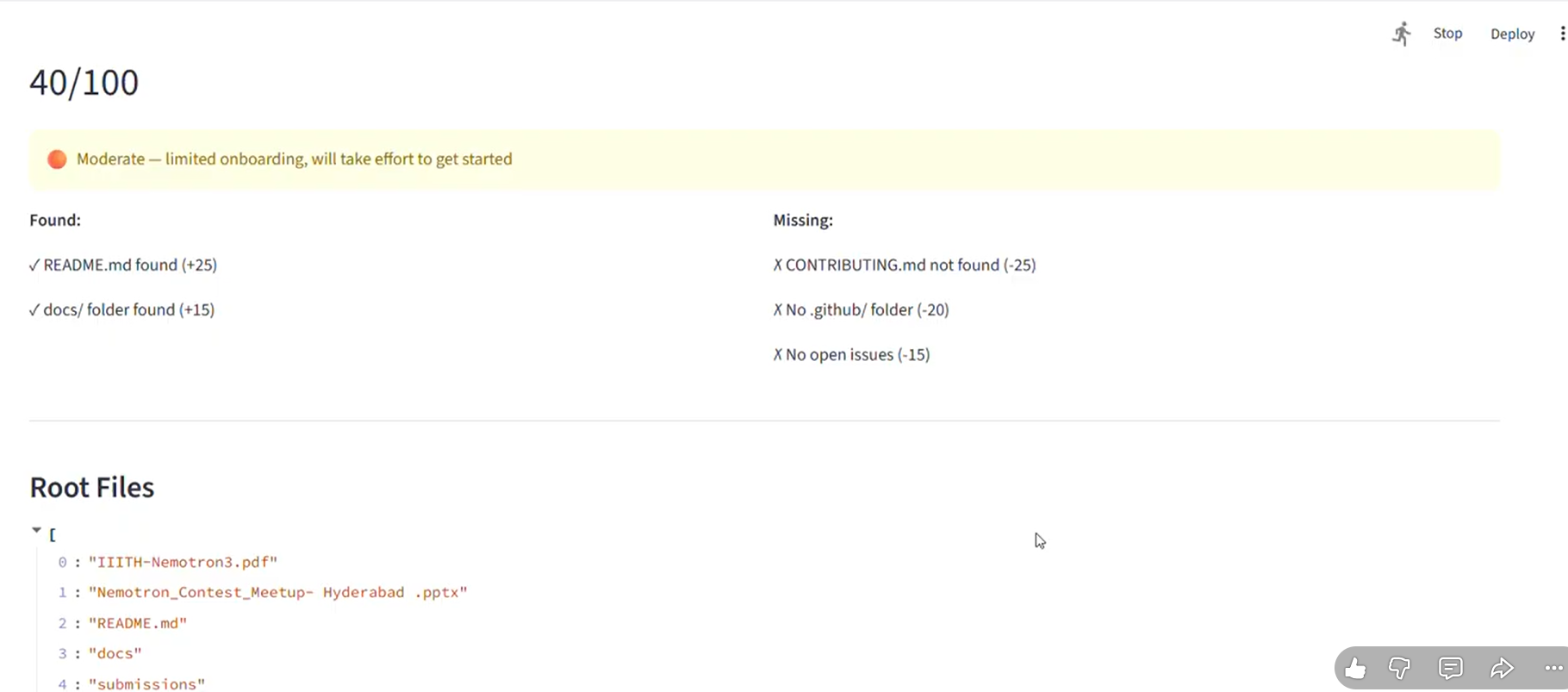
- Contributor Friendliness Score based on repository structure, documentation quality, issue labels, and maintainer activity.
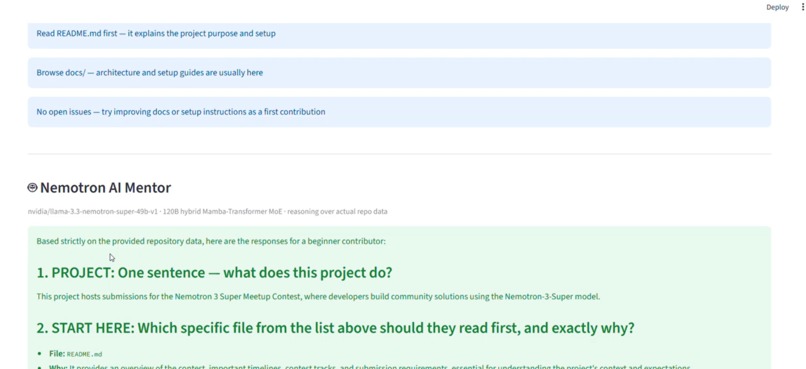
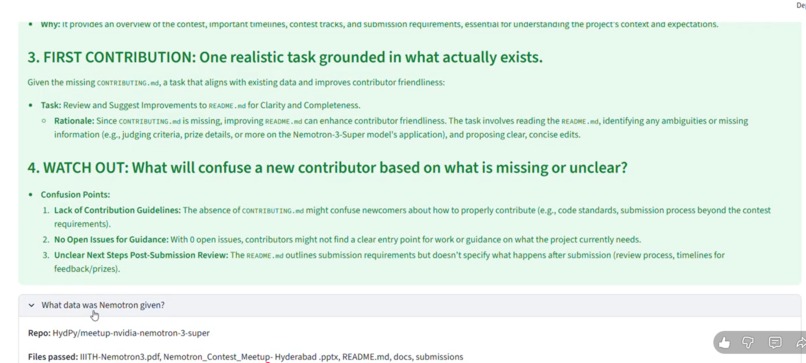
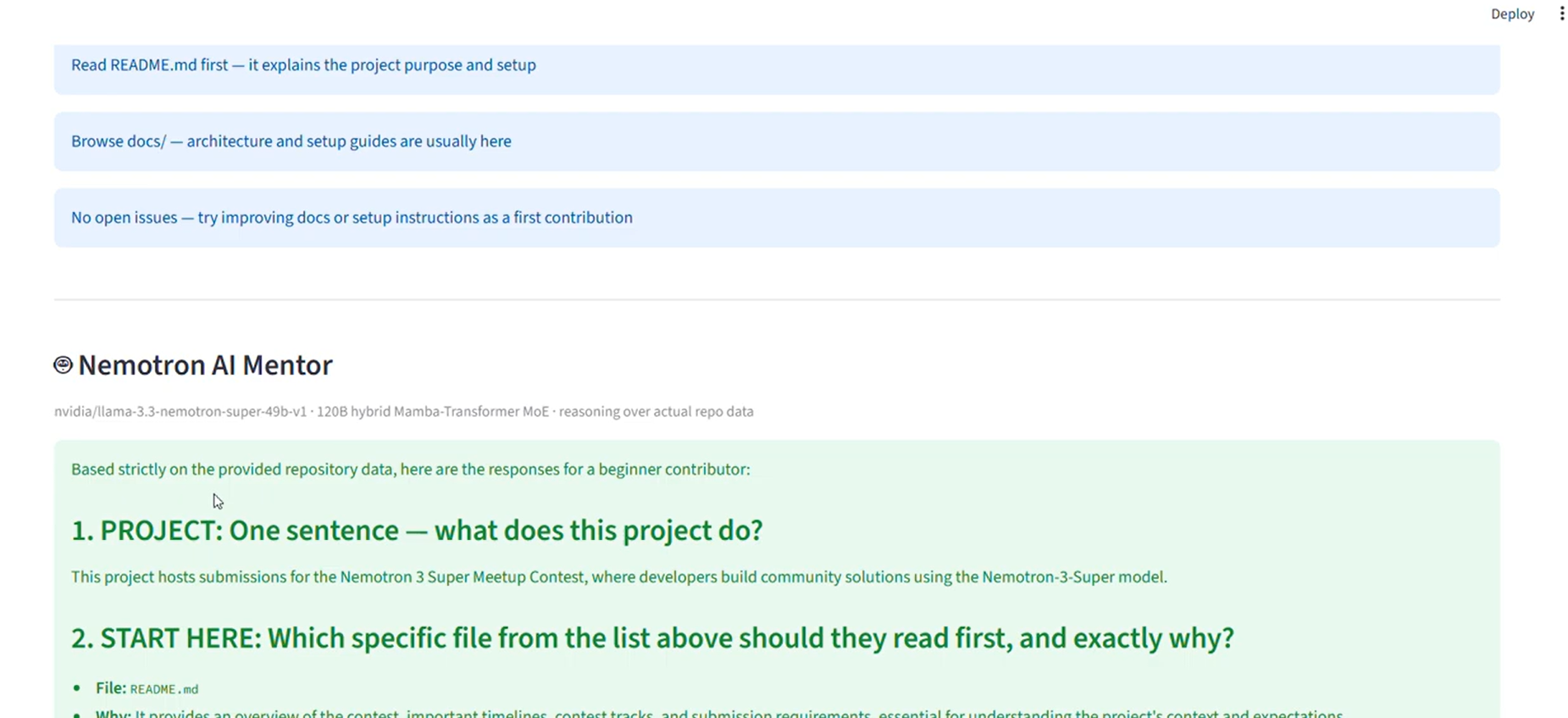
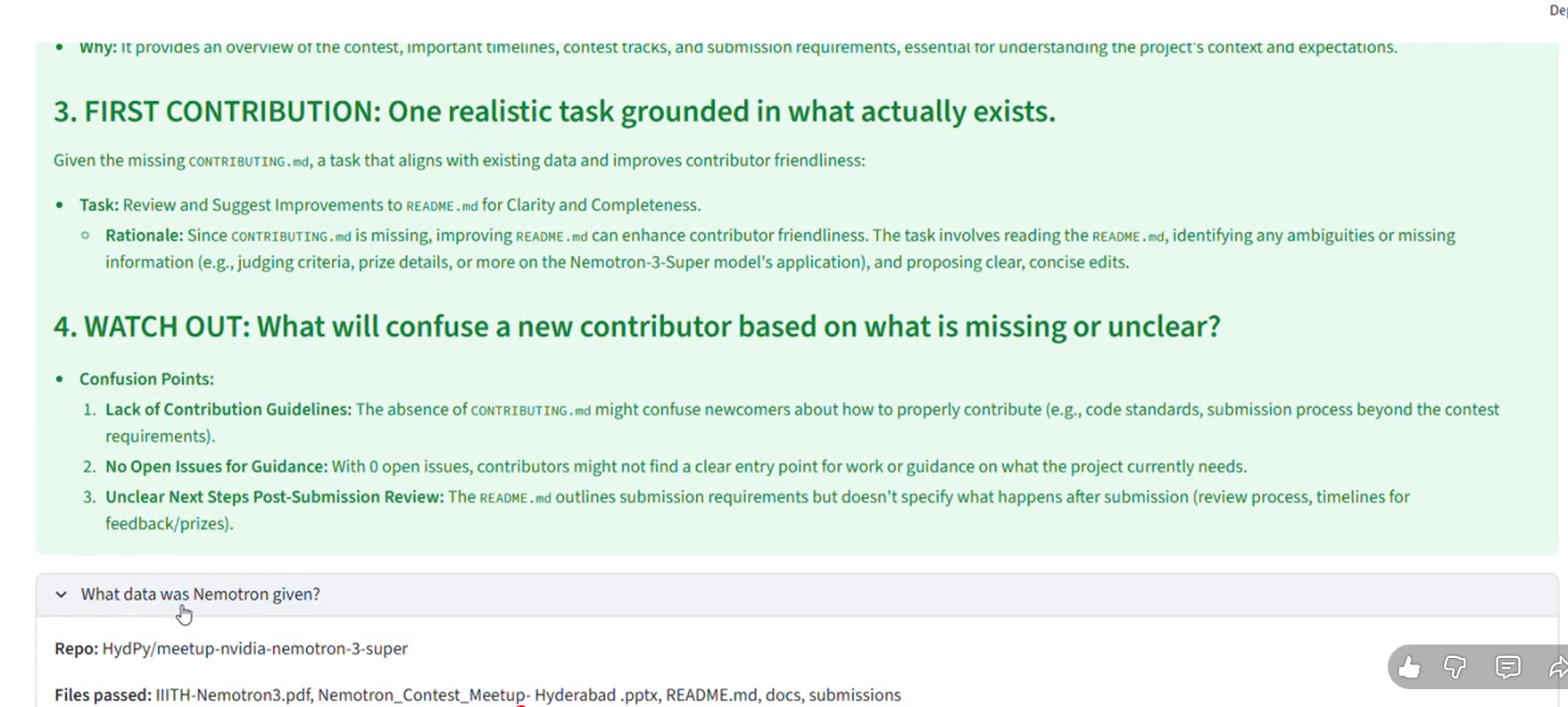
- AI Contributor Mentor that provides repository-specific guidance using NVIDIA Nemotron reasoning.
- Contribution Opportunity Analysis that identifies suitable issues and explains estimated difficulty levels.
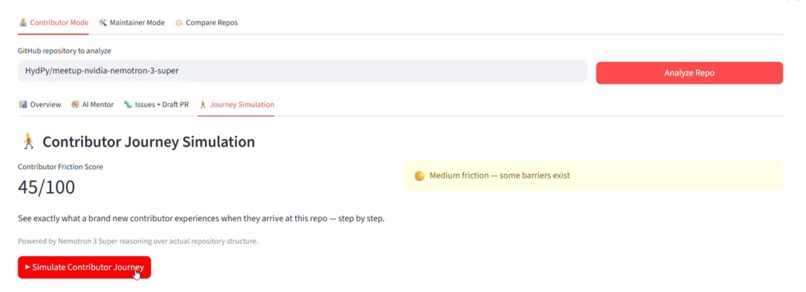
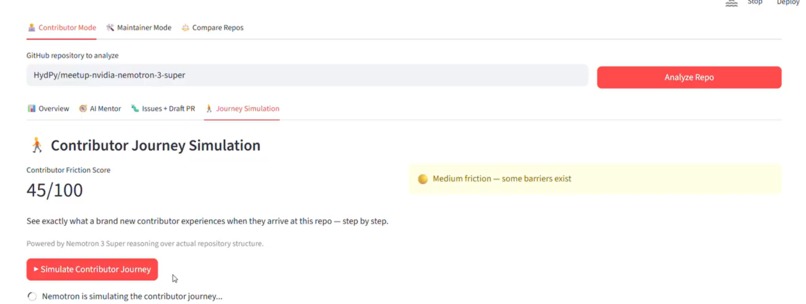
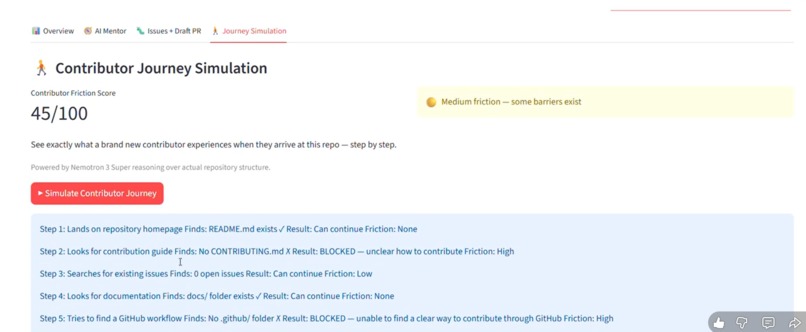
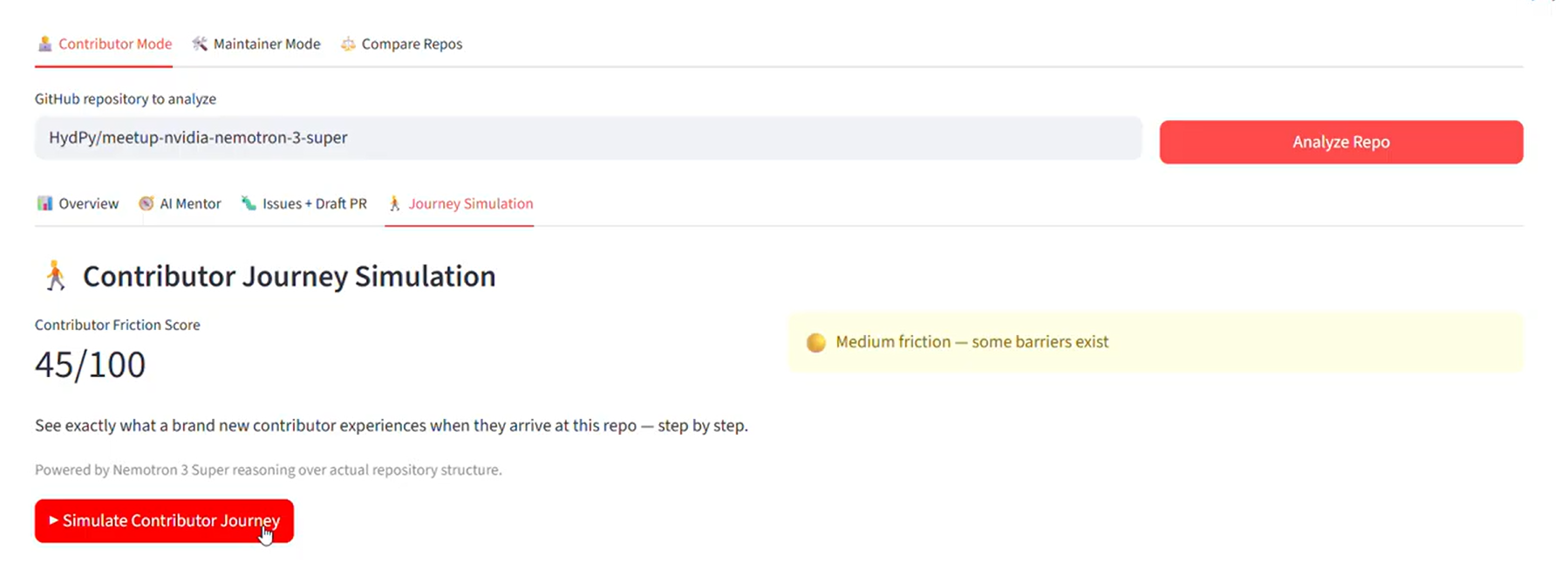
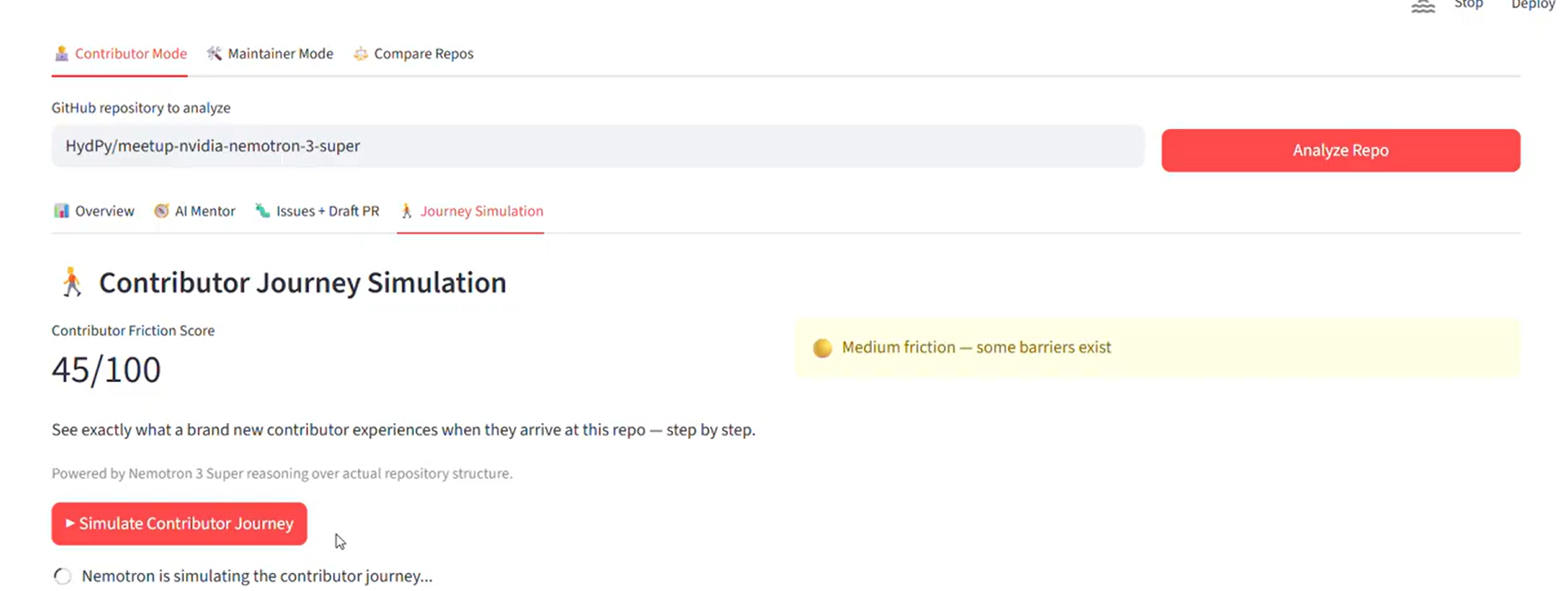
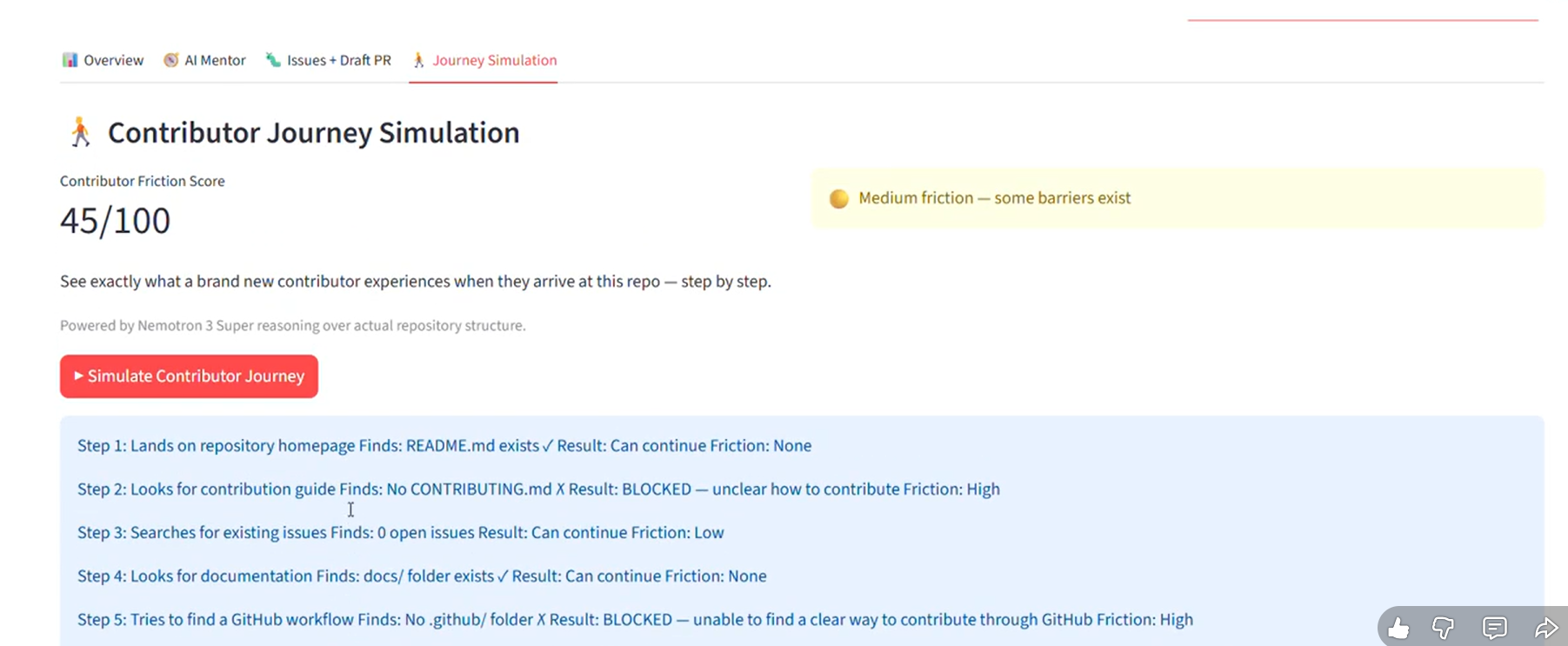
- Contributor Journey Simulation that evaluates onboarding friction and highlights obstacles faced by new contributors.
- Maintainer Health Reports that surface documentation gaps, responsiveness metrics, and improvement opportunities.
- Repository Comparison that helps users evaluate multiple repositories side by side.
The platform helps both contributors and maintainers better understand repository health, accessibility, and collaboration readiness.
How we built it
ContribLens was built using:
- Python
- Streamlit
- GitHub REST APIs
- NVIDIA Nemotron
- LangChain
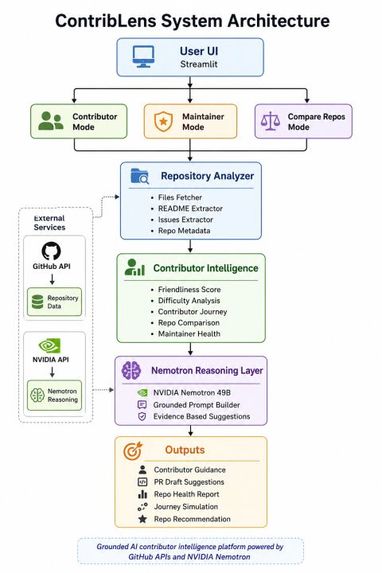
The system first retrieves repository metadata, README content, issues, labels, contributor information, and activity metrics from GitHub APIs.
A repository analysis layer processes this data and generates engineered features such as documentation quality, maintainer responsiveness, issue accessibility, and contributor friendliness indicators.
These features are combined using heuristic scoring methods to produce explainable repository metrics.
The processed repository evidence is then passed into NVIDIA Nemotron through grounded prompts. Instead of relying on general knowledge, the model reasons over actual repository data to generate contributor guidance, onboarding recommendations, and repository assessments.
The final results are presented through an interactive Streamlit interface.
Challenges we ran into
One of the biggest challenges was grounding AI responses in repository evidence rather than allowing the model to generate generic recommendations.
Repositories vary significantly in structure, documentation quality, issue organization, and contributor workflows. Designing prompts that consistently incorporated repository context while maintaining useful responses required multiple iterations.
Another challenge was converting raw GitHub data into meaningful contributor intelligence. Metrics such as friendliness, onboarding difficulty, and maintainer health are not directly available through APIs and required careful feature engineering and scoring logic.
Balancing explainability with AI-generated insights was also an important design consideration throughout development.
Accomplishments that we're proud of
- Successfully built an end-to-end contributor intelligence platform in a short development cycle.
- Created a grounded AI workflow that uses repository evidence rather than generic LLM responses.
- Developed explainable contributor friendliness and maintainer health scoring systems.
- Implemented contributor journey simulation to identify onboarding friction points.
- Integrated NVIDIA Nemotron reasoning with repository analytics to generate actionable contributor guidance.
- Delivered an interactive experience that supports contributors, maintainers, and repository comparison workflows.
What we learned
Building ContribLens provided valuable insights into open-source contributor experience and practical AI system design.
We learned that repository analytics alone are often insufficient for helping contributors make decisions. Combining structured repository data with large language model reasoning creates a much richer user experience.
We also gained experience in:
- Grounded AI design
- Prompt engineering
- Feature engineering
- Heuristic scoring systems
- GitHub ecosystem analytics
- Retrieval-augmented reasoning workflows
Most importantly, we learned that effective AI systems require high-quality context and evidence, not just powerful models.
What's next for ContribLens
Future improvements include:
- Personalized repository recommendations based on contributor skill level and interests.
- Pull request drafting assistance and contribution planning.
- Deeper codebase understanding using repository embeddings and semantic search.
- Historical contributor journey analytics.
- Multi-repository ecosystem analysis.
- GitLab support alongside GitHub repositories.
- Advanced maintainer insights and community health monitoring.
- Team onboarding recommendations for organizations adopting open-source projects.
Our long-term vision is to make open-source contribution more accessible, transparent, and welcoming for developers worldwide.

Log in or sign up for Devpost to join the conversation.