-
-
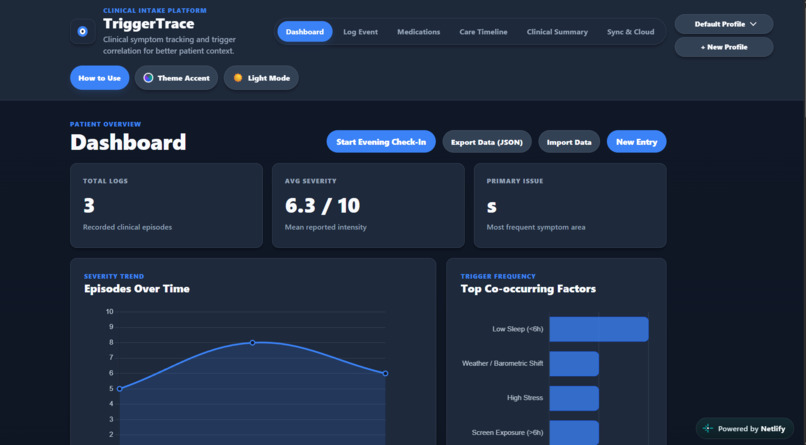
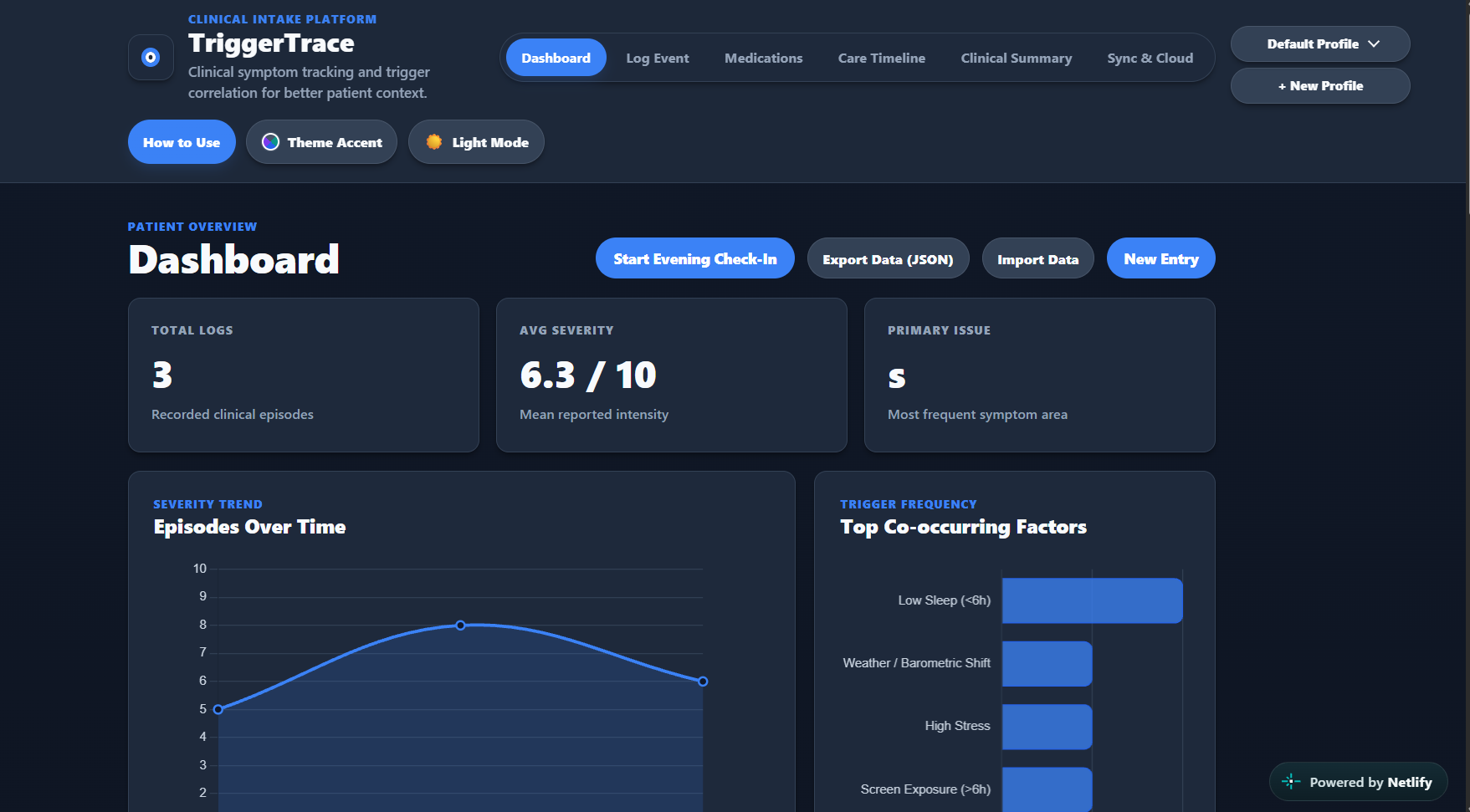
Dashboard
-
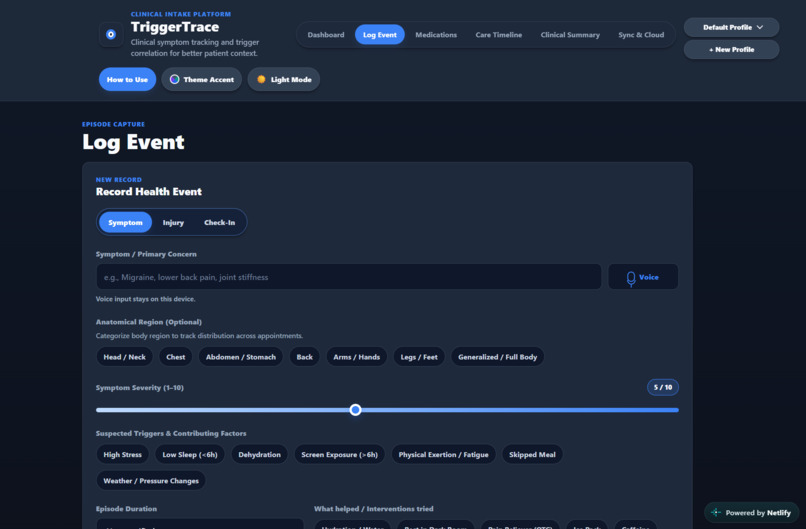
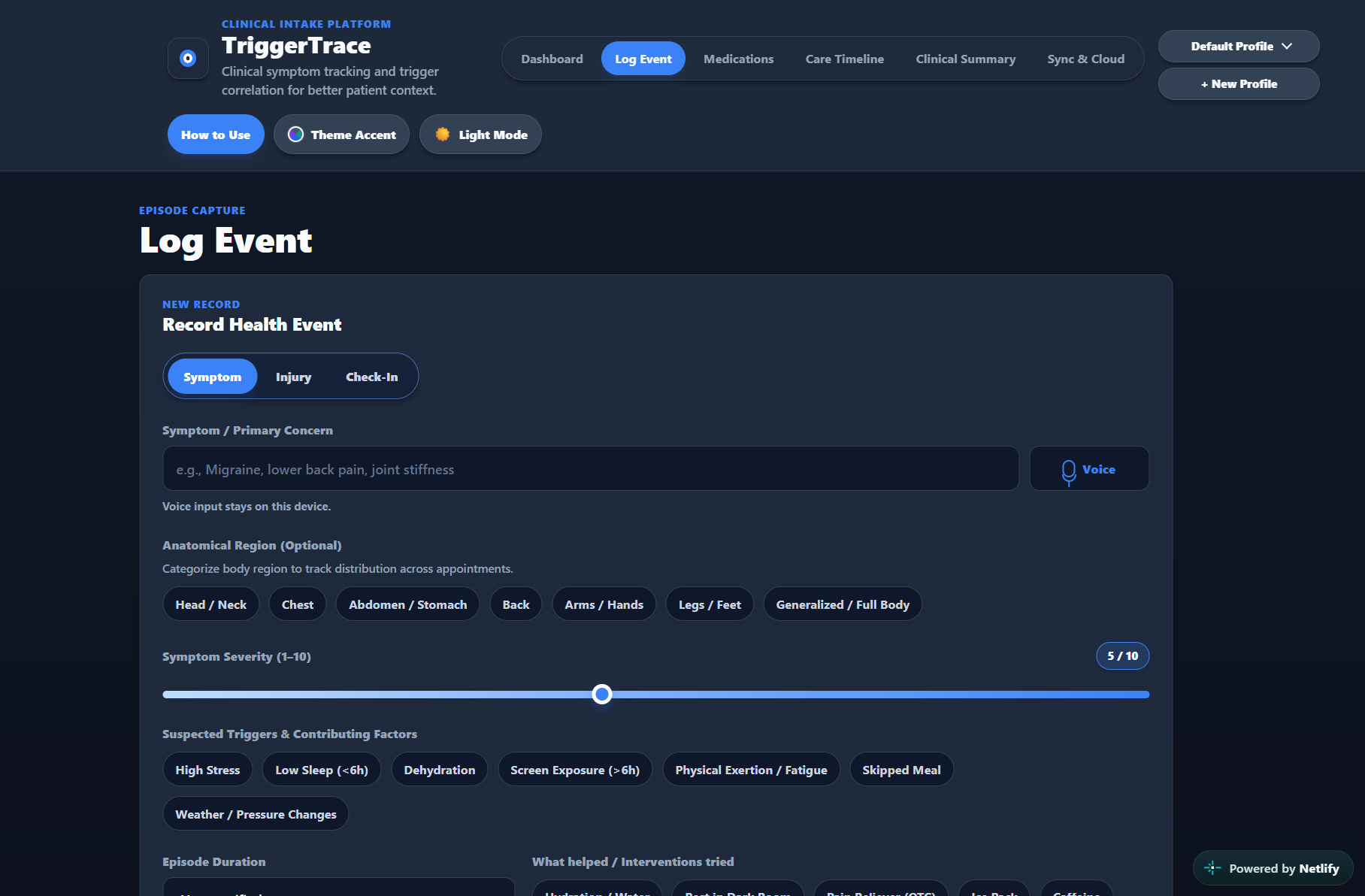
Log event tab
-
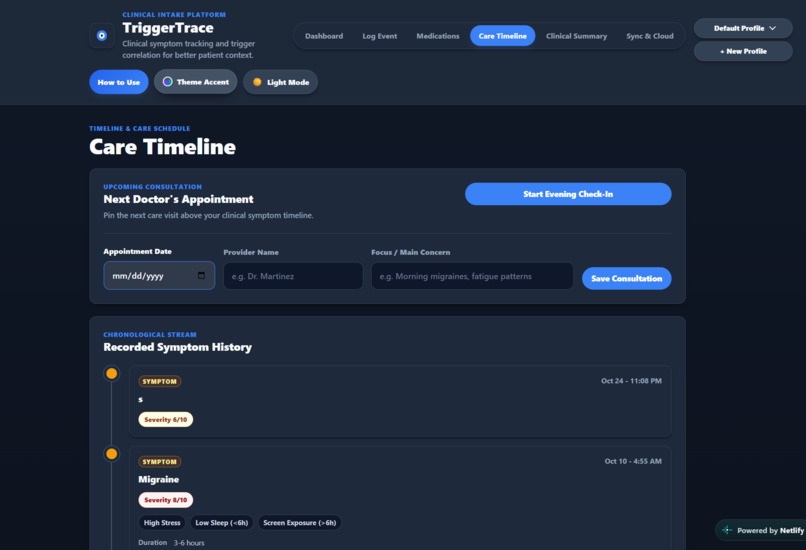
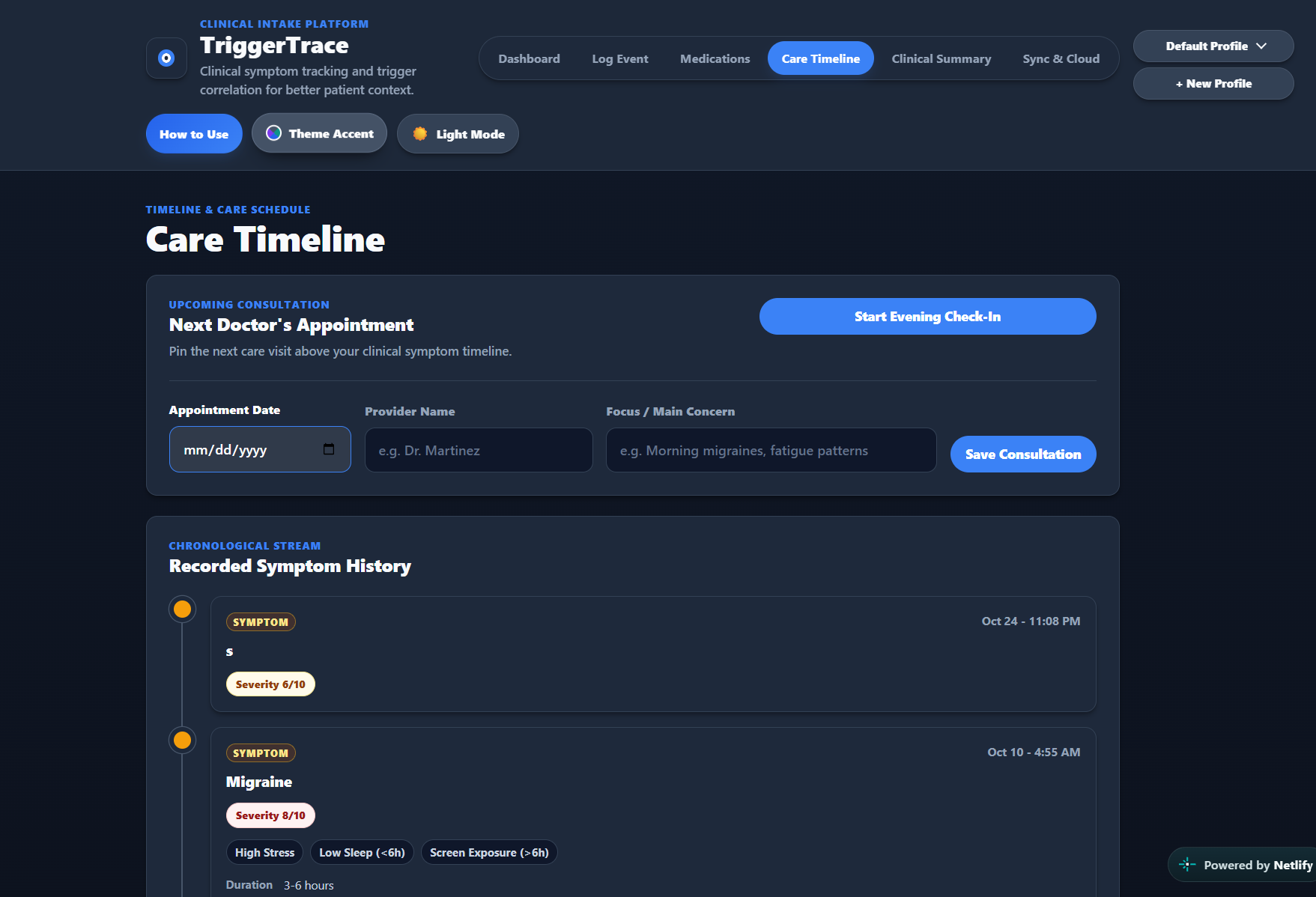
Care timeline tab
-
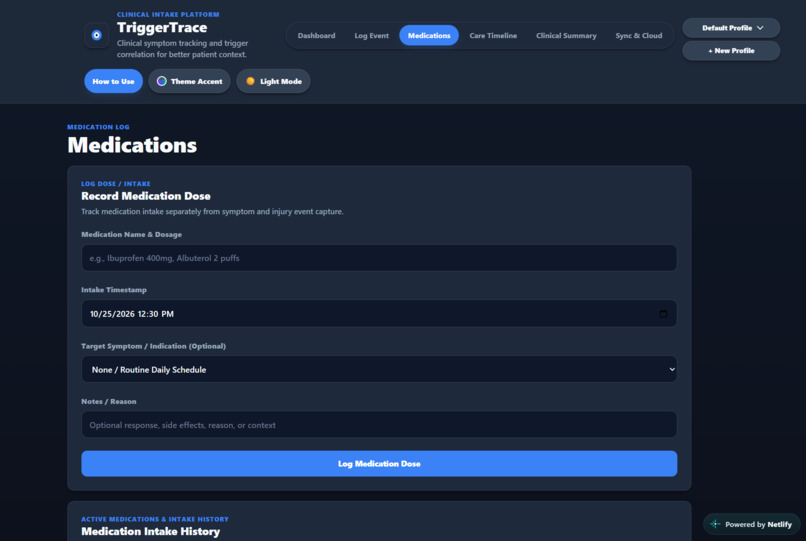
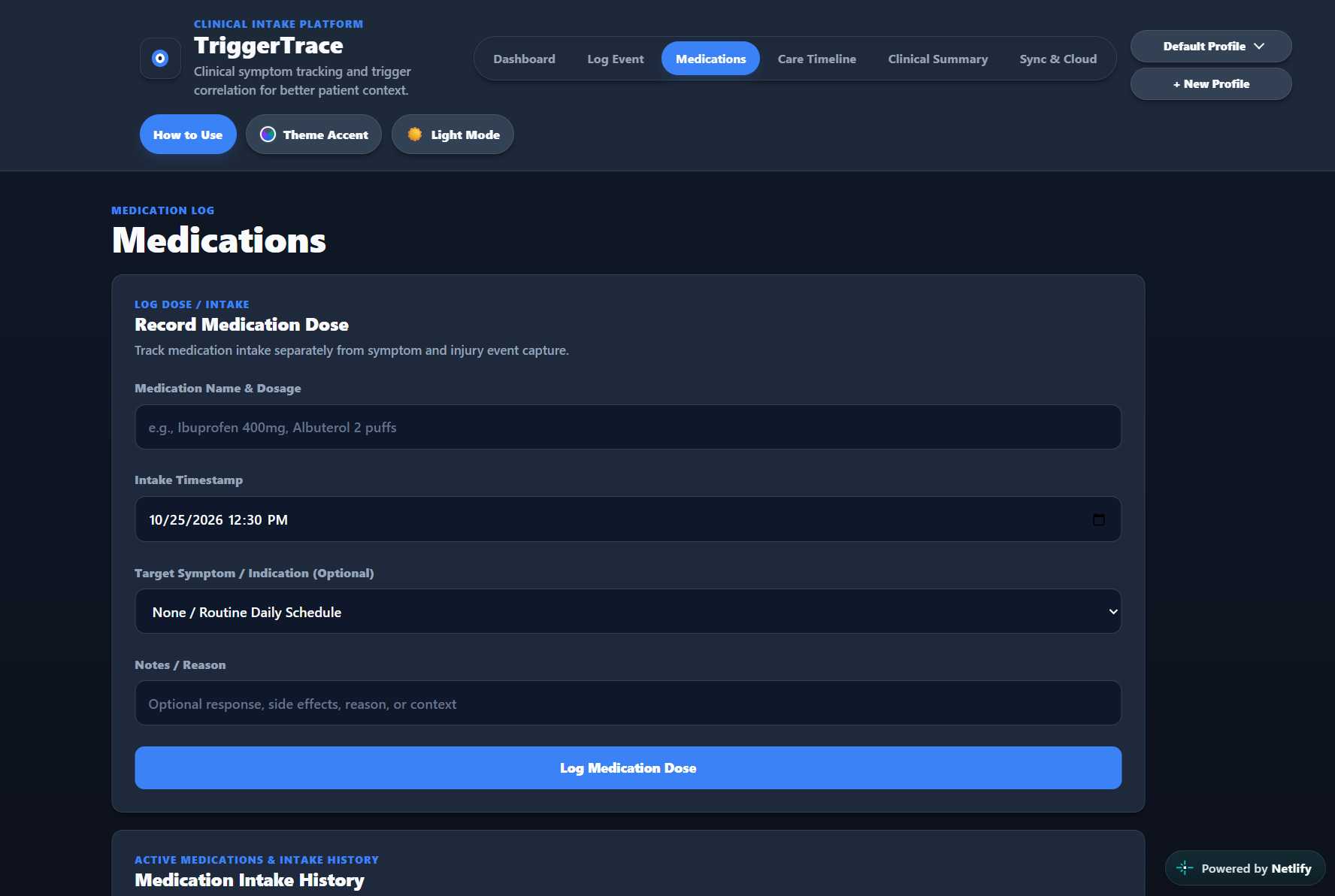
Medications tab
-
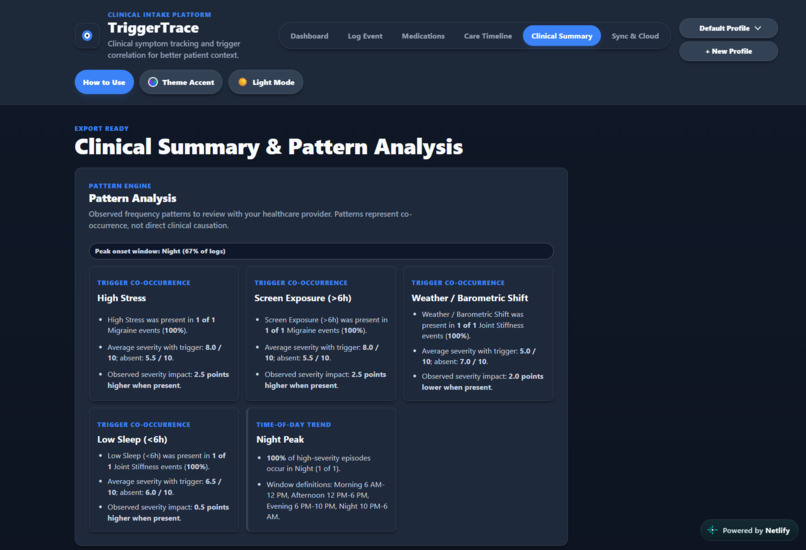
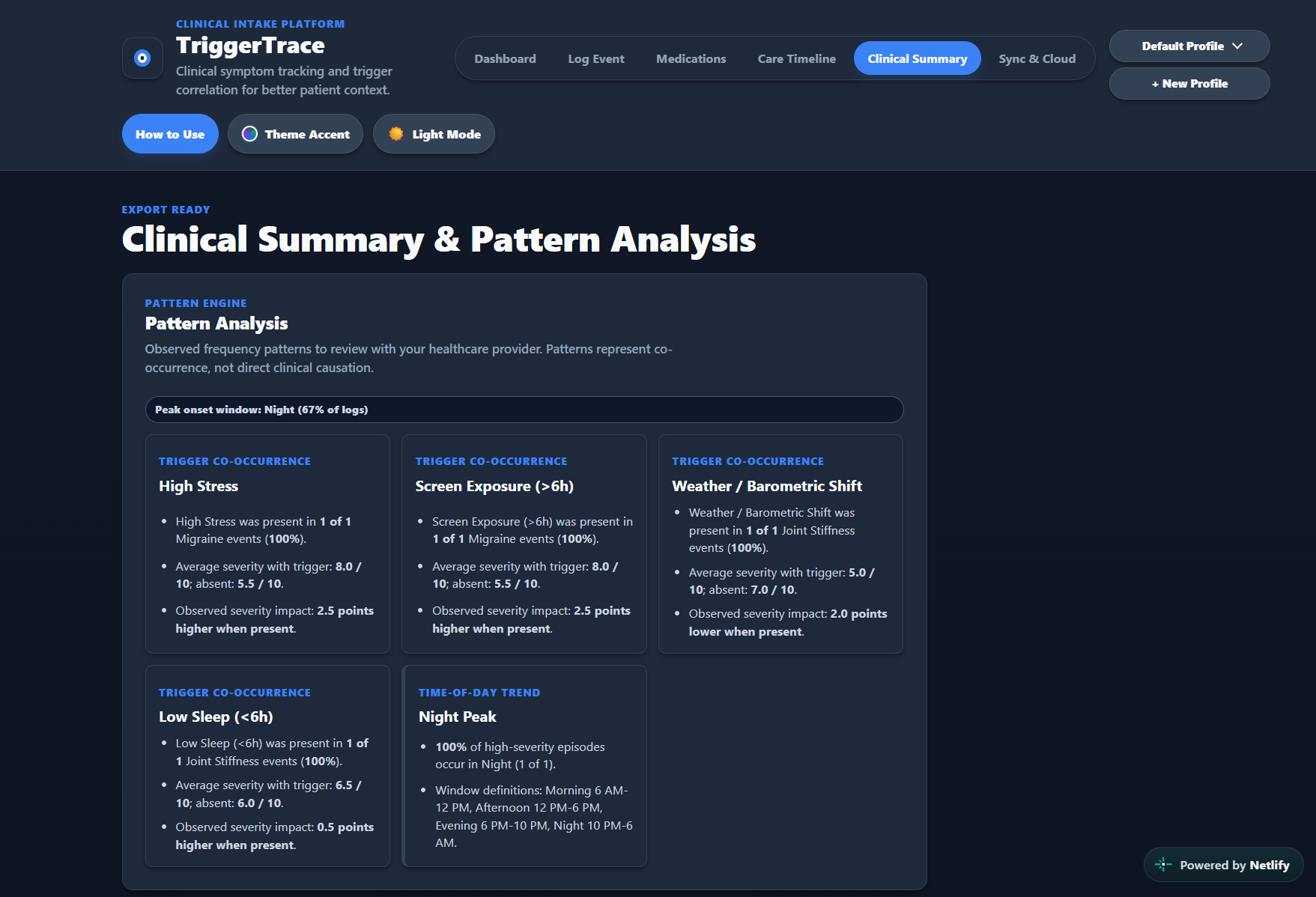
Clinical summary tab
-
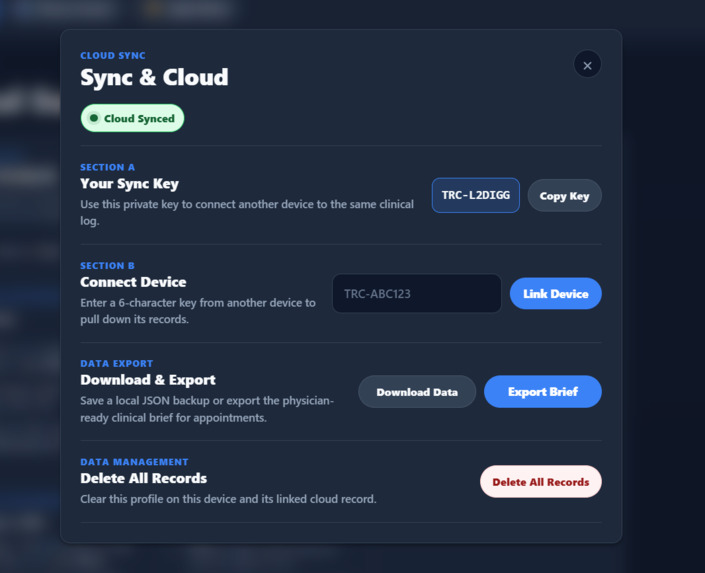
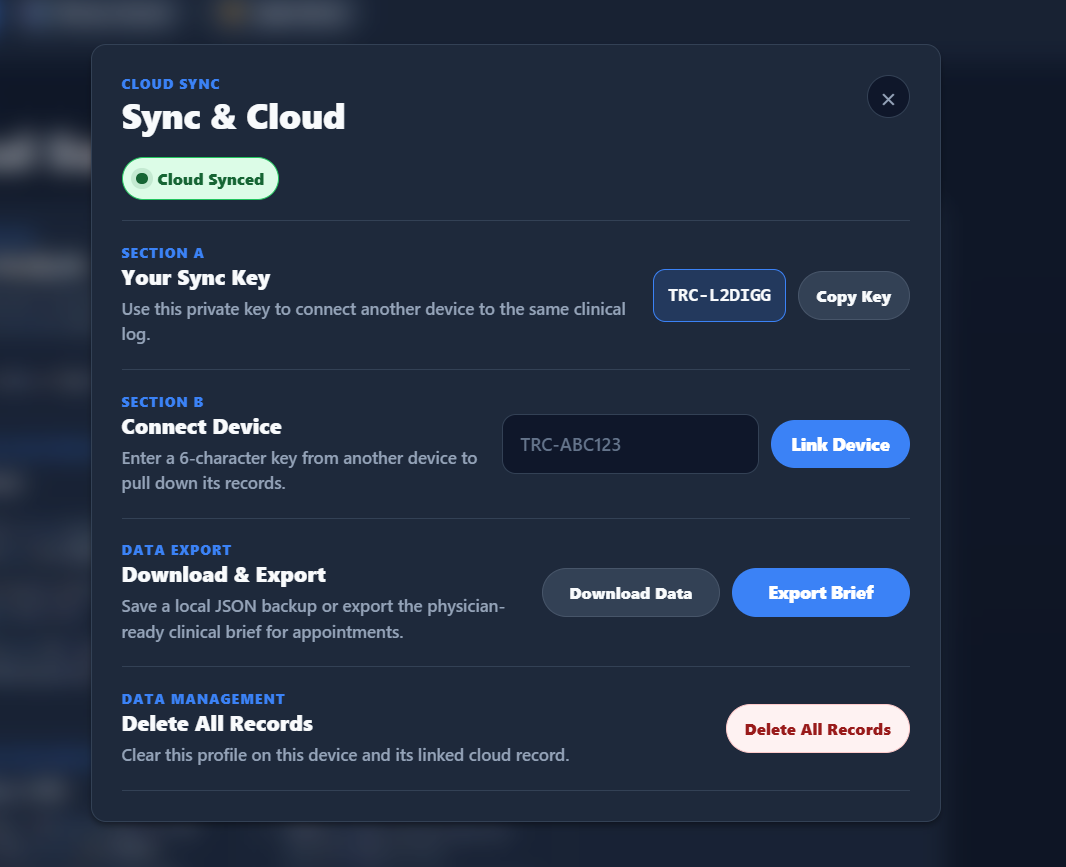
Sync and Cloud tab
Inspiration
Watching my grandparents manage chronic health issues and frequent doctor visits made me realize how flawed the healthcare communication loop can be. During brief clinic appointments, it was nearly impossible for them to accurately recall exact timelines, subtle symptom patterns, or specific environmental triggers from weeks earlier. They often felt rushed, and doctors were forced to make decisions based on incomplete memories rather than clear data. Seeing their frustration inspired me to build TriggerTrace—a simple, accessible tool designed to help patients effortlessly capture episodes in real time and give healthcare providers the structured data they need to make accurate diagnoses.
What it does
TriggerTrace is an accessible healthcare web application designed to bridge the communication gap between patients and providers:
- Interactive Intake & Episode Logging:** Allows users to log symptoms, pain scales (1–10), suspected triggers, environment factors, and duration in seconds.
- Voice-to-Text Input:** Leverages the Web Speech API so patients experiencing acute fatigue or limited dexterity can log entries completely hands-free.
- Persistent Storage & Data Privacy:** Stores user health metrics securely in Firebase Firestore, keeping records structured, timestamped, and segmented by user.
- Clinical Summary Generator & Export:** Automatically analyzes logged episodes over custom timeframes to identify patterns and generates a downloadable, structured summary (JSON/Print-ready format) tailored for doctor consultations. ## How we built it Frontend: Built with vanilla HTML5, modern CSS3 (responsive grid/flexbox architecture), and modular ES6 JavaScript. Backend & Database: Integrated with Firebase/Firestore for real-time data persistence, authentication, and structured document storage. APIs & Web Technologies: Utilized the Web Speech API (SpeechRecognition) for client-side voice transcription and native DOM APIs for instant clinical report generation without external server overhead. ## Challenges we ran into State Management and Sanitization: Managing dynamic entry lists alongside asynchronous Firestore calls required strict client-side validation to ensure invalid or empty records were never pushed to the database.
Speech Recognition Reliability: Handling ambient noise and unsupported browser states required fallback logic and clear visual status indicators so users always knew if their microphone was actively listening.
Designing for Clinical Usability: Finding the balance between an easy-to-use patient interface and a rigorous format that medical providers can parse in under 30 seconds.
Accomplishments that we're proud of
Designing a completely functional, zero-latency client-side voice input workflow that enhances accessibility for injured or fatigued patients.
Building a full-stack architecture that requires zero backend maintenance while maintaining high performance.
Delivering a clean, production-grade tool that solves a genuine healthcare issue.
What we learned
Deepened hands-on experience with Firestore asynchronous CRUD operations and security rules.
Learned how to effectively implement browser-native Web APIs for assistive healthcare workflows.
Gained practical insight into health-tech user experience: keeping interfaces calm, distraction-free, and accessible under stress.
What's next for TriggerTrace
Implementing automated correlation analysis using machine learning to detect patterns between environmental factors like diet, weather, sleep and symptom flare-ups.
Expanding export formats directly into standard medical record formats for hospital portal integration.

Log in or sign up for Devpost to join the conversation.