Inspiration
Campus infrastructure problems are usually reported through a fragmented mess of emails, web forms, and word-of-mouth. Students don't know if a critical issue (like a broken elevator or a water leak) has already been reported, and operational teams get overwhelmed with noisy, duplicated information. We realized the missing piece wasn't another work-order database, but a bridge—a transparent triage layer that cleans up the signal before it reaches facilities.
What it does
TribeSignal turns scattered community reports into structured, deduplicated, prioritized, and routable operational signals.
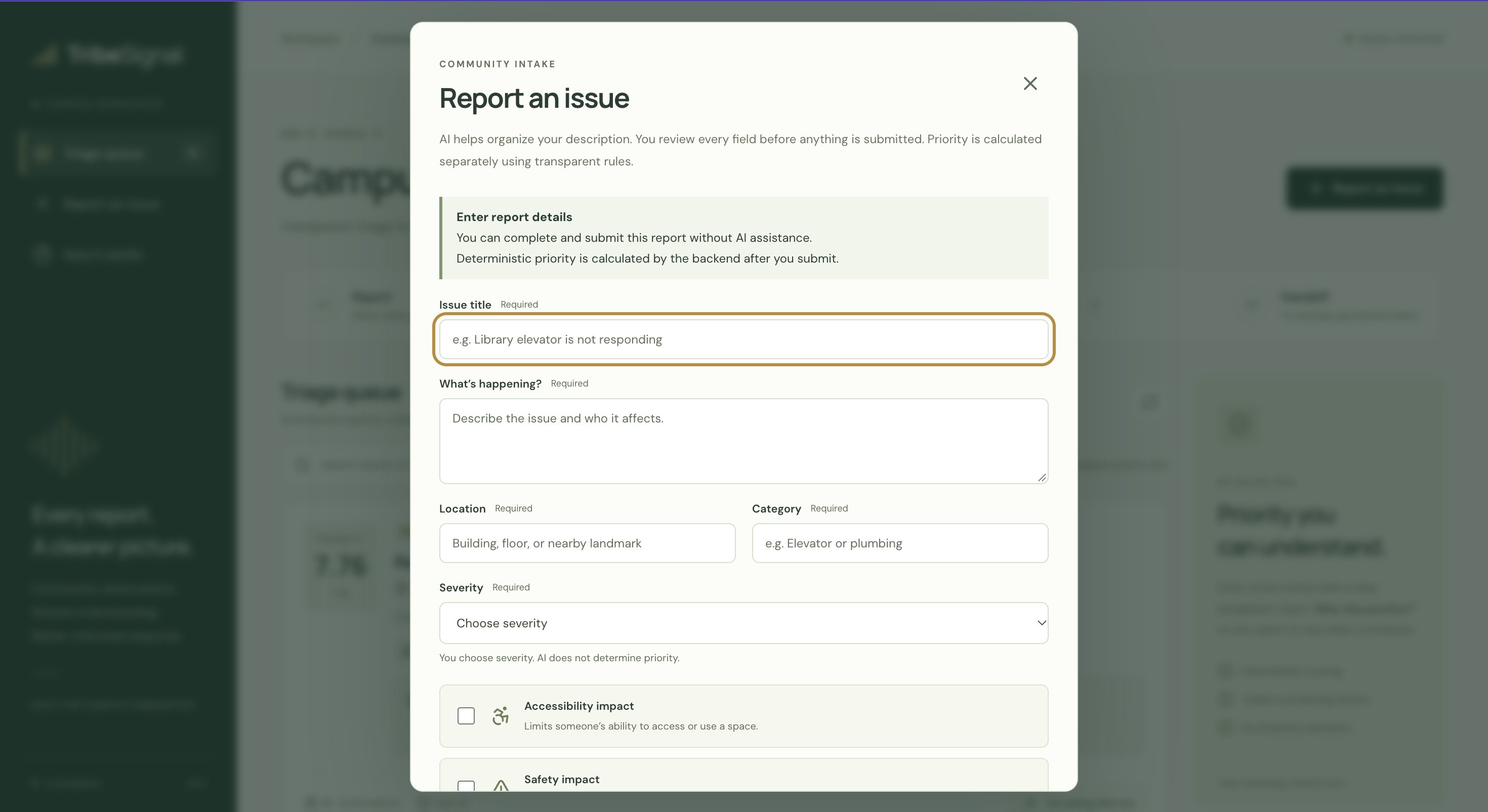
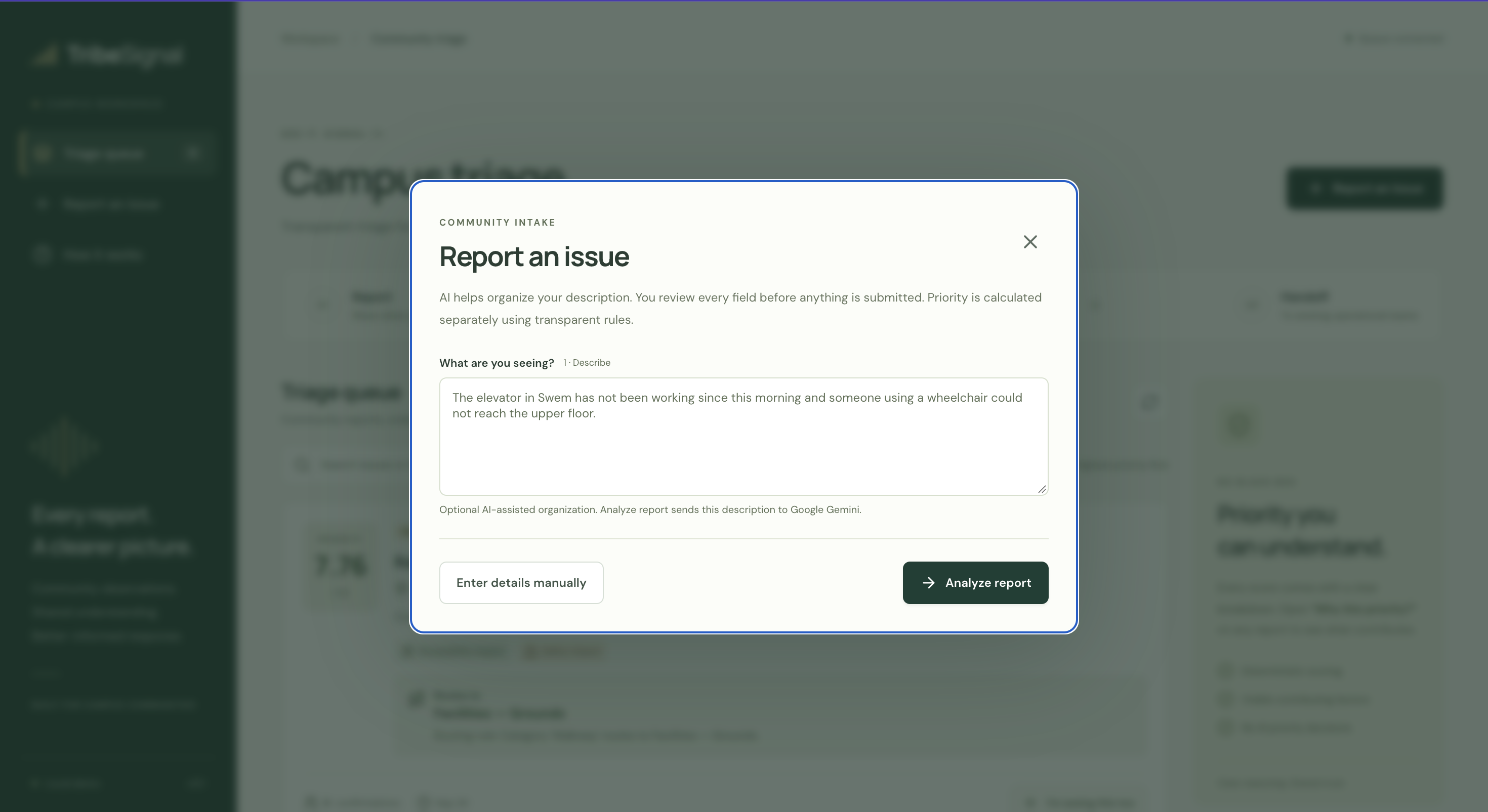
- Smart Intake: Users report issues in plain text. Our AI layer structures the report (extracting location, category, and safety flags) while keeping a human in the loop for final confirmation.
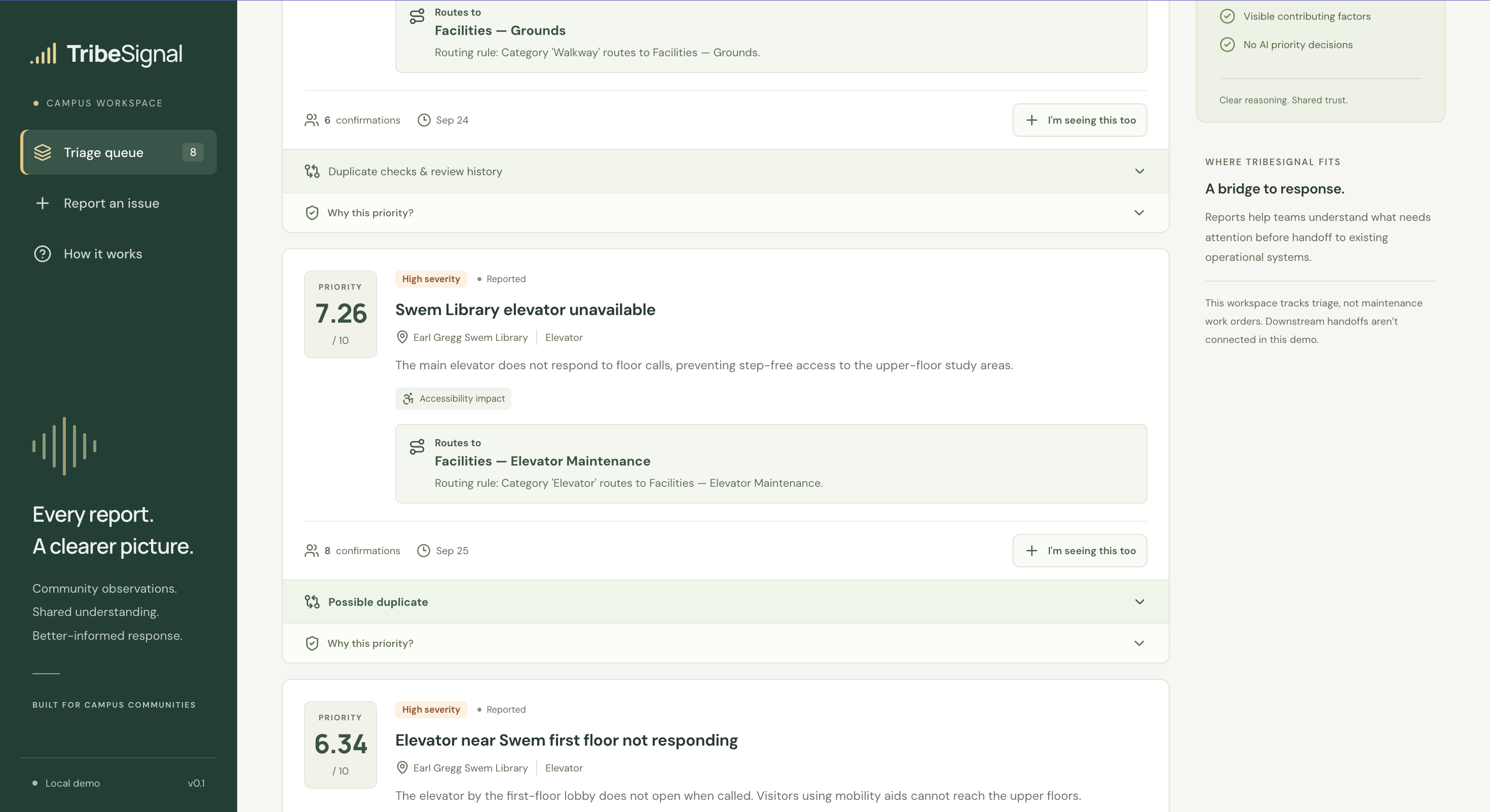
- Semantic Consolidation: It catches identical reports (e.g., "Swem elevator broken" vs. "Library lift is down") and consolidates them. Instead of spamming the queue, it increments a community confirmation count.
- Explainable Priority: We built a strict deterministic math engine that calculates priority based on severity, accessibility impact, safety, community confirmations (using a logarithmic curve), and time open.
- Transparent Routing: Every issue exposes a full breakdown of why it received its score and who it is routed to (e.g., Facilities - Electrical), providing total transparency to the community.
How we built it
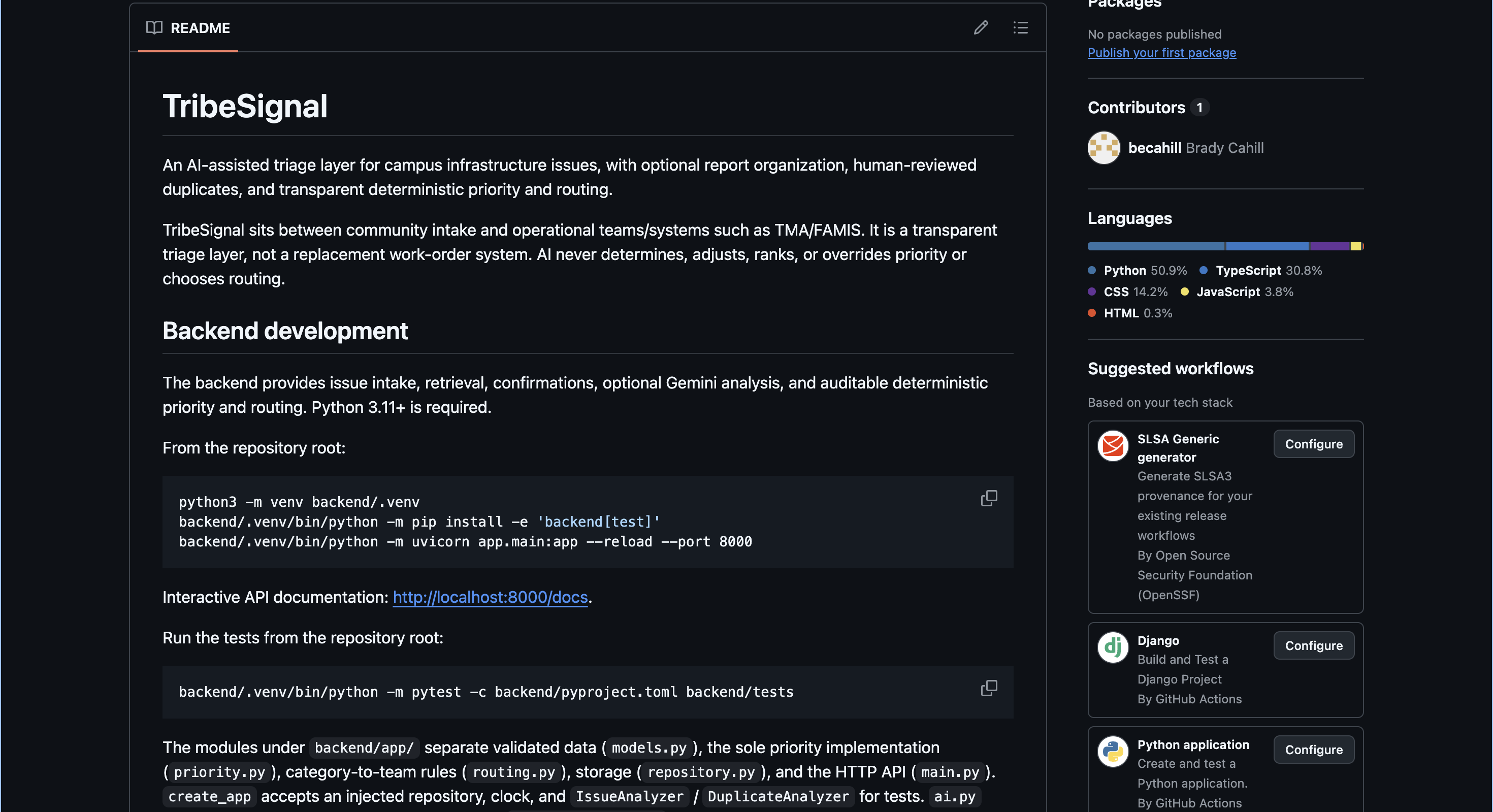
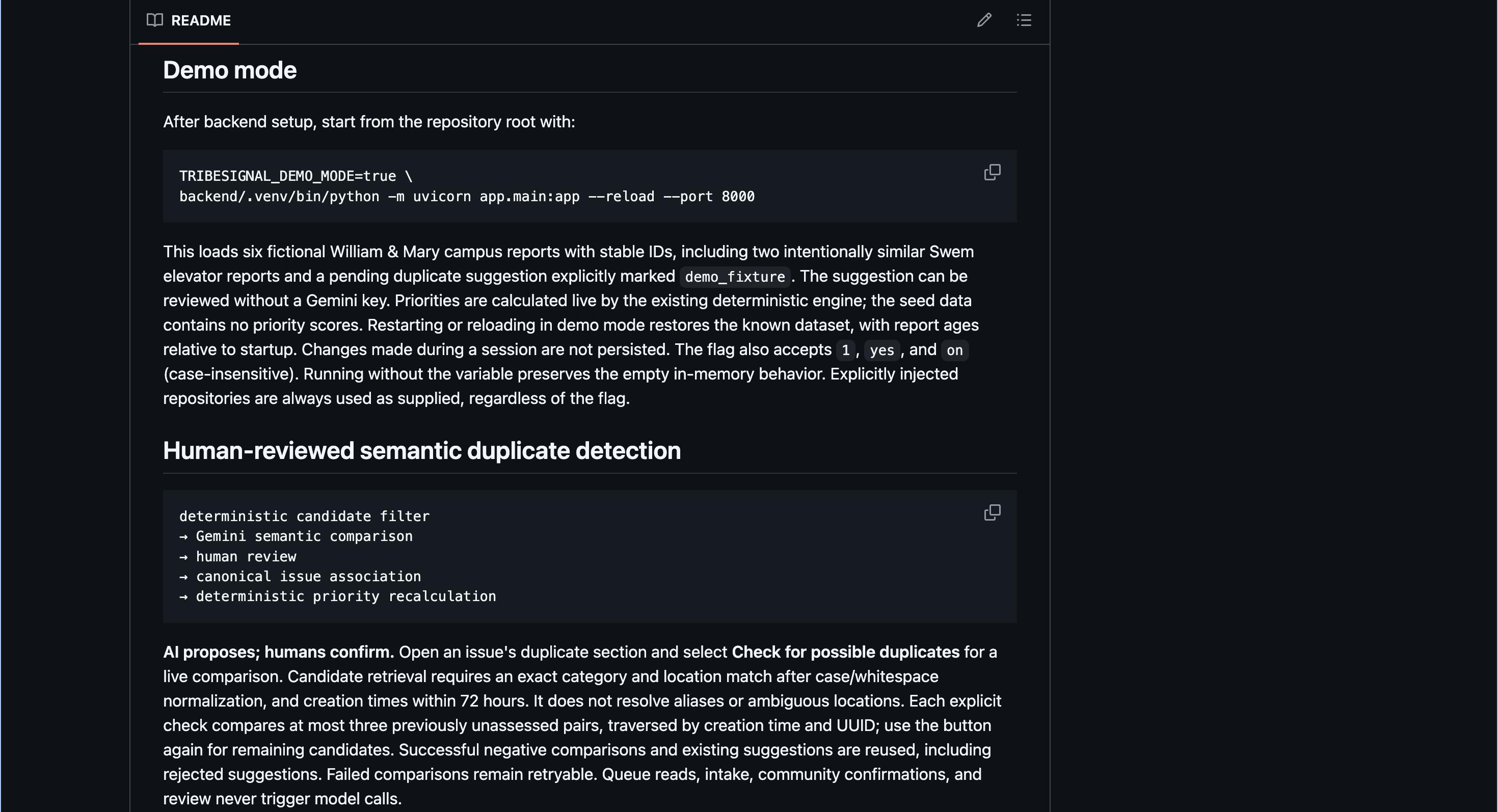
We built a vertical slice using a FastAPI (Python) backend and a React (TypeScript) frontend. To guarantee a flawless and reproducible live demo, we implemented an in-memory data store with a custom seed script that populates canonical campus scenarios on startup. We integrated LLM APIs specifically for natural language structuring and semantic duplicate detection.
Challenges we ran into
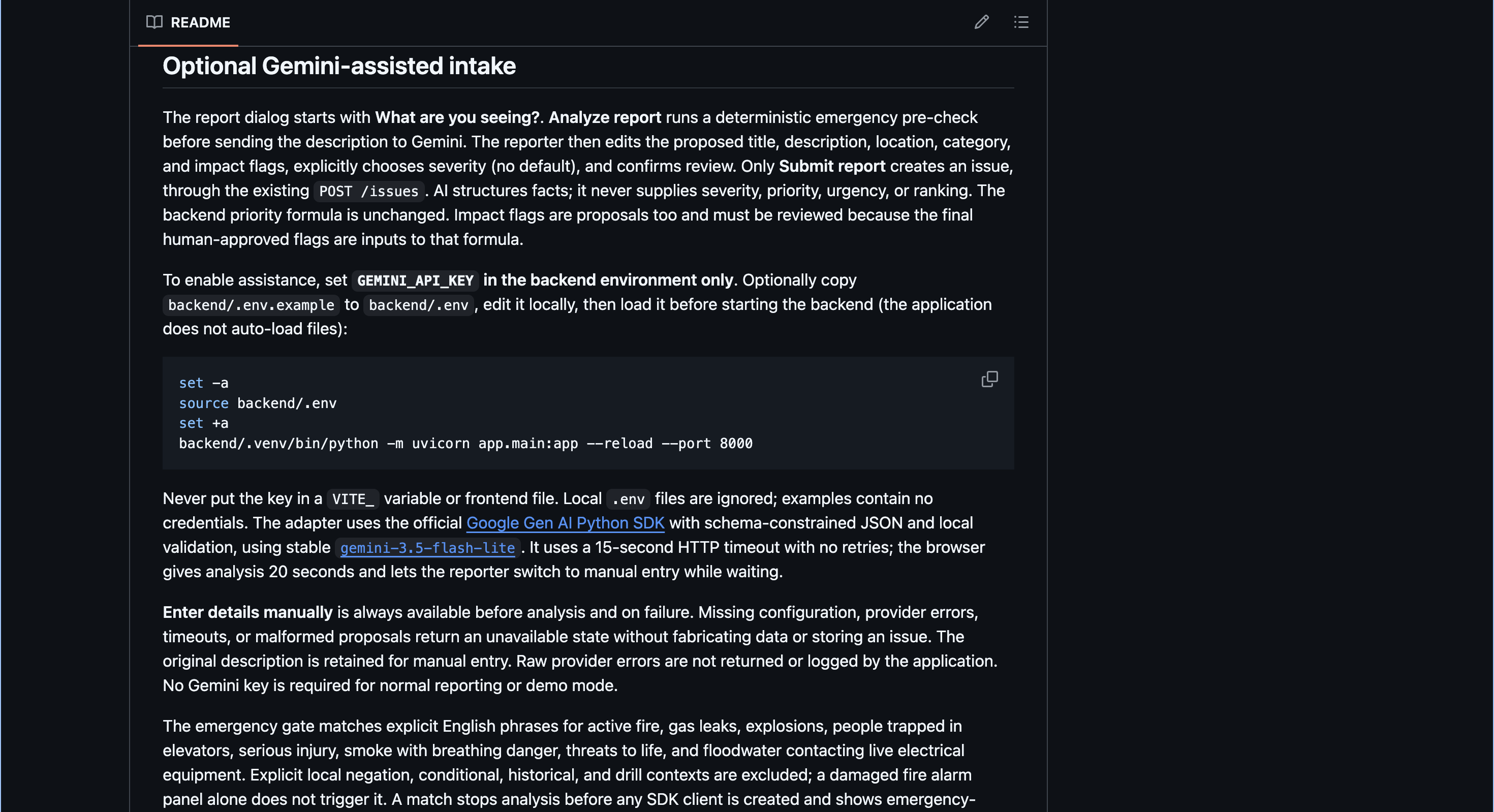
Our biggest architectural challenge was preventing the AI from overstepping. It is tempting to simply ask an LLM, "Score this emergency from 1 to 10," but that creates an un-auditable black box. We had to engineer strict emergency guardrails (catching phrases like "active fire" before the AI even touches the text) and design the system so the AI only proposes deduplications, requiring a human operator to confirm them.
Accomplishments that we're proud of
We are incredibly proud of our Responsible AI architecture. By strictly separating probabilistic AI tasks (language understanding and semantic matching) from consequential triage decisions (the deterministic priority math), we built a system that is transparent, auditable, and highly trustworthy.
What we learned
We learned that the most effective way to deploy AI in civic and community tech is to use it as an extraction assistant, never as the final decision-maker.
What's next for TribeSignal
Our next step would be integrating TribeSignal's outbound routing directly into existing downstream facilities software (like TMA or FAMIS) so it can serve as the ultimate, community-facing triage layer for university campuses.
Built With
- fastapi
- gemini
- python
- react
- typescript

Log in or sign up for Devpost to join the conversation.