-
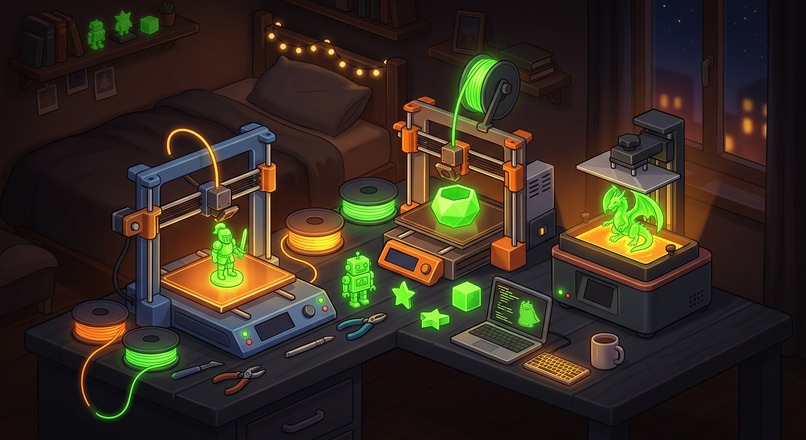
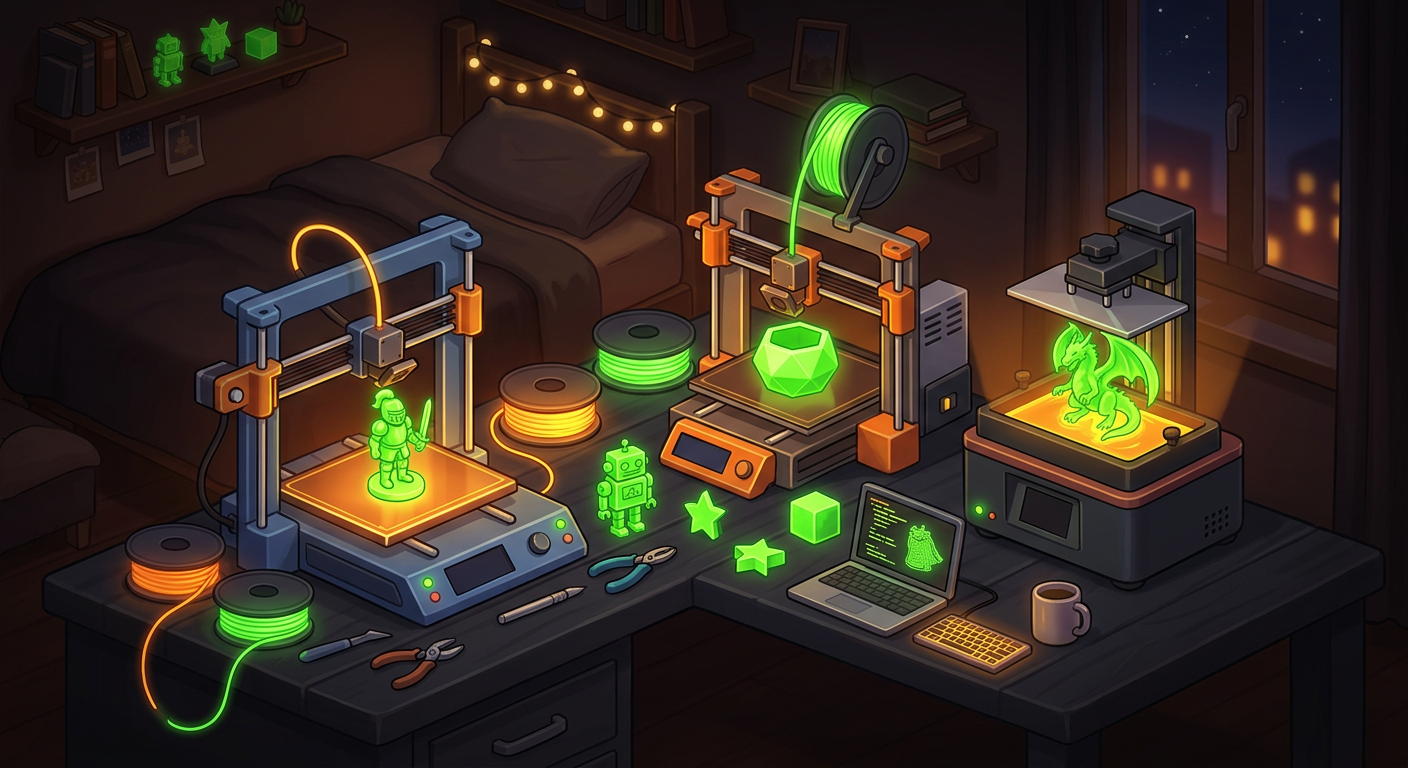
Key art - "Warm Workshop Neon": a cozy night workshop where the 3D prints glow as the heroes of every screen.
-
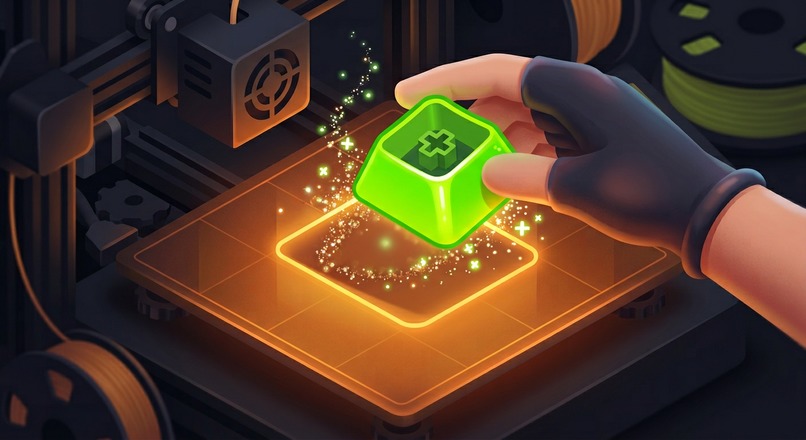
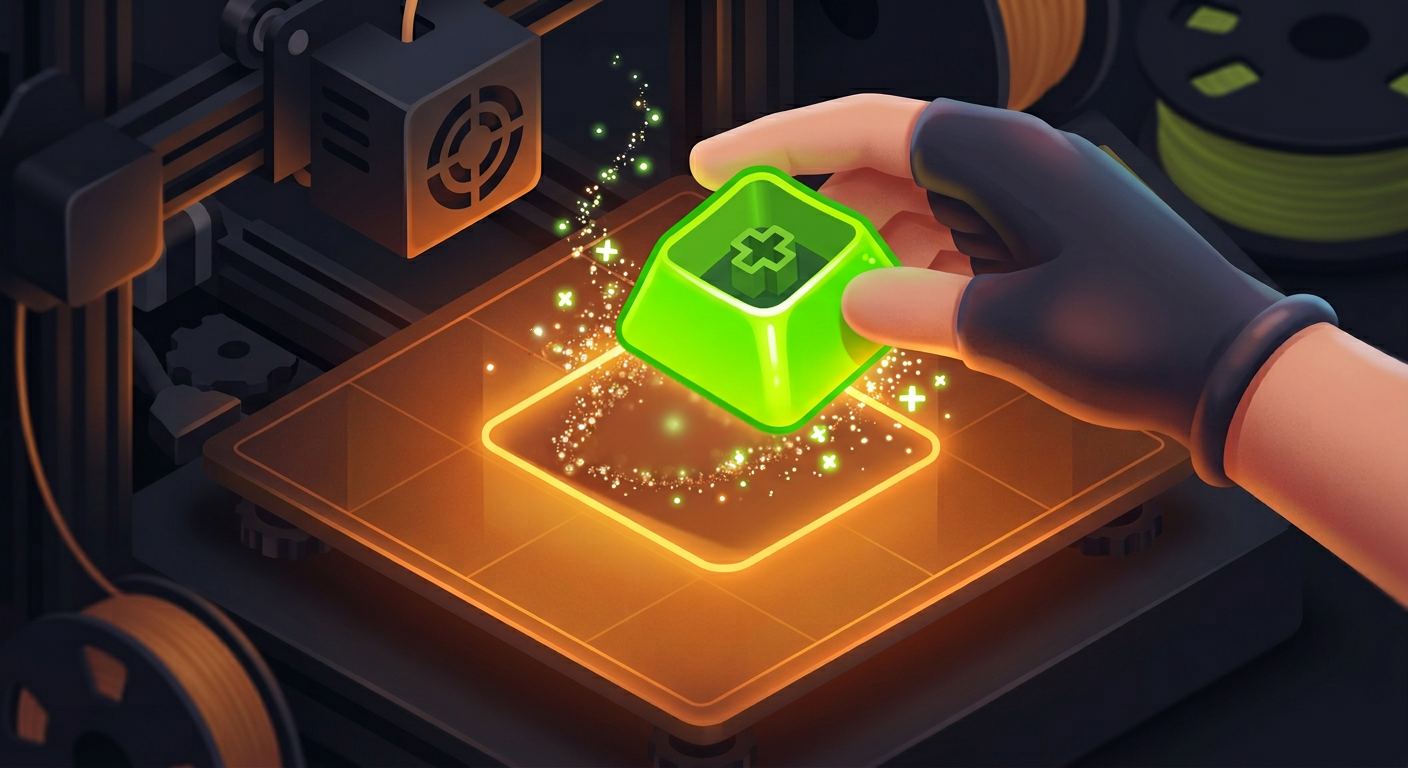
The signature “Fix-It Feel”: peel a finished print off the warm bed — the satisfying, ASMR-grade hero moment.
-
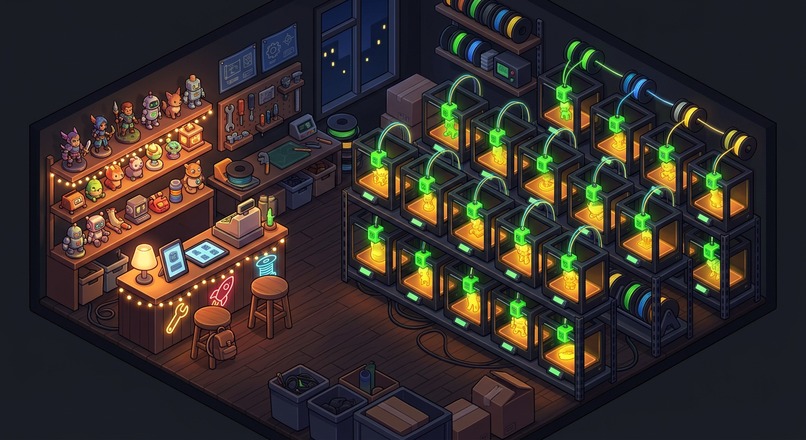
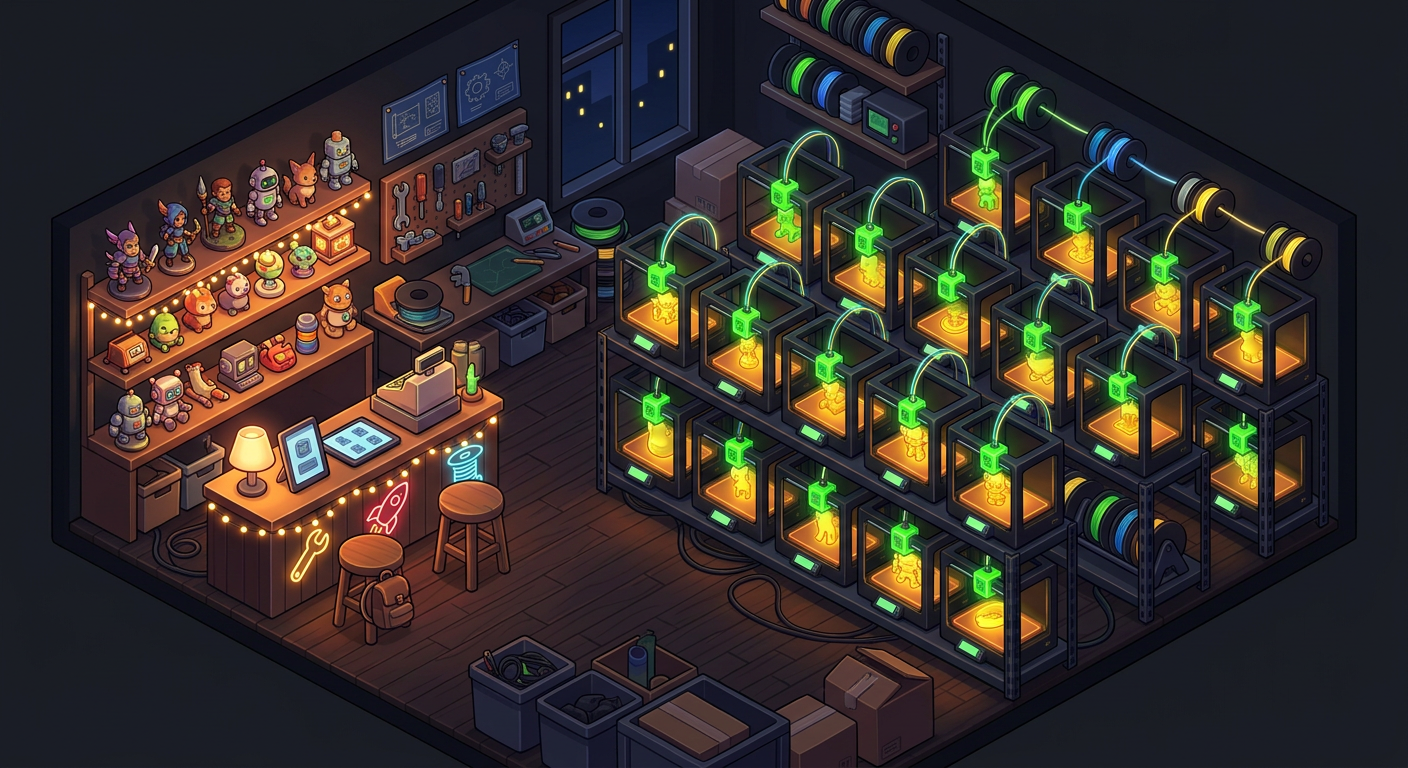
Visible growth: the endgame automated print farm and a decorated storefront friends can visit and shop in.
-
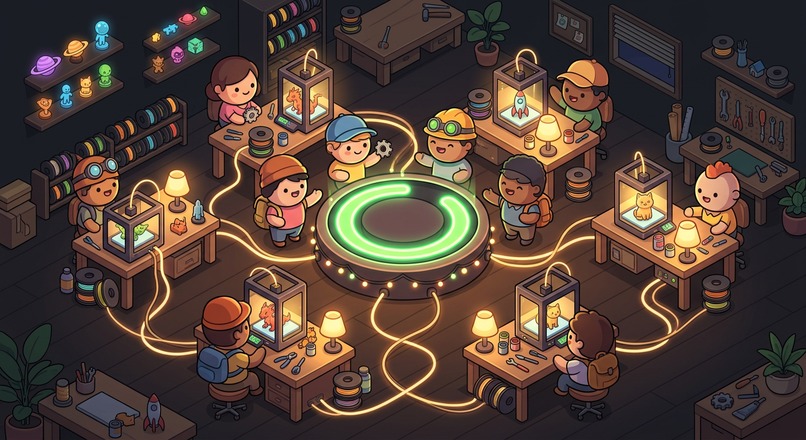
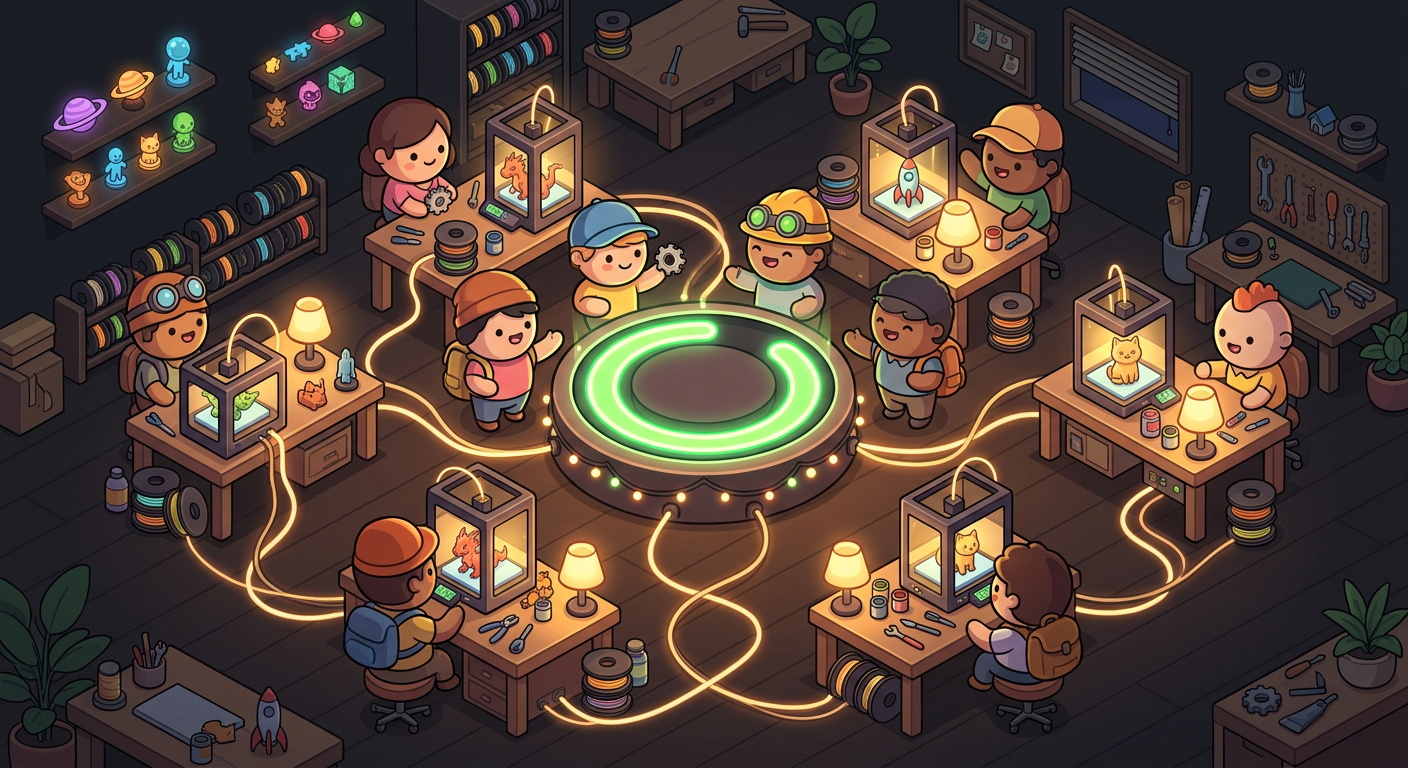
The Tribe: small farms pool their output toward a shared community goal - the cooperative hook that drives daily return.
Inspiration
I am one of those people who actually live this dream. I started with a single small 3D printer sitting on the floor of my garage; today I run three printers and I am planning to expand. That journey - one cheap machine to a real little farm - is the exact fantasy thousands of young adults chase right now, and it is the heart of this game. The hobby is also full of friction: failed prints, clogged nozzles, filament costs, long waits. PC Building Simulator proved that "managing nerdy hardware" can be deeply satisfying (94% positive), yet the 3D-printing tycoon lives almost entirely on desktop - nothing strong on mobile, nothing on Meta Horizon. As a maker genuinely going from 3D printing to the metaverse, and a game designer studying cyberpsychology, I wanted to turn that friction into calm, tactile joy: replace spreadsheets with the feeling of peeling a finished print off the bed.
What it does
Tribe: 3D Print Farm is a mobile-first simulation & management game. You grow a 3D-printing business from one cheap printer on a desk into an automated print farm. You manage a genuine economy - filament costs, print times, hardware failure rates - but every action is a sensory reward: swipe to peel finished prints, tap to clear nozzle clogs, pop bubble wrap to ship orders. You join a Tribe and pool your output toward shared weekly community goals, so a tiny solo farm still matters to a group. It is a fidget toy wrapped around a real tycoon, built for one-handed, 30-second sessions. To be clear, play is entirely digital: you never print real objects in-game and never earn real money - what becomes real are the bonds you build inside a Tribe and the hands-off, transferable understanding of design, mechanics, management and marketing the game quietly teaches.
How I designed it
A "Simple & Powerful" thumb-zone UI: visual states instead of menus (a glowing red nozzle, not a status number), no text tutorial, time-to-fun under ten seconds. The art direction - "Warm Workshop Neon," a dark, high-contrast palette where the prints themselves glow - serves both a coherent, ownable identity and mobile performance (low vertex counts and draw calls, locked 60 fps). For retention I leaned on what Meta's winning simulation worlds (Let Me Cook!) showed: community is the strongest hook, so the cooperative Tribe is a core pillar, not an add-on. Daily return is rewarded gently via a "Hot Bed" streak - a bonus for coming back, never a punishment.
Challenges I ran into
The hardest design problem was depth without stress. A real print farm involves filament burn rates, electricity overhead and failure probabilities - easy to make tedious. I solved it by hiding the spreadsheet under tactile interactions: the player feels the economy (a clog, a warped print) instead of reading it, while optimisers can still dig into the numbers. The second challenge was scope honesty for a short design window, which pushed me to define a tight MVP (single-player tactile loop) and defer multiplayer lobbies and advanced materials.
What I learned
That authenticity is a design asset: because I actually run this kind of business, the economy, the failure points and the progression arc are modelled on a real one - which makes the design specific instead of generic. I also confirmed that the genre is validated (PC Building Simulator) but wide open on mobile, tactile and cooperative dimensions.
What's next for Tribe: 3D Print Farm
A customisable retail storefront friends can visit, a light "design your own model" creative tool, and seasonal Tribe events tied to real maker culture. Longer term, Mixed Reality Passthrough would let players anchor their virtual farm onto their real desk - a natural step as Horizon's mobile and MR worlds converge, mirroring my own path from the garage floor to the metaverse.
And a special "possibility" easter egg - Screen-to-Shelf: any player who actually owns a printer can use an in-game turntable capture (a clean sprite-sheet turnaround for the 2D assets) and feed those reference frames to image-to-3D generators like Tripo, Meshy, Luma Genie, Rodin or Hunyuan3D, reconstruct a printable mesh, and pull a beloved object out of the game and into the real world - circulating real makes and their interpretations back through the global, interconnected community. Strictly optional, never monetised: a literal way the virtual farm can seed real shelves. The timing is the point: Meta already ships AI 3D generation inside Horizon (mesh and texture GenAI, AssetGen 2.0 from text and image, WorldGen), while the market is wiring image-to-3D straight to real printing (Meshy 6 now sends one-click, full-colour prints into MakerWorld/Bambu). Tribe is a natural place for Meta to unite the two booms it already invests in - AI and 3D printing - through on-demand printing or partnerships with image-to-3D and print brands.
Built with
Game design for Meta Horizon Worlds (mobile); 2D/2.5D isometric vector art; haptic + audio-driven UX; Meta Horizon social graph (the Tribe system). Full pre-production package: Game Design Document, Player Journey Map, Visual Concept Package, and Production Plan (attached).


Log in or sign up for Devpost to join the conversation.