Inspiration
The project was born from the realization that indigenous languages like Gondi, Kurukh, and Santali are digitally invisible. While mainstream languages dominate NLP, these tribal communities lack the tools to preserve their linguistic heritage. I wanted to move beyond passive archiving and create a platform where Ethnolinguistic Data Sovereignty is the priority—ensuring the community owns its data while the youth have a high-tech way to connect with their roots.
What it does
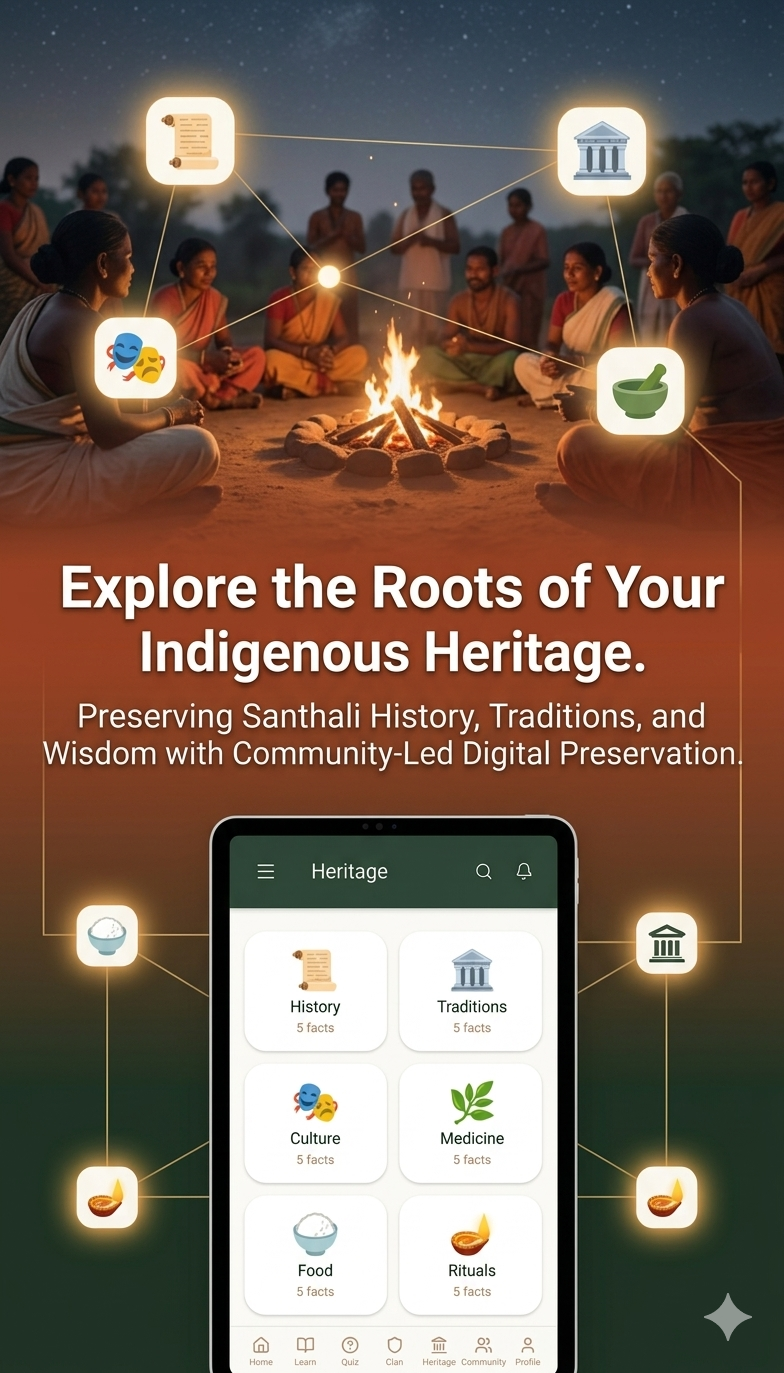
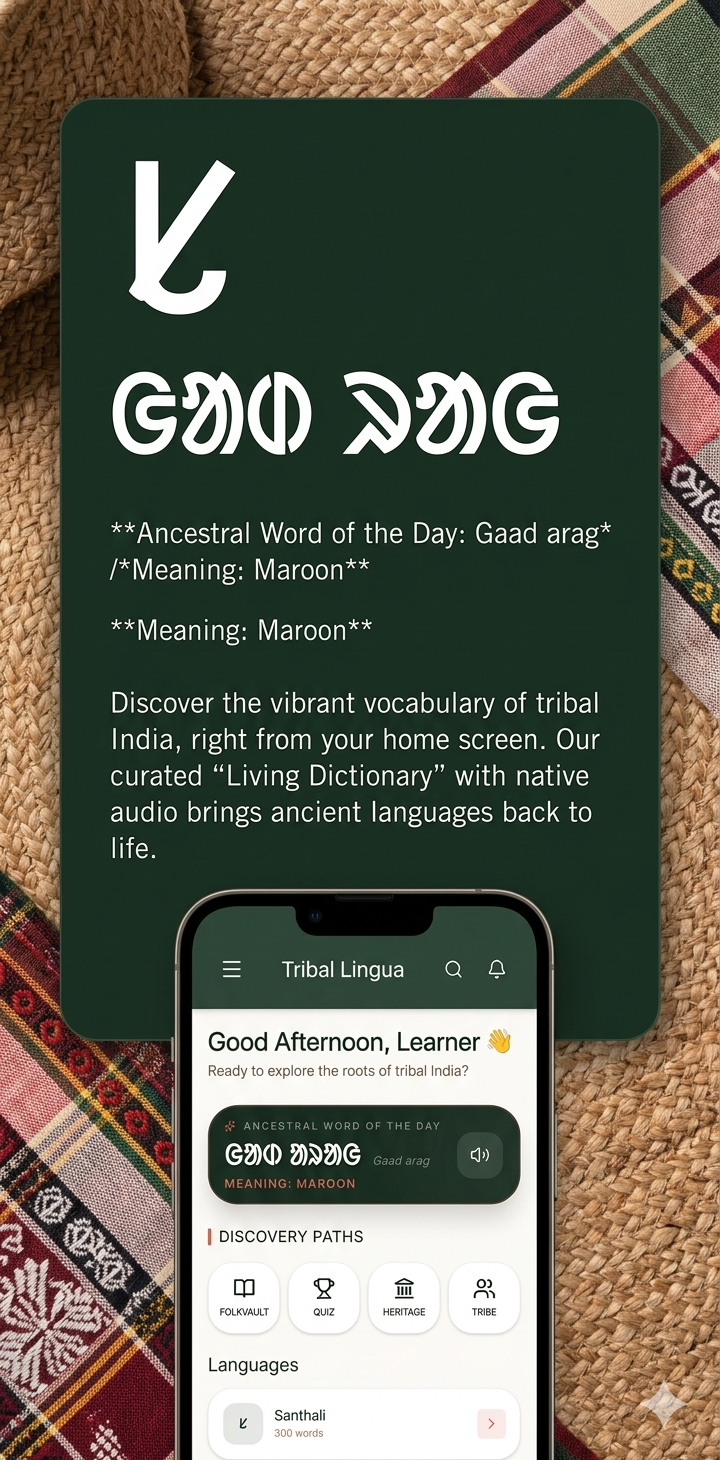
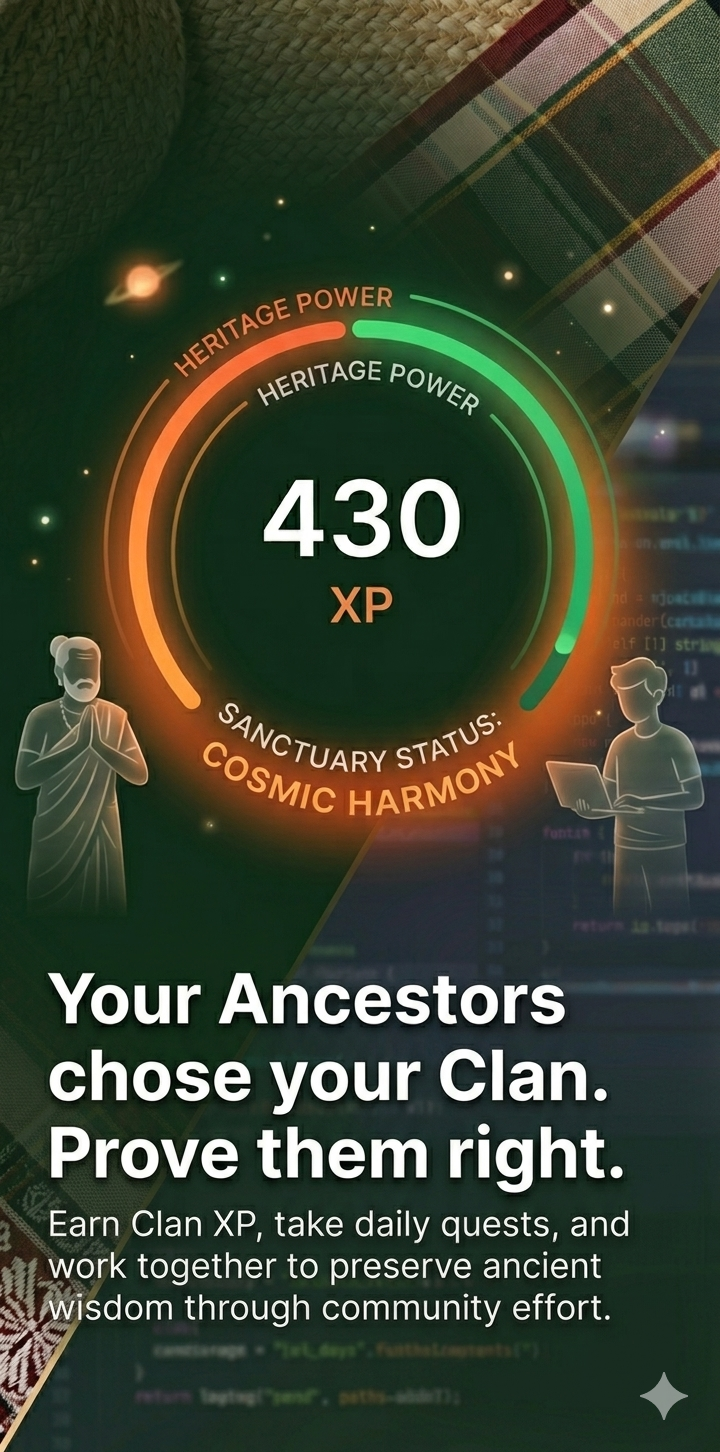
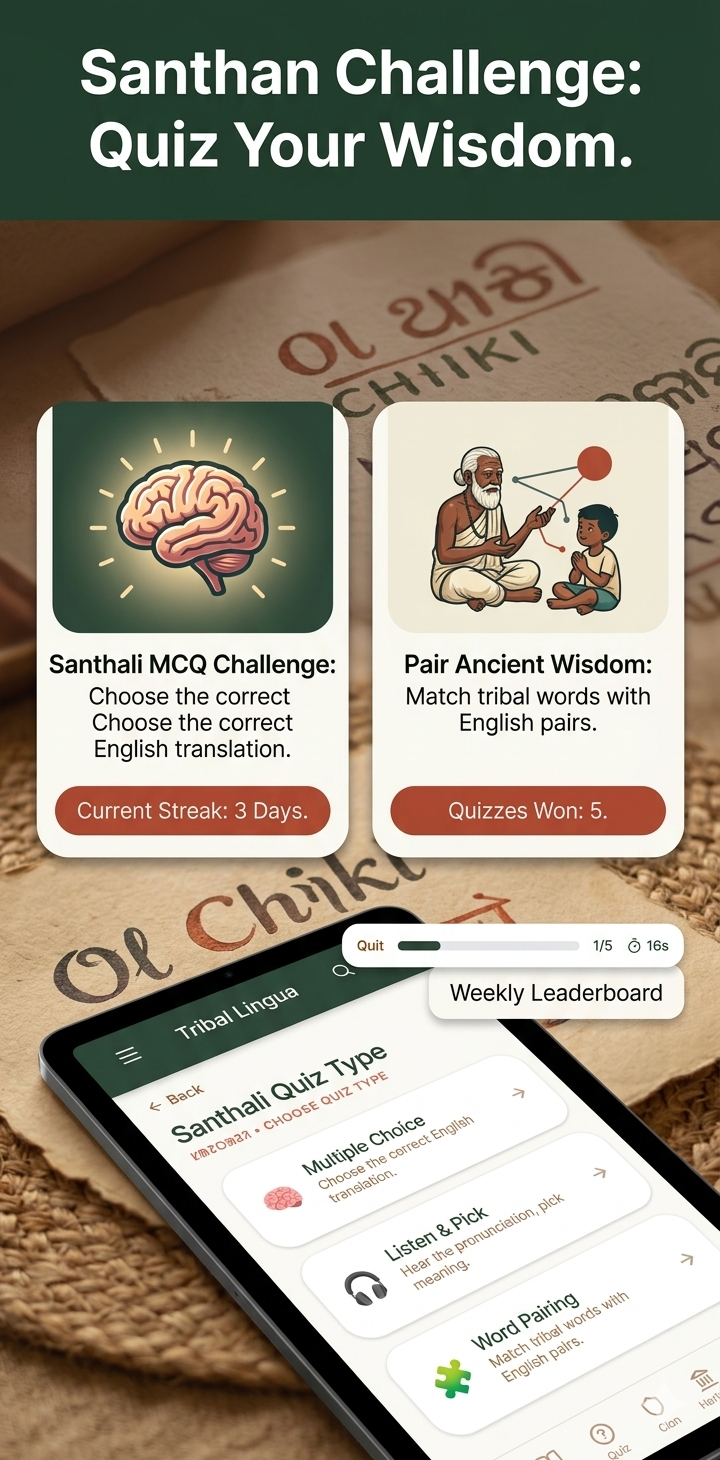
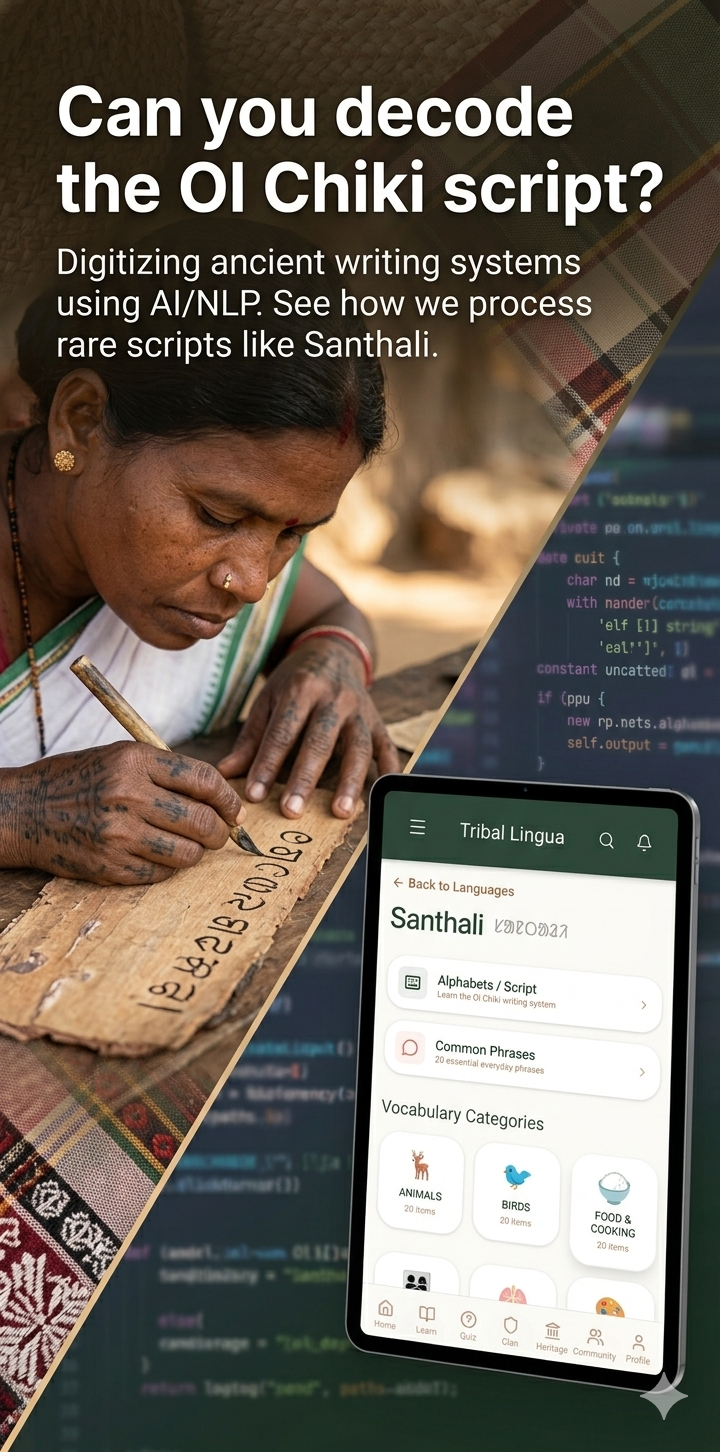
Tribal Lingua is an offline-first Progressive Web App (PWA) that serves as a functional bridge for low-resource languages. It features custom script rendering for Ol Chiki, native audio playback based on AI pronounciation, and a gamified Archetype Engine and Clan Finder. These features transform language learning into an exploration of ancestral identity, making the app a living digital ecosystem rather than just a dictionary. It includes Learn feature where uses can learn about the tribal words,phrases and alphabets, also users can take quiz on what they have learnt . Apart from this the users can also learn about legends ,myths and other Tribal Folktales through Folkvault. Some of the other features of tribal lingua are Community feature where users can share their knowledge on tribal words and phrases to make the apps database alive all time, Gamified experience through exp, streaks and achievement. Also make sure learning is fun through plant features where users are chosen to an clan according to the questions the answer and they have to learn and take business to run there plan higher than others. Are app also includes elder AI which has an extensive knowledge on tribal languages and facts and based on Gemini.
How we built it
I developed the app using the AntiGravity IDE, leveraging Firebase for deployment and data management. The architecture is built as a PWA to ensure it works seamlessly in remote regions with limited connectivity. I focused on building a modular localization system that supports unique phonetic structures and non-standard scripts, ensuring that the interface feels native to the speakers of each language family.
Challenges we ran into
The primary hurdle was the technical complexity of rendering custom scripts like Ol Chiki across different mobile browsers without losing performance. Additionally, optimizing the app for an offline-first experience while maintaining high-quality audio files required strict asset management. Navigating the linguistic differences between the Dravidian and Austroasiatic families also required a highly flexible database schema.
Accomplishments that we're proud of
I am particularly proud of successfully implementing the Clan Finder logic, which bridges the gap between software and cultural sociology. Achieving robust script rendering that doesn't break on low-end devices is a major milestone. Furthermore, presenting the project's focus on Data Sovereignty at platforms like the HyKr Build Challenge has helped validate the ethical necessity of this work.
What we learned
This project taught me that software development in a cultural context requires a "community-first" mindset. I learned the intricacies of low-resource NLP and the importance of ethical data collection. On the technical side, I deepened my understanding of PWA service workers and the challenges of internationalization for languages that have been historically ignored by big tech.
What's next for Tribal Lingua
The next step is to expand support to the Toda,Irulu languages and refine the Archetype Engine with more community-verified data. I plan to collaborate with local language advocates for "Digital Fieldwork" to gather more native audio. Ultimately, the goal is to publish Tribal Lingua on the Play Store and create an open-source framework that other indigenous communities worldwide can use to reclaim their digital presence.
Built With
- antigravity
- firebase
- gemini
- html
- javascript
- lovable
- stitch
- tailwindcss
- vs-code

Log in or sign up for Devpost to join the conversation.