TrialTwin AI — Project Story
Inspiration
Clinical trials are expensive, slow, and high-risk. While much focus is placed on biological outcomes, many trials fail for operational reasons—participants drift, disengage, or show warning signs too late.
We started with a simple question:
What if trial teams could see where a participant is heading before it’s too late?
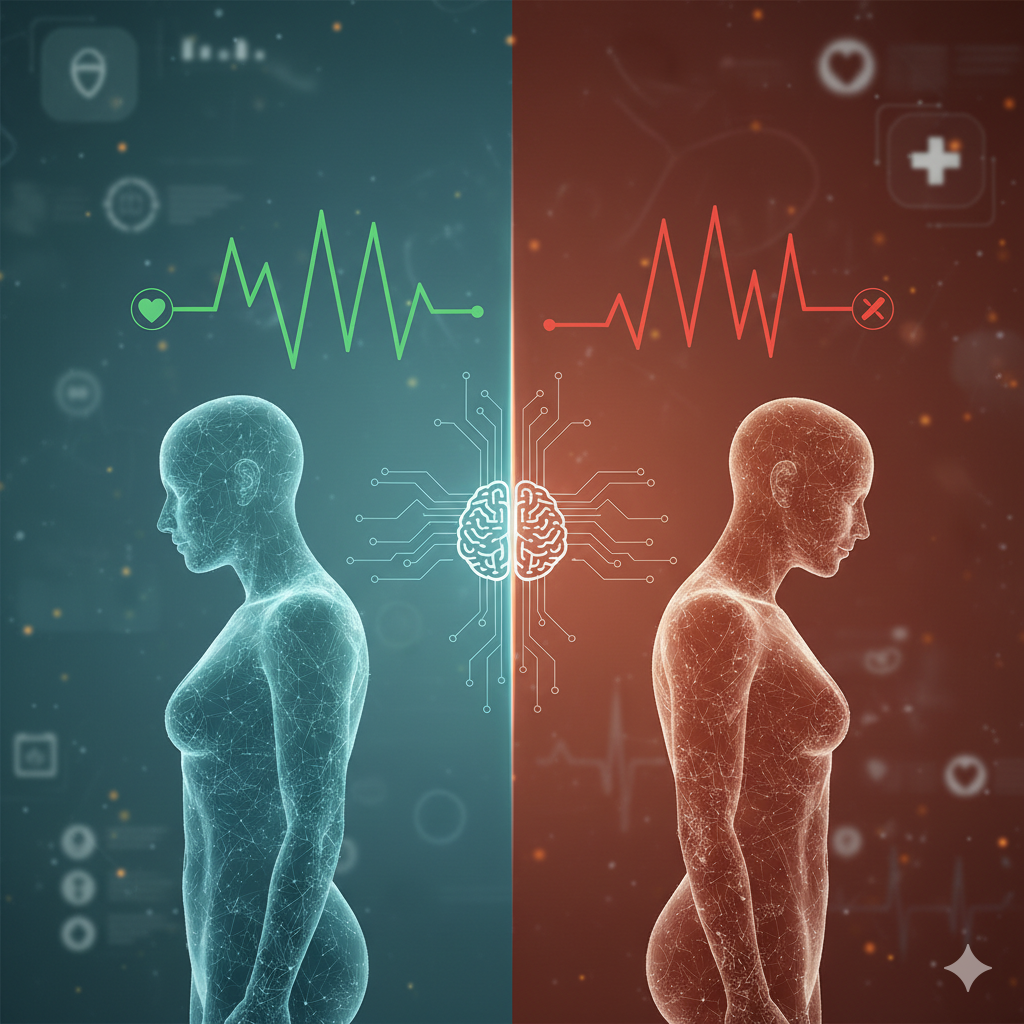
Instead of building a complex biological simulator, we focused on clinical trial operations—specifically, how participant behavior affects outcomes. This led to TrialTwin AI: a digital twin system that shows two possible futures for the same participant.
What We Learned
This project reinforced several key insights:
Explainability matters more than complexity
In healthcare contexts, understanding why a participant is at risk is more valuable than using a black-box model.Visualization drives understanding
The split-screen “two futures” design communicates the concept instantly—often before any explanation is needed.Small signals compound over time
Minor changes in adherence or symptoms can lead to dramatically different outcomes when projected forward.Narrative is critical in demos
Structuring the product as a story (one participant → two futures → intervention) made it significantly more compelling.
How We Built It
TrialTwin AI is a lightweight system that simulates, analyzes, and visualizes participant behavior.
1. Synthetic Data Generation
We generated realistic longitudinal participant data to safely simulate trial behavior. Each participant includes baseline attributes and daily observations such as:
- Heart rate
- Blood pressure
- Glucose proxy
- Symptom score
- Medication adherence
This forms a time series:
X_t = {x_1, x_2, ..., x_t}
2. Feature Engineering
We transform raw time-series data into interpretable features:
- Rolling averages
- Short-term slopes
- Recent event flags
Example (7-day slope):
slope = (x_t - x_{t-7}) / 7
These features capture trends rather than single data points.
3. Risk Modeling
We use simple, interpretable models to estimate:
- Safety risk
- Dropout risk
- Adherence risk
Each model outputs a probability:
P(risk) = σ(w^T x + b)
We chose this approach for speed, transparency, and explainability.
4. Twin Simulation Engine
The core idea is the digital twin:
- Take the participant’s current state
- Split into two scenarios:
- Adherent
- Non-adherent
- Adherent
- Simulate forward using rule-based projections
Future_adherent ≠ Future_non-adherent
The divergence between these paths is the key insight.
5. Frontend Experience
We built a React-based interface focused on storytelling:
- Split-screen twin comparison
- Diverging outcome visualization
- Risk scoring dashboard
- Actionable recommendations
The UI is designed so the concept is understood before the metrics are read.
Tech Stack
- Frontend: React + Vite
- Backend: FastAPI
- Modeling: pandas, scikit-learn
- Database: SQLite
- Visualization: Recharts + custom SVG
Challenges We Faced
1. Balancing realism vs simplicity
We needed data that felt believable, but simple enough to explain and debug.
2. Avoiding black-box AI
We intentionally avoided complex models in favor of interpretability, which required careful feature design.
3. Making the demo intuitive
Early versions required too much explanation. The breakthrough came from the split-screen twin concept, which made the idea immediately clear.
4. Time constraints (hackathon reality)
We had to:
- Build backend + models
- Create a polished frontend
- Ensure everything worked live
This forced us to prioritize clarity over completeness.
Final Takeaway
TrialTwin AI is not about perfectly predicting the future.
It is about making the future visible, understandable, and actionable.
By turning one participant into two futures, we help trial teams answer a critical question:
What happens next—and what can we do about it?
Tagline
Two sides. Two futures.


Log in or sign up for Devpost to join the conversation.