-
-
logo
-
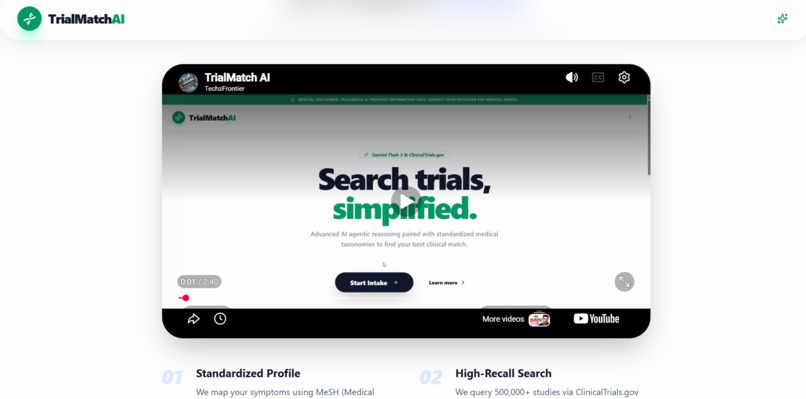
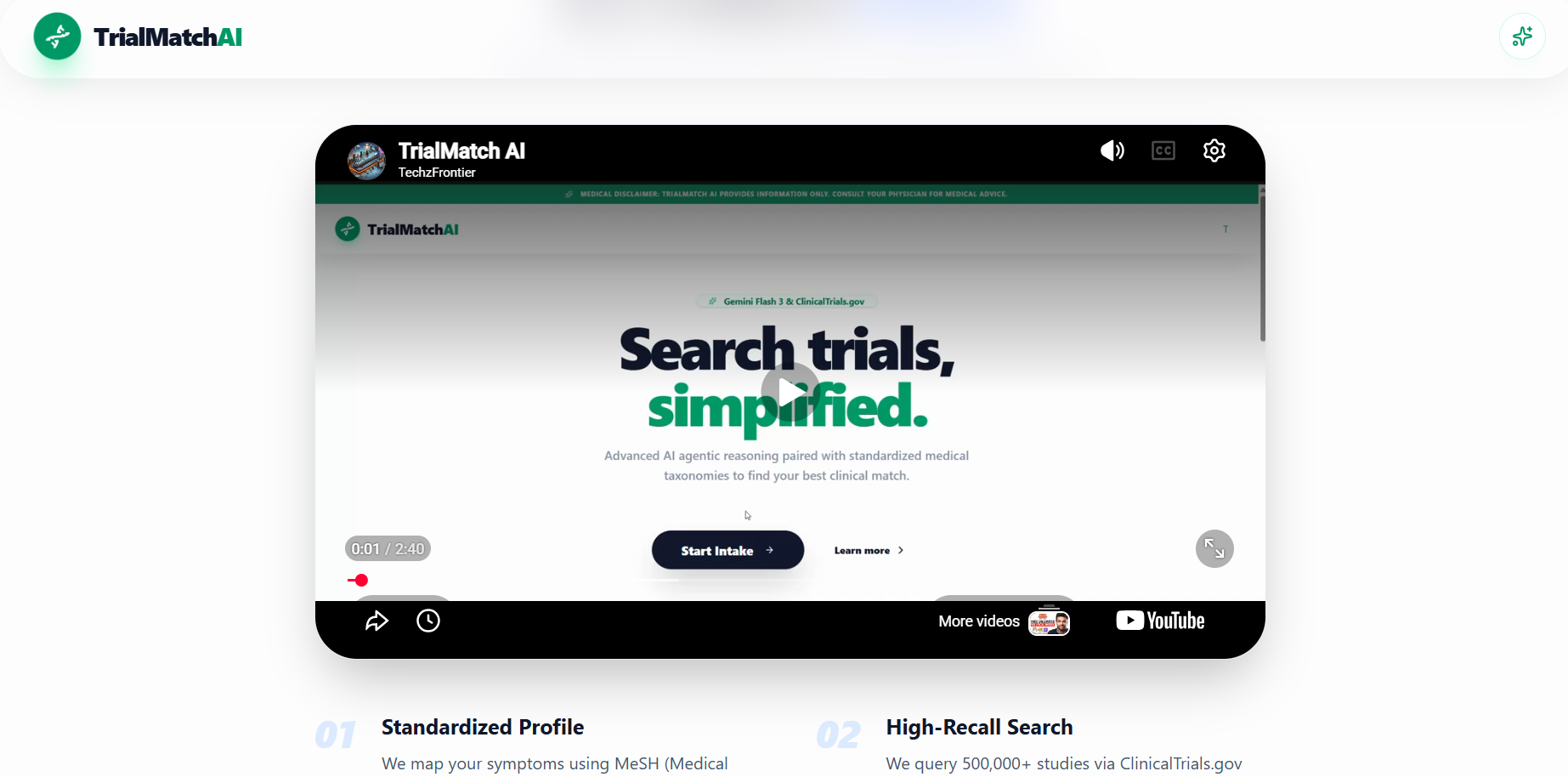
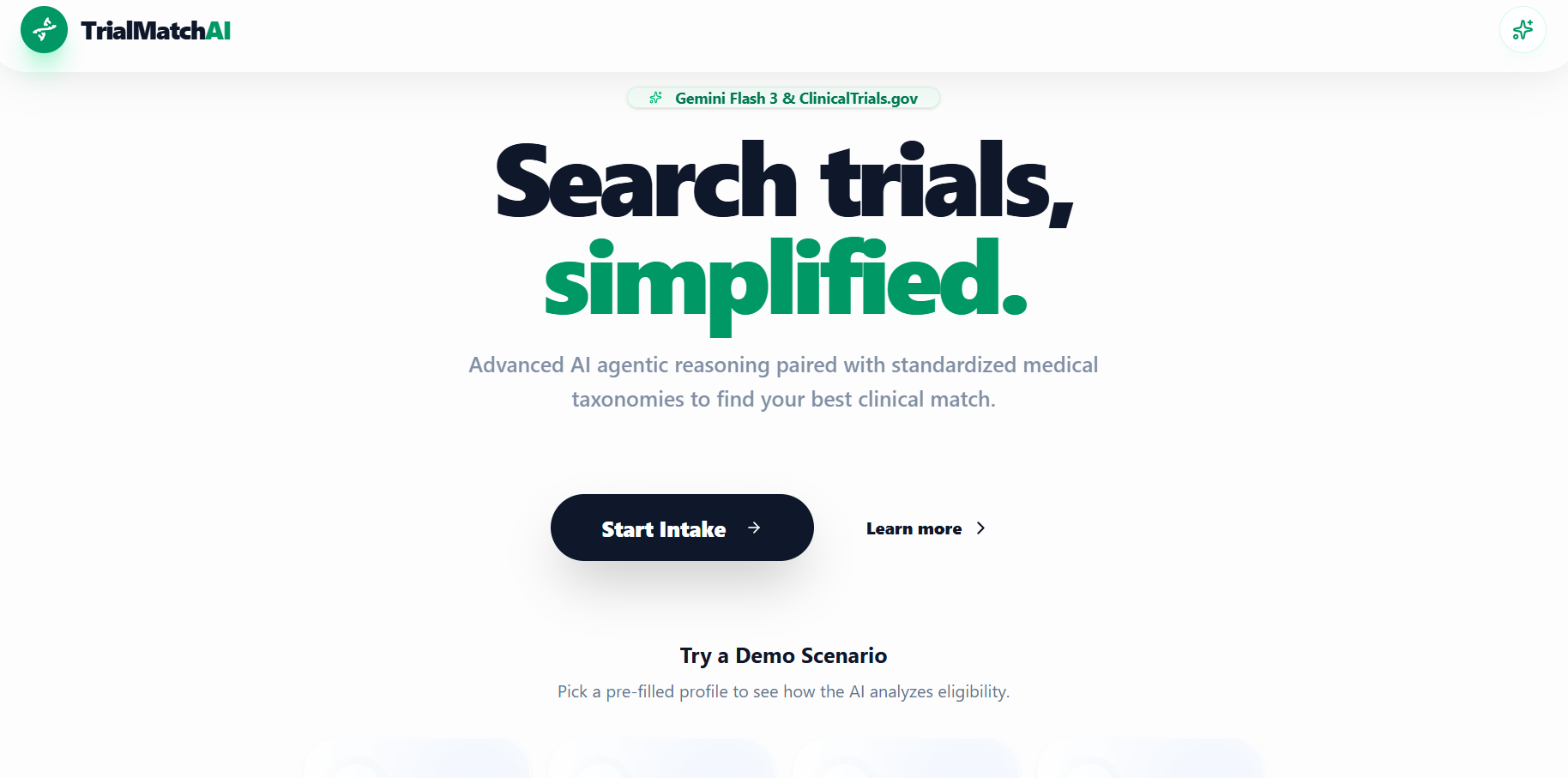
onboarding screen
-
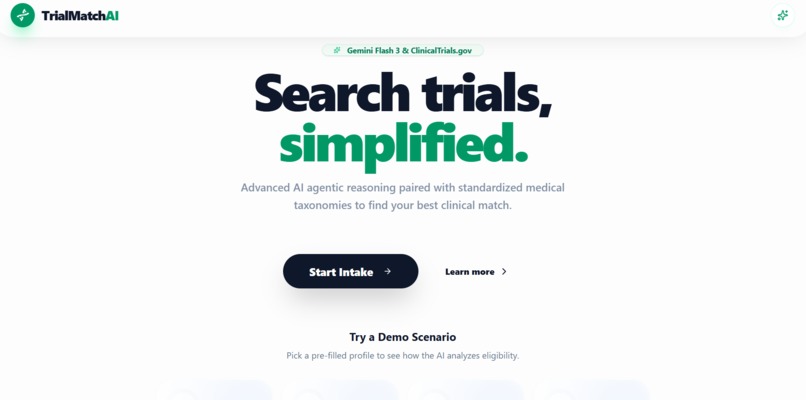
get started
-
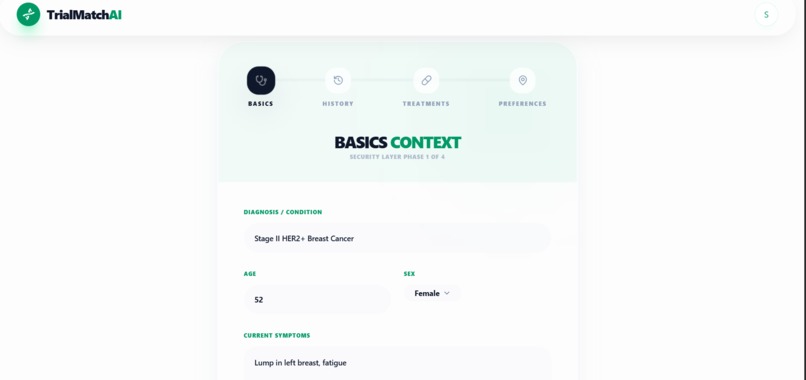
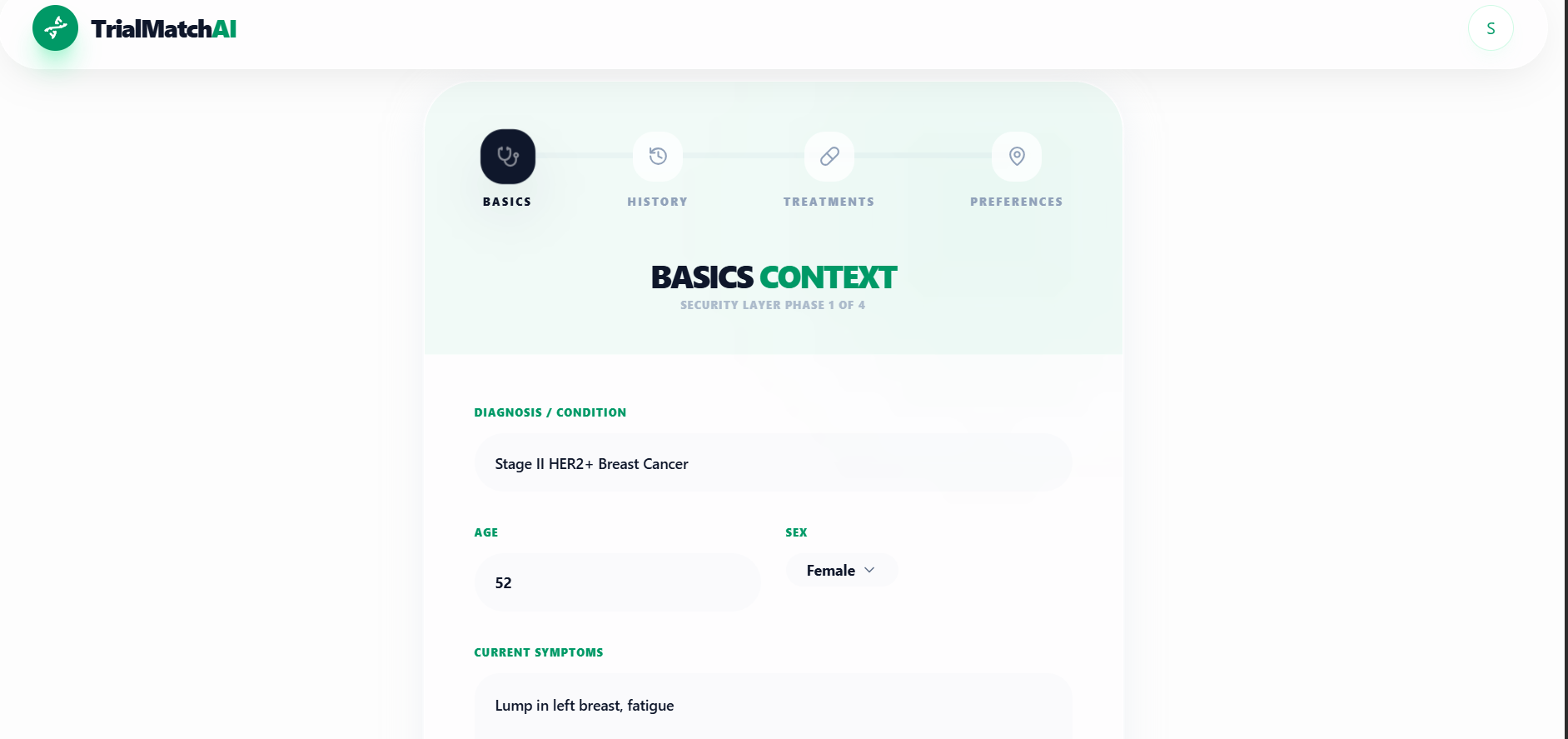
form page
-
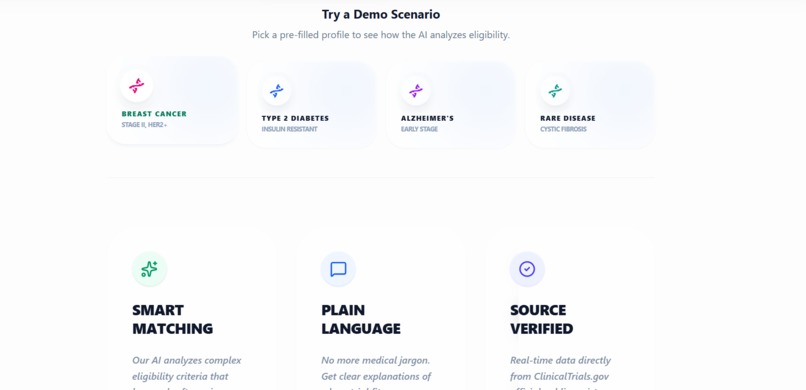
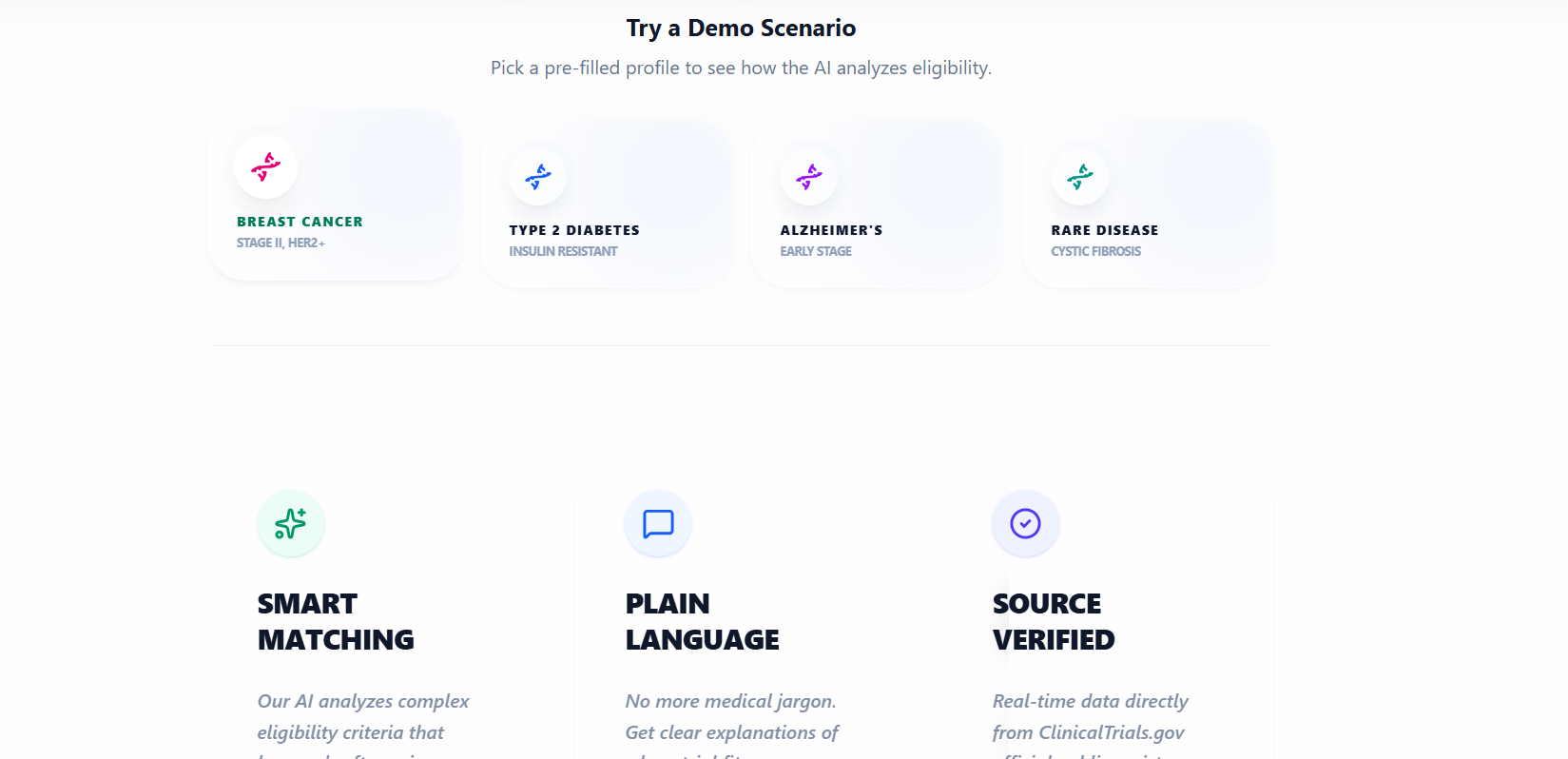
demo trail
-
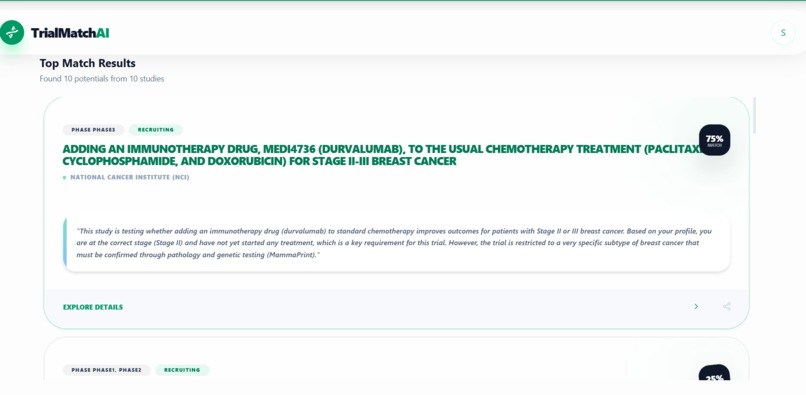
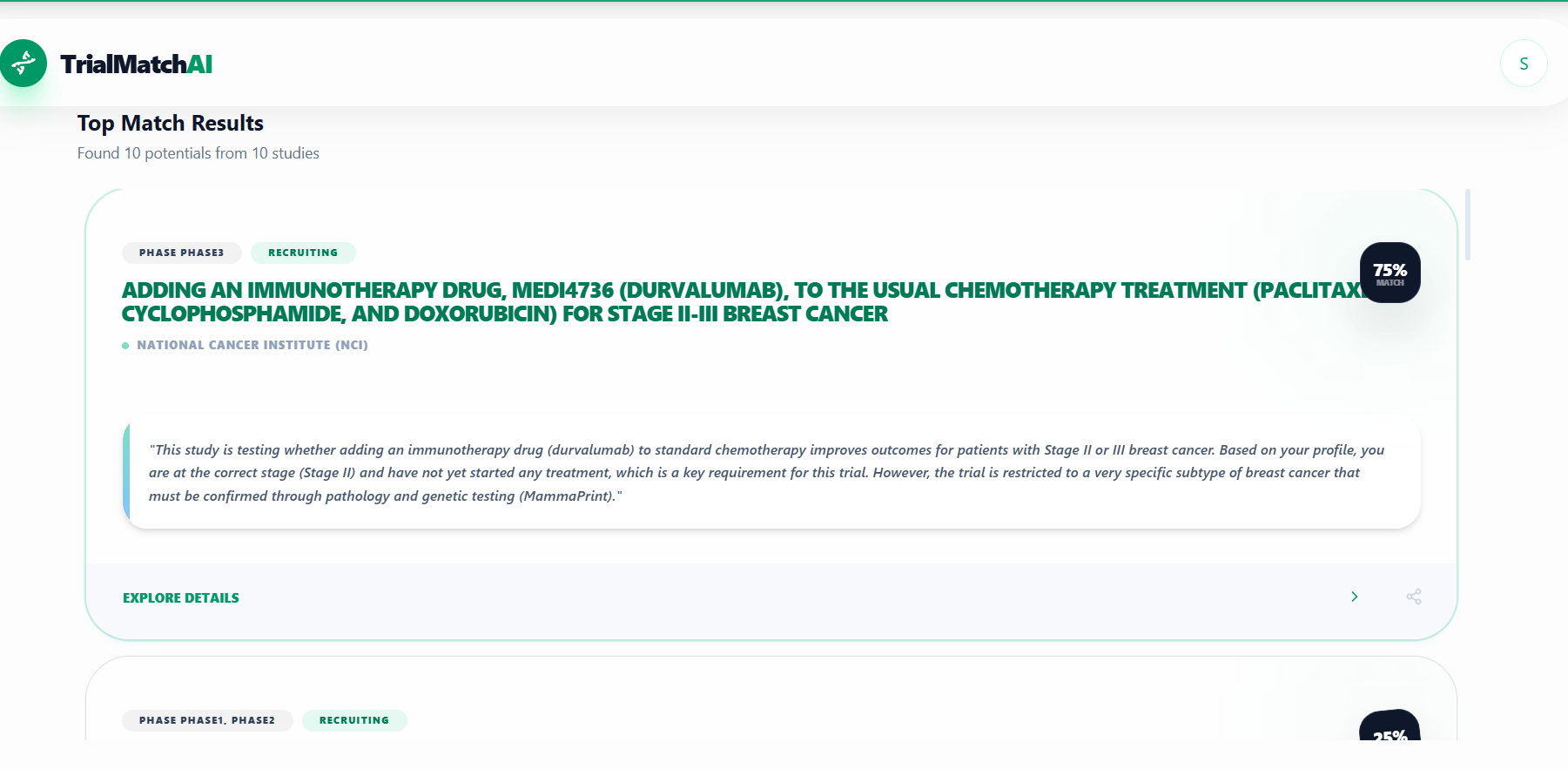
report with data fetch api
-
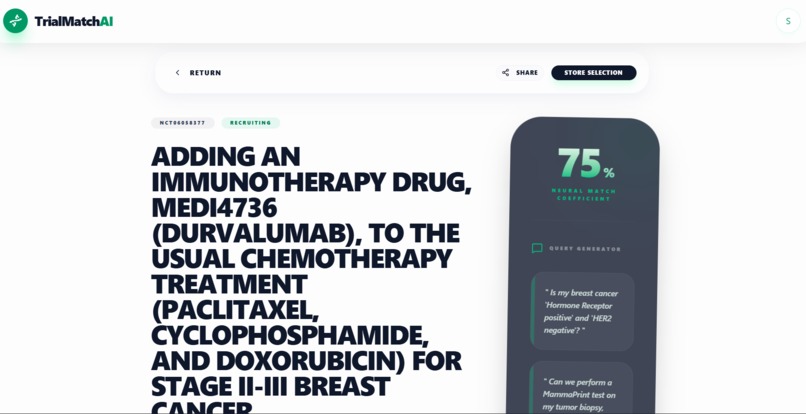
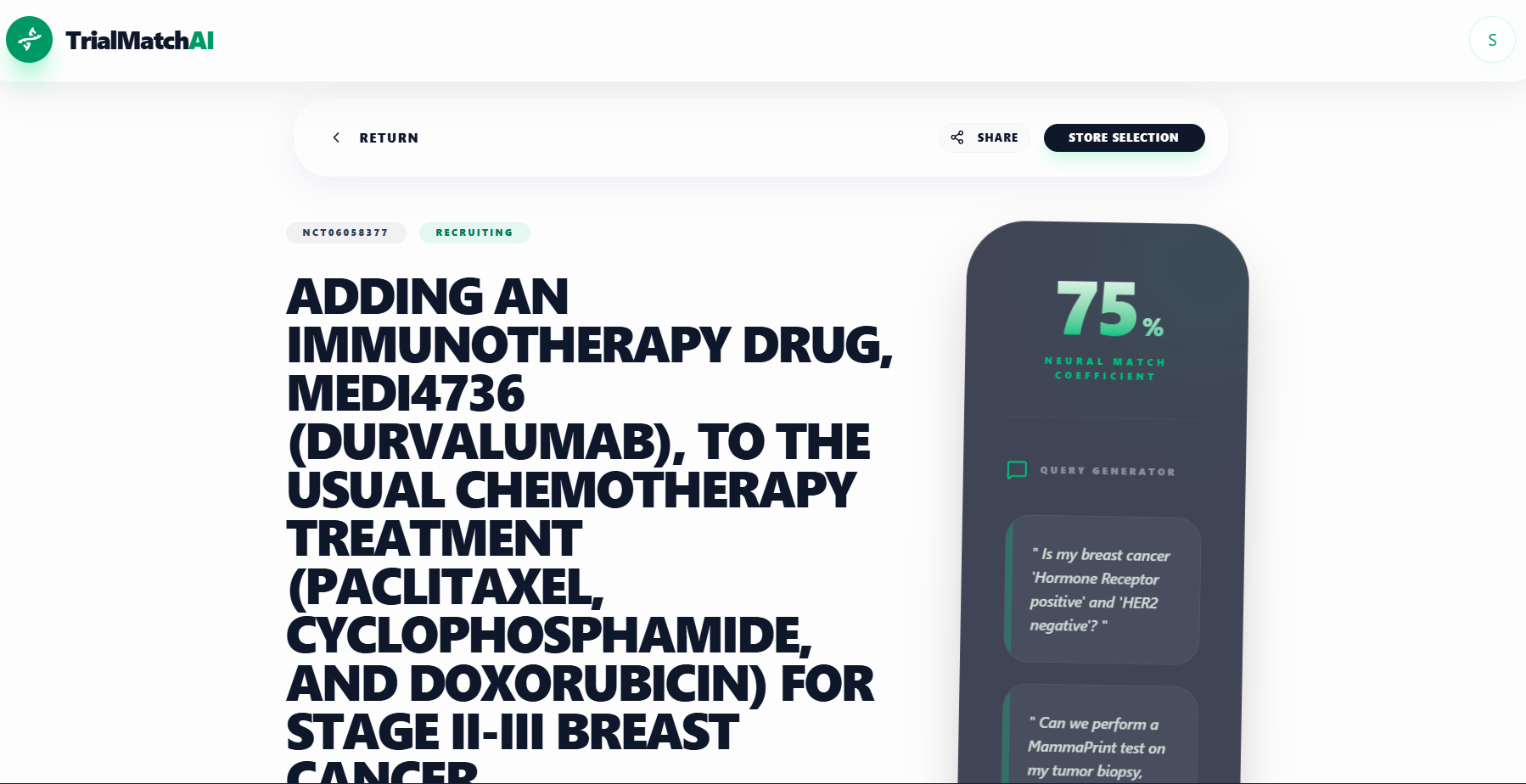
review the trial
-
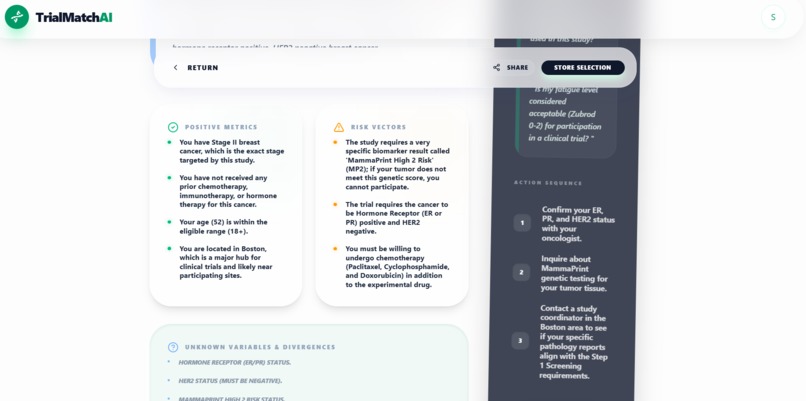
share report to doctors
-
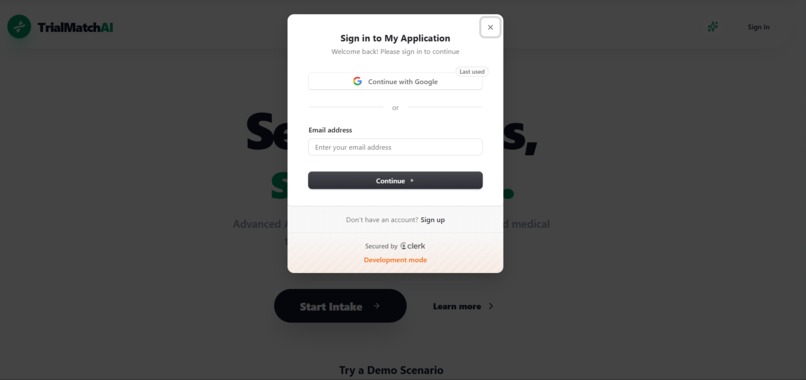
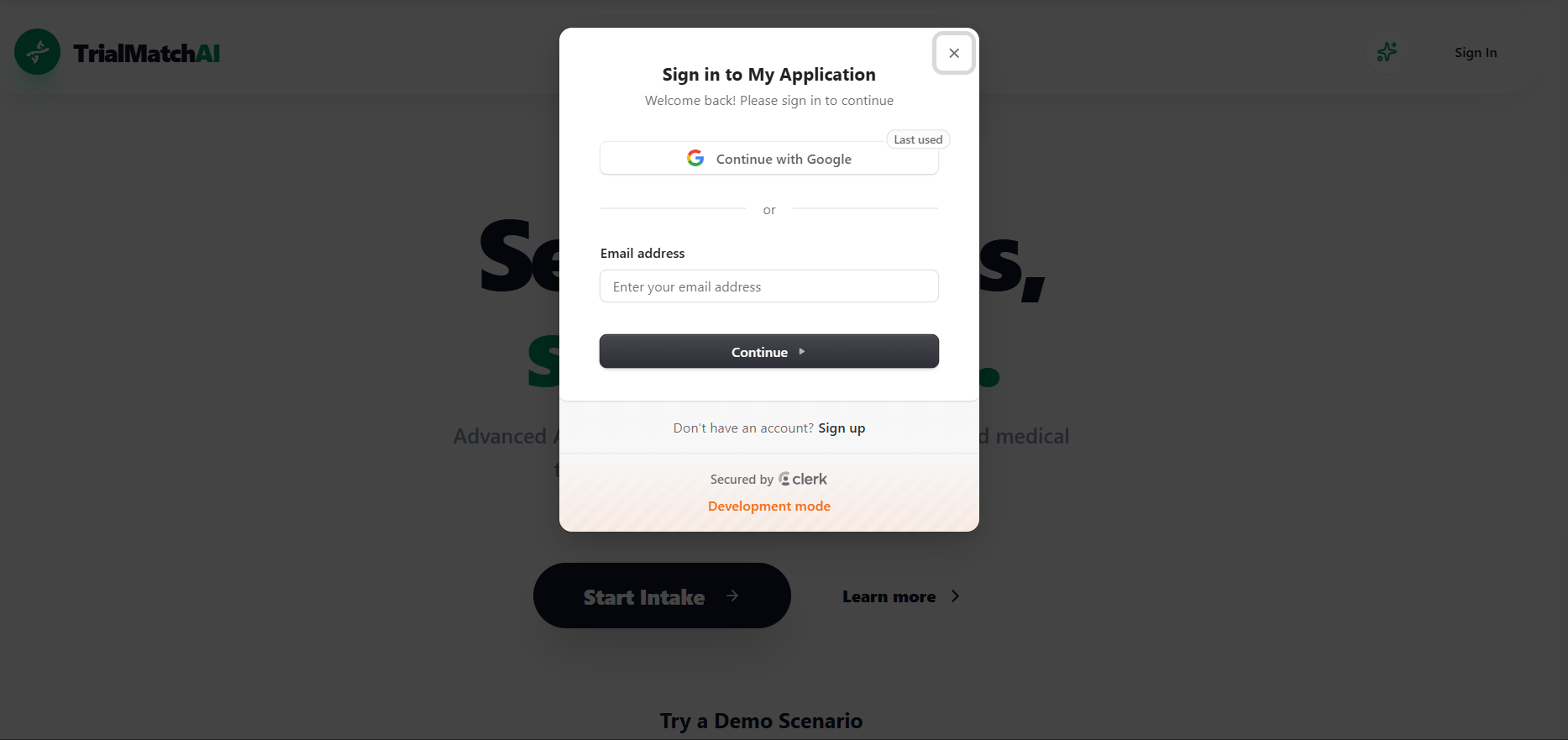
auth
# Inspiration
Clinical trial discovery is one of the most difficult and overlooked problems in healthcare accessibility.
While platforms like ClinicalTrials.gov provide access to thousands of studies, the process is still overwhelming for most patients and caregivers. Eligibility criteria are often written in highly technical medical language that can be difficult to understand without clinical expertise.
We were inspired by a simple question:
“What if AI could help patients understand clinical trial eligibility in plain language instead of forcing them to decode complex medical text?”
Our goal with TrialMatchAI was to bridge the gap between medical research and real people by creating an AI-powered assistant that simplifies clinical trial discovery and makes the process more accessible, understandable, and human-centered.
# What it does
TrialMatchAI is an AI-powered clinical trial matching and eligibility reasoning platform.
Users enter:
- Diagnosis
- Symptoms
- Age
- Location
- Medical history
- Prior treatments
The system then:
- Searches real studies using the ClinicalTrials.gov API
- Filters relevant recruiting trials
- Uses AI reasoning to analyze inclusion and exclusion criteria
- Ranks trials based on patient compatibility
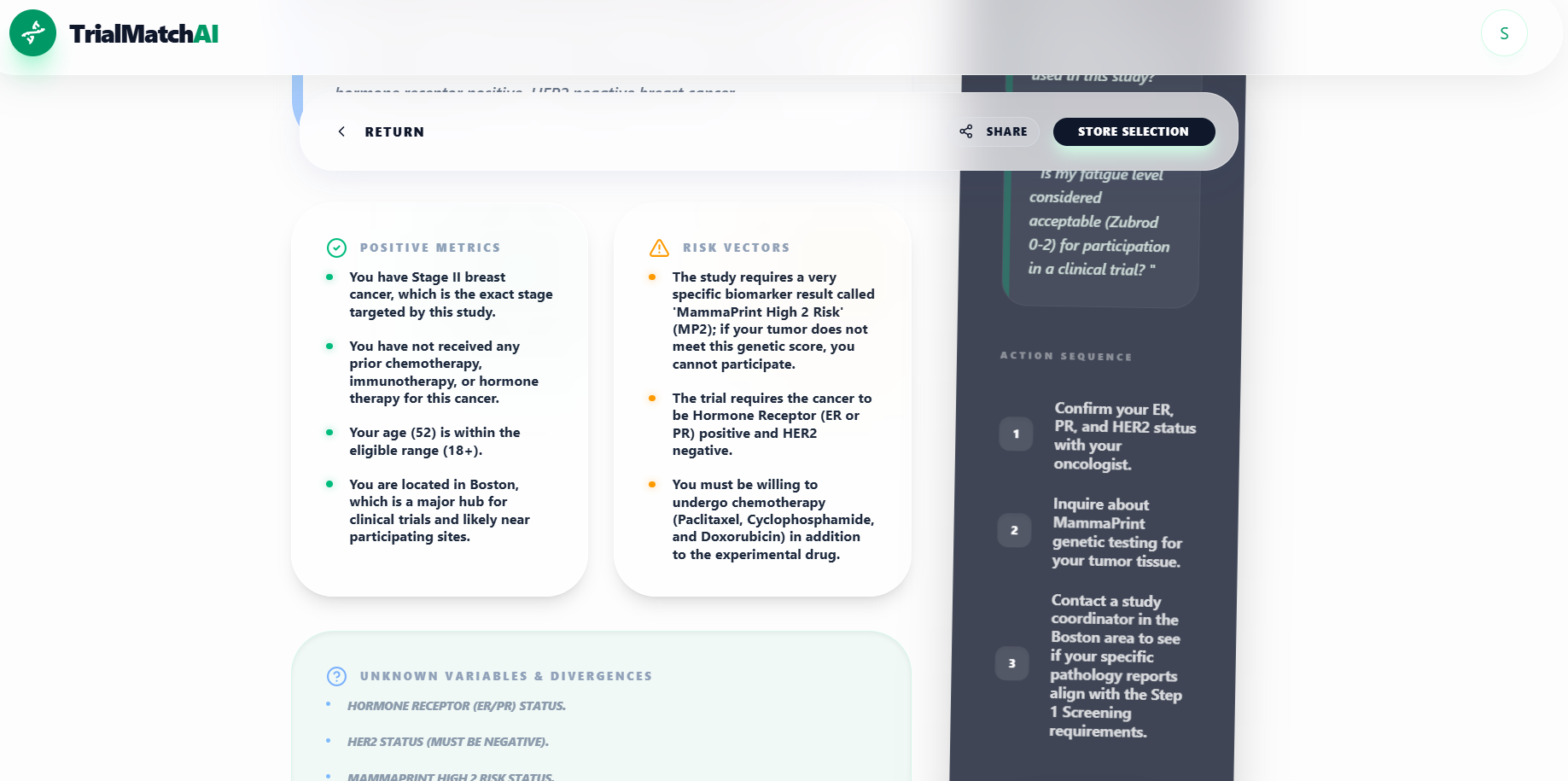
- Explains matches in simple, human-readable language
Instead of presenting overwhelming medical documents, TrialMatchAI provides:
- Match scores
- Eligibility summaries
- Recruiting status
- Trial phase
- Potential concerns
- Questions to ask a doctor
- Recommended next steps
The platform focuses on explainability and accessibility rather than replacing medical professionals.
# How we built it
We built TrialMatchAI as a modern AI-powered healthcare web application.
Frontend
- Next.js
- React
- Tailwind CSS
- Framer Motion
- Responsive UI components
Backend
- Node.js API routes
- ClinicalTrials.gov API v2 integration
- Trial normalization and ranking pipeline
AI Layer
We used Claude as the reasoning engine for:
- Eligibility analysis
- Medical text simplification
- Match explanation generation
- Structured clinical reasoning
- Plain-language summaries
Workflow Pipeline
Patient Input
↓
ClinicalTrials.gov Search
↓
Trial Filtering
↓
Claude Eligibility Analysis
↓
Trial Ranking
↓
Human-Readable Results
We also implemented:
- Match scoring logic
- Safety disclaimers
- Structured JSON outputs
- Relevance ranking
- Explainability-focused UI
# Challenges we ran into
One of the biggest challenges was working with clinical eligibility criteria.
Many studies contain:
- Long unstructured text
- Inconsistent formatting
- Complex inclusion/exclusion rules
- Ambiguous medical language
Translating these criteria into understandable summaries without oversimplifying important medical details required careful prompt engineering and structured reasoning workflows.
Another major challenge was balancing:
- AI usefulness
- Medical safety
- User simplicity
We wanted the platform to feel intelligent and helpful while ensuring it never crossed into giving medical advice or making definitive eligibility decisions.
We also faced challenges in:
- Ranking trials effectively
- Handling incomplete patient information
- Maintaining fast API response times
- Designing trustworthy healthcare UX
# Accomplishments that we're proud of
We are proud that TrialMatchAI transforms a difficult healthcare research process into something approachable and understandable.
Some accomplishments we are especially proud of:
- Successfully integrating real-world clinical trial data
- Building a multi-step AI reasoning pipeline
- Translating complex medical criteria into plain language
- Creating a clean and intuitive healthcare UI
- Designing a system focused on patient empowerment and accessibility
Most importantly, we built a realistic and deployable MVP that addresses a genuine healthcare problem.
# What we learned
This project taught us a lot about:
- Clinical NLP
- AI reasoning systems
- Healthcare UX design
- Responsible AI communication
- Public healthcare APIs
- Explainable AI workflows
We also learned how important trust and clarity are in healthcare technology. Users do not just need answers — they need understandable explanations they can confidently discuss with healthcare professionals.
Building TrialMatchAI showed us the importance of combining AI capability with safety, transparency, and practical usability.
# What's next for TrialMatchAI
We believe TrialMatchAI has strong future potential.
Our next steps include:
- Multilingual support
- EHR/FHIR integration
- Mobile application support
- Rare disease optimization
- Personalized recommendation systems
- Doctor collaboration workflows
- Geographic proximity matching
- AI-powered follow-up guidance
Long term, we envision TrialMatchAI becoming a patient-friendly healthcare intelligence platform that helps people navigate complex clinical research opportunities more confidently and accessibly.

Log in or sign up for Devpost to join the conversation.