Inspiration
I come from a B.Pharm background and I have also completed a Post Graduate Diploma in Clinical Research, so I already had a good understanding of how clinical trials work and why protocol quality is so important.
What inspired me was the fact that clinical trial protocol writing is still a slow and document-heavy process. A lot of work goes into drafting, reviewing, organizing, and improving protocols. At the same time, AI models have become very powerful. I wanted to explore whether Amazon Nova could help make this process faster, more structured, and more practical.
That is how the idea of TrialForge AI started. I did not want to build just another text generation tool. I wanted to build something that feels closer to a real product that can support protocol design in a smarter way.
What it does
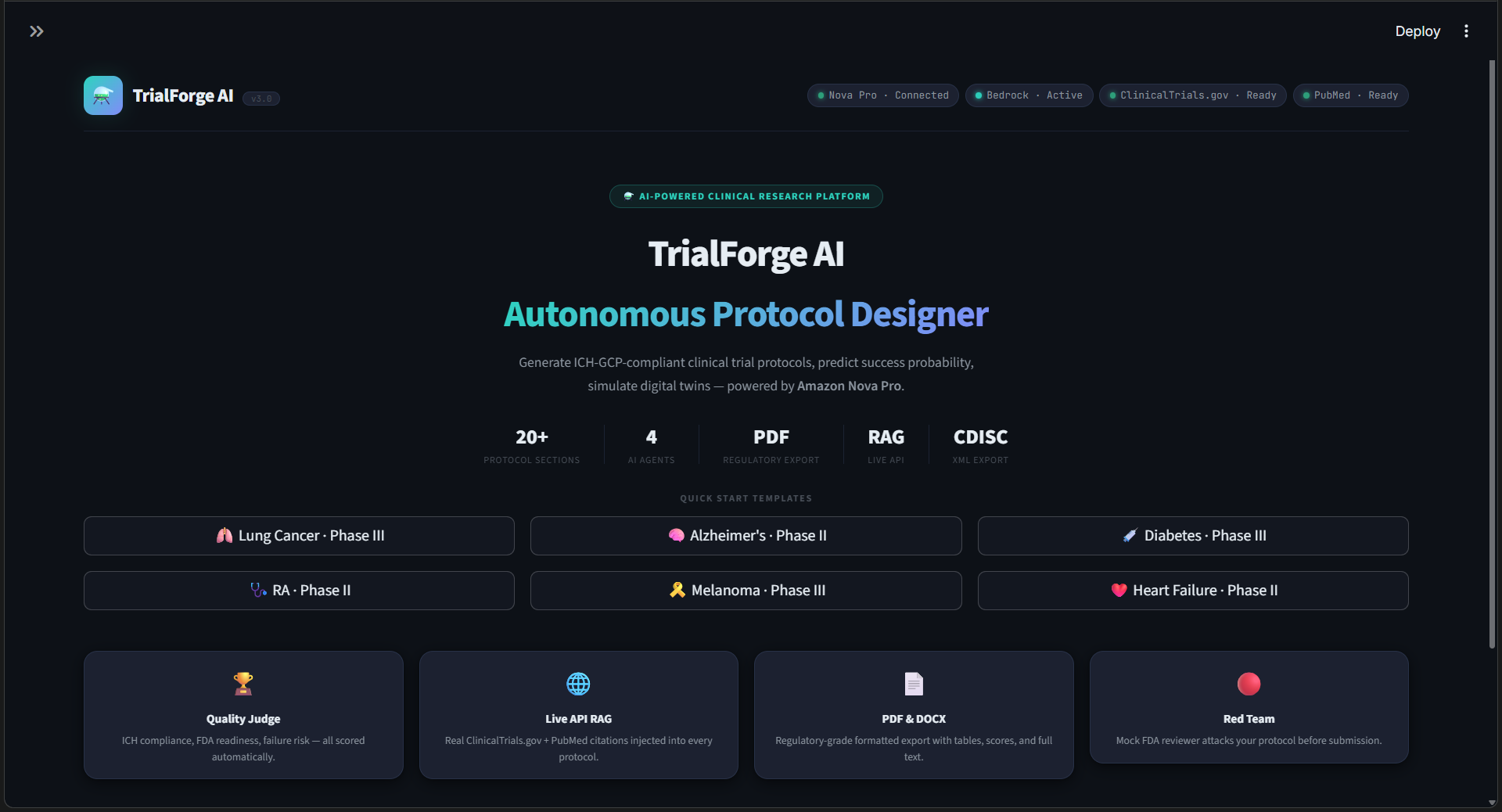
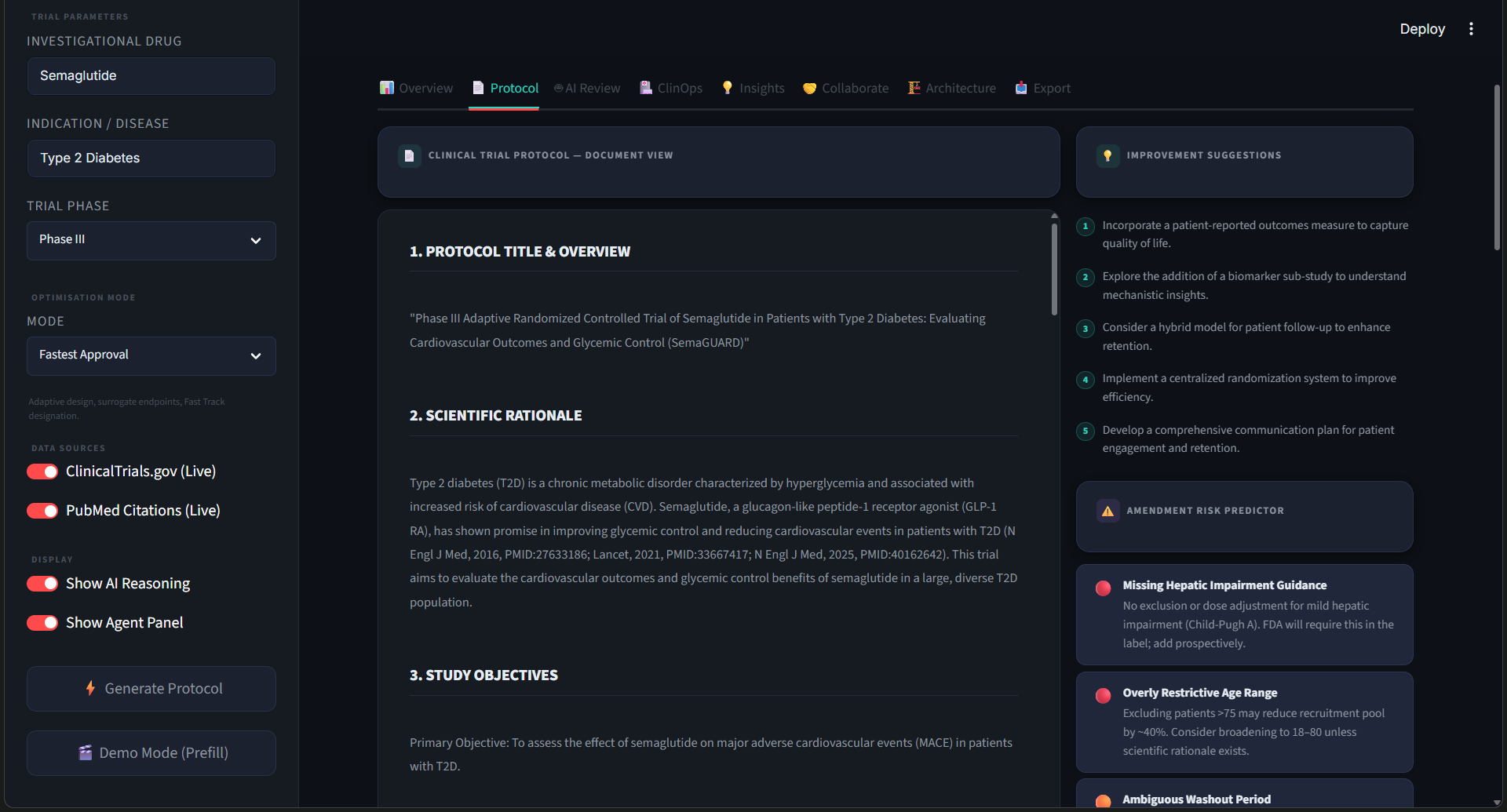
TrialForge AI helps generate and refine clinical trial protocols using Amazon Nova.
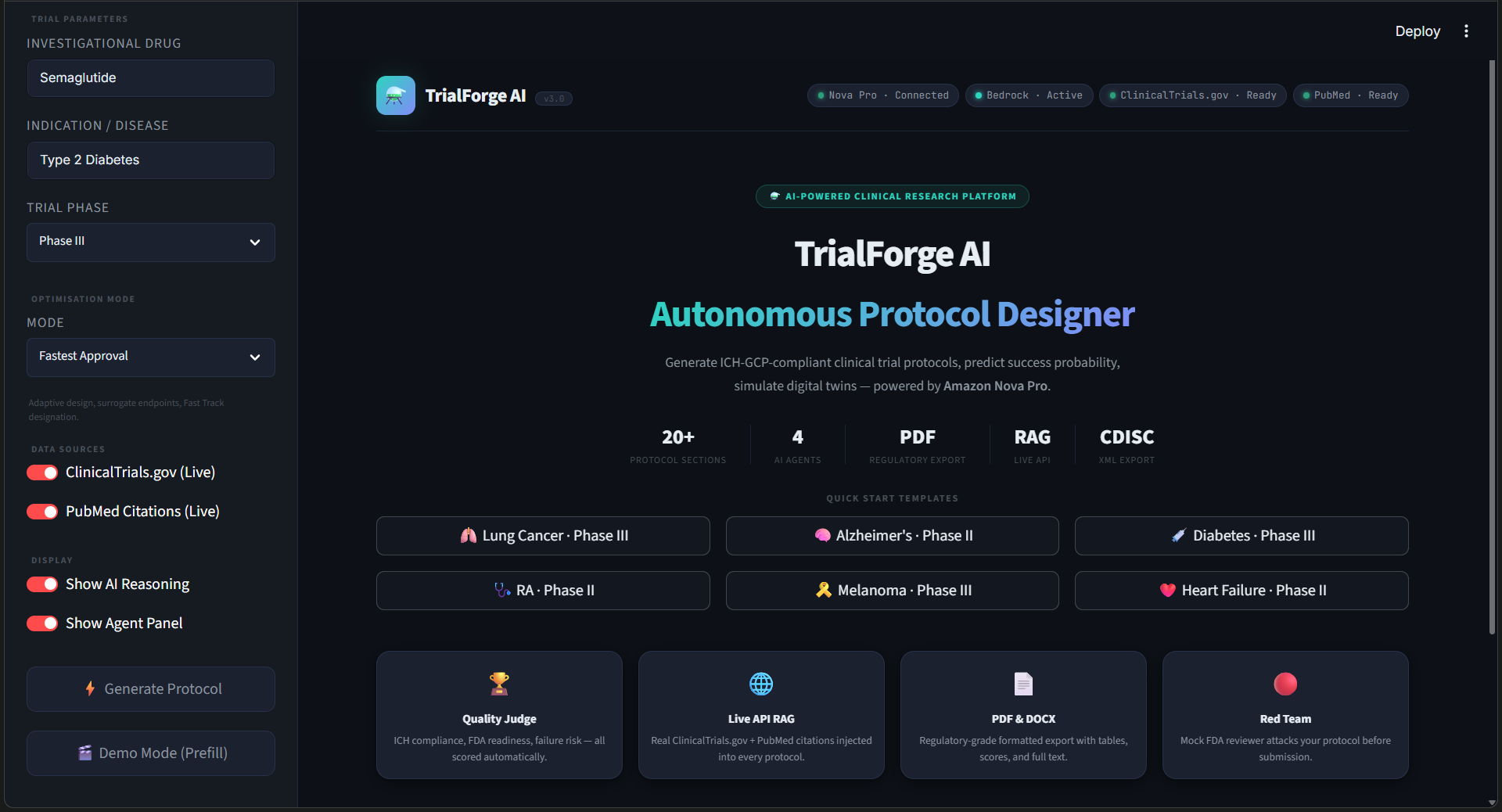
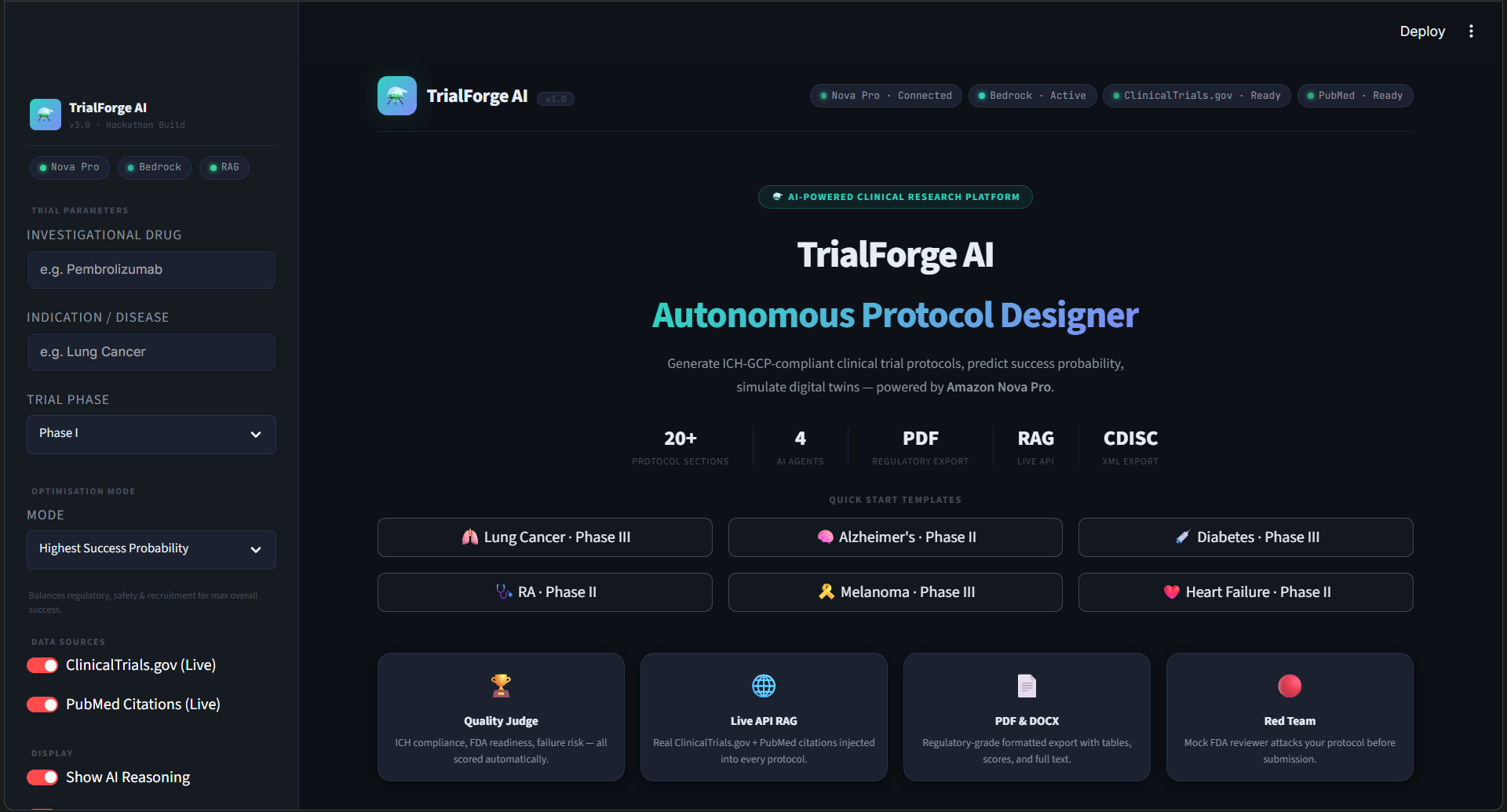
The user can enter details like:
- investigational drug
- indication or disease
- trial phase
- optimization goal
Based on these inputs, the platform generates a structured clinical trial protocol draft.
The project also includes:
- a protocol editing workspace
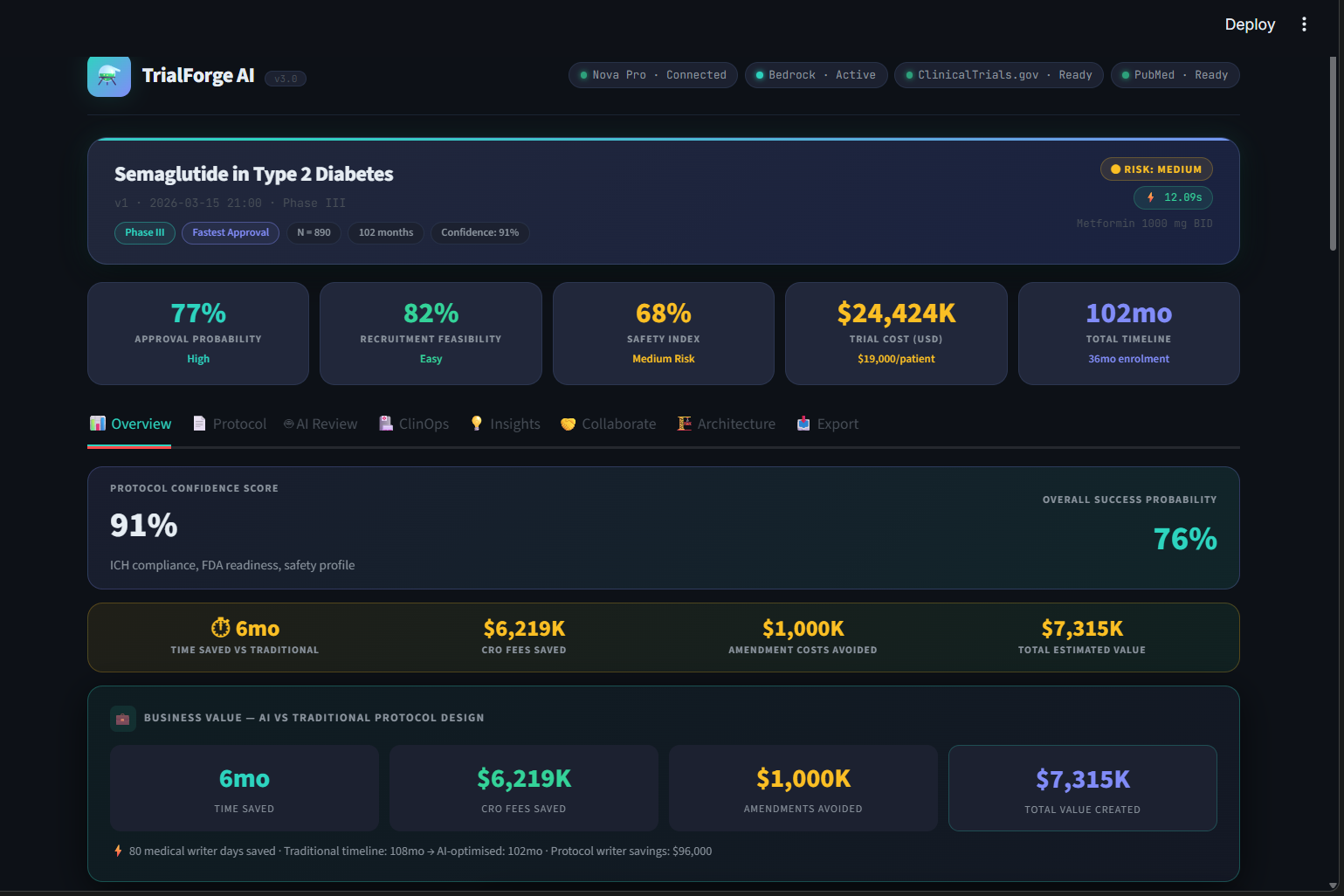
- feasibility and quality review sections
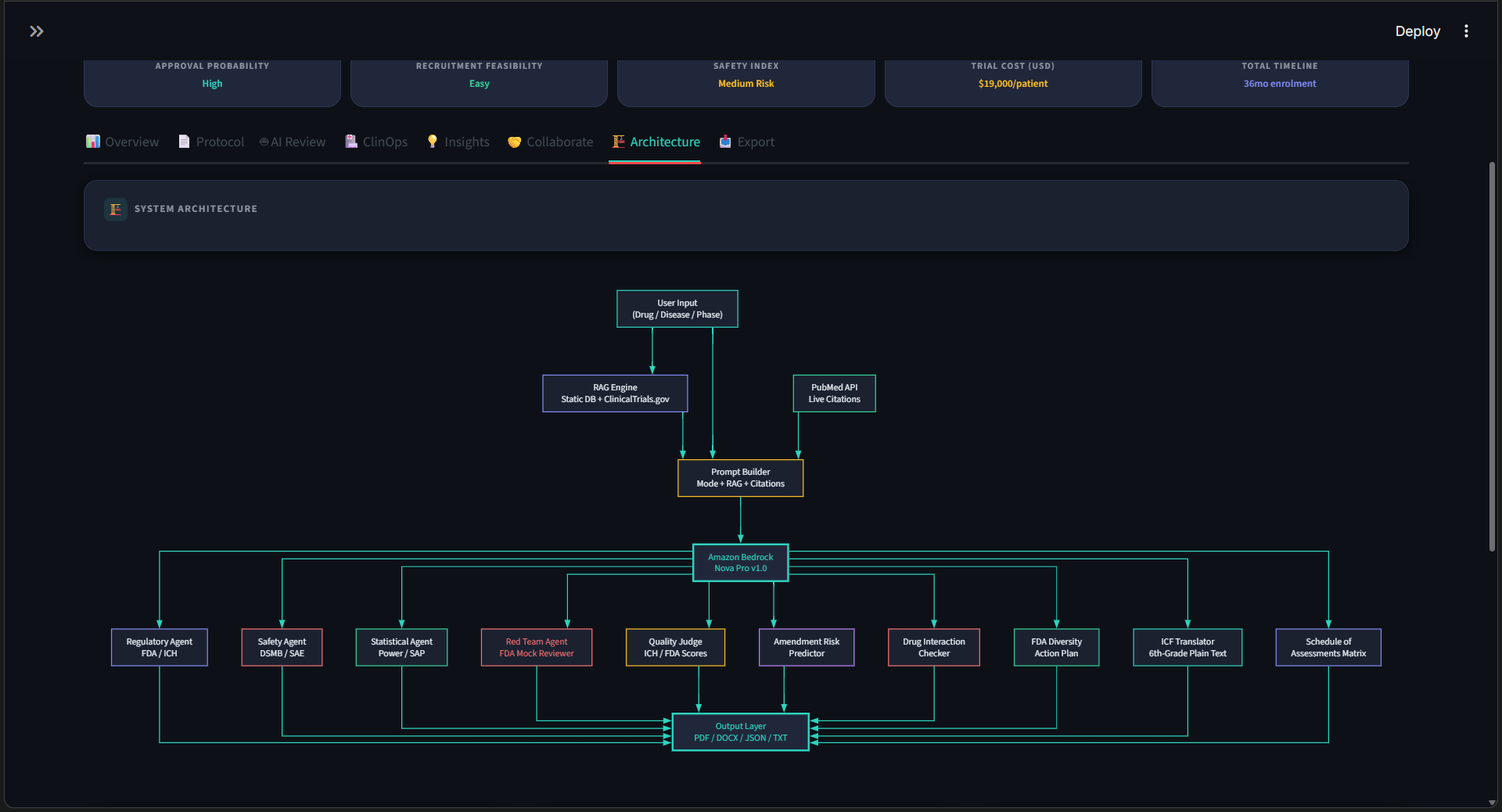
- architecture and workflow visualization
- export options in multiple formats
- support for clinical context through retrieval and external references
The main goal is to make protocol design more structured, faster, and easier to review.
How we built it
I built TrialForge AI as an interactive web app using Streamlit for the frontend and Amazon Nova as the main AI layer for protocol generation and refinement.
The workflow includes:
- collecting study inputs from the user
- sending structured prompts to Amazon Nova
- generating protocol drafts
- showing the output inside a reviewable interface
- saving data locally for continuity
- providing export options for sharing results
I also spent a lot of time improving the UI so it feels more like a product and less like a simple prototype.
Challenges we ran into
One major challenge was balancing features and simplicity.
It was easy to keep adding more ideas, but not every idea improved the project. I had to decide what really adds value and what only makes the app heavier or more confusing.
Another challenge was output formatting. Sometimes AI-generated text looked too raw or had formatting that did not feel professional enough for a clinical document. So I had to improve the prompts and also improve how the text is shown in the app.
I also faced technical issues while working on dependencies, UI cleanup, architecture flow, and export functionality.
Accomplishments that we're proud of
The biggest thing I am proud of is turning the idea into a working product-style demo instead of keeping it as just a concept.
I am also proud that:
- the project is based on a real healthcare workflow
- it uses Amazon Nova in a meaningful way
- it goes beyond plain text generation
- it combines protocol drafting, review, structure, and usability in one system
- it shows how AI can support a serious domain like clinical research
As someone with a pharmacy and clinical research background, it felt meaningful to build something connected to a domain I genuinely understand and care about.
What we learned
This project taught me that building with AI is not only about model output. The overall workflow, interface, user trust, and clarity matter just as much.
I also learned that in healthcare, AI should be used carefully. The best systems are not the ones trying to replace professionals completely. The better approach is to build tools that help people work faster, review better, and make more informed decisions.
Apart from that, I also learned a lot about product thinking, UI decisions, feature prioritization, and how to make a hackathon project feel more complete.
What's next for TrialForge AI
The next step for TrialForge AI is to make it more practical and closer to a real industry workflow.
Some future improvements I would like to add are:
- better document grounding
- stronger protocol comparison
- richer feasibility analysis
- human-in-the-loop editing
- more clinical evidence and trial reference integration
- better export and reporting quality
For this hackathon, my main goal was to build a strong foundation and show how Amazon Nova can be used in a meaningful healthcare workflow. Going forward, I would like to keep improving TrialForge AI into a more complete clinical trial design assistant.


Log in or sign up for Devpost to join the conversation.