Inspiration
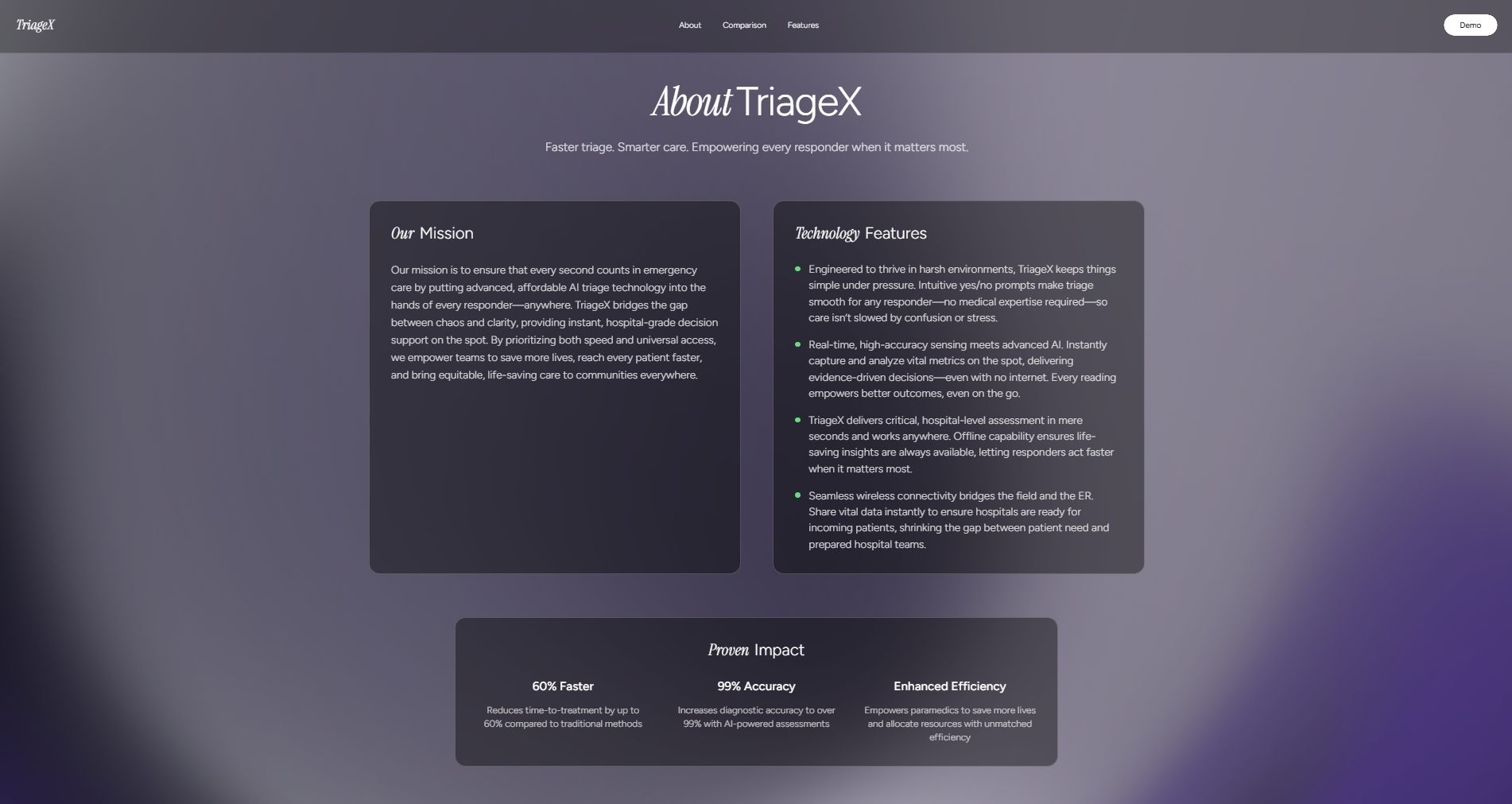
We wanted to assist healthcare workers around the world, especially in communities with a lower amount of resources. In developing TriageX, we learned about the struggles faced by both patients and service workers in accessing emergency services in areas with underdeveloped healthcare infrastructure. We set out to create a platform that anyone, no matter where they live or what circumstances they face, could turn to without barriers. Our goal was to make it not just reliable but also accessible for all, so that people from every corner of the world, whether in bustling cities or remote villages, can find the support, resources, and opportunities they deserve.
What it does
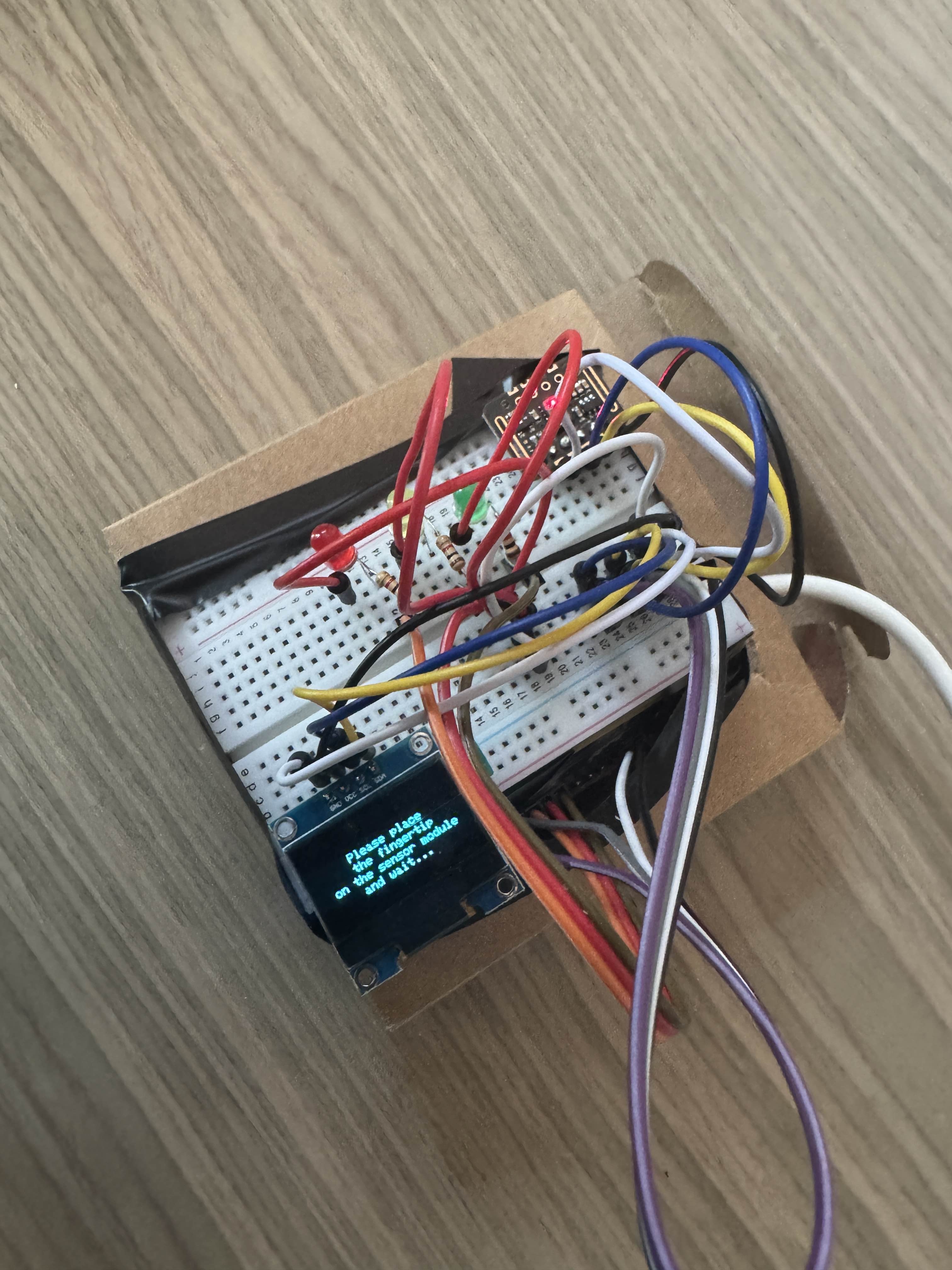
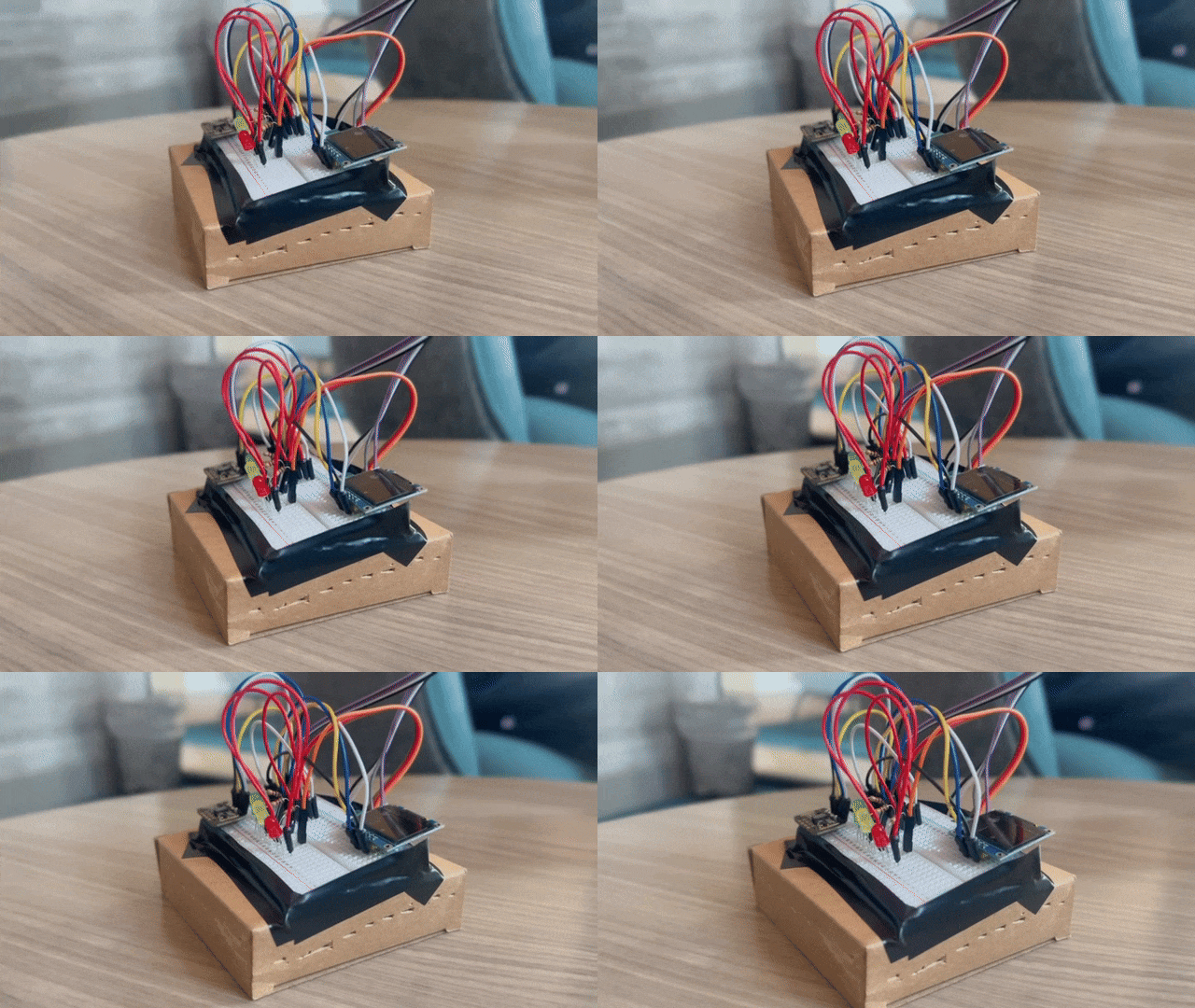
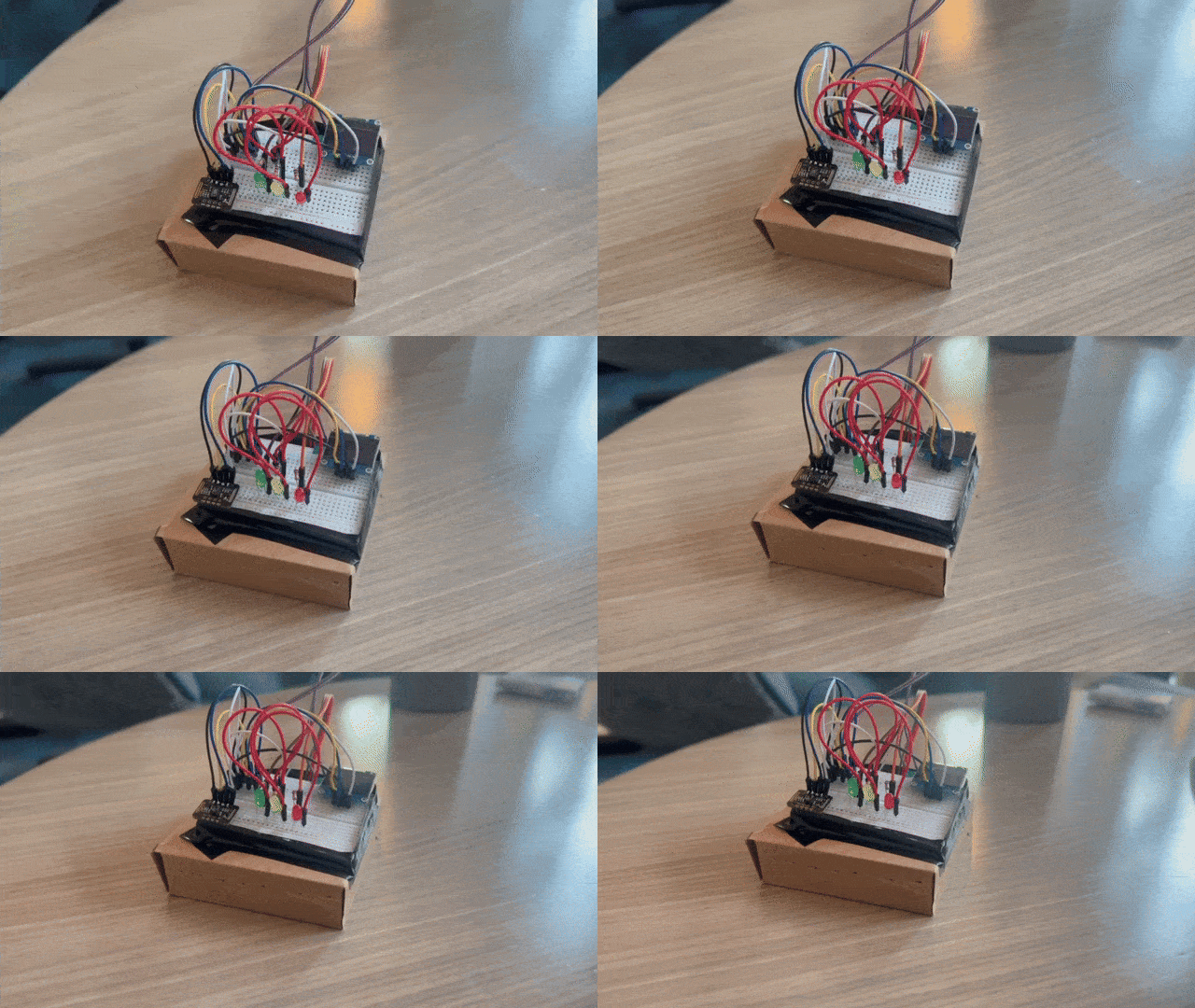
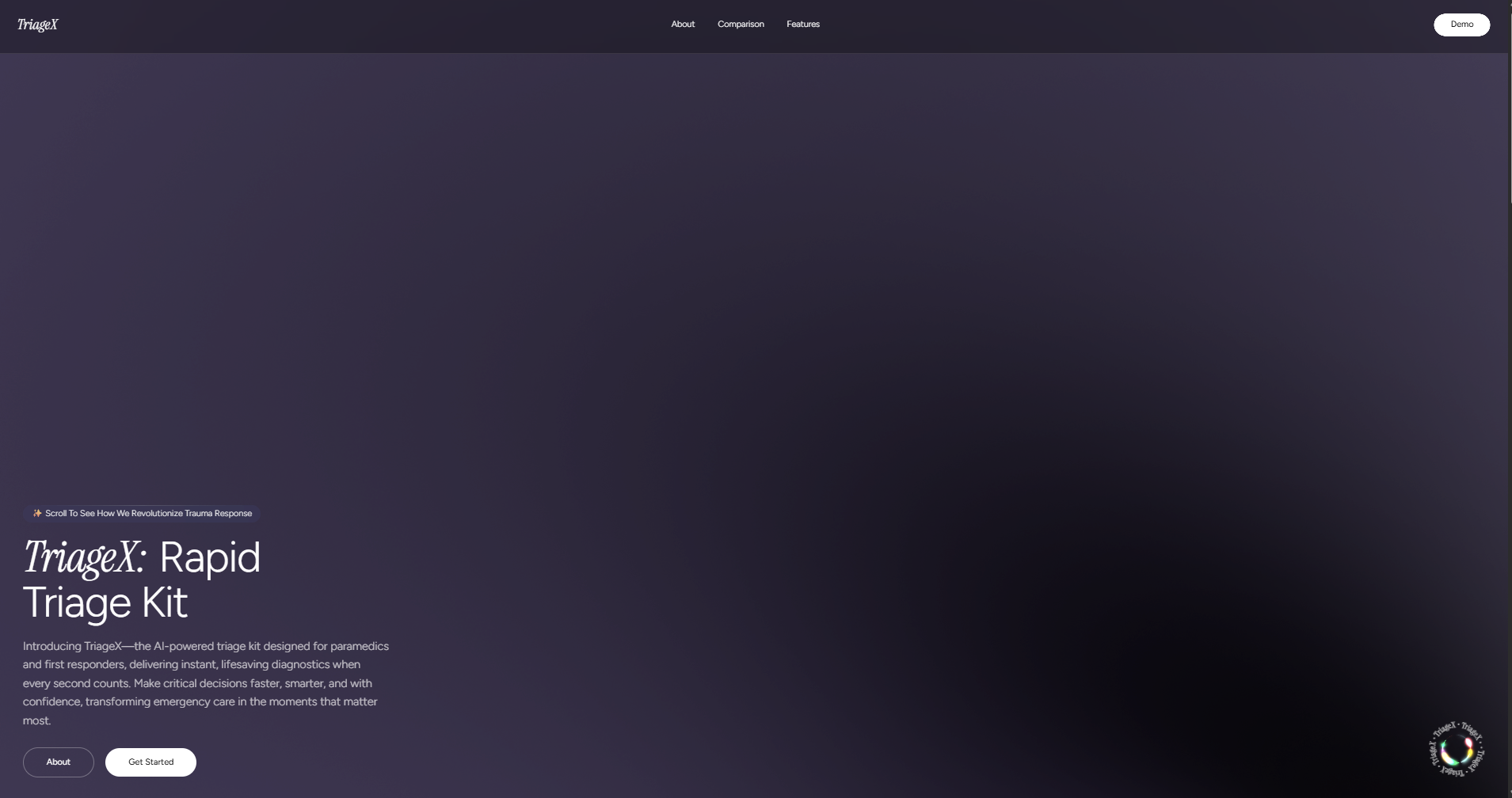
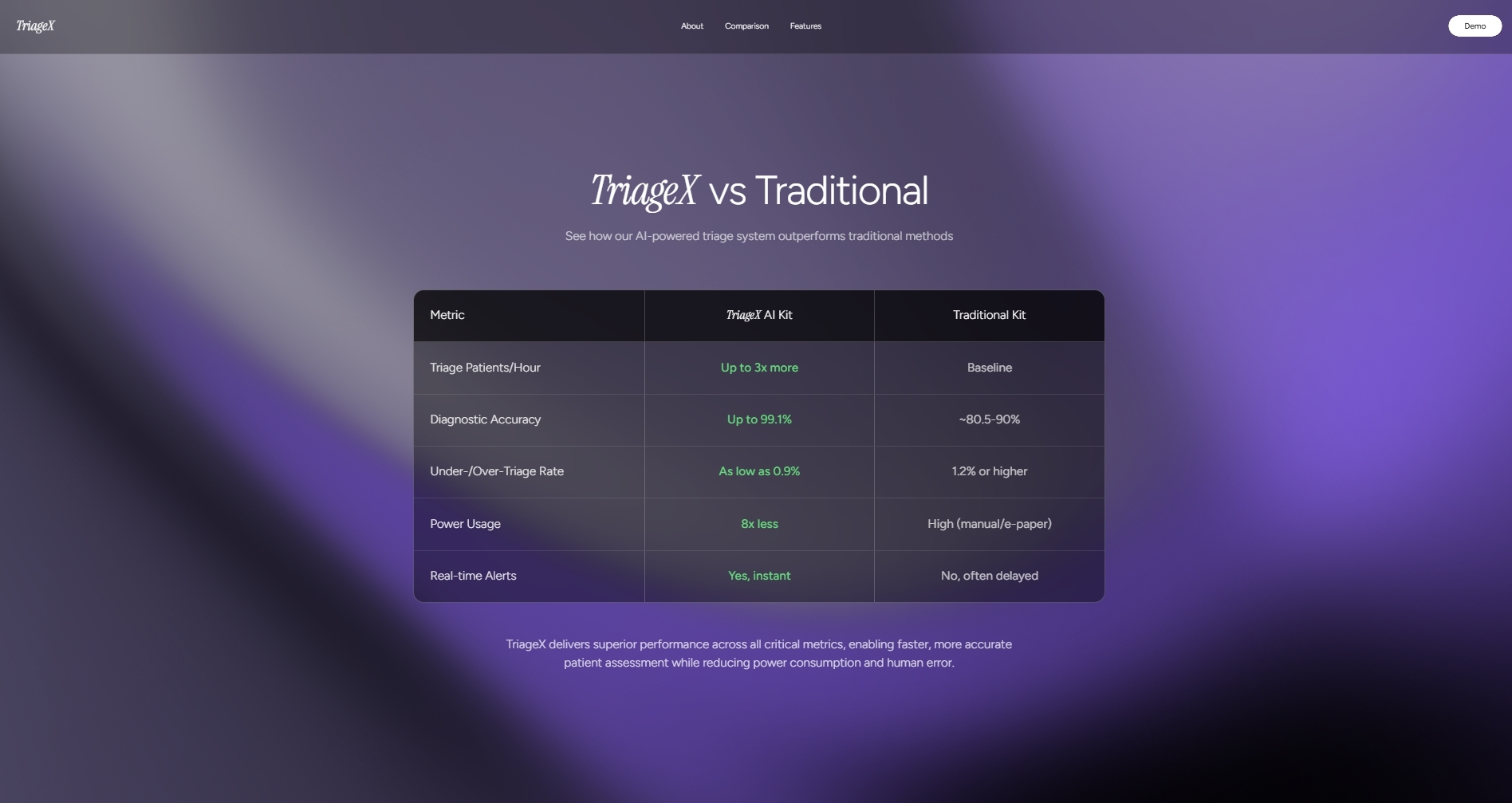
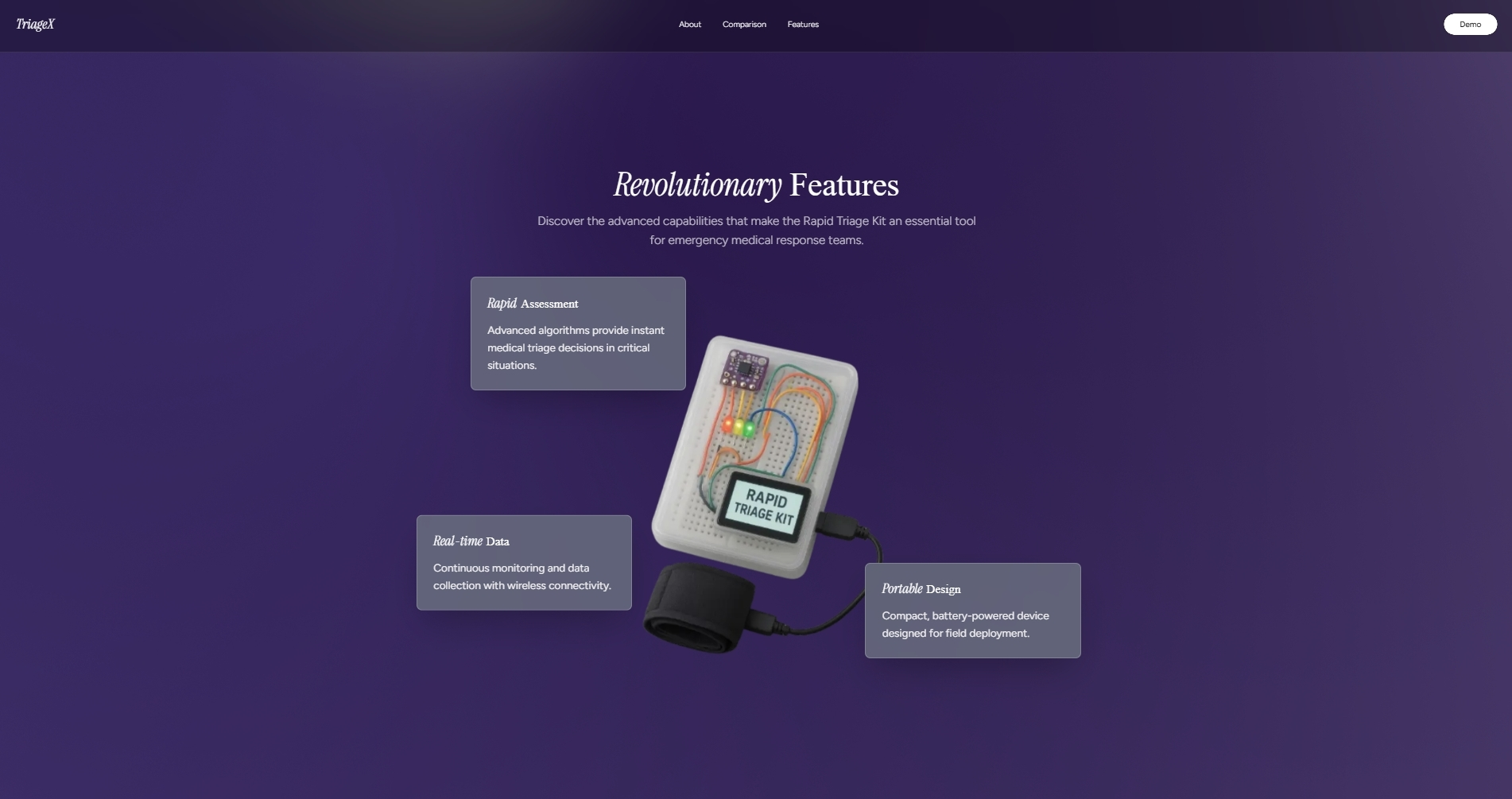
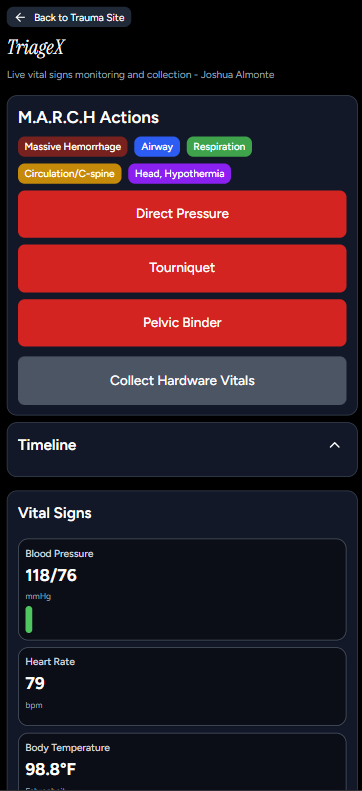
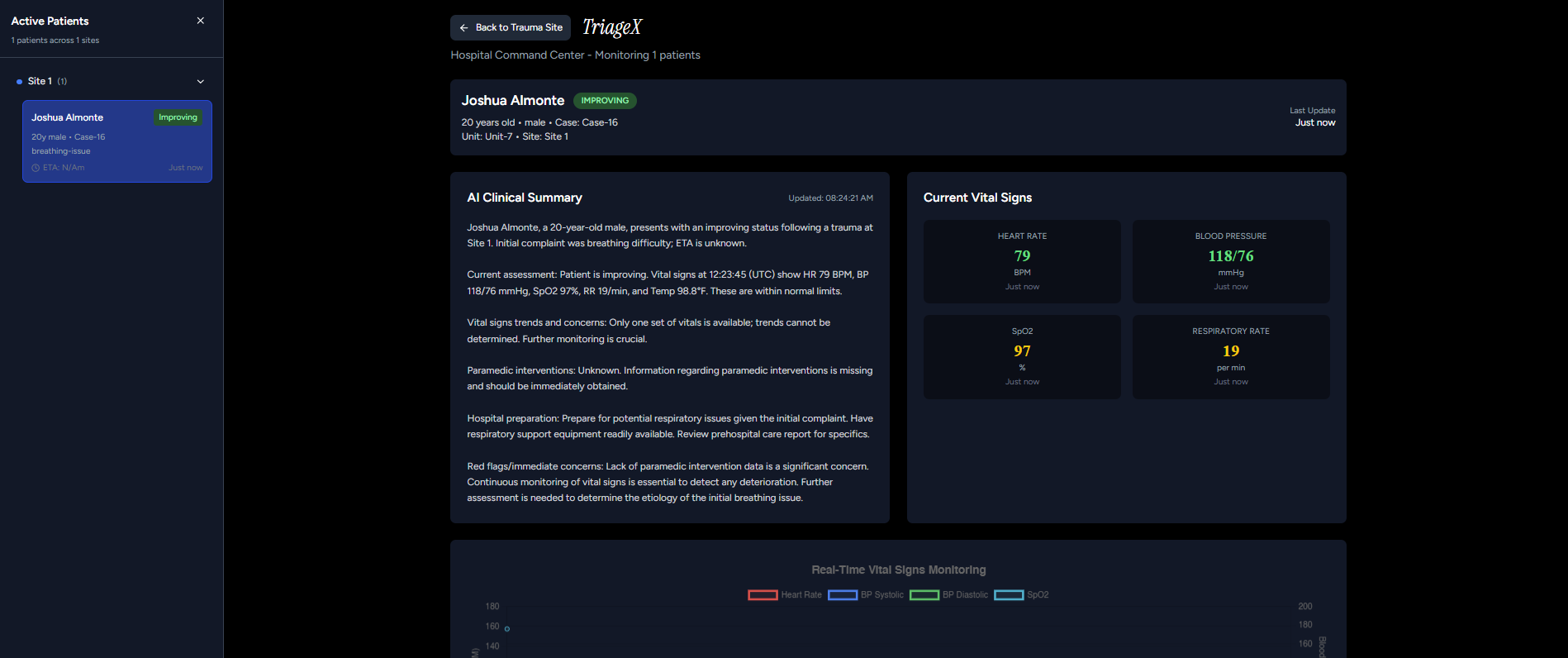
TriageX is the combination of physical components and software to create a more effective healthcare system so that everyone is able to get the help that they need. We built a rapid response vital monitoring unit paired with software that allows for blistering quick documentation, macro buttons to streamline communication to medical centers about incoming patients. We measure all critical vitals, including heart rate, blood pressure, body temperature, and blood oxygen levels. By utilizing our app (both desktop and mobile versions) we implemented a M.A.R.C.H (Massive Hemorrhage, Airway, Respirations, Circulation, and Head injury/Hypothermia) guideline, patient logging system, and a trauma site event recording. By connecting first responders in the field to specialists and staff in clinics and hospitals, we allow all service workers to provide enhanced patient care and greater coordination within the industry.
How we built it
For our frontend, we used a sleek stack of React, Next.js, Tailwind CSS, Typescript, and HTML. For our backend, we used Django for our local RESTful API database, Python, and Gemini's API for our generative AI enhancements. For our hardware, we used the SoC ESP32 that interfaces a live monitoring system using I^2C and wired LED pins for classification. We used Arduino to implement code into the ESP32 that also allows it to create its own web server.
Challenges we ran into
The most difficulty we ran into during the hackathon was when we needed to create communication links for all our different frameworks to tie everything together.
Accomplishments that we're proud of
We are proud of being able to deploy and run the code successfully.
What we learned
How to develop three interlinked platforms with such an ambitious goal in mind under such time constraints, and that sleep is optional.
What's next for TriageX
We are looking to be able to go further with our platform by creating a second prototype that is even sleeker, easier to use, with further accessibility to provide our revolutionary technology to low-resource communities around the world.


Log in or sign up for Devpost to join the conversation.