Inspiration
Support teams waste most of their time manually triaging tickets—categorizing, prioritizing, and assigning them. I wanted to eliminate this repetitive work using AI so teams could focus on what matters: solving customer problems.
What it does
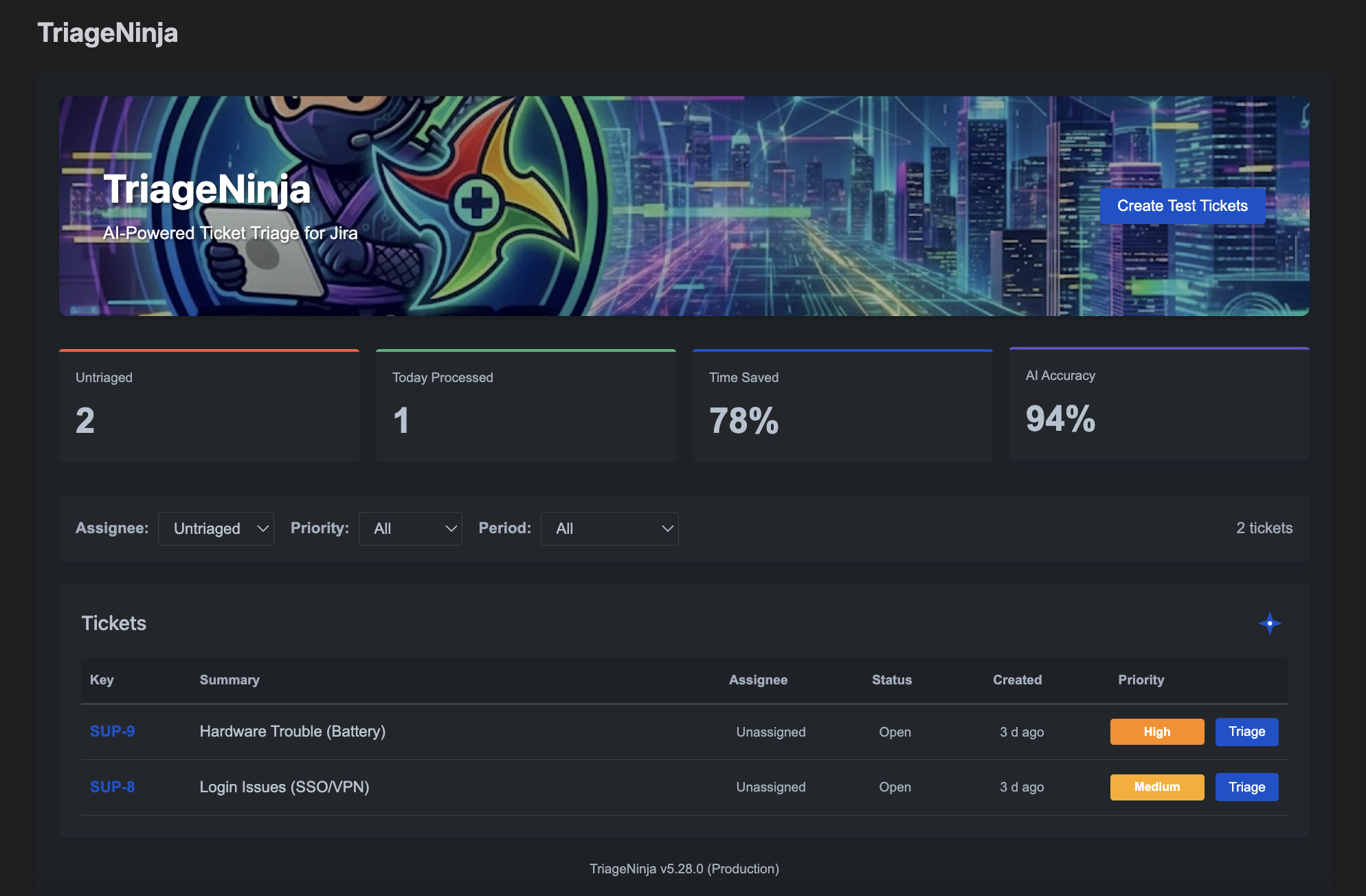
TriageNinja uses Forge LLM (Atlassian Rovo) to automatically:
Classify tickets by category and priority with high accuracy Suggest the best assignee based on skills, workload, and historical patterns Find similar resolved tickets with proven solutions Complete triage in seconds with transparent confidence scoring All powered by Claude 3.5 Sonnet through Atlassian's Forge LLM API.
How I built it
Built 100% on Atlassian Forge with:
Frontend: React + Forge UI Kit for seamless Jira integration Backend: Node.js + TypeScript with Forge LLM API AI Engine: Forge LLM (Rovo Chat) with Claude 3.5 Sonnet Smart Fallback: Keyword-based classification with historical data analysis when LLM is unavailable Architecture: Three-tier system (Auto-triage, Manual-triage, Fallback) for reliability
Challenges I ran into
Forge LLM EAP Access: Required Early Access Program approval to use Forge LLM API Context Limitations: Trigger context doesn't support user authentication, requiring careful API design Prompt Engineering: Optimizing prompts for structured JSON output and high accuracy Fallback Intelligence: Building a smart fallback that uses historical ticket data, not just keywords Real-time Updates: Implementing auto-refresh for statistics and ticket lists
Accomplishments that I'm proud of
High classification accuracy with Forge LLM (Rovo) Dramatic time reduction: From several minutes to seconds per ticket Smart fallback system: Enhanced keyword-based classification with historical pattern analysis Fair workload distribution: Randomized assignment for equal workloads Dynamic AI accuracy tracking: Real-time calculation from user feedback 100% serverless: Zero infrastructure management, runs entirely on Atlassian Forge Production-ready: Comprehensive error handling, logging, and monitoring
What I learned
Forge LLM Integration: Mastered Atlassian's Rovo Chat API for production AI features Advanced Prompt Engineering: Structured JSON output with confidence scoring Context-Aware Development: Different API approaches for user vs. trigger contexts Intelligent Fallbacks: Building resilient systems that work even when AI is unavailable Real Business Value: AI features must be transparent, reliable, and measurably improve workflows
What's next for TriageNinja for Jira
Multi-language support: Analyze tickets in any language Custom category training: Learn from your team's specific ticket types Slack/Teams notifications: Real-time alerts for new assignments Advanced analytics: Trend analysis, bottleneck detection, team performance insights Full auto-triage mode: Automatically assign high-confidence tickets without human review Enhanced similar ticket search: Semantic search using embeddings for better matches AI-powered response suggestions: Draft replies based on similar resolved tickets

Log in or sign up for Devpost to join the conversation.