-
-
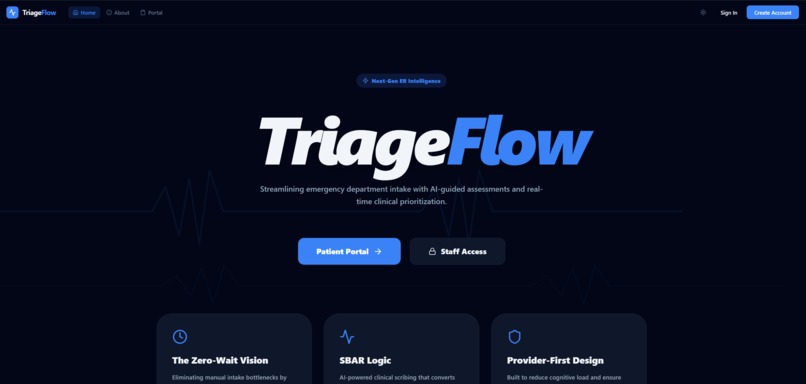
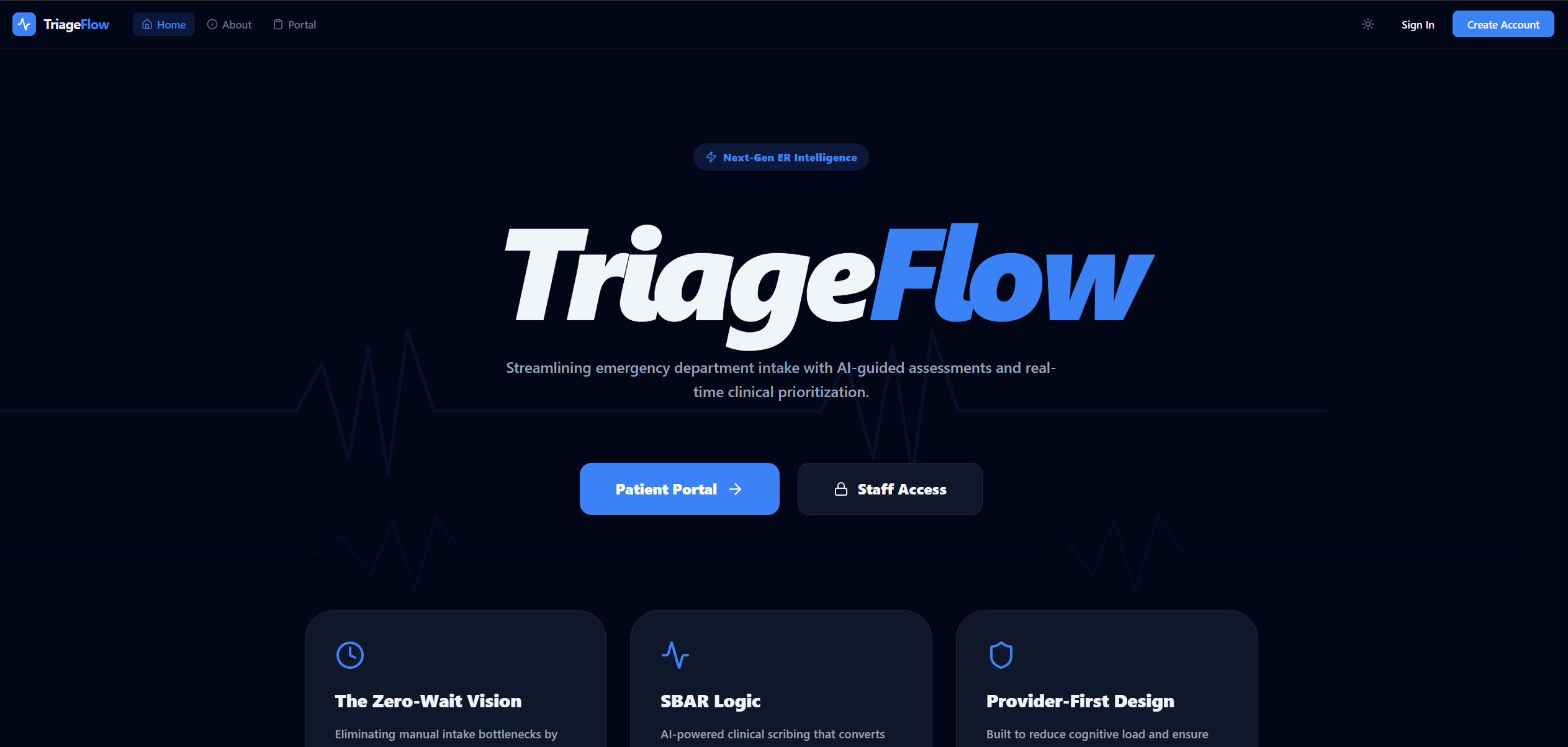
HomePage
-
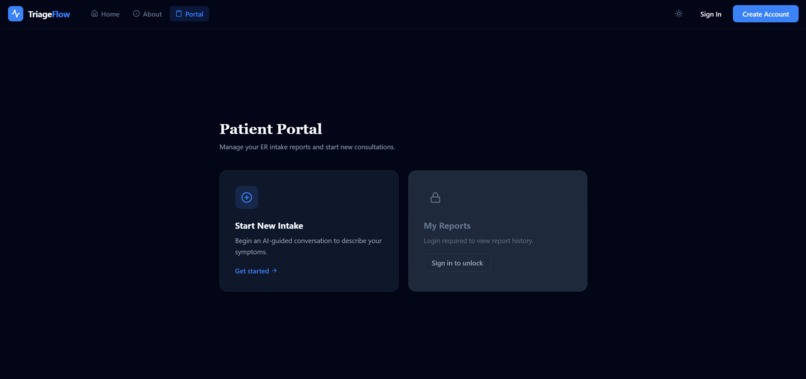
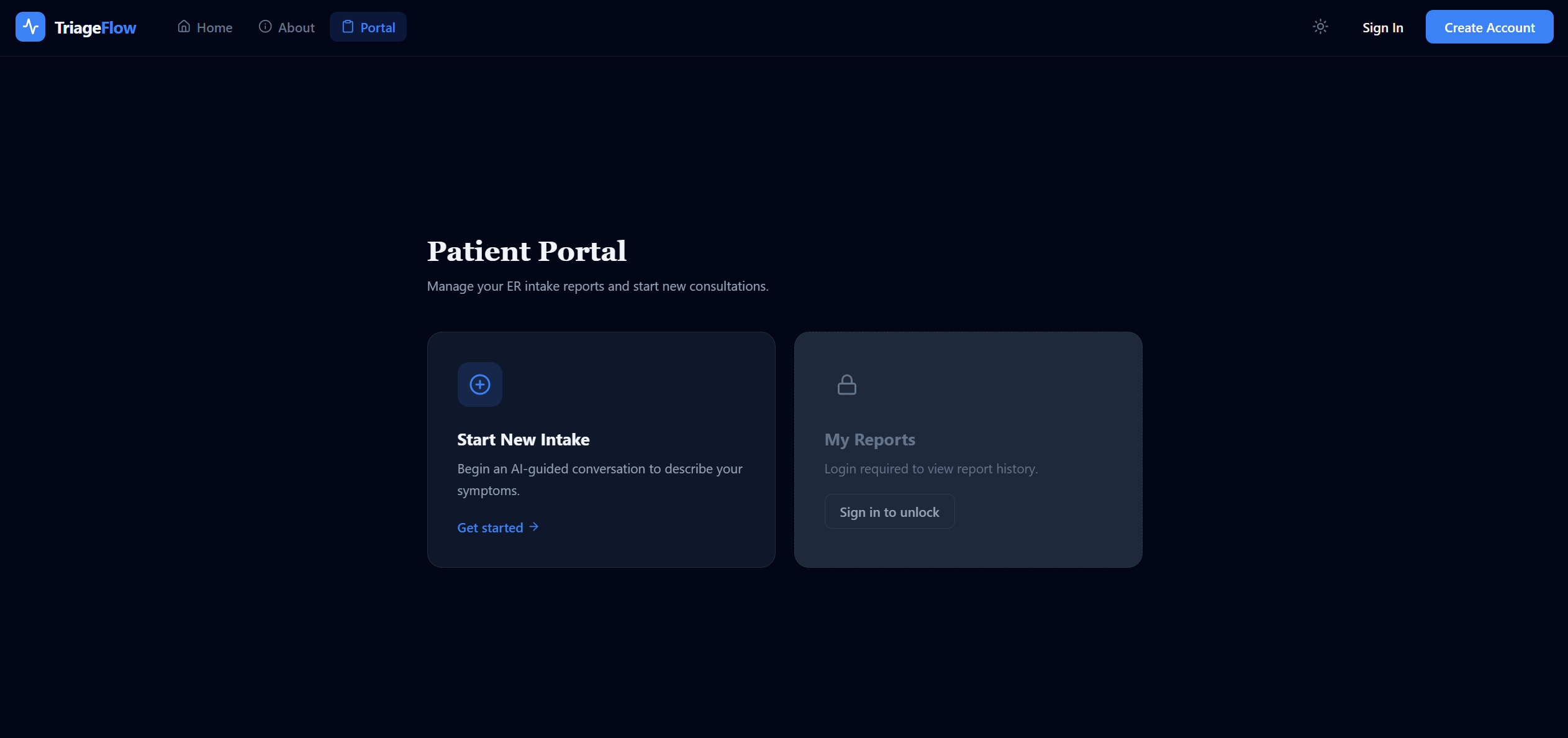
Patient Portal
-
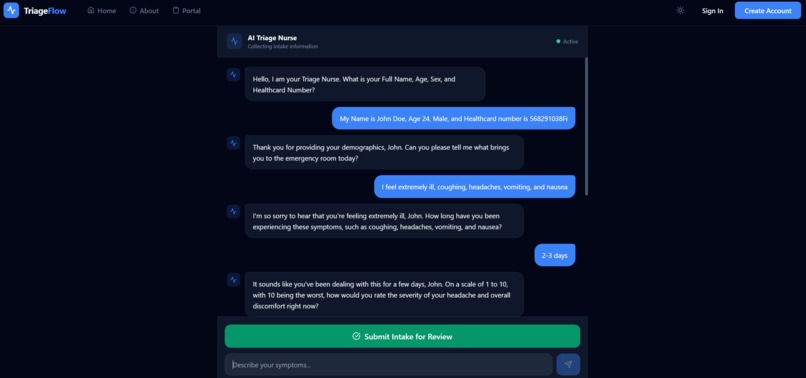
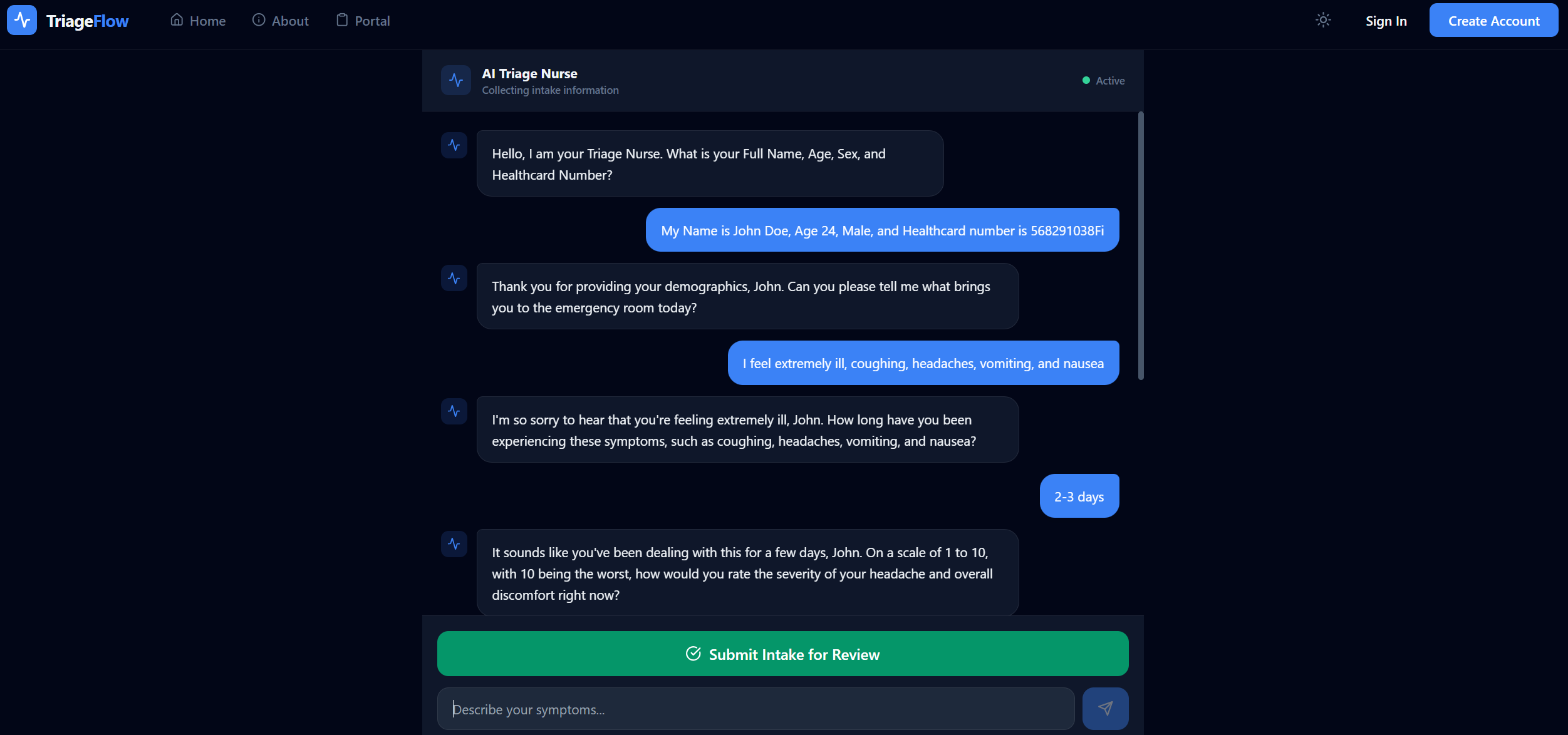
TriageFlow Nurse
-
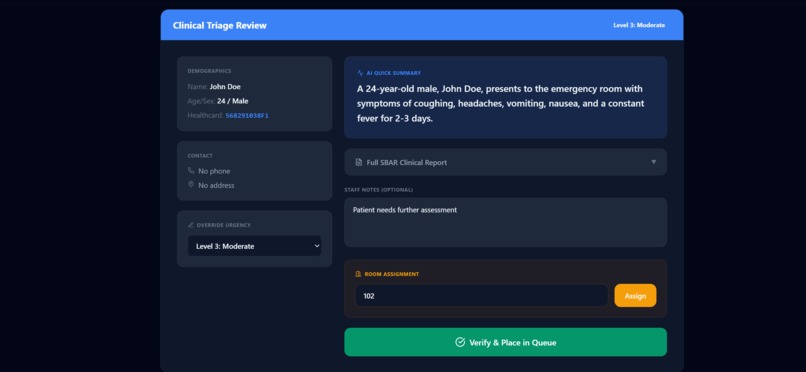
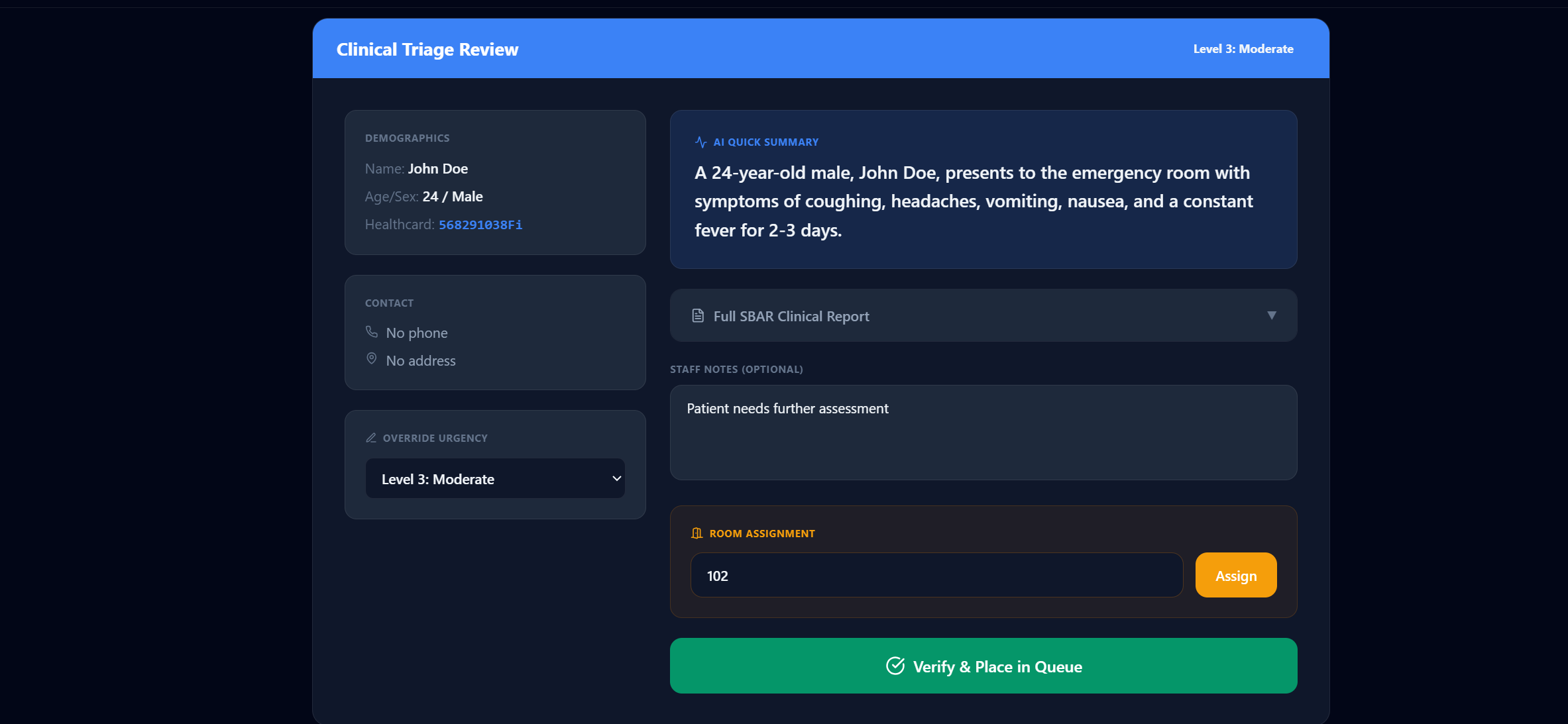
Staff Dashboard Session Review
Inspiration
Hospitals and clinics struggle with overcrowding, long wait times, and inefficient intake processes. Patients often arrive with unclear or incomplete information, while staff must quickly determine who needs immediate attention and who can safely wait. We were inspired to build a system that improves how information flows at the very start of care, so staff can make faster and more confident triage decisions.
What it does
TriageFlow is a digital patient intake and triage support system.
Patients enter their symptoms and basic information before being seen. This information is organized into a clear and consistent summary that highlights urgency and potential risk factors. Medical staff review submissions through a dashboard, allowing them to prioritize patients more effectively and focus attention where it is most needed. Staff always remain in full control of decisions and can adjust priorities at any time.
How we built it
We built TriageFlow as a modern web application using Next.js and TypeScript. The interface was designed to be simple and accessible for patients while providing staff with structured and actionable information. The backend follows an API driven architecture that separates patient intake from staff review, making the system reliable and easy to extend. The entire project is containerized using Docker to ensure consistent setup and deployment.
Challenges we ran into
One of the biggest challenges was designing a system that gathers useful clinical information without overwhelming patients. We also had to carefully structure symptom data so it could be reviewed quickly by staff without losing important context. Balancing speed, clarity, and safety under tight time constraints was a constant challenge throughout development.
Accomplishments that we're proud of
We built a complete end to end workflow that mirrors real clinical intake processes. The system improves organization and prioritization without interfering with medical judgment. We are proud of creating a solution that is realistic, responsible, and designed around the needs of healthcare workers rather than technology for its own sake
What we learned
We learned that small improvements in how information is collected and presented can have a large impact on care delivery. Clear structure and thoughtful design matter more than complex features. Most importantly, we learned that effective triage depends on supporting healthcare professionals with better tools, not replacing their expertise.
What's next for TriageFlow
Next, we plan to add support for multilingual intake, integrate with electronic health record systems, and provide analytics that help clinics understand patient flow and demand patterns. We also aim to gather feedback from healthcare professionals to further refine and validate the system in real clinical settings.
Built With
- docker
- gemini
- next.js
- postgresql
- react
- tailwindcss
- typescript

Log in or sign up for Devpost to join the conversation.