Inspiration
Emergency departments are often overwhelmed, and the first few minutes of intake can significantly impact patient outcomes. Today, triage relies heavily on manual questioning, language-dependent communication, and subjective interpretation—often under stressful conditions.
We were inspired by a simple question: what if we could preserve a patient’s story, context, and urgency clearly and safely before a clinician ever sees them?
TriageAI was built to explore how responsible AI, when designed with guardrails and clinicians in the loop, can improve accessibility, consistency, and safety in emergency care.
What it does
TriageAI is an AI-assisted, clinician-in-the-loop triage system designed for emergency rooms and urgent care settings.
It consists of:
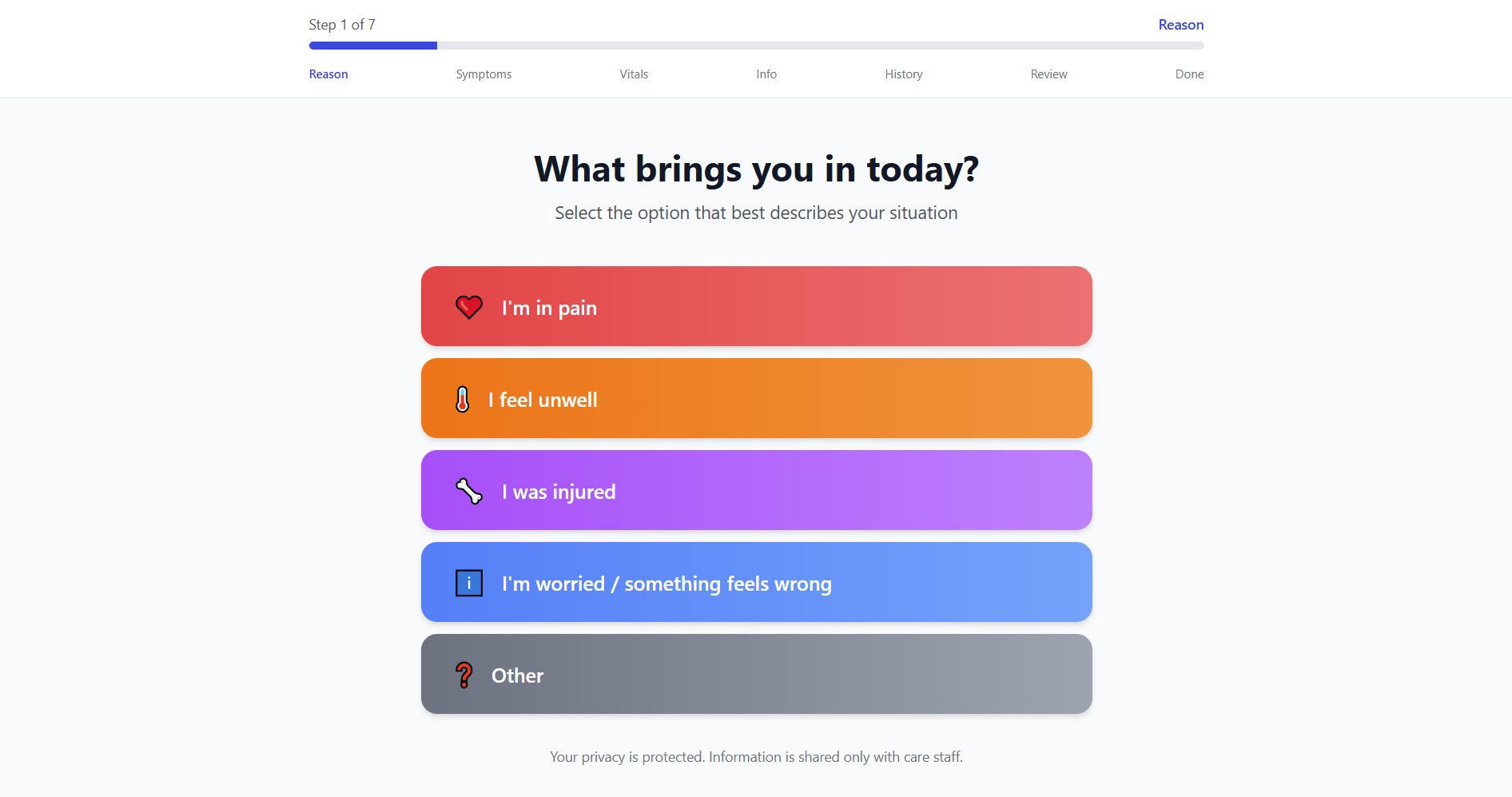
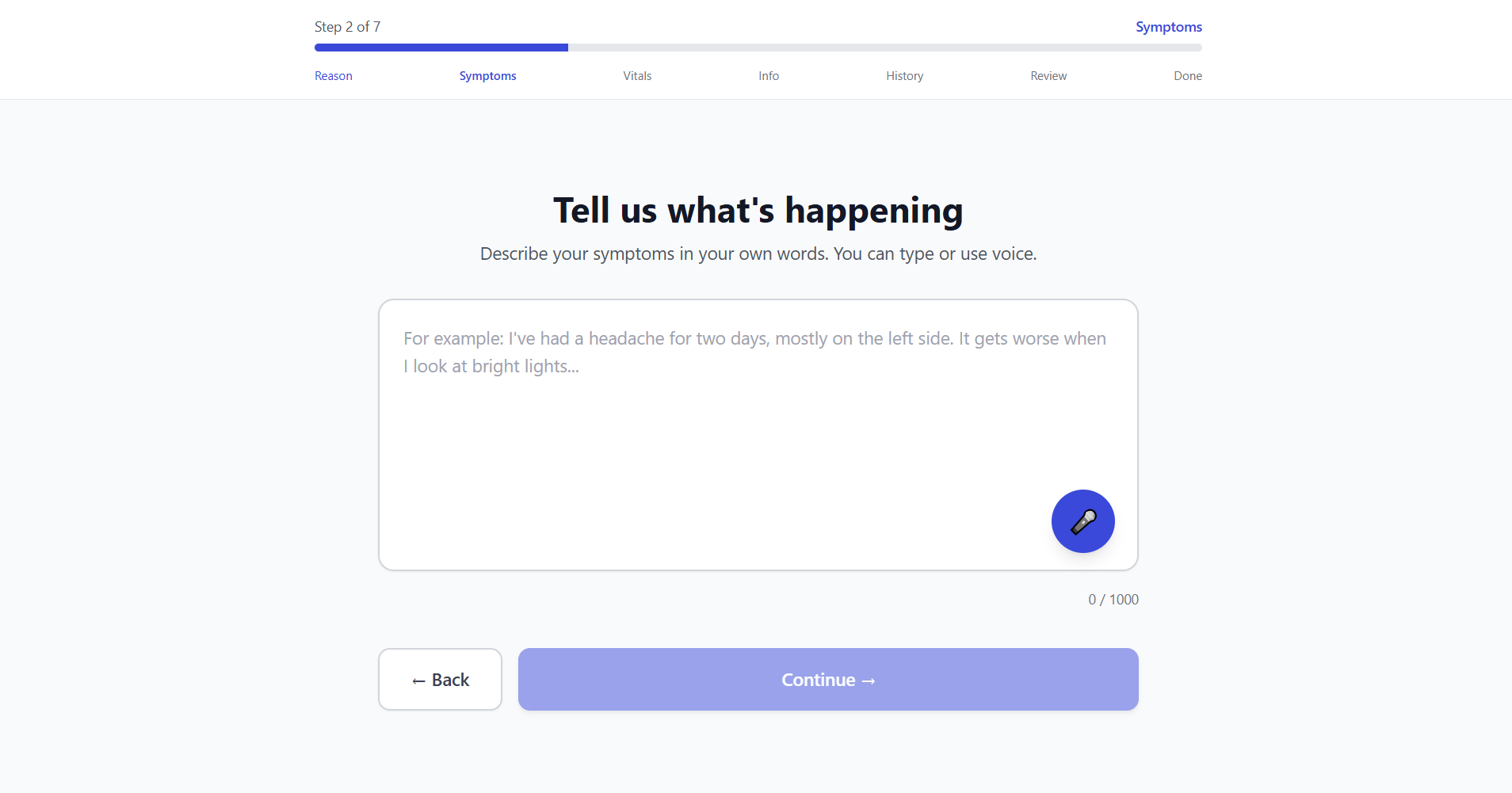
- A patient-facing web intake kiosk where patients describe their symptoms using speech or text
- An AI-powered multi-agent pipeline that structures intake, estimates urgency, and produces a clinician-ready summary
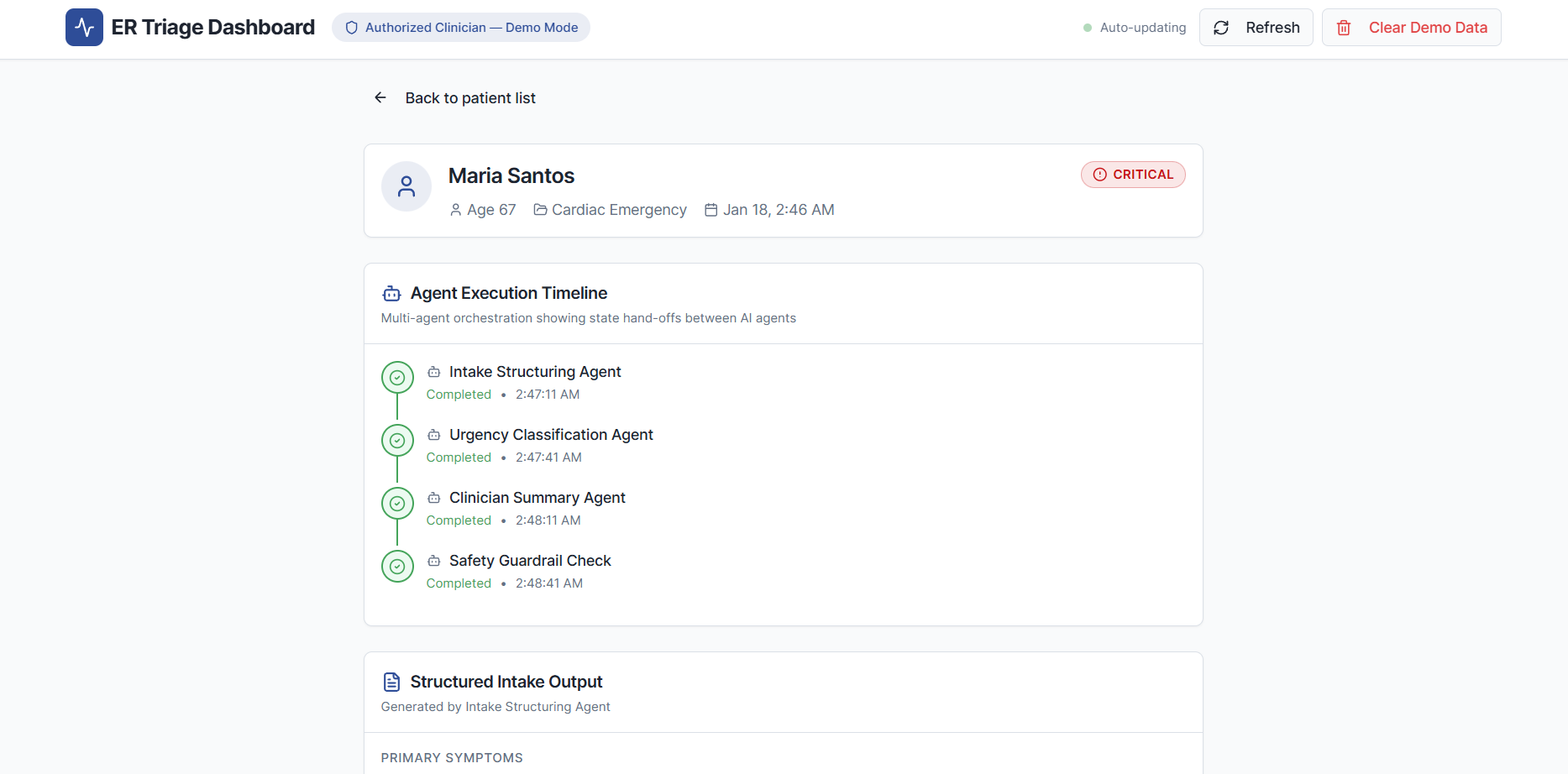
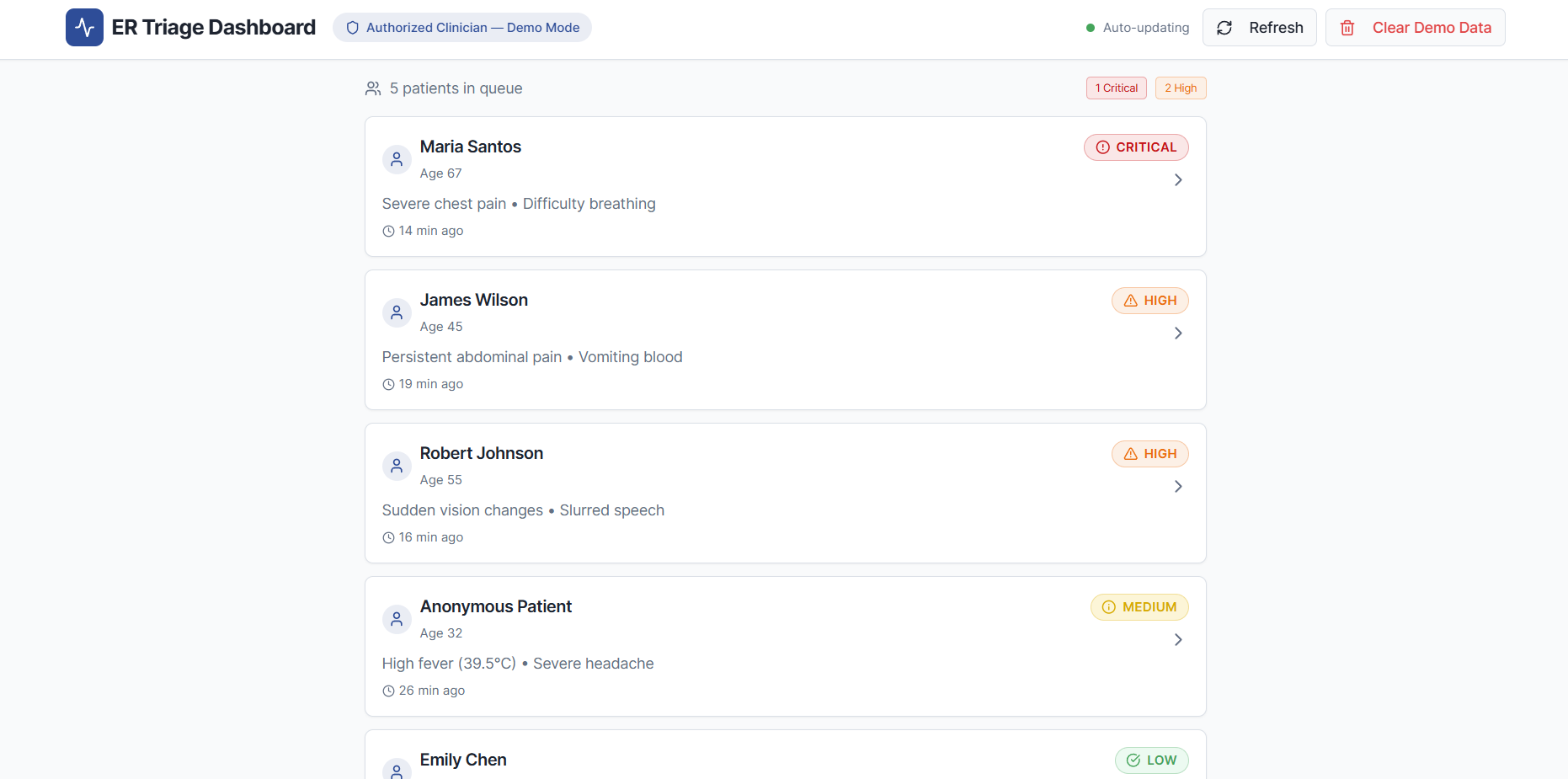
- A doctor dashboard that shows patients prioritized by urgency and clearly visualizes how AI agents contributed to each assessment
Key features:
- Multilingual-friendly intake via speech or text
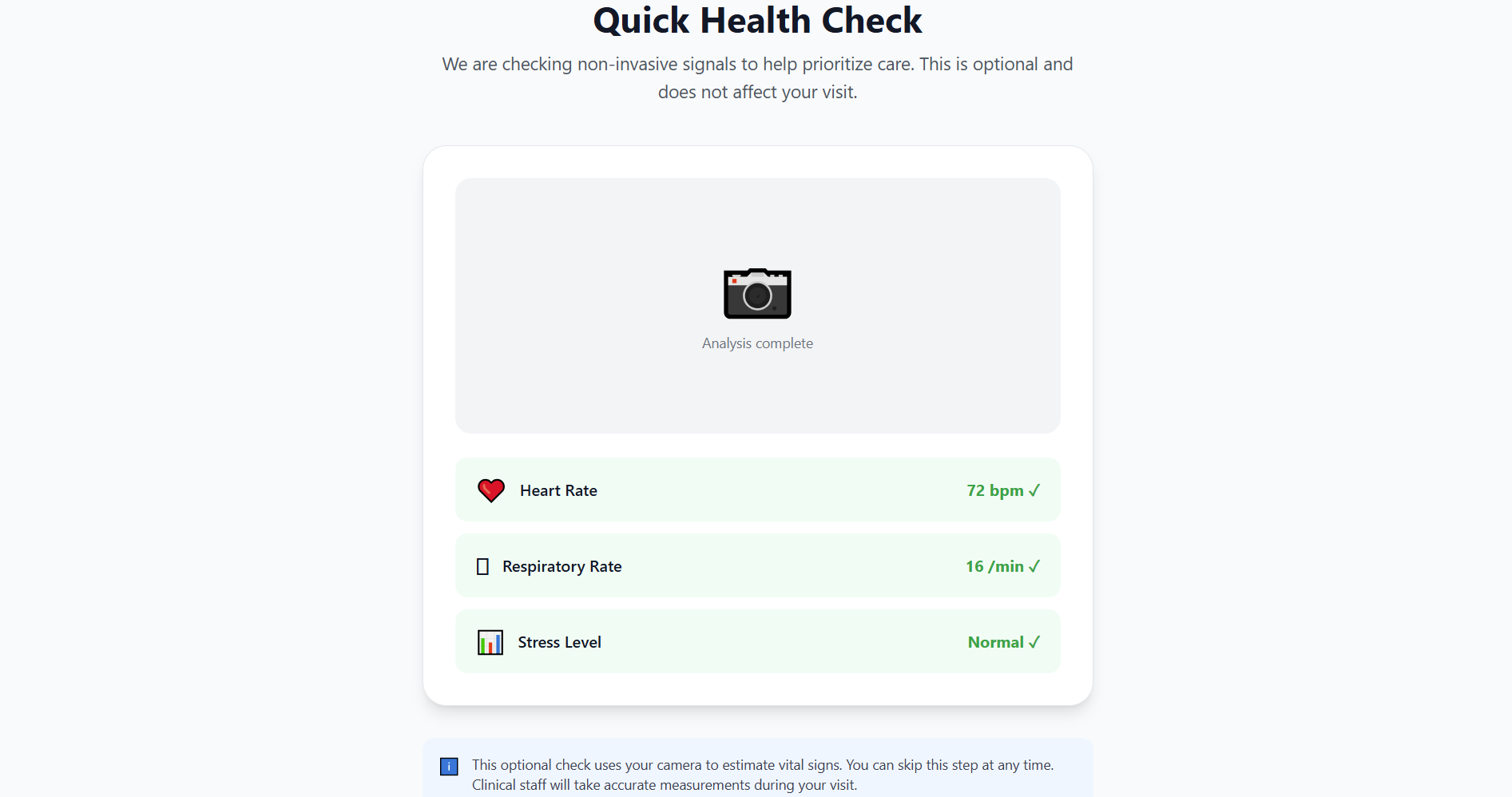
- Passive, non-invasive vitals support (optional)
- Conservative urgency classification (Low / Medium / High / Critical)
- Deterministic safety guardrails that always err on the side of escalation
- Clear, explainable agent hand-offs and timestamps
- No diagnoses or treatment recommendations — decision support only
How we built it
TriageAI was built as a monorepo with a clean separation of concerns:
Frontend
- React + TypeScript + Tailwind CSS
- Patient Intake Web App (ER kiosk)
- Doctor Dashboard Web App (clinician-facing)
Backend
- Node.js + Express API
- MongoDB as a shared, evolving patient state store
- Polling-based real-time updates for demo reliability
AI & Orchestration
- Multi-agent system orchestrated using LangGraph
- Agents include:
- Intake Structuring Agent
- Urgency Classification Agent
- Clinician Summary Agent
- Deterministic post-agent guardrails enforce safety rules (age risk, red flags, vitals, uncertainty)
- Adaptive memory and model selection supported via Backboard.io + LangChain
The MongoDB patient record acts as the shared “state,” allowing each agent to append its output in sequence, making orchestration and hand-offs fully inspectable.
Challenges we ran into
Balancing safety with usefulness in a healthcare context
We had to be extremely careful to avoid diagnoses, treatment advice, or overconfident AI outputs.Making multi-agent orchestration visible
It’s easy to claim “multi-agent AI”; it’s much harder to show it clearly. We solved this by explicitly exposing agent timelines, outputs, and timestamps in the dashboard.Scope discipline as a solo hacker
Many tempting features (real-time video analysis, mobile apps, advanced analytics) were intentionally cut to ensure a stable, polished demo.
Accomplishments that we’re proud of
- Designing a responsible AI system for healthcare that prioritizes safety and explainability
- Building a clear, inspectable multi-agent pipeline that meets real-world standards
- Creating a clinician dashboard that makes AI behavior transparent rather than opaque
- Integrating deterministic guardrails that constrain AI outputs
- Completing an end-to-end system solo within a tight hackathon timeframe
What we learned
- In high-stakes domains, constraints are a feature, not a limitation
- AI systems are far more trustworthy when paired with explicit rules and human oversight
- Clear state management and explainability matter more than model complexity
- Judges and users alike value clarity, responsibility, and intent over flashy demos
What’s next for TriageAI
- A home/mobile pre-triage experience to help patients choose the right care setting before arriving
- Deeper multilingual support with omnilingual speech models
- Integration with EHR systems for seamless clinician workflows
- Longitudinal learning from clinician feedback to continuously improve triage consistency
- Further research into bias mitigation and accessibility in emergency care


Log in or sign up for Devpost to join the conversation.