Inspiration
This project was inspired by a personal experience while commuting home from school. I slipped and fell on icy stairs because there were no warnings or signs indicating unsafe conditions. While the fall was not serious, my laptop broke in the process, turning a small incident into a costly one.
That moment made me realize how easily the situation could have been avoided with better information. It motivated me to build a digital signage platform that informs people about hazards or changing conditions ahead of time so they can act more cautiously.
What it does
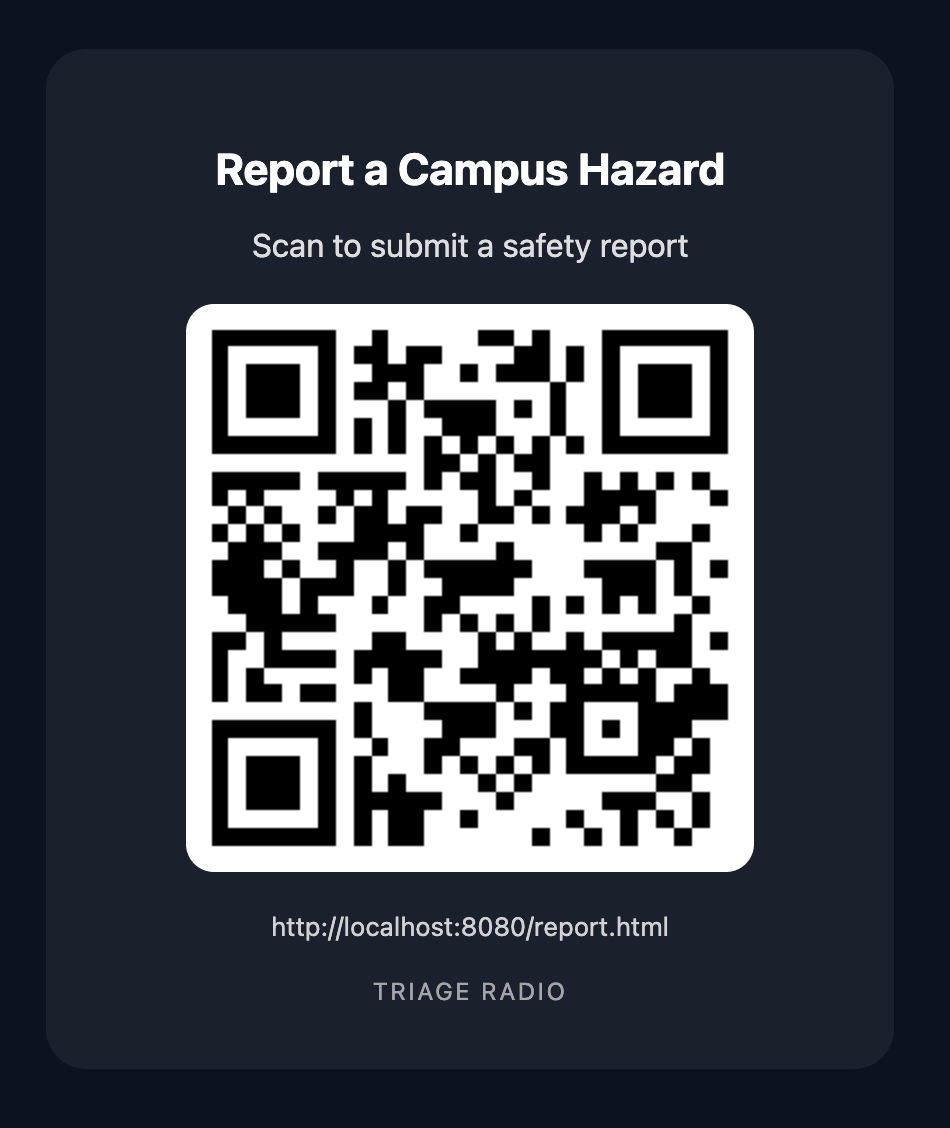
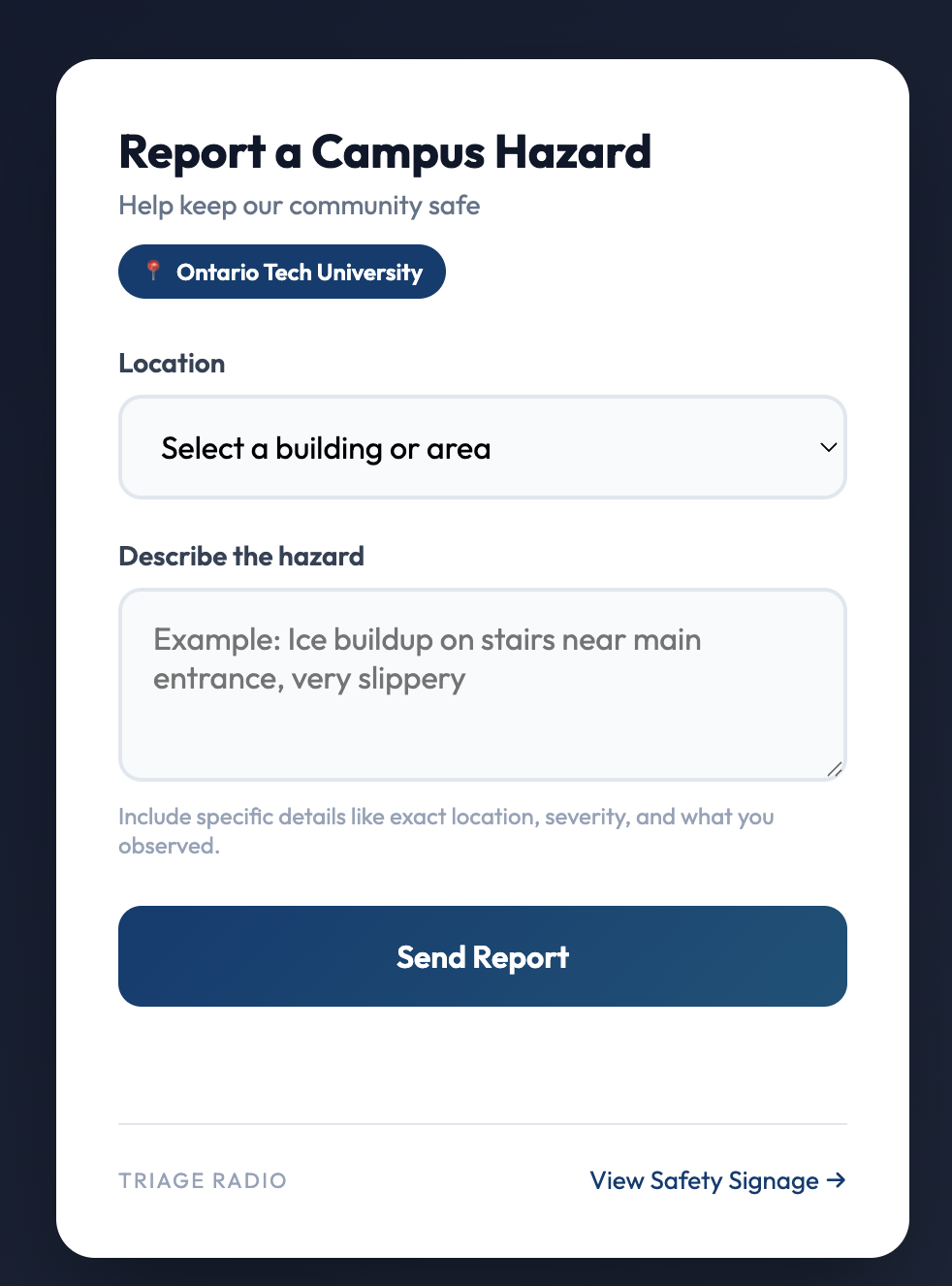
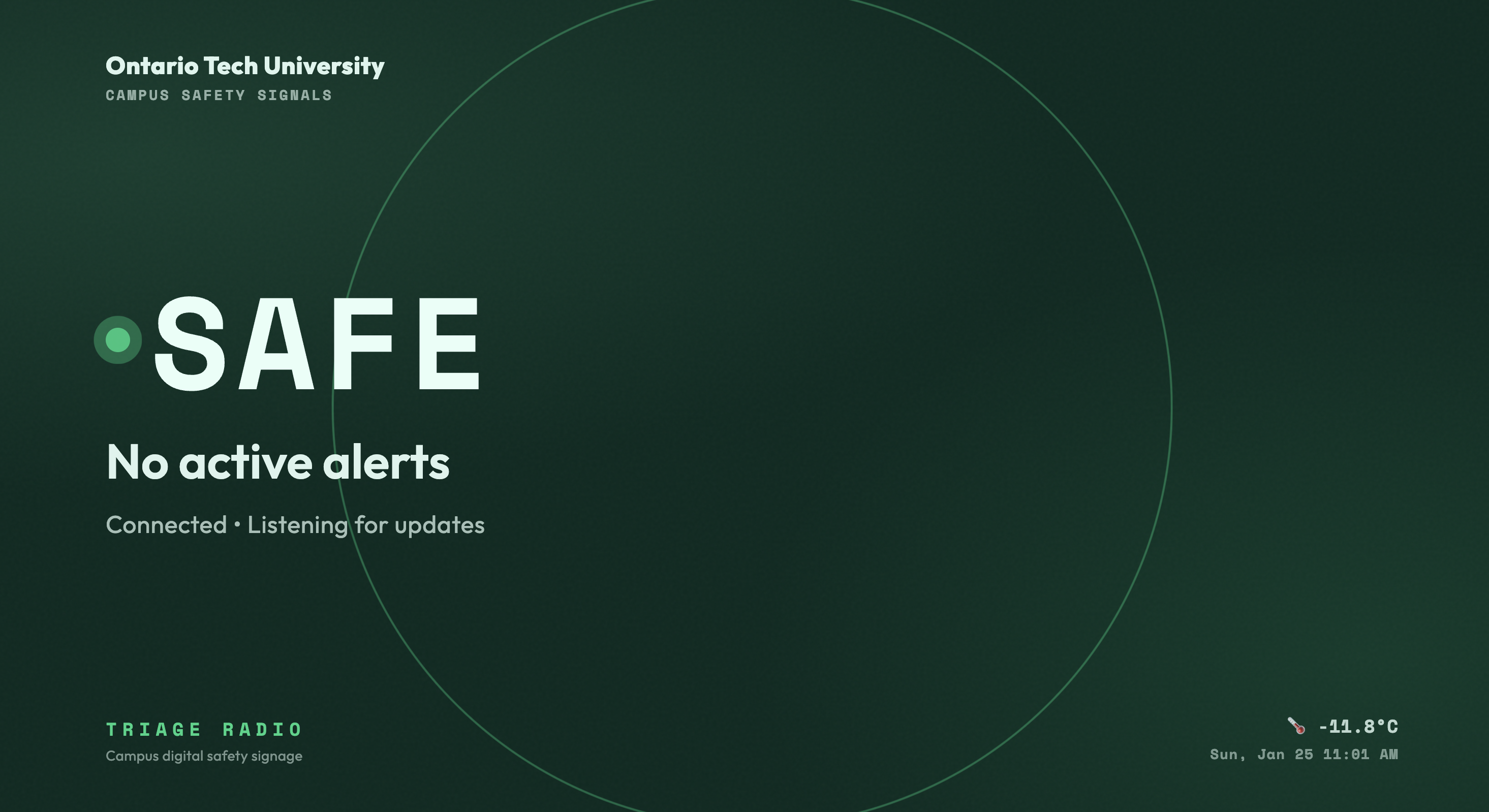
Triage Radio is a digital signage platform designed to display timely and important information on screens. It is built to prioritize clarity and visibility, helping people become aware of potential risks or updates before entering a space.
How we built it
The project was built as a full stack system with a clear separation between backend logic and frontend display.
The backend is built with Node.js and is designed to manage and prepare information. The signage frontend is built with HTML, CSS, and JavaScript and focuses on presenting clear, readable content optimized for screens.
Both parts are combined into a single repository for easier sharing and review.
Challenges we ran into
One of the main challenges was deciding how much information to show without overwhelming the viewer. Digital signage is meant to be read quickly, so simplicity and prioritization were key.
Another challenge was organizing the project structure so that the backend and signage could work independently while still feeling like one cohesive system.
Accomplishments that we're proud of
I successfully built a working full-stack digital signage platform based on a real-world problem.
I also created a clean project structure that makes the system easy to understand, extend, and showcase as a student project.
What I learned
Through this project, I learned how to design software with real-world users in mind rather than just focusing on features.
I also gained experience structuring a project with both backend and frontend components and thinking about how software can improve awareness and safety.
One key idea behind the project is that risk can be reduced by improving information. The fundamental risk equation is:
$$ \text{Risk} = P(\text{hazard}) \times \text{Impact} $$
By informing people ahead of time, I can reduce the probability \(P(\text{hazard})\) of accidents occurring, thereby lowering overall risk \(R\).
What's next for Triage Radio
Future improvements include adding live updates, integrating data sources for real-time conditions, and enhancing the signage layouts.
The platform could also be expanded to support different environments such as campuses, transit areas, or public buildings. I envision the update frequency \(f\) being optimized based on the hazard change rate:
$$ f_{\text{optimal}} = k \cdot \frac{d}{dt}[\text{hazard level}] $$
where \(k\) is a visibility constant ensuring information stays current without overwhelming viewers.
Built With
- css3
- gemini
- html
- javascript
- node.js
- supabase


Log in or sign up for Devpost to join the conversation.