Inspiration
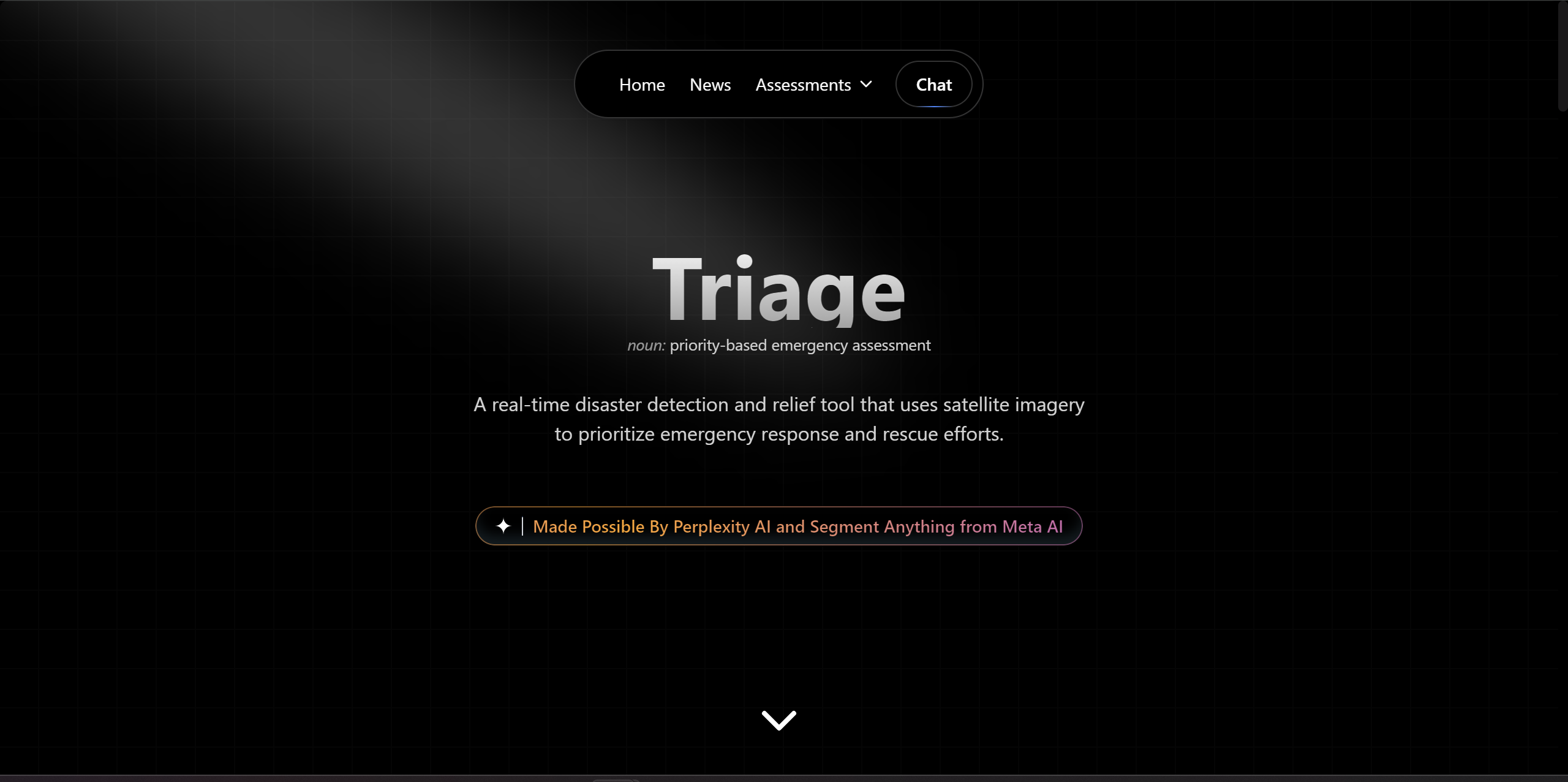
With natural disasters happening all over the world and becoming exponentially more frequent and deadly, my team and I realized that there was a gap between technology and the severity of natural disasters. As a result, we decided to create Triage. At first, Triage was initially for first responders and built on satellite imagery and computer vision models. However, we soon realized that there are so many more use cases that a centralized toolkit for natural disasters could bring. Triage seeks to grant relief to everyone from emergency workers to concerned citizens.
What it does
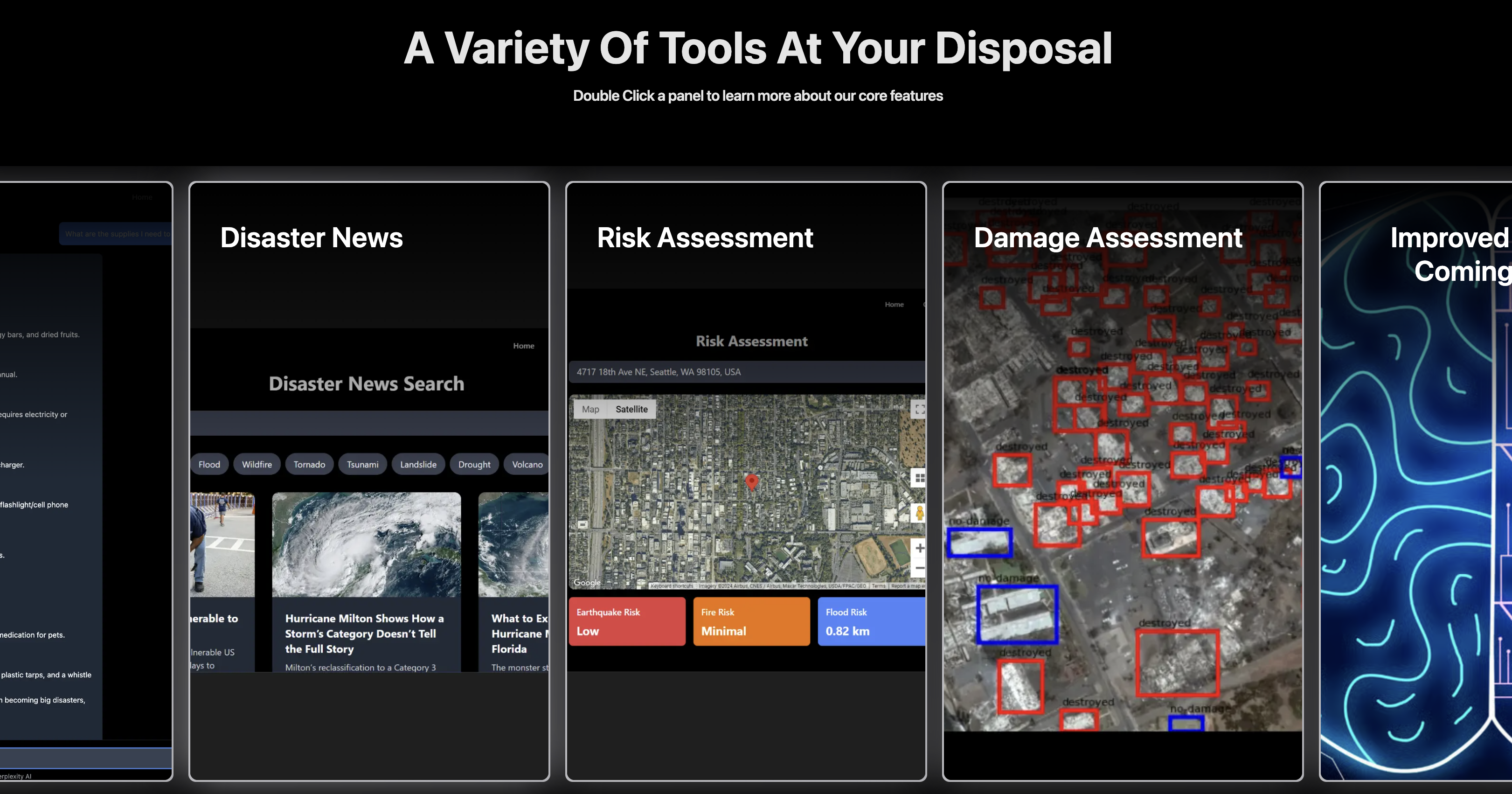
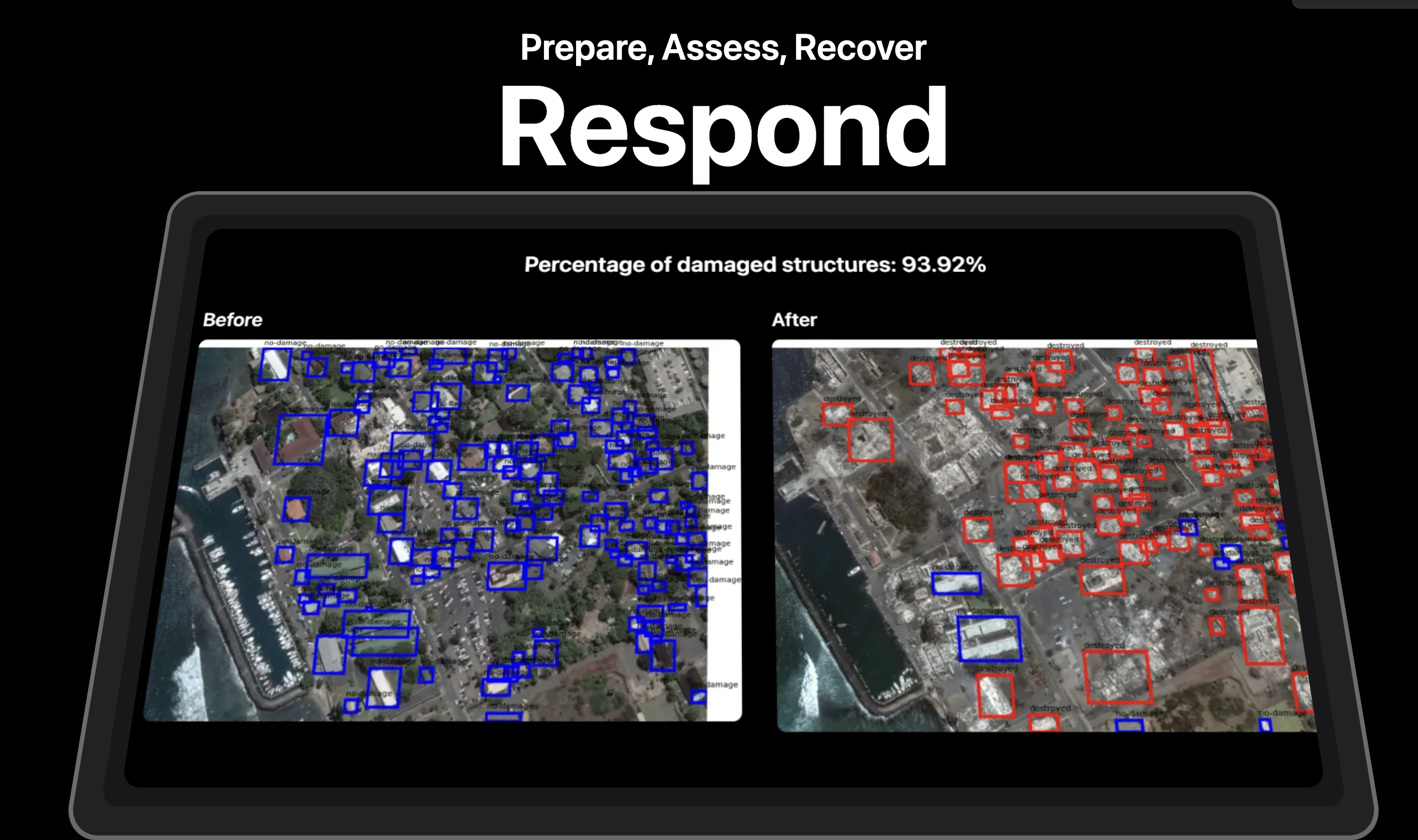
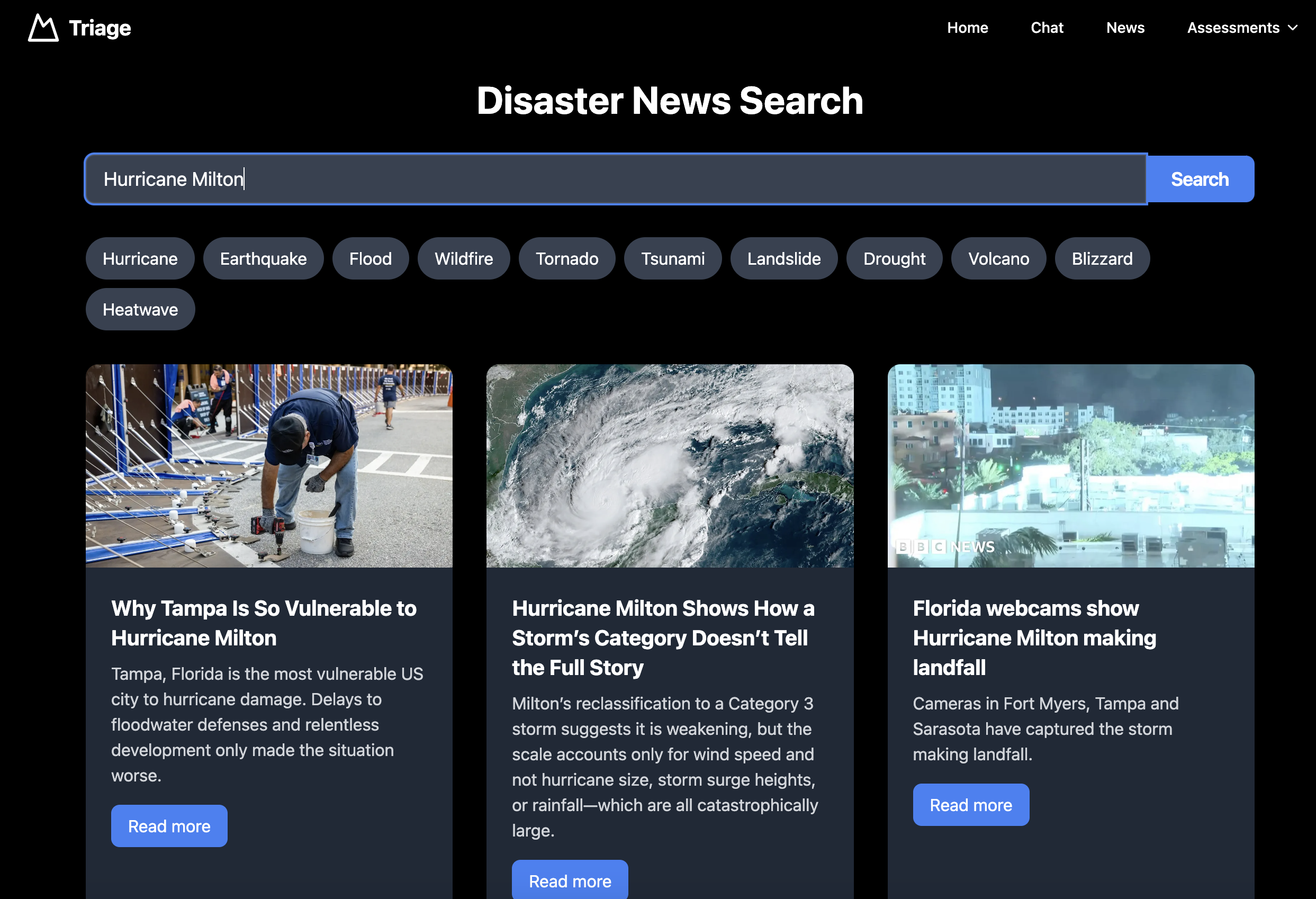
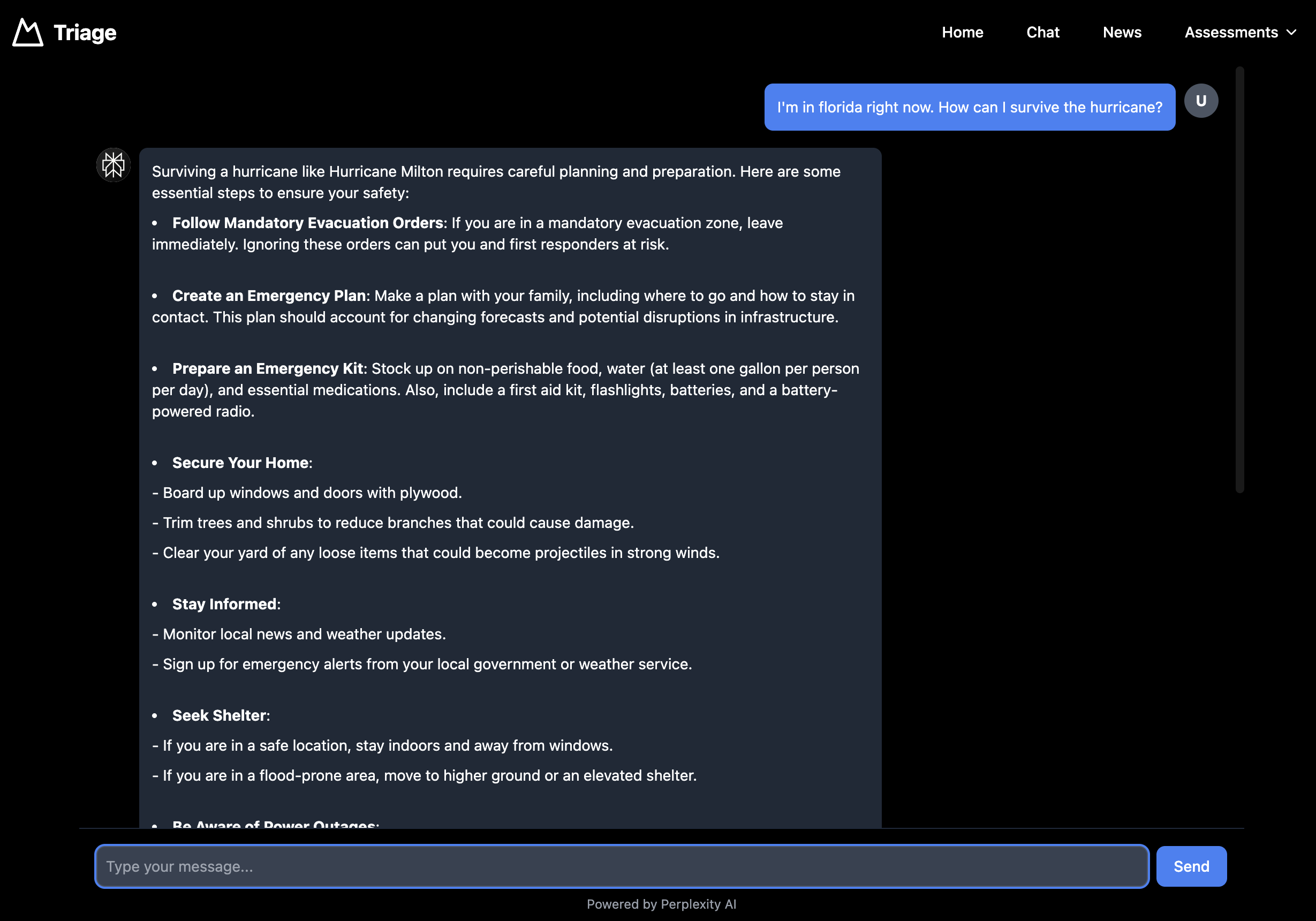
Triage has four primary use cases: Damage Assessment, Risk Assessment, News, and Chat. Firstly, Disaster assessment helps determine which areas are most impacted, and help those in charge effectively delegate limited resources. Risk Assessment uses four criteria to calculate the risk of natural disasters in the area around you. The tool is meant for those who want to be prepared for any potential natural disasters. News is a hub for disaster related current events for those who want to stay informed on what's happening in the world. Lastly, Chat is a fine tuned LLM designed to provide general information and assistance on natural disasters, whether it's preparation, evacuation, or rebuilding. Through these functions, Triage hopes to be able to provide benefit to all.
How we built it
Triage is built primarily with a Next.JS Framework and a Backend Flask Server, along with an AWS CloudFormation Stack to host Image Processing Models. We also used a fine-tuned Perplexity Llama model for our LLM, Intel Tiber for hosting, SAM 2.0 for Segmentation, Precisely Risk API for Risk Analysis, a U-Net Computer Vision model, and Google Map APIs for Satellite Images.
Challenges we ran into
We primarily ran into challenges with our computer vision models, package management, server hosting, Intel learning challenges, and Tim falling asleep.
What's next for Triage
We want to built further on Triage through more use cases and stronger computer vision models. We also want to expand our platform and begin having real time users who can leverage our services to improve their safety.
Built With
- flask
- google-maps
- java
- next.js
- perplexity
- precisely-risk-api
- python
- sam2.0
- u-net


Log in or sign up for Devpost to join the conversation.