Inspiration. We were inspired by how difficult it is to respond to real system outages in modern infrastructure. When multiple components fail at once (servers, networks, power), it’s often unclear what the root cause is or where to start fixing first. We wanted to build something that helps automate that “triage” process and make incident response faster and more structured.
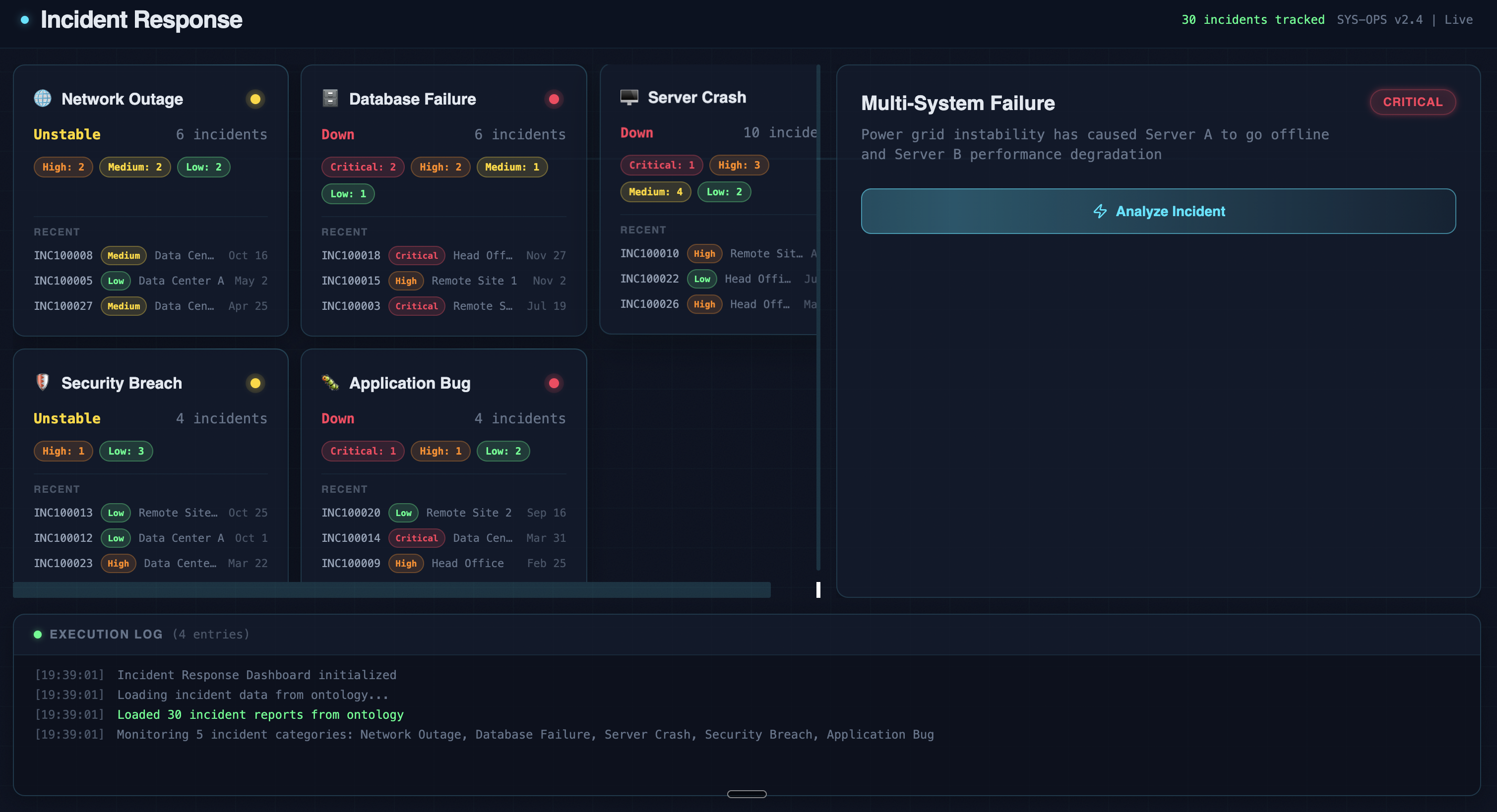
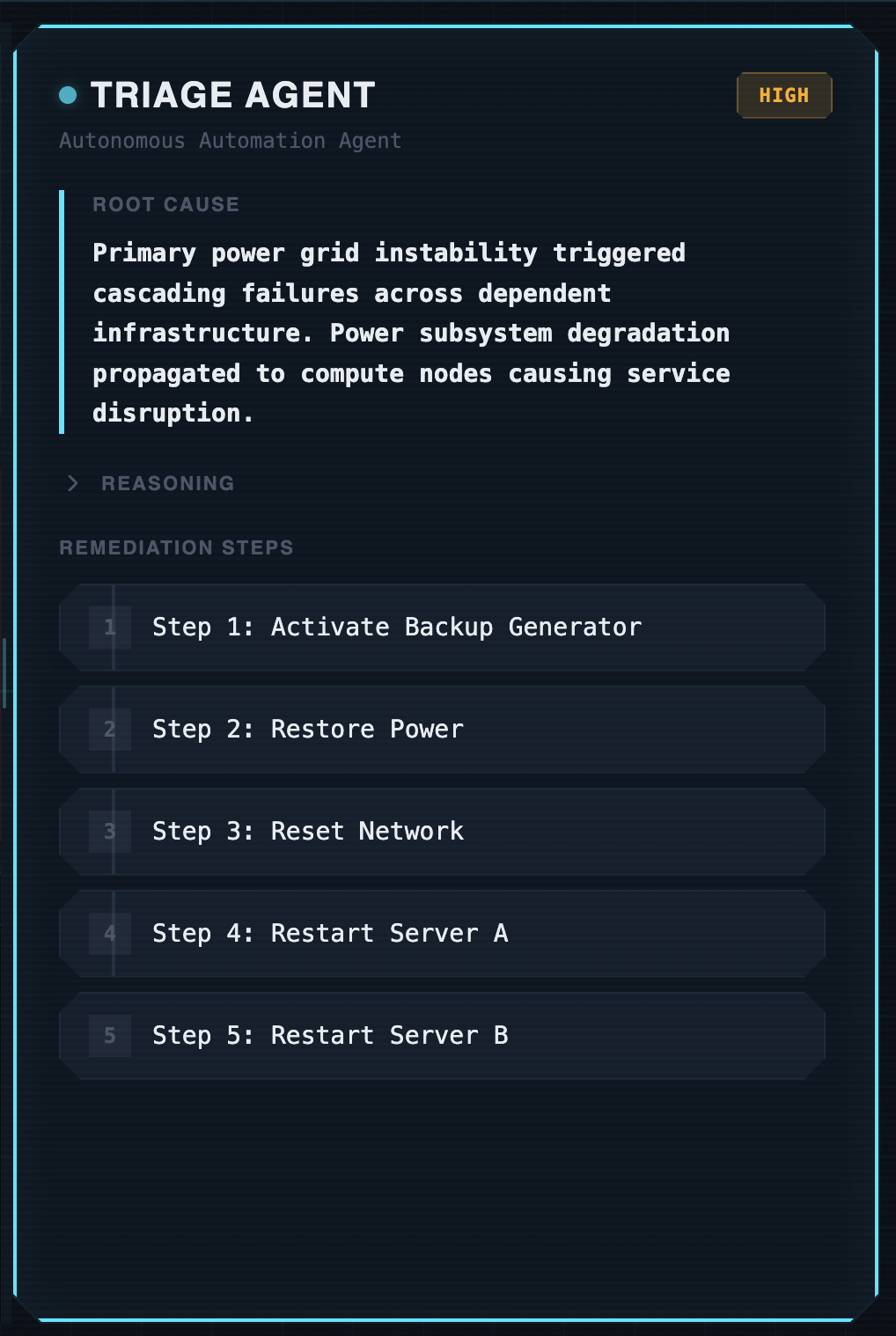
What it does. Triage Agent is an AI-powered incident response dashboard that simulates system failures across server, network, and power layers. It detects and organizes these failures, then uses AI to analyze the situation and generate prioritized, step-by-step recovery actions. It turns raw system signals into clear operational guidance.
How we built it. We built the system as a simulated operations environment where components can fail and trigger alerts. We used Palantir Technologies tools, especially Palantir AIP, Palantir Pilot, Palantir Ontology, and Palantir Logic Functions to connect data, reasoning, and automated workflows. For development, we used GitHub, Visual Studio Code, and GitHub Copilot.
Challenges we ran into. One major challenge was designing a system that felt realistic but still understandable in a hackathon timeframe. Modeling failures across multiple subsystems while keeping outputs structured required a lot of iteration. Another challenge was integrating AI outputs into actionable workflows rather than just descriptive text.
Accomplishments that we're proud of. We’re proud that we were able to create a working end-to-end simulation where system failures trigger AI-generated responses and structured remediation steps. We also successfully connected data modeling, reasoning, and automated action into one cohesive workflow.
What we learned. We learned how important data modeling (ontology design) is when building AI-driven systems. The structure of the underlying system heavily influences the quality and usefulness of AI outputs.
What's next for Triage Agent? Next, we would like to make the system more realistic by integrating real-time monitoring data and expanding failure scenarios. We also want to improve the AI’s decision-making consistency and add more granular automation so it can simulate real-world incident response systems more accurately.
Built With
- aip
- built-with-languages:-javascript
- copilot
- github
- html/css-backend:-node.js-(api-layer-and-simulation-logic)-ai-/-workflow-layer:-palantir-aip
- palantir
- palantir-logic-functions-data-modeling:-palantir-ontology-dev-tools:-visual-studio-code
- palantir-pilot
- python-frontend:-react-(dashboard-ui)
- typescript

Log in or sign up for Devpost to join the conversation.