-
-
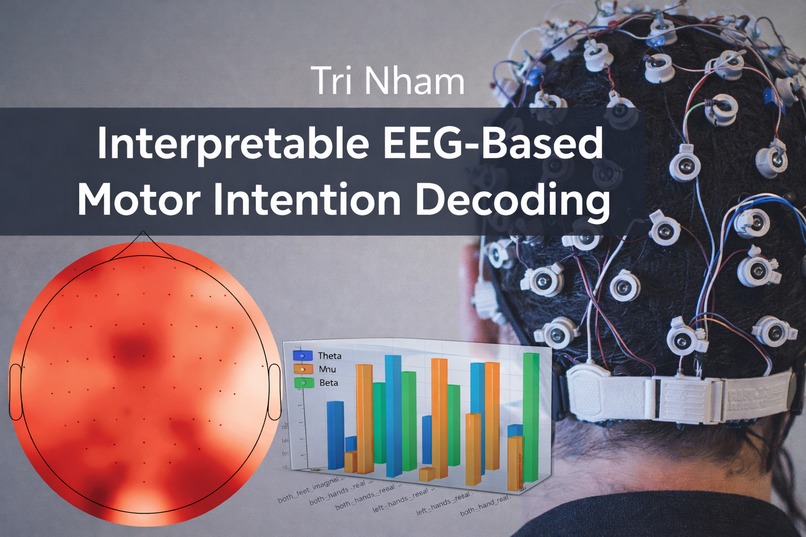
Tri Nham's Interpretable EEG-Based Classification of Motor Execution and Imagery
-
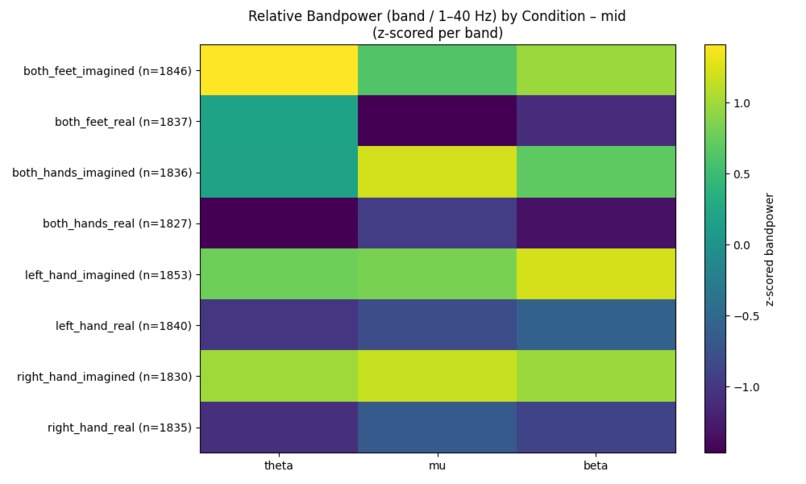
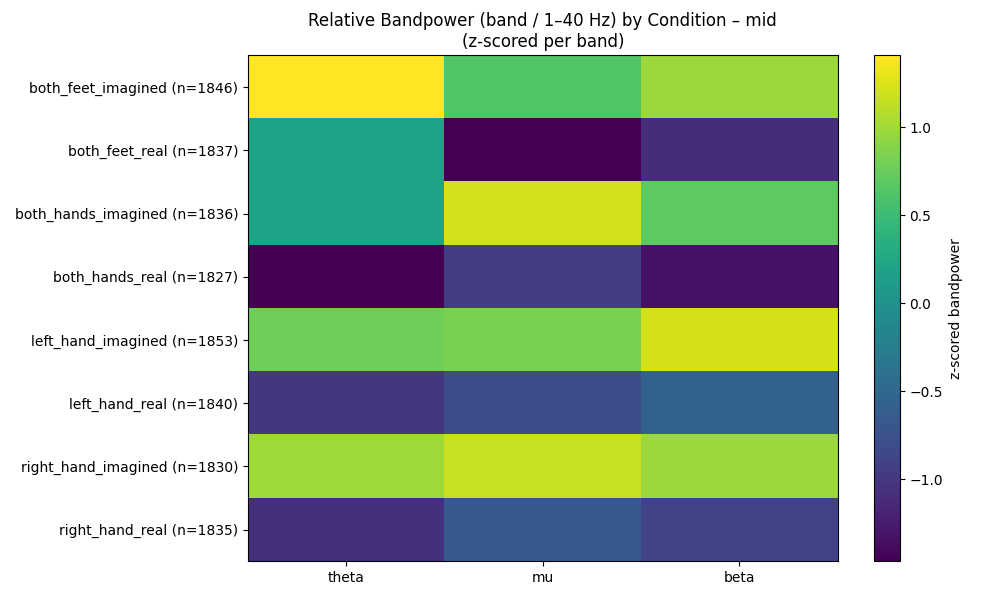
Heat map
-
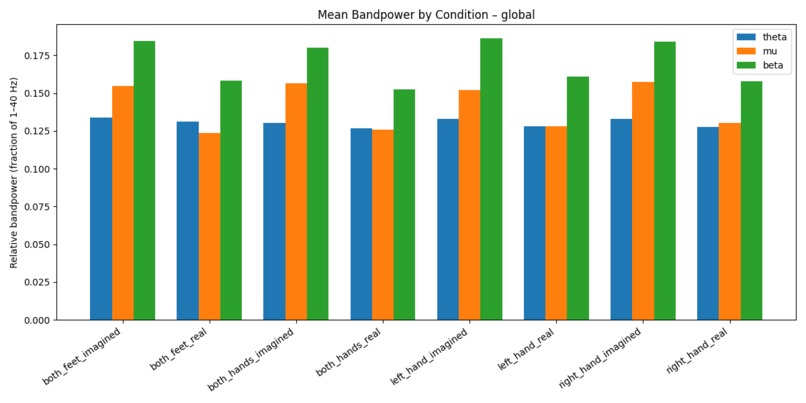
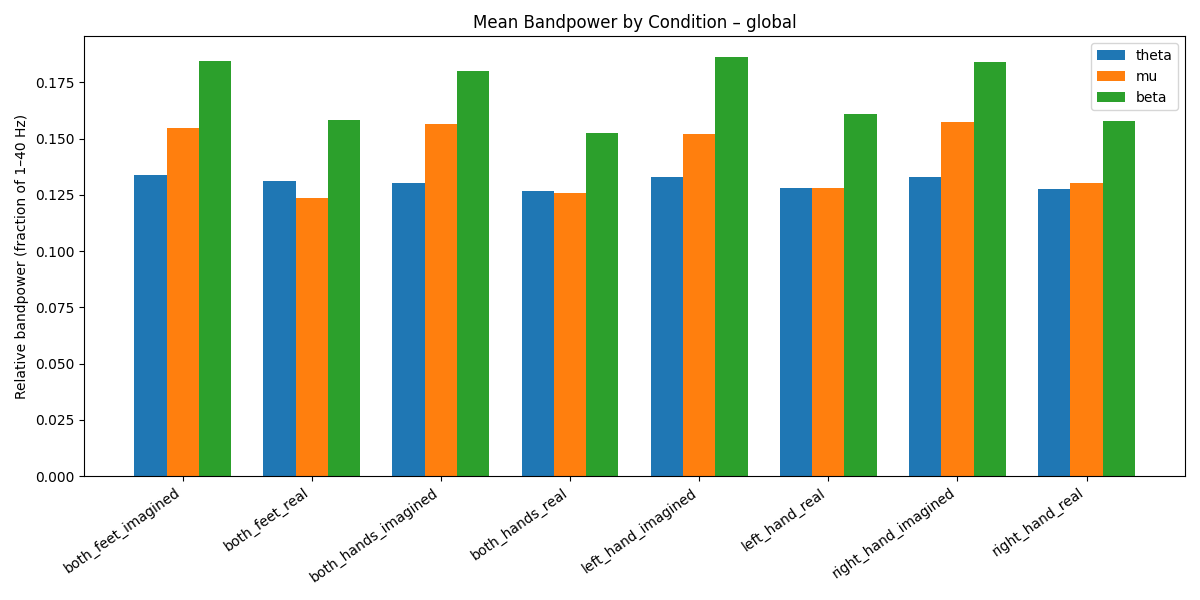
Bar Chart
-
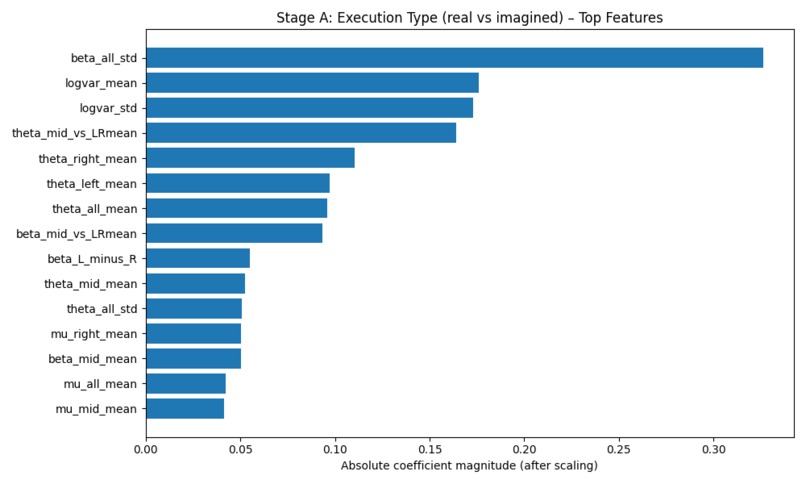
Bar Chart
-
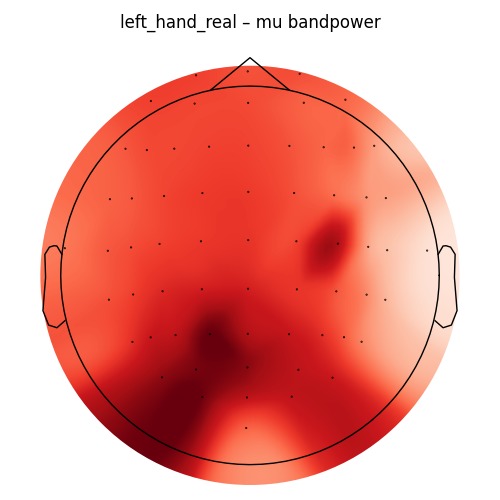
Topomap
Inspiration
No one should have to lose their sense of self to neurological diseases like dementia or Alzheimer’s. We spend our lives working, learning, and building meaning—yet for many people, those memories and abilities slowly fade in ways we still don’t fully understand. That reality is what motivates me.
My long-term goal is to contribute, in whatever way I can, to a deeper understanding of the brain so that safer, more effective treatments can exist in the future. Neurotechnology is one of the few areas where engineering, data science, and medicine truly intersect, and I see it as a practical way to turn technical skills into real human impact.
I came into this project with no prior experience in the neurotech stack. EEG data, brain physiology, and motor imagery were all new to me. But that challenge is exactly why I chose this track. NeuroTrack is my way of stepping into unfamiliar territory, learning from the ground up, and contributing to something I’ve always wanted to be part of: building technology that helps people live meaningful lives for as long as possible.
What it does
This project, Tri-Nham-NeuroTechTrack-2026RiceDatathon (NeuroTrack), is a two-stage EEG decoding pipeline that works at the level of individual movement epochs.
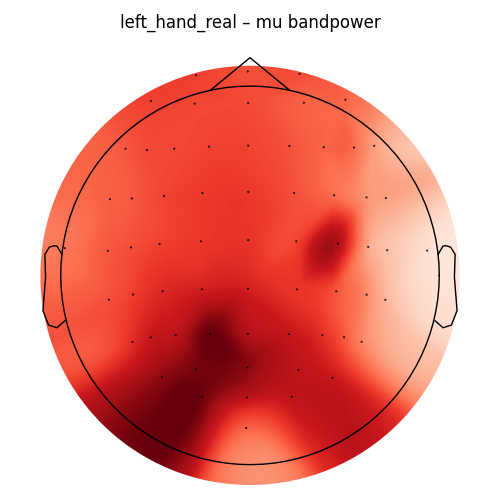
It first distinguishes whether a movement is real or imagined, and then classifies which limb is involved (left hand, right hand, both hands, or both feet). Beyond prediction, the project focuses on interpreting neural patterns, using EEG bandpower analysis and scalp visualizations to understand how different motor conditions manifest in the brain.
How I built it
I worked with a modified EEG Motor Movement/Imagery dataset consisting of 64-channel EEG recordings collected during real and imagined limb movements. To avoid data leakage, I used subject-wise splits, ensuring that models never saw data from the same participant during training and evaluation.
The pipeline consists of:
Signal processing using Welch’s method to estimate power spectral density.
Feature extraction focused on interpretable EEG bands (theta, mu, beta), hemispheric asymmetry, and midline activity.
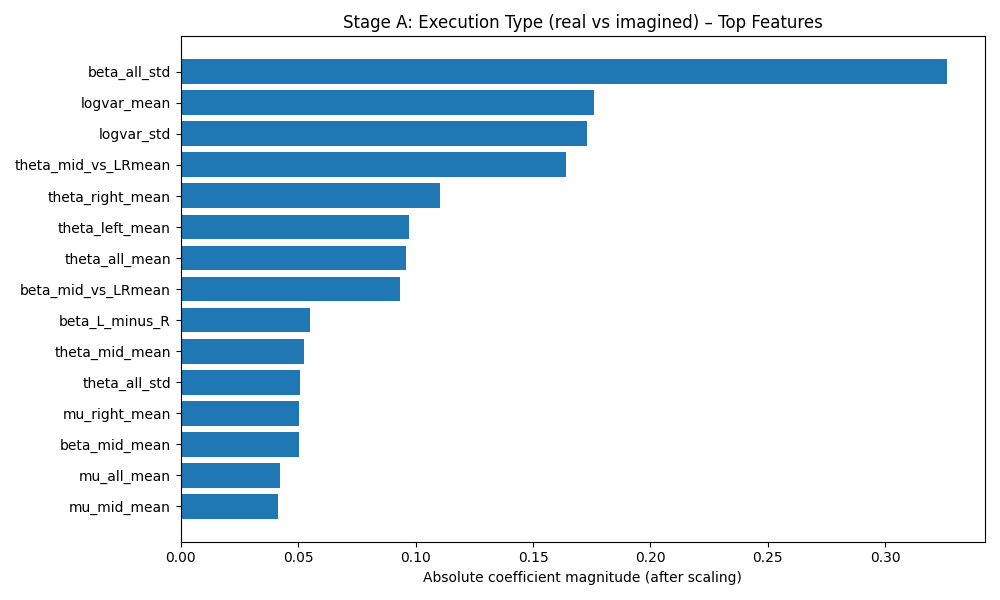
Stage A modeling using logistic regression to classify real vs imagined movement.
Stage B modeling using a second classifier to identify limb type, conditioned on execution type.
Visualization and analysis, including feature importance, relative bandpower comparisons, and EEG scalp topomaps to highlight spatial patterns.
The goal was to build a system that is simple enough to explain, yet grounded in known EEG physiology.
Challenges we ran into
One of the biggest challenges was cross-subject variability. EEG signals differ significantly from person to person, which makes fine-grained limb classification much harder than it initially appears.
Another challenge was balancing performance and interpretability. More advanced spatial methods showed promise, but they were computationally expensive and difficult to fully tune within the datathon timeframe. I chose to prioritize a strong, interpretable baseline that I could fully understand and explain.
Accomplishments that we're proud of
Built a complete, end-to-end EEG decoding pipeline as a solo project.
Ensured subject-independent validation, which reflects real-world deployment challenges.
Demonstrated meaningful neural patterns through bandpower analysis and scalp maps, not just classification scores.
Delivered a working, reproducible solution under tight time and computational constraints.
What we learned
This project reinforced how challenging EEG-based decoding is outside of controlled, subject-specific settings. I learned that:
Separating real vs imagined movement is more reliable than decoding specific limbs with global features alone.
Interpretability tools are essential for understanding model behavior in neurotech applications.
Strong baselines matter — they reveal where complexity is actually needed.
EEG analysis requires both signal processing intuition and machine learning discipline.
What's next for Tri-Nham-NeuroTechTrack-2026RiceDatathon
The next steps are clear:
Integrate spatial filtering techniques such as Common Spatial Patterns (CSP) to better capture limb-specific information.
Explore covariance-based and Riemannian approaches for more robust cross-subject decoding.
Use baseline EEG recordings for normalization.
Move toward real-time decoding scenarios relevant to assistive technology and BCIs.
This project represents a solid, interpretable foundation — and a starting point for deeper exploration into EEG-based motor decoding.
Built With
- github
- matplotlib
- mne-python
- numpy
- python
- scikit-learn
- seaborn


Log in or sign up for Devpost to join the conversation.