-
-
Our Logo
-
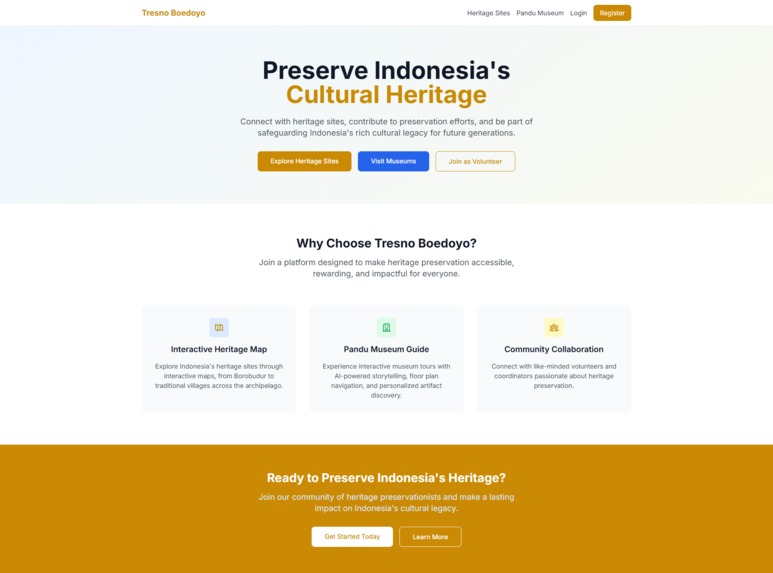
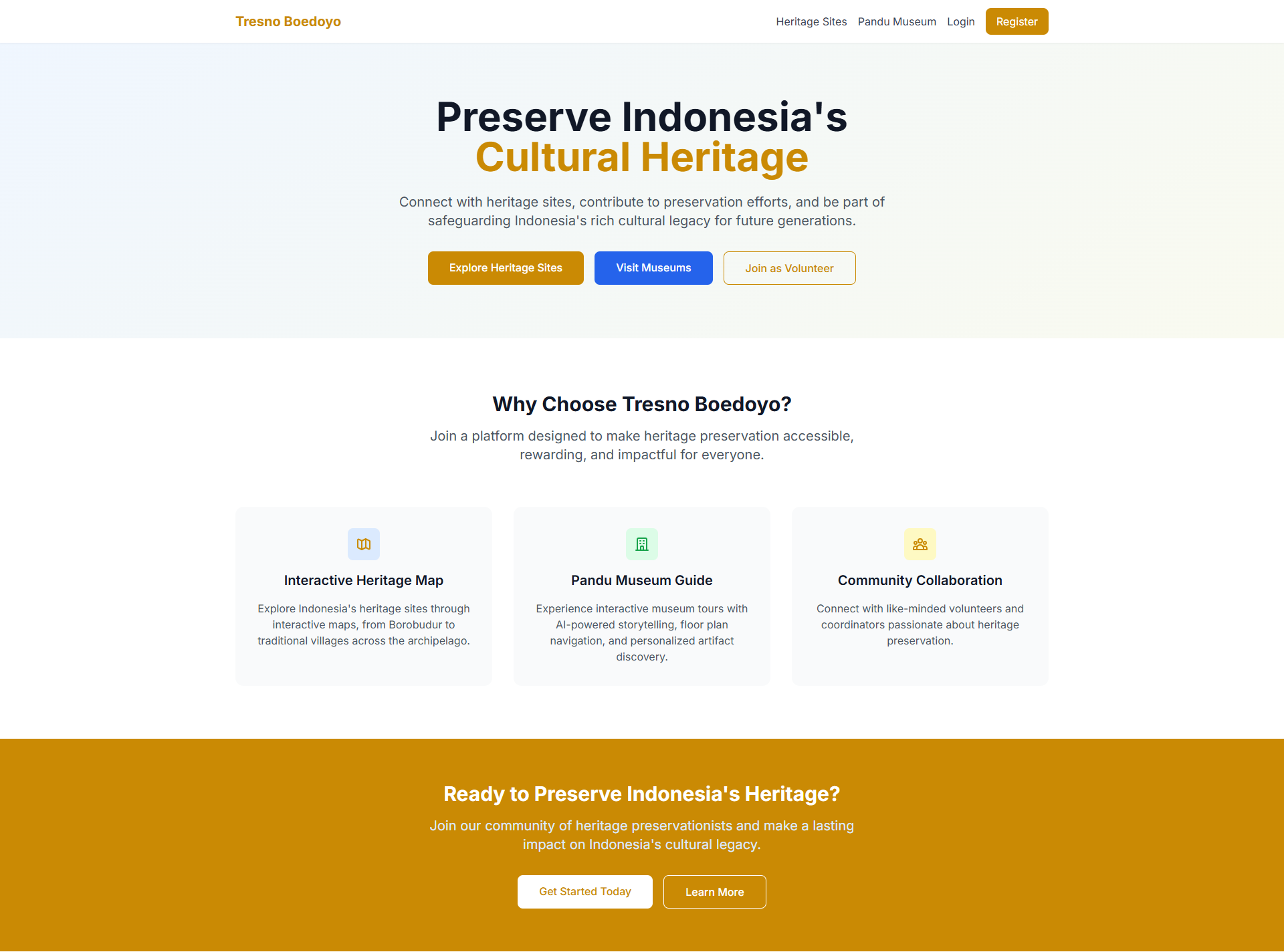
Landing Page of Cultural Heritage
-
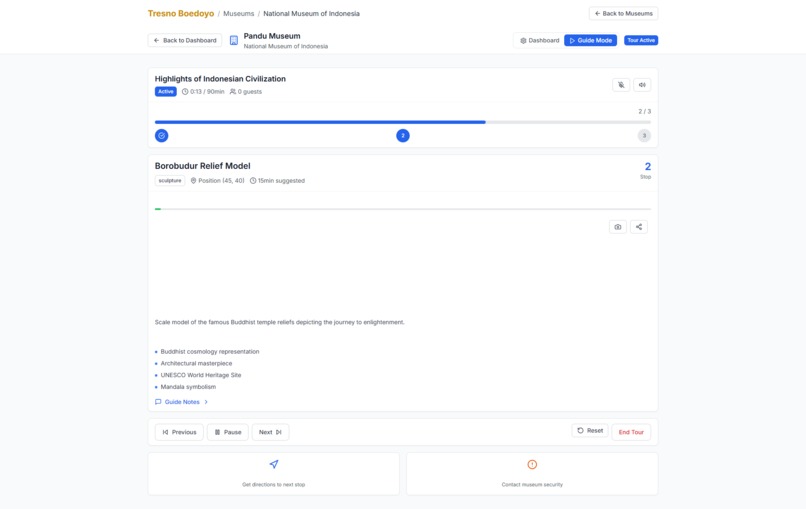
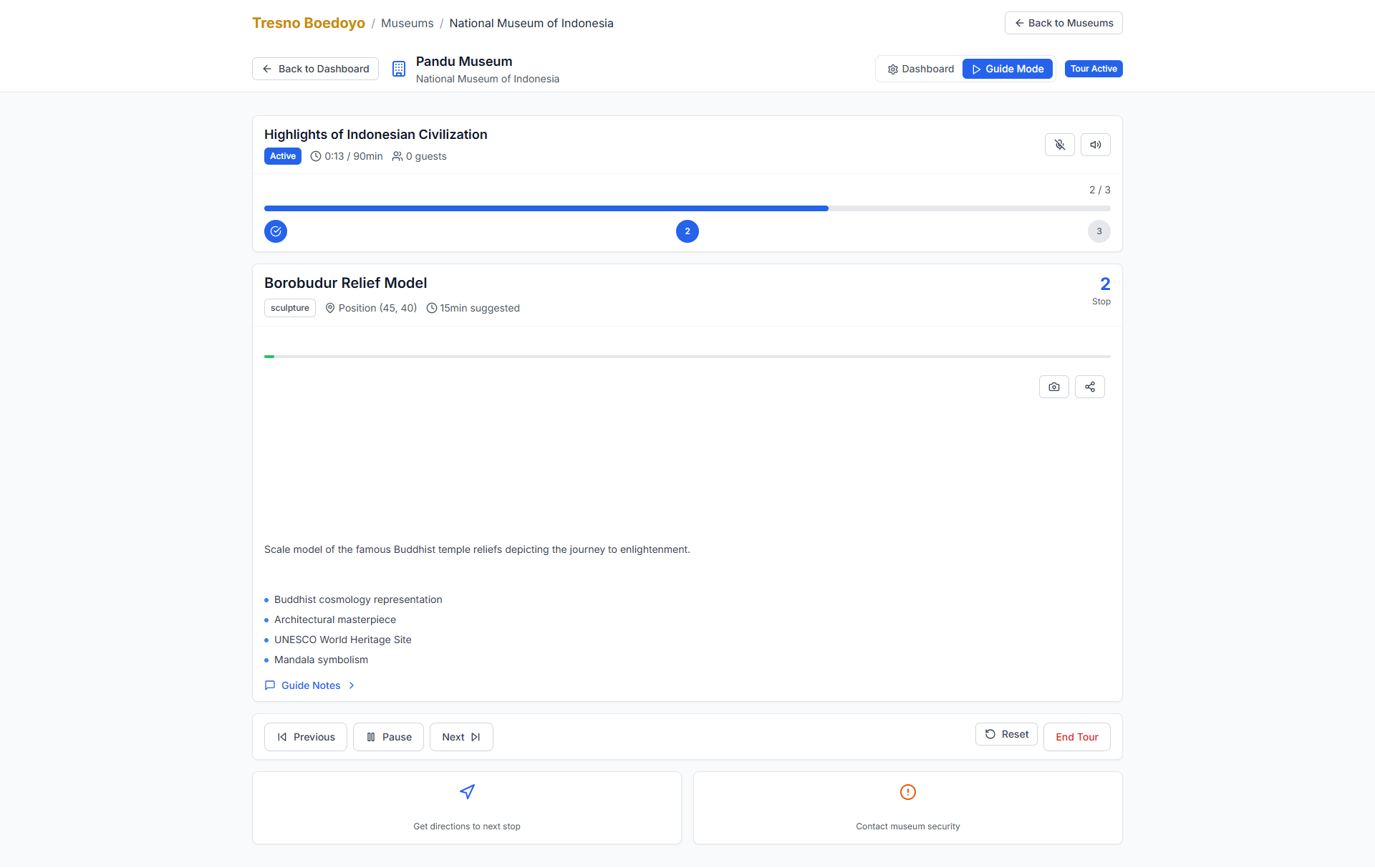
Guide Mode of Museum (AI Story Teller)
-
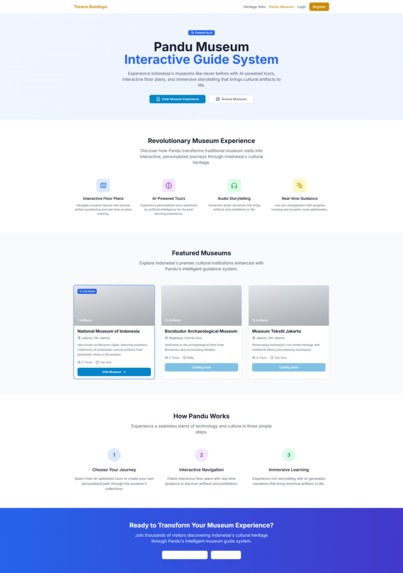
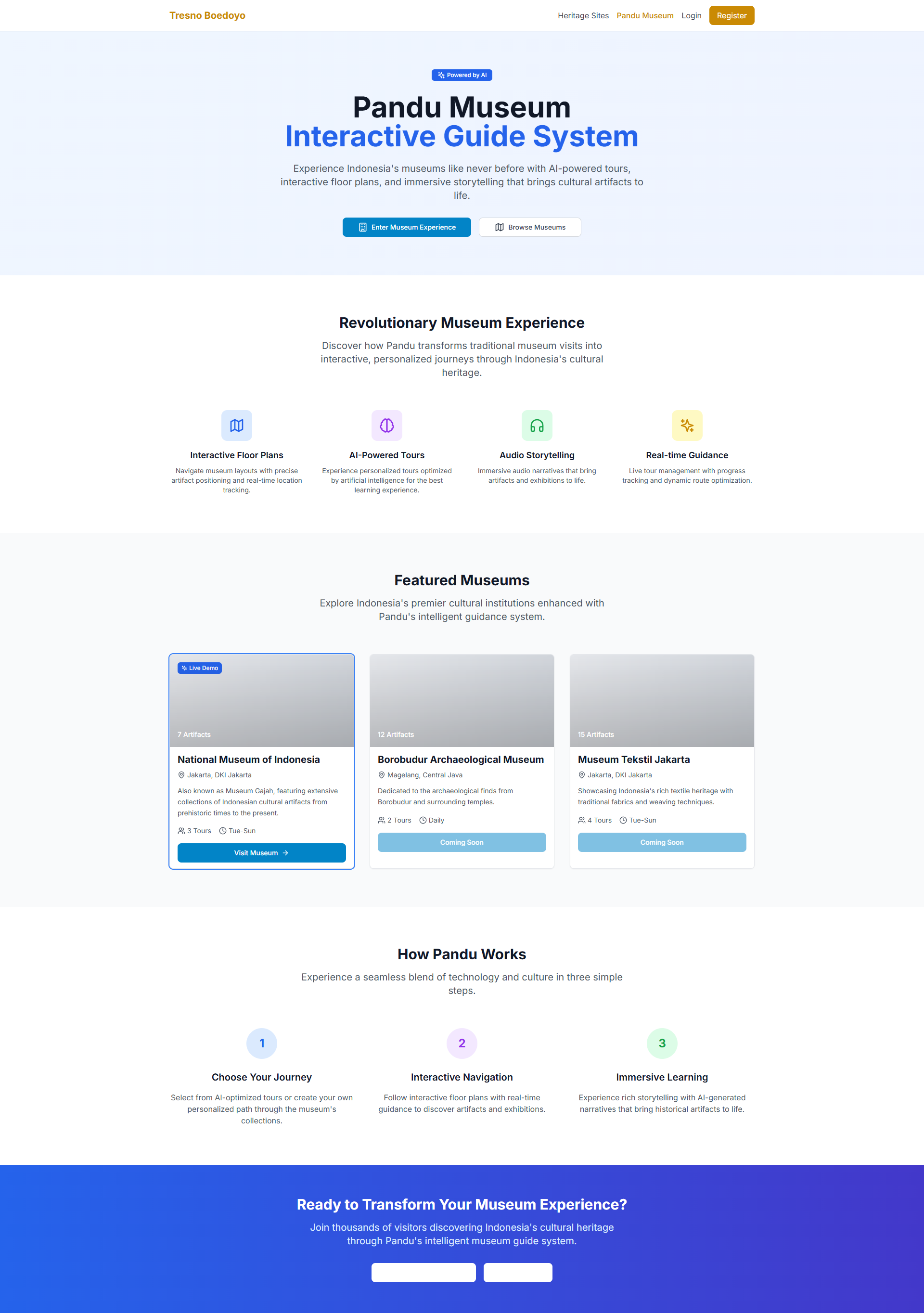
Landing Page of Pandu Museum
-
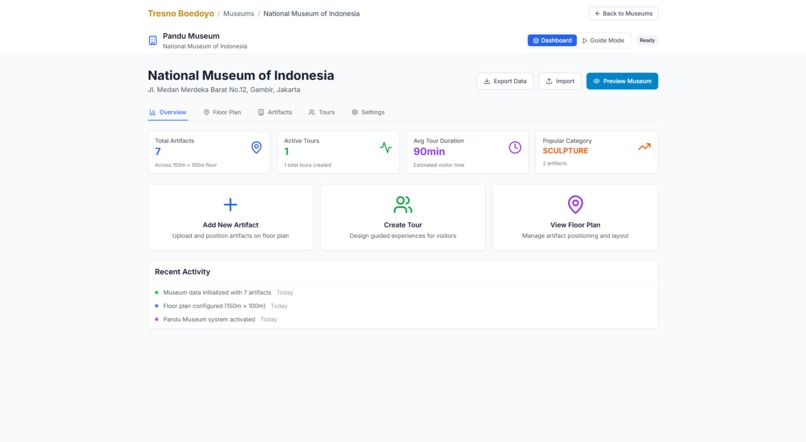
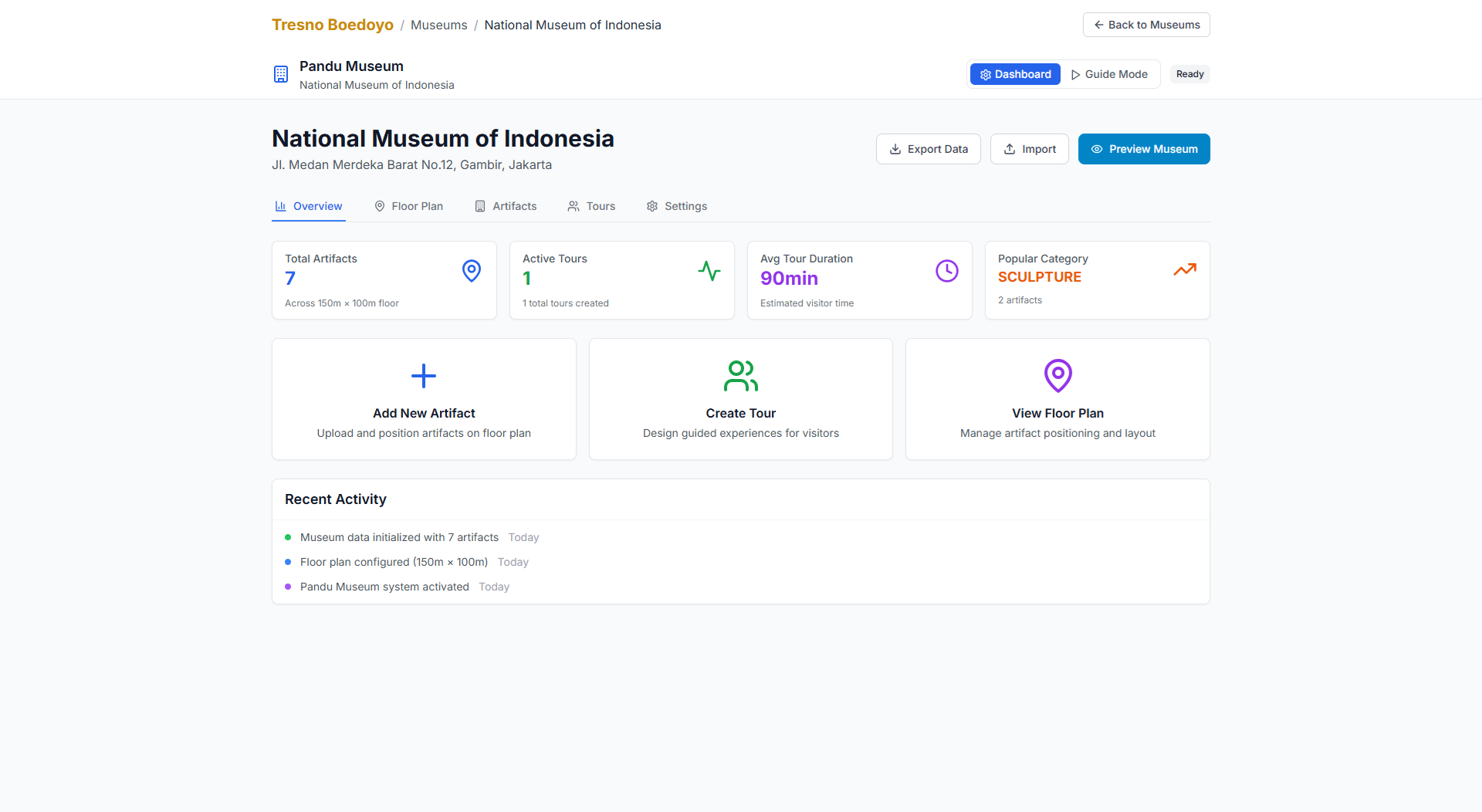
Dashboard of Pandu Museum
-
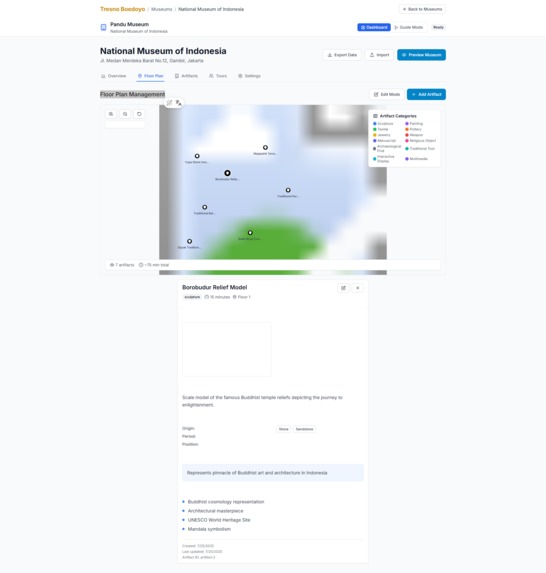
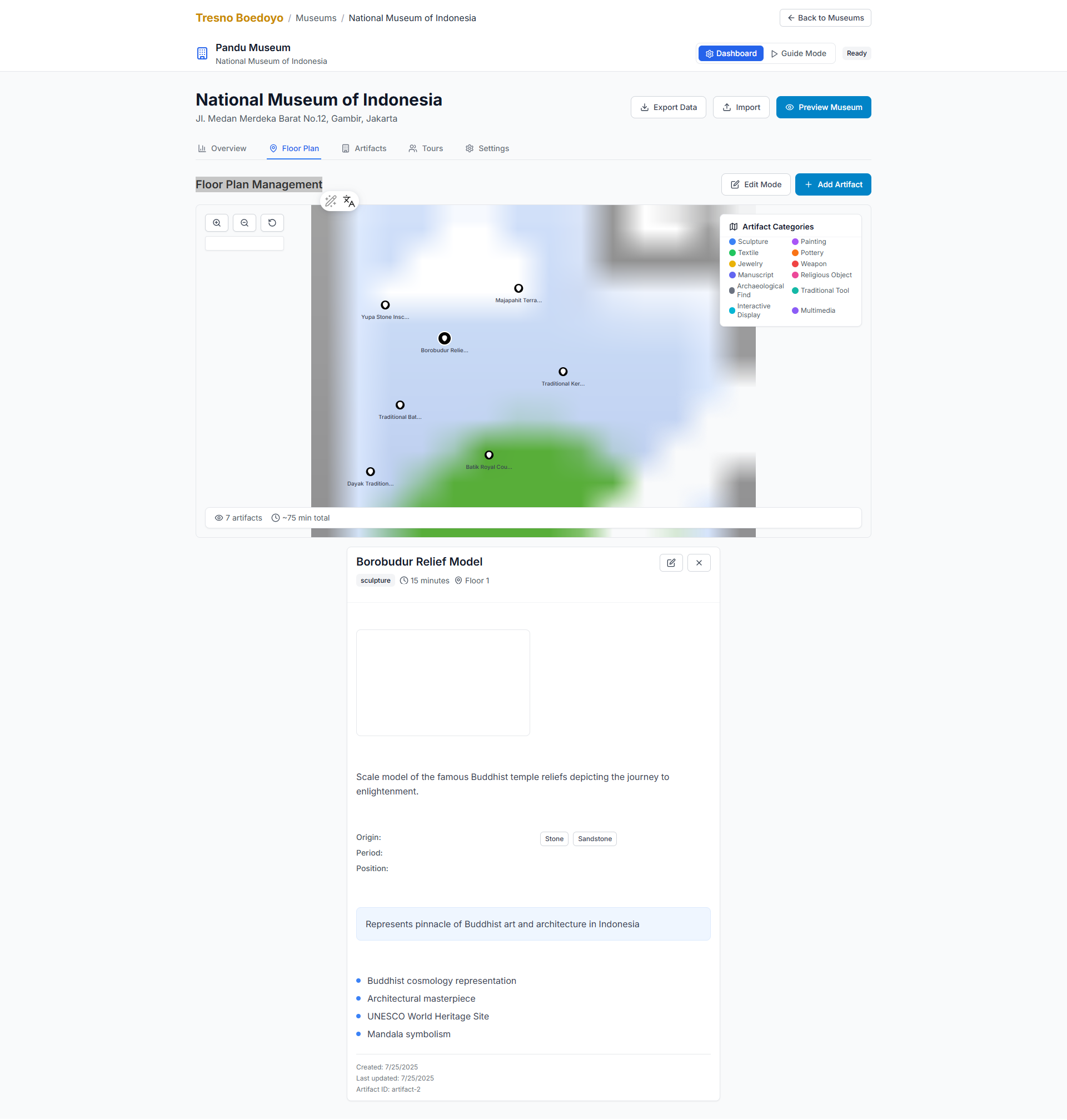
Live Map of Museum
-
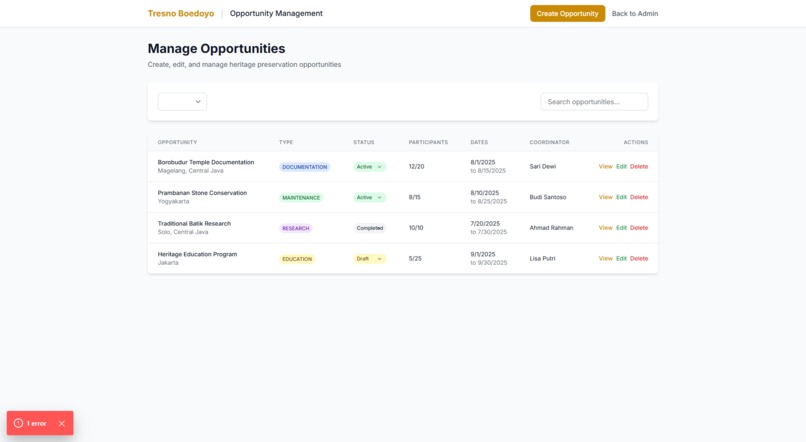
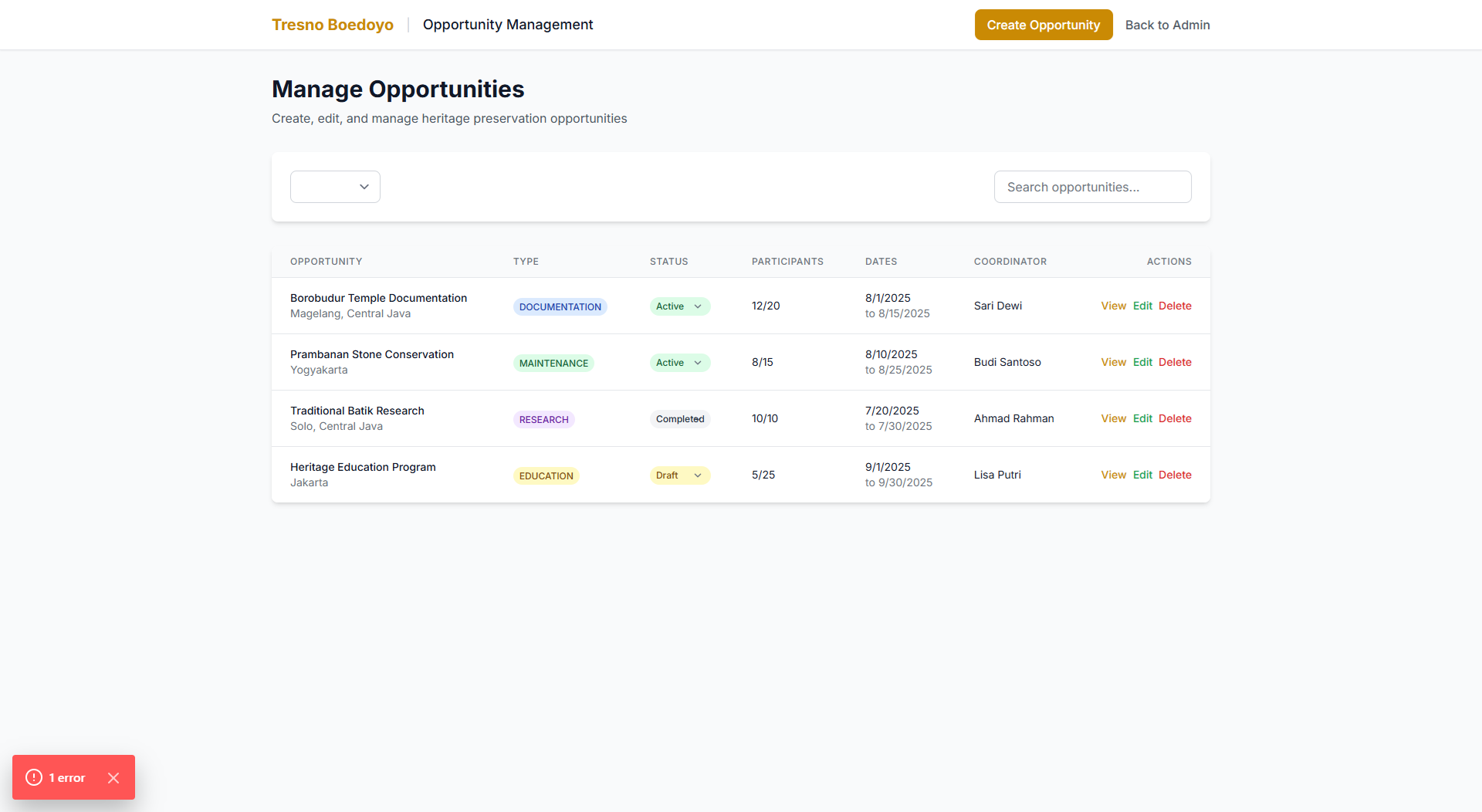
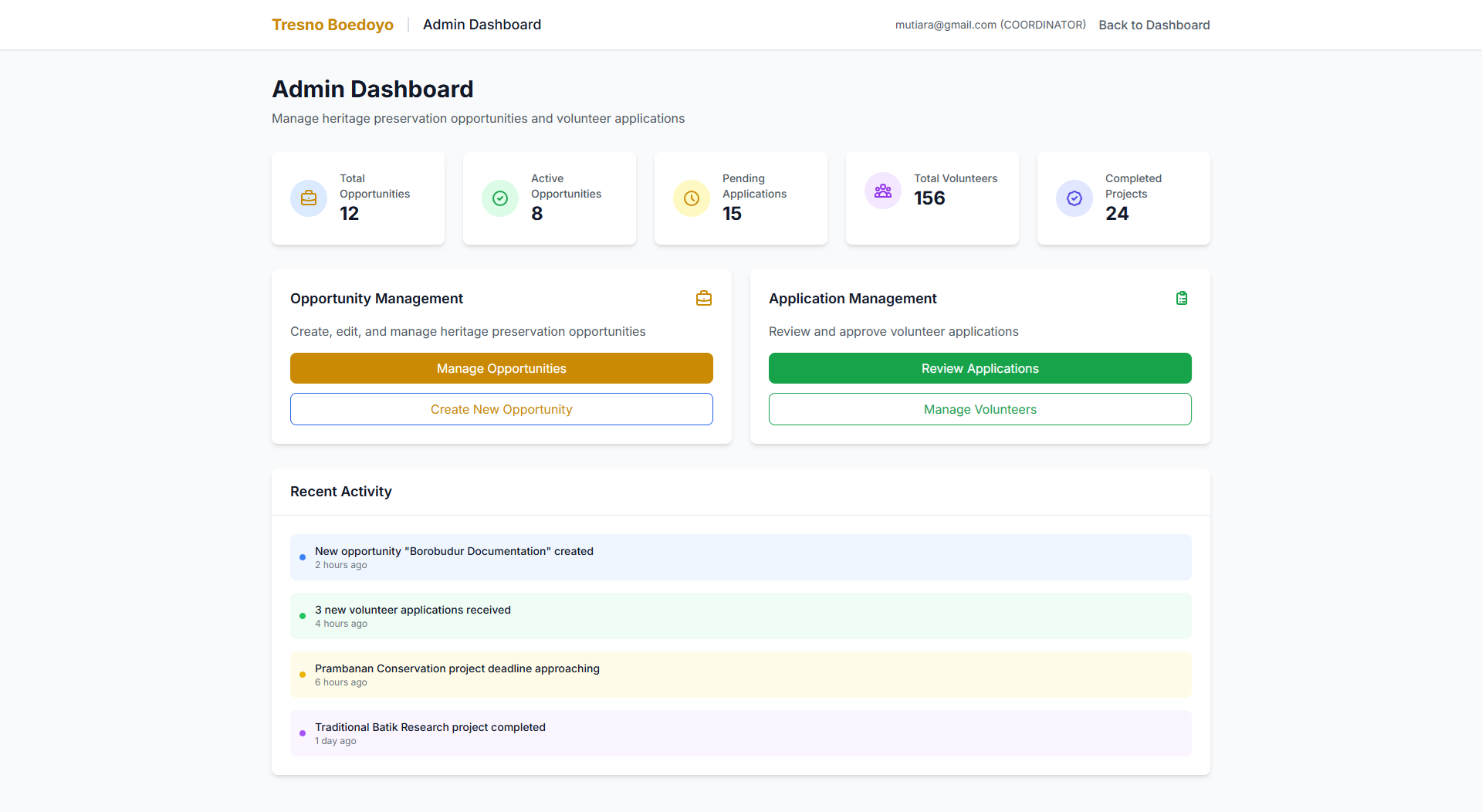
Event/Opportunities Management
-
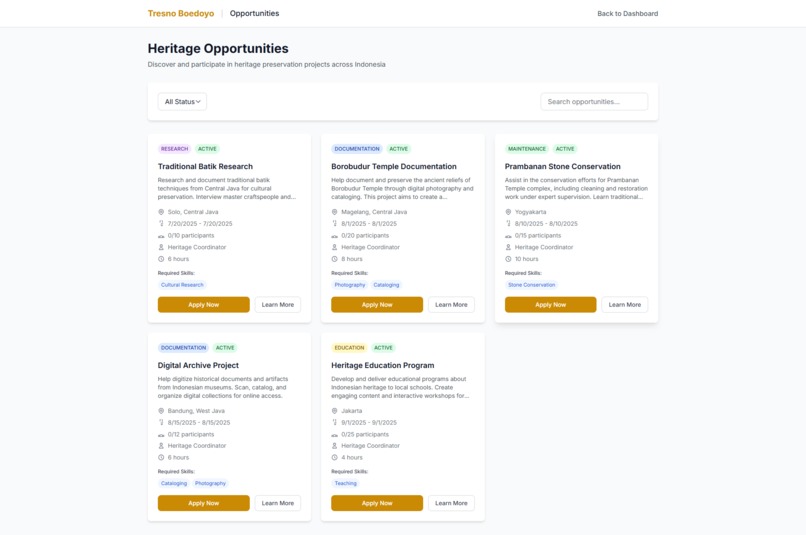
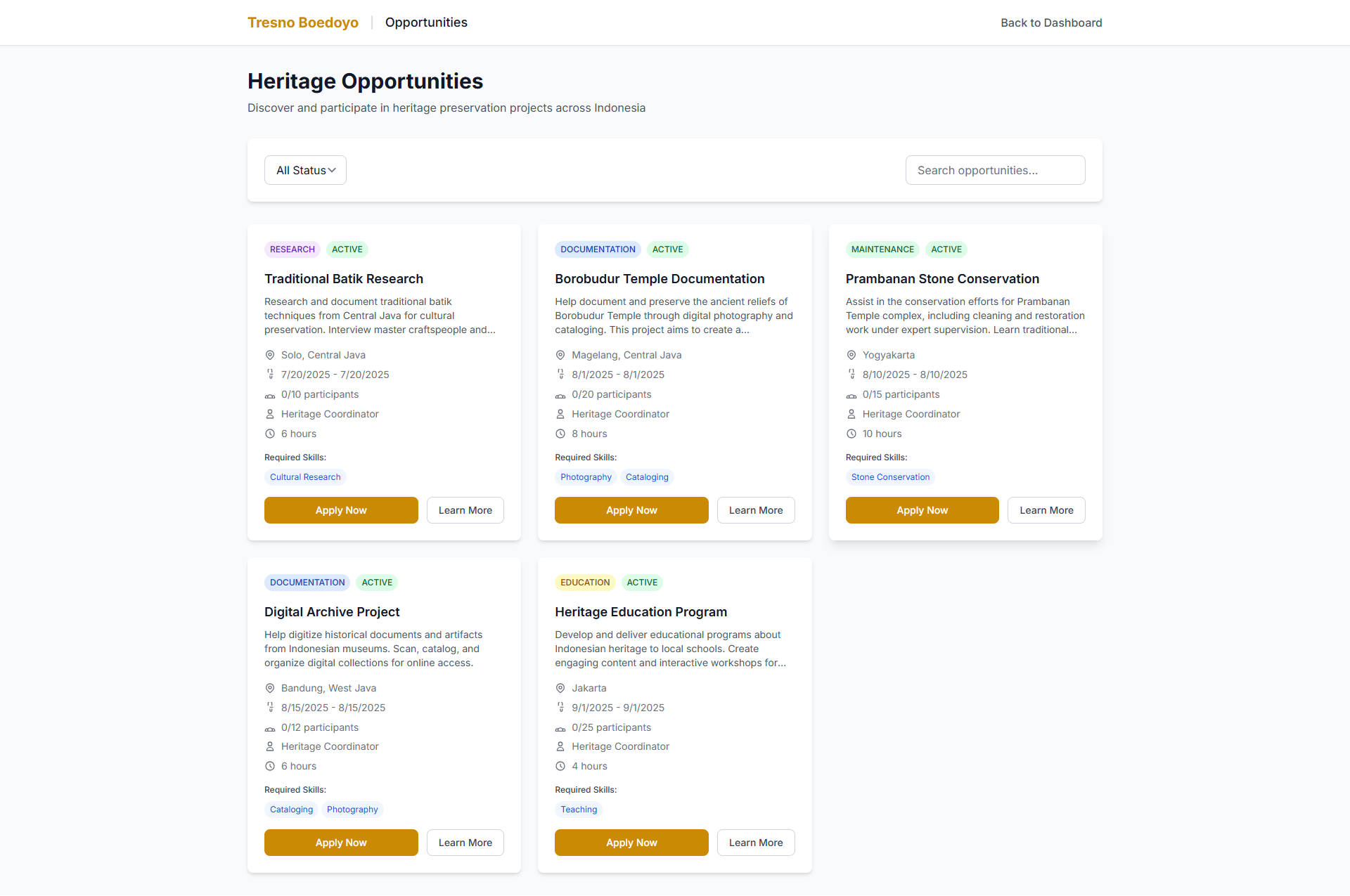
Apply Opportunity Page by Volunteers
-
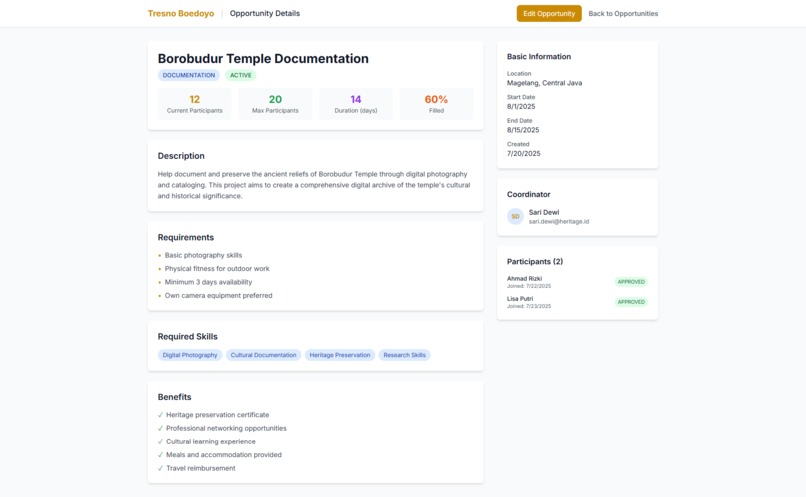
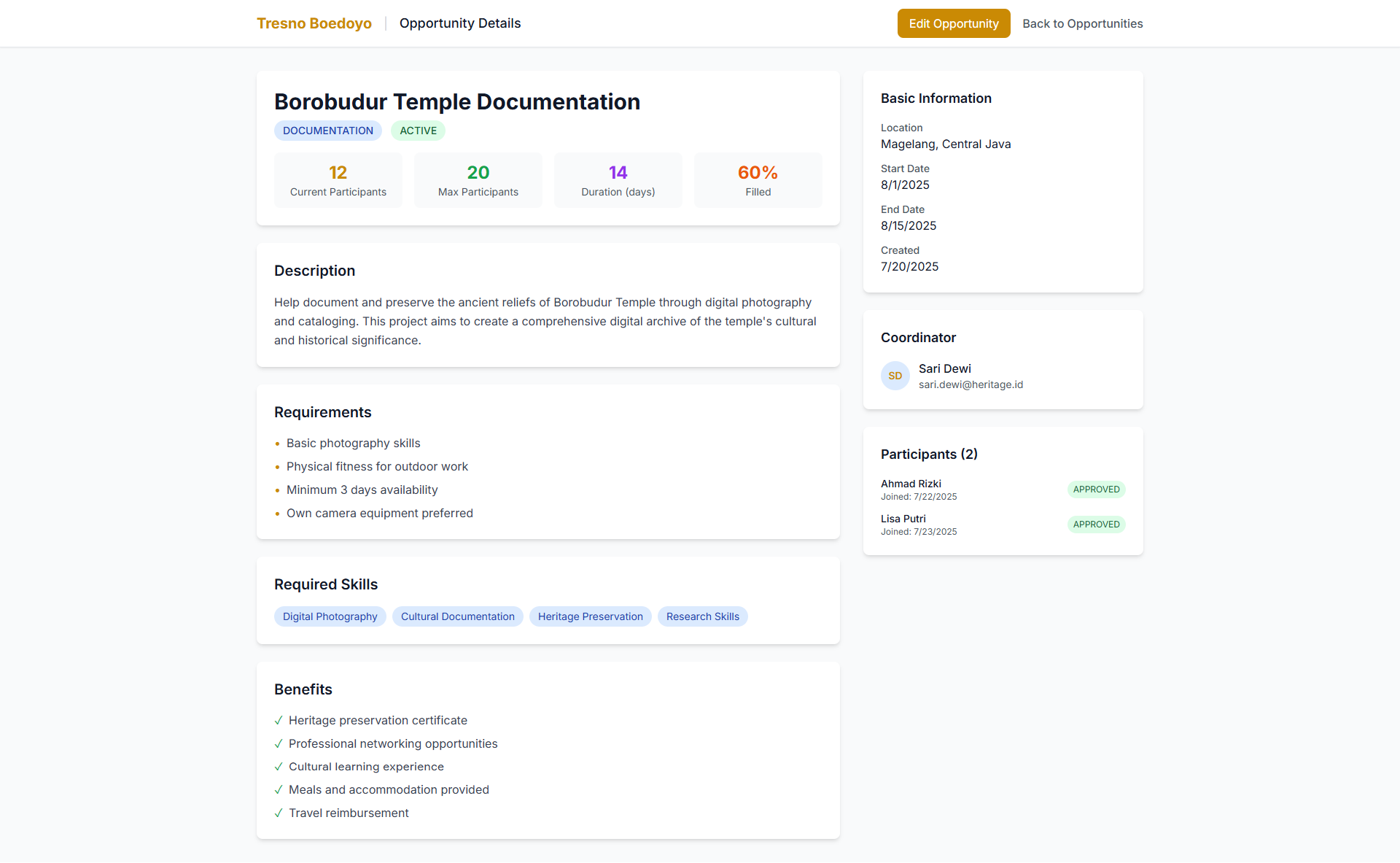
Opportunities Detail
-
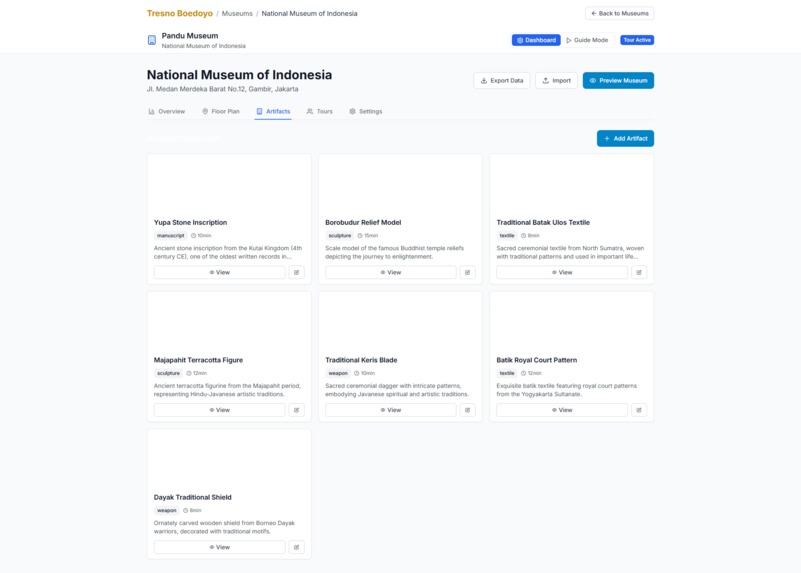
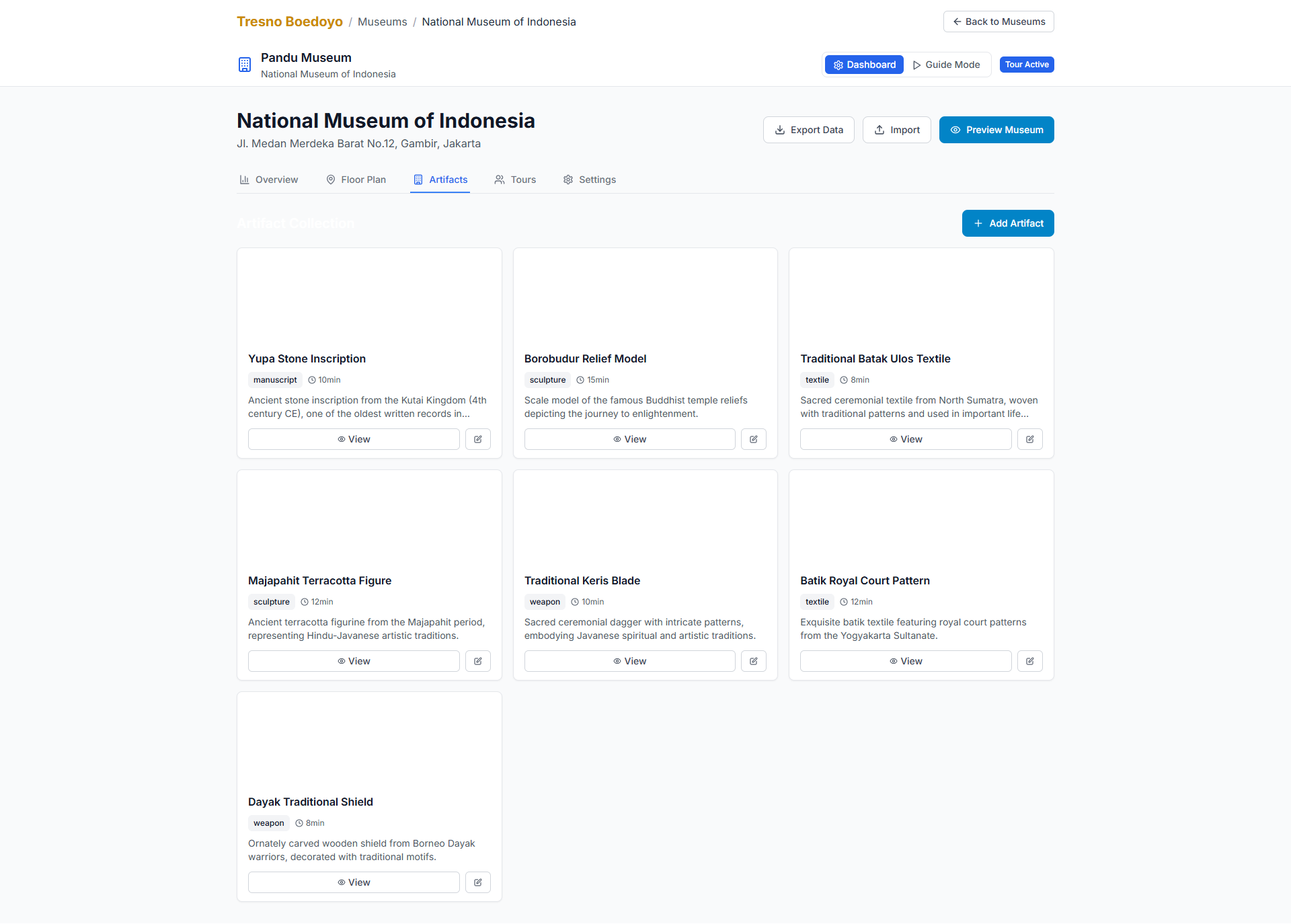
Artifacts Database
-
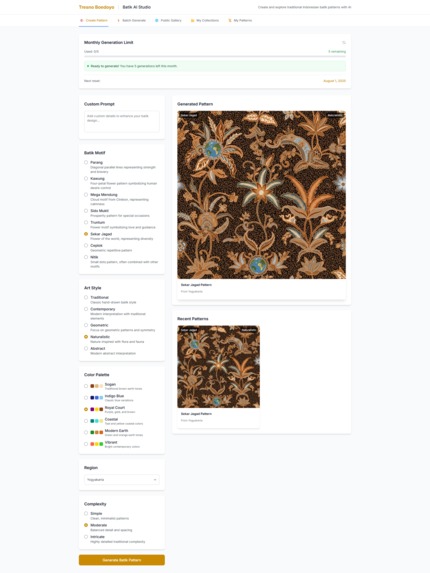
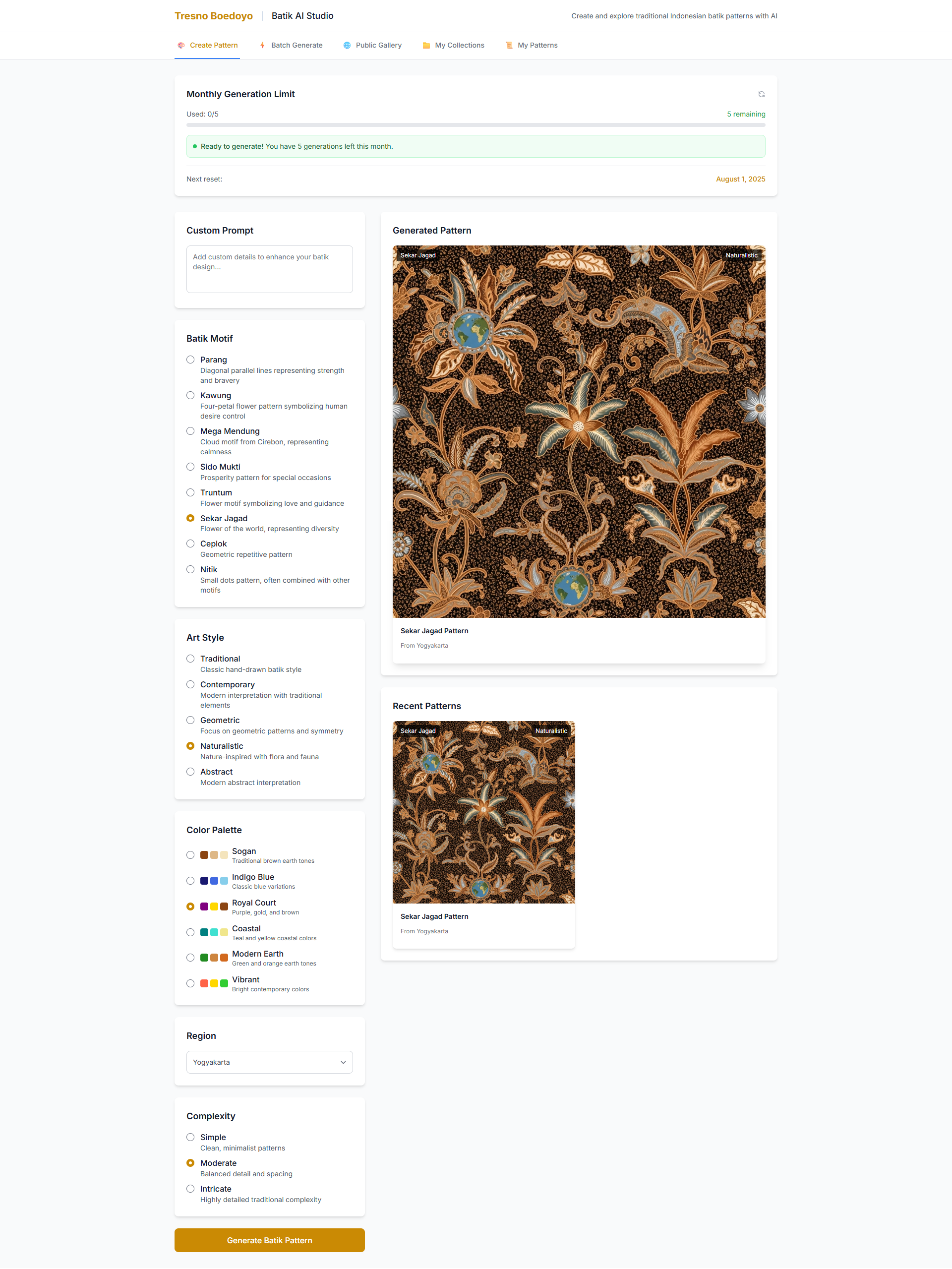
Batik AI Studio
-
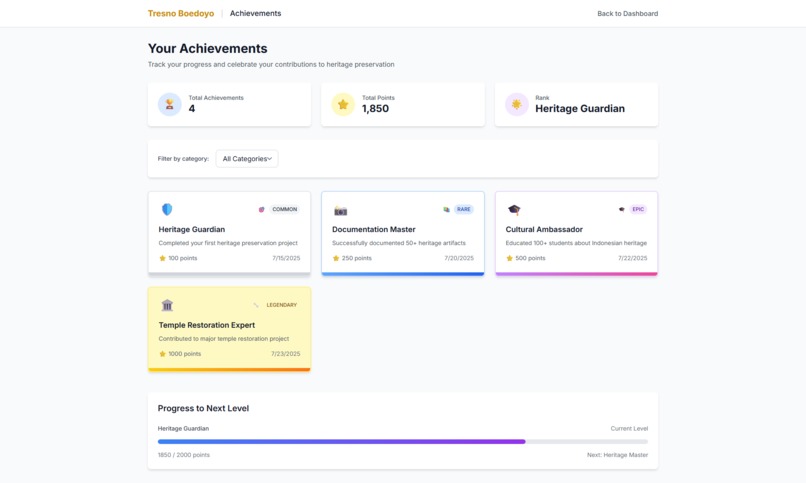
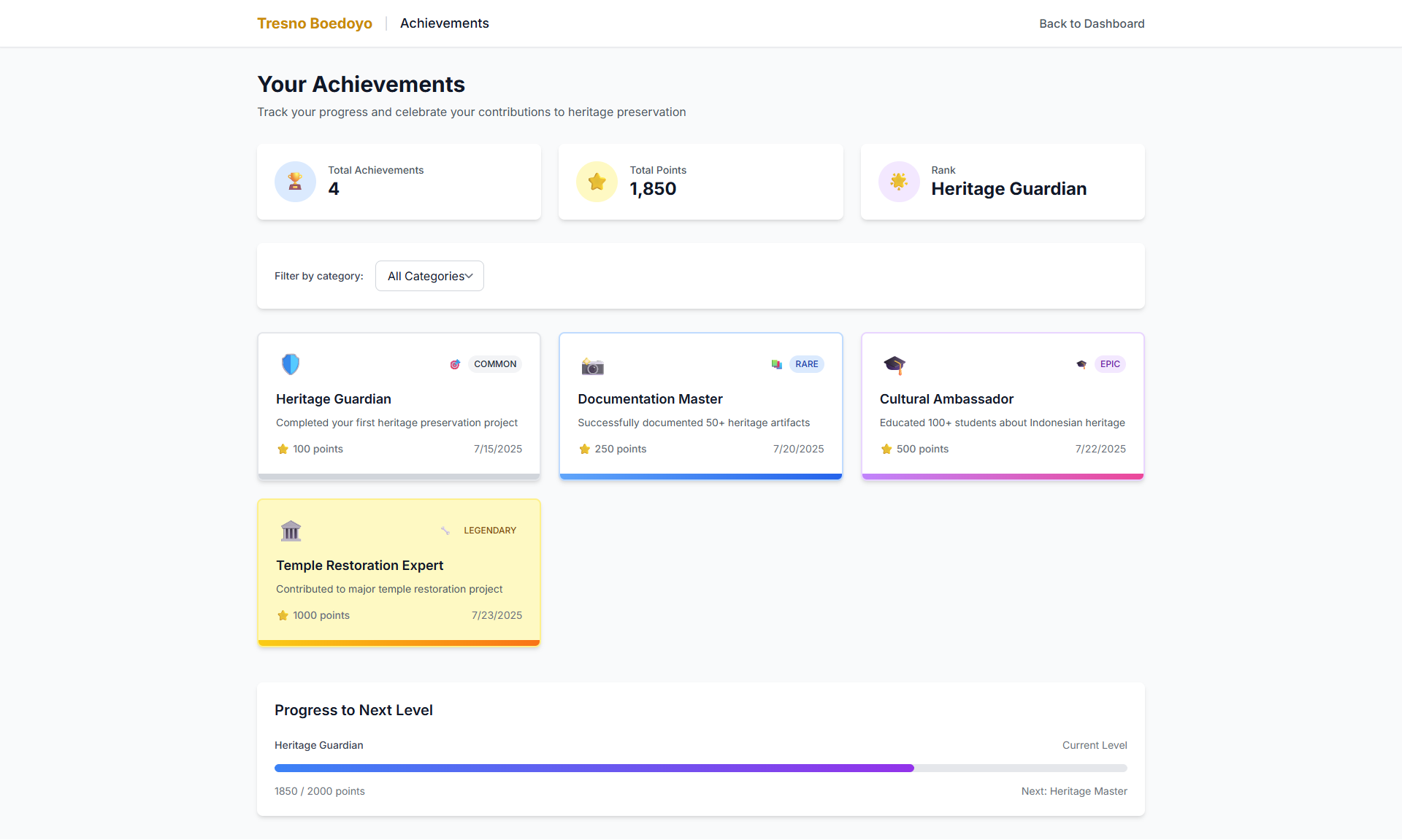
Achievements (Token Reward)
-
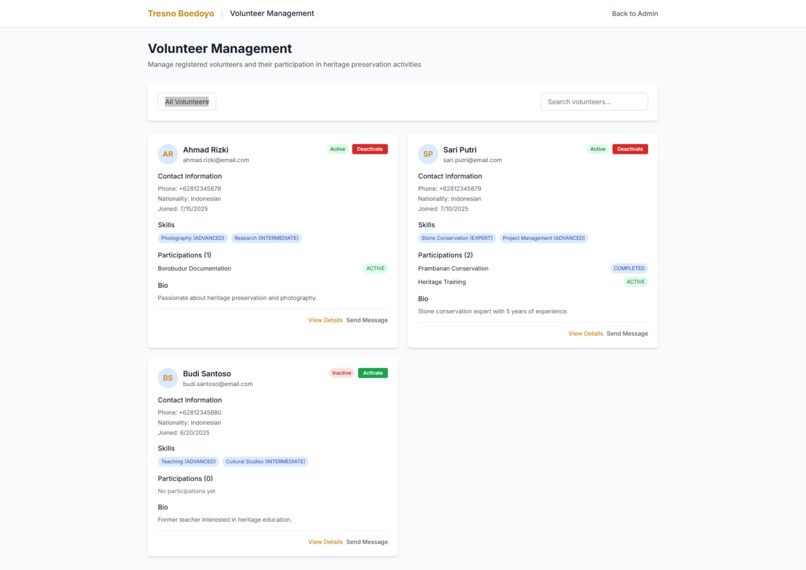
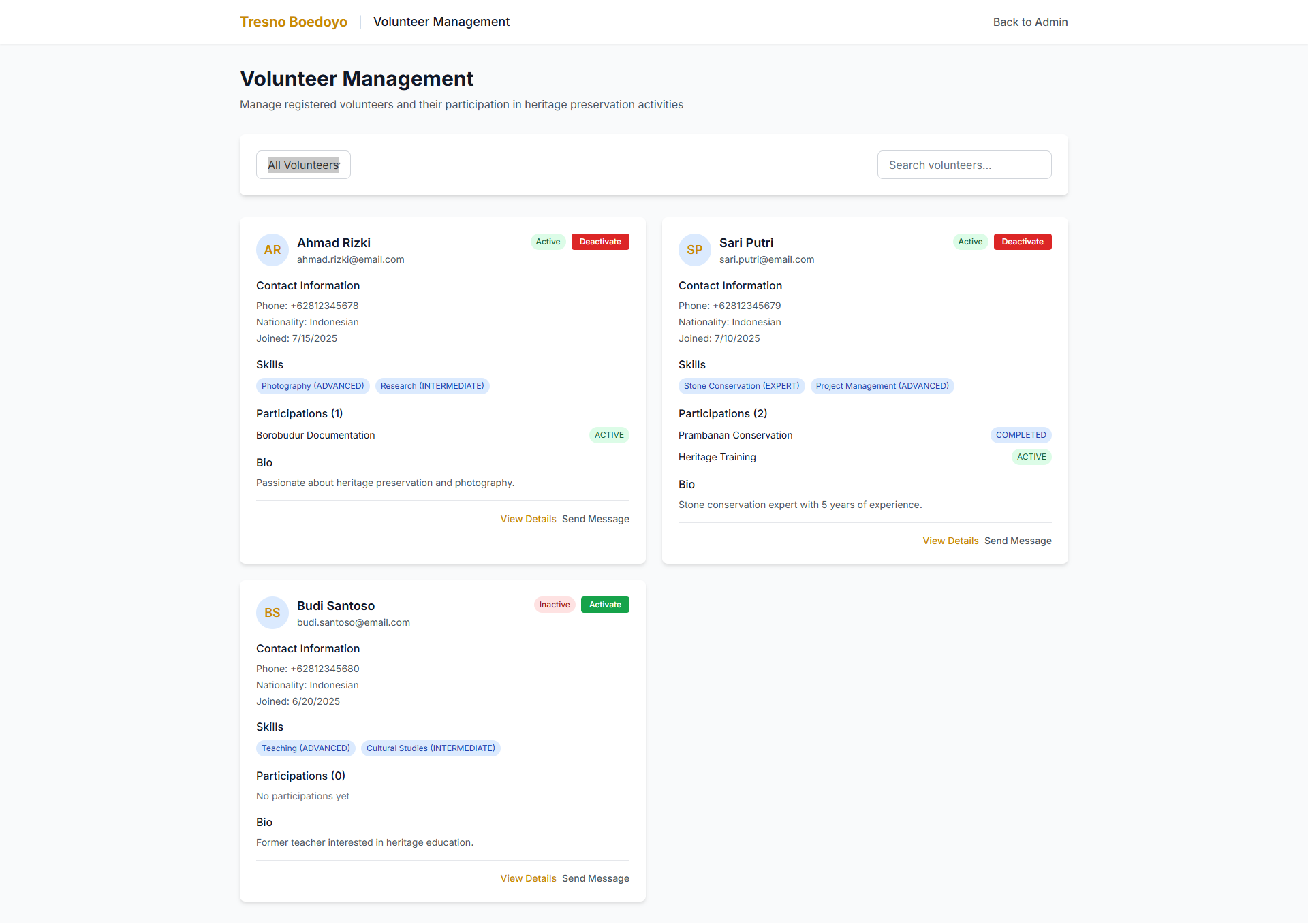
Volunteer Management
-
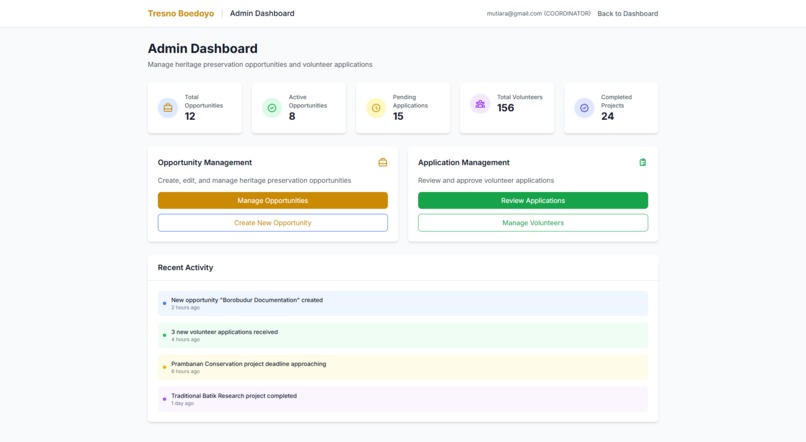
Admin Panel of Heritage Site Module
Tresno Boedoyo: Empowering Heritage Guardians
Inspiration
Our inspiration came directly from a powerful presentation by Bu Rima Sjukrie, the Vice Chair of the Museum Division at the Indonesia Heritage Society (IHS). She shared the immense passion of her volunteer-run organization but also laid bare the critical operational challenges they face.
She told us a story about a dedicated guide who, during a tour, found that a key artifact had been moved for a special exhibition. While the guide improvised beautifully, the moment highlighted a core inefficiency. Bu Rima explained that this "broken flow" was a constant source of stress. Furthermore, she described the "data vacuum" behind the scenes—the chaotic system of Excel sheets and WhatsApp groups used to manage over 100 volunteers.
We were deeply moved by her dedication and the clear need for a modern solution. Our project, Tresno Boedoyo (Javanese for "Love for Culture"), was born directly from that conversation. It is not just a hackathon project; it is our answer to Bu Rima's call for help—a tool built to serve and sustain the guardians of Indonesia's heritage.
The Problem Statement
The core problem, as articulated by Bu Rima, is a critical operational disconnect that impacts IHS at every level, from macro-level coordination to micro-level tour execution. This creates two primary pain points:
The Guide's Dilemma: The Broken Flow The physical museum space is dynamic, but the guide's knowledge is static. Artifacts are moved, breaking the narrative flow of a tour. Bu Rima shared a quote from a senior guide:
"Setiap kali ada pameran baru atau rotasi koleksi, kami seperti harus belajar dari nol lagi. Denah di kepala kami sudah tidak berlaku. Stresnya bukan pada materinya, tapi pada bagaimana menyusun ulang alur cerita secara mendadak agar tetap menarik bagi pengunjung."
(Every time there's a new exhibition or collection rotation, it's like we have to learn from scratch again. The map in our heads is no longer valid. The stress isn't about the material itself, but about how to restructure the narrative flow on the fly to keep it engaging for visitors.)
The Coordinator's Dilemma: The Data Vacuum The process of finding the right volunteer for a specific tour is inefficient and manual. A new volunteer had told Bu Rima about their anxiety:
"I was so excited to start, but the tour opportunities come through a huge WhatsApp group, and it's easy to miss one that would have been perfect for me. I feel like my specific skills aren't being seen."
This combination of a broken tour flow and a vacuum in volunteer data creates significant operational drag, limits the scalability of IHS programs, and risks volunteer burnout.
What it does
Tresno Boedoyo is a unified digital ecosystem designed to be the central command center for IHS operations. It empowers the organization through three core modules:
Module 1: IHS Connect (The Community Hub) This module solves the "Data Vacuum" by replacing spreadsheets and WhatsApp with a smart, centralized platform for volunteer management, featuring smart profiles, AI-powered matchmaking, and Web3-based recognition to keep the community engaged and efficiently managed.
Module 2: Pandu Museum (The Smart Compass) This module solves the "Broken Flow" for guides on-site. It provides a real-time digital map of the museum, calculates the most efficient walking path for any tour, and offers an AI Storyteller to help guides create smooth, compelling narratives between artifacts.
Module 3: Batik AI Studio (The Creative Engine) This module directly addresses the goal of making heritage interactive and irresistible. It is a generative AI tool that allows anyone to become a Batik designer. Users can:
- Select Parameters: Choose from options like Batik style (e.g., Pesisir, Kraton), complexity, origin (Cirebon, Solo, Pekalongan), and primary colors.
- Use a Custom Prompt: Add descriptive keywords like "Megamendung clouds with a modern geometric twist" for more creative control.
- Generate & Create: The platform uses a powerful image generation model to create a unique, high-resolution Batik pattern based on the user's input, which they can then download or see mocked up on fashion items.
How we built it
We built Tresno Boedoyo using a modern, integrated tech stack designed for scalability and rapid development:
- Frontend: We used React for the coordinator's web-based CMS and React Native (with Expo) for the volunteer's cross-platform mobile app.
- Backend: A Node.js server with Express serves as the central API.
- Database: PostgreSQL with the PostGIS extension was our critical choice for reliably storing both structured user data and the geospatial locations of the artifact pins.
- AI Integration:
- Gemini API: The engine behind our text-based AI features: the AI Matchmaking logic and the AI Storyteller script generation.
- Imagen 2 API (via Google Cloud): The powerful image generation model used for the Batik AI Studio.
- Web3 Integration: The Thirdweb SDK was used to simplify the creation and distribution of the "Proof of Contribution" SBTs on the Polygon blockchain.
Challenges we ran into
- Prompt Engineering for Visual Arts: Translating abstract cultural concepts like "Kraton style" or "Sogan brown" into a text prompt that the Imagen 2 model could interpret accurately and beautifully was a significant challenge that required extensive experimentation.
- Unified User Experience: Our biggest design challenge was integrating three powerful modules—volunteer management, tour guidance, and a creative studio—into a single, intuitive application without it feeling cluttered.
- Real-time Data Synchronization: Ensuring that a map change made by a coordinator was instantly reflected in the mobile app for a guide required a robust backend architecture and careful state management on the frontend.
Accomplishments that we're proud of
- Solving a Real-World Problem: We are most proud of building a solution that directly addresses the specific, real-world challenges articulated by Bu Rima Sjukrie. This project is purpose-built to serve the IHS community.
- The AI Batik Studio: We successfully created a tool that transforms heritage from a static asset to be viewed into a dynamic medium for creation. It's a fun, engaging, and powerful way to connect a new generation with the philosophy of Batik design.
- A True End-to-End Solution: We didn't just solve one problem; we created a holistic platform that addresses the entire volunteer lifecycle, from recruitment and matching to on-the-ground execution and creative engagement.
What we learned
- Listen First, Build Second: The success of our project concept hinges on the fact that we listened carefully to a key stakeholder. Understanding Bu Rima's challenges allowed us to focus on building features that provide real, immediate value.
- AI as a Bridge Between Worlds: We learned that AI can be a powerful bridge. It connects coordinators to the right volunteers (IHS Connect), guides to the right path (Pandu Museum), and the public to the art of creation (Batik AI Studio).
- Heritage is a Platform for Innovation: Working on this project taught us that cultural heritage is not just something to be preserved; it is a rich foundation upon which we can build exciting, modern, and interactive experiences.
What's next for Tresno Boedoyo
Our vision for Tresno Boedoyo is to become the indispensable digital partner for the Indonesia Heritage Society and beyond.
- Pilot Program with IHS: Our immediate next step is to work directly with Bu Rima and her team to pilot Tresno Boedoyo at the National Museum, gathering feedback to perfect the platform.
- Expanding the Batik AI Studio: We will add features to allow users to have their unique, AI-generated designs printed on fabric by real Indonesian artisans, creating a new economic opportunity and a tangible link between digital creation and traditional craft.
- Platform Expansion: We will scale the platform to serve other cultural institutions across Indonesia, making Tresno Boedoyo the national standard for managing heritage programs and engaging with cultural treasures.


Log in or sign up for Devpost to join the conversation.