


Inspiration
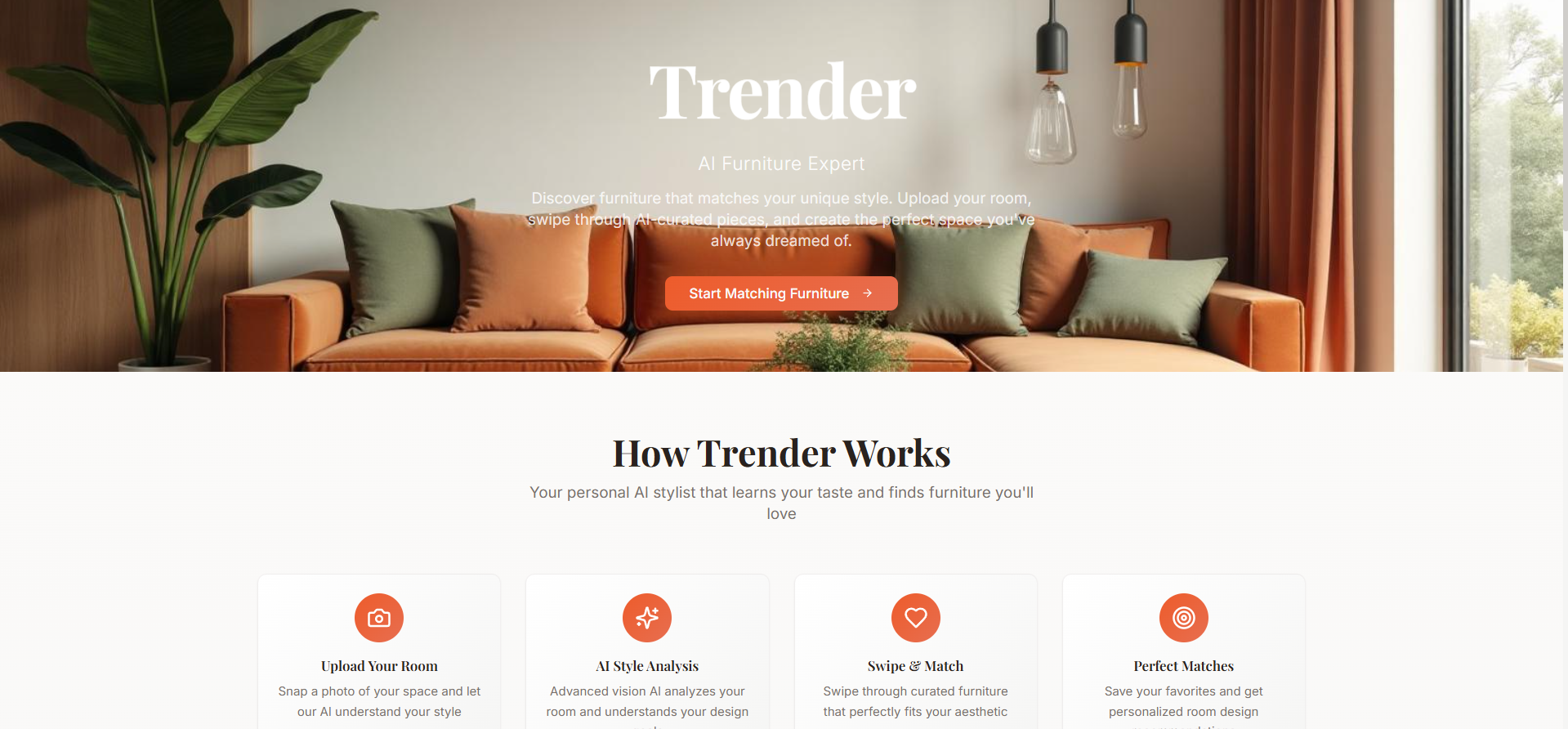
Trender was inspired by a problem almost everyone faces: buying furniture online is risky because you never really know how it will look in your own room. A sofa might look amazing on a website, but once it arrives, the size, color, or style might feel completely off.
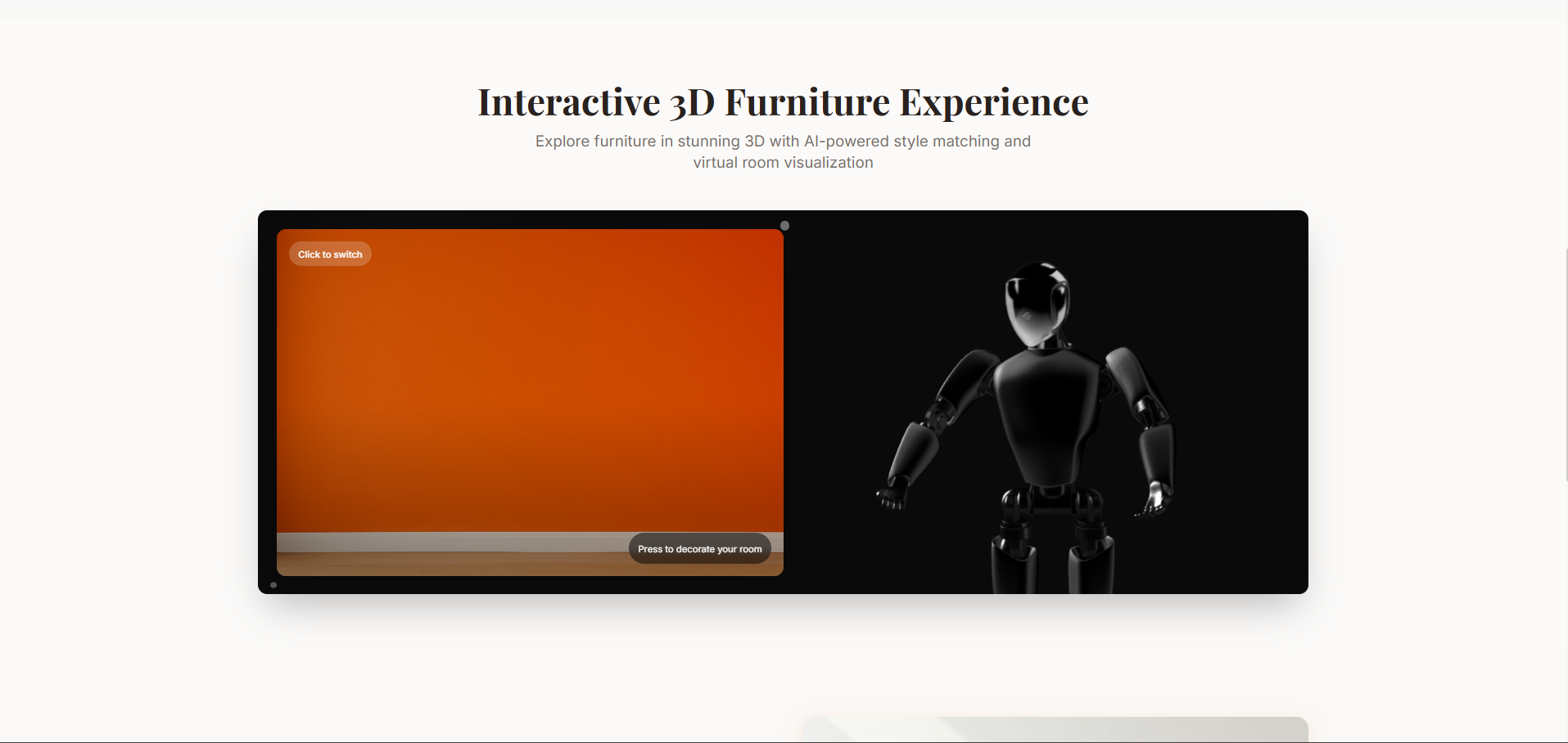
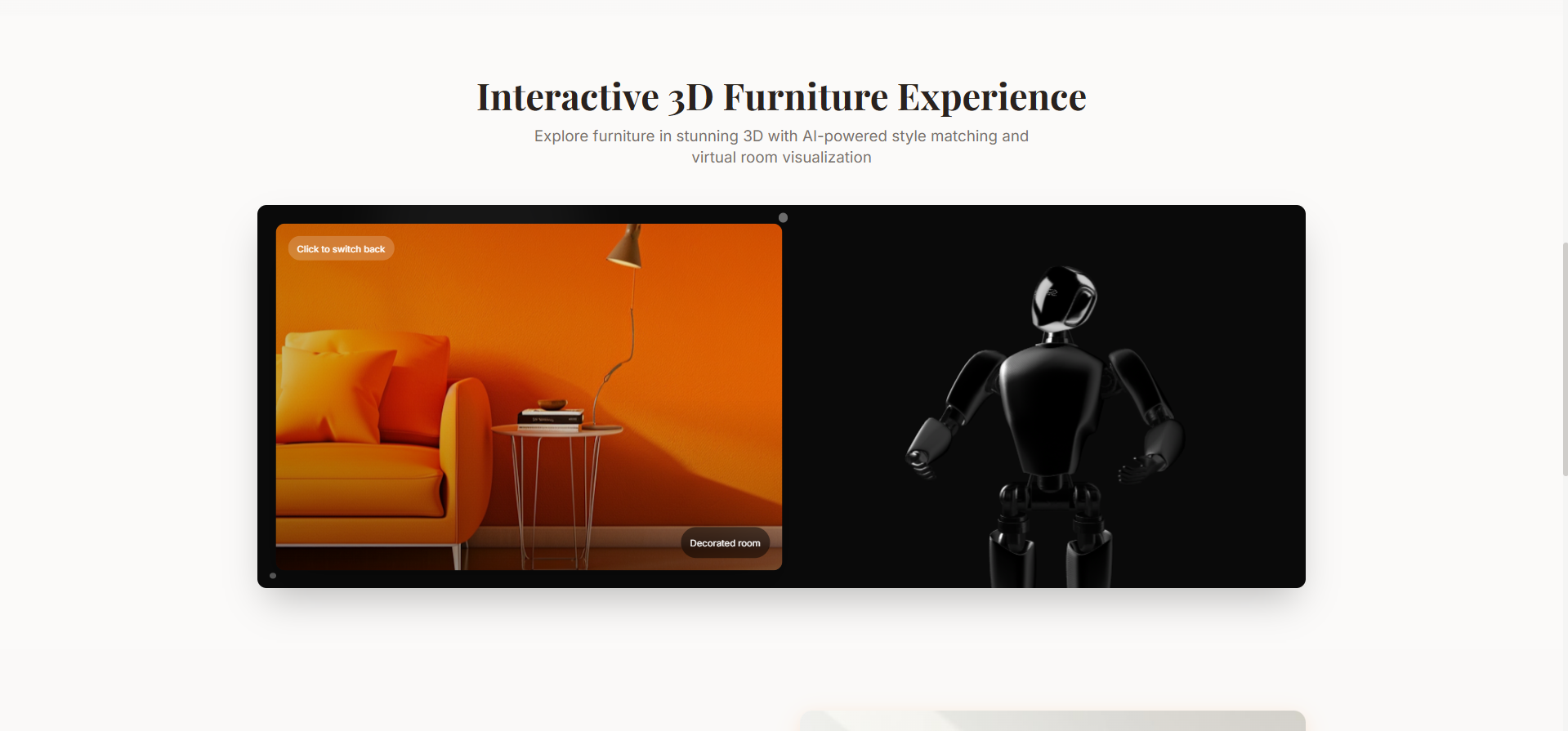
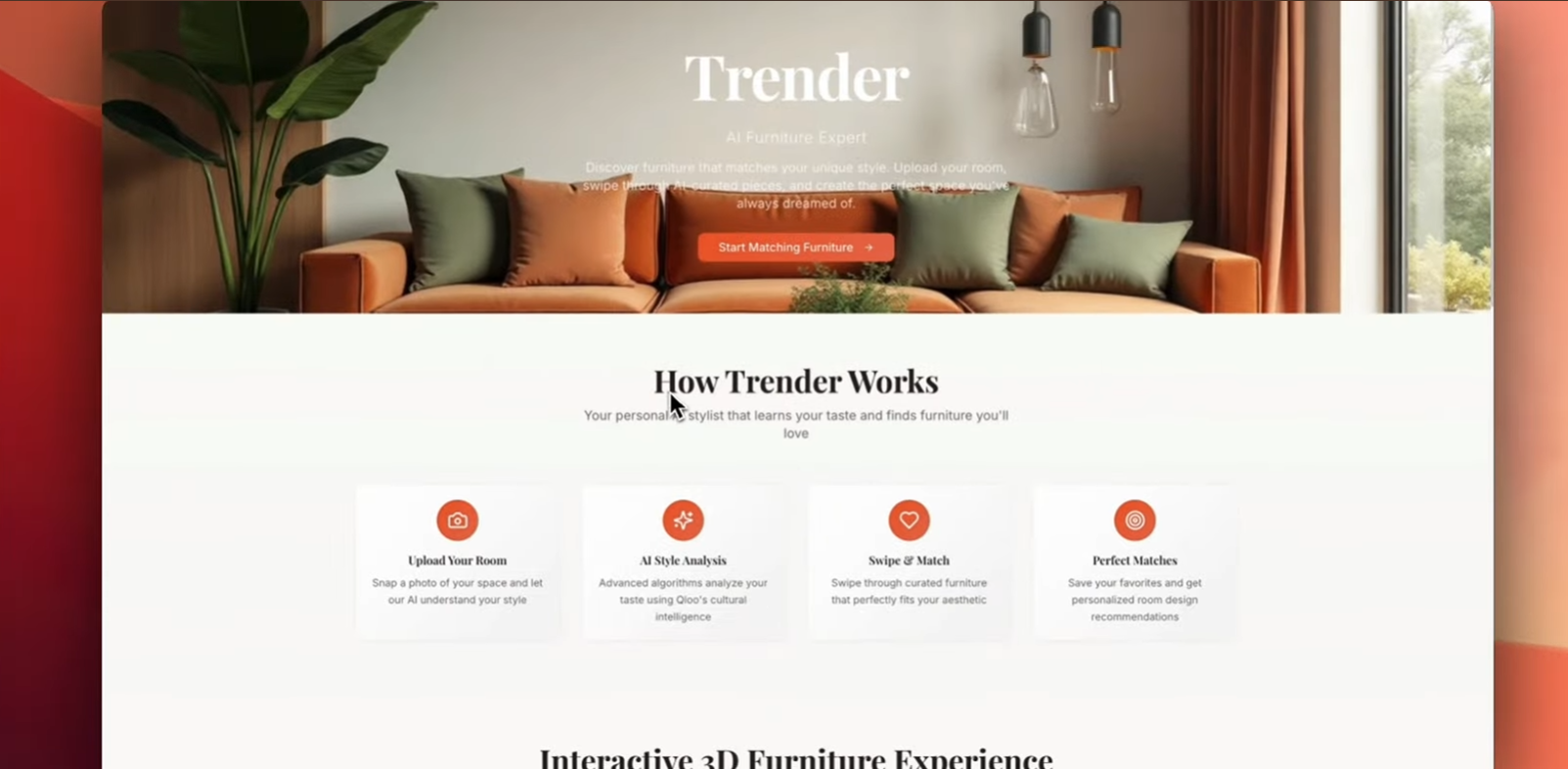
We wanted to build Trender as an AI-powered interior design tool that helps people visualize furniture before they buy it. Instead of endlessly scrolling through furniture websites and guessing what works, users can upload a photo of their room, describe what they want, and instantly see realistic furniture ideas placed into their space.
What it does
Trender lets users upload a room photo and type a prompt like:
“Add a modern beige sofa”
“Show me a small desk”
“I want a dark wood TV stand”
The app analyzes the room and the user’s request, then recommends real furniture products that match the room’s style, size, color, and vibe. It creates mockup-style images where the furniture is placed directly into the user’s actual room photo. 🪄
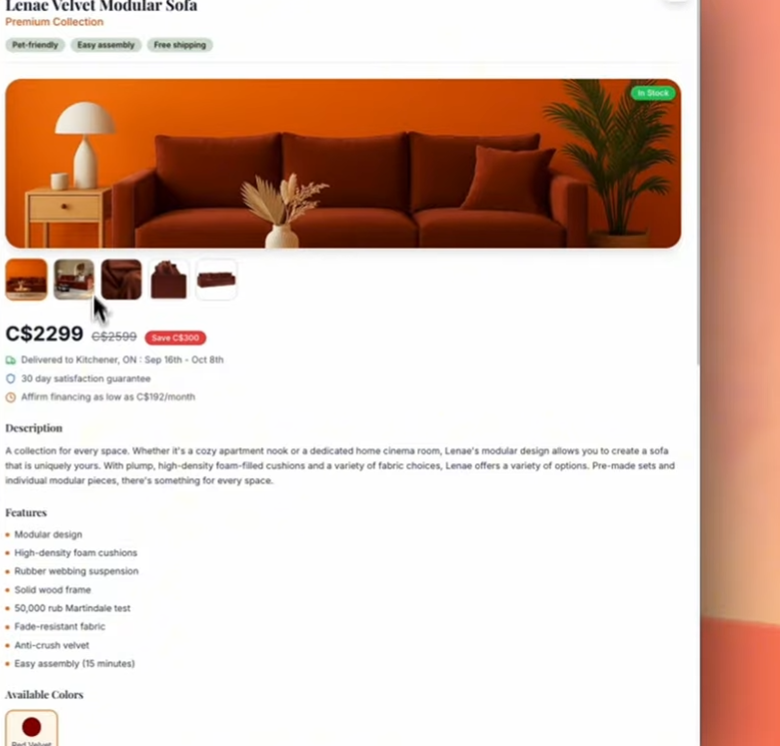
Users can then swipe through the results like a Tinder-style furniture discovery experience. Swipe right to save a product to a cart or saved list, and swipe left to skip it. Each result includes the edited room image, product details, price, store, and a link to buy.
How we built it
We built Trender using Next.js, React, TypeScript, Supabase, and the Gemini API.
The frontend was built with React and TypeScript to create a smooth upload flow, polished results page, and swipeable furniture card experience. Supabase stores room photos, products, stores, product attributes, dimensions, and saved user selections.
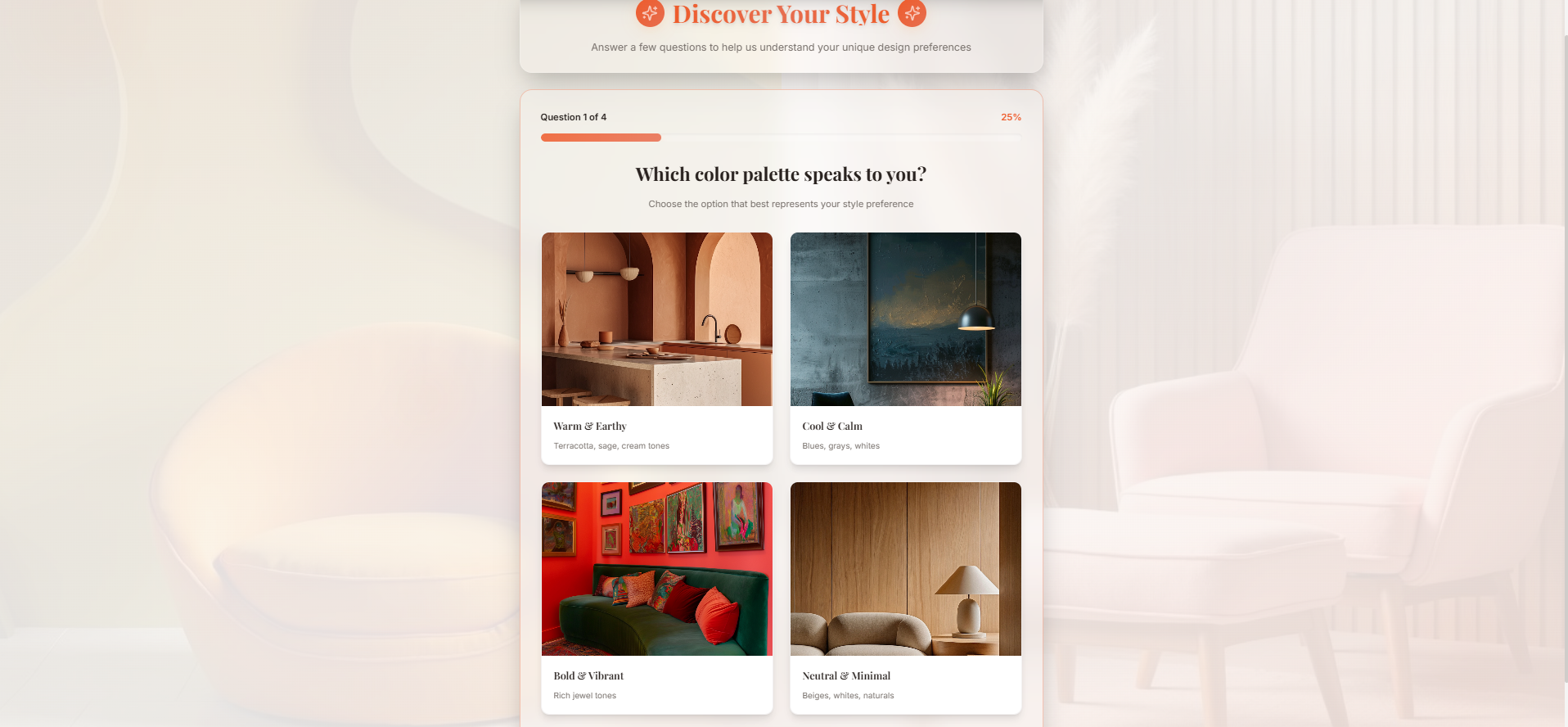
Gemini is used for room understanding, prompt interpretation, and product reasoning. Instead of randomly generating fake furniture, Trender focuses on real products from the database. The backend retrieves furniture using structured filtering such as furniture type, style, color, material, room type, dimensions, and overlay suitability.
We also designed the flow so each product result can be shown inside the user’s room image and displayed as a final swipeable card with product details and a purchase link. 🚀
Challenges we ran into
One big challenge was making product matching accurate. Simple keyword matching was not enough because people describe furniture in different ways. For example, “sofa bed,” “sleeper sofa,” and “convertible couch” can all mean similar things, so the system needed smarter classification and synonyms.
Another challenge was making the furniture look realistic inside the room image. The product needs to be scaled properly, placed naturally, and blended into the room so it does not look like a sticker pasted on top.
We also had to design a smooth user flow from upload, to AI analysis, to product retrieval, to image mockups, to the swipe results page without making the experience feel slow or confusing.
Accomplishments that we're proud of
We are proud that Trender turns a common shopping problem into a fun and interactive AI experience. Instead of just recommending furniture, the app helps users actually see how products could look in their own room.
We are also proud of the swipe-based discovery flow because it makes furniture shopping feel more visual, playful, and personalized. The saved/cart system connects the room mockup directly to real product links, making the experience useful beyond just a cool demo.
Another accomplishment was building the foundation for structured furniture filtering, including product categories, room compatibility, style tags, color tags, material tags, dimensions, and overlay suitability with a database of over 9,000 furniture items from 28 stores!
What we learned
We learned that AI works best when it is combined with structured data. Gemini can understand the user’s room and prompt, but accurate recommendations depend on having a clean and organized product database.
We also learned that visual quality matters a lot. If the furniture placement does not look realistic, users will not trust the recommendation, even if the product is technically a good match.
Most importantly, we learned that a strong AI product is not just about the model. The upload flow, loading state, results page, swipe interactions, saved list, and product details all need to feel connected and polished.
What's next for Trender
Next, we want to improve the realism of the room mockups by making furniture placement, scaling, shadows, and blending more accurate.
We also want to grow the product database with more real furniture stores, better product classification, and stronger filtering for style, size, price, color, and material.
Future features could include personalized style profiles, multi-item room redesigns, budget-based recommendations, before-and-after comparisons, saved room boards, and direct shopping integrations.
The long-term goal is to make Trender feel like an AI interior designer and furniture shopping assistant in one platform.
Built With
- css3
- gemini
- html
- javascript
- nextjs
- node.js
- postgresql
- react
- shell
- supabase
- tailwind
- typescript


Log in or sign up for Devpost to join the conversation.