-
-
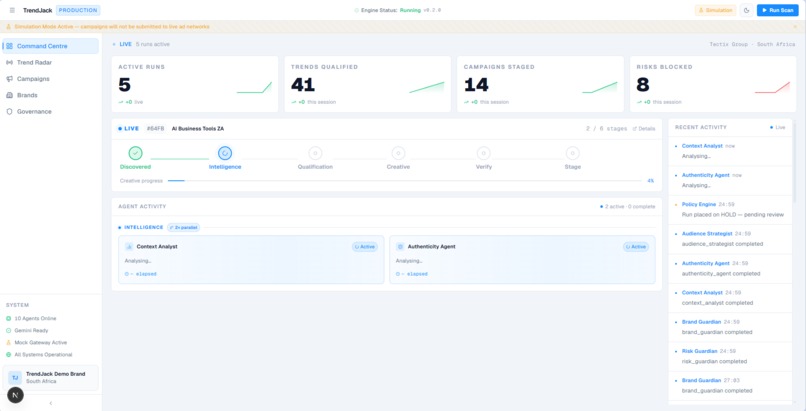
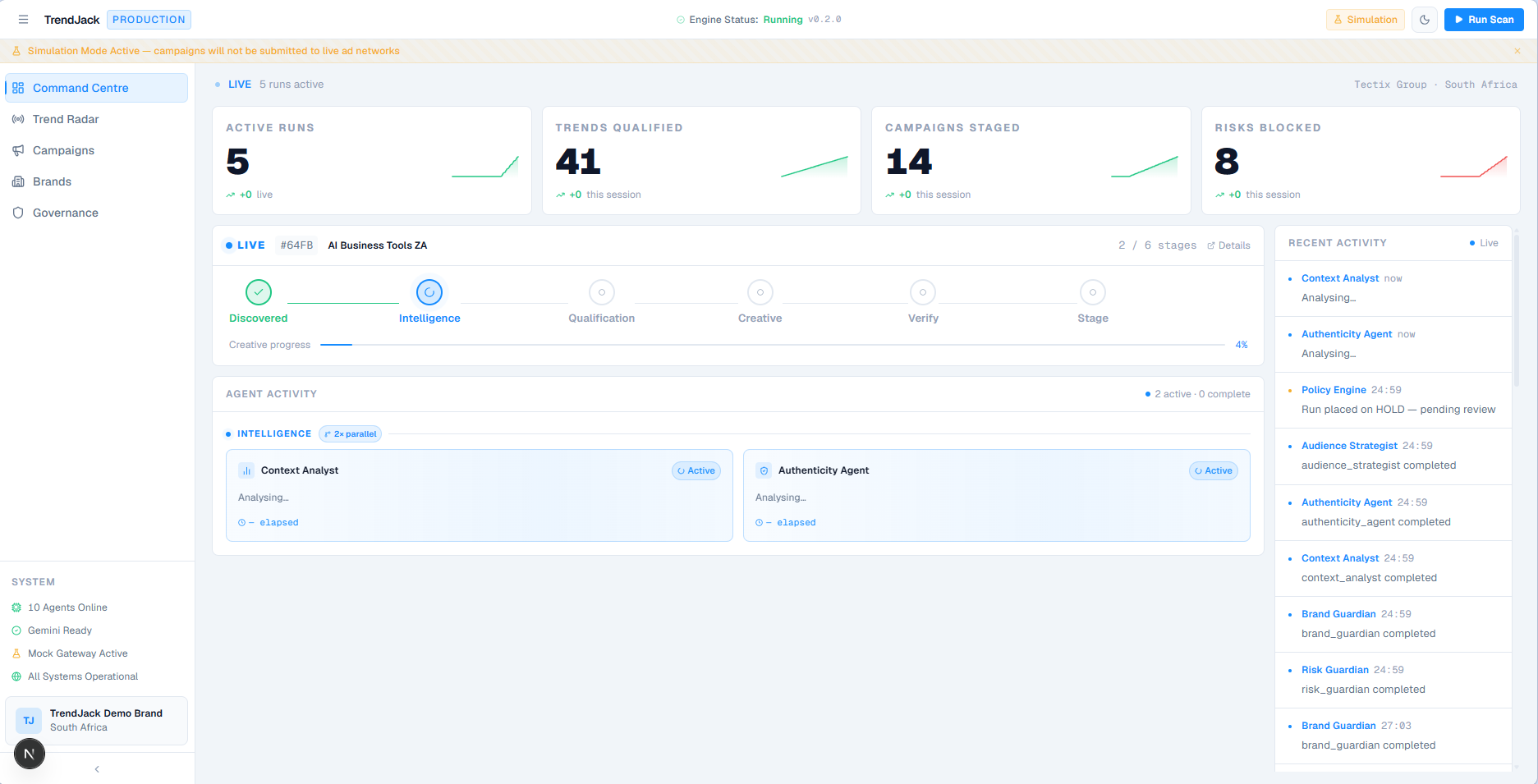
A demonstration of the first parallel agents running
-
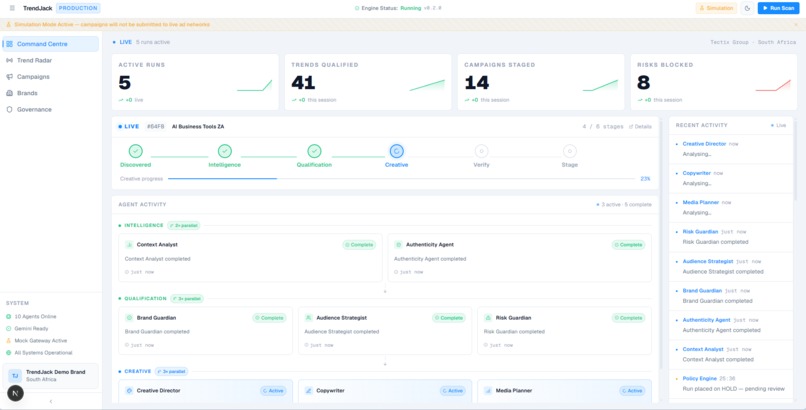
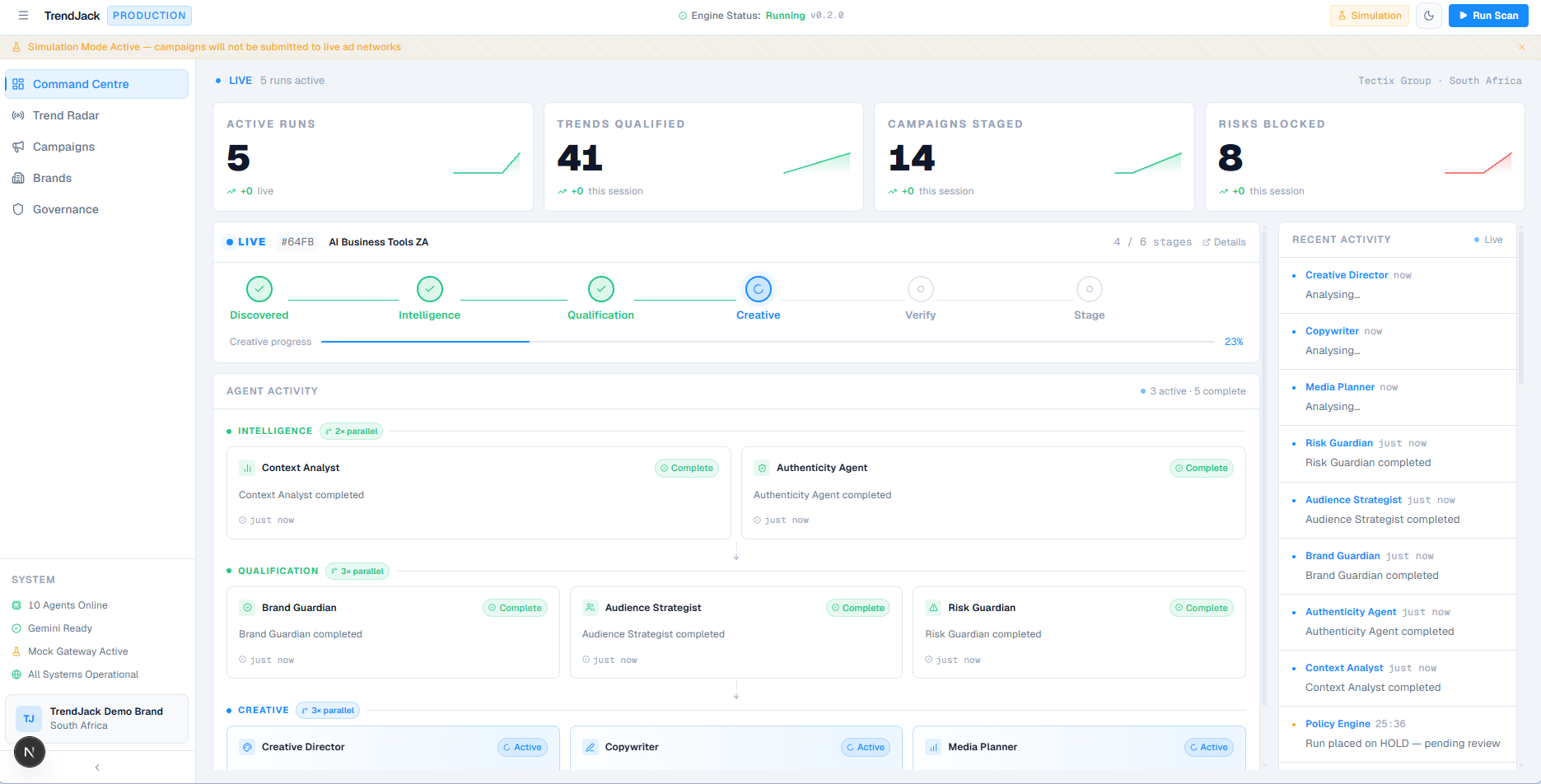
A demonstration of the thirparallel agents running, 3 agents
-
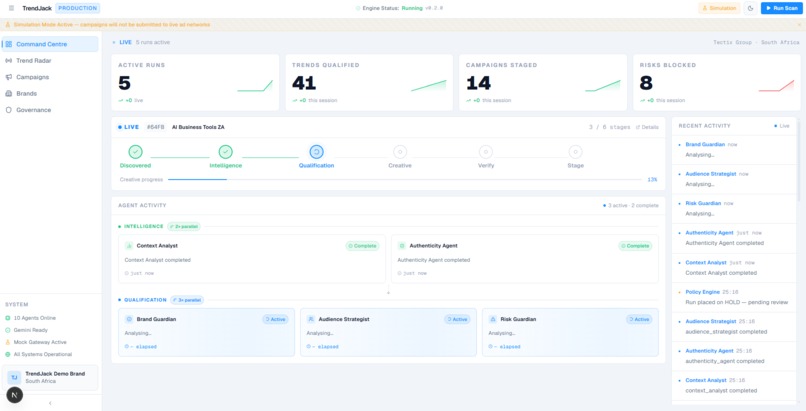
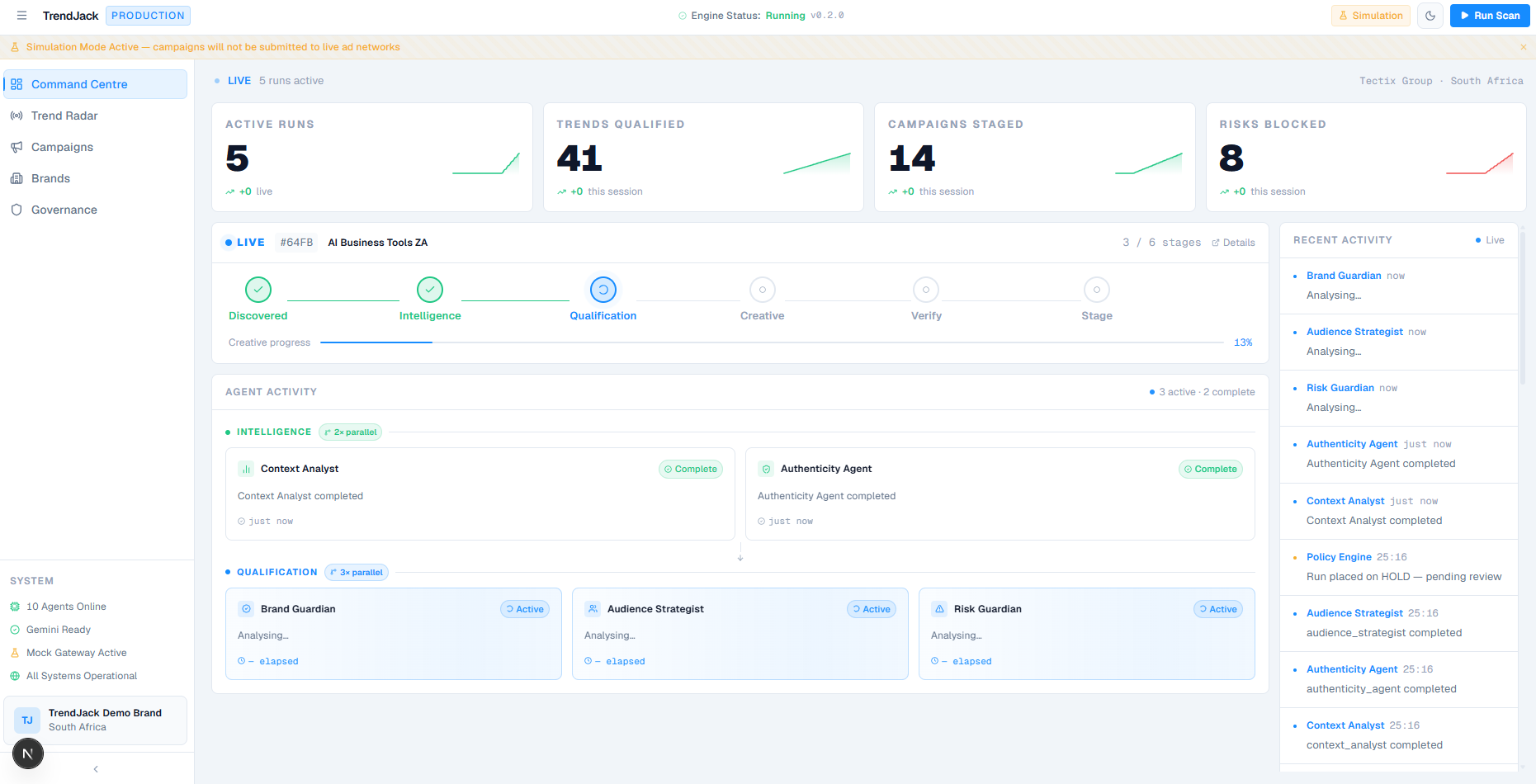
A demonstration of the second parallel agents running, 3 agents
-
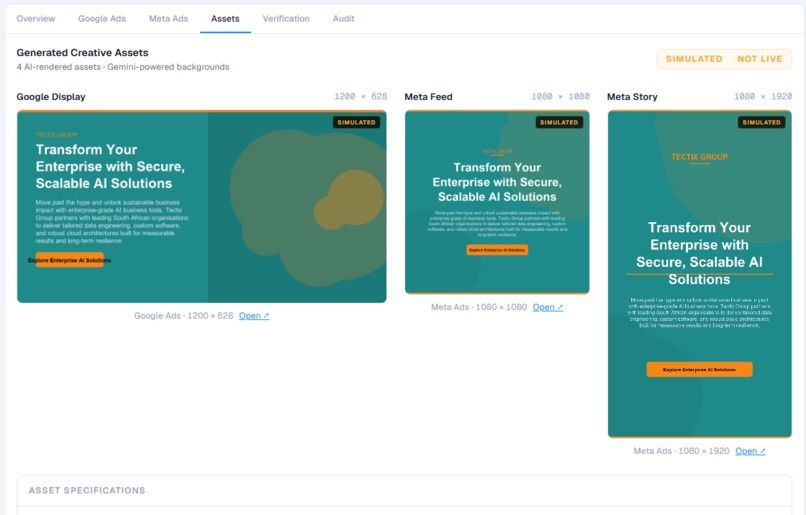
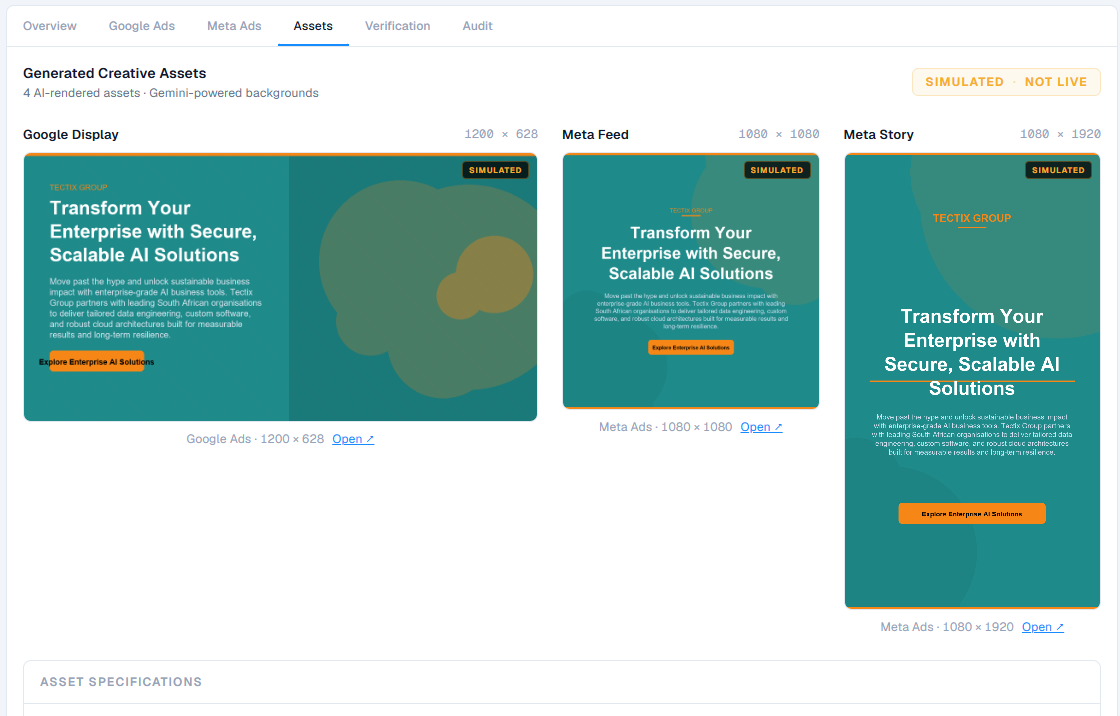
A demonstration of the media generated by agents based on brand guide
Inspiration
Advertising operations is broken. A trend emerges on a Monday morning - by the time a human team has briefed creatives, run it through compliance, allocated budget, and built the ad variants, it's Thursday and the moment has passed. I asked: what if the entire ops workflow - trend discovery, brand evaluation, creative generation, compliance review, and campaign staging - could run autonomously in minutes, with a human only stepping in to approve or reject the output?
TrendJack is the answer.
What I Built
TrendJack is a Fortified Enterprise Fleet of 12 specialized AI agents that operate as a fully autonomous advertising operations center. The system continuously scans for emerging trends, runs each one through a multi-stage evaluation pipeline, and either stages a production-ready campaign or rejects it - all without human initiation.
The Agent Fleet
Each agent owns a distinct responsibility and cannot override the others:
| Agent | Role |
|---|---|
| Context Analyst | Maps cultural and source context behind the trend |
| Authenticity Agent | Verifies the trend is organic, not astroturfed |
| Brand Guardian | Checks the trend against brand values and no-go zones |
| Audience Strategist | Identifies targetable audience segments |
| Risk Guardian | Flags reputational and legal hazards |
| Creative Director | Generates campaign concept directions |
| Copywriter | Produces all ad copy variants across formats |
| Media Planner | Allocates budget across Google and Meta placements |
| Compliance Reviewer | Checks every variant against ASA (South Africa) standards |
| Red Team Reviewer | Adversarially probes the campaign for misuse potential |
| Technical QA | Validates creative assets against platform spec requirements |
| Policy Engine | Deterministic hard gate - AI agents advise, the policy engine decides |
The Policy Engine - AI Advises, Rules Decide
The most important architectural decision: the Policy Engine is not an AI model. It is a deterministic rule evaluator that runs against every run at every gate. Agents score, flag, and recommend - but the Policy Engine has the final verdict (AUTO_STAGE, REVIEW, HOLD, or REJECT). This is intentional: no hallucination or prompt injection can override a hard-coded business rule.
The Command Centre
The human interface is a real-time operations dashboard - not a form. Users observe the fleet working: agents light up as they execute, confidence scores accumulate, policy gates open or close, and a campaign either surfaces in the staging queue or is rejected with a full audit trail.
How I Built It
Backend: FastAPI on Cloud Run, async throughout (asyncpg + SQLModel + Postgres on Cloud SQL). All 12 agents are orchestrated via the Google GenAI SDK with Gemini 3.7 Flash on Vertex AI (locations/global). Agents are registered in the Vertex AI Agent Registry using the A2A v1.0 protocol.
Frontend: Next.js 15 (App Router) on Cloud Run, real-time polling via TanStack Query, Framer Motion for agent activity animations, and a dark command-centre design aesthetic inspired by Palantir and Linear.
Infrastructure: Fully deployed on Google Cloud - Cloud Run (autoscaling, zero cold-start penalty for demo), Cloud SQL (Postgres), Artifact Registry, Cloud Build, Secret Manager for database credentials.
Challenges
Agent coordination without a shared mutable state: Each agent receives a read-only snapshot of the run and writes back structured output. This prevents agents from influencing each other mid-run while keeping the audit trail clean.
Gemini 3.7 Flash availability: The model is only published at locations/global - using us-central1 returns a 404. This took longer than it should have to diagnose.
The Policy Engine independence problem: Early versions had agent outputs directly influencing pipeline flow. I refactored so all routing decisions are made by the deterministic policy layer, with agents contributing evidence only. This makes the system auditable and manipulation-resistant.
Making autonomy legible: An ops center that just works in the background isn't compelling. I invested heavily in the Command Centre UI to make the fleet's reasoning visible - confidence scores, per-agent summaries, audit timelines, and policy verdicts - so the human can trust and verify what the system decided.
What I Learned
A fleet of agents is only as trustworthy as its least-governed component. The insight that changed the architecture: AI should advise, deterministic rules should decide. Every production AI system that touches money or reputation needs a hard policy layer that no model output can bypass.
Built With
- a2a-protocol
- agent-registry
- artifact-registry
- asyncpg
- cloud-build
- cloud-run
- cloud-sql
- docker
- fast-api
- framer
- gemini
- google-cloud
- google-genai-sdk
- nextjs
- postgresql
- python
- secret-manager
- sqlmodel
- typescript
- vertex-ai

Log in or sign up for Devpost to join the conversation.