-
-
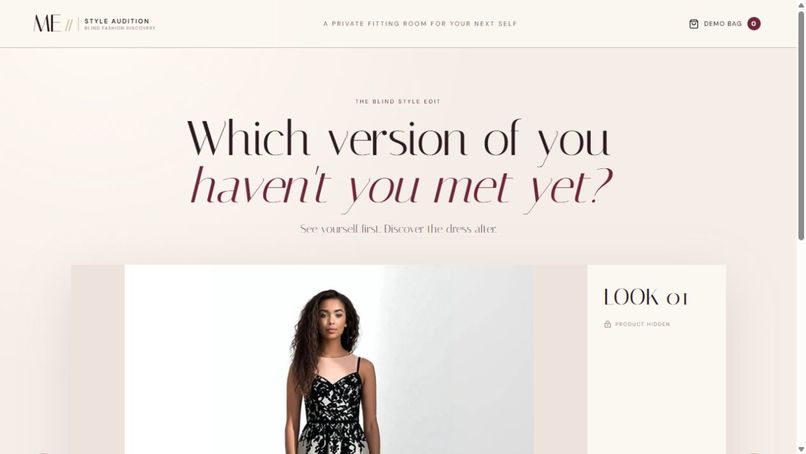
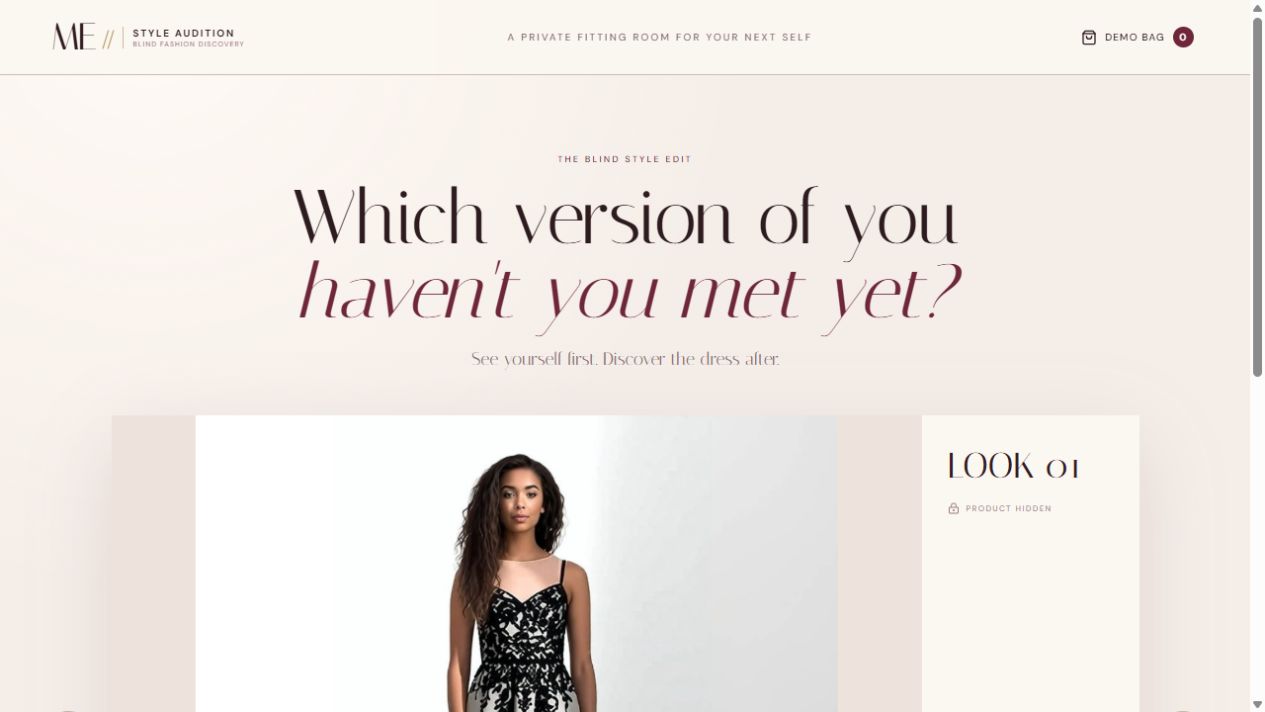
Blind editorial audition: one real YouCam result at a time, product hidden.
-
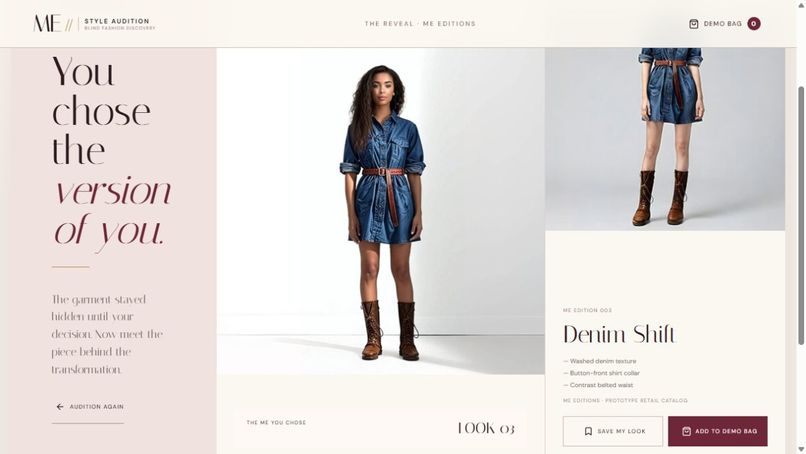
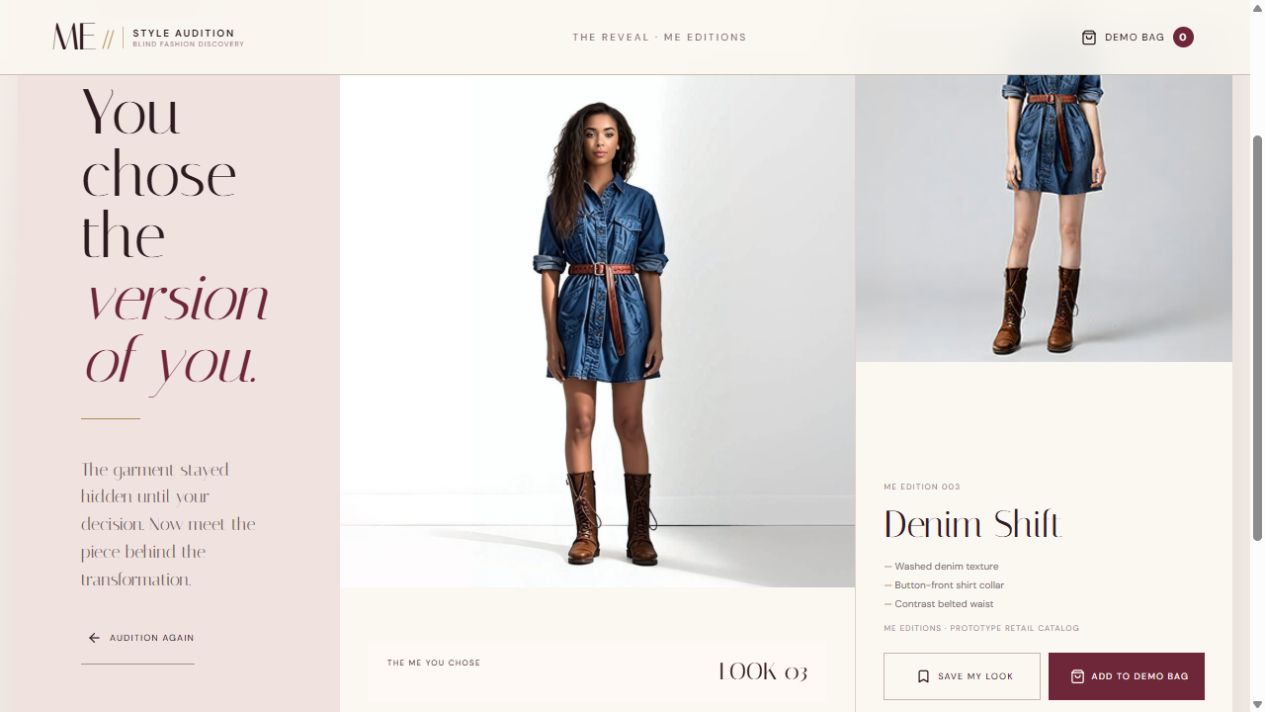
Magazine-style reveal: the chosen self and the prototype garment side by side.
-
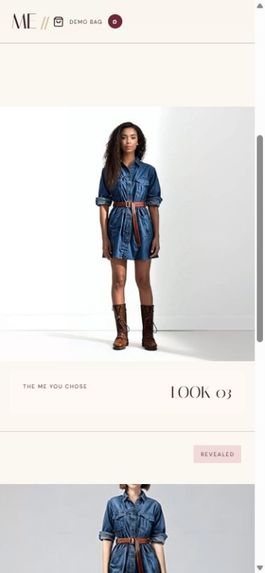
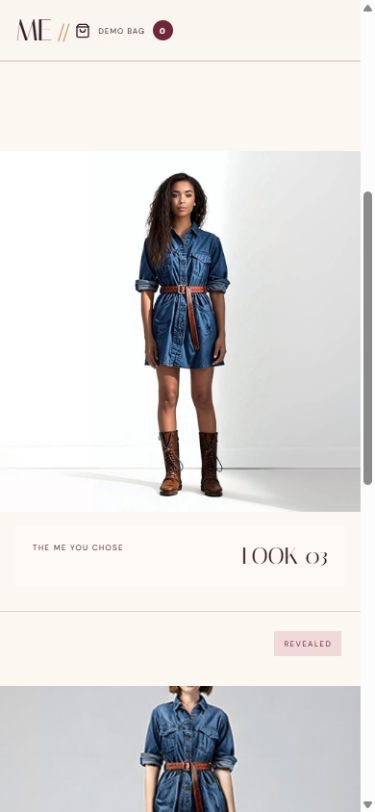
Mobile reveal with the actual VTO result and permanent product asset.
Inspiration
Online fashion shopping begins with product photography, brand, price, and familiar style labels. Those signals can keep shoppers choosing what they already know. We asked a different question: what if the shopper could meet a new version of themselves before seeing the garment?
What it does
ME // STYLE AUDITION reverses the usual shopping sequence. The same shopper appears in three real virtual try-on results labeled only LOOK 01, LOOK 02, and LOOK 03. Product images, brands, prices, style names, and AI scores remain hidden. The shopper can reject a look with NOT ME or choose I WANT THIS ME. Only then does the app reveal the exact garment reference, its visual characteristics, and actions to SAVE MY LOOK or ADD TO DEMO BAG.
The prototype catalog is ME EDITIONS. It uses project-authorized garment references, no external brands, and no invented prices. The product does not decide which body or look is “best”; it gives the decision back to the shopper.
How we built it
The frontend uses React, TypeScript, Vite, Lucide React, and responsive CSS. A Node.js/Express server keeps the YouCam credential off the client.
For validation, we paired one authorized full-body shopper image with three distinct garment references and executed three independent YouCam Clothes V3 requests. Every request followed the asynchronous REST workflow: request upload slots, upload the shopper and garment assets, create a Clothes V3 task, record the Task ID, poll task status, and retrieve the successful result. All three requests completed successfully (3/3 SUCCESS), and the original trace and returned images are preserved.
Challenges we ran into
The hardest constraint was preserving a true blind audition without implying objective body scoring or physical-fit certainty. We removed recommendation scores, brands, prices, and style labels from the audition, limited the prototype to one garment category, and kept a clear boundary between visual VTO evidence and real-world fit.
Accomplishments that we're proud of
- Three successful YouCam Clothes V3 tasks using the same shopper
- A product-first shopping flow inverted into a self-discovery flow
- Product reveal only after an uninfluenced personal choice
- Desktop and mobile interactions for reject, reveal, save, and demo cart
- Honest disclosure that VTO visualizes appearance and does not guarantee sizing or fit
What we learned
Virtual try-on can do more than preview a product. When product metadata is deliberately delayed, VTO becomes a discovery interface: the shopper responds to identity and possibility before familiar commercial cues shape the decision.
What's next
Next we would connect authorized retailer catalogs, add consent-aware shopper image management, measure whether blind auditions increase discovery beyond habitual categories, and test reveal-to-cart conversion with real commerce partners.
Built With
- api
- clothes
- css
- express.js
- lucide
- node.js
- react
- rest
- typescript
- v3
- vite
- youcam

Log in or sign up for Devpost to join the conversation.