-
-
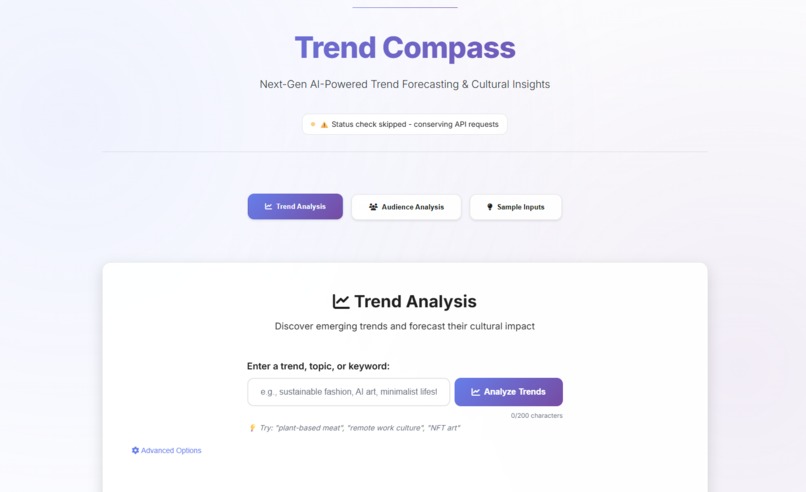
Trend Compass AI
Inspiration
I was inspired by the gap between raw data and true insight. In today’s world, it's easy to find out what is trending, but incredibly difficult to understand why it's happening and how it connects to a broader cultural context. The inspiration for Trend Compass AI was to build a tool that goes beyond keyword searches and generic reports. I wanted to create a platform that provides a deeper, semantic understanding of trends, allowing users to make smarter, more informed decisions based on genuine cultural intelligence.
What it does
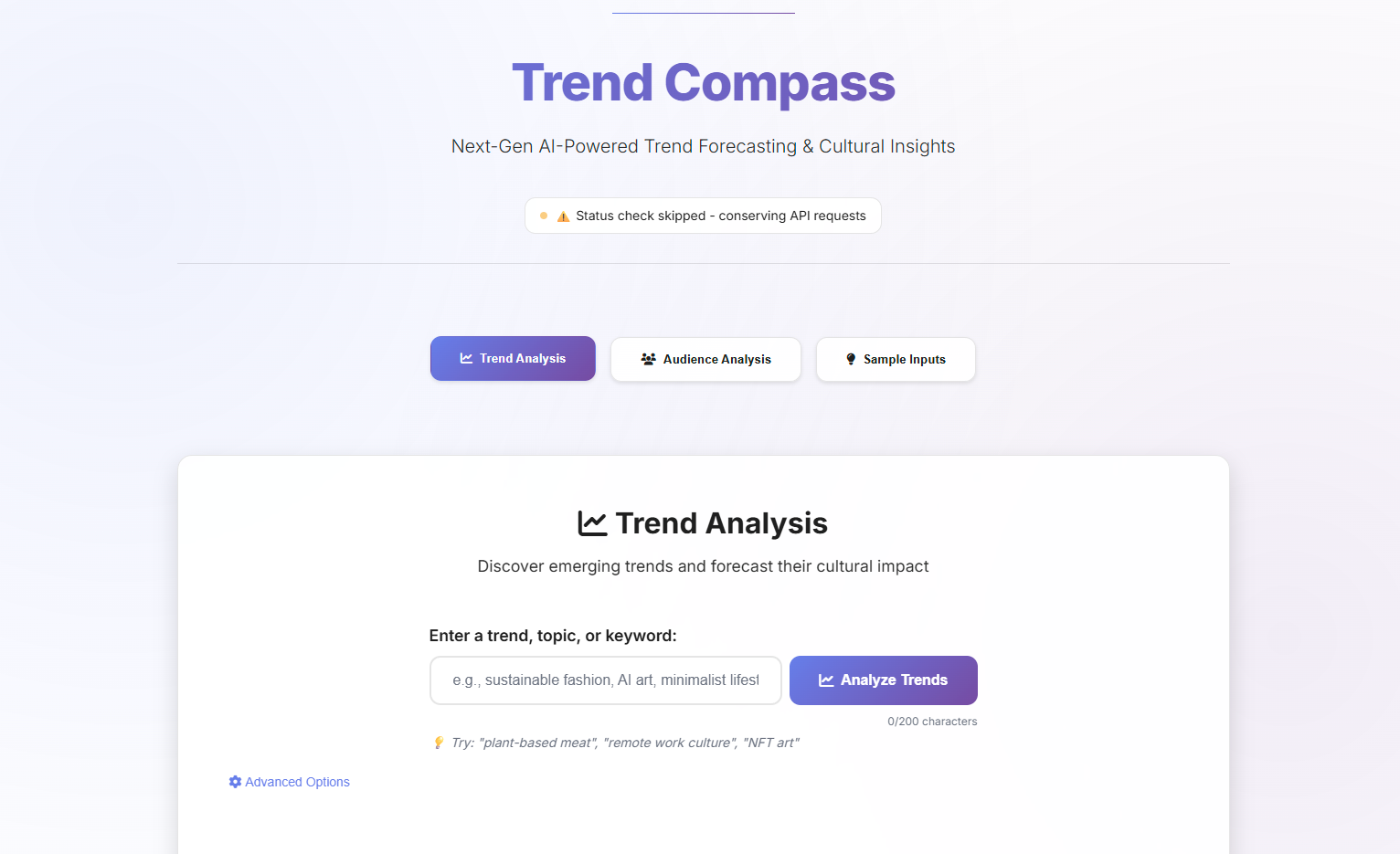
Trend Compass AI is an AI-powered trend analysis and forecasting tool. A user enters a trend or topic, and my application does the rest.
It first queries Qloo's Taste AI™ API to gather rich, cultural affinity data related to the topic, providing a foundation of consumer preferences and connections to other cultural categories (e.g., music, fashion, dining).
This comprehensive Qloo data is then sent to the Google Gemini LLM along with a prompt. The LLM synthesizes this raw data, turning it into a clear, concise, and actionable trend report.
The final report, delivered in my clean and intuitive user interface, includes key insights, a confidence score, and specific recommendations for marketing and strategy.
Essentially, I turn a simple query into a strategic business asset in a matter of seconds.
How I built it
I built Trend Compass AI using a modern full-stack architecture with a clear separation of concerns.
Frontend: A responsive and user-friendly interface built with Vite + TypeScript. This gave me a fast development experience with a clean, modular structure.
Backend: A robust API service built with Python and FastAPI. This framework was chosen for its high performance and built-in interactive documentation, which was invaluable for my development.
AI Integration: I seamlessly integrated both the Qloo API and the Google Gemini LLM into my FastAPI backend, which handles all the business logic and orchestrates the data flow.
Deployment: The entire application is deployed as a Web Service on Render, allowing for a unified and continuous deployment from my GitHub repository.
Challenges I ran into
Building this project was a fantastic learning experience, full of challenges that ultimately made the final product stronger. My biggest hurdles were in deployment and new technology adoption.
The Deployment Maze: As a newcomer to deploying Python web apps, I initially tried to use platforms like Vercel and Netlify, which are better suited for front-end-only applications. This resulted in a lot of time spent debugging errors that were fundamentally incompatible with my tech stack. I ultimately discovered Render, which was a perfect fit for my FastAPI backend and provided the seamless, all-in-one deployment I needed.
Learning FastAPI: Building the backend from scratch with FastAPI was a new experience for me. I had to quickly learn how to structure my endpoints, handle requests, and manage dependencies to ensure a stable and reliable API.
API Orchestration: The true challenge was not just using one API, but getting the Qloo API and the Gemini LLM to work together cohesively. I had to carefully structure my backend logic to first retrieve the right data from Qloo and then craft the perfect prompt for the LLM to synthesize that data into a useful and actionable report.
Accomplishments that I'm proud of
I am most proud of successfully integrating two powerful and distinct APIs—Qloo's cultural intelligence and a large language model—to create a fully functional, end-to-end product. I am also very proud of the user-friendly interface, which was built with modern tools like Vite and TypeScript, giving the project a polished and professional feel. The final result is a working application to showcases a clear understanding of its use.
What I learned
This hackathon was a masterclass in full-stack development and problem-solving. I learned:
The critical importance of choosing the right deployment platform for my specific tech stack.
How to build a clean, efficient backend with FastAPI.
The power of using modern frontend tools like Vite and TypeScript to create a smooth developer experience and a great user interface.
The value of perseverance when faced with new and complex API integrations.
What's next for Trend Compass AI
I believe this project has immense potential beyond the hackathon. Next steps could include:
Advanced Visualizations: Integrating charts and graphs to visualize trend data and growth over time.
User Accounts: Implementing user authentication and a database to allow users to save, edit, and export their reports.
New Analysis Models: Expanding my services to include competitor analysis, historical trend tracking, and more detailed audience segmentation.
Full API Documentation: Creating public-facing API documentation to allow other developers to build on my Trend Compass platform.
Built With
- api
- css3
- fastapi
- gemini
- html5
- python
- qloo
- typescript
- vite


Log in or sign up for Devpost to join the conversation.