-
-
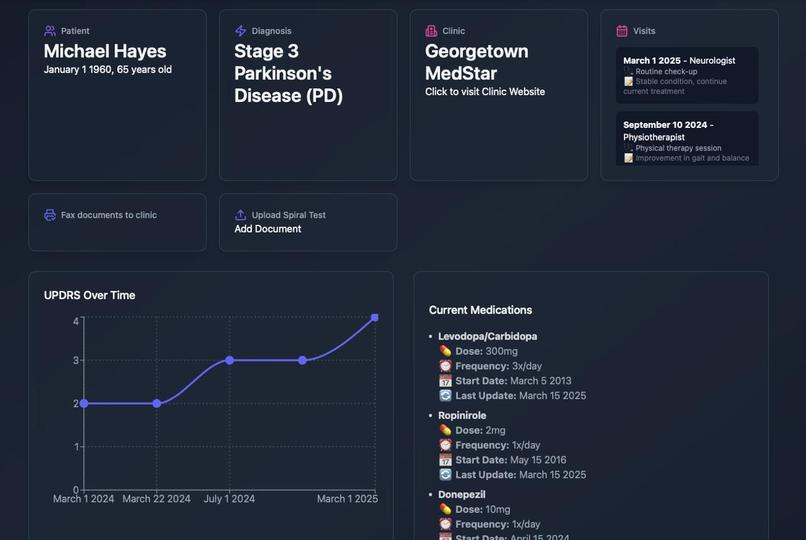
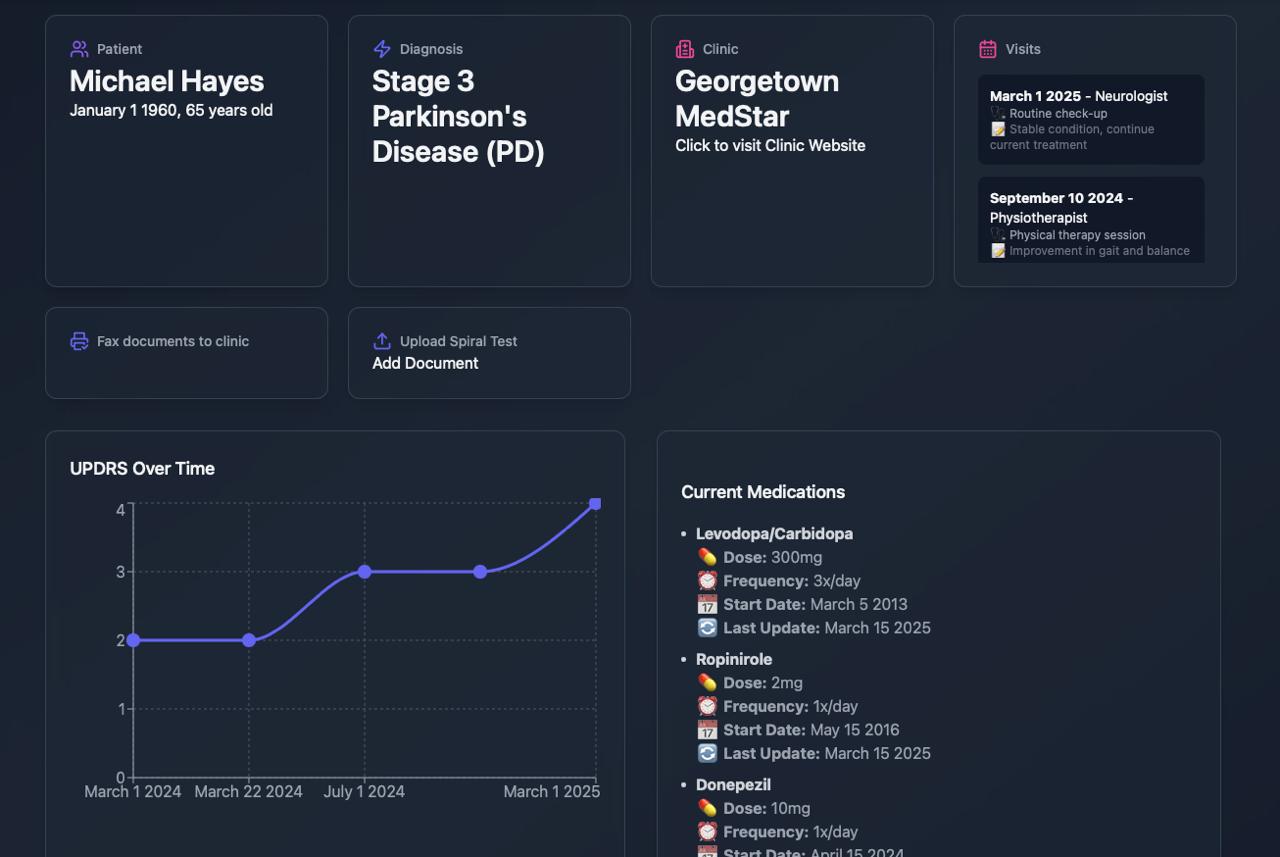
Dashboard UI
-
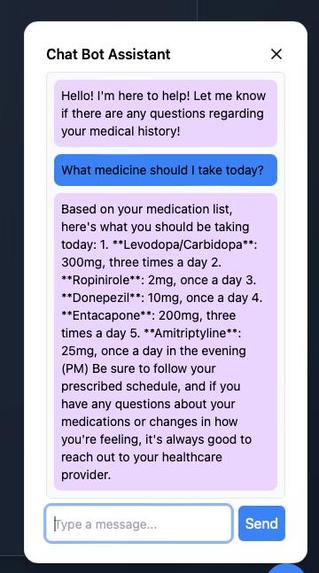
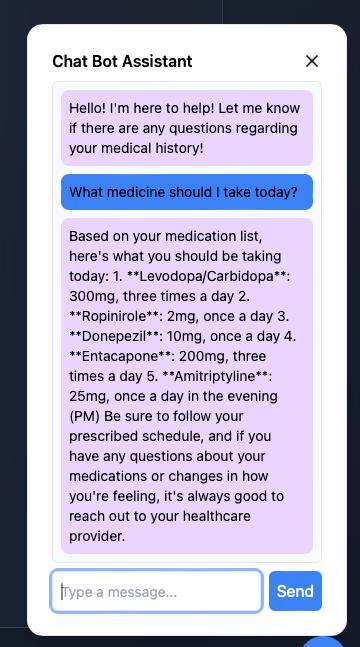
RAG-based AI Advocate
-

Pranay Prabhakar
-

Nicholas Kong
-

Tamer Hage
-

Tejas Sekhar




Inspiration
TremTrak was born out of the realization that early signs of Parkinson’s, like subtle handwriting changes, often go unnoticed until the disease has progressed. We were inspired by the potential of AI to transform early diagnosis and enable personalized care by uncovering these hidden signals.
What it does
TremTrak uses advanced AI to analyze patients’ handwriting, detecting micrographia—a key early symptom of Parkinson’s. It turns everyday handwriting samples into actionable insights, providing clinicians with objective, longitudinal data to track disease progression and adjust treatments.
How we built it
We combined clinical research with cutting-edge machine learning:
- Data Processing: We normalized and transformed handwriting samples into digital images and time-series data.
- Model Development: Using CNNs and attention mechanisms, we trained our models to quantify subtle changes in handwriting.
- Integration: We built a user-friendly dashboard that seamlessly integrates with electronic medical records, ensuring clinicians have real-time access to the data.
- Collaboration: Our interdisciplinary team of clinicians, engineers, and data scientists worked together, iterating on prototypes and incorporating early feedback.
Challenges we ran into
- Data Variability: Handwriting varies widely between individuals, so ensuring consistent, accurate analysis was challenging.
- Model Sensitivity: Fine-tuning our neural network to detect subtle changes without overfitting required numerous iterations.
- Clinical Integration: Adapting our system to work seamlessly with existing EMR systems and ensuring regulatory compliance added layers of complexity.
- Communication: Bridging the gap between technical jargon and clear clinical insights was essential to ensure the tool’s adoption in real-world settings.
Accomplishments that we're proud of
- Early Detection: We successfully demonstrated that our model can detect minute changes in handwriting that correlate with Parkinson’s progression.
- Interdisciplinary Collaboration: Our team’s diverse expertise allowed us to merge clinical insights with technical innovation, creating a tool that’s both effective and user-friendly.
- Real-World Integration: We built a prototype dashboard that not only visualizes data trends over time but also fits into clinicians’ existing workflows.
- Robust Business Strategy: Our comprehensive go-to-market plan and strategic partnerships set TremTrak on a path to making a meaningful impact in healthcare.
What we learned
- The Power of Collaboration: Working across disciplines enriched our approach and helped us overcome technical and clinical challenges.
- User-Centric Design is Crucial: Continuous feedback from clinicians and patients guided our design, ensuring the final product is both intuitive and valuable.
- Iterative Development: Prototyping, testing, and refining were key to addressing the complexities of data variability and model accuracy.
- Regulatory and Ethical Considerations: Early attention to data security, privacy, and clinical validation is essential when developing tools for healthcare.
What's next for TremTrak
Moving forward, we plan to:
- Pilot Clinical Studies: Validate our model further through real-world pilot studies, gathering more data and refining our algorithms.
- Enhance Personalization: Integrate additional patient data (like medication history and other clinical markers) for more tailored insights.
- Expand Integration: Work on deeper integration with EMRs and telemedicine platforms to broaden our reach.
- Scale Partnerships: Strengthen collaborations with key stakeholders, including research institutions, healthcare providers, and patient advocacy groups.
- Continuous Improvement: Use ongoing feedback to iterate on both the technology and the user experience, ensuring TremTrak remains at the forefront of digital health innovation.


Log in or sign up for Devpost to join the conversation.