-
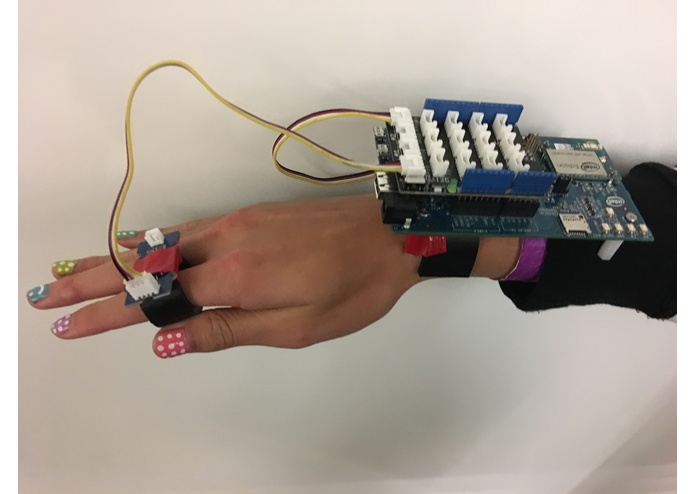
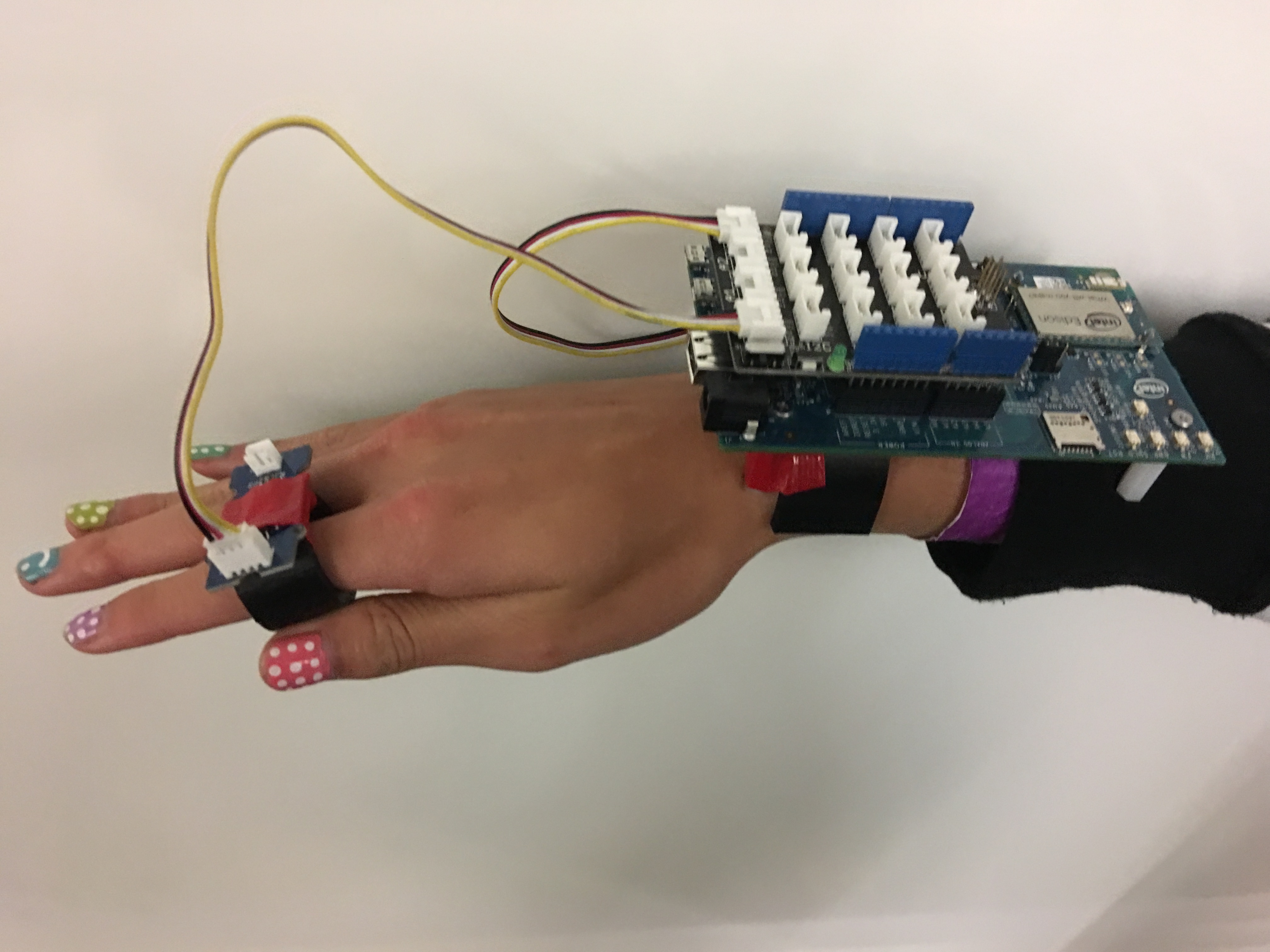
First physical prototype, developed at HealthHacks
-
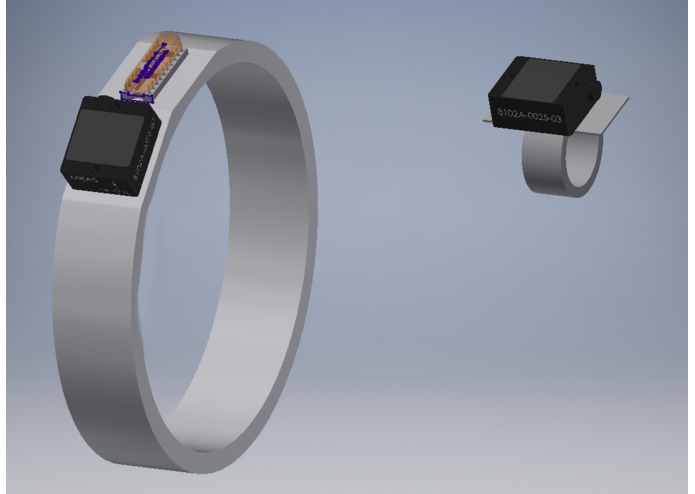
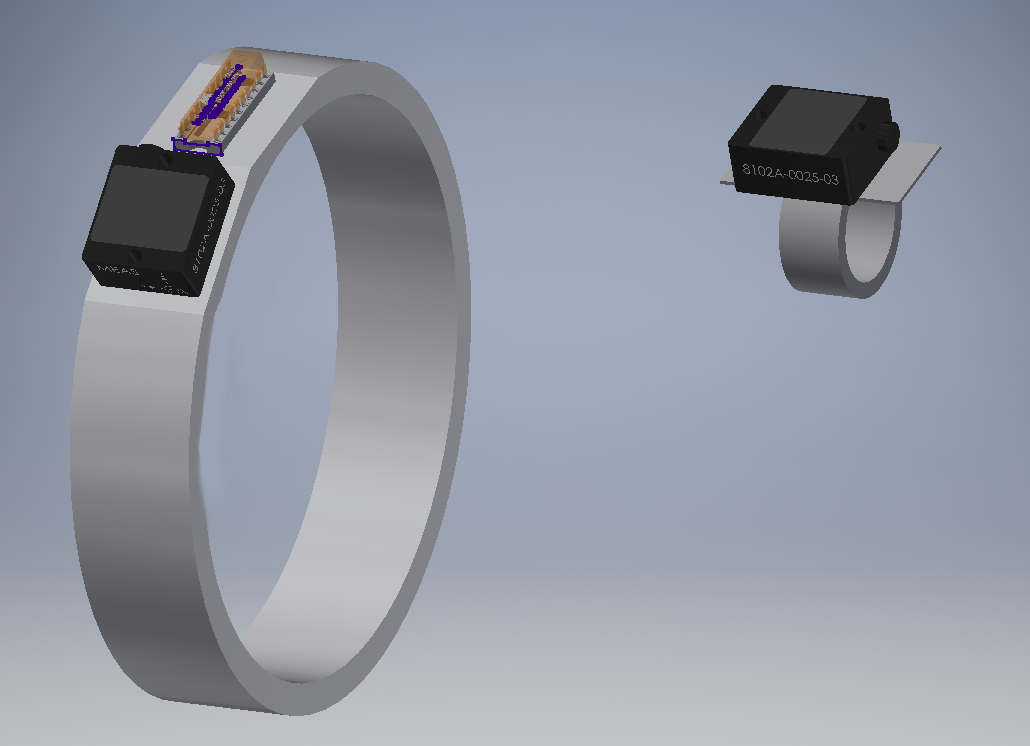
CAD drawing of theoretical design of device
-
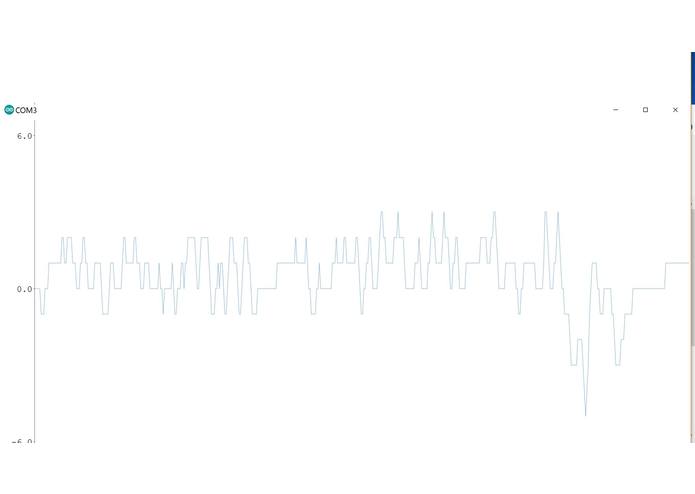
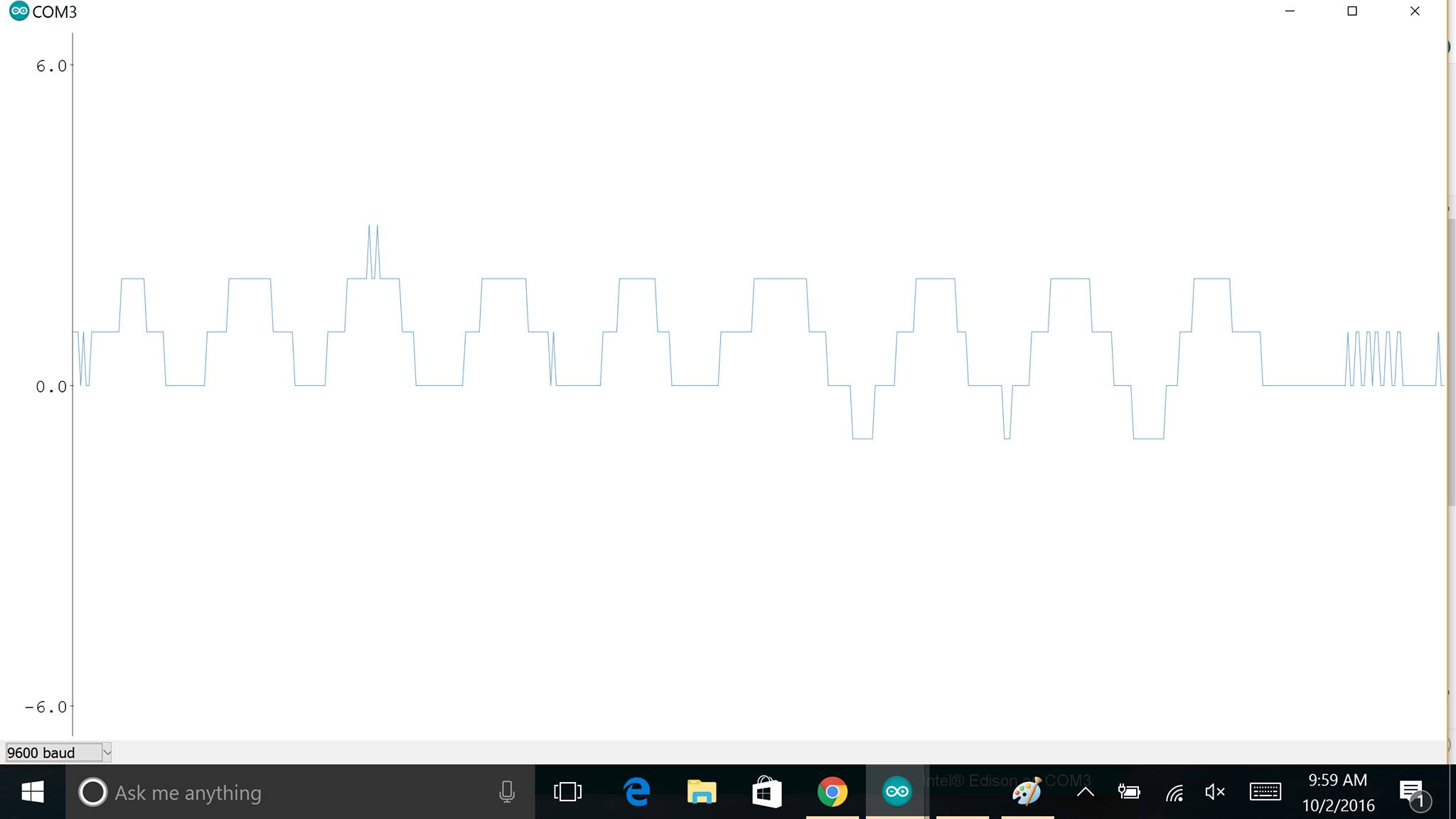
The TremorSense was able to detect large motion differences in tremors.
-
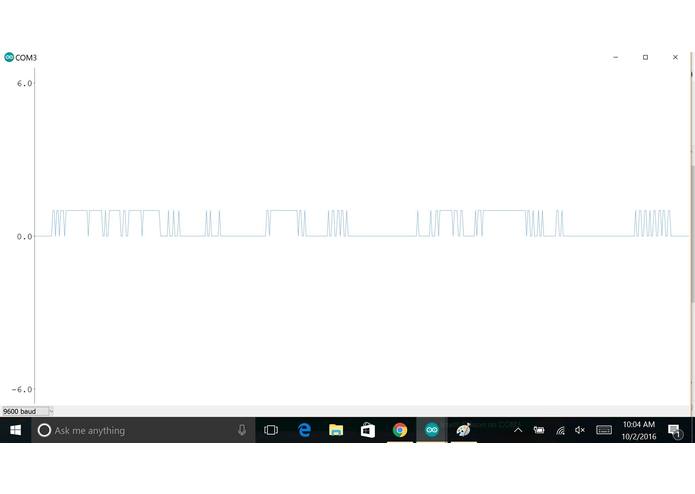
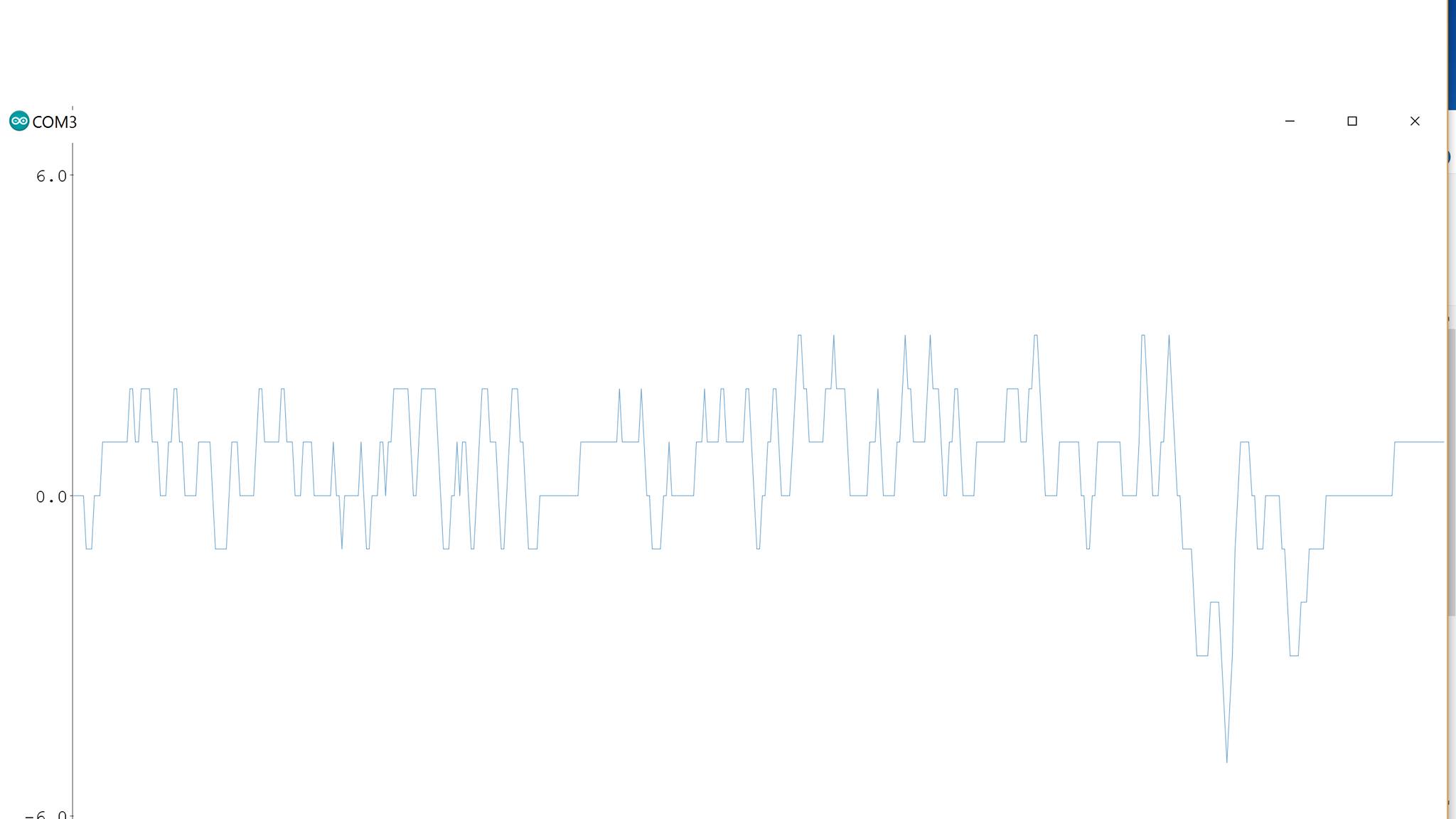
The TremorSense could differentiate between still motion and tremor motion, though some noise was present.
-
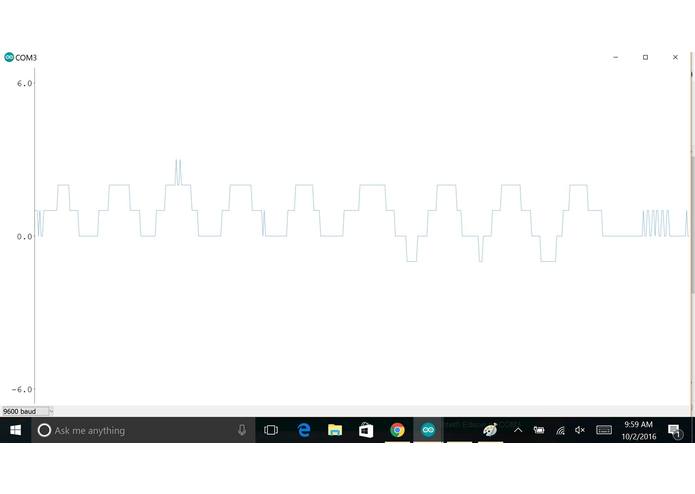
The TremorSense could also detect small tremors.
-
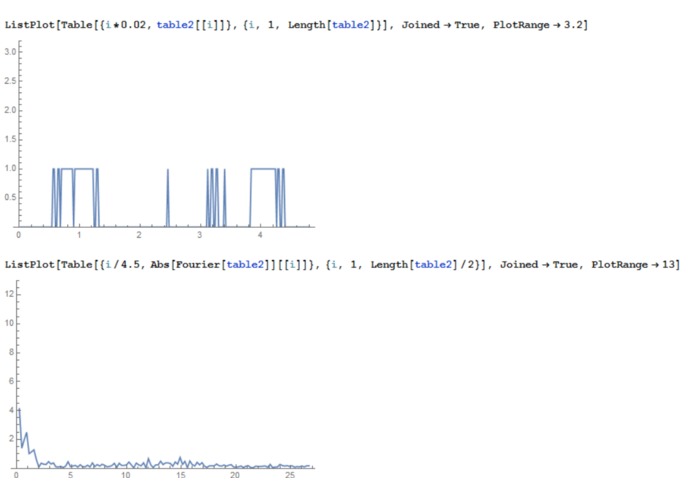
This is the Fast Fourier transform for no motion, showing no peak at low frequencies - differentiating this from the tremor graph.
-
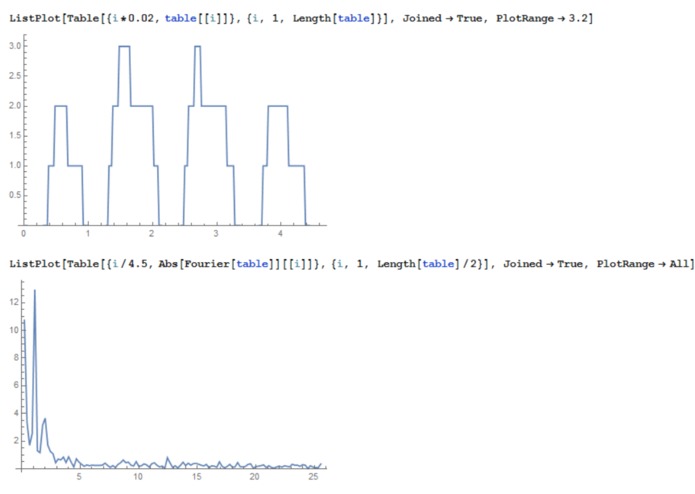
Fast Fourier transform showed a peak at low frequencies for tremors, indicating our algorithm could further differentiate among tremors.



Inspiration
We were inspired by Pfizer's challenge about creating wearable technology for the future of health care devices. We decided to focus on tremors because we know Parkinson's disease and several other neurodegenerative and muscle disorders include tremors as early diagnostic syndromes, and such disorders often prove life-threatening. It is imperative for patients to be able to diagnose and also track the development of their disorder, especially in response to treatment.
What it does
The TremorSense is a convenient device for tracking long-term tremor movements in patients with neurodegenerative or muscle disorders. The device is comprised of a wristband and ring which relay motion data continuously to a computer. The data is then analyzed to determine tremor frequency and amplitude with respect to time, allowing for diagnosis of Parkinson's disease and other tremor disorders. This is especially useful for differentiating between different forms of tremor disorders, tracking the progression of tremor disorders, and observing their response to treatment.
How we built it
The TremorSense was first prototyped using 3D printing to fabricate the ring and wristband components. An Intel Edison serves as a microcontroller and attaches to the wristband. The Intel Edison then connects to accelerometers placed on the wristband and the ring, and they feed data to a computer for analysis.
Challenges we ran into
There was a lack of materials to use: there were no velcro and no Arduinos available, and the first accelerometers we used did not work well with the Intel Edison. The Intel Edison was a completely new microcontroller that none of us had used, but we adapted using our knowledge of Arduino and other programming epxerience. Generating the problem idea and specifications was the hardest step, comprising most of the time used. Furthermore, the Intel Edison was powerful almost to a fault: ideally we can make TremorSense using a processor with only a fraction of the power and size, since the computing power required isn't very extensive. Think of a FitBit: our device would have a similar computing power need, so it is possible to incorporate any required computing chips in a bracelet.
Accomplishments that we're proud of
We made a working prototype that can output data, has great potential for improvement, and explores technology usage to make lives better. We're proud that we were able to provide a "proof of concept" prototype that has real-world implications. TremorSense was selected as the 3rd place winner in VCU HealthHacks!
What we learned
The hardest part for us was idea generation. There is a whole field of untapped problems that require creative solutions in the form of new technology. As battery life, motion-tracking precision, and processor power increases, a whole new world of electronics is opened up.
What's next for TremorSense
We hope to prototype a new design, especially one which has a much smaller microcontroller, and a different means of storing and analyzing data (e.g. wireless data transfer or SD card). We hope to eventually feature a phone interface so that the user may track his motions in real-time.
Built With
- 3dprinting
- arduino
- mathematica

Log in or sign up for Devpost to join the conversation.