
Inspiration
We've all had days where our brain just isn't working — but we don't realize it until after the bombed exam or the missed deadline. The scary part is that cognitive decline from sleep deprivation, stress, or overcaffeination is invisible. You feel fine. You're not. We wanted to build something that makes your brain's performance as measurable as your heart rate.
What it does
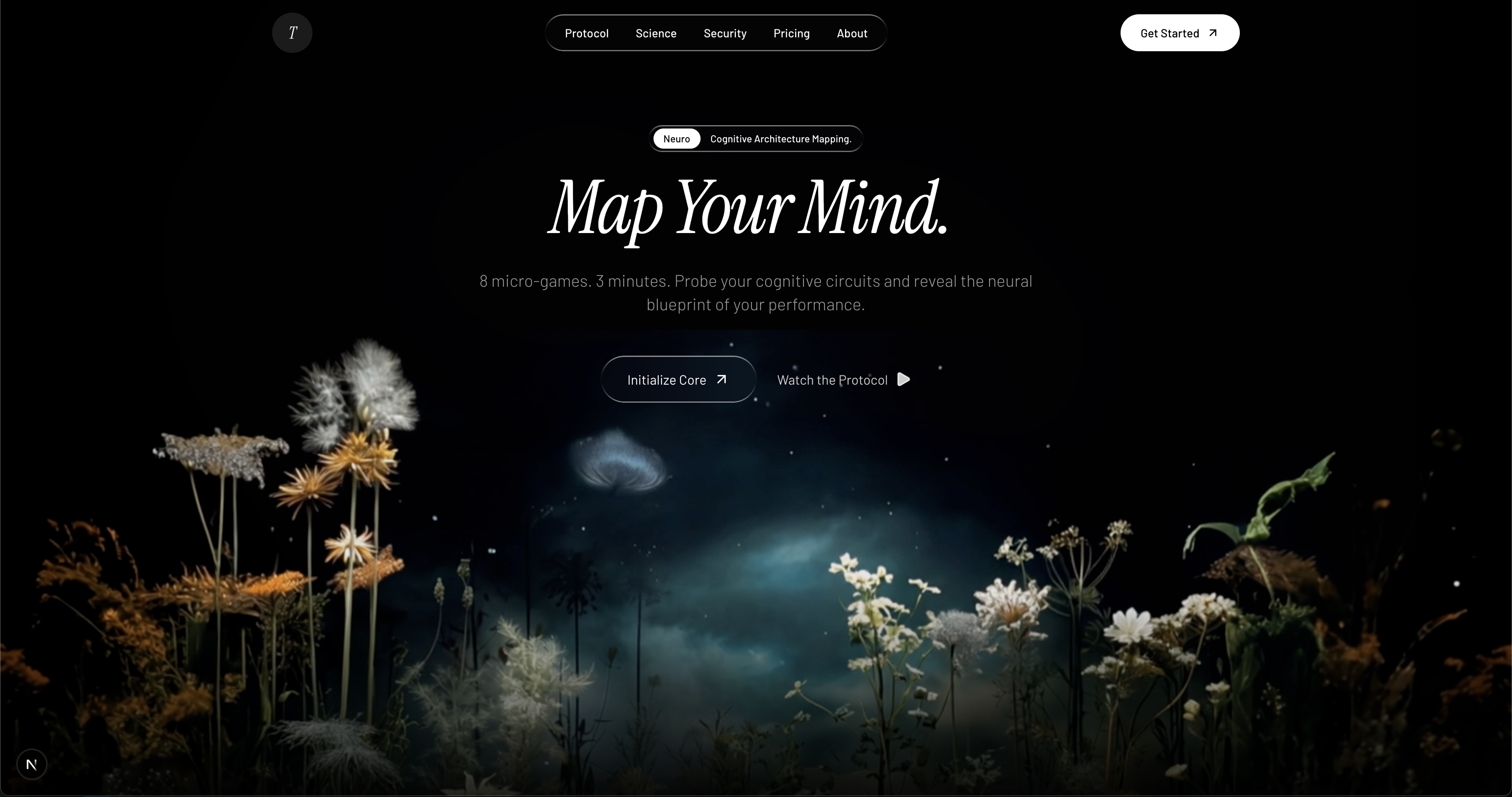
Tremble runs users through 7 neuroscience-backed brain games measuring reaction time, memory, impulse control, cognitive flexibility, and spatial reasoning. Users log their lifestyle — sleep, caffeine, exercise, stress — and we score them against 2,700 real participants from a national health study. Over multiple sessions, we find the specific correlations between each user's habits and their cognitive performance, then generate personalized AI-powered insights telling them what to change.
How we built it
Next.js and Three.js for the frontend, Express for the API layer, and a Python FastAPI service running 7 MLP neural networks trained on NHANES population data. We use signal detection theory (d-prime)
for scoring, bootstrap statistical analysis for lifestyle correlations, and a dual-model blending system that transitions from population-level predictions to user-specific Ridge regression models as
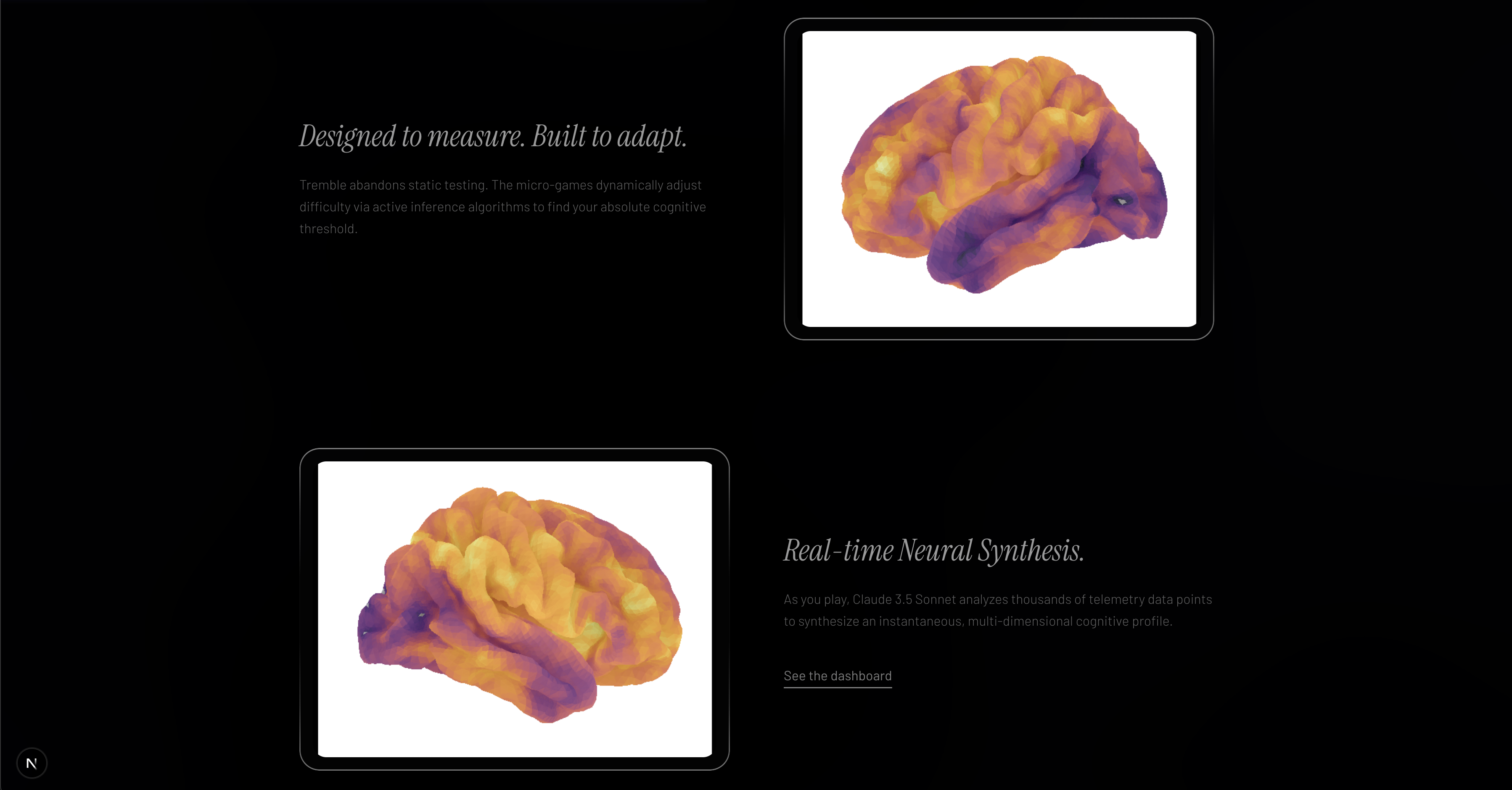
data accumulates. Google Gemini 2.0 Flash generates the personalized reports. Brain activation maps are based on published fMRI meta-analyses.
Challenges we ran into
Getting the scoring right was harder than expected — cognitive metrics like interference cost and switch cost need careful normalization and direction handling (lower is better for some, higher for
others). Blending population models with personal data without overfitting on 2-3 sessions took real tuning. And making 7 games feel like one cohesive experience rather than 7 separate apps was a
constant design battle.
Accomplishments that we're proud of
The system actually works end to end. You can play the games, get scored against real national data, see your brain activation regions light up, and receive a genuinely personalized AI report — not generic advice, but insights tied to your specific patterns. The fact that the model gets smarter with each session and starts giving you predictions before you even play is something we're really proud of.
What we learned
Neuroscience metrics are deceptively simple on the surface but incredibly nuanced to implement correctly. We also learned that the gap between "cool demo" and "statistically valid tool" is massive —
things like clamping hit rates to avoid infinite d-prime values, handling missing games in the factor loading matrix, and properly computing conditional expectations for imputed cognitive factors were
all rabbit holes we didn't expect.
What's next for Tremble
Longitudinal tracking — showing users their cognitive trends over weeks and months. Mobile app so people can test themselves daily in under 5 minutes. Social benchmarking so friend groups or teams can compare. And eventually, integration with wearables so lifestyle data gets logged automatically instead of self-reported.
Built With
- express5
- flask
- geminiapi
- nextjs
- node.js
- python
- three.js
- typescript

Log in or sign up for Devpost to join the conversation.