
Inspiration
As developers we often find ourselves context-switching between team discussions and project management tools. During meetings or casual conversations about project updates, we'd have to manually translate these discussions into actionable items in Trello. Omi's Integration App platform provided the perfect foundation to bridge this gap, leading to the creation of Trellomi.
What It Does
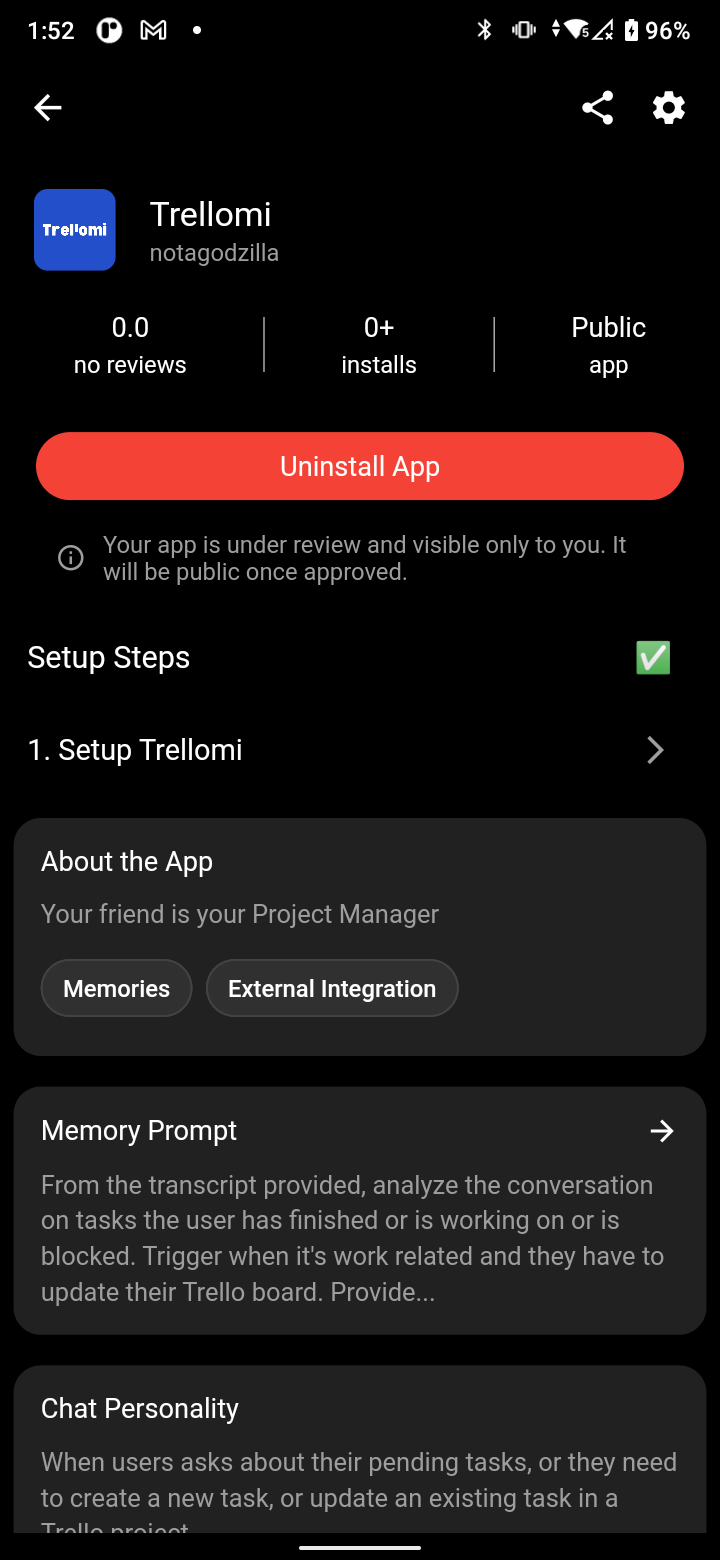
Trellomi is an AI-powered project management assistant that bridges the gap between natural conversations and project tracking. Built as an Omi Integration App, it leverages Omi's conversation processing capabilities to automatically manage your Trello boards based on natural conversations.
How it works:
- Conversation Processing: Omi processes user conversations and sends structured memories to Trellomi which either moves existing tasks, or create new ones based on the context.
- Memory Webhook: Trellomi receives these memories through its
/webhook/memoryendpoint - Structured Understanding: Each memory provided by Omi contains:
- Structured data (title and overview)
- Transcript segments of the conversation
- Unique memory ID for deduplication
- Intelligent Action: Based on these memories, Trellomi:
- Creates and moves cards across Trello boards
- Adds context-aware comments to cards
- Manages tasks across multiple boards
How We Built It
Omi Integration
- Memory Webhook: Leveraged the memory webhook to accept requests
- Request Processing:
- Handles structured memory data from Omi
- Uses memory IDs to prevent duplicate processing
- Processes conversation transcripts for context
- Authentication: OAuth-based Trello authentication flow
Tech Stack
- Platform: Omi Integration App
- Backend: Node.js with Express
- AI: OpenAI's GPT for task interpretation
- Database: SQLite for token and request storage
- Project Management: Trello API
Challenges We Ran Into
- Memory Processing: Efficiently handling Omi's structured memories
- Context Maintenance: Preserving conversation context across actions
- Request Deduplication: Implementing memory ID-based deduplication
- Token Management: Secure handling of Trello authentication
- Comment Attribution: Implementing app-based commenting
- Trello API Navigation: Understanding and working with Trello's complex API structure for boards, lists, and cards while managing rate limits and authentication scopes
What We Learned
- The effectiveness of Omi's structured memory format
- The importance of proper webhook implementation
- The power of combining conversation context with project management
What's Next for Trellomi
- Jira Integration: Expand support to Jira and other tools
- Team Context: Better understanding of team roles
- Custom Workflows: Support for various project methodologies
- Meeting Integration: Direct meeting tool integration
- Analytics: Project progress insights
Trellomi demonstrates the power of Omi's Integration App platform, showing how developers can build applications that understand and act on conversations. By implementing Omi's webhook-based memory system, we've created a solution that seamlessly bridges the gap between natural conversation and project management.


Log in or sign up for Devpost to join the conversation.