-
-
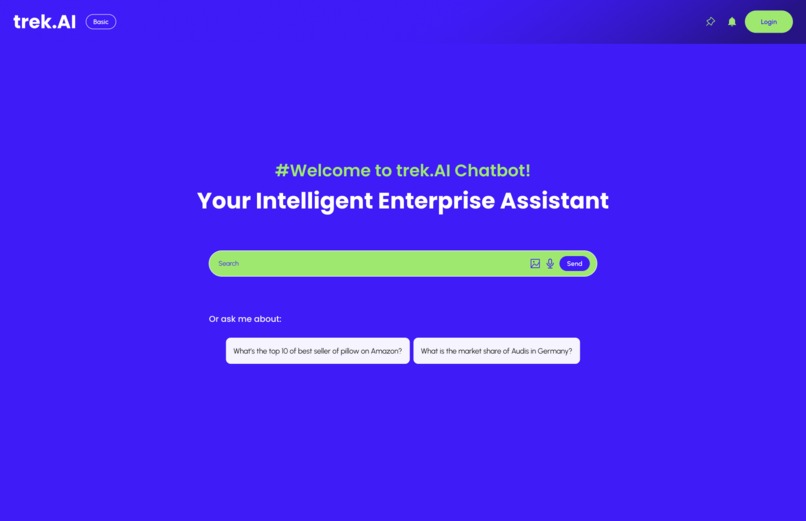
-
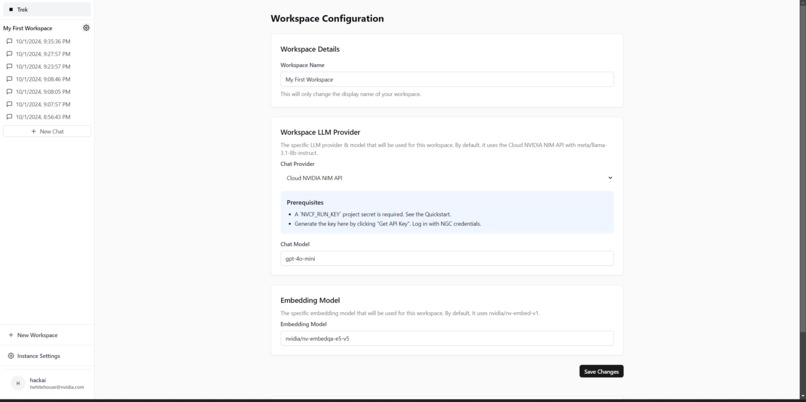
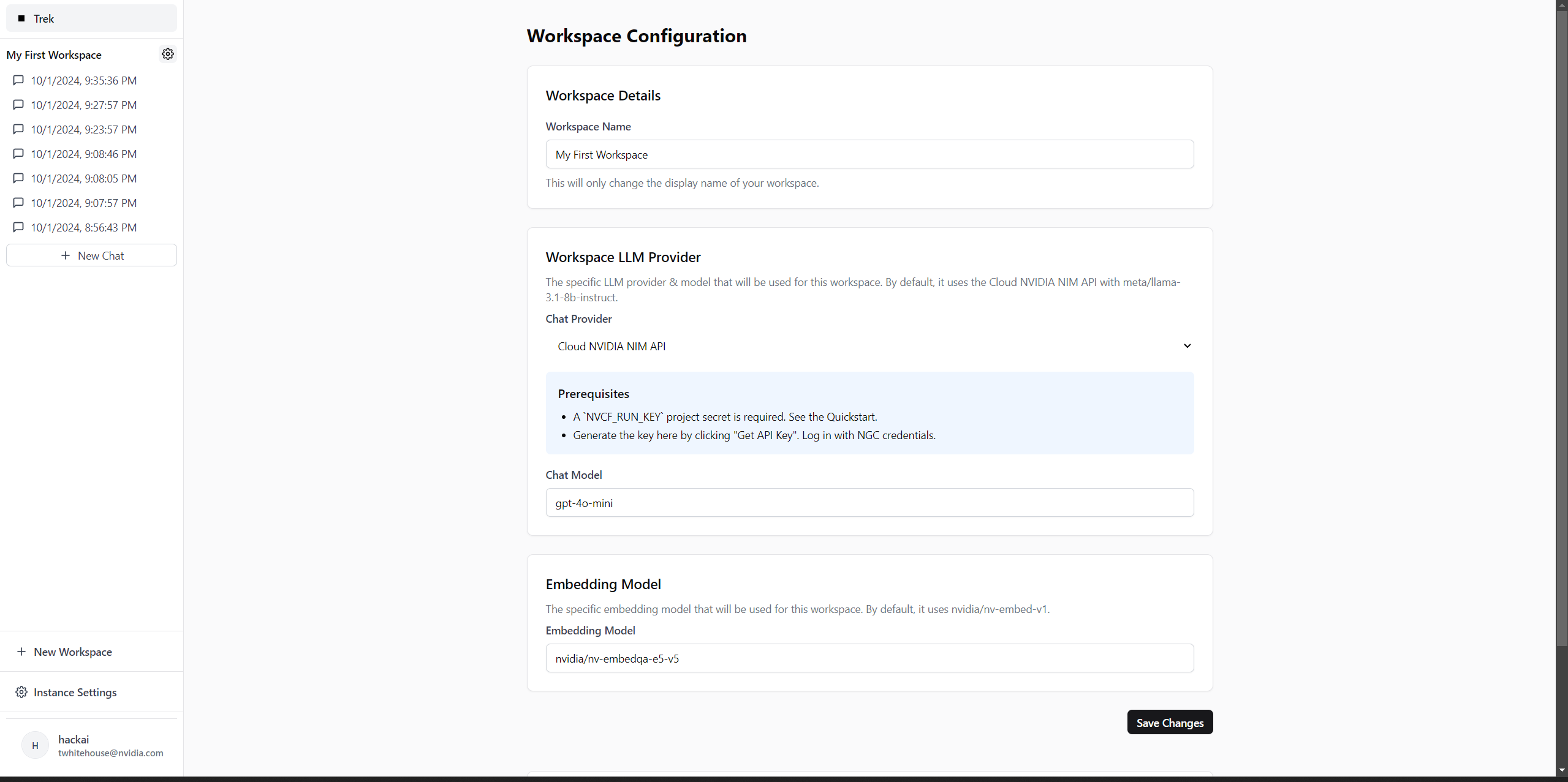
Configuring a workspace
-
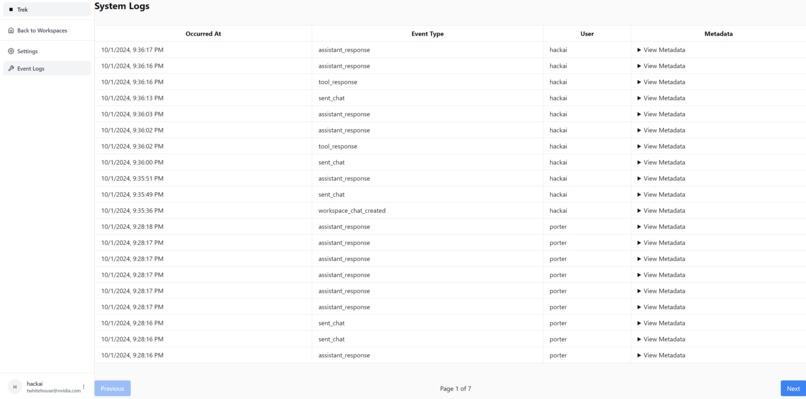
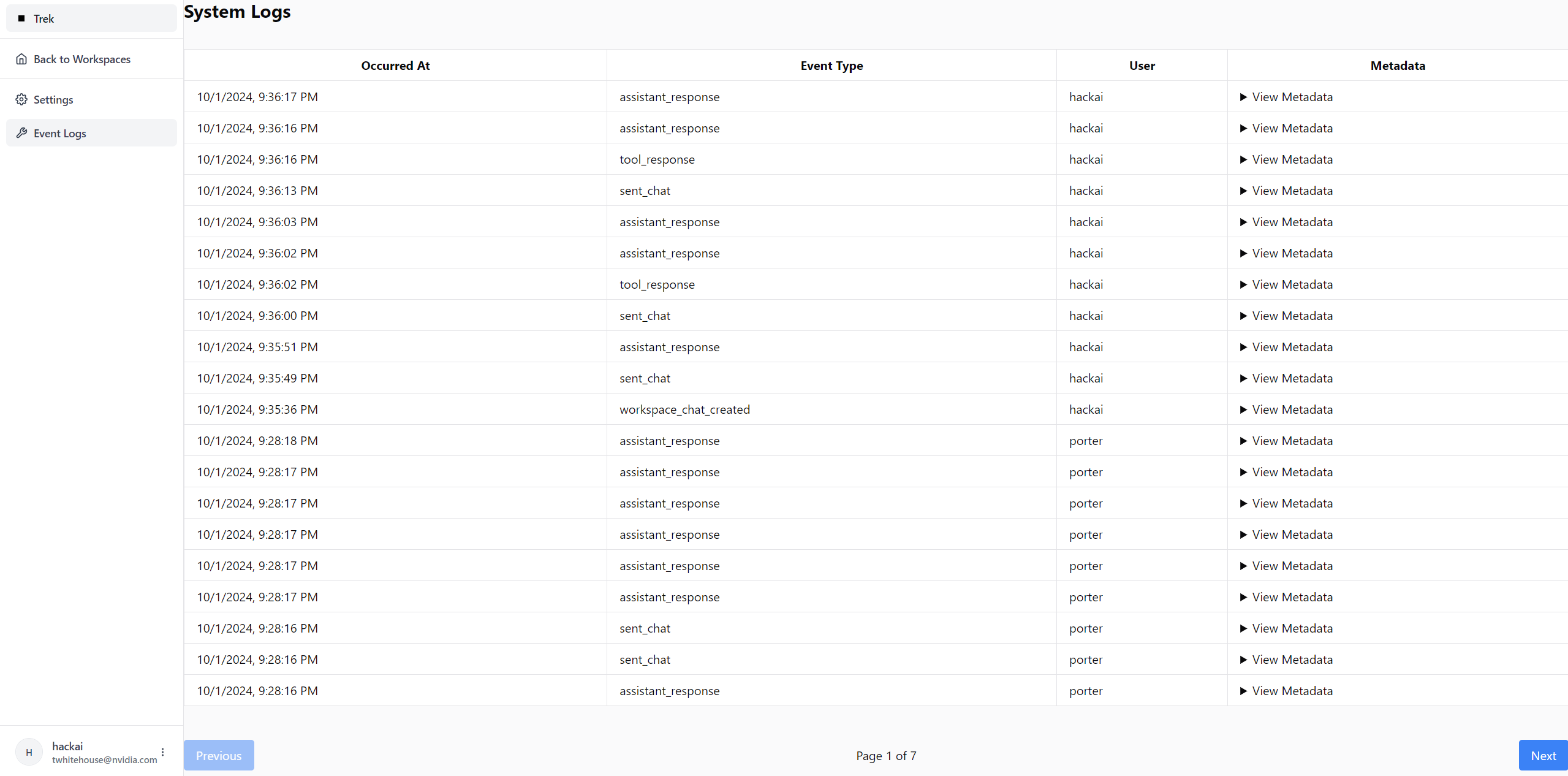
System Logging
-
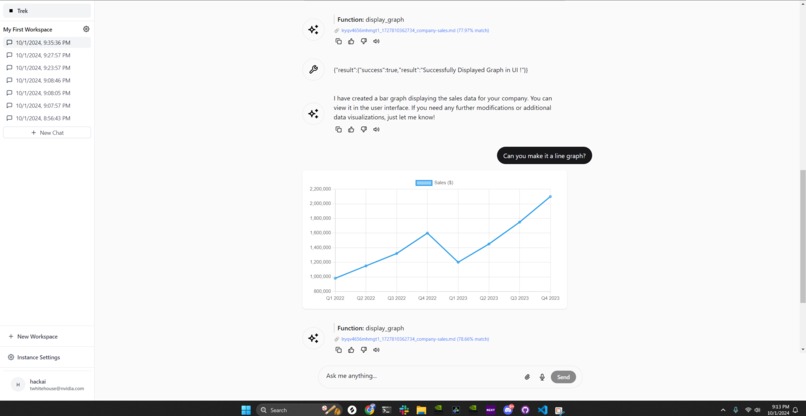
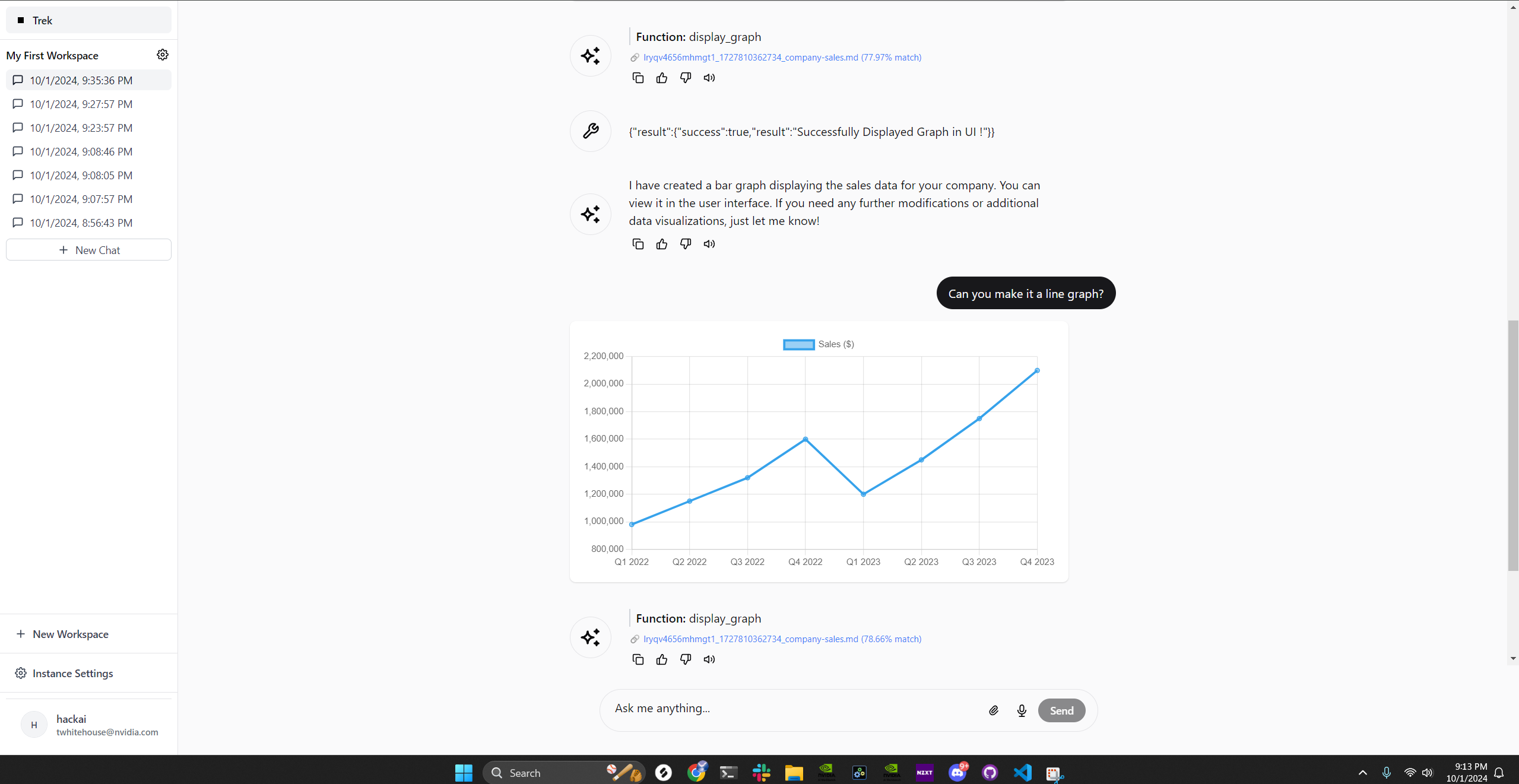
Chatting
-
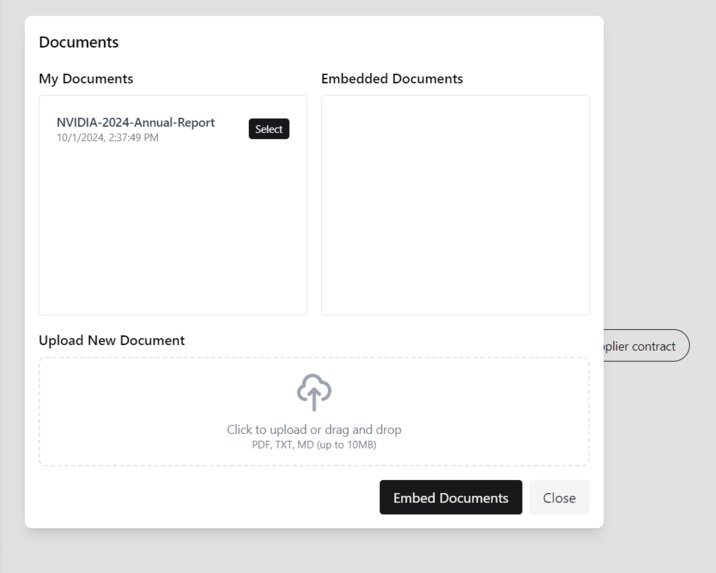
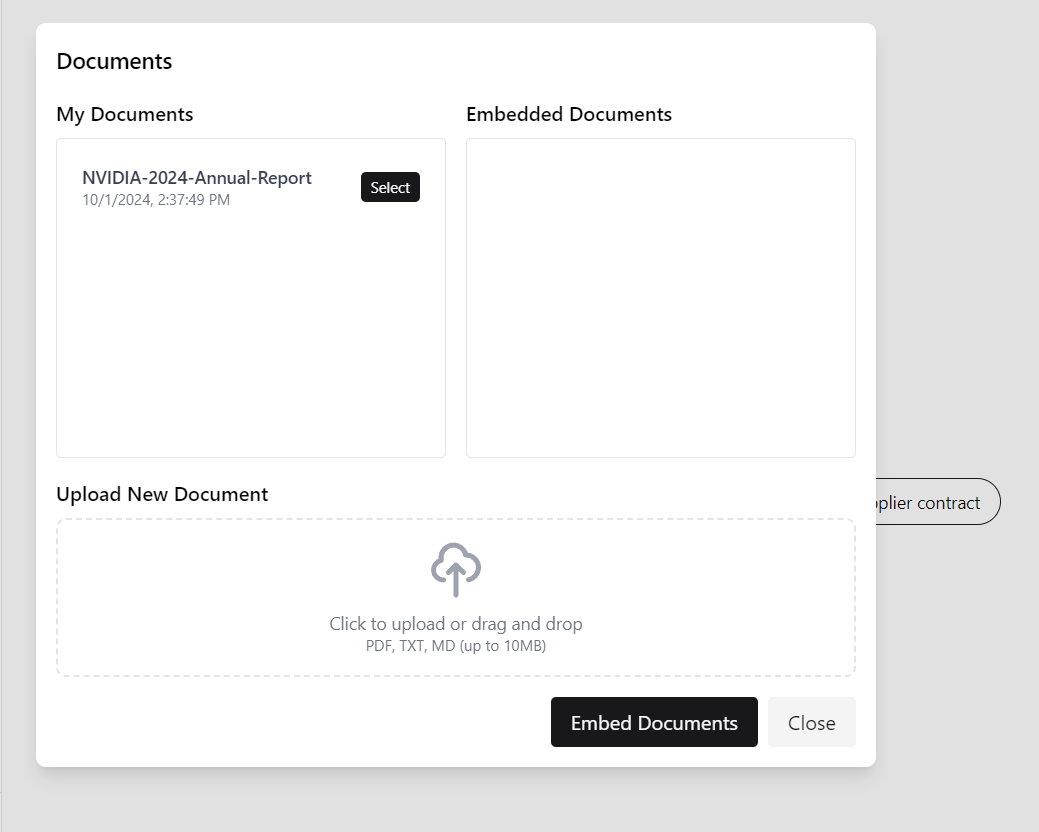
Document Upload to system and saving to a workspace
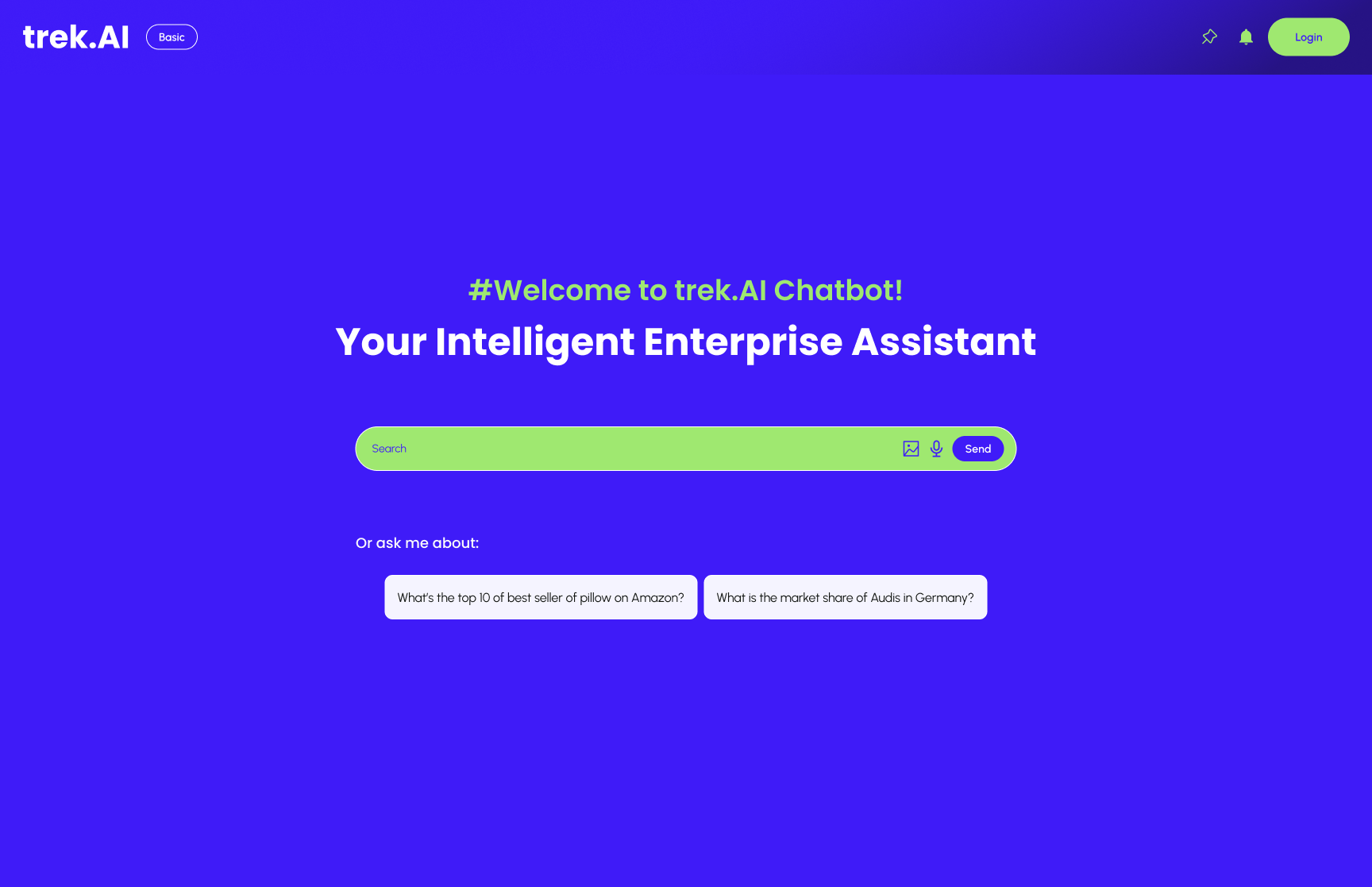
Trek AI
Inspiration
We initially aimed to create a browser automation tool, but pivoted when we realized the limitations of open-source models in controlling browser navigation. Inspired by tools like AnythingLLM, we developed Trek AI - a private, easily deployable enterprise data interaction tool using NVIDIA Workbench.
Demo Video
What it does
Trek AI is an AI-powered platform built on NVIDIA AI Workbench that allows enterprises to interact with their data using natural language. It offers:
- Document processing and analysis
- Natural language querying of company information
- Collaborative data-driven tasks
- Complete data privacy and security
- Configurable AI agents for various tasks
- Custom tool creation for agents
- Data visualization and graph generation
How we built it
We used NVIDIA AI Workbench to implement the following technologies:
- Astro with SSR for backend and frontend
- Lucia Auth for authentication
- SQLite for structured data
- LanceDB as a vector database
- Tailwind CSS for styling
- Vanilla UI for components
Challenges we ran into
- Integrating local AI models with NVIDIA AI Workbench
- NVIDIA Workbench proxy pathing issues, requiring a custom Vite plugin (astroPath) for Astro
- Balancing feature development with user-friendly design
- Time management and rapid pivoting of ideas
Accomplishments that we're proud of
- Developed a full-fledged enterprise AI tool in just 2 weeks
- Implemented a comprehensive system including:
- User authentication
- Workspace management
- Configurable AI agents
- LLM integration and configuration
- Custom tool creation for agents
- Data visualization with graph generation
- Created a secure, private data interaction system
- Developed an intuitive natural language interface for data querying and agent interaction
- Successfully integrated with NVIDIA AI Workbench, leveraging its powerful capabilities
- Overcame technical challenges like NVIDIA Workbench proxy pathing issues
What we learned
- Helpfulness of creating prototypes to show to teammates to help guide project if we were to do it again I would have focused more on this.
- Time management and prioritization in a high-pressure, short-timeline project.
- The potential of AI agents and LLMs in transforming enterprise data interaction
- Overcoming technical hurdles
What's next for Trek AI
- Add functionality for users to create custom tools with their own code and call their own APIs
- Implement a system to fine-tune AI models within Trek
- Finish implementing local AI processing with NIM
- Integrate data sources imports like Jira, GitHub, Notion, and website content
- Integrate the browser extension from initial project for enterprise web automations
- Expand supported document types
- More collaboration features and things like inviting people to workspaces and what not.
- Developer API to call Trek AI anywhere.
Trek AI aims to make advanced AI capabilities accessible and secure for businesses of all sizes, revolutionizing enterprise data interaction. By providing a powerful, flexible platform for AI-driven data analysis and interaction, we're enabling companies to unlock new insights and efficiencies in their operations.
Built With
- astro
- lancedb
- lucia
- sqlite
- tailwind
- vanilla-ui


Log in or sign up for Devpost to join the conversation.