-
-
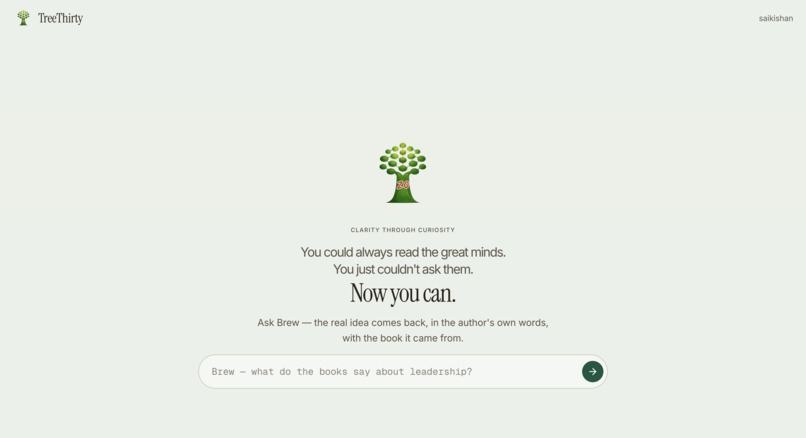
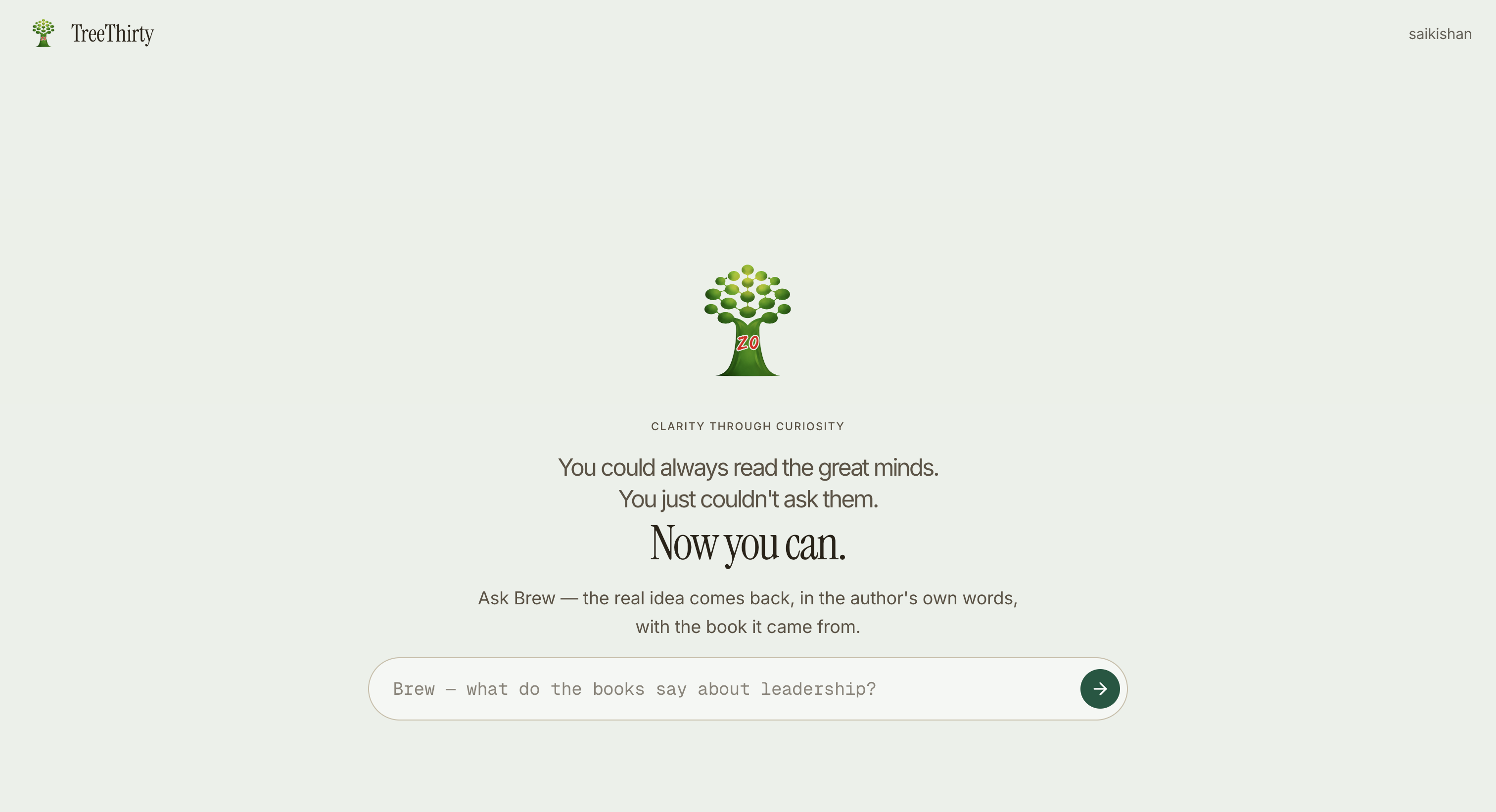
You could always read the great minds. You just couldn't ask them. Now you can.
-
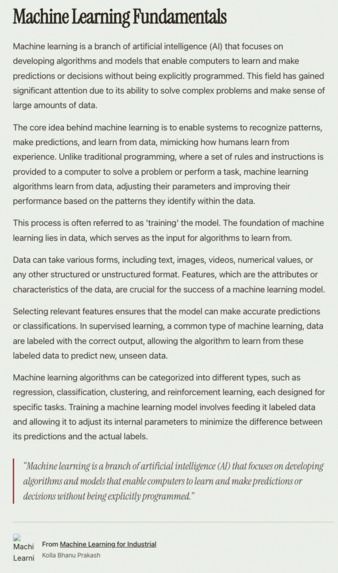
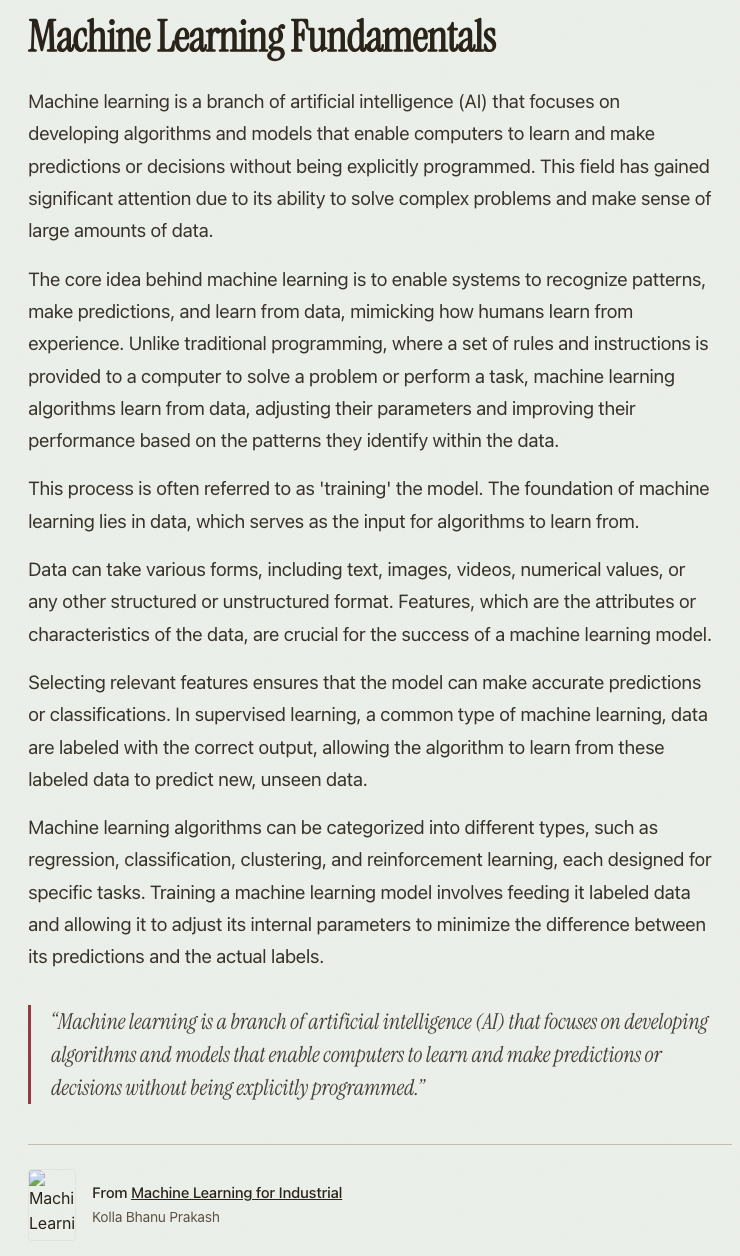
Every idea, two layers: explained in plain language, then the author's exact words — straight from the book, always attributed.
-
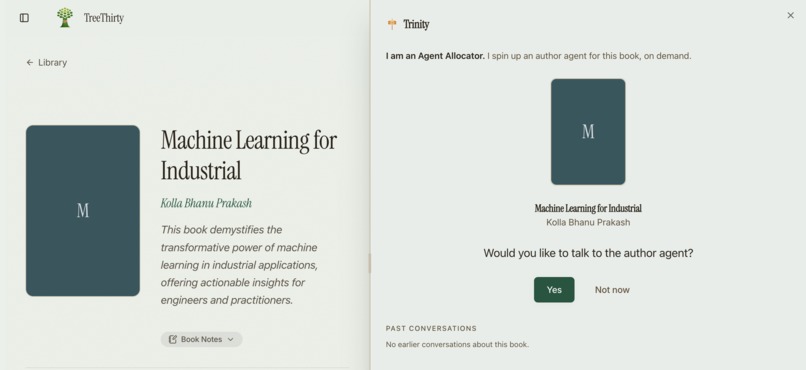
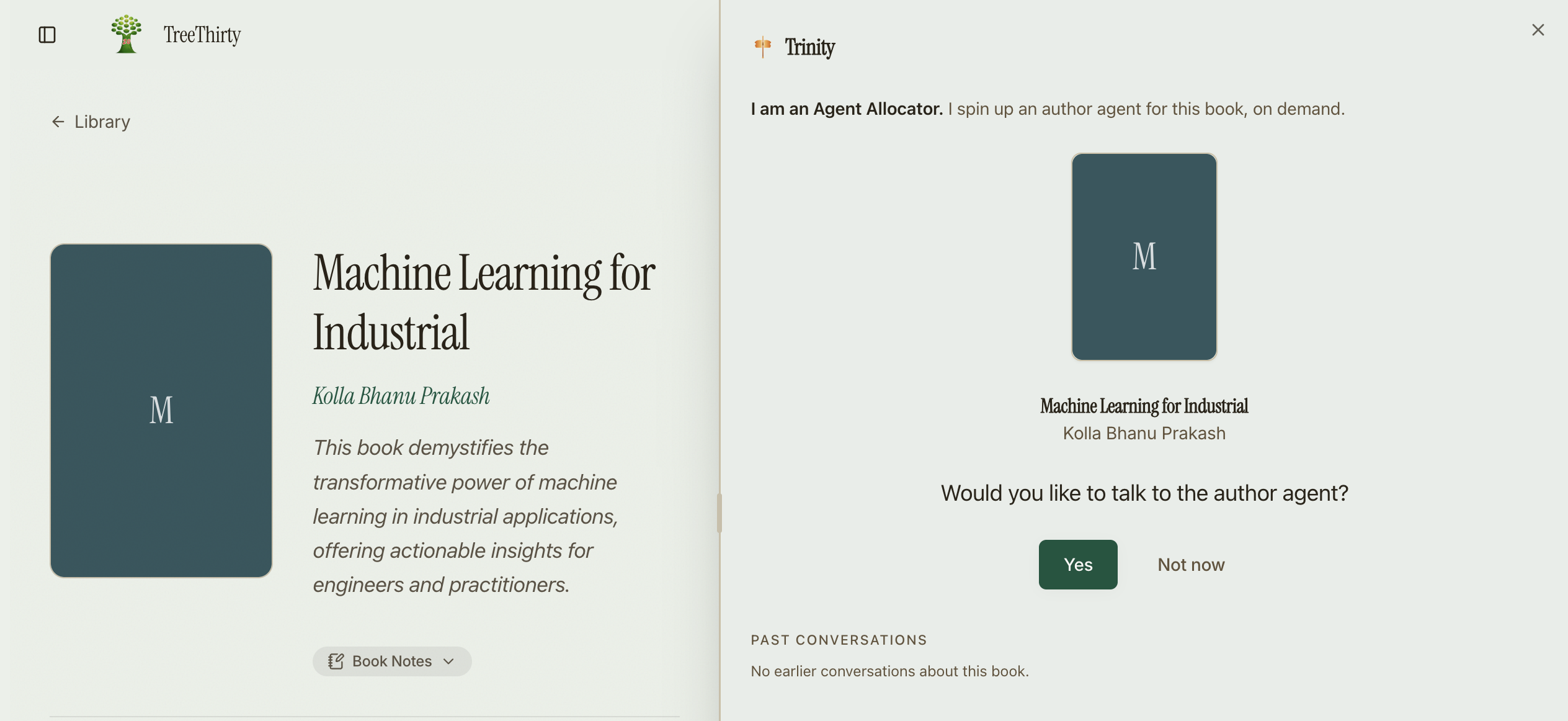
Trinity, the Agent Allocator — it spins up an author agent for any book, on demand.
-
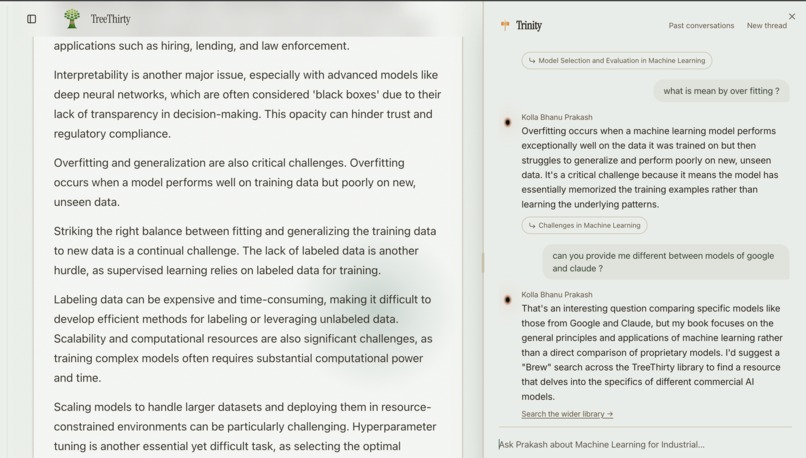
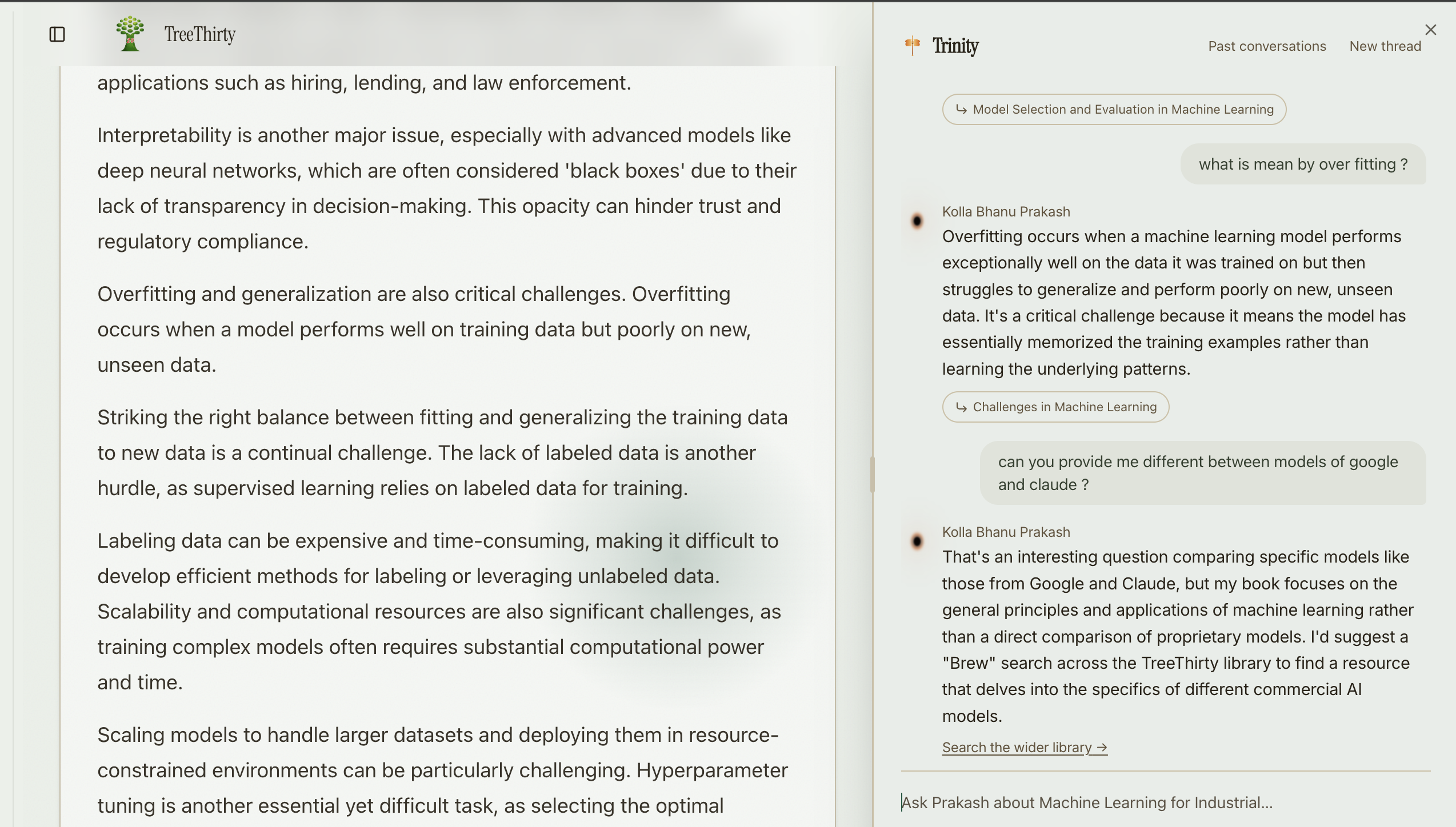
Asked something the book doesn't cover, the agent says so — and routes you back to the library. It never fakes an answer.
-
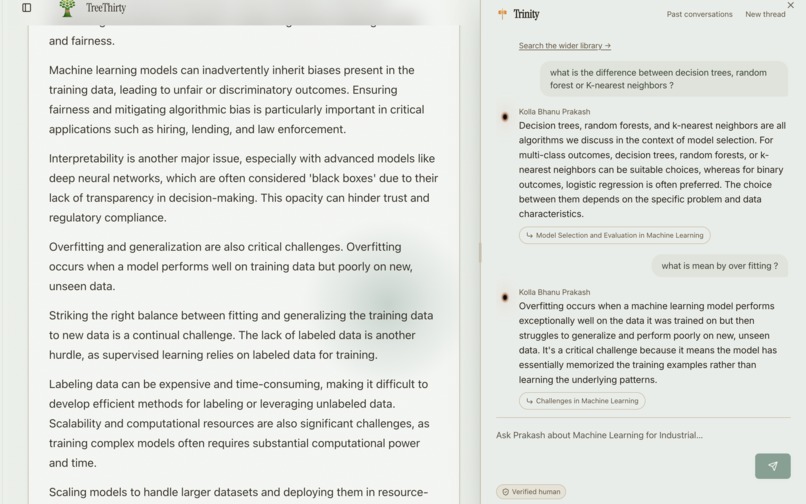
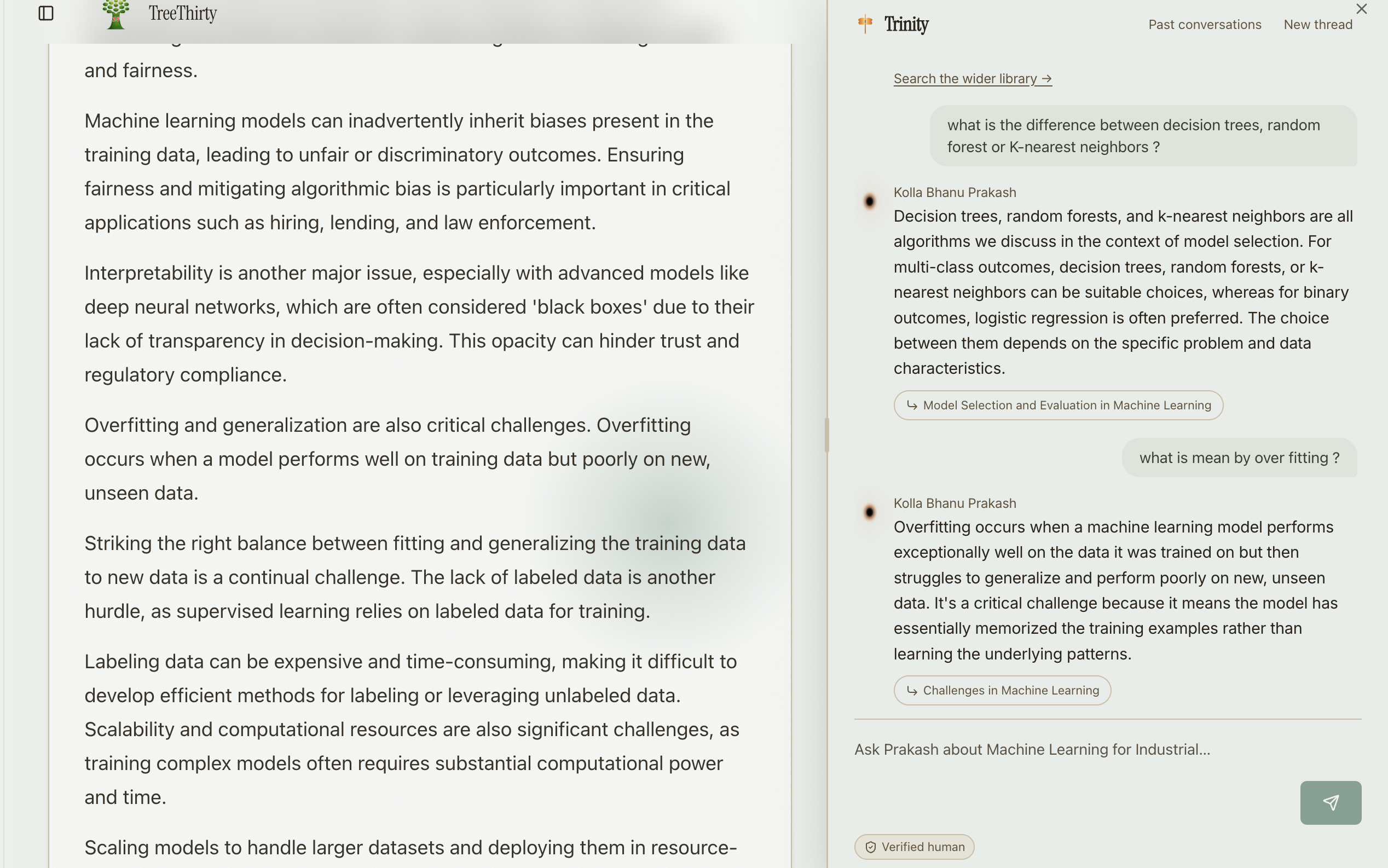
Ask the author. Answers in their voice, grounded in their book — with a source chip on every reply.
-
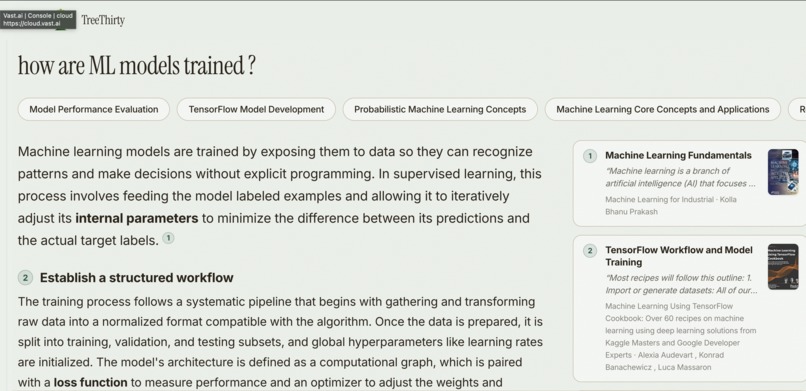
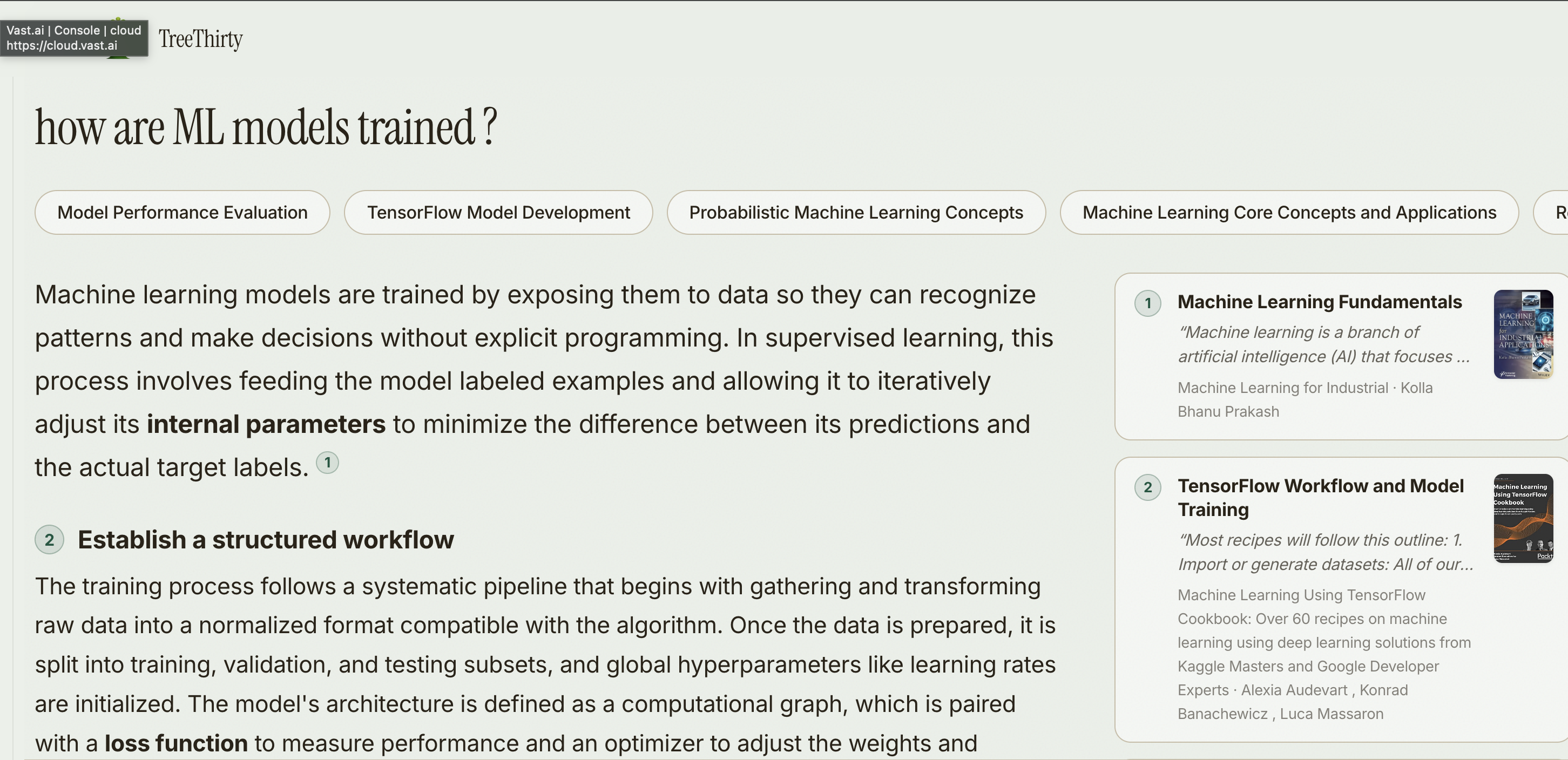
Brew: one question, thousands of books. Gemini streams the answer — every claim footnoted to a real idea card.
Inspiration
In 1983, Steve Jobs said the problem with books is that you can't ask Aristotle a question. I felt that problem personally: for four years I practically lived in Stanford's Green Library, surrounded by the great minds — able to read them, never able to ask.
Then AI arrived and made it worse. Ask a chatbot about Marcus Aurelius and you get a confident paragraph with no source — a middleman doing an impression. The line between reader and author, which ran one way for three thousand years, was about to be cut entirely.
I grew up in a small town in Telangana, India, without knowing what "online" meant — probably the last generation in my family to live that life. Books were where I looked for answers. TreeThirty is my attempt to keep that conversation alive in the AI era, instead of letting AI end it.
What it does
TreeThirty is an AI library where the authors stay in the room.
Brew — search the ideas inside thousands of nonfiction books at once. Answers stream like a conversation, and every claim is footnoted to a real idea card: the author's exact words, the book, the line, the link.
The idea-graph — every idea links home to its book: the distilled idea in plain language, then the author's verbatim passage, attributed. Readers add notes right where the idea lives.
Trinity — an agent allocator on every book page. It spins up the author's agent on demand, answering in their voice, grounded in that book's actual ideas. Ask something the book doesn't cover, and it says so — and routes you back to the library. It never fakes an answer.
Live at treethirty.com, with a free tier and a single $9.99/mo plan on Stripe.
How we built it — with Gemini at the center
Solo, end to end. A batch pipeline extracts and attributes ideas from a library-scale corpus — the heavy work (extraction, embedding, ranking) happens once, offline, with GPU workers running at pennies per book. A proprietary ranking algorithm decides which idea deserves to surface.
At runtime, everything the user sees is Gemini:
Brew's streaming composer runs on Gemini Flash. Hybrid semantic retrieval finds the right idea cards, and Gemini streams an answer constrained to those cards — every claim footnoted to the author's exact words. Generation grounded in sources, never free-form. Gemini's speed is what makes answers feel like conversation; its instruction-following is what makes the grounding hold.
Trinity's author agents are Gemini agents. Each book page can spin up an agent that answers in the author's voice, grounded in that book's idea cards — with explicit refusal behavior when a question falls outside the book. Getting a model to say "that's not in my book" reliably is a prompting-and-guardrails discipline, and Gemini made it tractable.
Infra: Python pipeline on Google Cloud (Cloud Run, Cloud SQL vector search, GCS + CDN, serverless functions), GPU workers for corpus runs, Stripe payments, React/TypeScript frontend.
Challenges we ran into
Ranking is the product. Early on, weak ideas outranked strong ones — and a search product with bad ranking is nothing. Rebuilding the retrieval and ranking layer (and proving it with evals before cut-over) was the hardest engineering of the project.
Honest agents. Making Trinity refuse gracefully — saying "that's not in this book" instead of hallucinating — took as much design as making it answer.
Corpus economics. Extracting a library at startup budget meant designing pipelines where a fleet of cloud machines processes books for under a cent each.
Doing it alone. Every layer — pipeline, retrieval, agents, payments, frontend — one person. Ruthless scope-cutting became a daily discipline.
What we learned
Attribution can't be a feature bolted on at the end — it has to be the architecture. If the system is built so answers can only be assembled from sourced ideas, honesty stops being a policy and becomes a property.
What's next
Public idea pages (every idea a front door, every page a storefront for its book), campus licenses for universities, and growing the library — while keeping the one rule that defines the product: the author is always in the room.
Built With
- cloud-run
- gemini
- google-cloud
- postgresql
- python
- react
- stripe
- typescript
- vector-search

Log in or sign up for Devpost to join the conversation.