Inspiration
Living in a region where climate action feels urgent yet abstract, I wanted to bridge the gap between "carbon offset" buzzwords and tangible impact. Too many eco-platforms lack transparency—users donate but never see where their trees grow or how much CO₂ they sequester. I built this to turn passive sustainability into active, verifiable stewardship, for individuals and businesses alike.
What it does
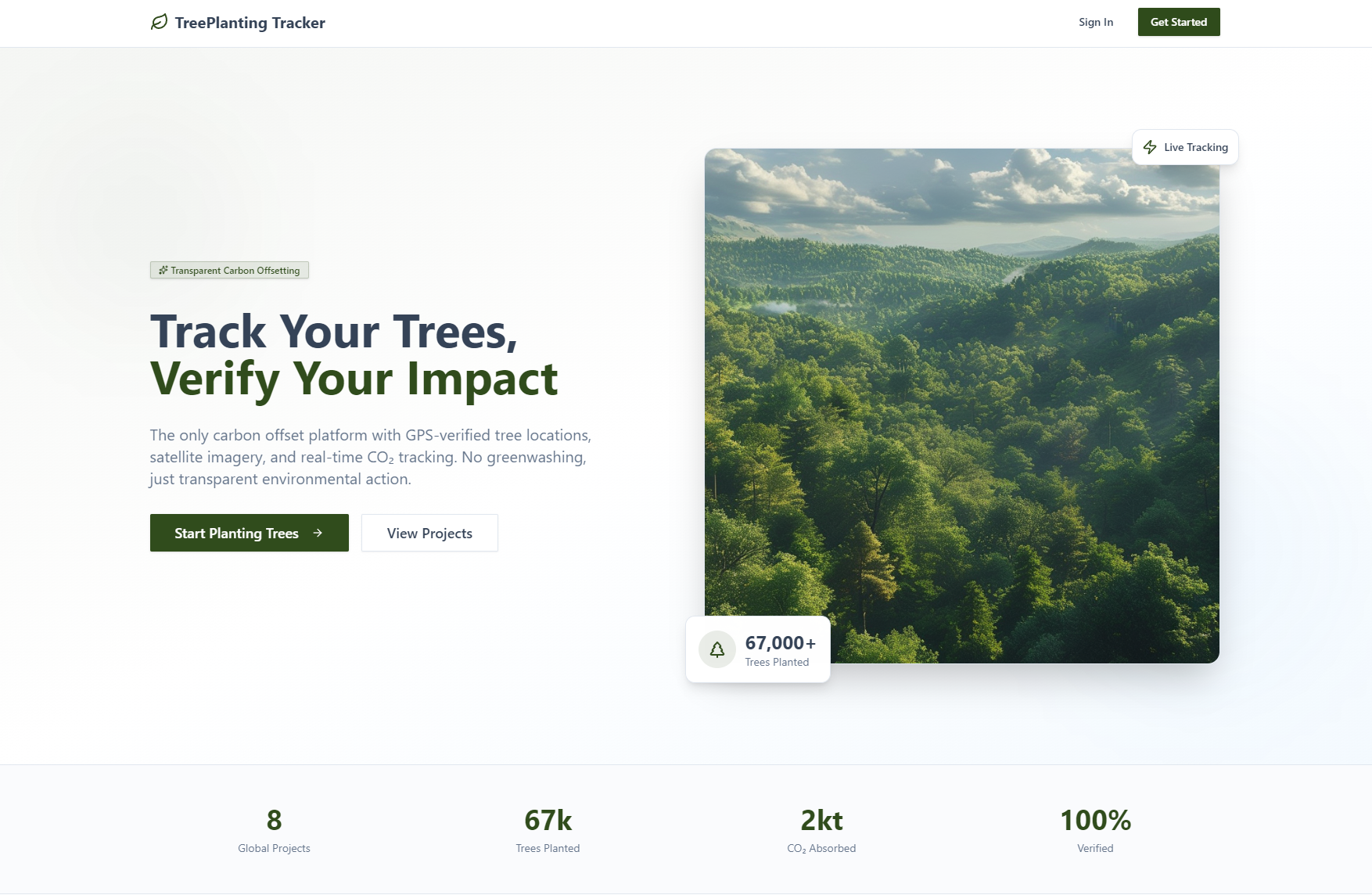
TreePlanting Tracker lets users buy GPS-verified trees, monitor growth via satellite imagery, gift trees to others, and track CO₂ absorption with science-backed calculations. Enterprise users get bulk purchasing, ESG reporting, and team management tools—all rooted in third-party verified reforestation projects.
How we built it
I started with core UX/UI design for intuitive map navigation and portfolio tracking, then built the frontend with React/Leaflet.js for interactive mapping. The backend (Node.js/PostgreSQL) manages tree ownership, CO₂ calculation logic, and user data. I integrated NASA/Sentinel APIs for satellite imagery, Stripe/PayPal for payments, and Chart.js for impact analytics. AWS handles cloud hosting and imagery storage.
Challenges we ran into
The biggest hurdle was syncing real-time CO₂ sequestration data with species-specific growth models—regional climate variations required constant calibration. Satellite imagery gaps (remote locations, cloud cover) forced creative placeholder solutions and transparency with users. Payment processing for bulk enterprise orders also needed custom logic to handle volume discounts and commission tracking.
Accomplishments that we're proud of
Creating a fully transparent platform where every tree has a unique ID, GPS coordinate, and verifiable impact data. Premium users get monthly satellite updates (free users quarterly) with before/after sliders—something few eco-platforms offer. Enterprise tools now help businesses meet ESG targets with branded, exportable reports, and gift functionality has made sustainable gifting accessible to all users.
What we learned
I deepened my expertise in GIS integration, satellite data processing, and subscription-based payment models. More importantly, I learned how to balance scientific accuracy (CO₂ calculations, project verification) with user-friendly design—critical for making climate tech accessible to non-experts. I also gained insight into enterprise ESG needs, which shaped the custom reporting and bulk purchase features.
What's next for This project
First, expand project partnerships to cover more European/US regions, adding native tree species for localized impact. Next, build advanced analytics for enterprise users (biodiversity impact tracking, long-term ESG forecasting). Finally, explore mobile-responsive enhancements (beyond web) to make on-the-go tree tracking easier—all while keeping transparency and scientific rigor at the core.

Log in or sign up for Devpost to join the conversation.