-
Treepedia is designed for measure and map carbon reserves through single tree monitoring.
-
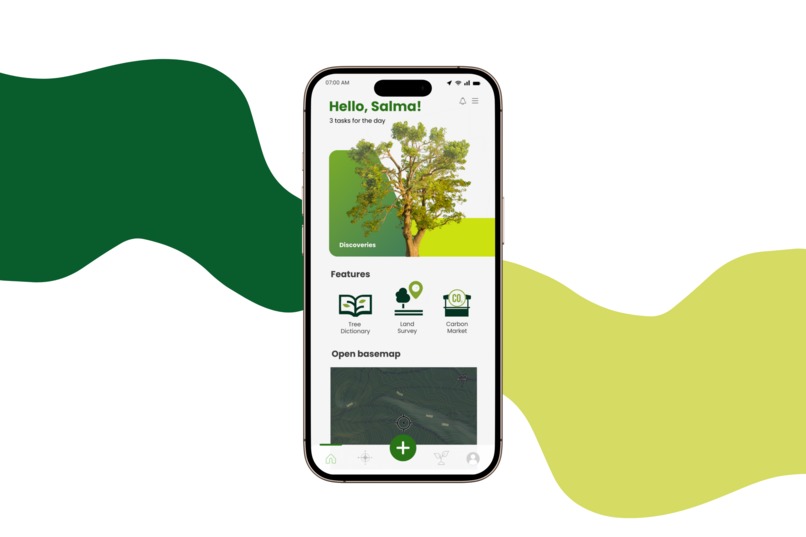
Treepedia has several features as follows
Inspiration
The inspiration to develop Treepedia as the carbon trading application comes from the urgent need to address climate change and promote environmental awareness. As climate threats become more visible and severe, it is crucial to motivate individuals to take meaningful actions that contribute to sustainability. Treepedia aims to bridge the gap between awareness and action by providing a user-friendly platform that simplifies participation in emissions trading. By utilizing technology, the application enables users to easily track their carbon emissions, earn carbon credits through sustainable actions, and trade these credits in a transparent market.
What it does
Treepedia as an application for everyone to join the global carbon trade, contains tools for: Stay updated with the latest news, discoveries, and contributions from the Treepedia community. Accessing the informative database of tree species based on the user’s location, complete with details on their characteristics and ecological significance. Conduct extensive carbon mapping across large areas by analyzing data from previously scanned trees, which can help to visualize the overall carbon storage potential. Engage in a marketplace for carbon credits, allowing users to buy, sell, or trade carbon credits based on the trees they monitor.
How we built it
1.) Start with defining our purpose. We built Treepedia as a platform for everyone to join the global carbon trade. Researchers and conservation managers are our main target because of their expertise in carbon management. These experts have critical knowledge of environmental science that is essential to developing science-based carbon projects that accurately measure and report carbon dynamics, ecosystem services, and carbon sequestration. This expertise ultimately contributes to more effective climate action and sustainable environmental practices. Nevertheless, this application can also be used by all people.
2.) Choose carbon standards and a suitable blockchain platform. We choose the Gold standard as our carbon standard because it aims to enhance the integrity of carbon credits by ensuring they contribute positively to sustainable development goals (SDGs) alongside climate mitigation efforts. As for the blockchain platform we can choose polygon due to effectively integrate Gold Standard methodologies while ensuring scalability, cost efficiency, and alignment with sustainability goals.
3.) Afterward we build the user interface that contains:
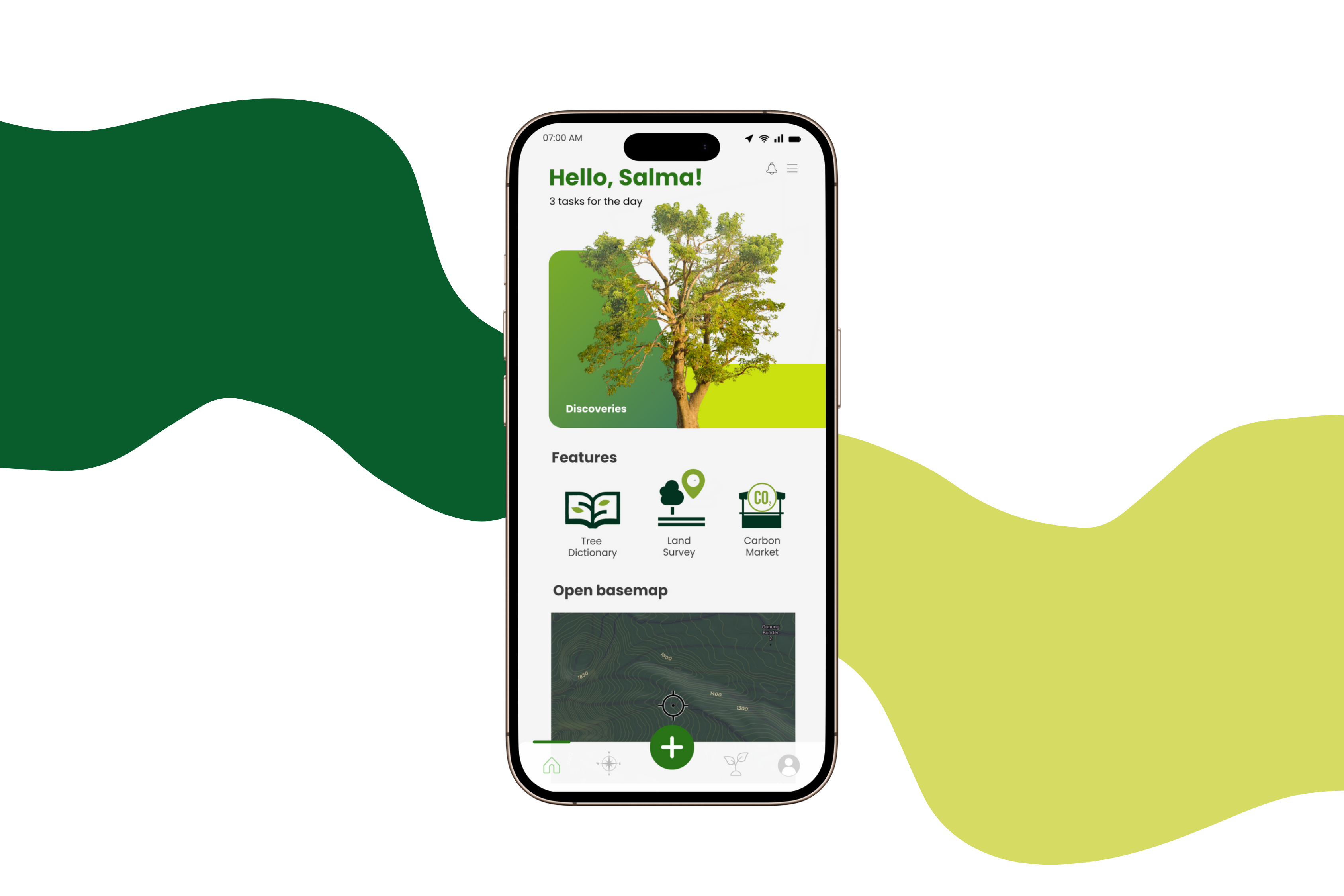
- Home: The Home screen serves as the central hub for users, featuring:
- Feeds: Stay updated with the latest news, discoveries, and contributions from the Treepedia community.
- Tree Dictionary: Access an informative database of tree species based on the user’s location, complete with details on their characteristics and ecological significance.
- Land Survey: Conduct extensive carbon mapping across large areas by analyzing data from previously scanned trees, helping to visualize the overall carbon storage potential.
- Virtual Carbon Market: Engage in a marketplace for carbon credits, allowing users to buy, sell, or trade carbon credits based on the trees they monitor.
- Map: This interactive feature displays a detailed map highlighting all the trees that users have tagged. Users can easily visualize tree distribution and monitor carbon reserves in specific locations.
- Add Species: Users can contribute to the app by filling out a form to add new tree species, including: Species name, Plot location, Circumference of the tree trunk, Photo of the species, Symbol or icon for visual representation, Marking the tree on the map for easy searching and grouping, Symbols for easy identification
- Species: This section showcases a comprehensive list of tree species categorized by eco-regions in Indonesia. Users can explore data collected by others, fostering collaboration and knowledge sharing within the conservation community.
- Profile: The user profile feature allows individuals to track their contributions, monitor their activities, and manage their settings. Users can view their scanned trees, carbon credits, and overall impact on conservation efforts.
4.) Lastly, we integrate our application with the database of the conservation land ecosystem, from the species to the characteristics. This database will be updated regularly alongside with the dynamics of land change.
Challenges we ran into
- User adoption and education. As we know, the carbon trade is not prevalent in Indonesia. Many potential users may lack familiarity with carbon markets, making it essential to provide clear information and support within the application.
- Market Volatility. The carbon market can be volatile because prices fluctuate based on regulatory changes, market demand, and other economic factors. This volatility can create uncertainty for users and complicate the trading process within the application.
- Quality Assurance of Carbon Credits. Ensuring that the carbon credits traded through the application meet high-quality standards is crucial for maintaining credibility. The risk of credits that do not represent real emissions reductions can undermine trust in the platform. Establishing robust verification processes is essential.
Accomplishment that we proud of
The development of Treepedia can lead to several significant accomplishments that can be a source of pride:
- We empower individuals to combat climate change: Treepedia facilitates and empowers people to take action steps towards sustainability. The application provides a platform for individuals to actively participate in carbon trading, allowing them to contribute to global efforts to reduce greenhouse gas emissions.
- Contributing to Global Climate Goals. Through its activities, Treepedia supports international climate agreements such as the Paris Agreement by helping users achieve their emissions reduction goals. The application tracks contributions and allows you to demonstrate collective efforts to achieve these global goals.
- Building a Community. The application can foster a community of environmentally conscious individuals who share their experiences and strategies for reducing their carbon footprint. This network can strengthen the impact of individual actions and create a shared voice for climate protection.
What we learn
There are several important lessons that can be learned from the development of Treepedia. First, it is important to set clear goals upfront. Defining the target group, desired features, and overall mission forms a solid foundation for development. The use of blockchain technology streamlines the process by automating transactions and increasing transparency, while the use of smart contracts ensures seamless execution of trading terms. Creating a user-friendly interface is essential, this includes key features such as a dashboard that allows easy navigation and real-time analytics. Strict regulatory compliance is mandatory, and often working with legal experts is required to navigate complex regulatory situations. Comprehensive testing, including security checks and performance simulations, identifies potential vulnerabilities before launch. Finally, continuous improvements based on user feedback ensure that the application remains functional, secure, and adaptable to evolving market needs. Following these rules will enable developers to build potent applications that effectively facilitate emissions trading and make a meaningful contribution to the fight against climate change.
What’s next
To advance the development of Treepedia we can develop more simple integrated essential features such as user friendly interface. We realize that the simple appearance of the application can make it easier to use. Especially for people who are not familiar with the carbon trade. Committing to ongoing updates based on user feedback will ensure the application remains functional, secure, and adaptable to the evolving carbon market. We have the goal to create a comprehensive and effective carbon trading application that engages users in meaningful sustainability efforts.
Built With
- avenza
- canva
- database
- figma
- google-docs
- google-drive

Log in or sign up for Devpost to join the conversation.