-
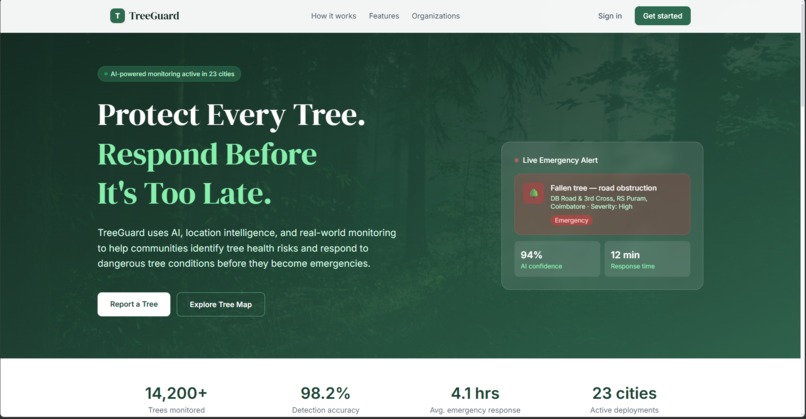
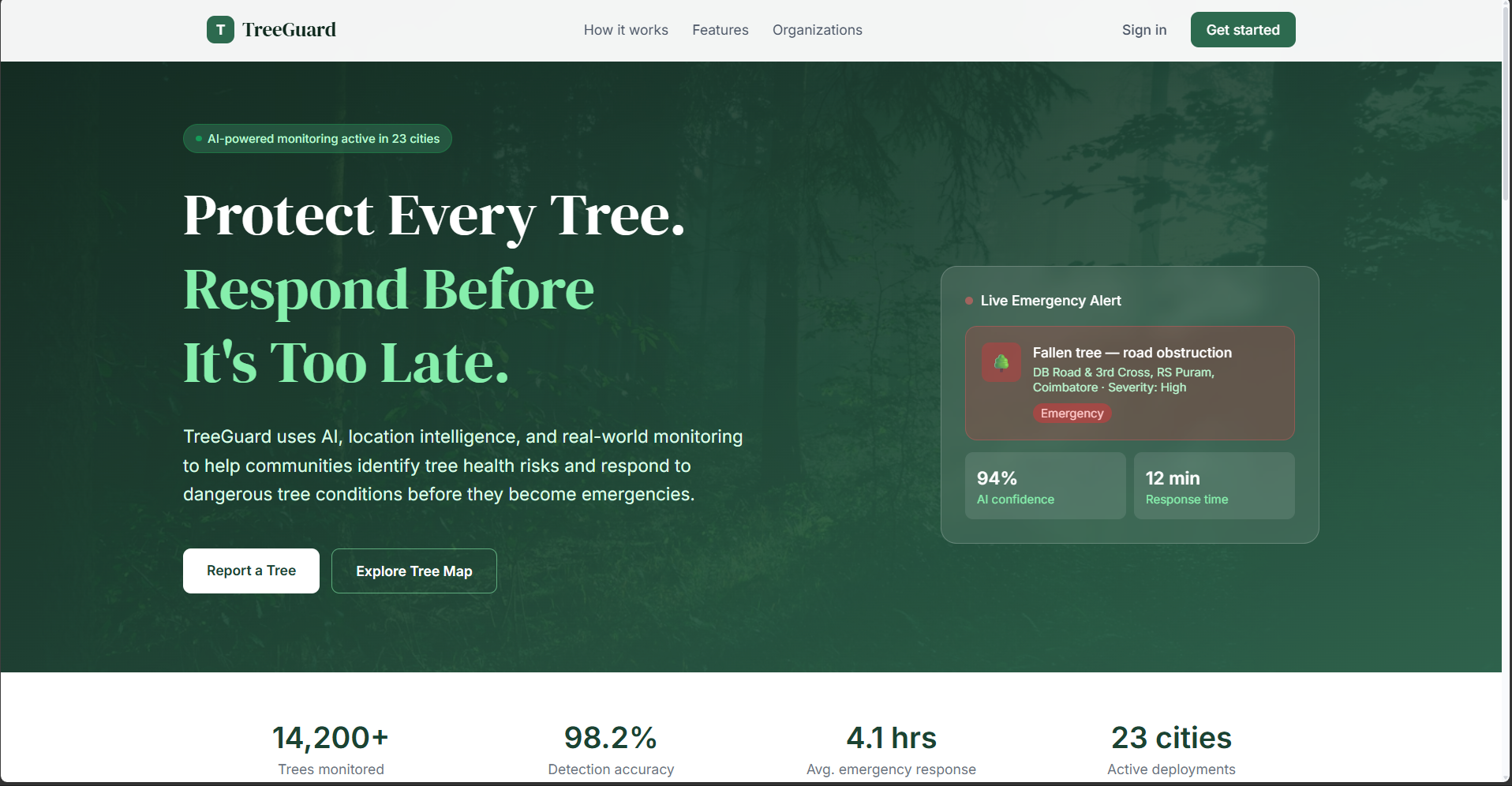
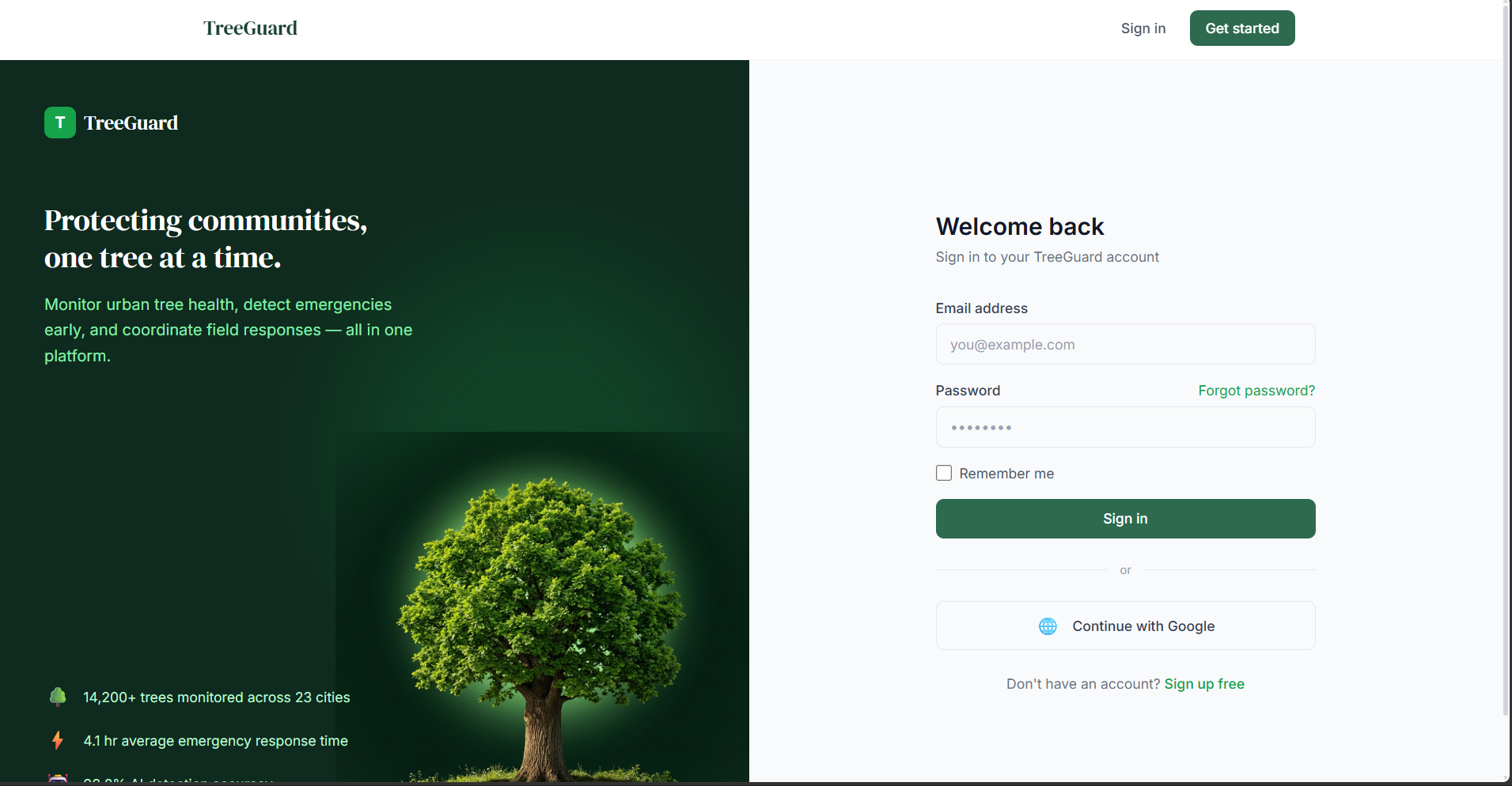
opening page
-
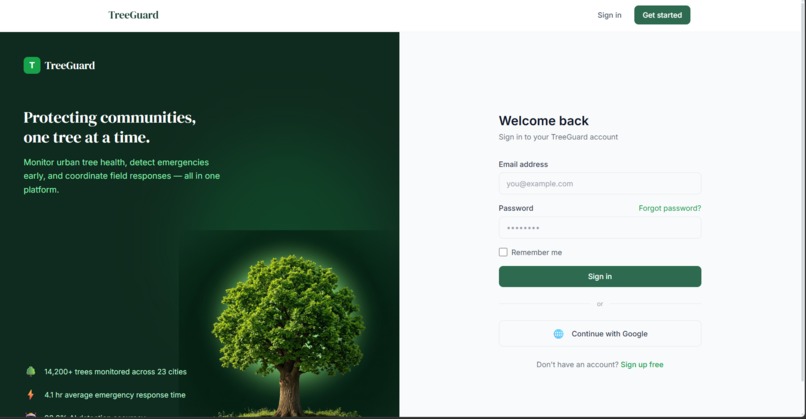
login in page
-
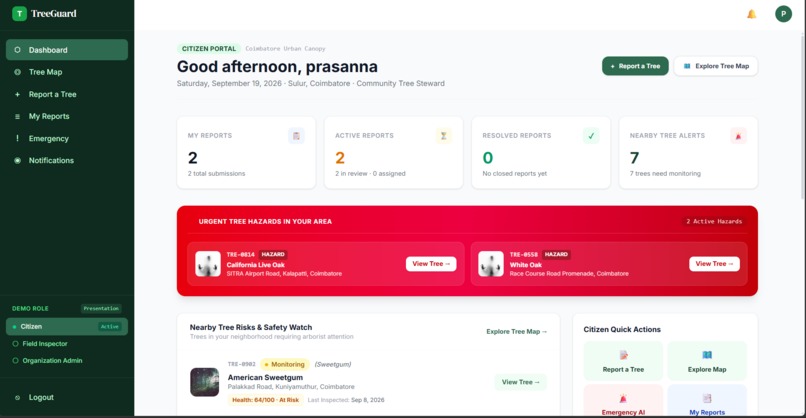
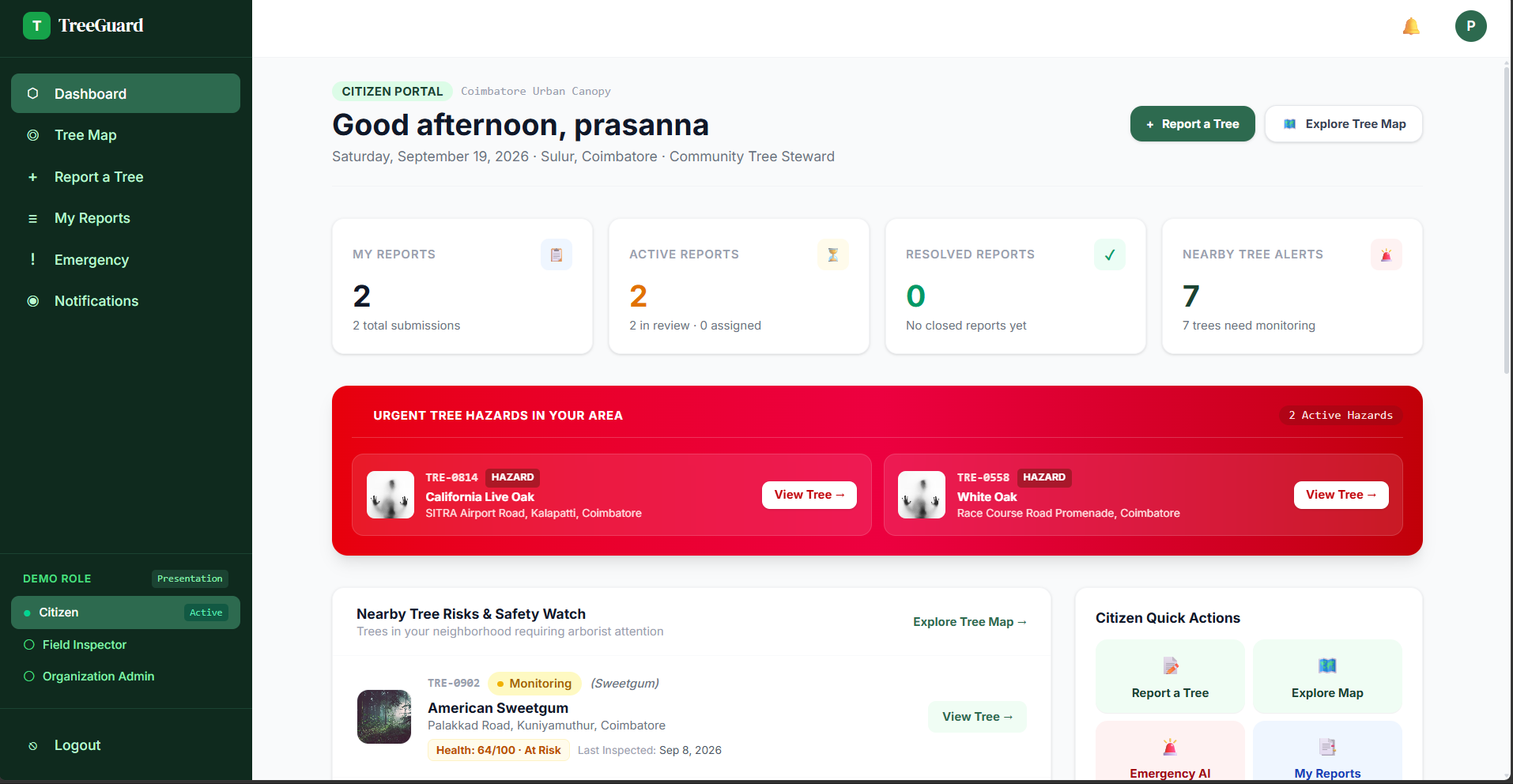
citizen dashboard
-
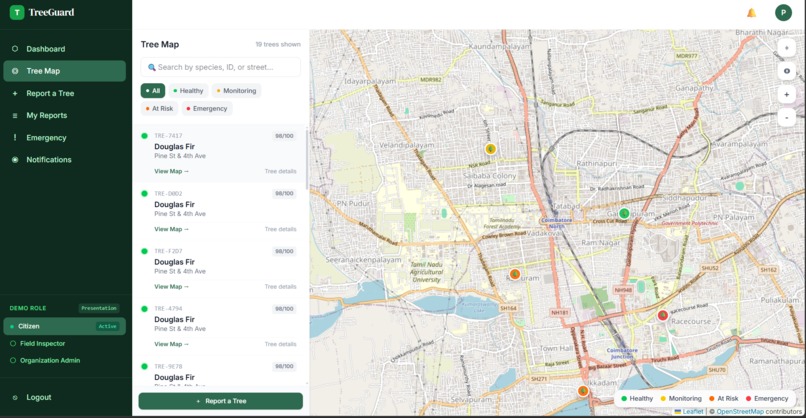
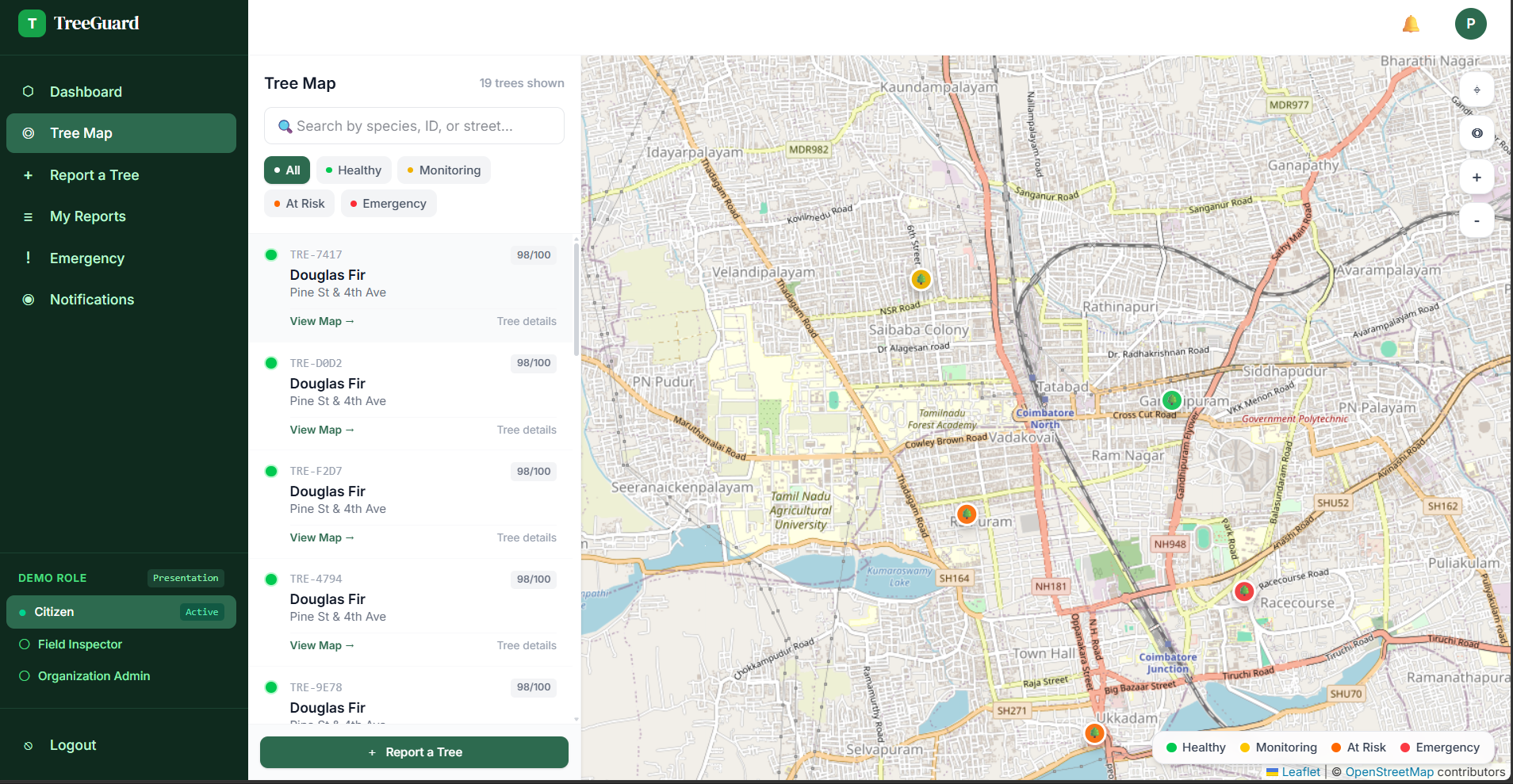
Tree Map
-
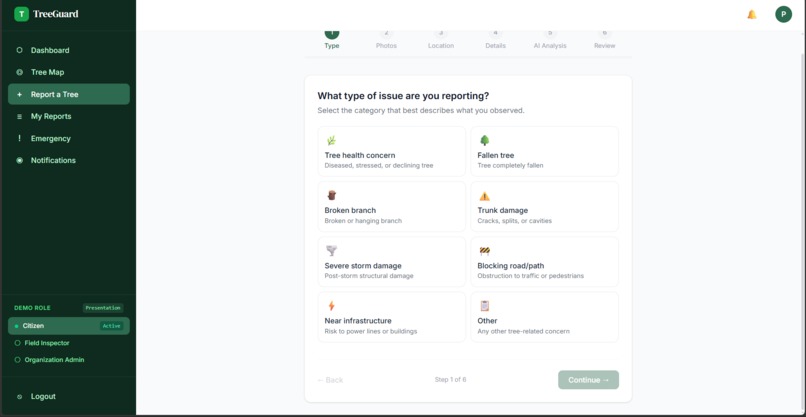
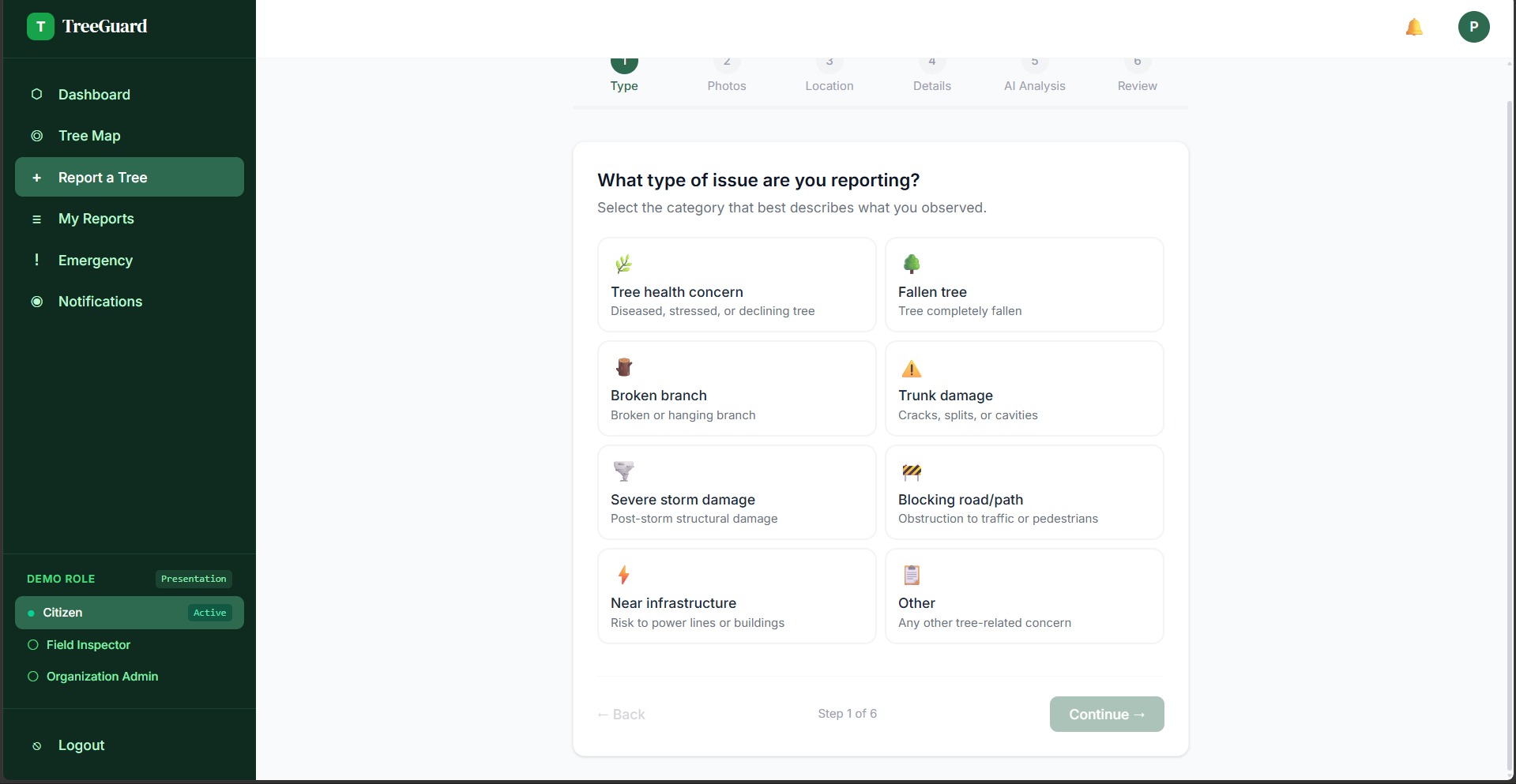
report tree
-
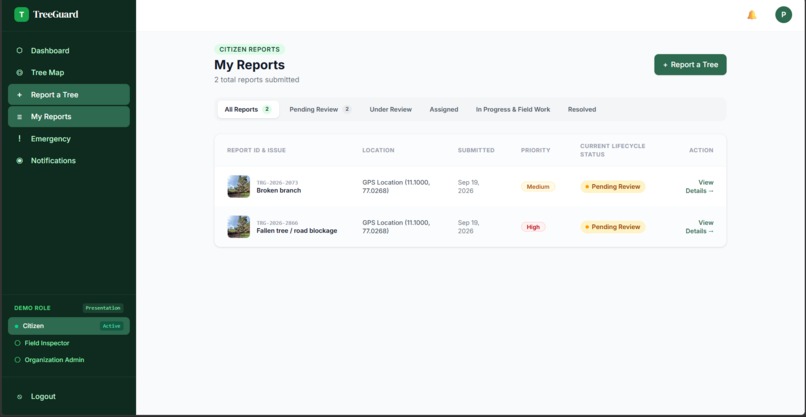
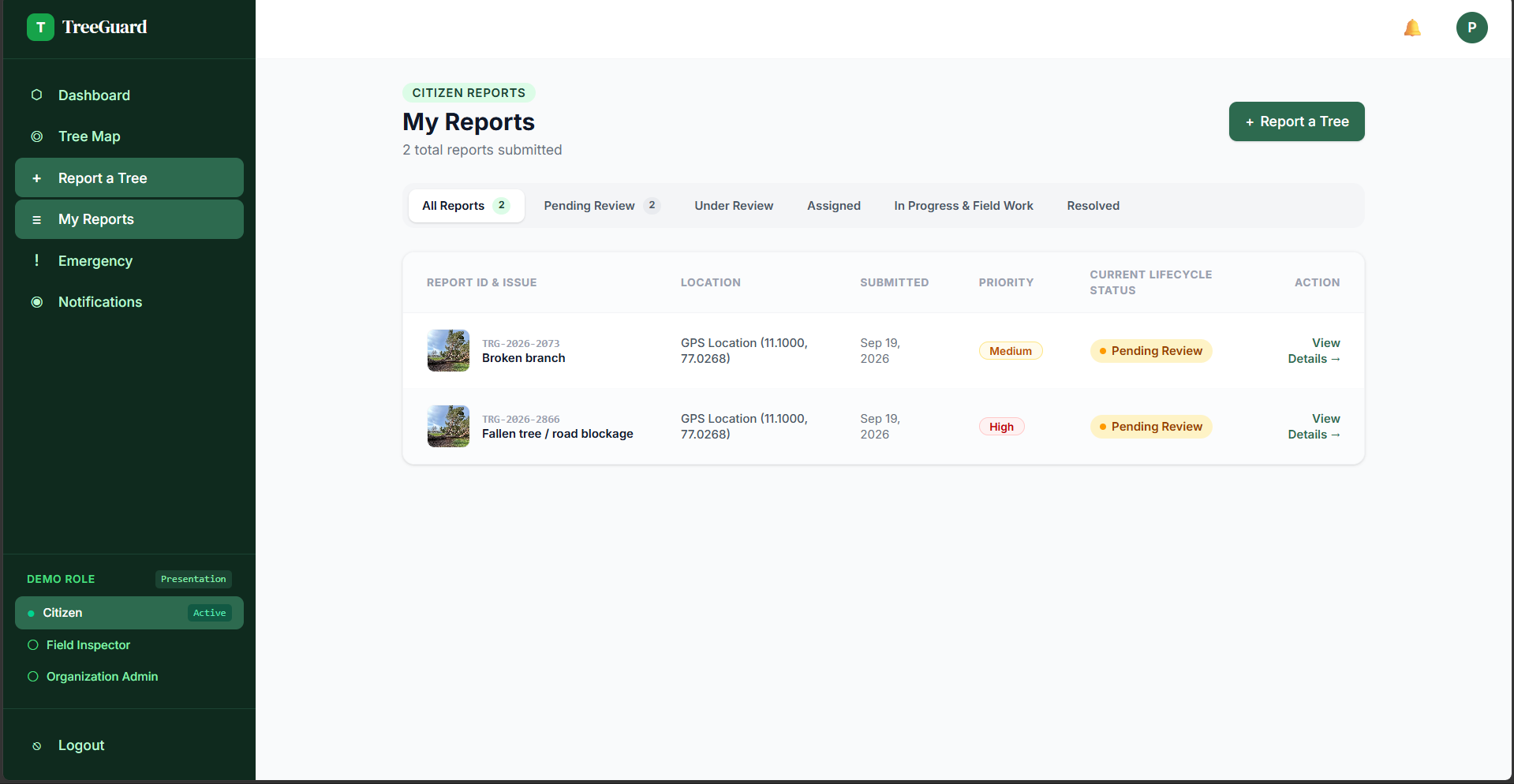
my report
-
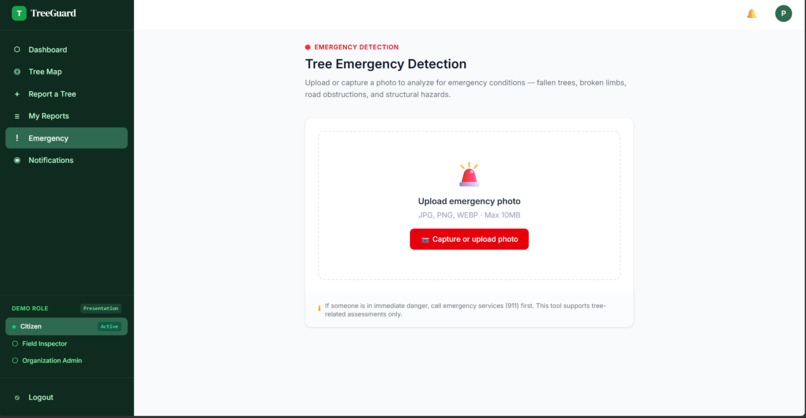
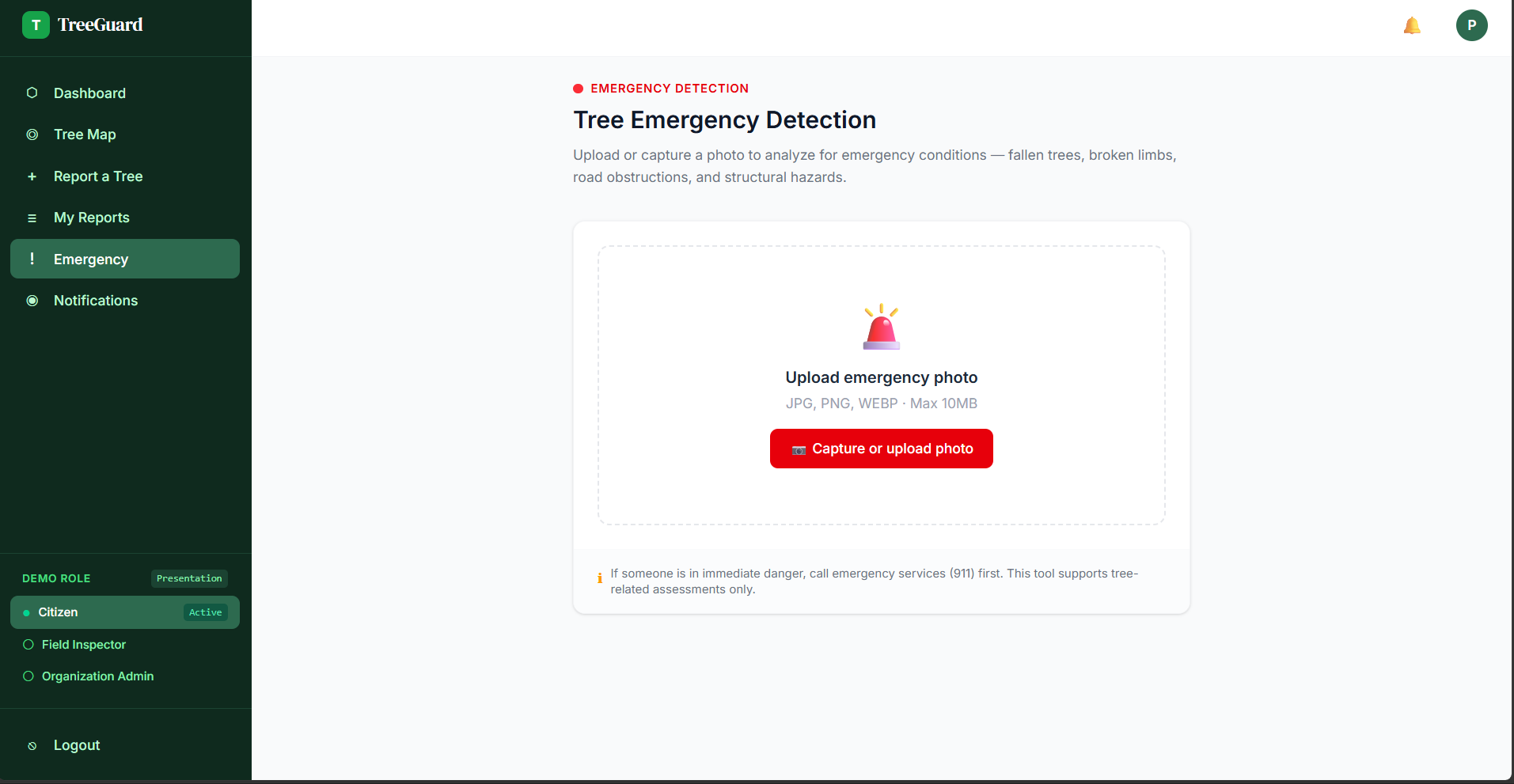
emegerency tree dedection
-
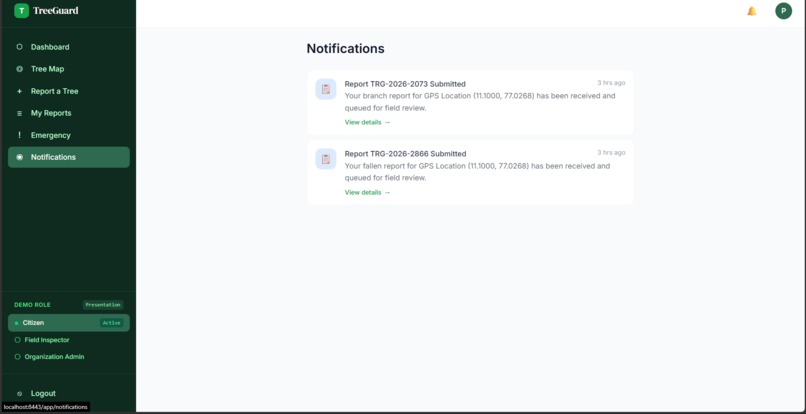
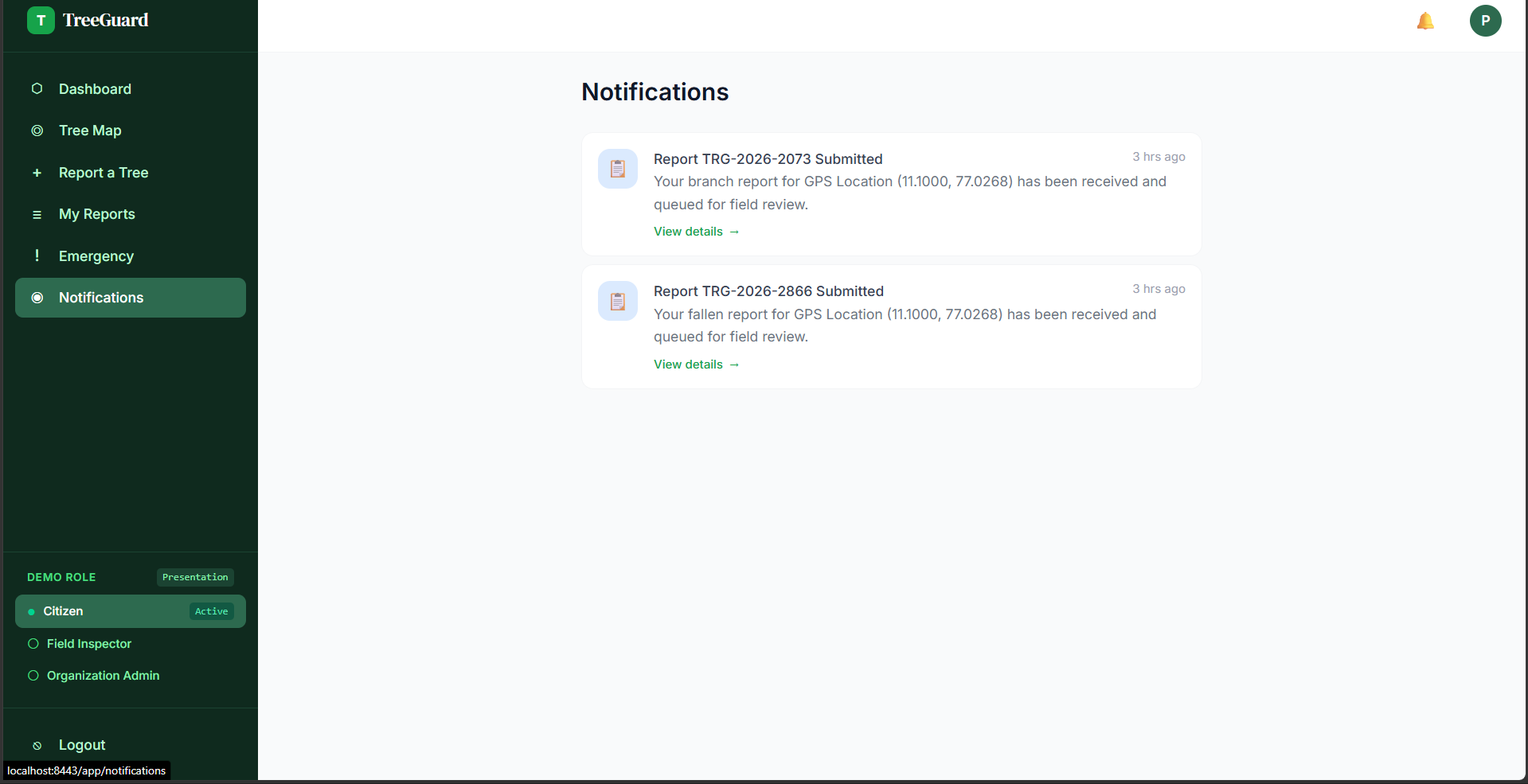
notification
-
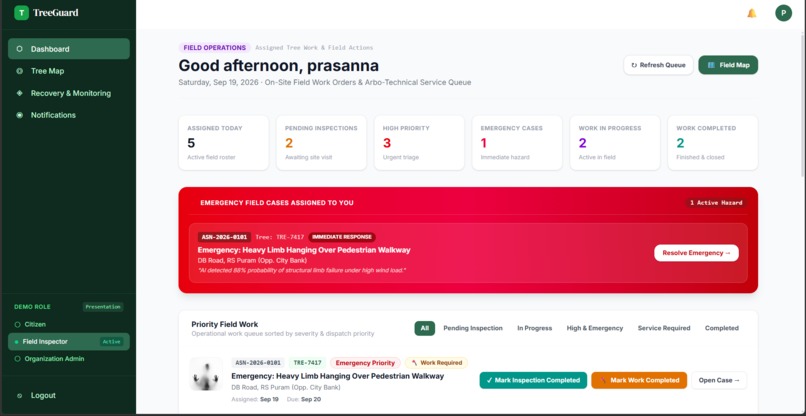
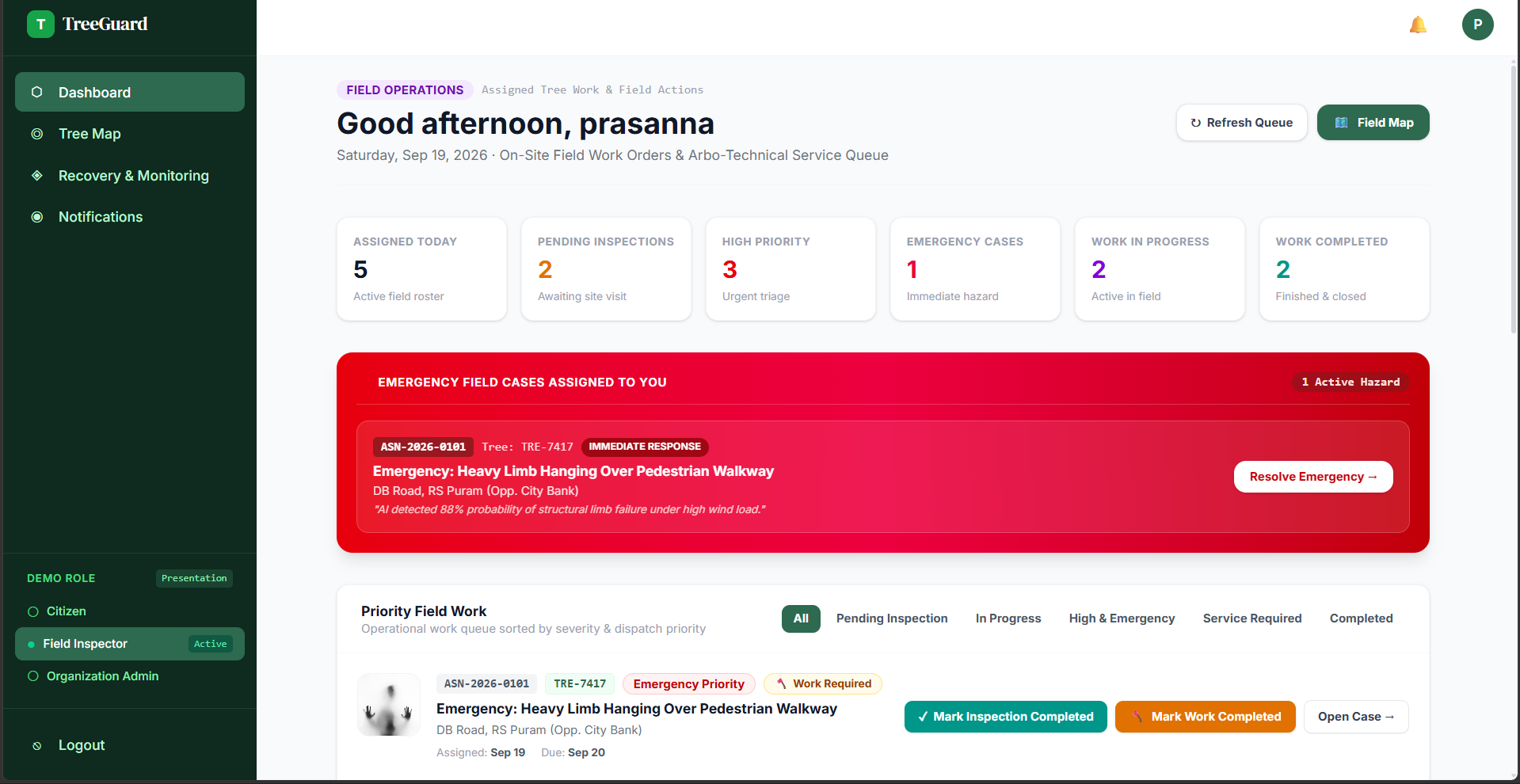
field inspector dashboard
-
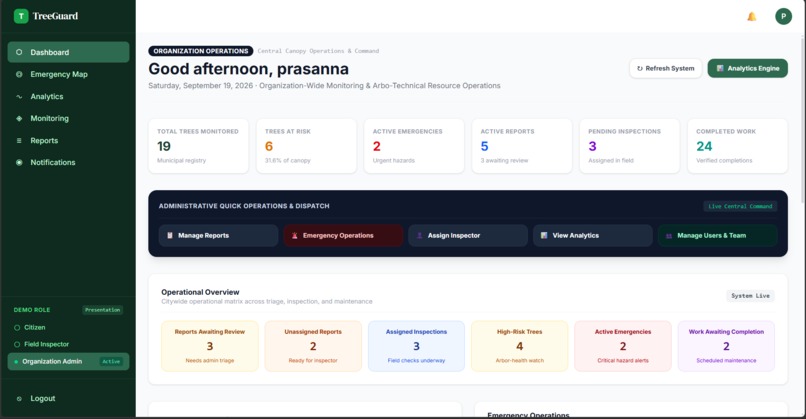
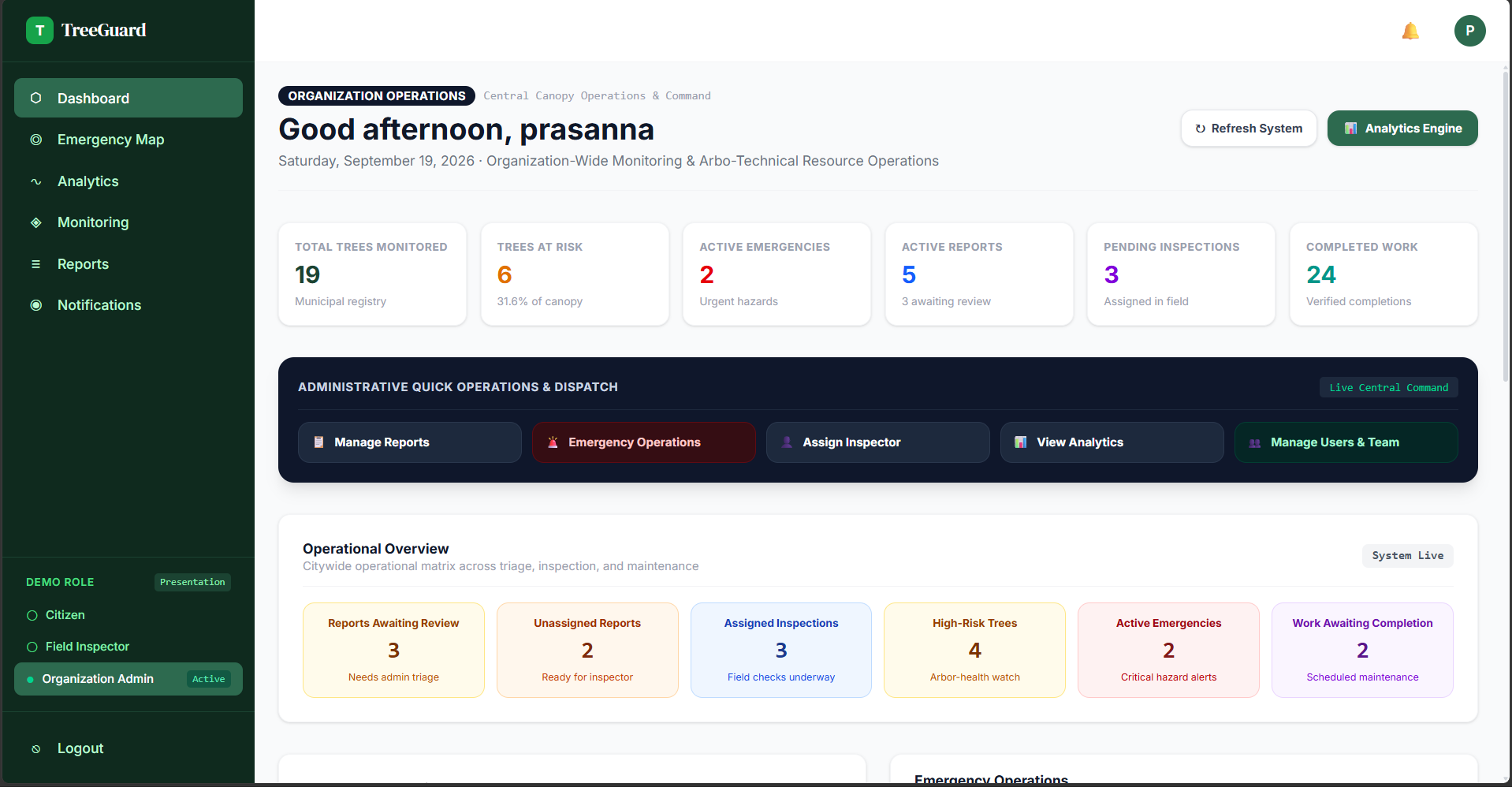
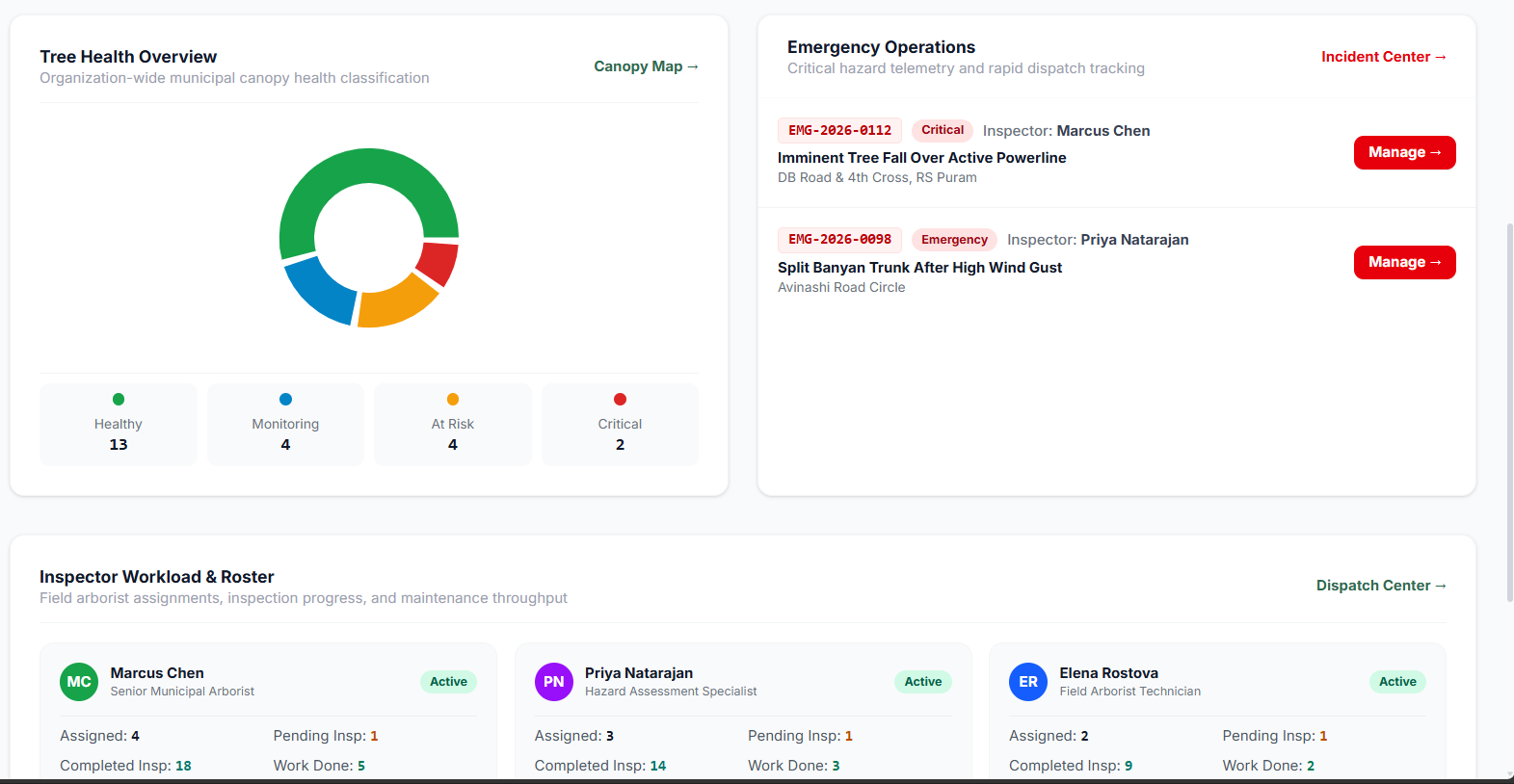
admin dashboard
-
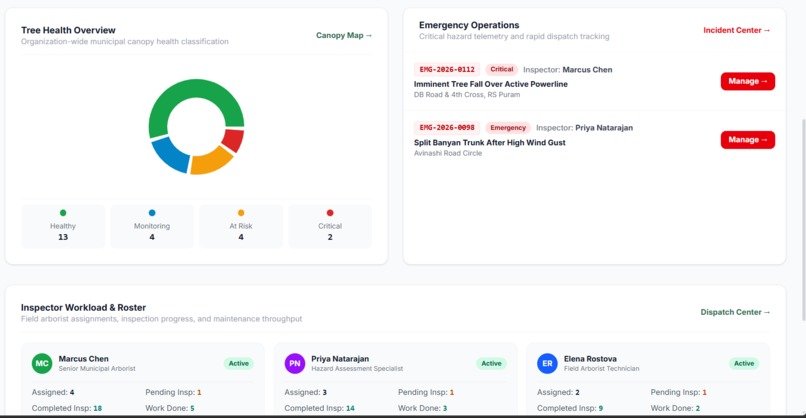
tree health map
Inspiration
Urban trees are essential for cleaner air, shade, biodiversity, and safer communities, but damaged or unhealthy trees can become dangerous when problems are detected too late. We wanted to create a platform that connects citizens, field inspectors, and organizations to identify tree risks earlier and coordinate action.
What it does
TreeGuard allows users to report tree problems with photos and location details. AI provides preliminary tree health and emergency assessments, while inspectors can review cases, perform field inspections, record work, and mark reports as completed. Organizations can monitor trees, emergencies, inspections, and environmental trends.
How we built it
We built TreeGuard as a full-stack web platform using React, TypeScript, FastAPI, PostgreSQL, SQLAlchemy, REST APIs, Leaflet/OpenStreetMap, and AI-based image assessment. The platform includes role-based experiences for Citizens, Field Inspectors, and Organization Admins.
Challenges we ran into
Our biggest challenges were connecting frontend workflows with real backend data, designing reliable role-based access, handling image analysis and uncertainty, managing location-based tree data, and creating a workflow that supports real field operations.
Accomplishments that we're proud of
We created a connected platform that brings reporting, AI assessment, tree mapping, inspection management, emergency response, monitoring, and analytics together in one system.
What we learned
We learned that building a real-world product requires much more than a frontend. Authentication, database design, security, API integration, error handling, role-based access, and reliable workflows are equally important.
What's next for TreeGuard
We plan to improve AI accuracy, expand continuous tree monitoring, add stronger environmental insights, improve field-operations support, and make TreeGuard easier for municipalities, campuses, parks, and communities to adopt.


Log in or sign up for Devpost to join the conversation.