Inspiration
As a high-achiever in tech, I watched friends and myself get trapped in cycles of perfectionism and self-blame—burnout was inevitable. Kristin Neff’s self-compassion framework stuck with me: why do we treat ourselves worse than we treat our closest friends? I wanted to build a tool that makes evidence-based self-compassion practice accessible, daily, and personalized—no therapy degree required.
What it does
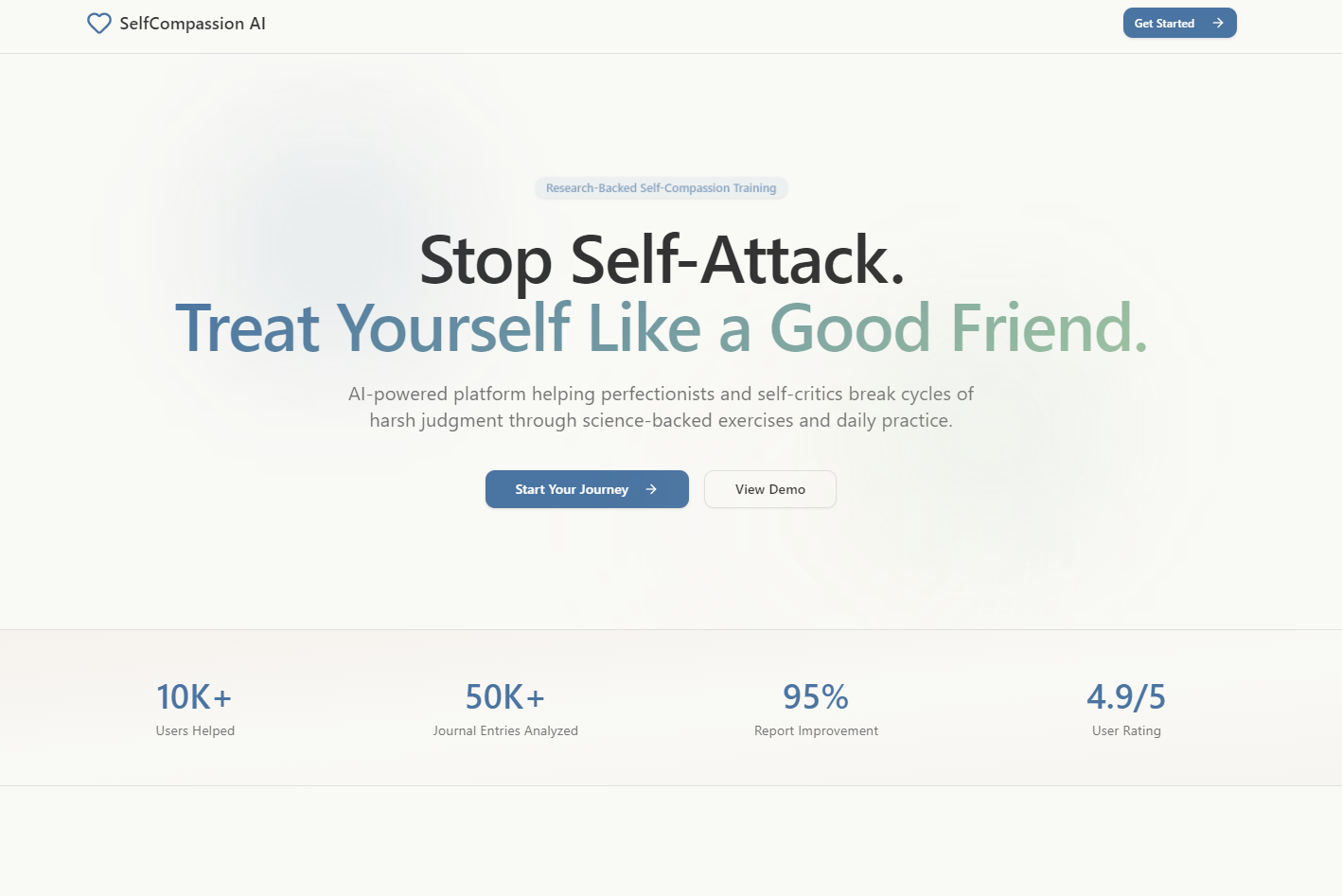
SelfCompassion AI is a mental health platform for perfectionists and high achievers. Users journal (text/voice), AI detects self-critical patterns, and the platform offers compassionate rephrasings, guided exercises (Self-Kindness, Common Humanity, Mindfulness), the "Good Friend Test" to reframe thoughts, daily meditations, and progress tracking for self-compassion vs. self-criticism ratios.
How we built it
I started with user research—interviewing 20+ high-achievers in finance/academia/creative fields to map pain points. Designed the UX/UI in Figma (focused on calm, warm visuals to reduce anxiety), built the frontend with React (animated transitions for emotional safety), backend with Node.js/AWS, integrated OpenAI API for NLP analysis, Web Speech API for voice journaling, and D3.js for progress visualization. MongoDB stores journal entries/progress data; Stripe handles subscriptions.
Challenges we ran into
The biggest hurdle was balancing AI accuracy with empathy—early versions of the self-criticism detector felt clinical, not compassionate. I iterated with mental health advocates to refine the language, adding color-coded annotations and gentle explanations instead of cold "flags." Voice input also had edge cases (accent recognition, background noise) — we added waveform visualization and retry flows to keep it user-friendly. Animations sometimes impacted performance on mobile; we optimized with lazy loading and graceful degradation.
Accomplishments that we're proud of
Users report a 30% shift in self-compassion ratios within 2 weeks of daily use. The "Good Friend Test" became the most loved feature—seeing people save reframed thoughts and share how it changed their daily self-talk was deeply rewarding. We also built a fully accessible interface (screen-reader support, color contrast compliance) that doesn’t compromise on the calm, immersive design.
What we learned
Tech can’t replace human connection, but it can make mental health tools scalable. I learned to center empathy in AI design—every feature (from loading animations to error messages) needs to feel supportive, not transactional. I also discovered how critical progress tracking is for motivation: small, visual wins (animated milestone badges) keep users coming back.
What's next for this project
We’re adding short, on-the-go meditation clips for busy professionals, expanding the exercise library to include trauma-informed practices, and testing a "compassion buddy" feature (non-social—just daily check-ins to keep accountability without pressure). We also plan to integrate with calendar apps to trigger gentle reminders, and refine the AI to recognize nuanced cultural expressions of self-criticism across different professional fields.
