-
-
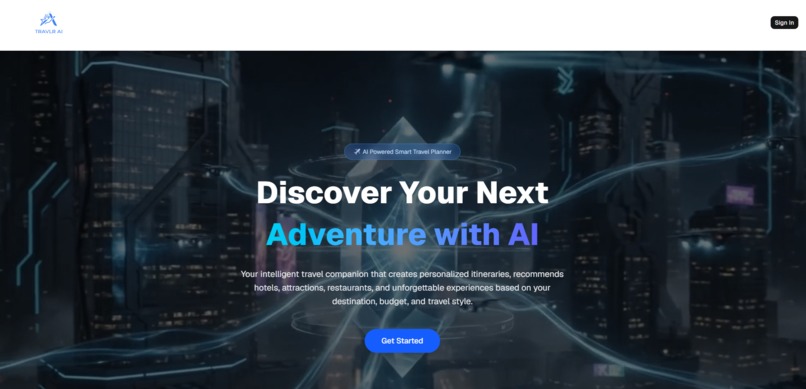
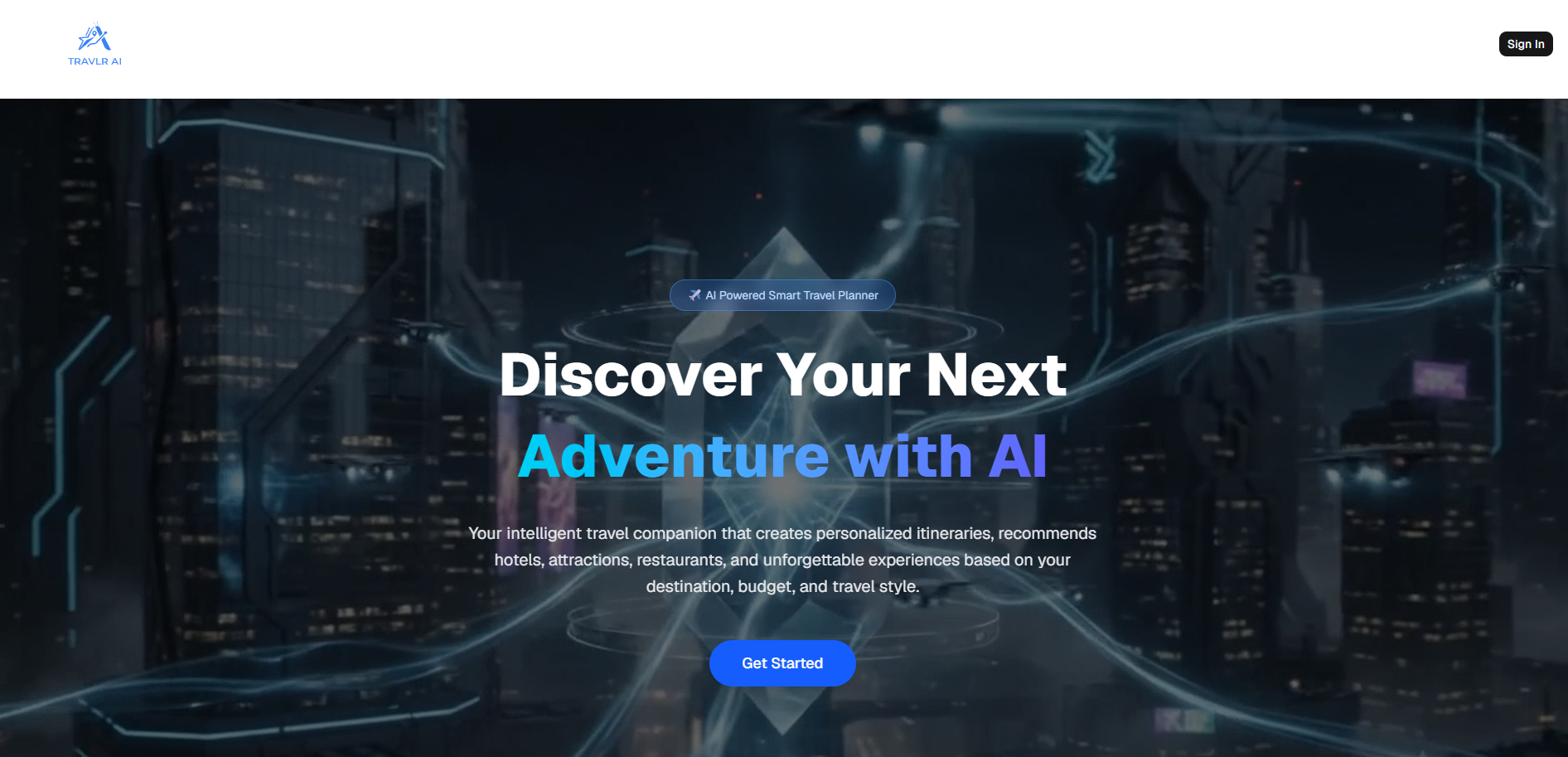
home page
-
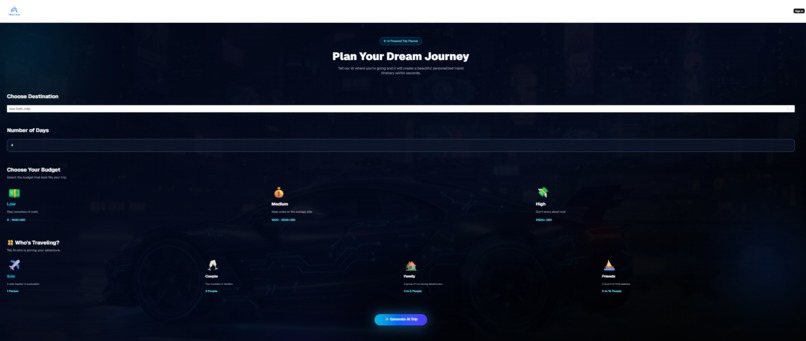
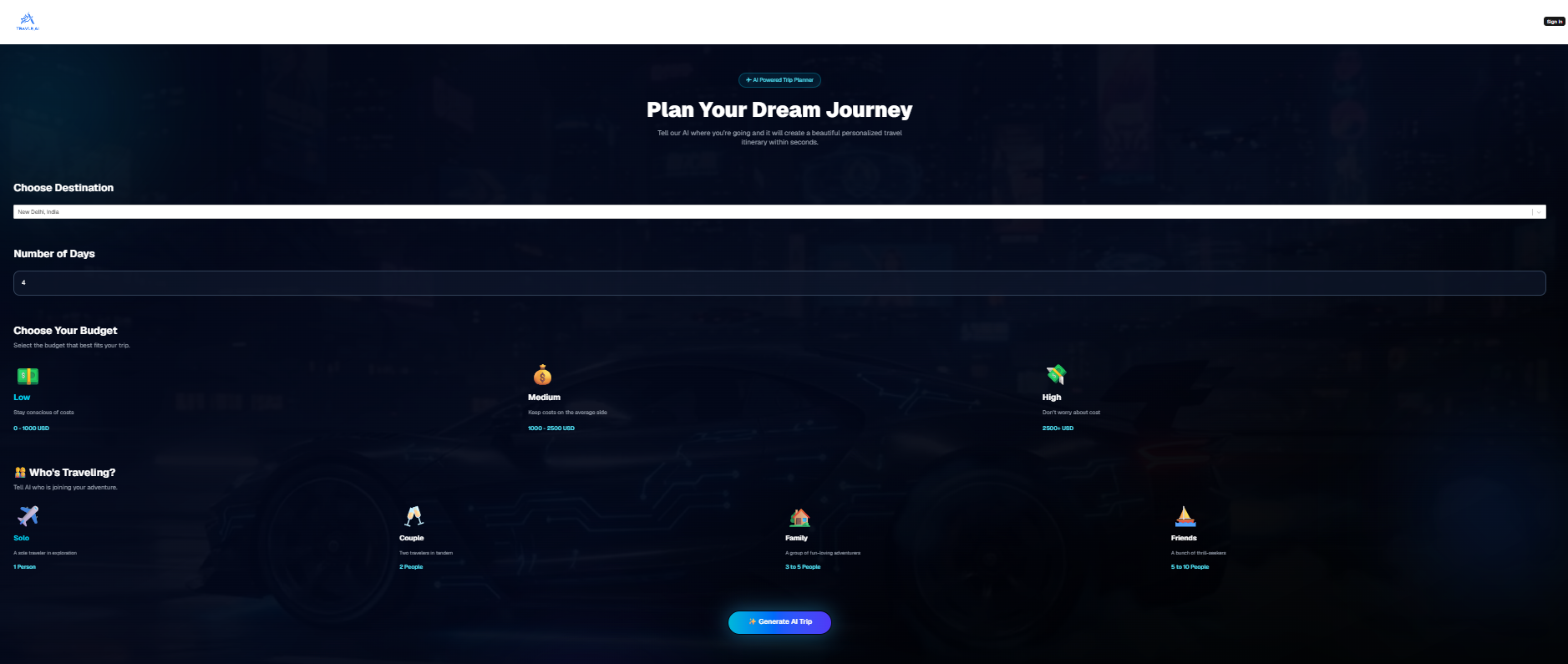
journey planner page
-

generating your journey
-
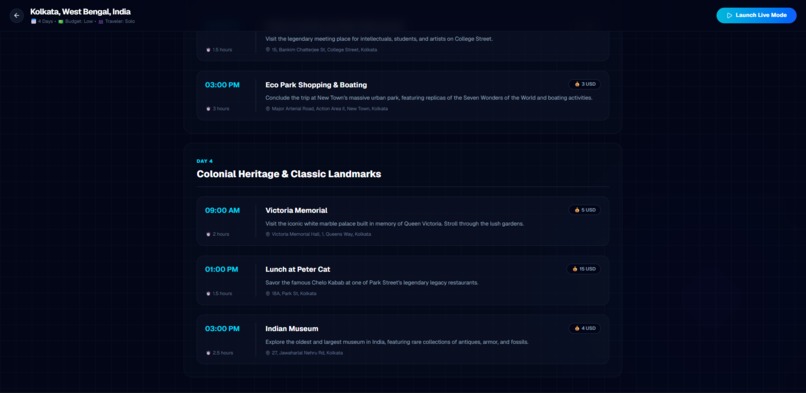
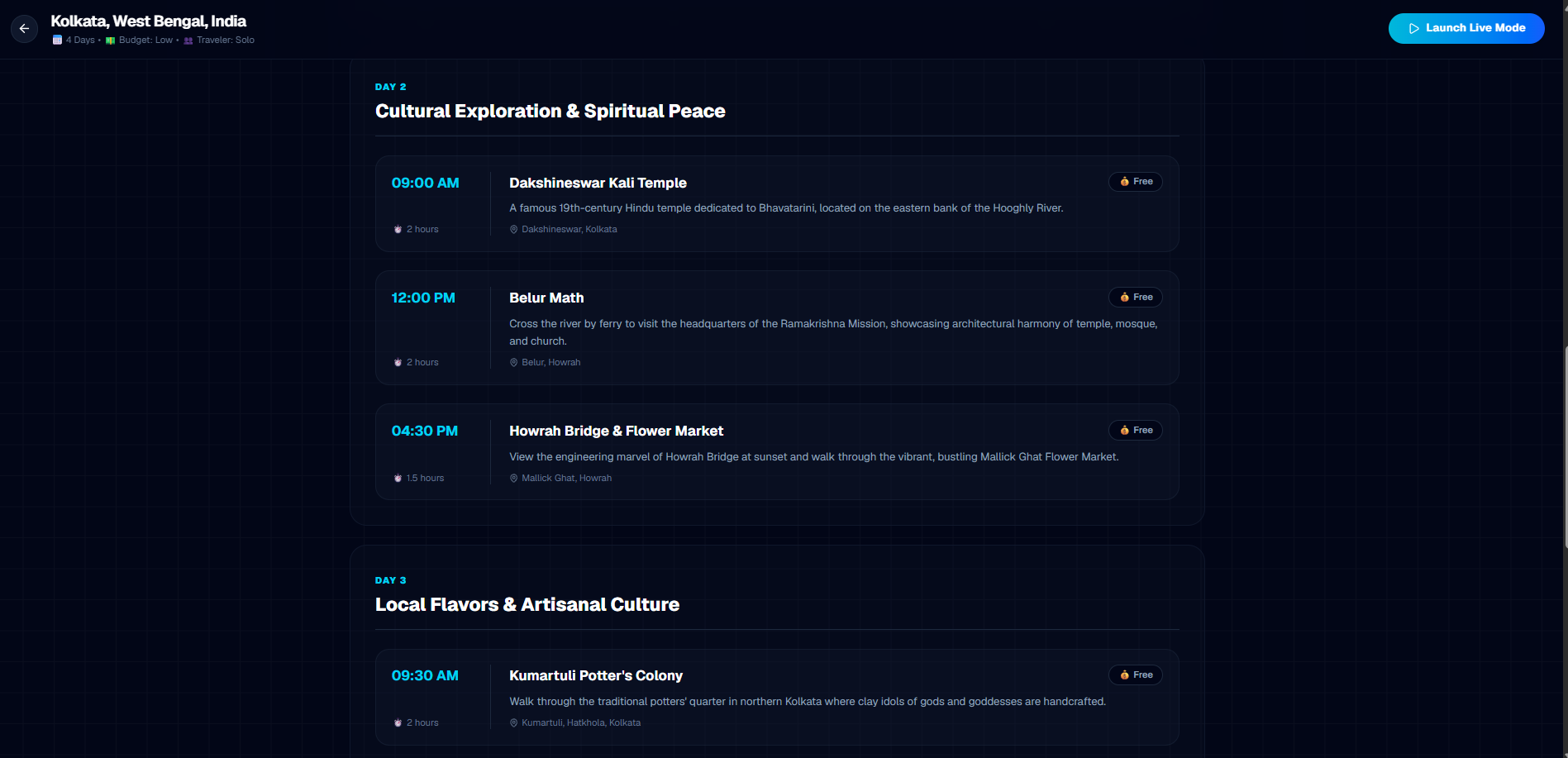
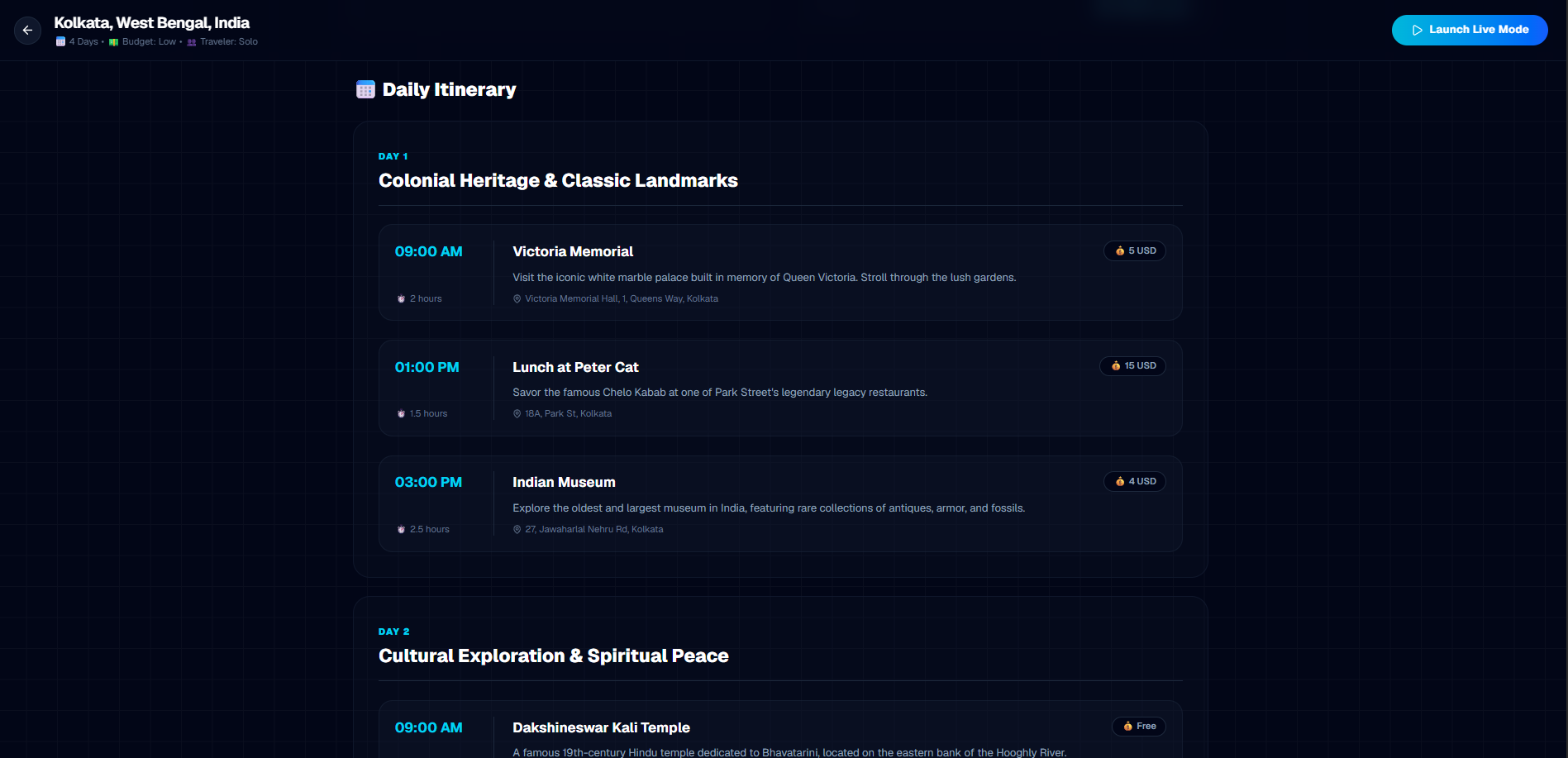
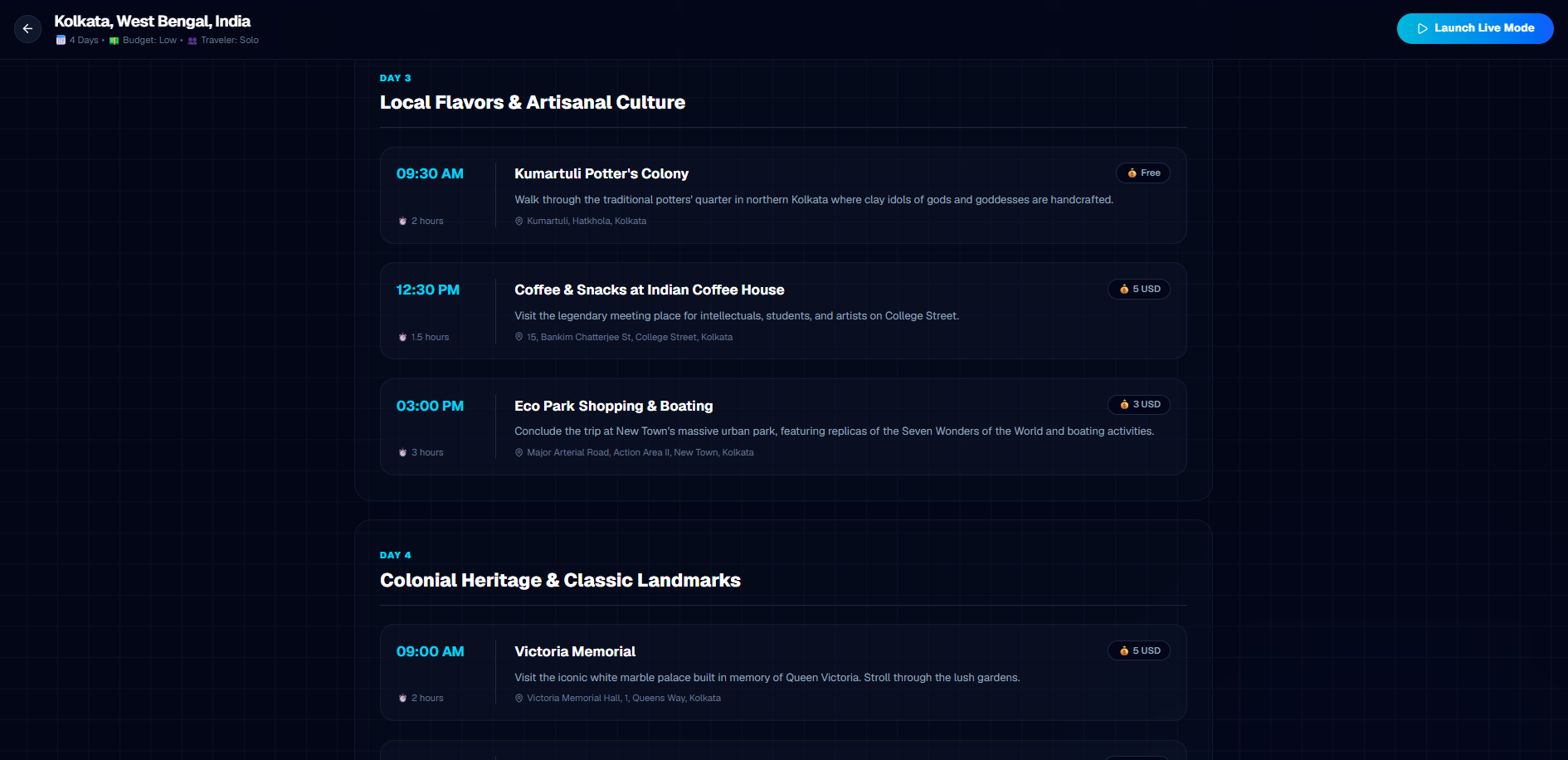
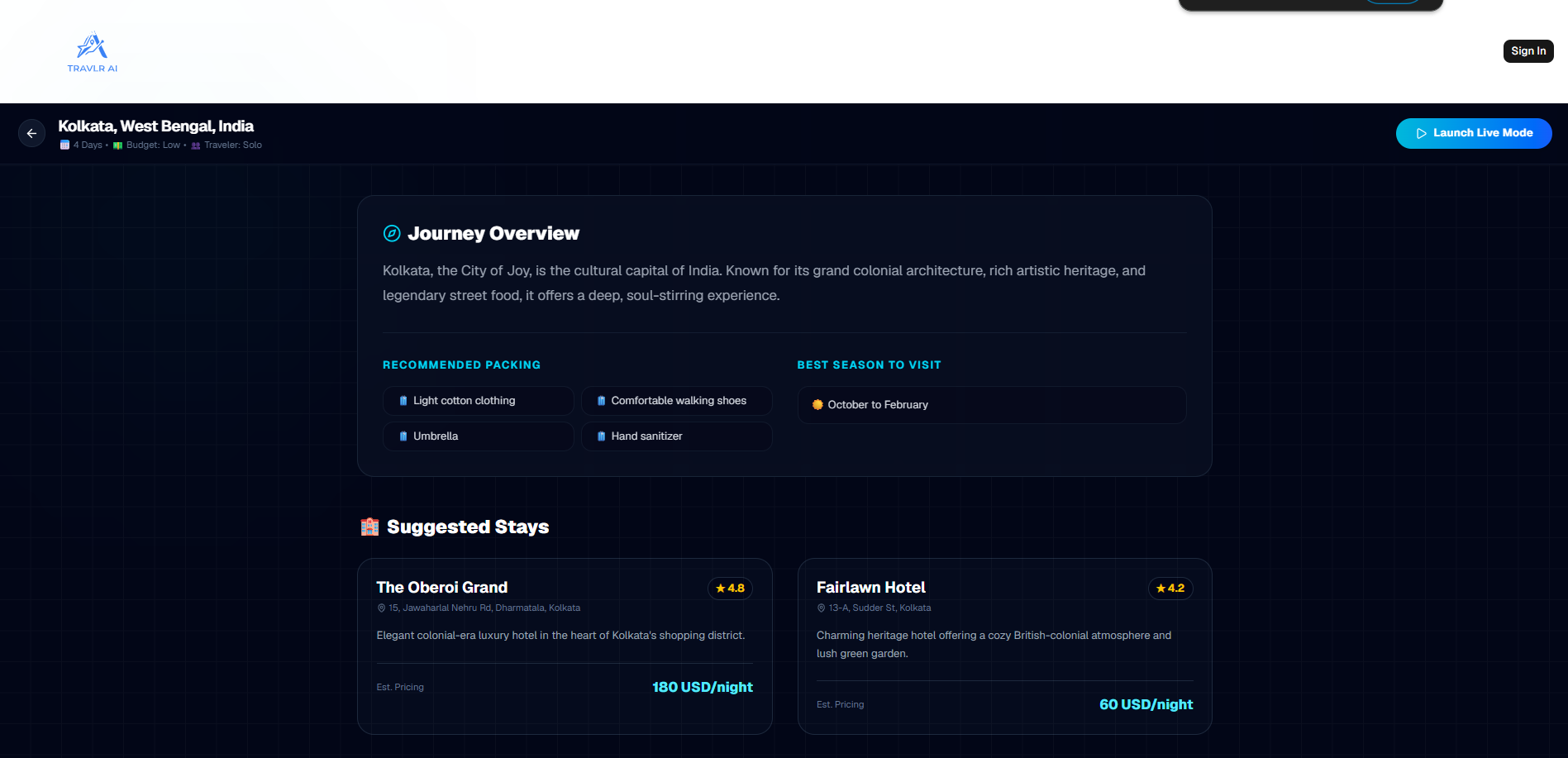
your personalized trip planner
-
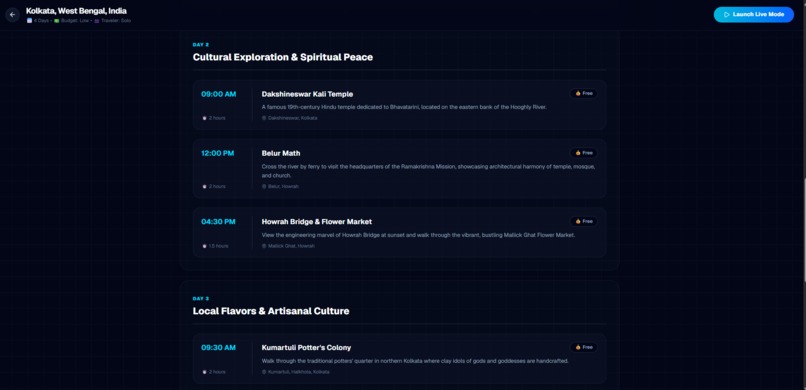
your personalized trip planner
-
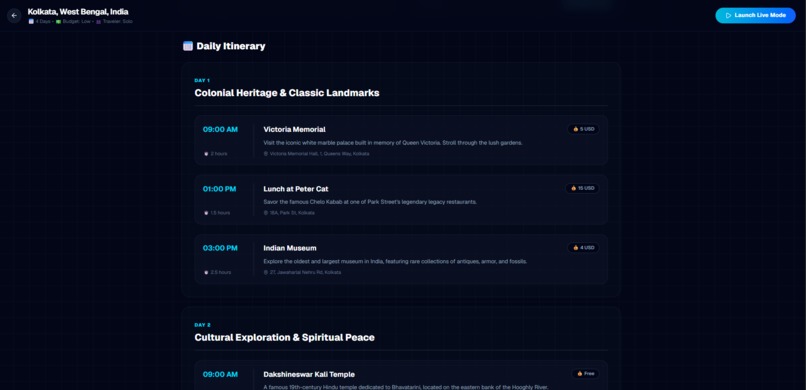
your personalized trip planner
-
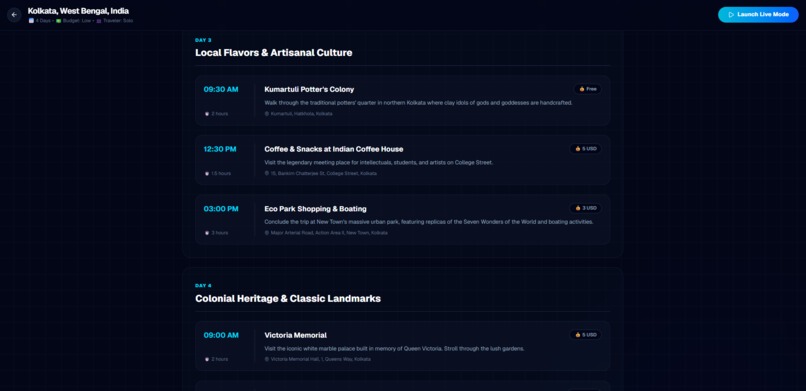
your personalized trip planner
-
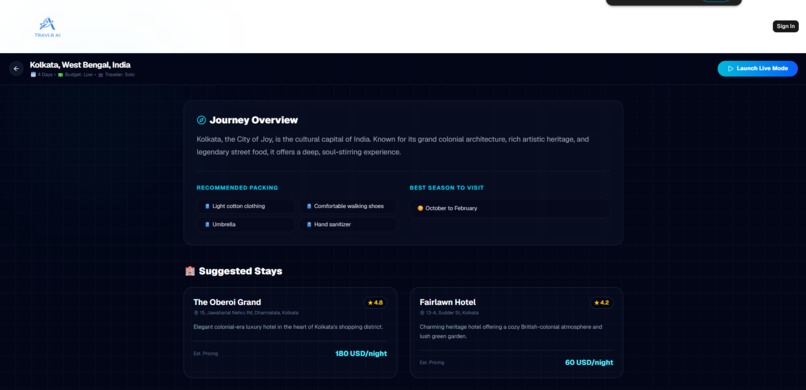
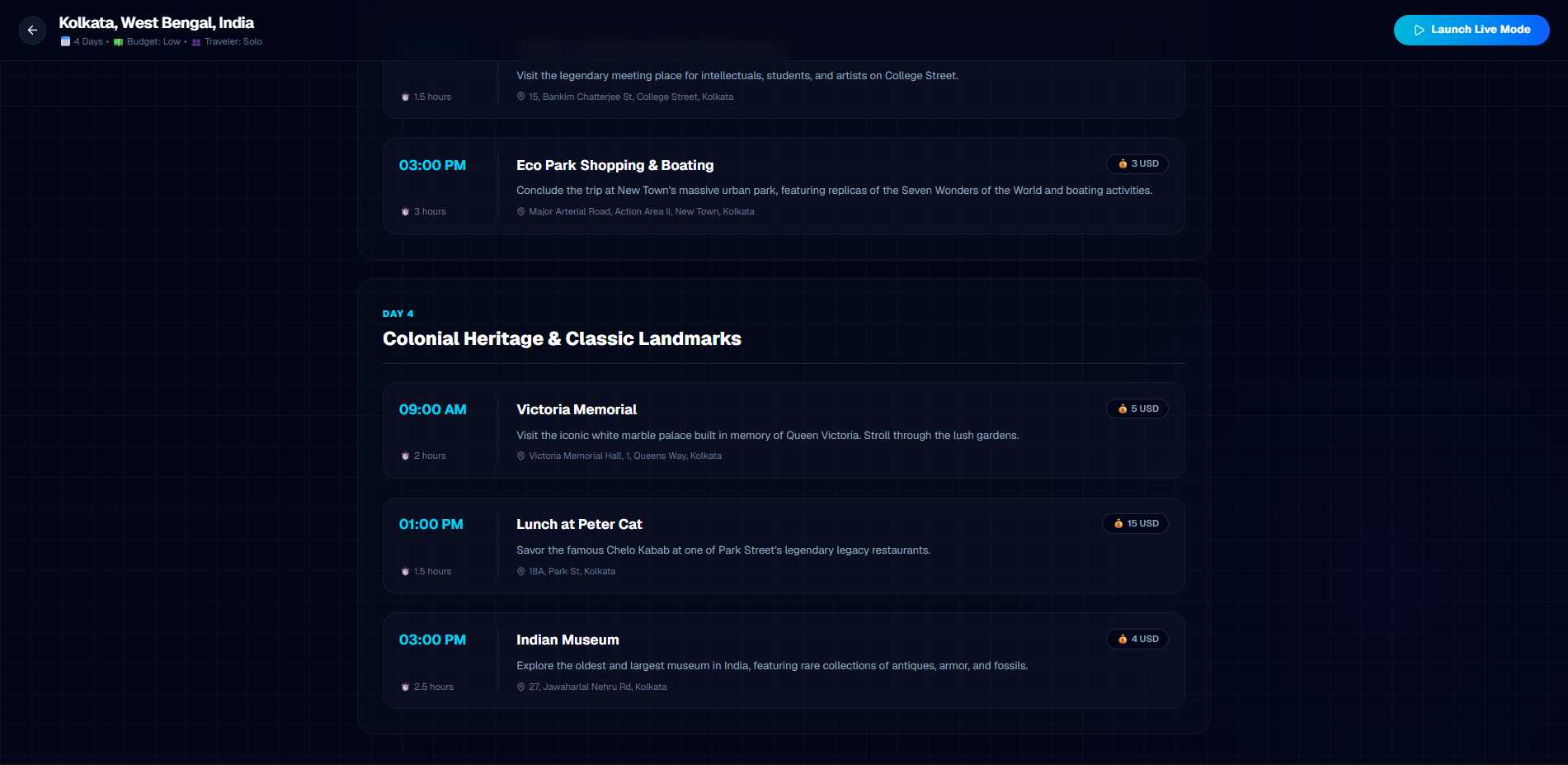
your personalized trip planner
-
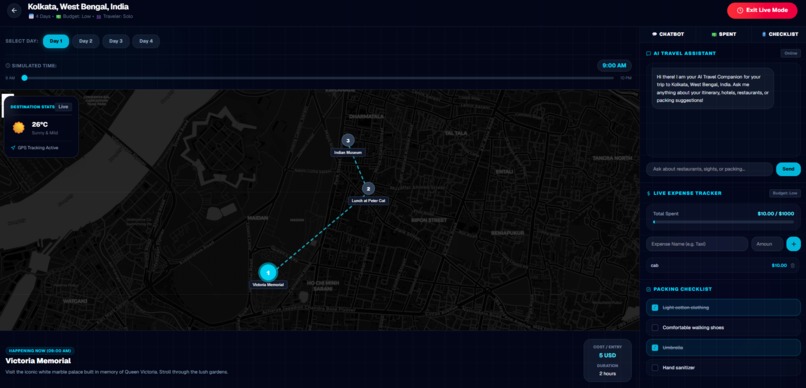
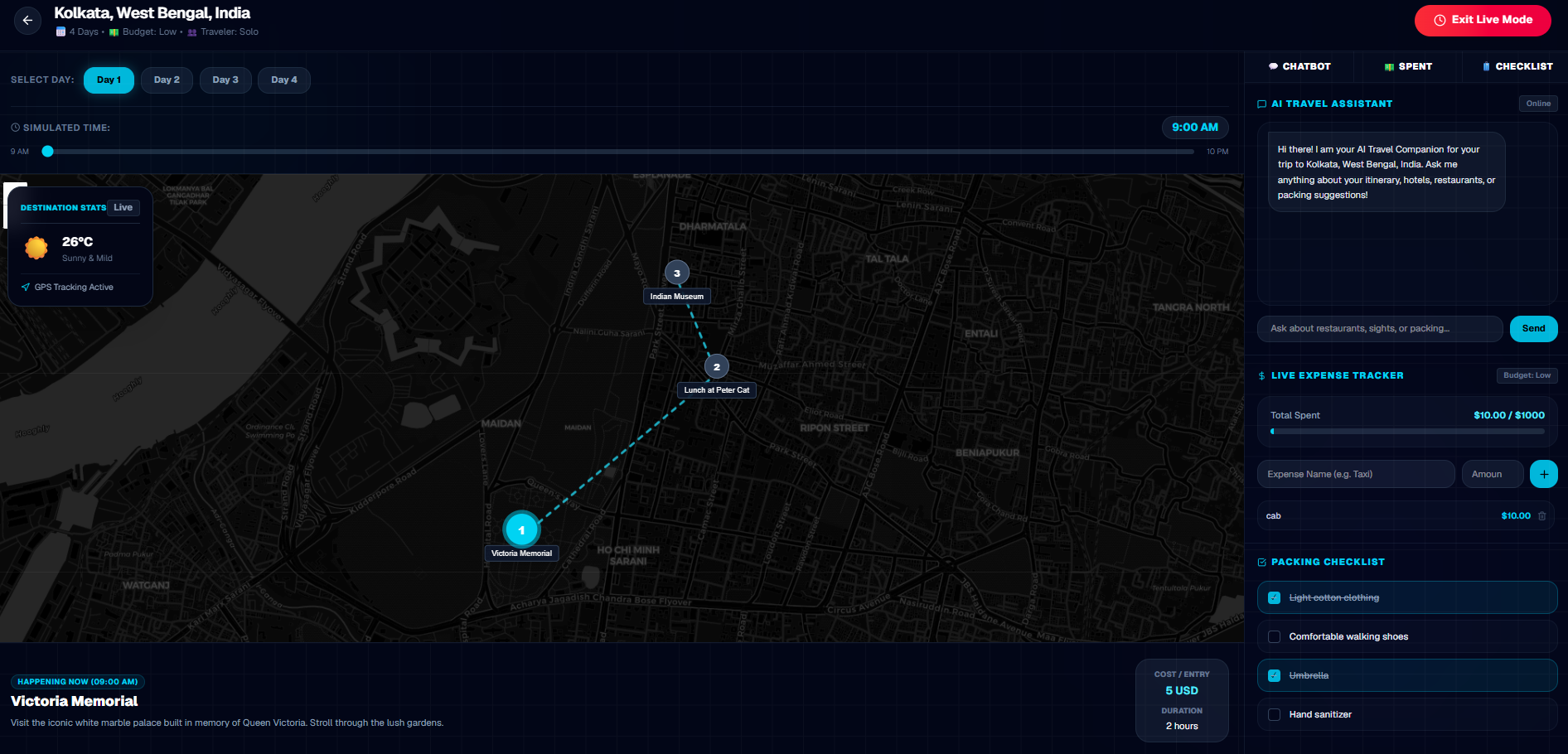
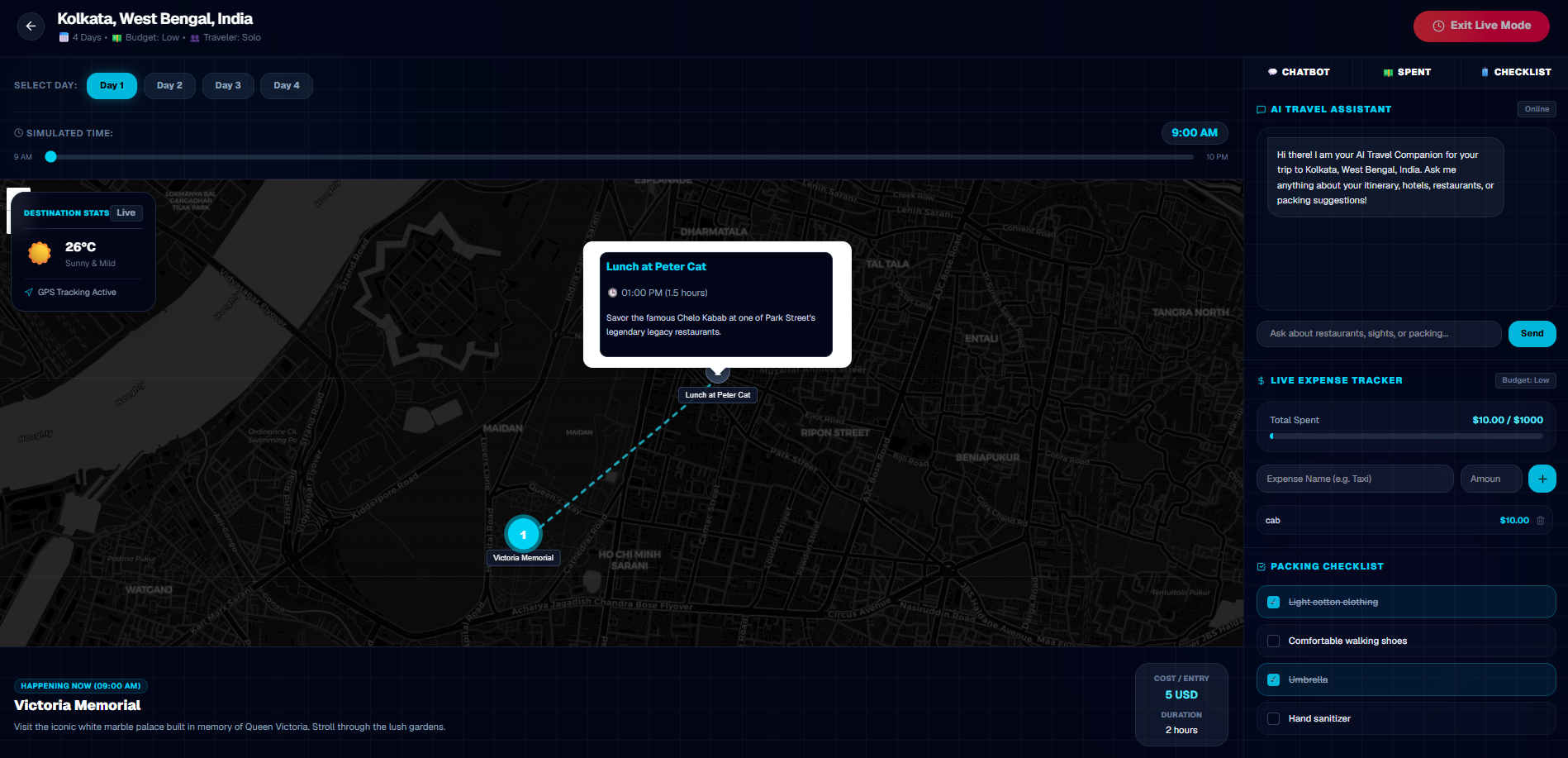
LIVE MODE with chatbot , spent counting and checkbox
-
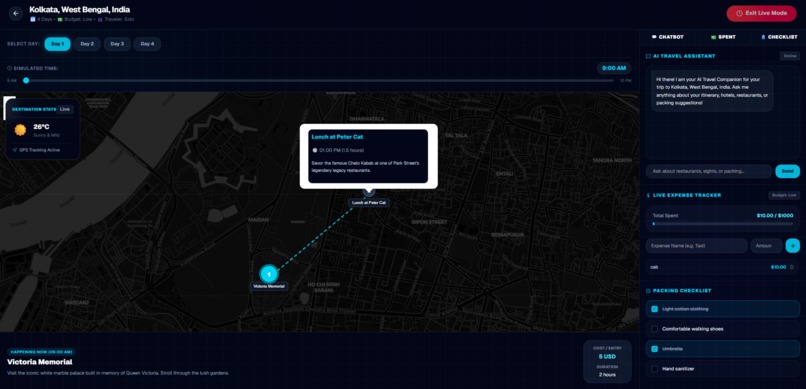
LIVE MODE with chatbot , spent counting and checkbox used here

Inspiration
When people travel, they switch between many apps : Google Maps and places for directions and exploring places. Zomato for food order. District for places to visit. MakeMyTrip for hotels and transport booking . This is such a waste of time.
What it does
Our web app does everything important but in an easy way . Suppose a user enters: "I want to go from Digha to Newtown." The app shows ✅ Safest route ✅ Traffic ✅ Accident-prone areas ✅ Road construction ✅ Flooded roads (if available) ✅ Nearby restaurants ✅ Nearby cafes ✅ Tourist attractions ✅ Budget hotels ✅ Bus/train/flight options Everything under one specific platform .
How we built it
Frontend: A modern web interface built using React and Vite for rapid rendering and hot module reloading. It uses Tailwind CSS and modular UI components for a premium, responsive design, along with interactive maps to visualize locations and hotel recommendations. Backend: A lightweight Node.js and Express server that handles client requests, communicates with external APIs, and manages a local JSON database to save, update, and retrieve generated travel itineraries. AI Engine: Powered by the OpenAI API (using models like gpt-4o-mini). The AI dynamically processes user preferences (such as destination, budget, travel companion type, and trip duration) to structure detailed day-by-day itineraries, estimate costs, and power an interactive, context-aware chatbot assistant to answer traveler queries.
Challenges we ran into
JSON Parsing Failures: Sometimes the AI returned Markdown or conversational text alongside the itinerary data. Solved by using strict prompts to enforce a clean JSON schema. Serverless File Storage: Serverless hosting (like Vercel) has a read-only filesystem, preventing local database writes. Solved by routing file database writes to the environment's temporary directory (/tmp). AI Latency: Generating a detailed multi-day plan takes a few seconds, which can hurt UX. Solved by implementing visual loading states and skeleton screens. Chatbot Context Limits: Feeding the entire itinerary details into the chat companion for every message was inefficient. Solved by compressing the trip details into a compact system context. Coordinate Inaccuracy: The AI would occasionally generate inaccurate latitude/longitude values for map pins. Solved by validating coordinates before rendering the map.
Accomplishments that we're proud of
Zero-to-Hero Travel Planning: Users can generate a complete, fully customized multi-day vacation plan under 10 seconds. Context-Aware Chat Companion: The AI assistant doesn't just chat. It understands the generated itinerary, allowing users to ask context-specific questions about their current trip. Seamless Map & Itinerary Sync: Successfully mapping out travel activities visually, creating a seamless dual-view experience. Polished User Experience: Achieving a premium, highly responsive UI/UX, smooth loading skeletons, and interactive states. Serverless-Ready Deployment: Building a production-ready application that works out-of-the-box on serverless environments, making it cheap to host and highly scalable.
What we learned
Prompt Engineering & Output Control: We learned how to write system instructions that constrain LLMs (such as OpenAI) to return structured JSON rather than raw text, thereby avoiding runtime crashes. Designing for API Latency: We discovered how critical perceived performance is; using placeholder skeletons and engaging loaders drastically improves the user experience while waiting for AI generation. Managing Ephemeral Environments: We gained a solid understanding of how serverless platforms (like Vercel) manage storage and routing, forcing us to write adaptive data-saving logic using /tmp. Effective Context Management: We learned how to pass large datasets into LLM chat models efficiently without hitting rate limits or driving up API token costs. Integrating AI with Interactive Maps: We learned how to bridge structural text coordinates returned by an AI with frontend mapping APIs to display dynamic, interactive visual components.
What's next for TRAVLR AI
Direct Booking Integration: Connect with flight and hotel APIs (like Skyscanner or Amadeus) to allow users to book their generated recommendations directly inside the app. Real-Time Collaborative Planning: Add support for shared workspaces, allowing friends or families to edit and plan the same itinerary together in real time. Offline Mode & PWA Support: Enable travelers to download itineraries offline or export them to PDF, ensuring access to schedules and maps even without cellular data. Expense & Budget Tracker: Integrate a live budgeting feature where users can log actual expenses during their trip and compare them to the AI's initial estimate. Community Hub & Social Sharing: Allow users to publish their generated itineraries to a community feed where other travelers can browse, upvote, and customize them.
Built With
- ai-chatbot
- ai-travel-planner
- api
- artificial-intelligence
- dynamic-ui
- express.js
- full-stack
- google-maps
- interactive-mapping
- itinerary-generator
- json-database
- leaflet.js
- node.js
- openai
- prompt-engineering
- react
- render
- responsive-design
- serverless
- shadcn-ui
- tailwind-css
- travel-tech
- vercel
- virtual-assistant
- vite


Log in or sign up for Devpost to join the conversation.