-
-
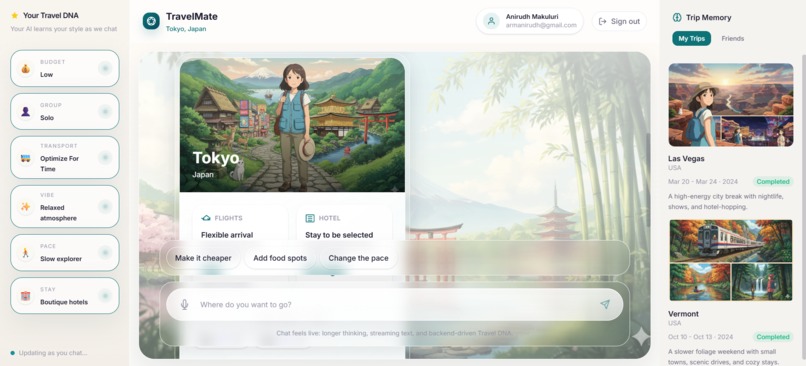
Main Landing Page
-

Travel Memories- blog post
-
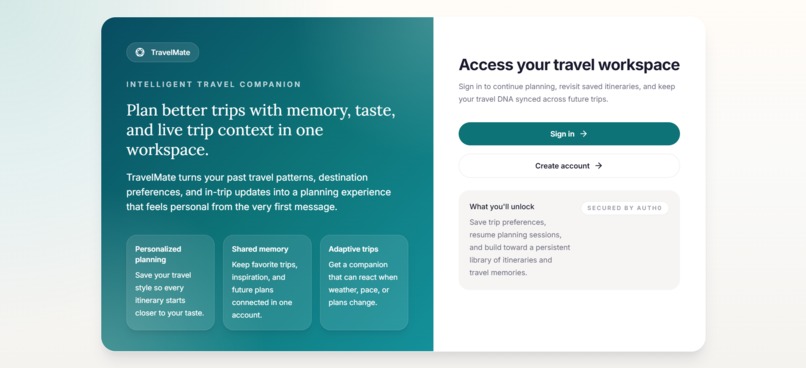
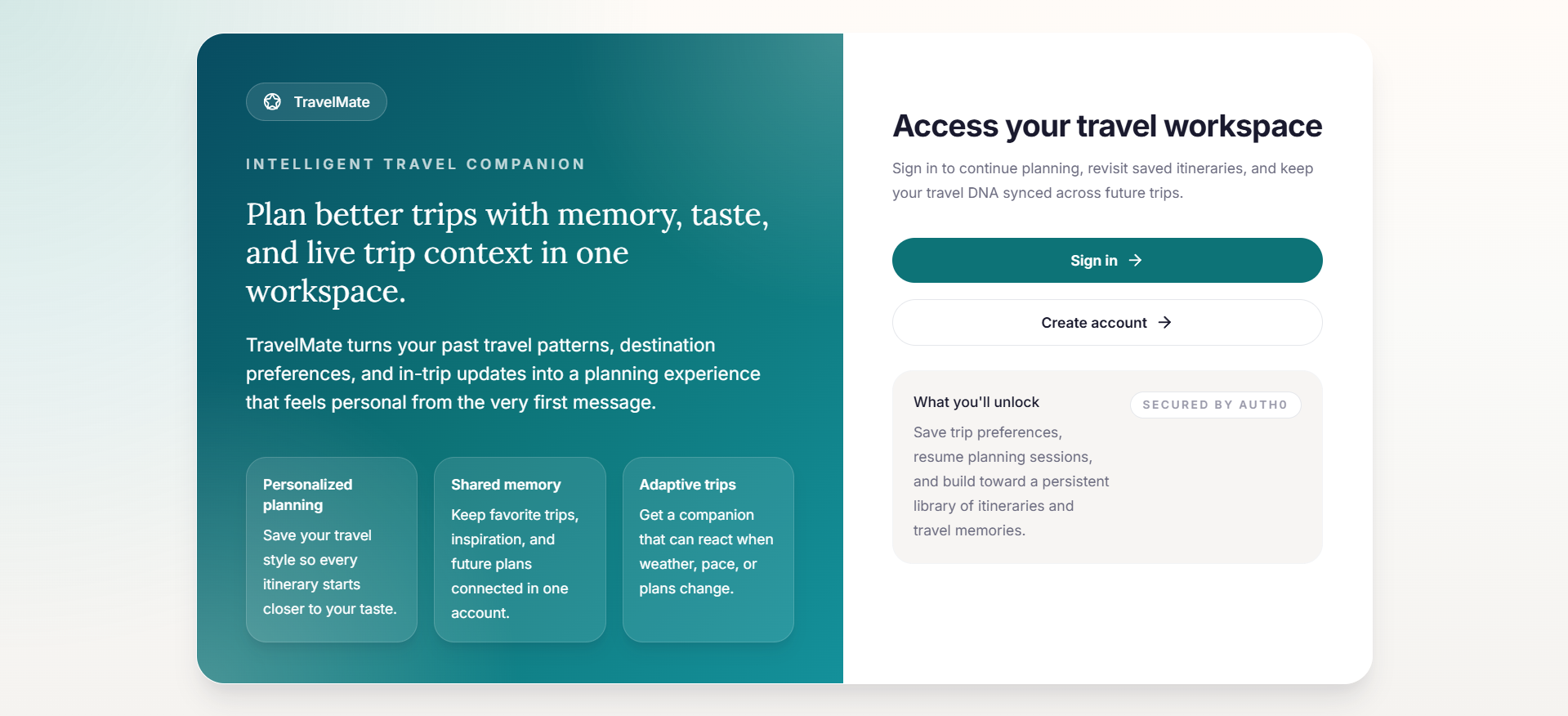
Initial Authpage
-
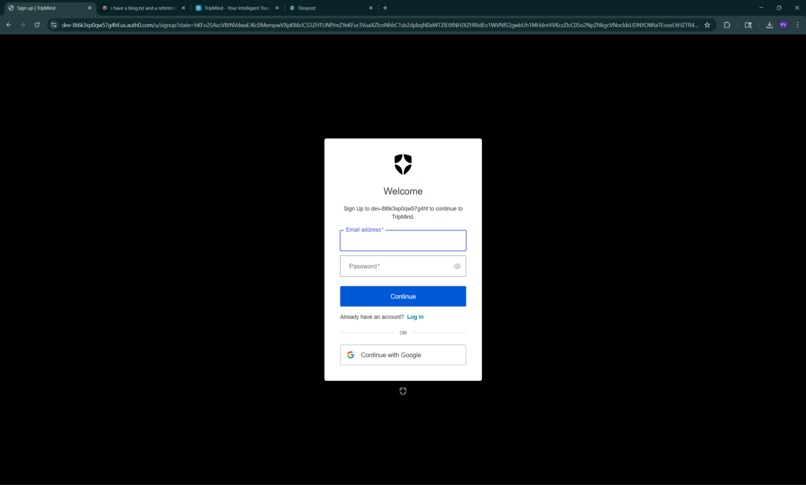
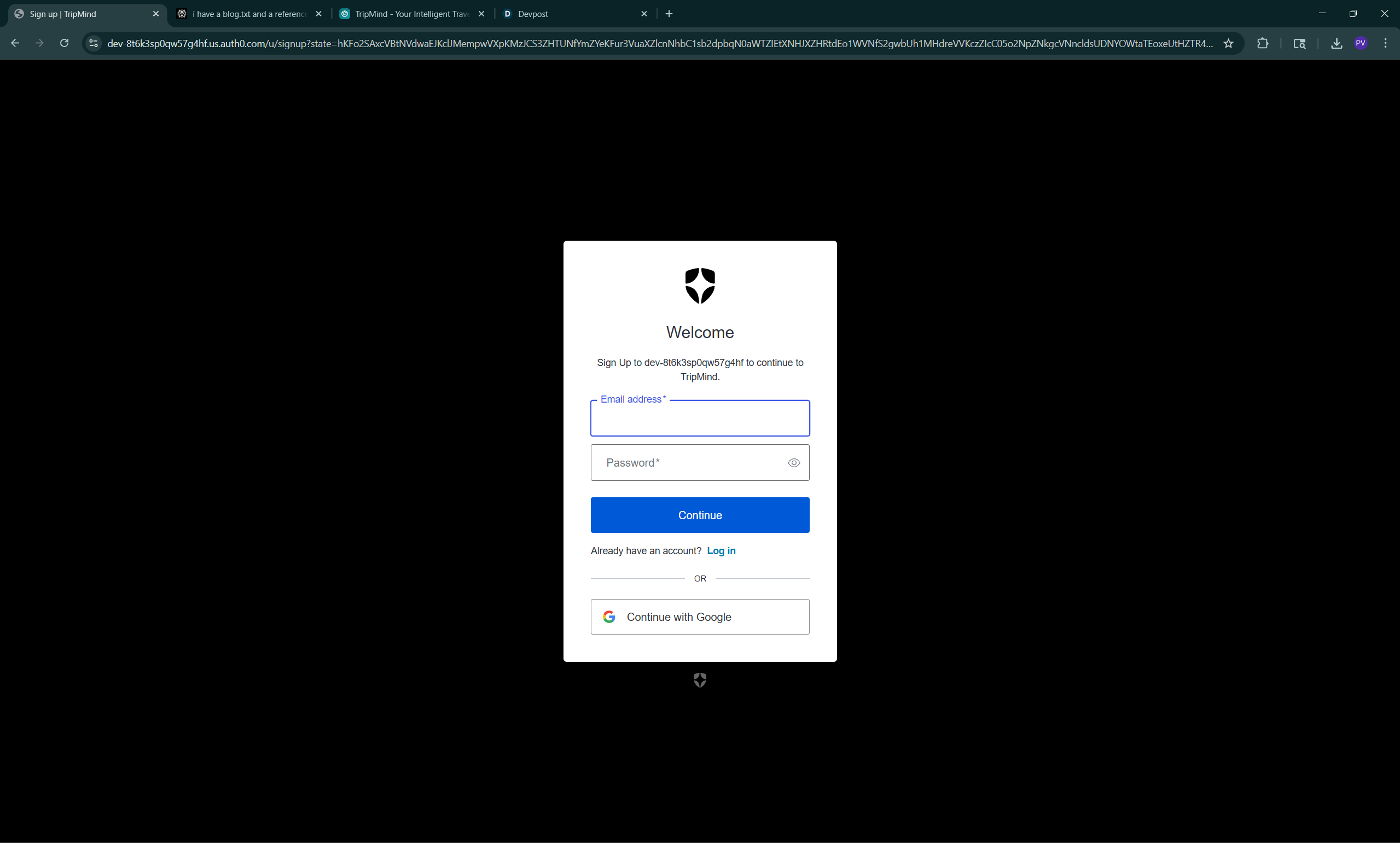
Auth0 page
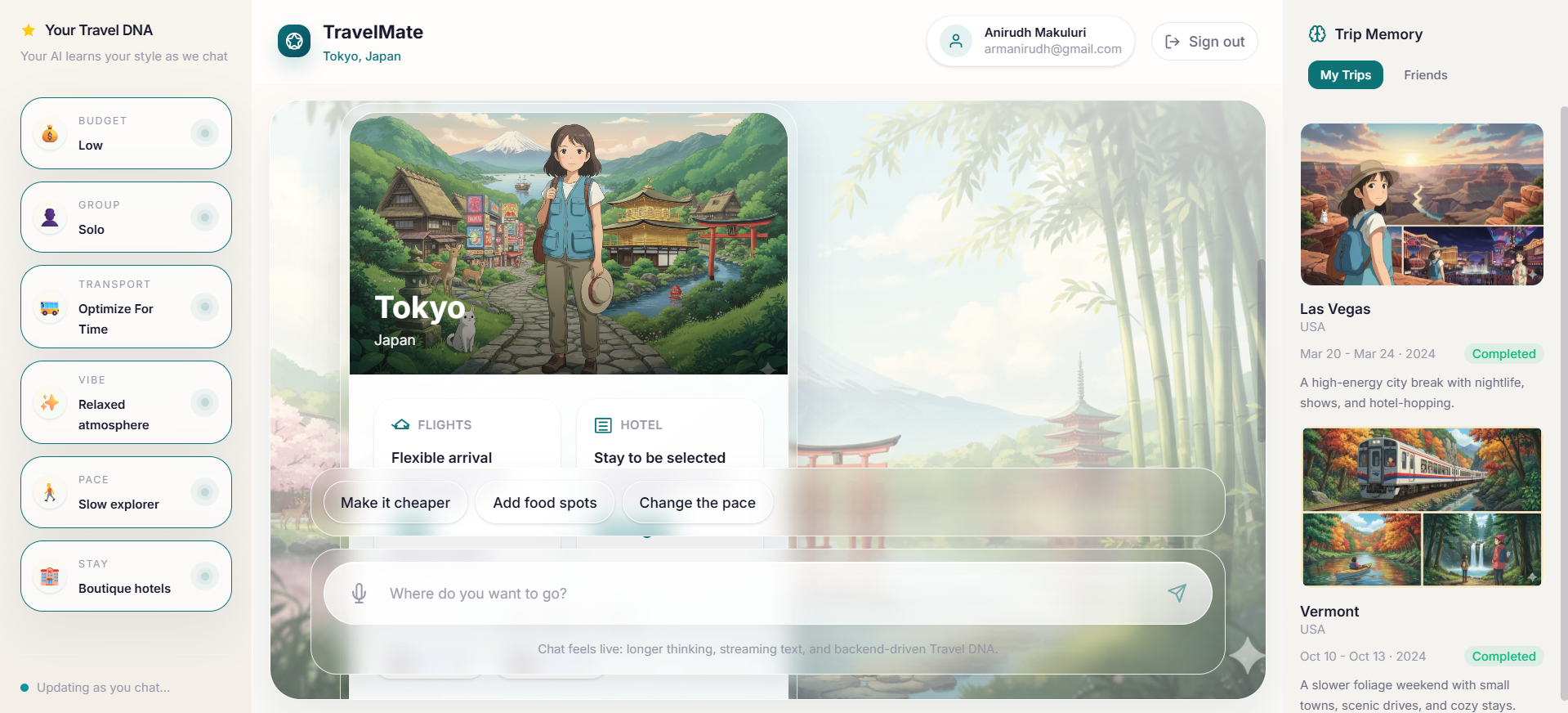

Inspiration
Travel planning should feel exciting, but it often turns into tab chaos, conflicting advice, and “wait, is this even possible in one day?” moments. We built TravelMate to solve that gap: a smart, playful co-planner that helps people go from vague ideas to realistic adventures without the stress spiral.
What it does
TravelMate turns user preferences, trip constraints, and destination context into personalized itineraries. It helps organize daily plans, suggests places and activities, and structures trips in a way that is practical, coherent, and easy to follow. The goal is simple: less planning fatigue, more meaningful travel.
How we built it
We built TravelMate as a full-stack application with a modern frontend and an AI-driven backend.
Frontend: A responsive Next.js interface for trip input, itinerary viewing, and interactive travel experience flows.
Backend: A Python/FastAPI service that handles planning logic, query building, feasibility checks, memory/context handling, and optimization.
AI + Integrations: AI models generate and refine recommendations, while map/location services ground suggestions in real-world context.
Personalization: Authentication and user metadata support a more tailored experience across sessions.
Challenges we ran into
Balancing creativity and feasibility: AI can generate exciting plans, but not all are realistic with travel time, budgets, and schedules.
Consistency of outputs: Keeping itinerary quality stable across different destinations and user styles required careful normalization and validation.
Orchestrating multiple services: Combining AI, mapping, and backend logic without introducing latency or brittle failure points was non-trivial.
UX clarity: Explaining complex planning decisions in a clean, user-friendly way took several iterations.
Accomplishments that we're proud of
End-to-end trip planning flow: The product experience seamlessly transitions from user intent to a structured itinerary.
Practical recommendation quality: Plans are not just interesting, but usable.
Thoughtful backend architecture: Dedicated services for feasibility, optimization, and memory made the system easier to evolve.
Product personality: TravelMate feels like a companion, not a spreadsheet.
What we learned
AI products need guardrails: Great UX comes from combining model output with strong validation and business logic.
Prompting is only half the battle: Post-processing, ranking, and fallback handling are just as important.
System design matters early: Separating responsibilities across services reduced technical debt and sped up iteration.
User trust is built through reliability: Even small inconsistencies in recommendations can quickly reduce confidence.
What's next for travelMate
Stronger personalization: Learn from traveler behavior to adapt pacing, preferences, and activity style over time.
Real-time adaptability: Adjust itineraries dynamically based on weather, closures, delays, or user changes.
Collaboration features: Enable group planning with shared edits, voting, and conflict resolution for trip decisions.
Deeper local intelligence: Improve neighborhood-level suggestions, hidden gems, and context-aware recommendations.
Production hardening: Expand testing, observability, and performance optimization for a more robust launch-ready platform.
Built With
- agent-development-kit
- auth0
- elevenlabs
- fastapi
- gemma-4
- google-deepmind
- google-gemini
- google-genai
- google-maps
- google-stitch
- google-vertex-ai
- langchain
- mcp
- next.js
- python
- react
- tailwind
- typescript
- vercel
- weatherapi
- zustand


Log in or sign up for Devpost to join the conversation.