-
-
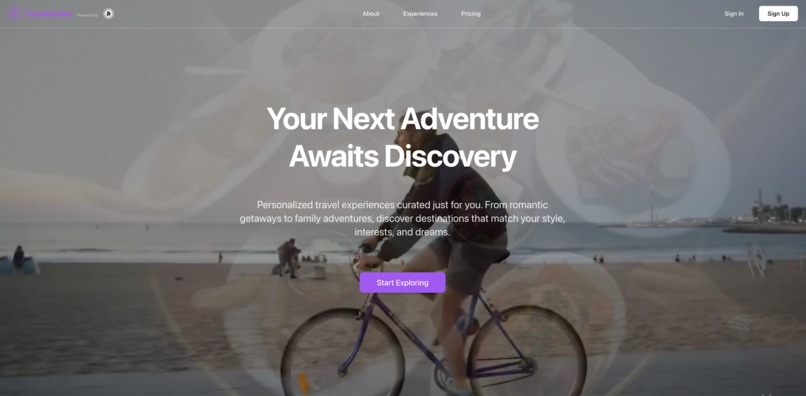
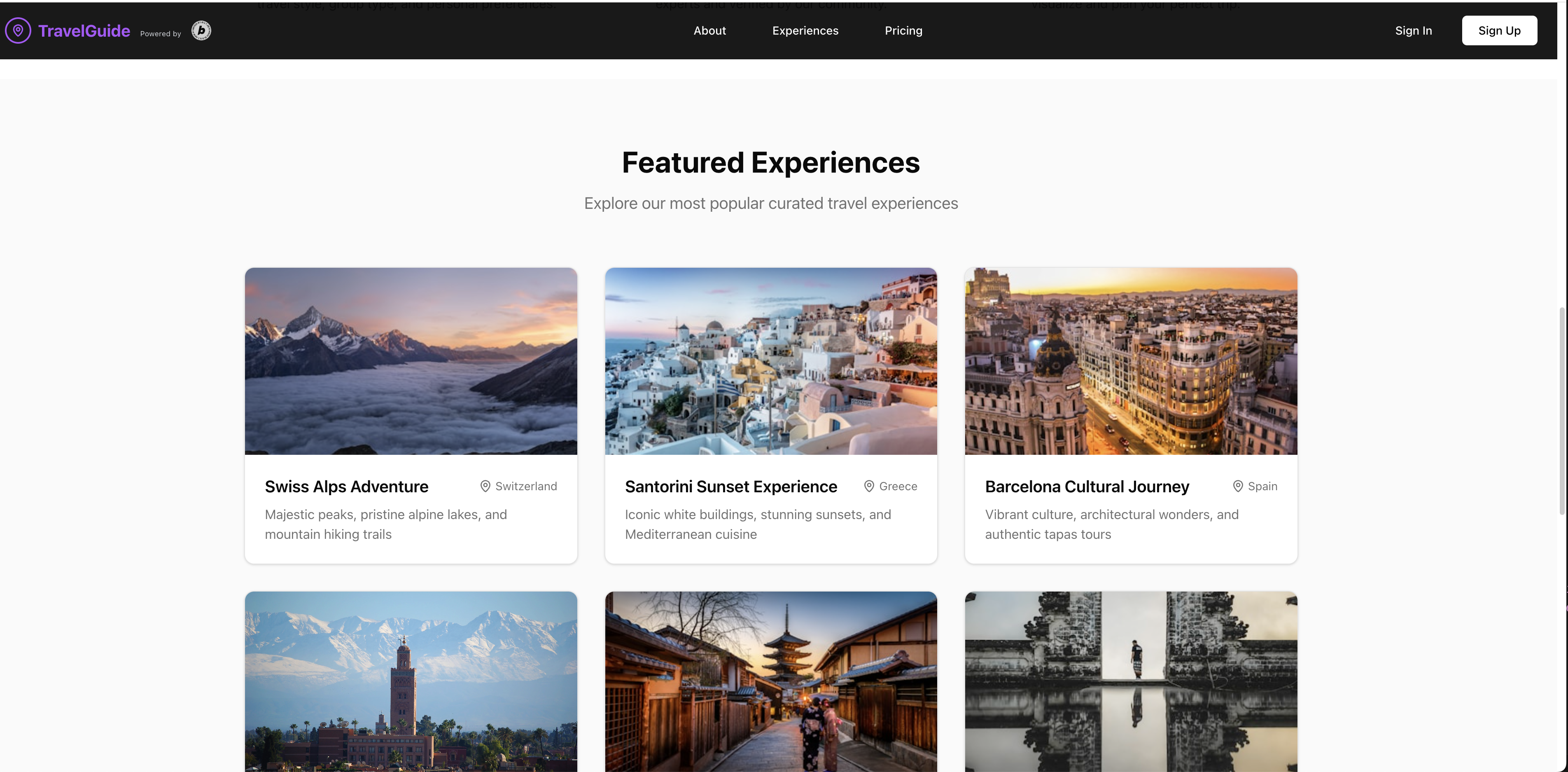
Landing Page
-
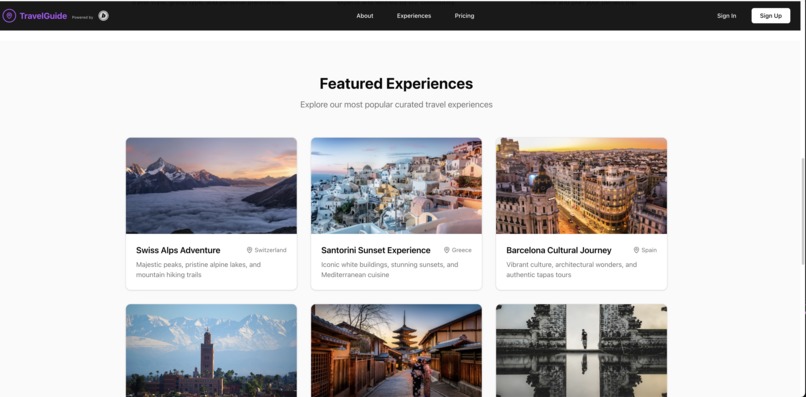
Learn about us
-
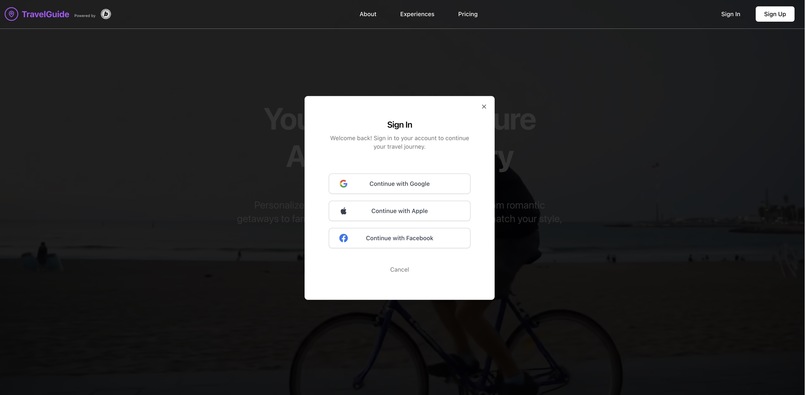
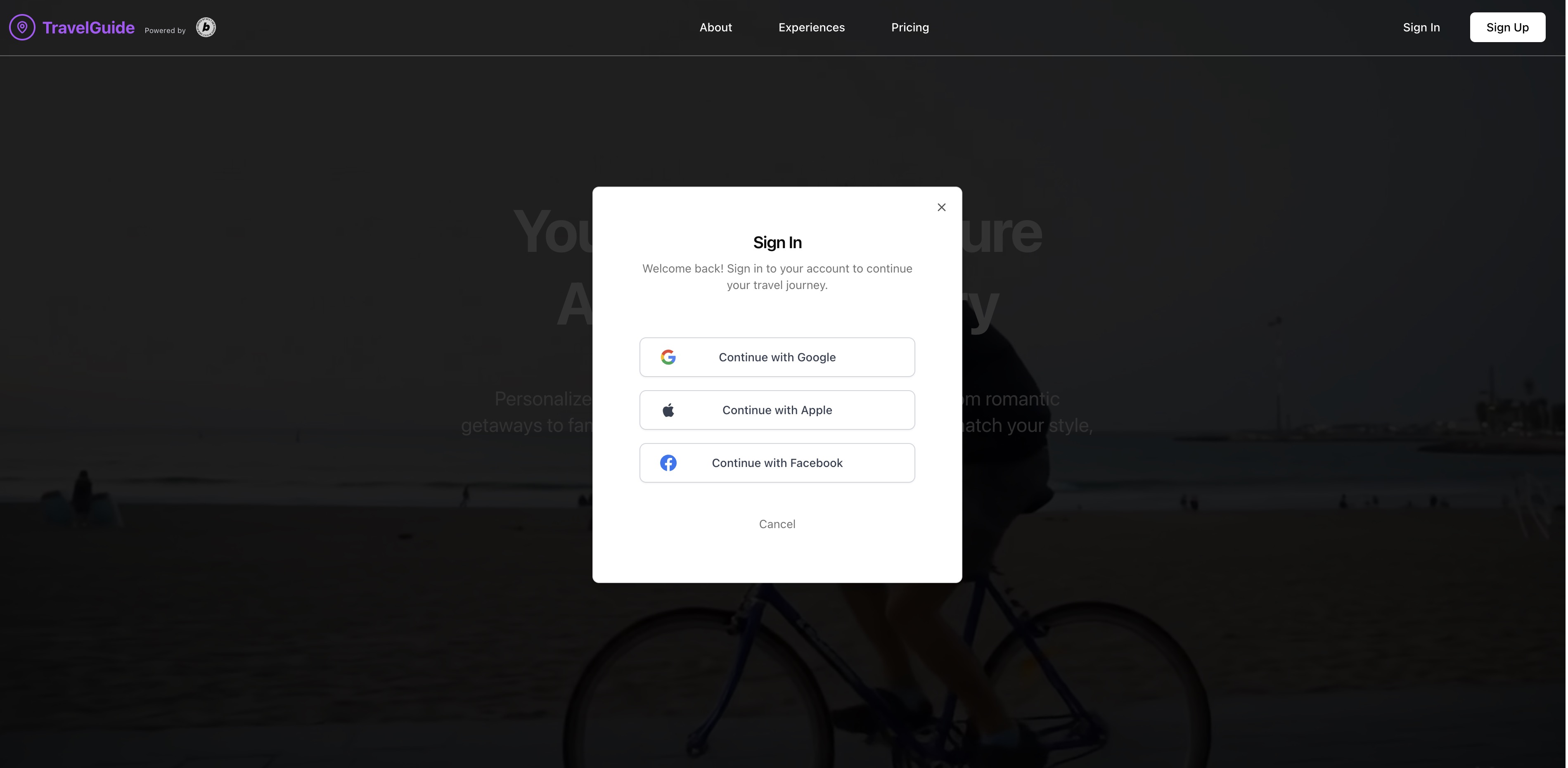
Sign in/up
-
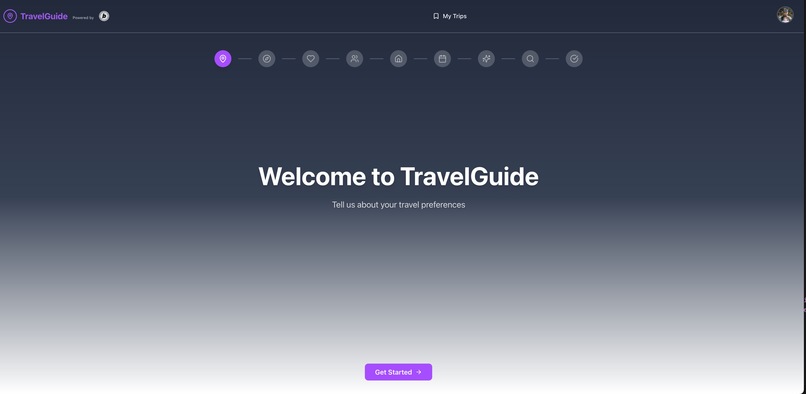
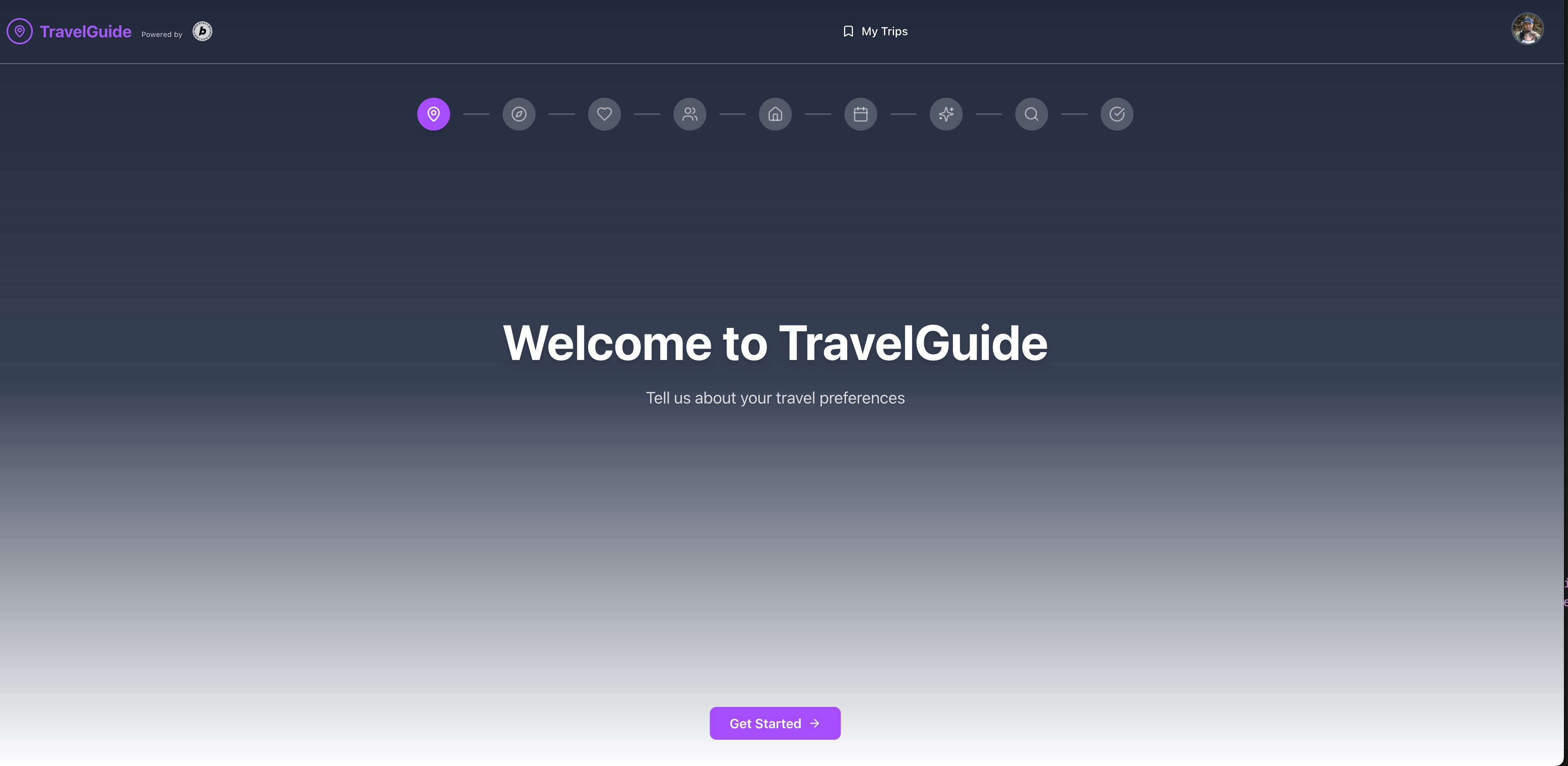
Start your onboarding
-
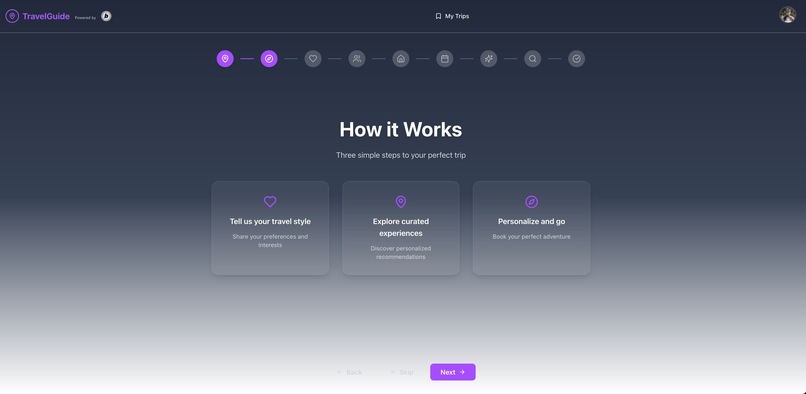
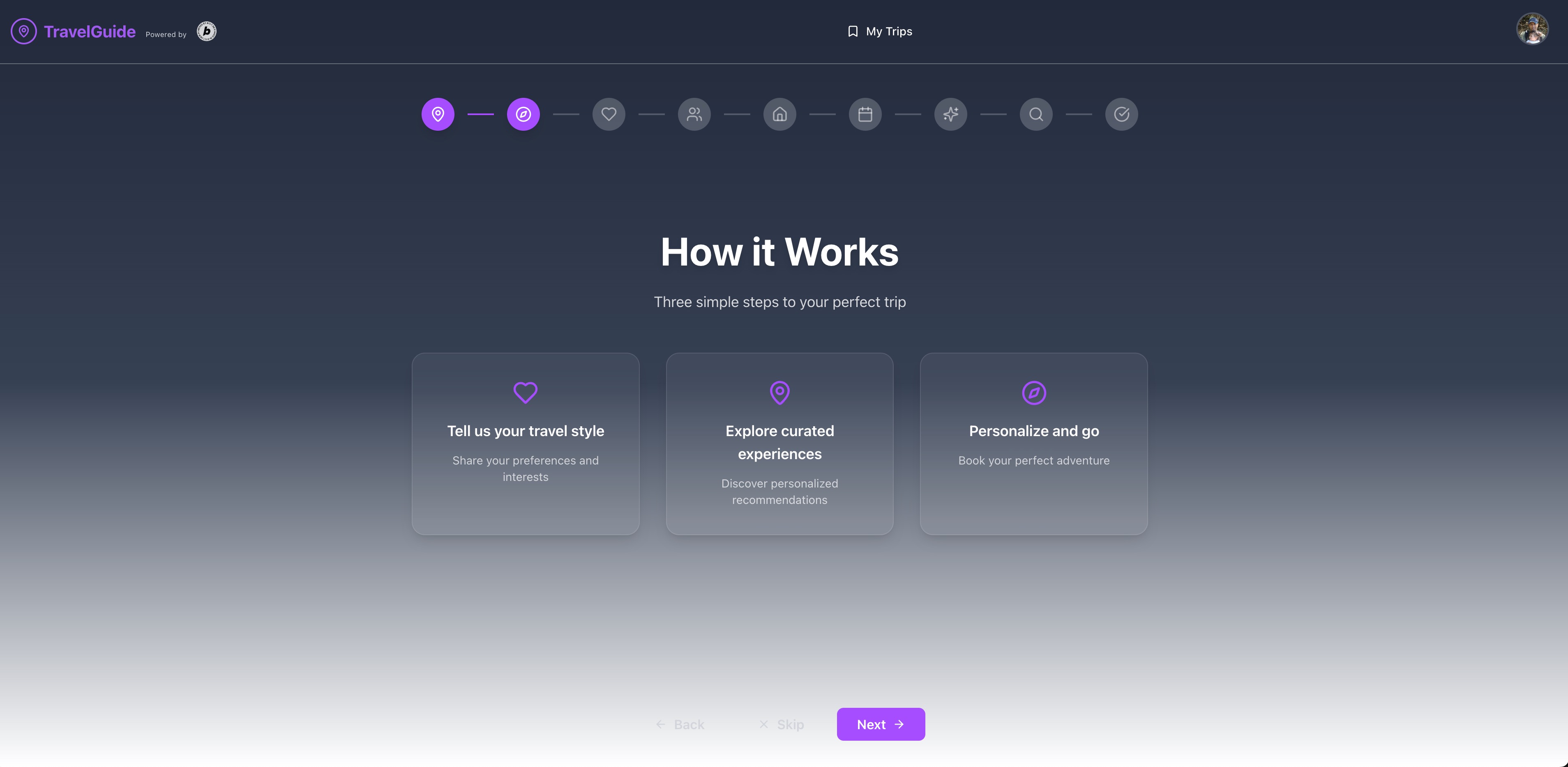
Learn about the service DNA
-
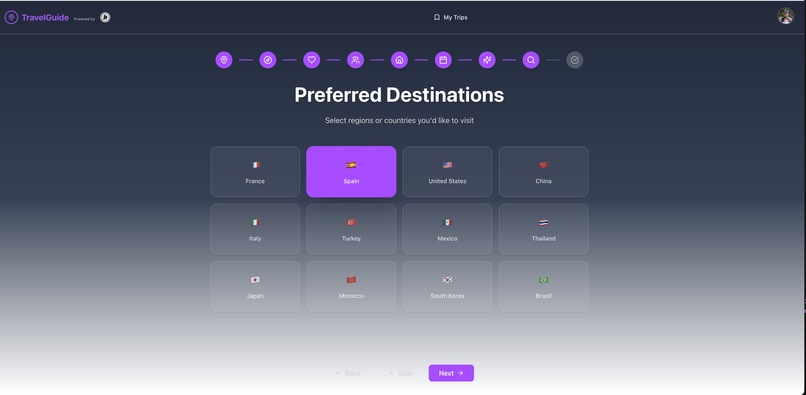
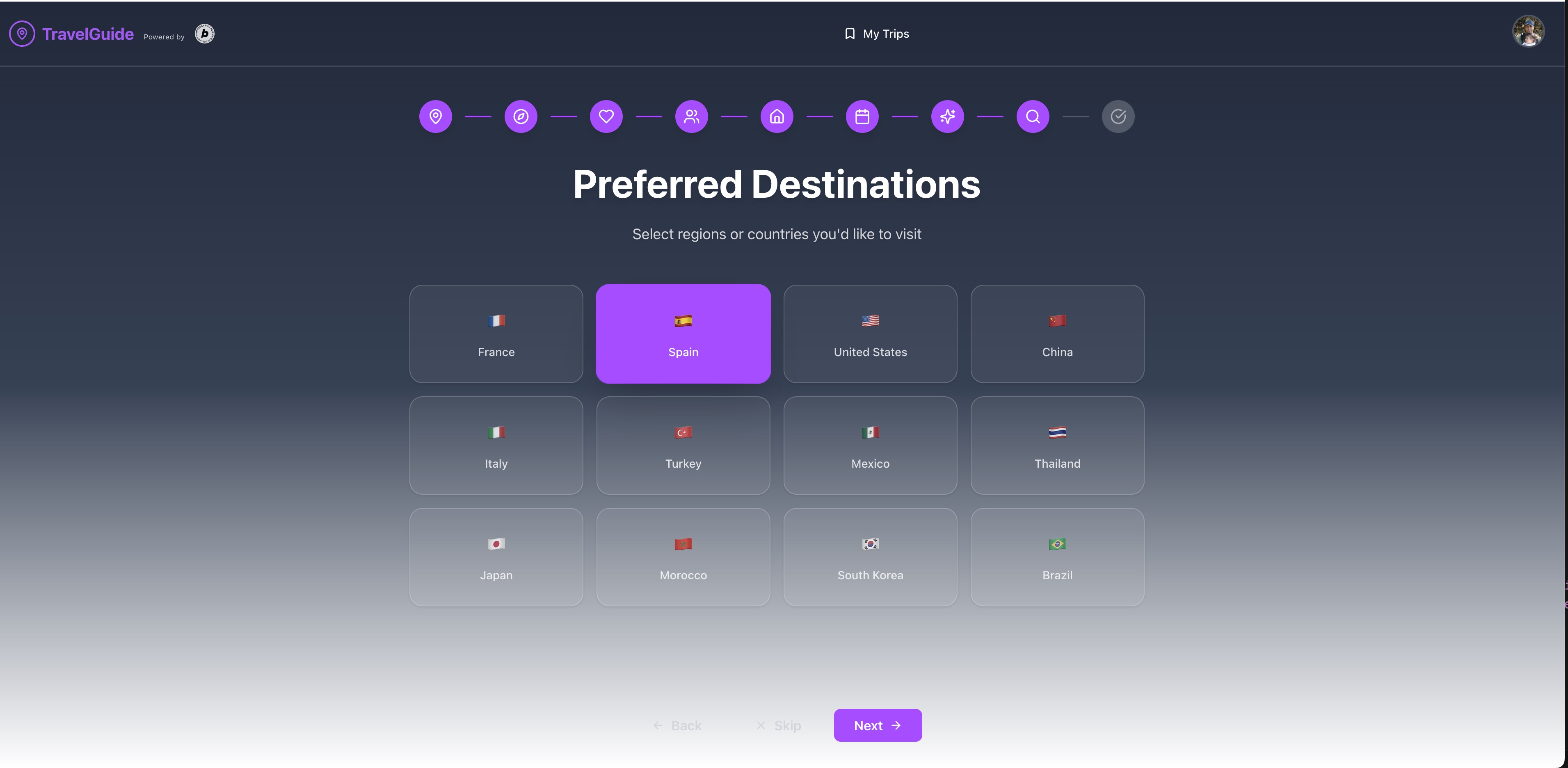
Tell us about your dream destinations
-
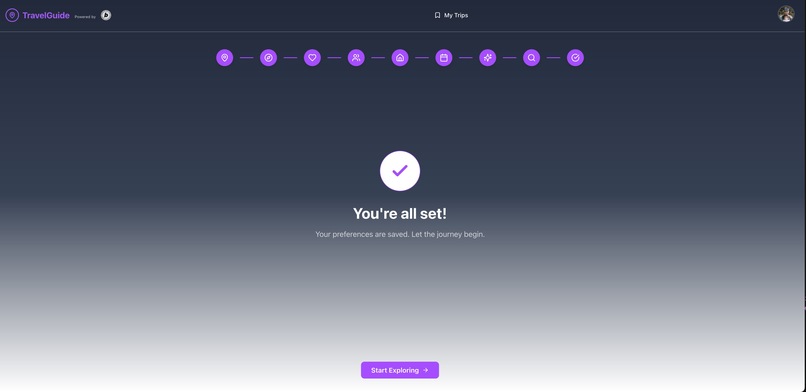
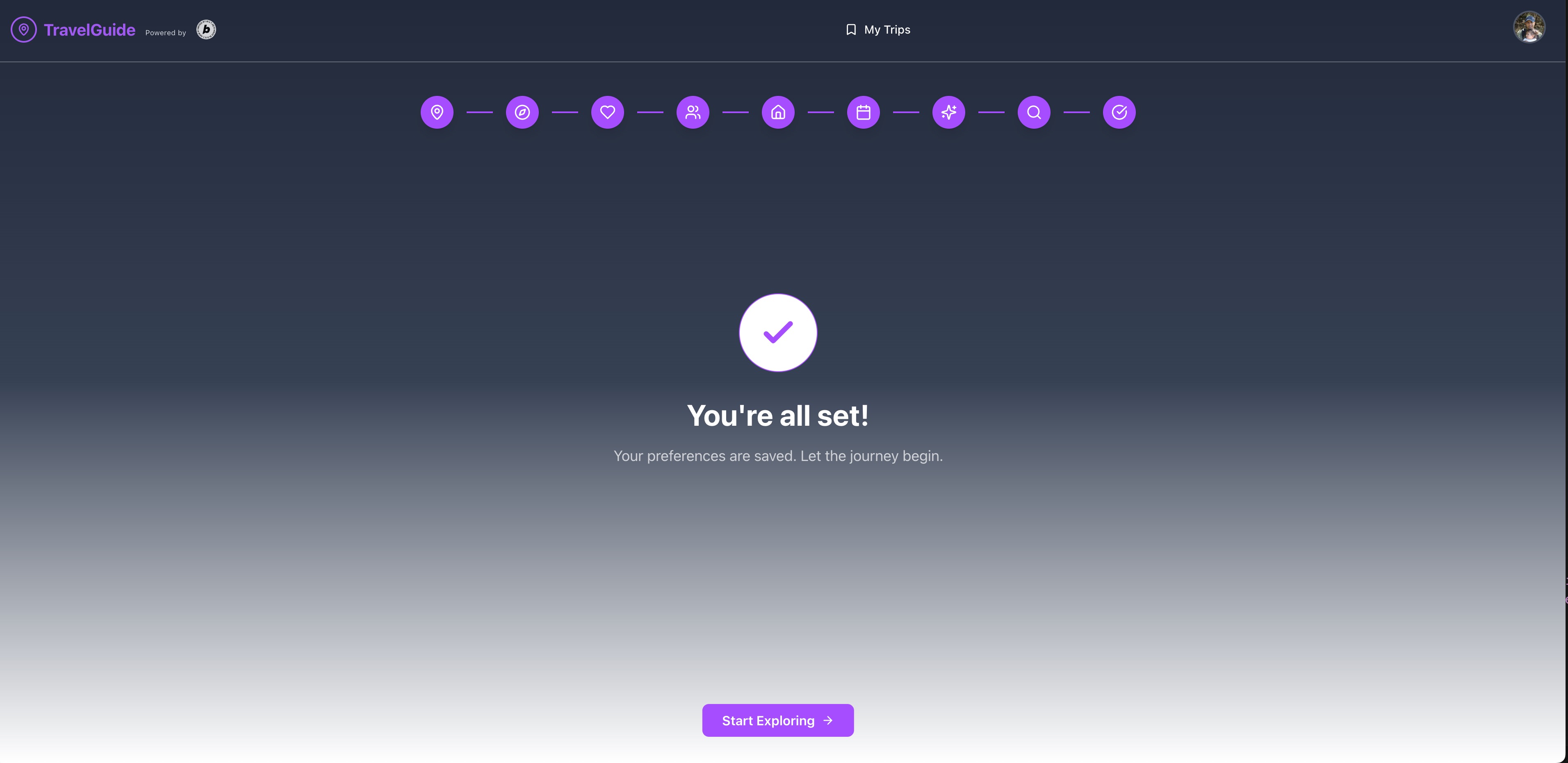
Onboarding Completed
-
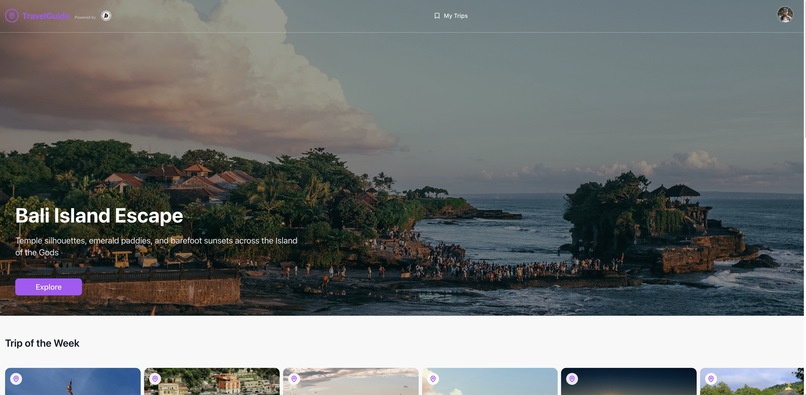
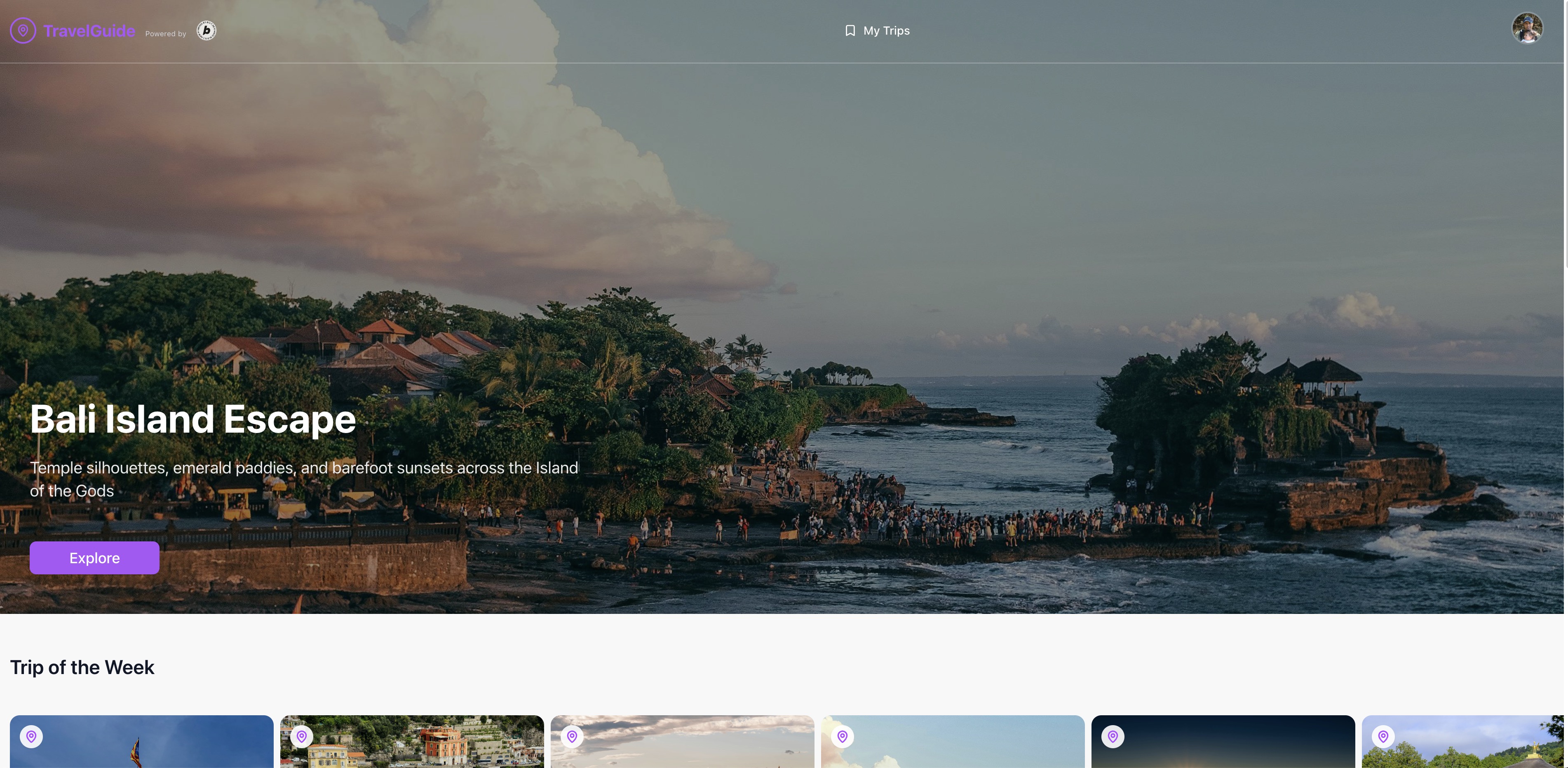
Explore Destinations 1
-
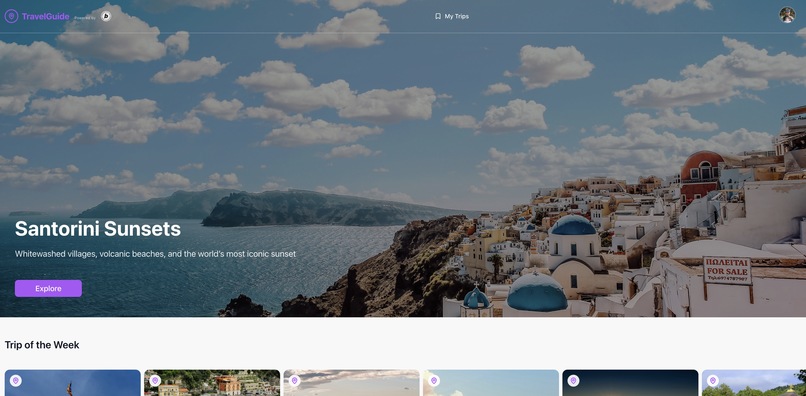
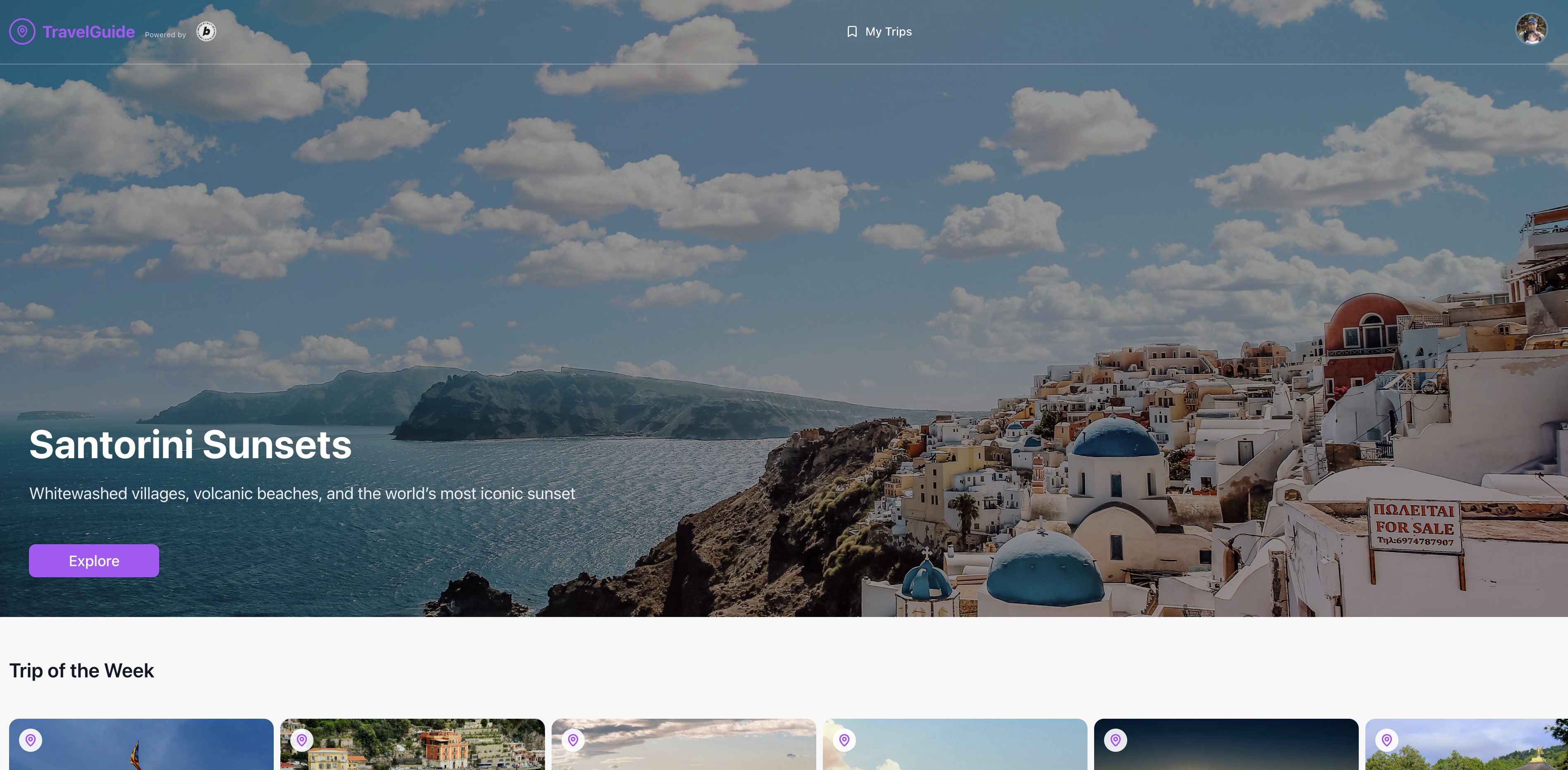
Explore Destinations 1
-
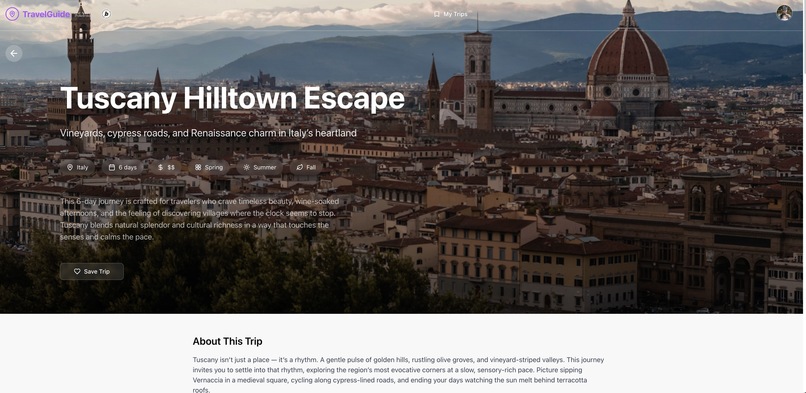
Deep Dive into trip details 2
-
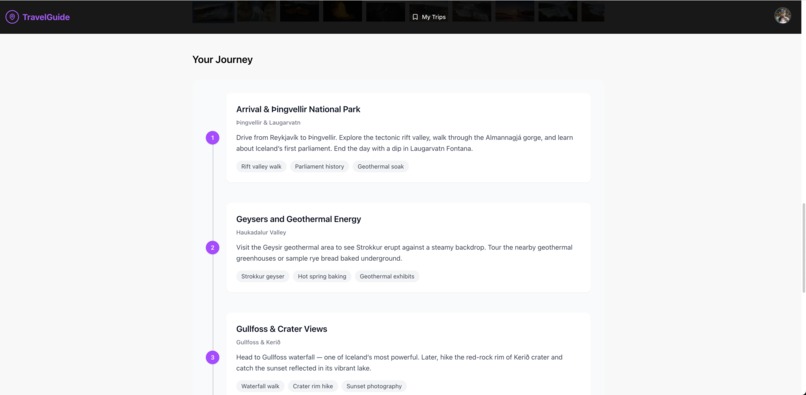
Deep Dive into trip details 1
-
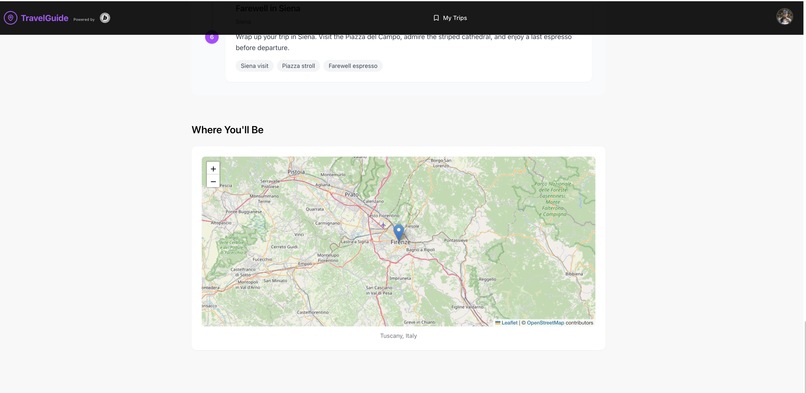
Deep Dive into trip details 3
-
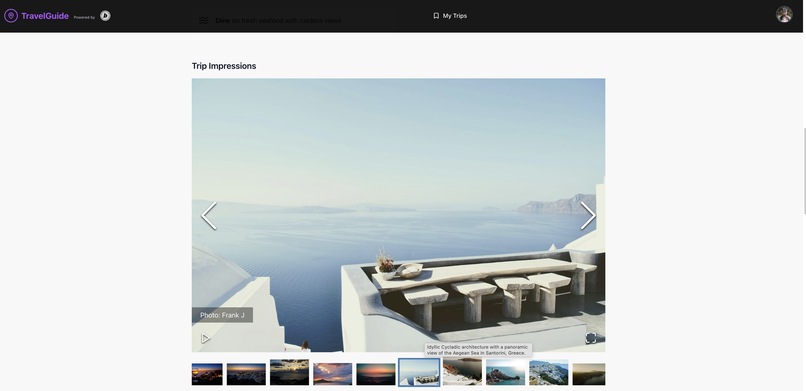
Deep Dive into trip details 4
-
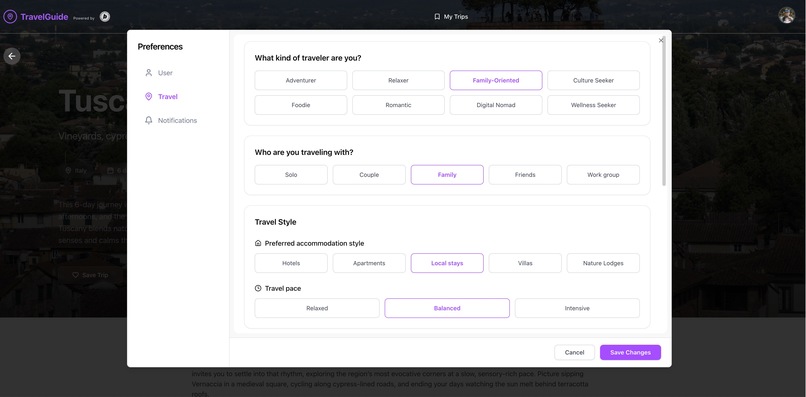
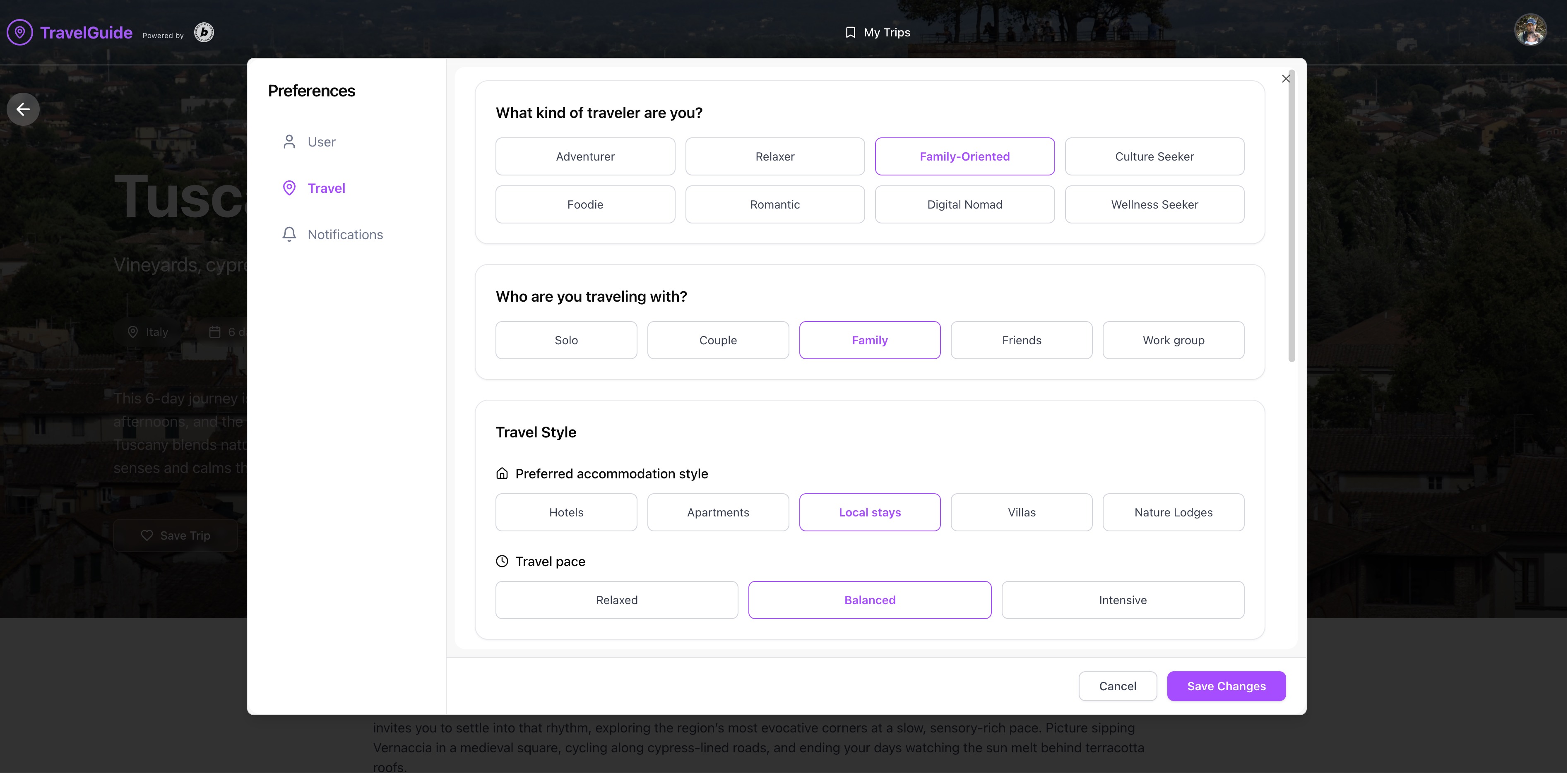
Modify your preferences
-
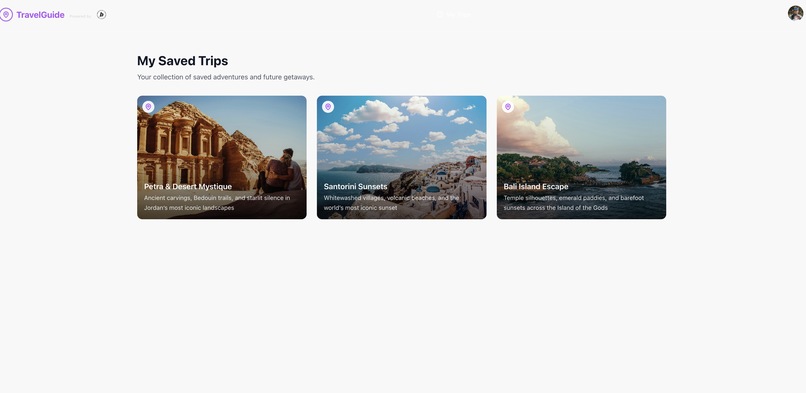
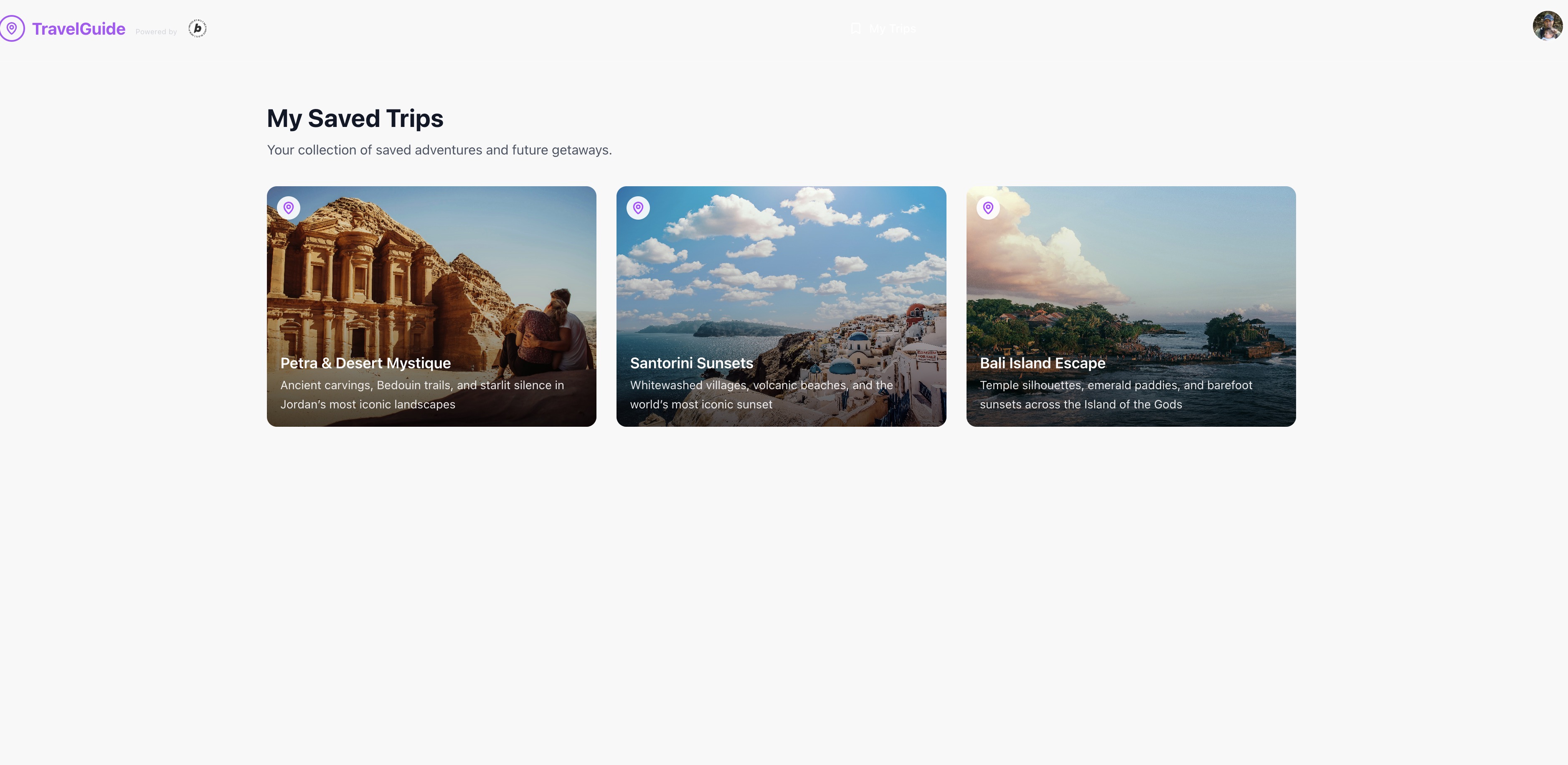
View your saved trips
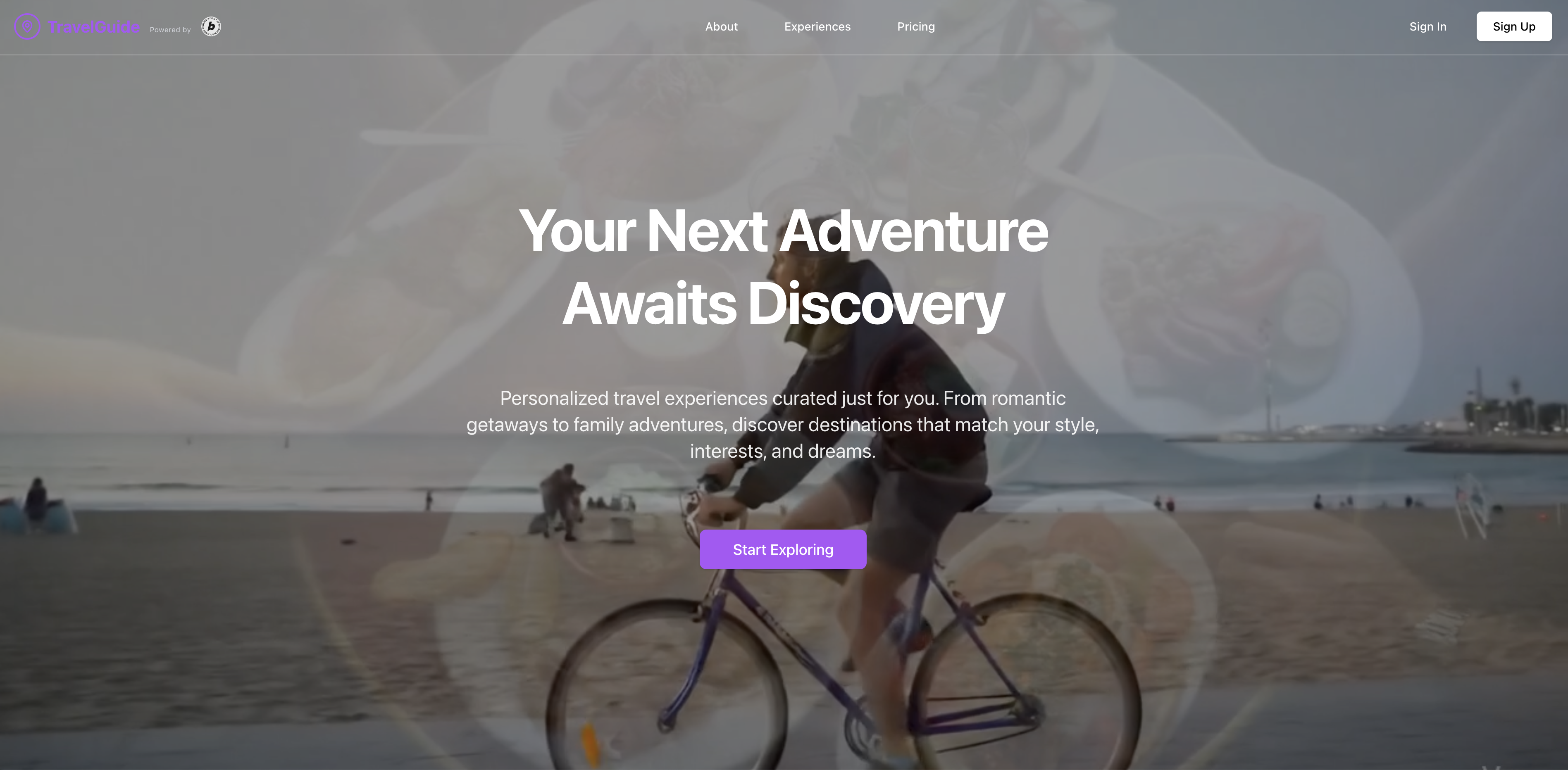
🎬 The Vision: Reimagining Travel Discovery
Travel should start with wonder—not stress.
Yet modern travel planning feels like a chore. People wade through tabs of blogs, Reddit threads, Facebook groups, booking engines, and spreadsheets. The joy of dreaming up a trip is buried under logistics and fragmented tools.
We asked: what if we could reverse the process?
Instead of starting with filters and dates, what if you started with a feeling—a vibe, a spark of inspiration? What if travel discovery felt more like browsing Netflix than filling out a form?
That’s how TravelGuide was born: a visually rich, AI-powered trip discovery platform that lets users explore complete travel plans in a streaming-style interface. We believe the future of travel starts not with bookings—but with storytelling.
Our vision represents a paradigm shift from the traditional search-and-book travel model. The “Netflix-style” analogy is not a gimmick—it’s a design principle. It means: • Visual richness: high-quality imagery, possibly short video clips, and cinematic aesthetics that make exploration feel magical. • Curated content and themes: just like Netflix organizes genres, we organize trips by vibe, interest, and user fit—not geography or filter criteria. • Discovery-first design: the interface encourages browsing, surprise, and inspiration. The homepage is not a search bar—it’s a canvas of possibilities. • Comprehensive, pre-built plans: each trip is a self-contained experience—complete with day-by-day structure, local insights, transport context, and recommendations. • A platform for planners: TravelGuide isn’t just for users—it will empower individuals and agencies to contribute, sell, and share trip plans, creating a true marketplace of experiences. • Personalization and memory: over time, we learn what excites each user and offer tailored suggestions. The more you explore, the more the system adapts.
This fundamentally contrasts with platforms like TripAdvisor, which are review-centric, search-dependent, and booking-oriented. Where TripAdvisor helps you finalize a plan, TravelGuide helps you fall in love with one.
We’re not trying to win at transactions. We’re trying to win at inspiration.
⸻
💡 What TravelGuide Does
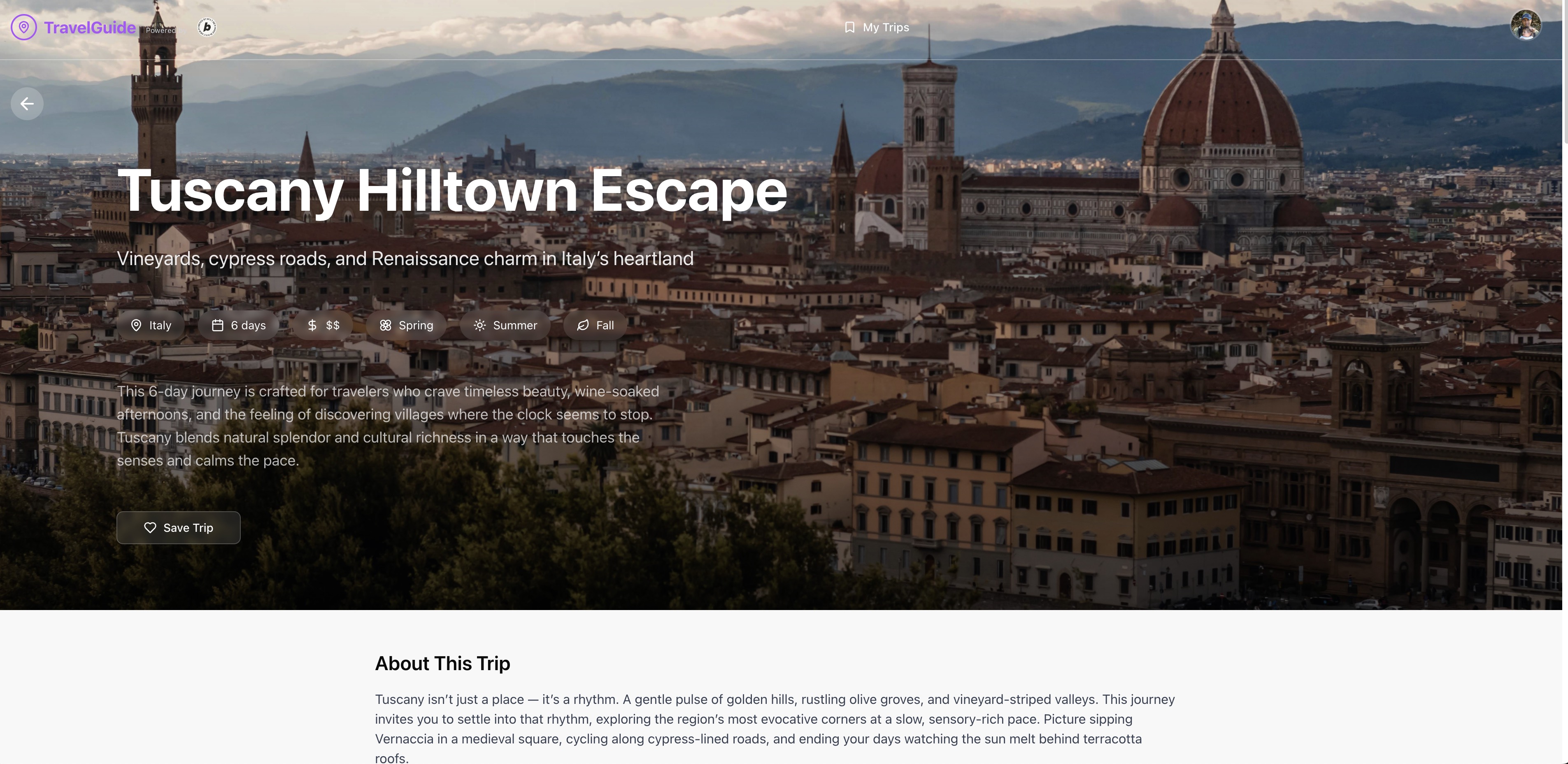
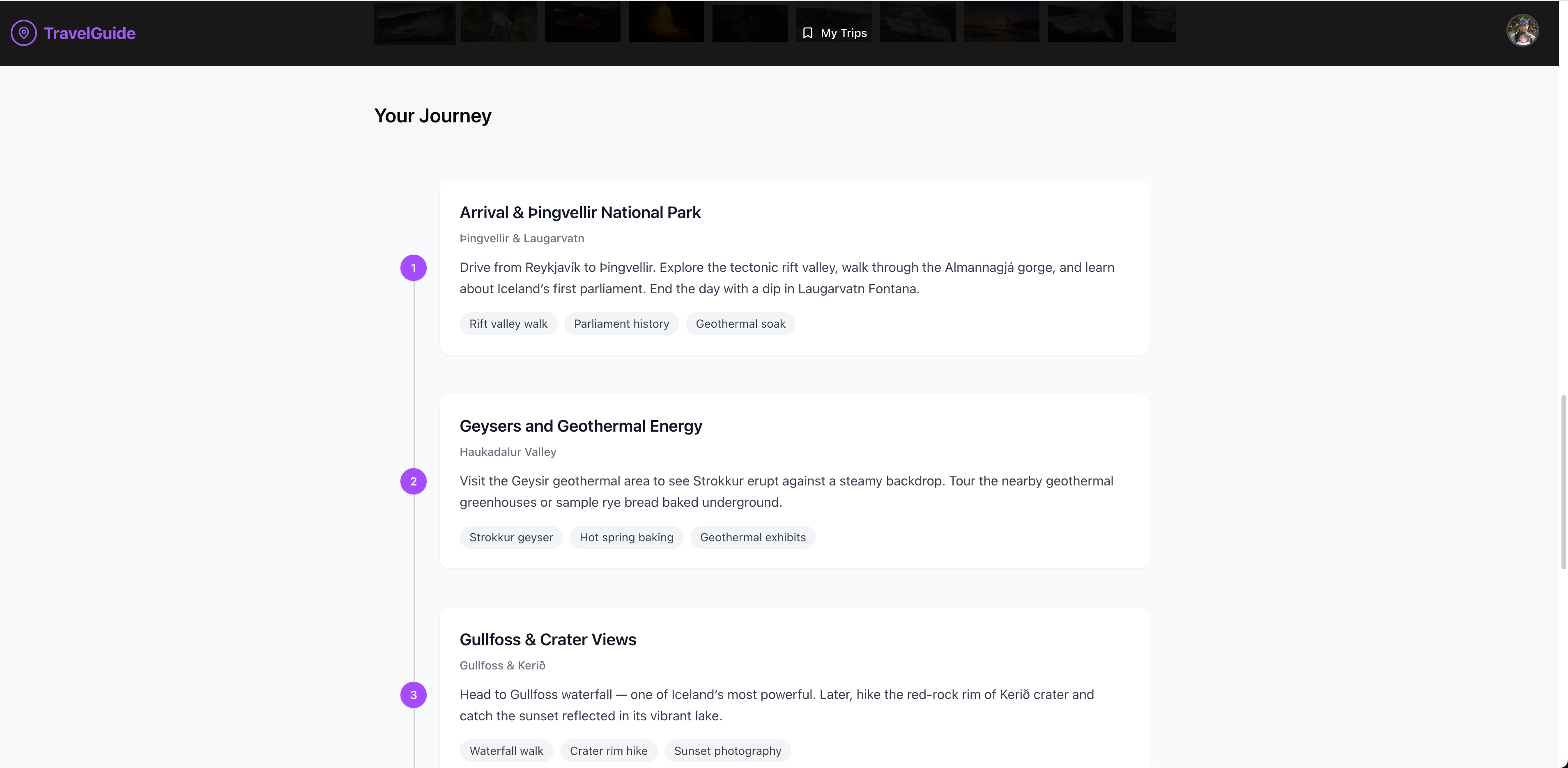
TravelGuide helps users: • Browse curated trip ideas by theme, vibe, region, or timing • Dive into immersive trip pages with daily itineraries, narrative context, and rich visuals • Save trips they love into a personal “My Trips” collection • Customize or personalize their preferences through a simple onboarding experience
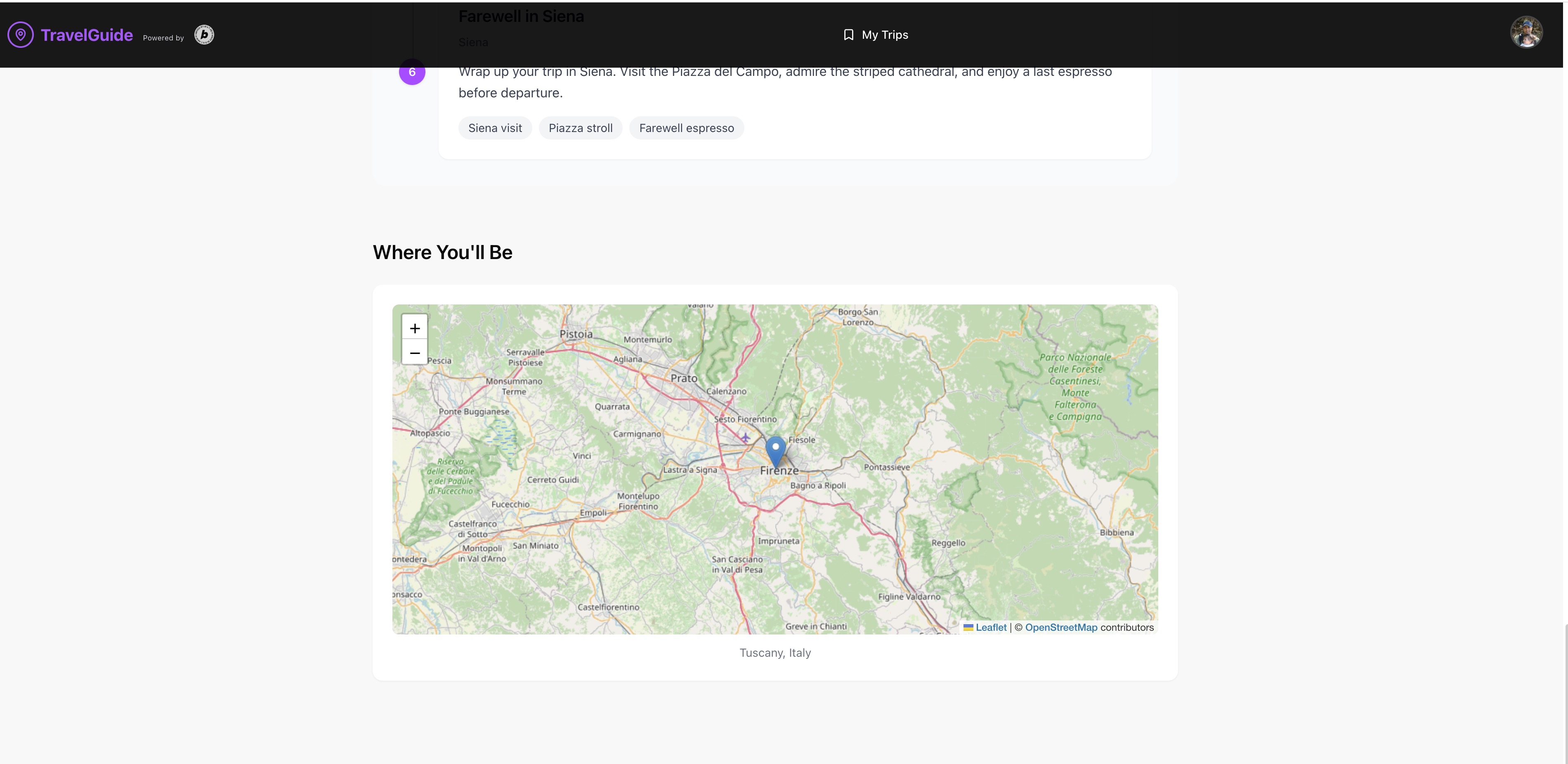
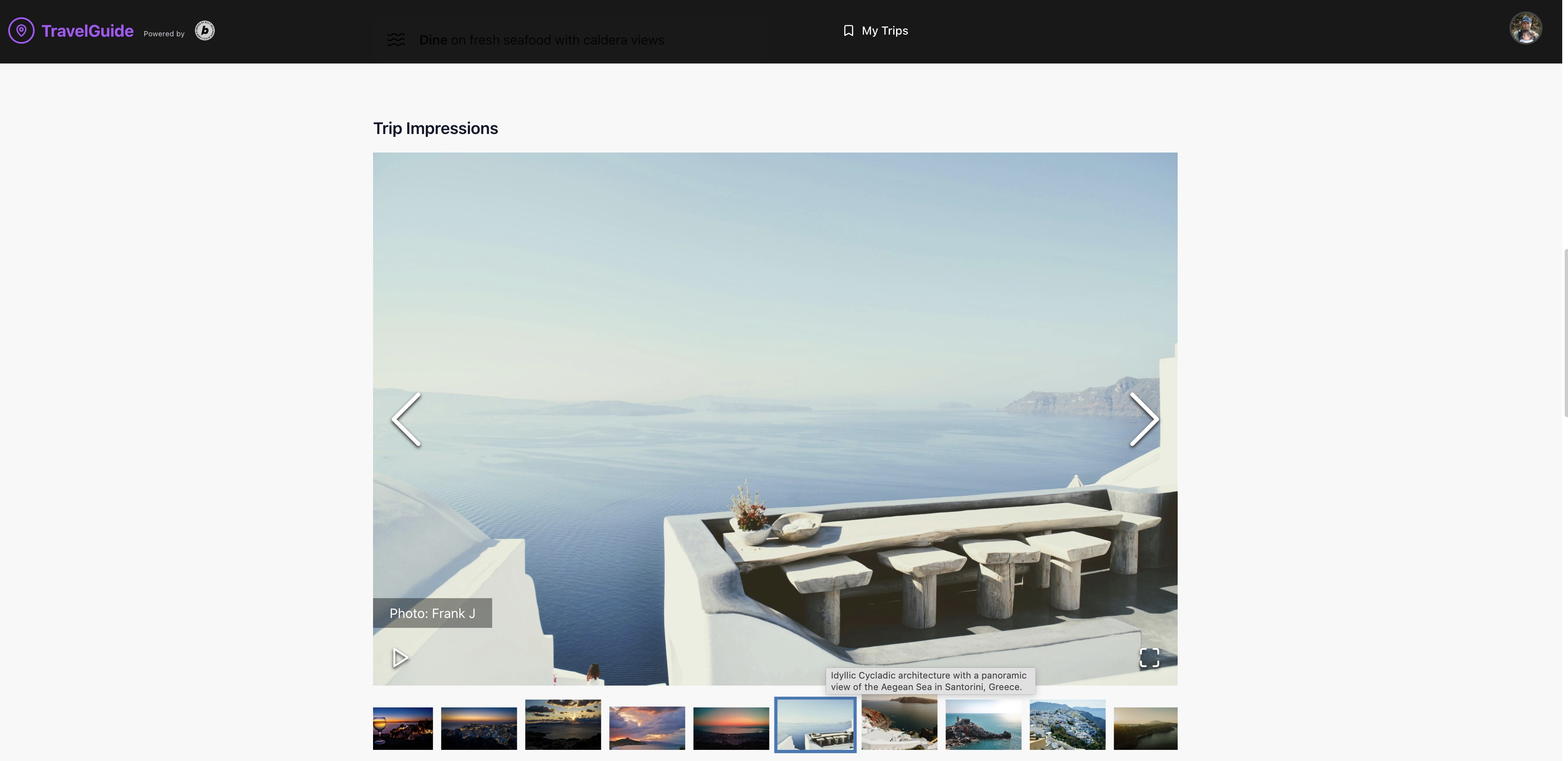
Each trip includes: • Destination name and mood • Themes and tags (e.g. nature, food, culture, adventure) • Hero imagery and gallery • A 3–5 day structured itinerary with compact descriptions • Clear UX for saving, discovering, and revisiting trips
We designed the entire experience to feel exploratory, emotional, and binge-worthy.
⸻
🔧 How We Built It
The stack: • Bolt: for rapid, visual-first prototyping of UI/UX • Supabase: for auth, user profiles, preference storage, and saved trips • Pexels API: for fetching high-quality, license-free travel photography • 21st.dev for UX & UI research. Iterating over screens and product concepts • GPT-4: for generating structured trip content (in JSON) and narrative copy • Cursor - debugging edge cases bugs
The process: • Created a unified UI system in Bolt inspired by streaming and travel brands (Netflix, Airbnb, Vercel) • Defined a structured trip schema to enable offline generation and high-quality rendering • Built features like onboarding, user preferences, trip cards, trip detail pages, and “My Trips” saved view • Integrated Supabase queries and session management to persist user state • Applied Tailwind and component logic to craft a modern, accessible interface
We iterated continuously between UX vision and backend shape to make sure everything stayed aligned.
⸻
🚧 Challenges and Key Decisions
We faced three major challenges: 1. Building the concept, not just the app Getting clarity on what makes TravelGuide different took work. We weren’t just building another itinerary viewer—we were inventing a whole new travel format. This meant defining the right abstractions (trip structure, discovery flow, personalization strategy) before a single screen was rendered. 2. Iterating on design and narrative experience Bolt allowed us to move fast, but that also meant every UX idea had to be clearly expressed as a prompt and refined visually. We tried dozens of variations of the homepage, trip layouts, image treatments, hover interactions, and so on to find what felt delightful, intuitive, and premium. 3. Engineering UX-first systems We cared deeply about responsiveness, edge-case behavior, Supabase integration quirks (e.g., .eq().single() failing silently), and maintaining a clean, extensible trip content format. This was as much an engineering challenge as a UX one.
We invested heavily in user-first thinking—every design choice was measured against how it would feel to someone discovering a trip for the first time. The polish wasn’t just surface—it was structural.
⸻
🏆 What We’re Proud Of • Designing a clean, coherent, user-first travel experience with Bolt from scratch • Building a complete end-to-end demo with sign-in, preferences, trip saving, and discovery • Crafting a content generation pipeline that produces emotionally resonant and structured trip JSONs • Keeping the entire experience lightweight, responsive, and elegant
This isn’t just a mockup—it’s the core of a product we want to keep growing.
⸻
🧠 What We Learned • Good prompting is both an art and a system design tool • Bolt can dramatically accelerate UX prototyping when paired with a strong product vision • The biggest challenge isn’t pixels or queries—it’s building something that feels different, memorable, and emotionally engaging • Travel is about story. Tech should get out of the way and let emotion lead
⸻
🚀 What’s Next for TravelGuide
This is just the beginning.
Next steps: • Open up a planner marketplace where individuals and agencies can submit their own curated trips • Add user-generated trips, with tools to remix or fork existing ones • Introduce preference learning and recommendations based on saved trips and browsing behavior • Eventually enable booking integrations—but only once we’ve nailed the discovery and emotional value of the platform
TravelGuide isn’t here to replace OTAs. It’s here to give people that spark—that magical feeling of saying, “I want to go there.”
⸻
Thanks to the Bolt Hackathon team for making this creative playground possible.
– Gil O.

Log in or sign up for Devpost to join the conversation.