-
-
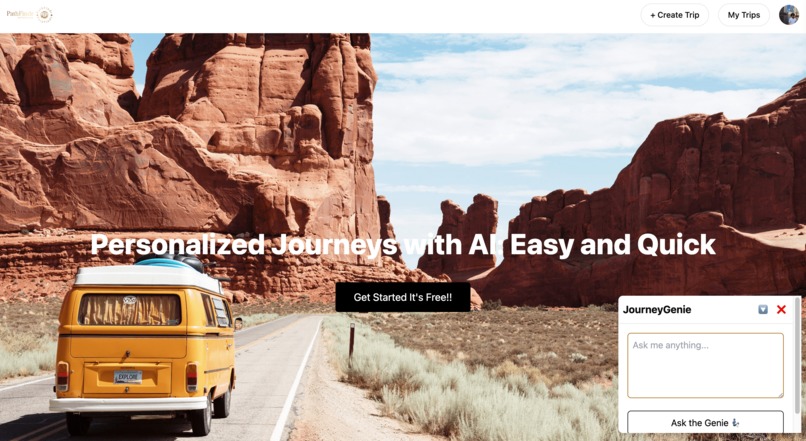
Landing Page with Journey genie
-
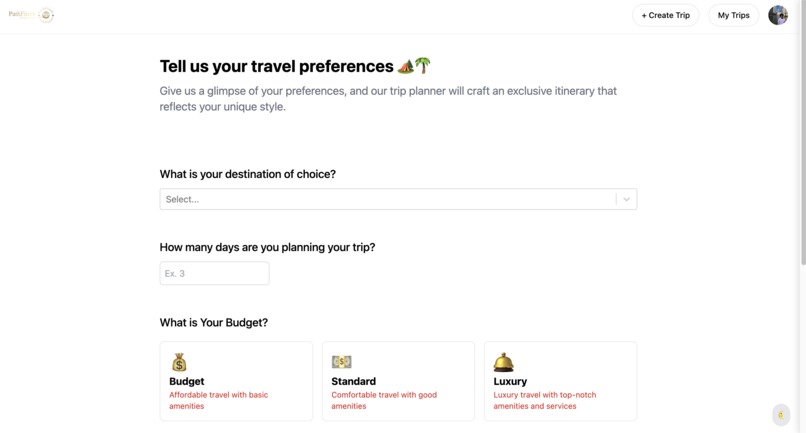
Itinerary for selection
-

Hotels suggested with the help of AI(Fetched with Google Places API)
-

Places to visit suggested with the help of AI(Fetched with Google Places API)


Inspiration
The idea for PathFindr was inspired by the desire to simplify and enhance the travel planning process. With countless travel options and personalized preferences, planning a trip can often be overwhelming. I wanted to create a tool that leverages AI to streamline this process, making it easier for users to discover, plan, and enjoy their ideal travel experiences.
What it does
PathFindr is an AI-powered travel planner designed to help users create personalized and unforgettable travel experiences. Here’s what it offers:
Personalized Trip Suggestions: Utilizing advanced AI technology, PathFindr provides tailored recommendations for destinations, activities, and accommodations based on user preferences.
Intelligent Trip Planning: The integrated AI bot, "Genie," based on the latest Gemini model, assists users by generating insightful travel suggestions and optimizing itineraries to fit their needs.
Seamless Integration: The tool integrates various data sources to offer a comprehensive travel planning experience, including local attractions, dining options, and accommodation details.
How we built it
Frontend Development: Developed the user interface using React, leveraging components for modularity and reusability. Employed Tailwind CSS for styling to ensure a responsive and visually appealing design.
AI Integration: Integrated Google’s Generative AI API to provide users with intelligent travel suggestions and personalized recommendations based on their preferences. Incorporated an AI bot, "Genie," based on the latest Gemini model, which assists users in planning their trips by offering tailored advice and suggestions.
Backend Communication: Utilized Axios for making HTTP requests to the AI service, ensuring efficient data handling and error management.
State Management: Managed state with React hooks, handling user inputs, API responses, and UI changes dynamically.
Responsive Design: Applied responsive design principles to ensure the application is user-friendly on both desktop and mobile devices.
Challenges we ran into
API Integration: Initially faced difficulties with API integration, including managing authentication and ensuring the correct usage of endpoints. Overcame this by thorough testing and debugging.
Responsive Design: Ensuring the UI was consistently functional and aesthetically pleasing across different devices was challenging. This was resolved through iterative testing and adjustments in the CSS.
Performance Optimization: Balancing performance with functionality, especially when handling large amounts of data from the AI service, required optimization strategies to maintain a smooth user experience.
Error Handling: Implementing robust error handling for API responses and user inputs was crucial to avoid disruptions and ensure a seamless user experience.
Accomplishments that we're proud of
Seamless AI Integration: Successfully integrated Google’s Generative AI API, including the latest Gemini model, to deliver personalized and intelligent travel recommendations. The addition of the AI bot, "Genie," has significantly enhanced user interactions and provided tailored trip planning assistance.
User-Centric Design: Developed a highly responsive and user-friendly interface using React and Tailwind CSS. The application provides a smooth and intuitive experience across various devices, from desktops to mobile phones.
Efficient Performance: Implemented performance optimization strategies that ensure the application runs smoothly even when processing large volumes of data. This has resulted in a fast and responsive user experience.
Dockerized Deployment: Dockerized the project to streamline the deployment process and ensure consistency across different environments. This has improved the ease of deployment and scalability of the application.
Implemented DarkMode and customized the application to work across all platforms and devices
What we learned
- AI Integration: I deepened my understanding of integrating AI services into web applications. Working with Google’s Generative AI provided valuable insights into natural language processing and content generation.


Log in or sign up for Devpost to join the conversation.