-
-
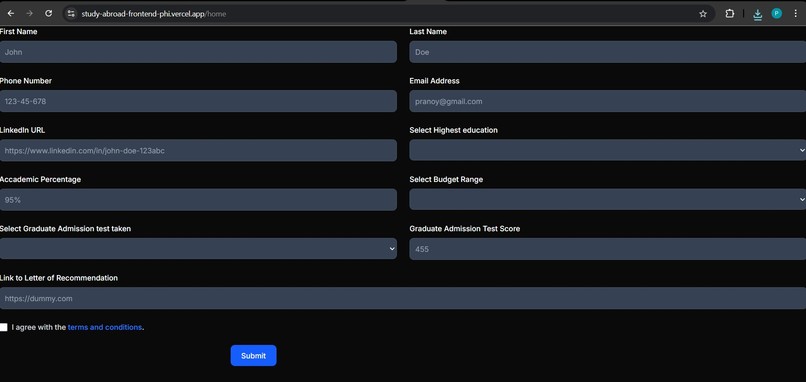
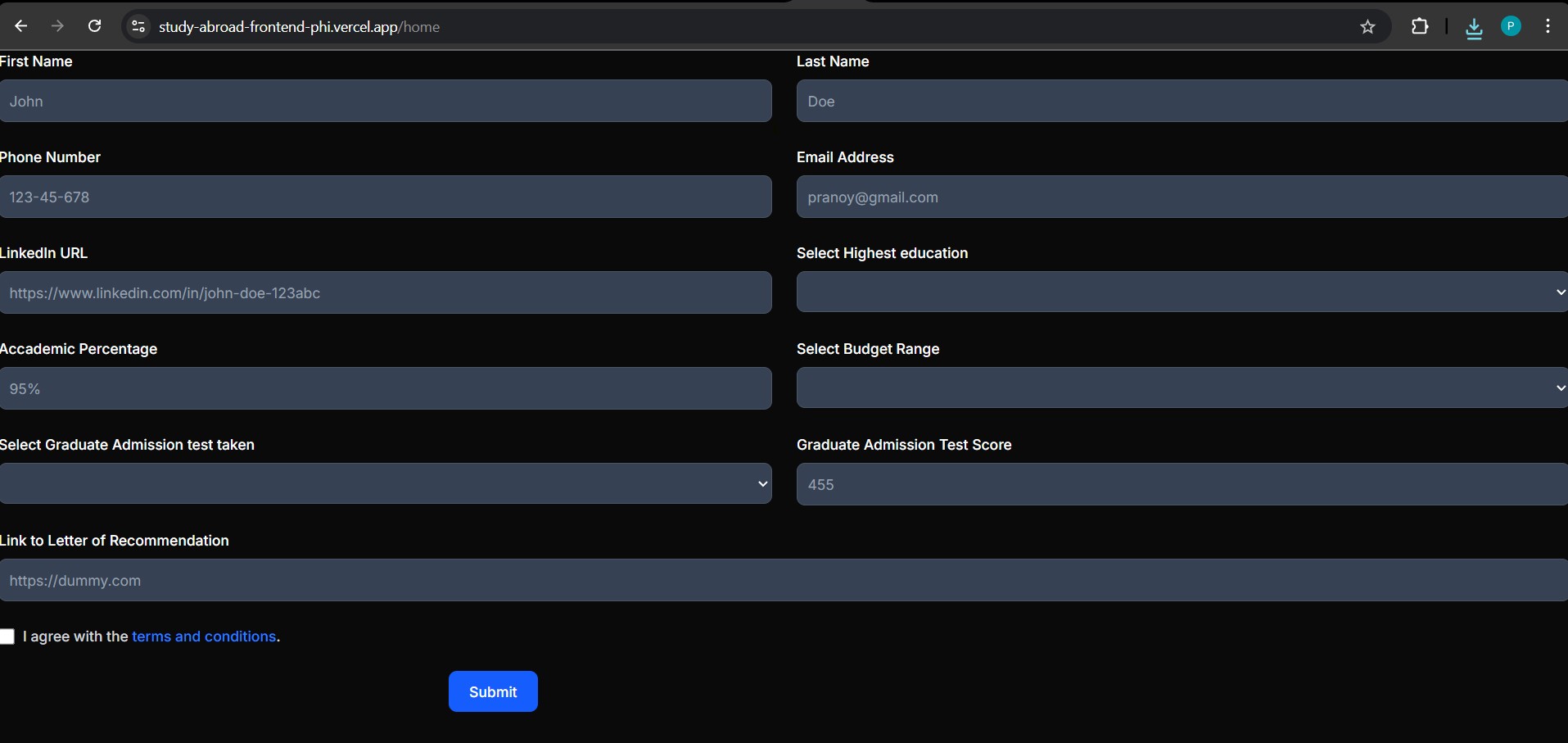
Home Page
-
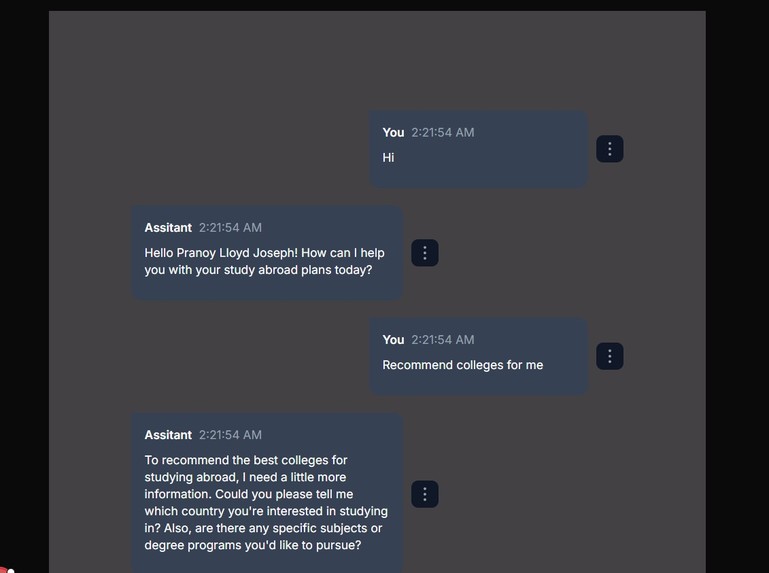
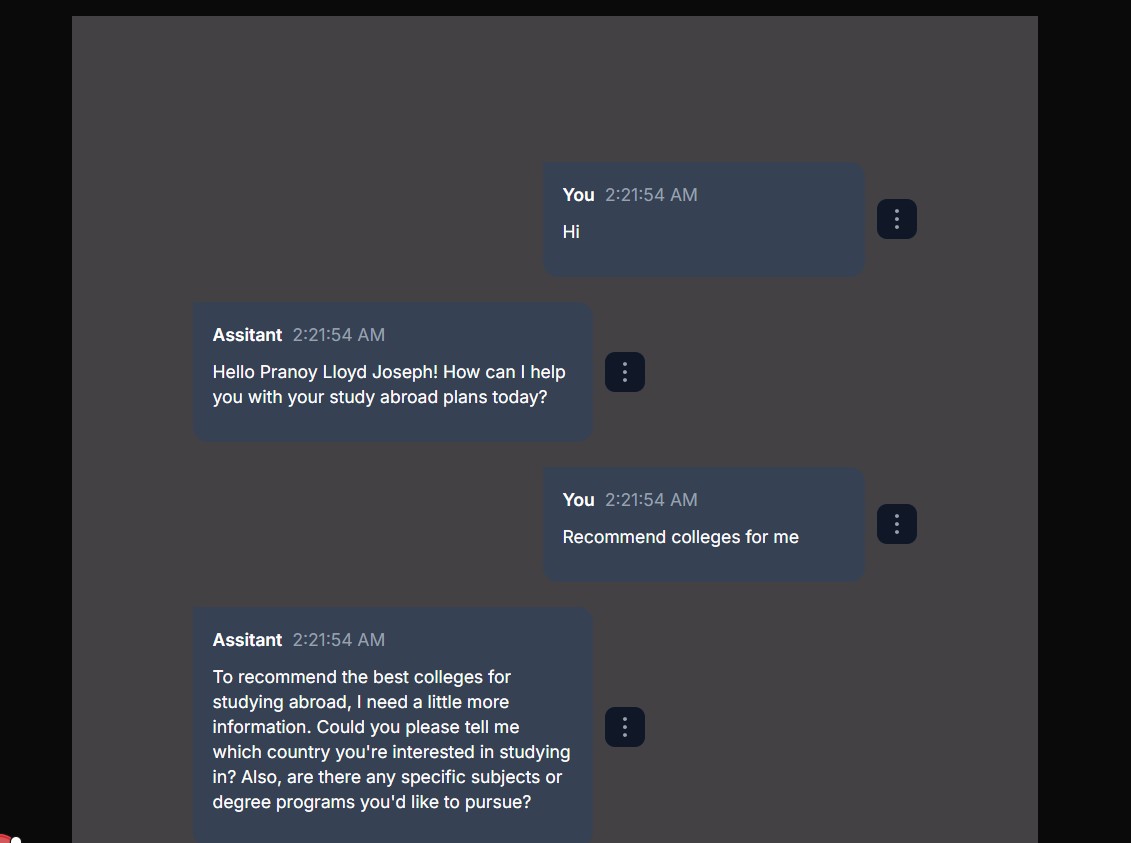
Chat Interface
Inspiration
Planning to study abroad can be an overwhelming and complex process—students must research universities, check visa requirements, prepare documents, estimate costs, and more. Many drop out midway due to lack of clarity or guidance. We wanted to create a centralized, intelligent AI system that can guide students through this journey step by step, making it less stressful and more structured.
The idea was to simulate a personal study-abroad consultant, available 24/7, powered by smart agents trained to assist with each aspect of the process.
What it does
Study_Abroad_AI_Planner is an AI-powered web app designed to help students seamlessly plan their journey to study abroad. It features a Root Agent that interacts with the user and coordinates with seven specialized subagents to provide targeted assistance:
Subagents: User Information Agent: Collects and stores essential user details like country preference, budget, academic background, etc.
College Finder Agent: Recommends the top 5 colleges based on user preferences (country, budget, academic goals).
College Selector Agent: Allows the user to choose a preferred college from the list and stores the selection.
Resume Builder Agent: Gathers relevant information (education, experience, skills) from the user and generates a professional PDF resume.
Visa Process Agent: Provides a country-specific, step-by-step visa application guide, tailored to the user's profile.
PDF Visa Agent: Converts the visa guide into a neatly formatted PDF document for offline access.
Weather Agent: Displays current weather information for the country the user is planning to move to.
Each agent operates independently but is orchestrated by the root agent to ensure a smooth and contextual conversation flow.
How we built it
We built the project using a mix of modern AI tools, web frameworks, and database technologies:
AI & Agent Framework:
Used Google ADK (AI Developer Kit) with the Gemini 2.0 Flash model to build and integrate AI agents.
Orchestrated subagents via Python scripts and prompt chaining.
Frontend:
Built using Next.js for a responsive and performant web interface.
Backend & Agent Logic:
Implemented in Python, using FastAPI to handle API calls from the frontend.
Database:
Used SQLite3 to store session data, selected colleges, and user resumes.
PDF Generation:
Leveraged Python libraries like reportlab and fpdf to create downloadable PDF files for resumes and visa guides.
Weather Data:
Integrated real-time weather updates.
Challenges we ran into
Multi-agent orchestration: Coordinating responses between the root agent and multiple subagents required careful state and context management. We had to ensure each agent understood the user's stage and passed the right data forward.
Prompt engineering: Getting the Gemini 2.0 Flash model to respond correctly and consistently for different use cases (e.g., building a resume vs. giving visa steps) required extensive tuning and testing.
PDF generation: Building clean, structured PDFs dynamically was more complex than expected, especially ensuring proper formatting across browsers and devices.
Accomplishments that we're proud of
Successfully built and deployed a fully functional, AI-powered multi-agent system in a hackathon setting.
Developed a smart resume builder and PDF visa assistant that students can use immediately.
Created a modular design that makes it easy to extend or replace subagents in the future.
Ensured a smooth and engaging conversational user experience powered by Gemini 2.0 Flash.
What we learned
How to integrate Google ADK and utilize the Gemini 2.0 Flash model in real-world scenarios.
The power of breaking complex tasks into task-specific agents to build scalable AI systems.
Improved our skills in prompt engineering, Python automation, and Next.js frontend development.
Gained insights into the user experience design for conversational AI applications.
Learned to manage cross-functional coordination (frontend, backend, AI, databases, external APIs) efficiently.
What's next for Study_Abroad_AI_Planner
We’re excited about the potential of this platform and plan to:
Integrate more agents such as flight booking assistants, accommodation finders, and cultural orientation bots.
Add voice interaction capabilities for a more immersive user experience.
Support more languages to make the planner accessible globally.
Build an analytics dashboard to track user preferences and improve recommendations.
Launch a mobile app version for easier access on the go.
Built With
- flask
- google-adk
- nextjs
- node.js
- python
- tailwind
- typescript


Log in or sign up for Devpost to join the conversation.