-
-
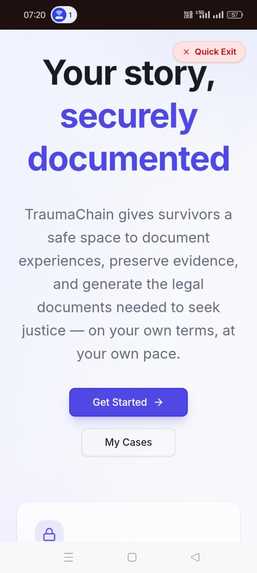
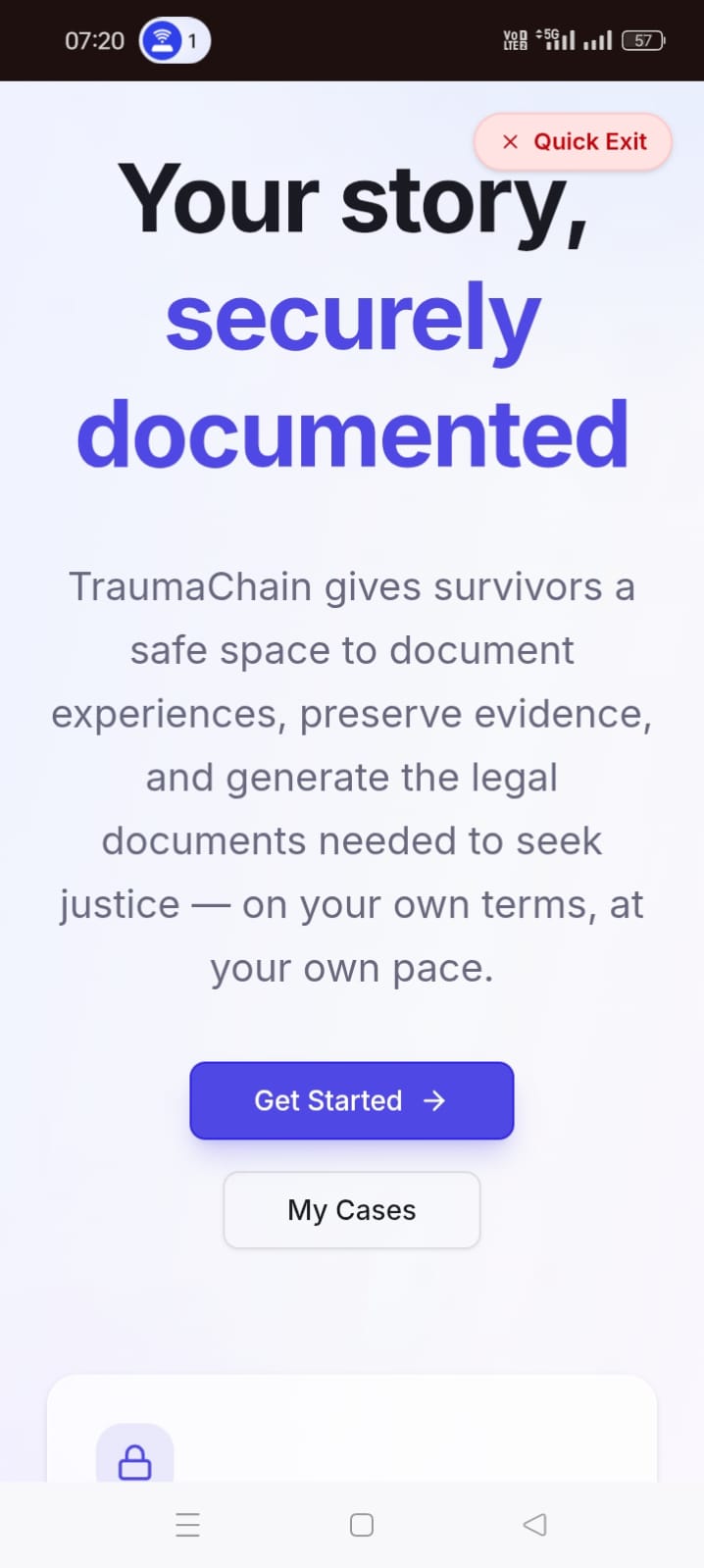
front page
-
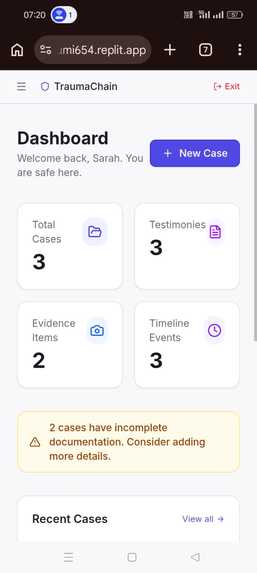
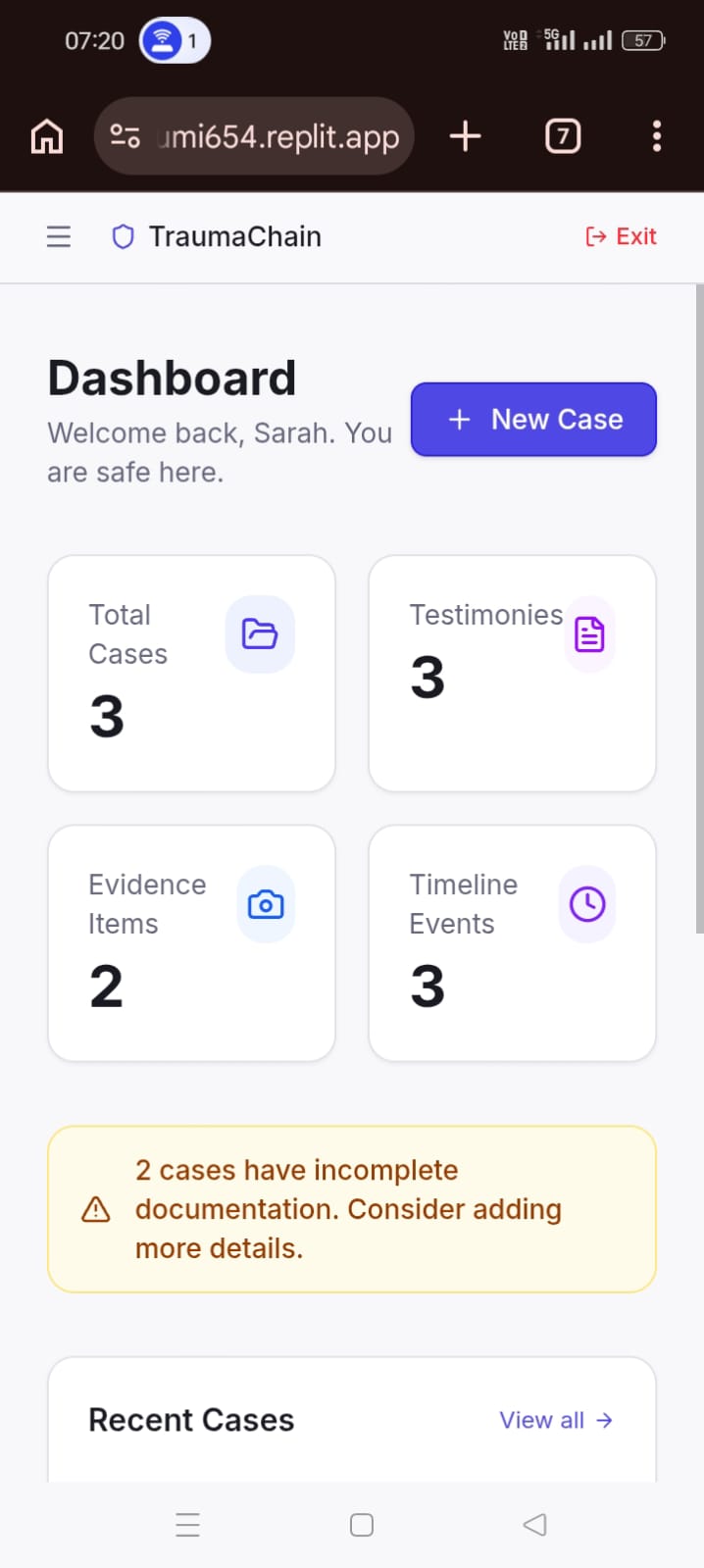
dashboard
-
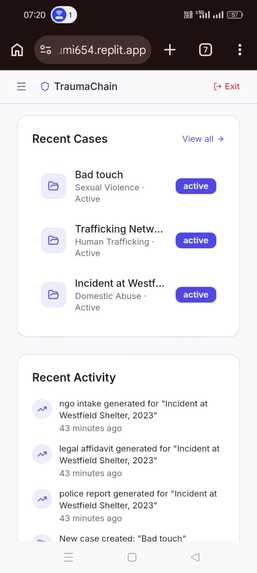
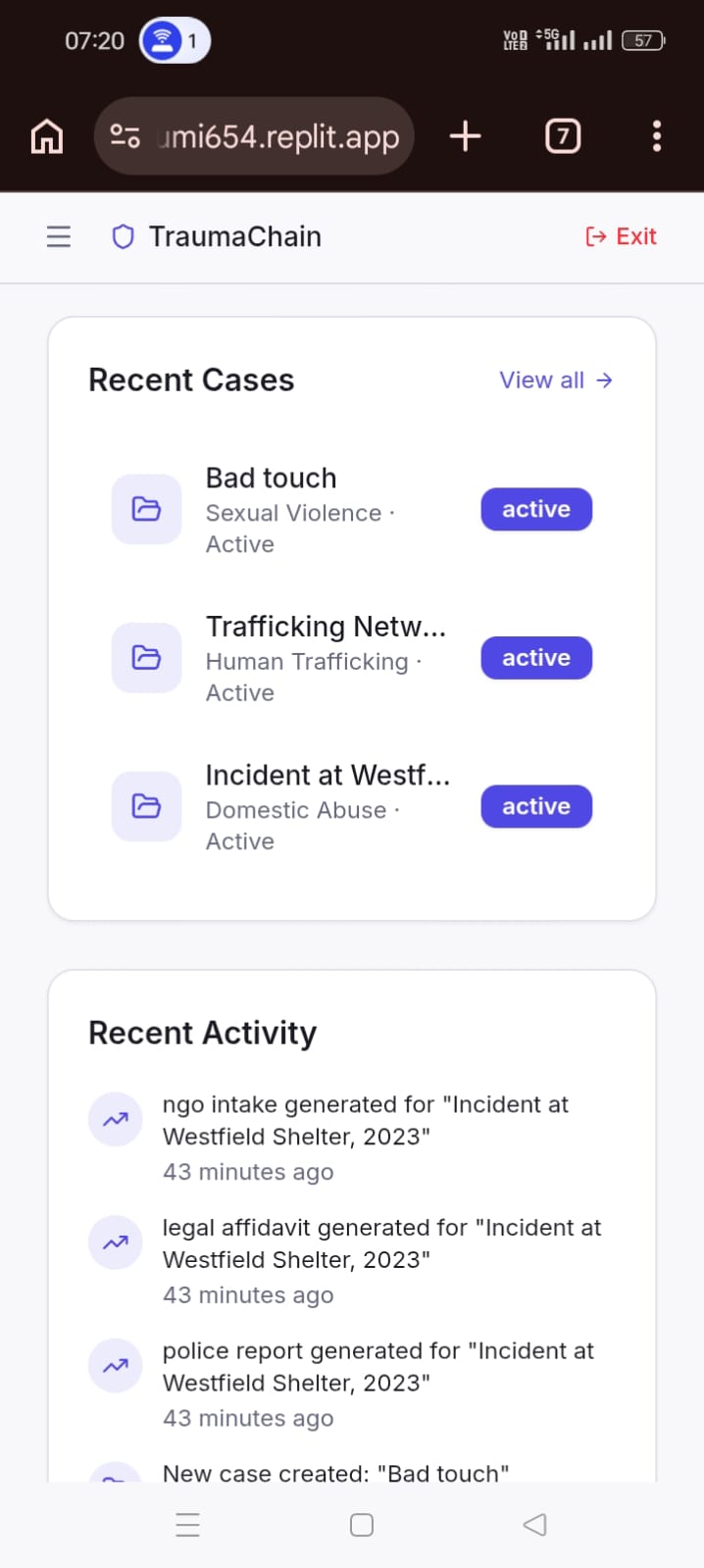
cases
-
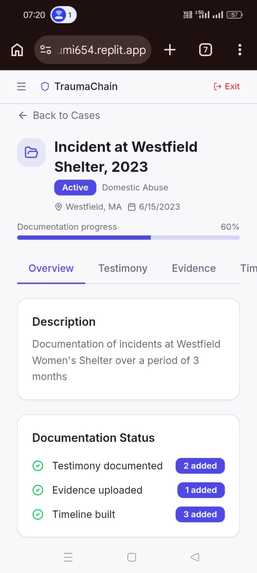
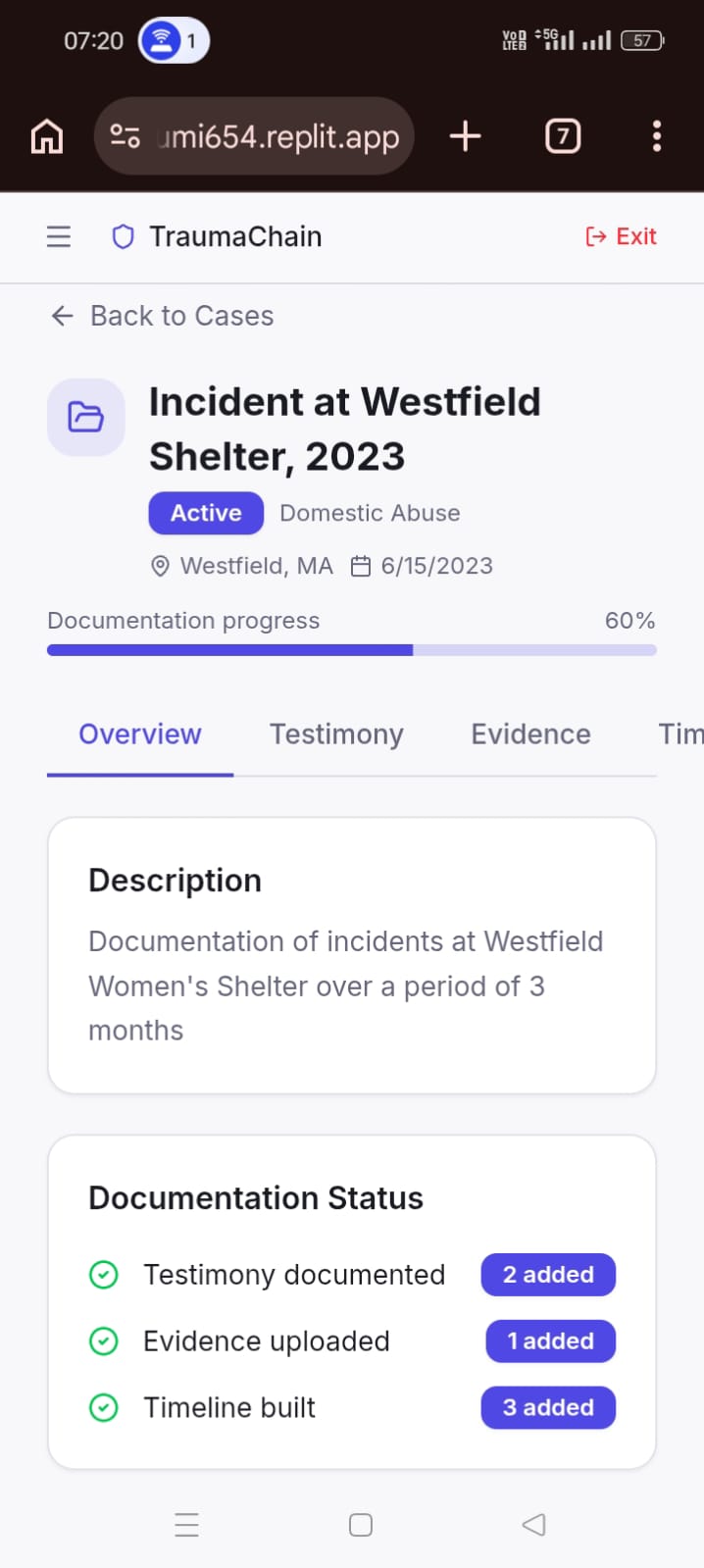
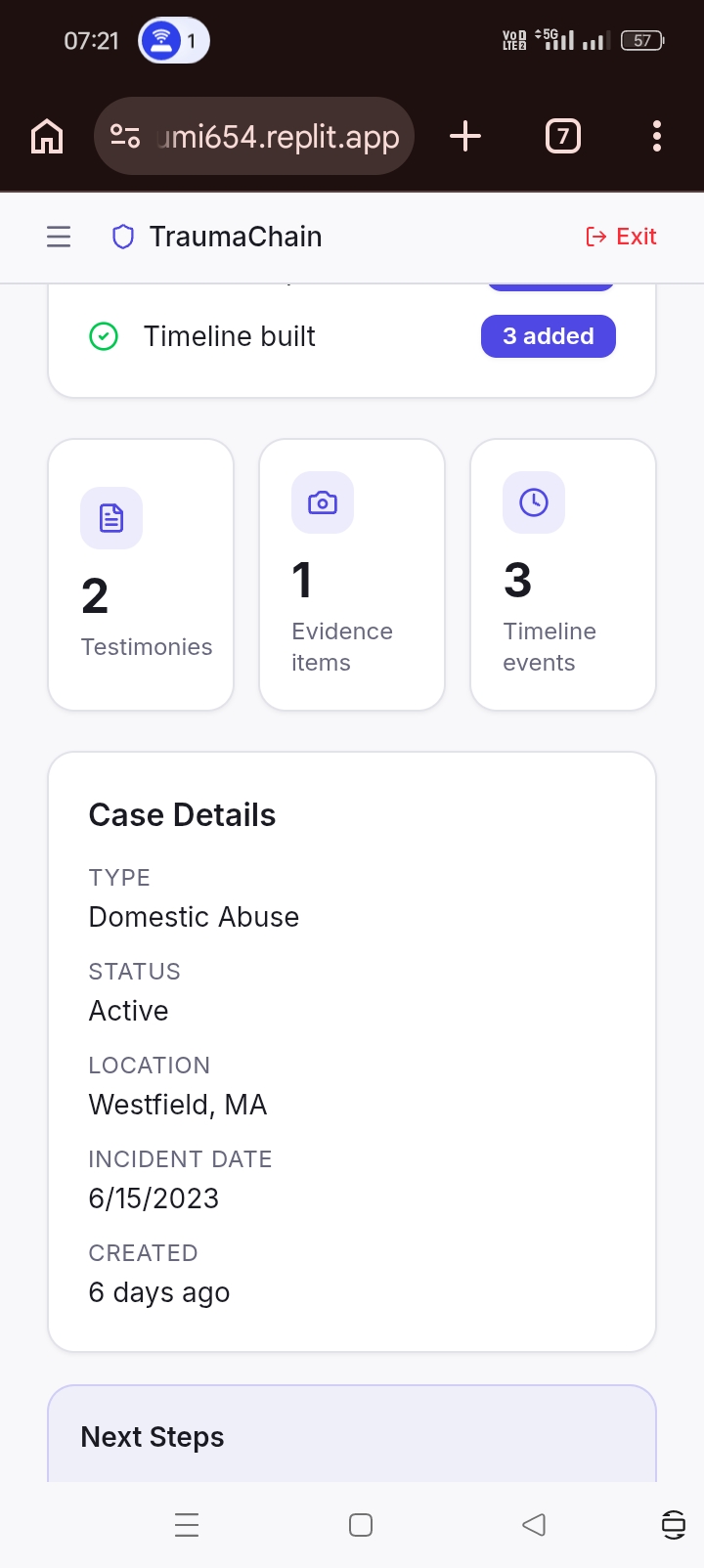
case overview page
-
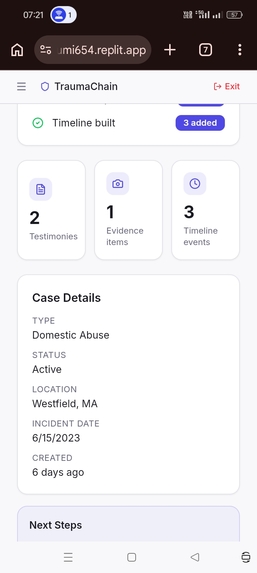
case overview page
-
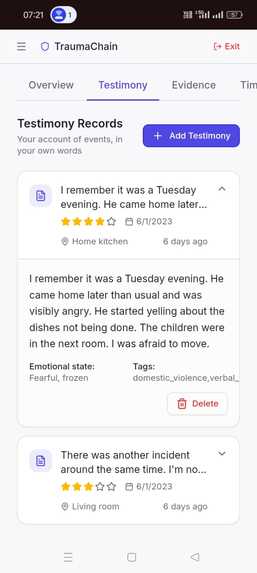
case chat history
-
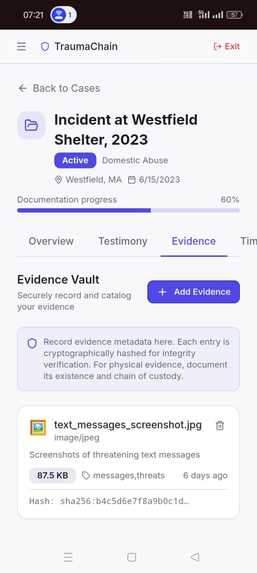
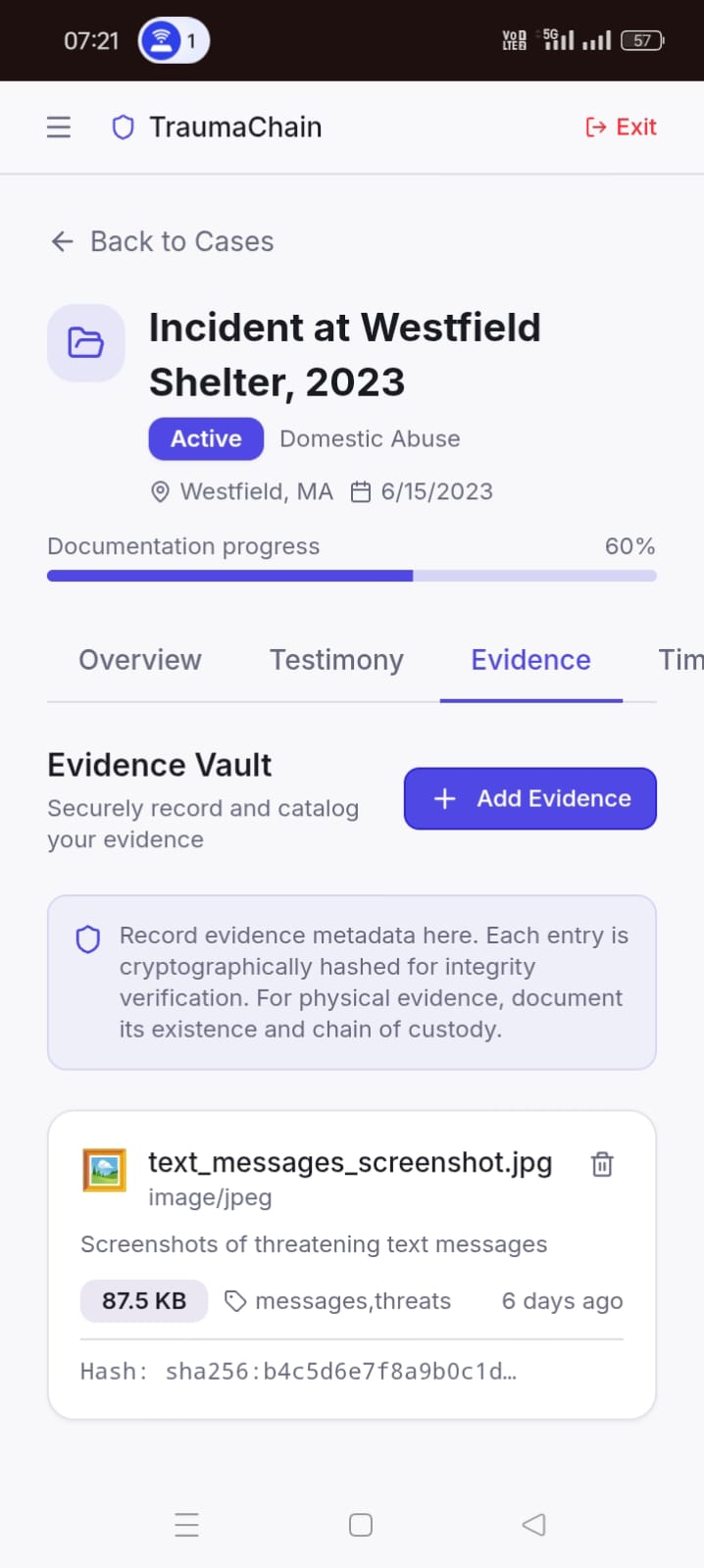
evidence vault
-
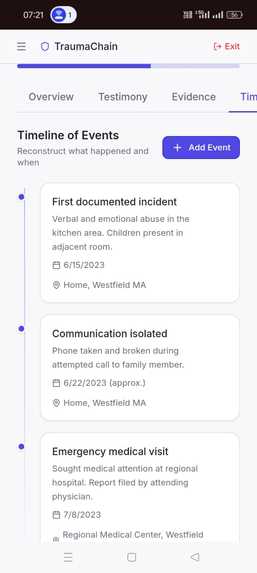
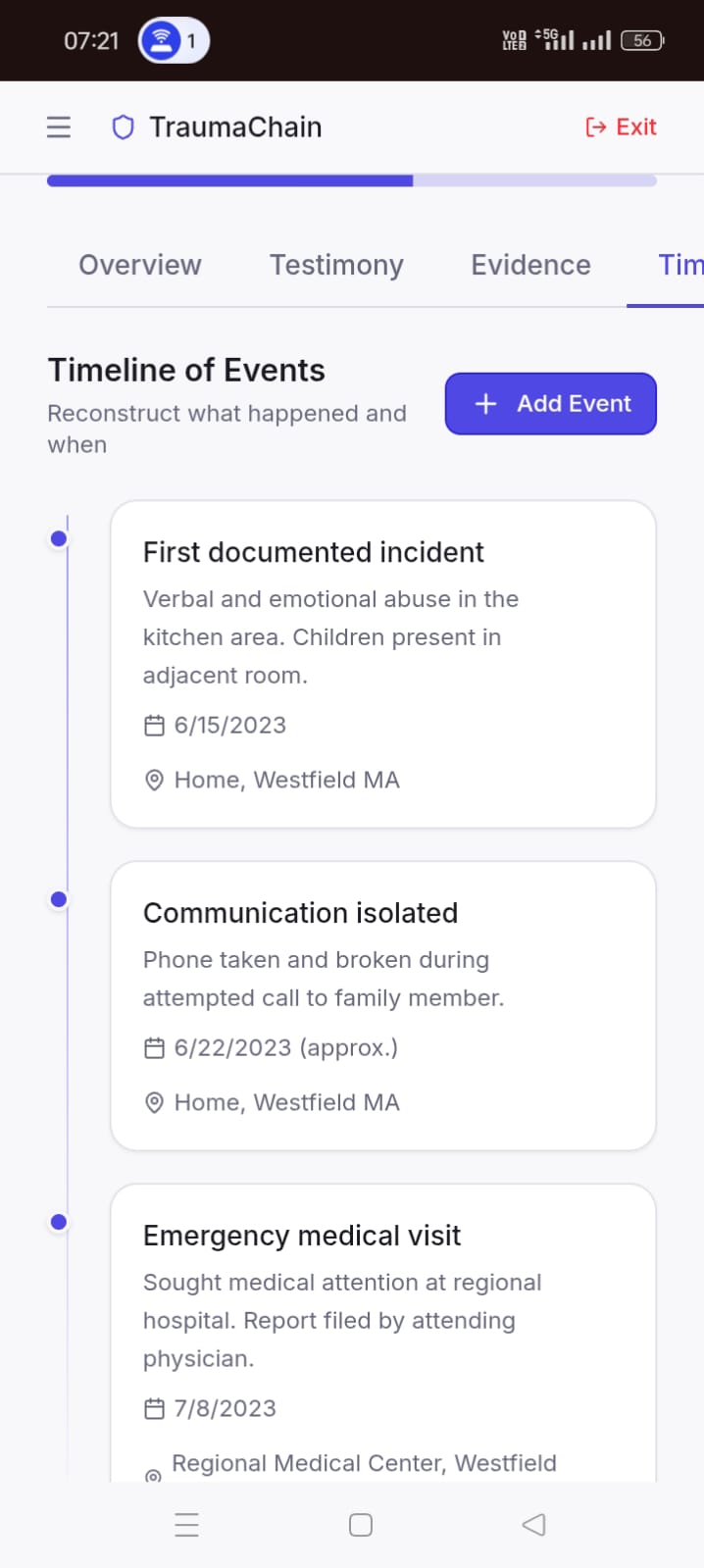
timeline summary
-
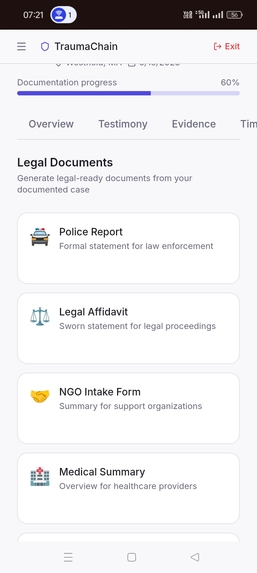
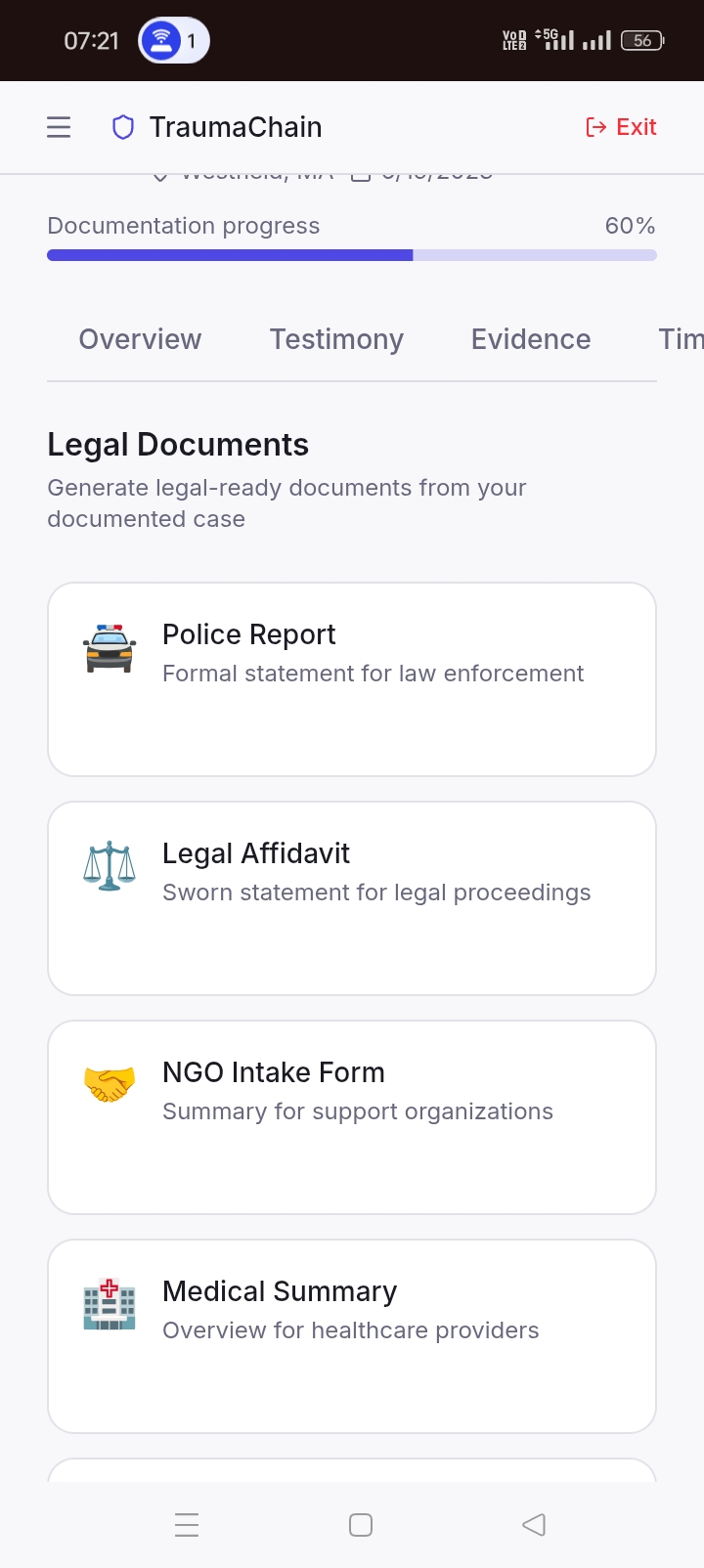
report generation
-
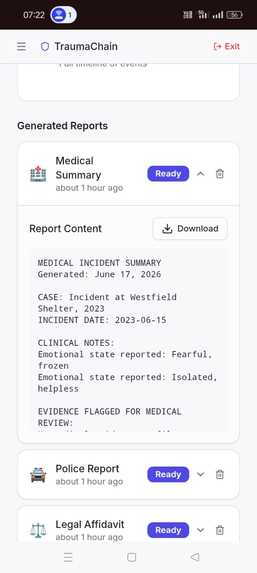
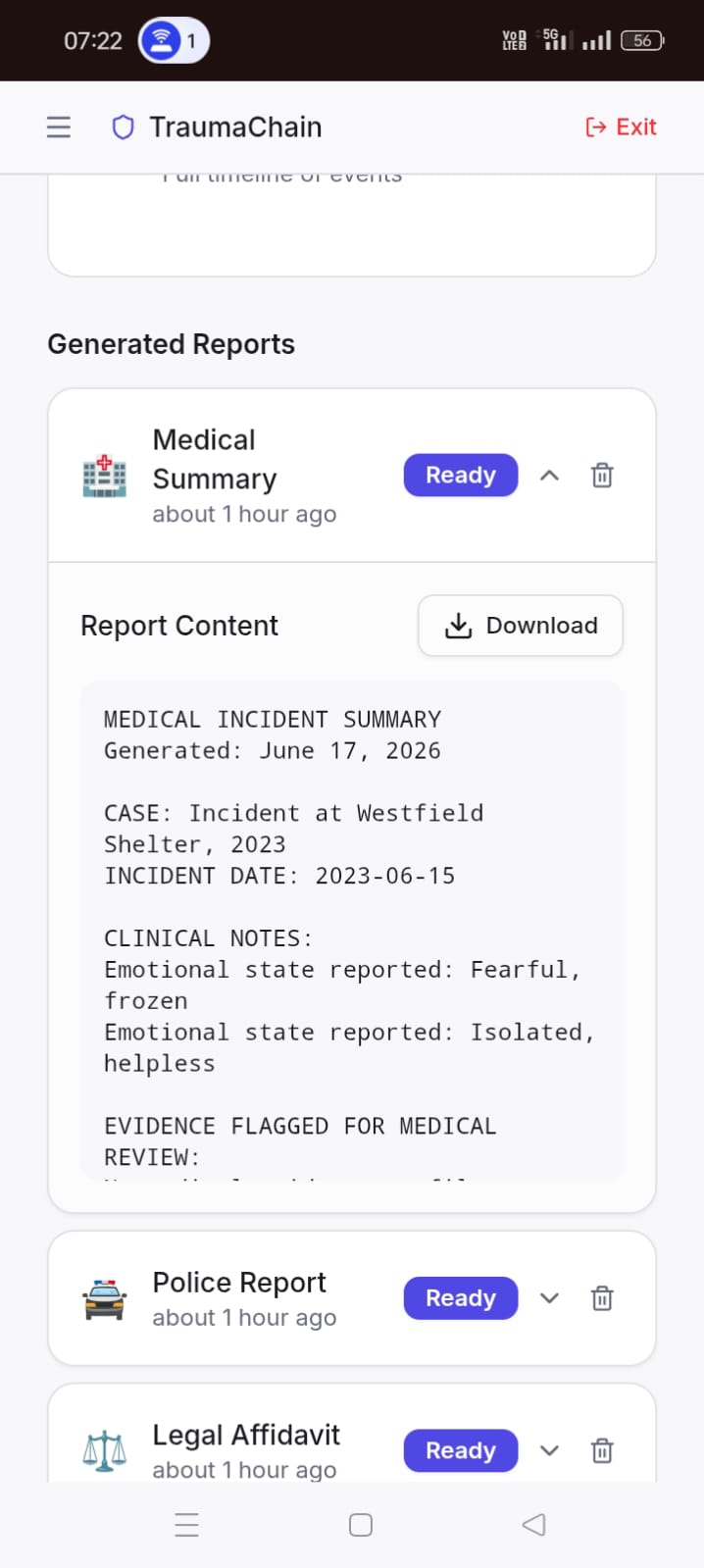
generated report
-
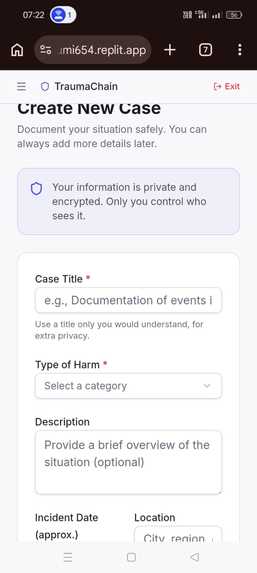
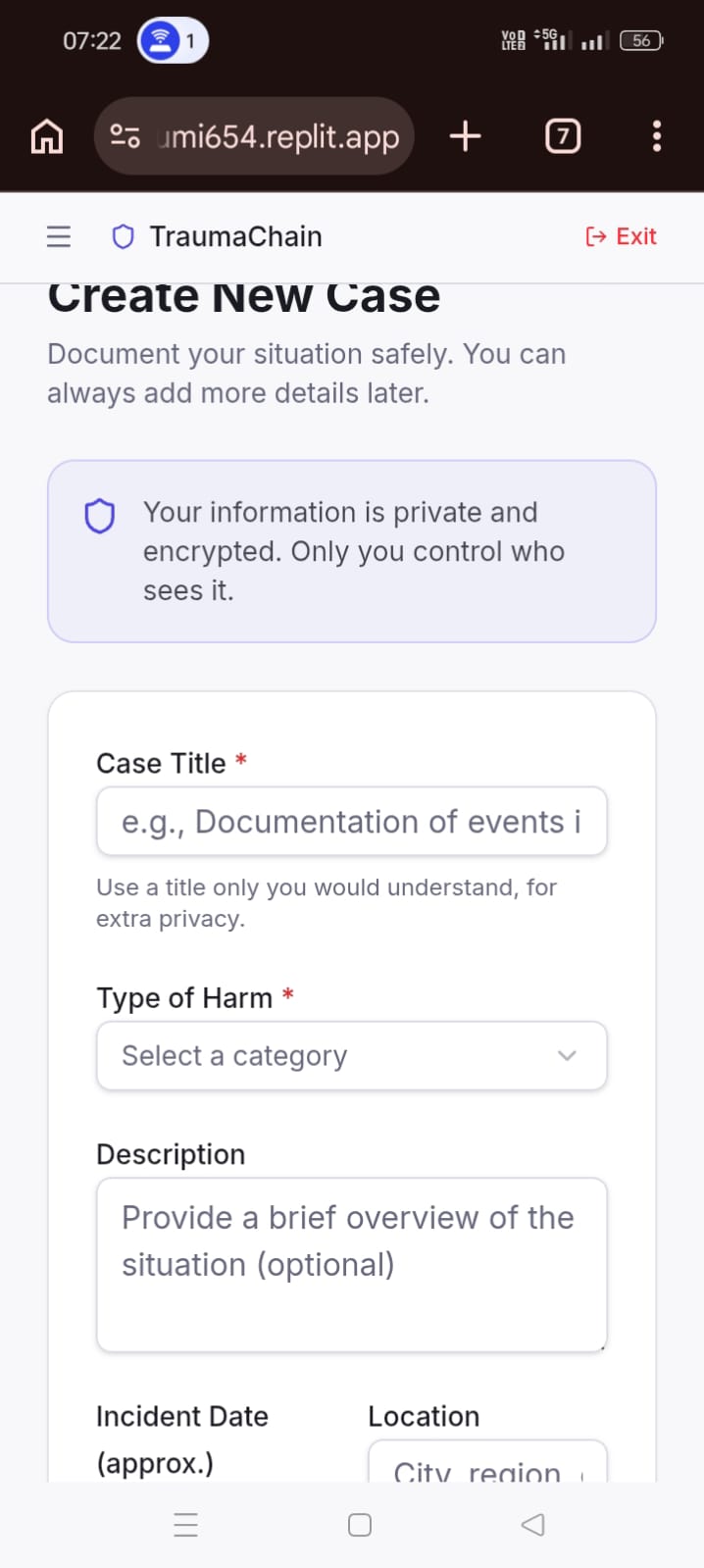
new case
Inspiration
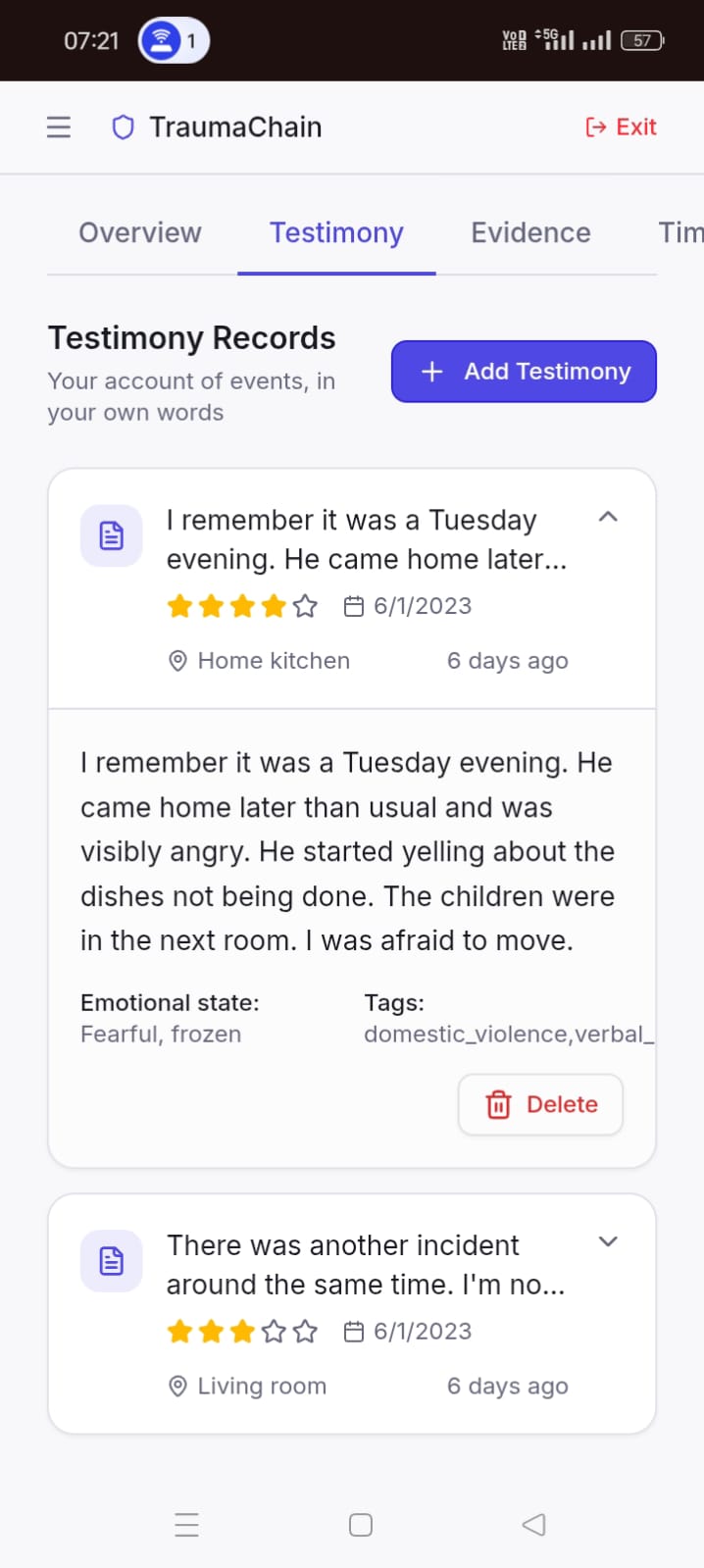
TraumaChain was inspired by a critical problem faced by survivors of abuse, harassment, domestic violence, and other traumatic experiences. Many survivors are unable to report incidents immediately due to fear, emotional distress, social pressure, or safety concerns. As time passes, important details, evidence, and timelines can become difficult to preserve, reducing the chances of obtaining justice and support.
We wanted to create a platform that empowers survivors by giving them a safe, private, and secure way to document their experiences and preserve evidence whenever they are ready.
What It Does
TraumaChain is a survivor-centered evidence and documentation platform that allows users to:
- Securely document incidents and personal testimonies.
- Store and organize digital evidence.
- Create chronological timelines of events.
- Maintain structured records that may support future legal, medical, or counseling processes.
- Access a privacy-focused environment designed with survivor safety in mind.
The platform helps ensure that important information is preserved accurately and remains accessible when needed.
How We Built It
We built TraumaChain using modern web technologies to create a responsive and secure user experience.
The application consists of:
- A user-friendly frontend for evidence and testimony management.
- Secure authentication and case management systems.
- Structured databases for storing case information and evidence metadata.
- Timeline generation and record organization features.
- Privacy-focused workflows, including safety-oriented design choices such as quick-exit functionality.
Our goal was to balance usability, security, and accessibility while keeping the platform simple enough for users in emotionally difficult situations.
Challenges We Faced
One of the biggest challenges was designing a system that handles highly sensitive information responsibly. We had to think carefully about privacy, trust, and user safety at every stage of development.
Other challenges included:
- Designing an intuitive interface for users experiencing stress or trauma.
- Structuring evidence records in a meaningful and organized manner.
- Creating a workflow that remains useful for both personal documentation and potential future legal use.
- Balancing security requirements with ease of use.
What We Learned
Throughout the project, we learned that technology can play an important role in supporting vulnerable individuals when designed with empathy and responsibility.
We gained experience in:
- Building secure web applications.
- Designing privacy-first user experiences.
- Structuring evidence and documentation systems.
- Understanding the real-world challenges survivors face when seeking support and justice.
Future Plans
In the future, we plan to expand TraumaChain with:
- AI-assisted incident summarization.
- Secure encrypted evidence storage.
- Legal and advocacy resource integration.
- Trusted sharing options for lawyers, counselors, and support organizations.
- Enhanced verification and evidence integrity mechanisms.
Impact
TraumaChain aims to help survivors regain control over their stories, preserve critical evidence, and create trusted records that can support justice, recovery, and accountability. We believe that everyone deserves a safe space to document their experiences and protect their truth.
Built With
- ai
- css3
- drizzle
- express.js
- html5
- javascript
- node.js
- orm
- postgresql
- react
- replit
- tailwind
- typescript


Log in or sign up for Devpost to join the conversation.