-
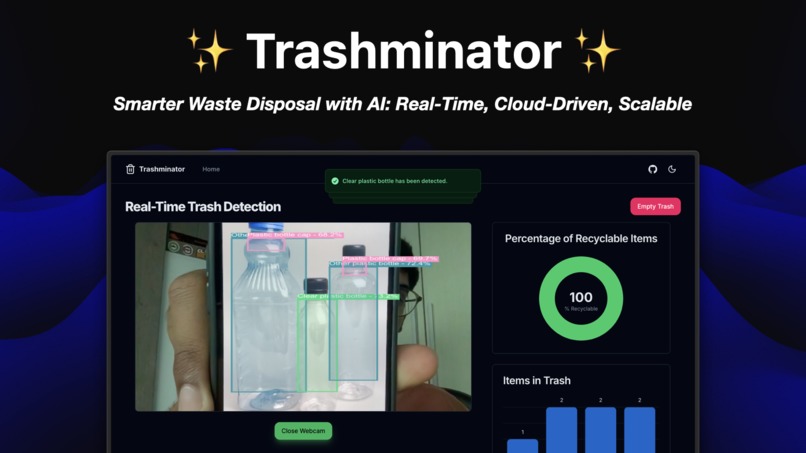
Trashminator: The coolest trash detection solution there is
-
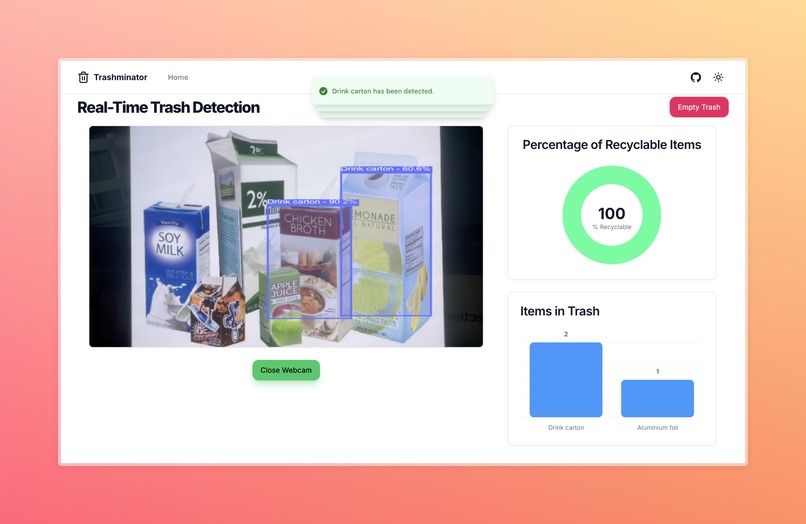
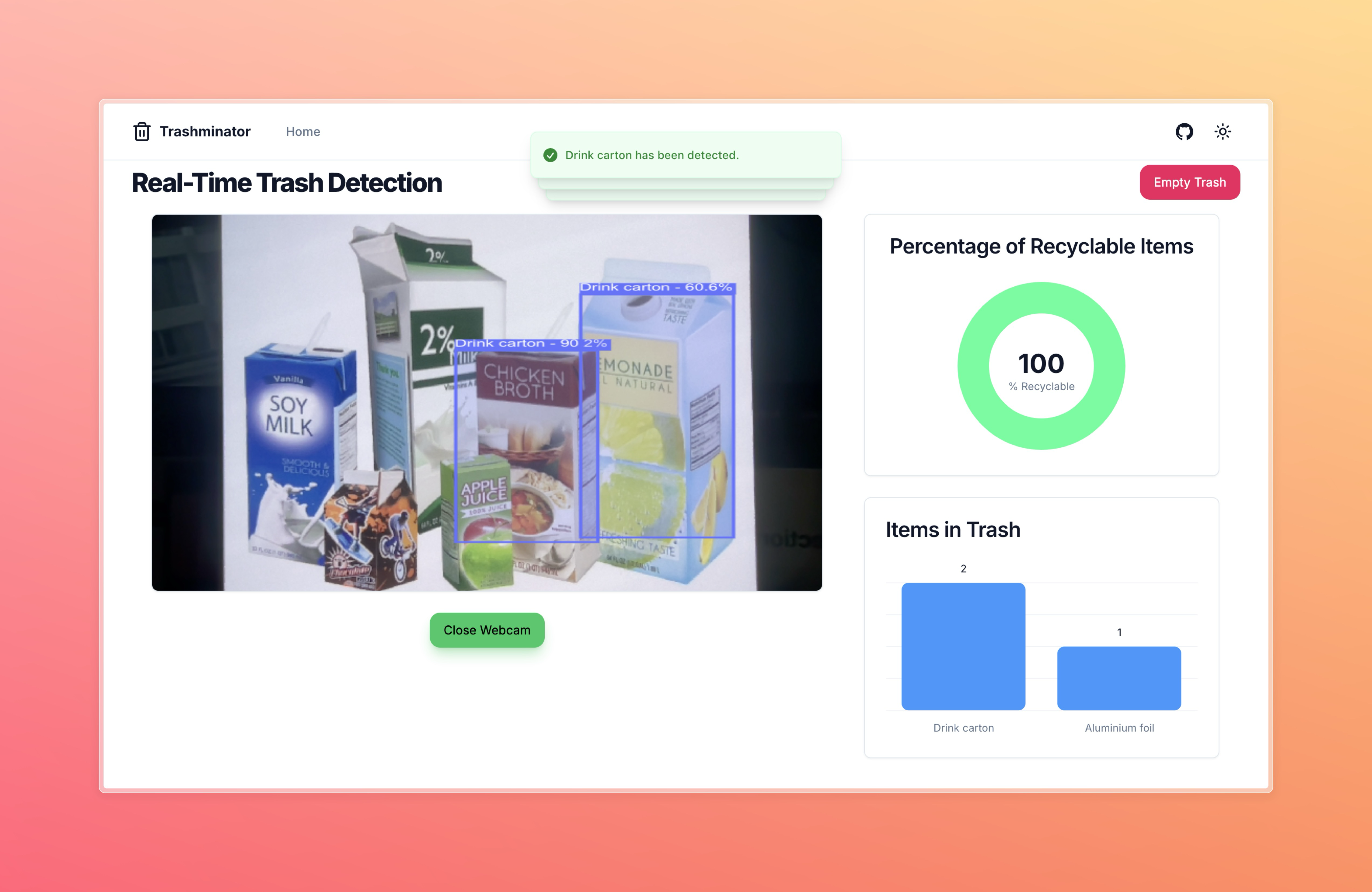
Light Mode
-
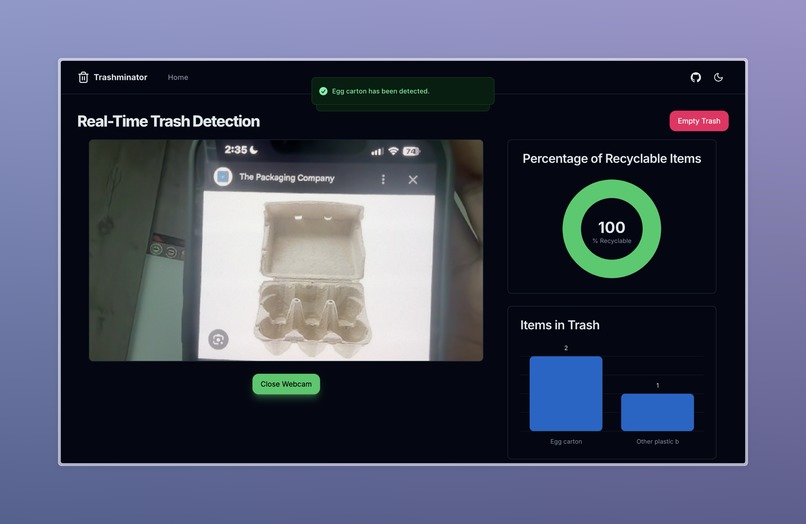
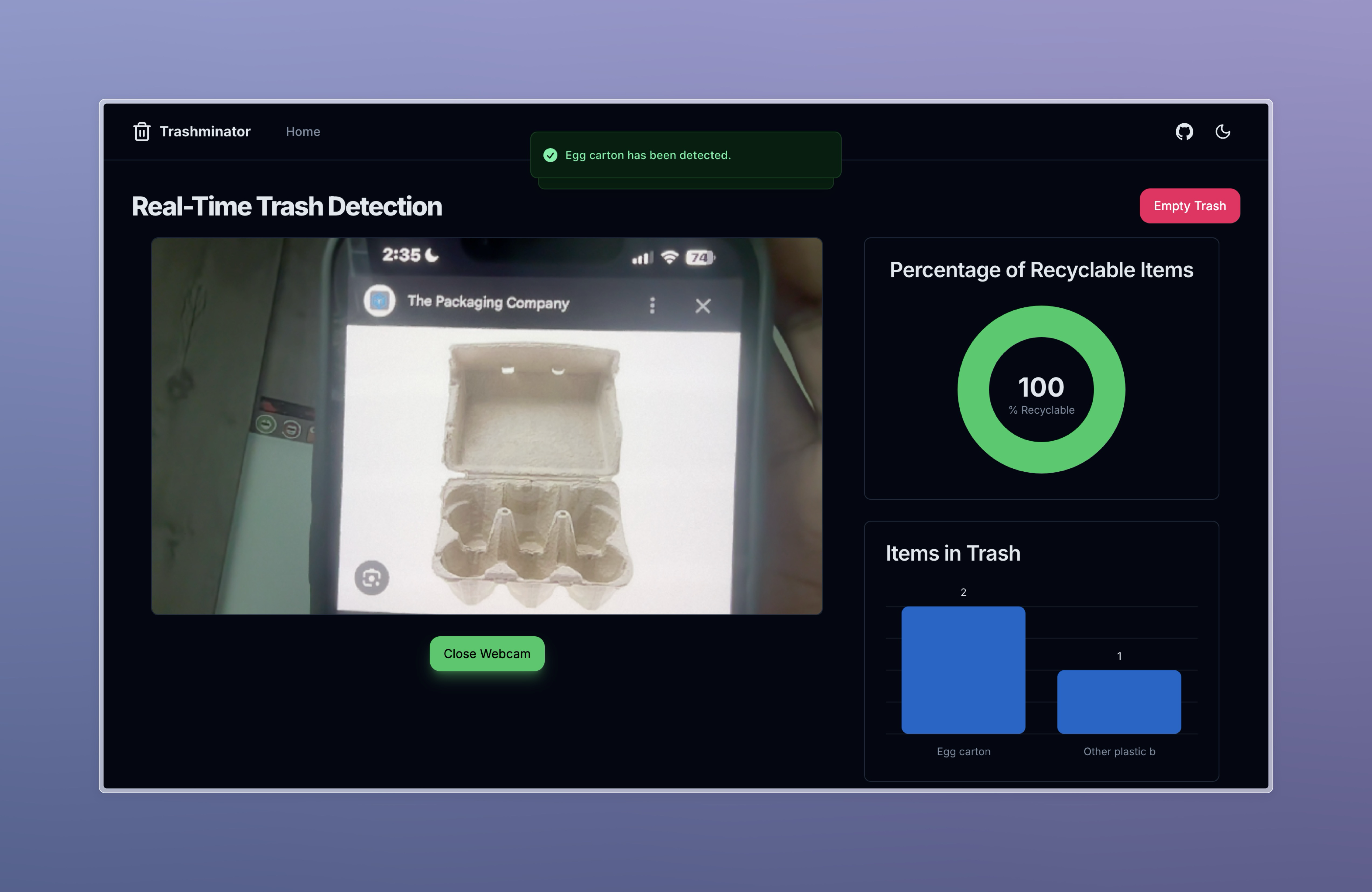
Dark Mode
Inspiration
In a world grappling with escalating waste management challenges, the need for innovative solutions to streamline recycling processes and support a circular economy has never been more critical. Trashminator was born from harnessing technology to combat pollution, promote sustainability, and educate communities on effective waste management practices. By observing the inefficiencies in current waste sorting systems and the growing environmental consciousness among individuals and businesses, we recognized an opportunity to revolutionize how society interacts with and manages its waste. We aim to empower communities and organizations with real-time insights and educational resources, driving actionable change towards a cleaner, greener planet and fostering a sustainable future for all.
What it does
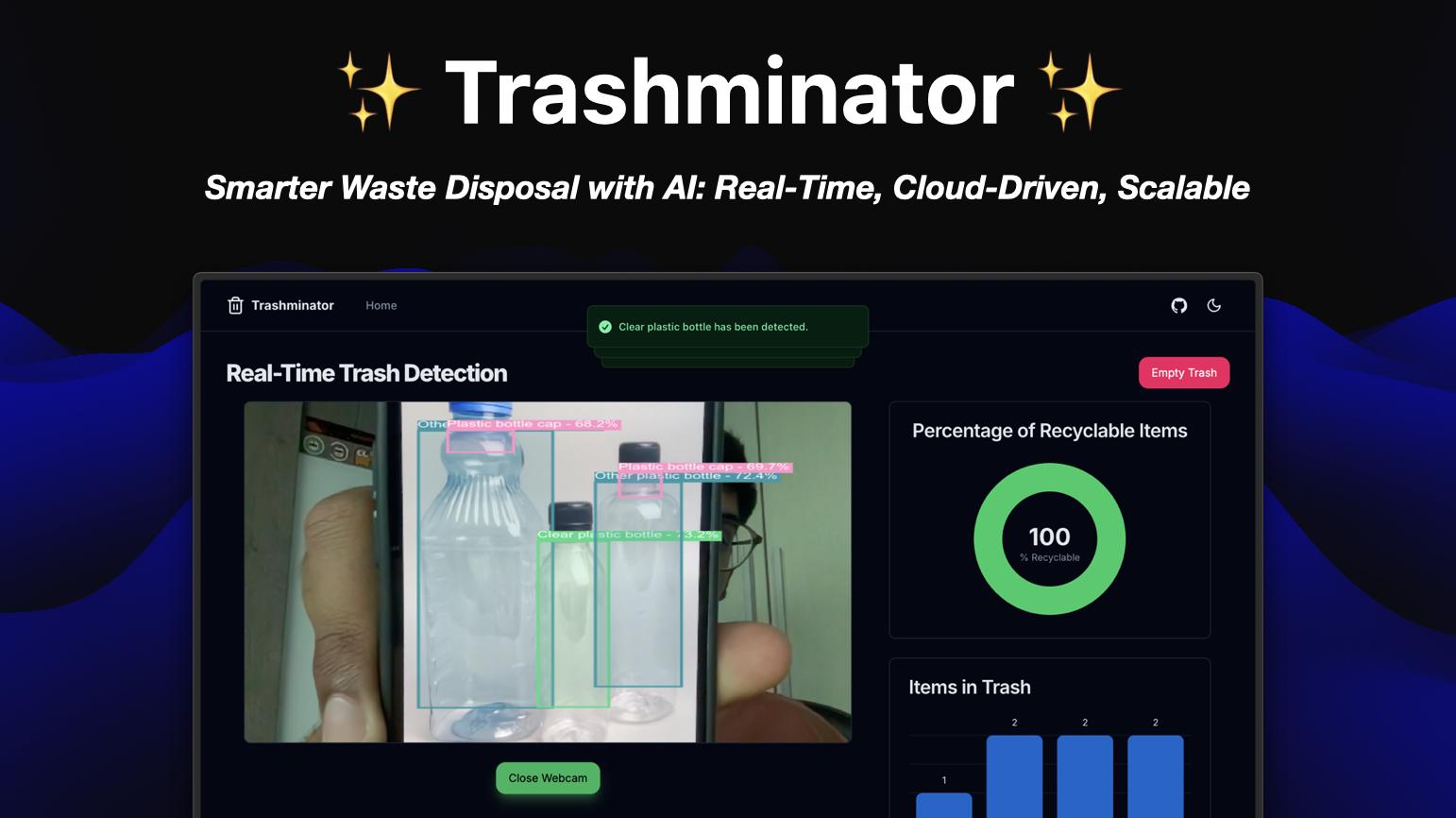
Trashminator is an advanced real-time dashboard that leverages state-of-the-art object detection technology to identify and categorize various types of trash, such as plastic cups, aerosols, and more. By seamlessly integrating with existing waste management systems, Trashminator provides instant analytics on the composition of waste streams. Users can view the percentage of recyclable materials and access dynamic bar charts displaying the count of different trash types. This immediate feedback enhances waste sorting accuracy and fosters informed decision-making, enabling organizations and individuals to optimize their recycling efforts and reduce their environmental footprint.
How we built it
Trashminator is powered by the below tech stack:
- Frontend: NextJS, Shadcn, TailwindCSS
- AI Model: YOLOv8, TensorFlow.js
- Model Development: Python, TensorFlow
Challenges we ran into
- Model Conversion: Successfully exporting the YOLO model to TensorFlow.js format was a complex task due to outdated documentation
- Real-Time Object Counting: Implementing accurate and efficient object counting in real time demanded advanced algorithmic strategies and optimization.
Accomplishments that we're proud of
- Model Integration: Successfully exported the YOLO model into TensorFlow.js format, enabling seamless integration with the front end.
- Advanced Components: Developed a NextJS video component embedded with the computer vision model, enhancing real-time processing capabilities.
- Accurate Counting: Engineered a reliable object counting system that operates in real time, ensuring precise waste categorization.
- Reliable Hosting: Effectively hosted the model, ensuring consistent performance and accessibility.
What we learned
- NextJS Development: Gained substantial knowledge in building and optimizing NextJS applications.
- Cloud Hosting: Mastered hosting solutions on Vercel, ensuring scalability and reliability for our platform.
What's next for Trashminator
Looking ahead, Trashminator plans to expand its capabilities and impact through several strategic initiatives:
- Algorithm Enhancement: Improve object detection algorithms to identify a wider range of materials and waste types, increasing accuracy and applicability.
- IoT Integration: Incorporate Internet of Things (IoT) devices to enable comprehensive data collection and automation in waste sorting processes.
- Predictive Analytics: Develop predictive features that offer proactive insights and recommendations to optimize recycling strategies.
- Community Collaboration: Partner with local communities to scale our solution, amplifying our impact and fostering widespread environmental benefits.
With continuous innovation and a steadfast commitment to sustainability, Trashminator is poised to become an indispensable tool in the global effort to combat waste and environmental degradation. Join us in our mission to create a cleaner, greener future for all.
Built With
- nextjs
- python
- shadcn
- tensorflowjs
- vercel
- yolo

Log in or sign up for Devpost to join the conversation.