-
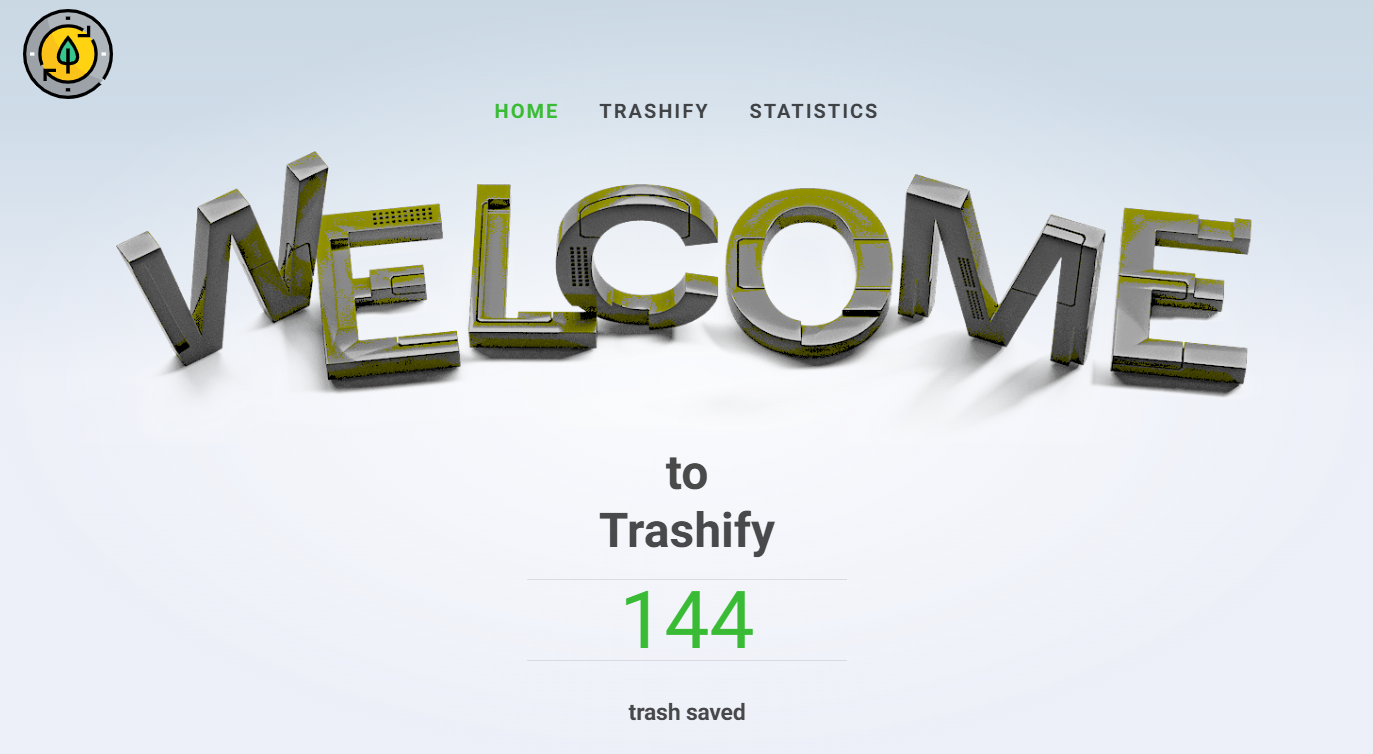
Trashify Web App
Inspiration
With the growing global waste crisis and the urgent need for sustainable solutions, we were inspired to create an innovative system to simplify and encourage proper waste segregation in Singapore. The decline in Singapore's recycling rate is especially so due to the inconvenience and the awareness/knowledge of sorting the type of recyclables. By leveraging AI and IoT technologies, we aim to make recycling more efficient, accessible, and impactful.
What it does
Our project, Trashify, uses AI-powered image recognition to classify trash into categories like plastic, paper, and metals. By integrating this solution with Raspberry Pi, users can sort waste in real-time, promoting responsible disposal and reducing environmental impact, easing the recycling process at the same time.
How we built it
Machine Learning Model: We trained a convolutional neural network (CNN) using TensorFlow and Keras with datasets containing images of various trash types.
Edge Deployment: The model was optimized and converted to TensorFlow Lite for efficient inference on the Raspberry Pi.
Hardware Integration: Raspberry Pi processes the input from a camera, classifies the trash, and provides feedback for sorting.
Backend data collection and Frontend design
Challenges we ran into
Data Imbalance: Ensuring the dataset had balanced categories for accurate predictions.
Model Optimization: Reducing model size while maintaining accuracy for edge deployment on Raspberry Pi.
Hardware Limitations: Managing memory and processing constraints of Raspberry Pi while maintaining real-time performance. Not enough equipment. Limitations on the GPU for software developments.
Accomplishments that we're proud of
Successfully trained a lightweight yet accurate model for trash classification.
Optimized the AI model for smooth performance on Raspberry Pi.
Built a fully functional prototype that combines AI, IoT, and sustainability.
What we learned
Training of AI model and machine learning
Techniques for optimizing AI models for edge devices like Raspberry Pi.
The importance of data preprocessing and augmentation in improving model accuracy.
Integrating AI with hardware systems to create real-world applications.
What's next for Trashify
Improved Classification: Expand to more waste categories like glass, cardboards and organic materials.
Extension of Convenience: Rinsing of bottles for further convenience.
Community Impact: Deploy Trashify in schools, offices, and public spaces to promote awareness and sustainability.
Mobile App: Develop a companion app to provide users with insights into their recycling habits and environmental impact.
Built With
- apple
- esp32
- flask
- javascript
- jupyternotebook
- keras
- metalframework
- python
- raspberrypi
- svelte
- tensorflow
- tensorflowlite
- vite

Log in or sign up for Devpost to join the conversation.