-
-
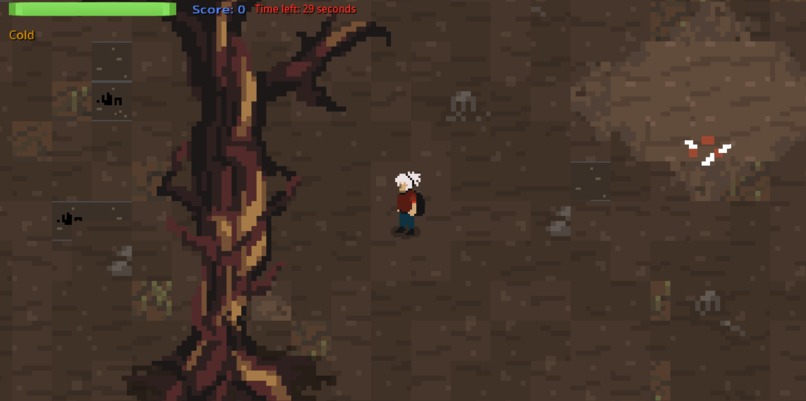
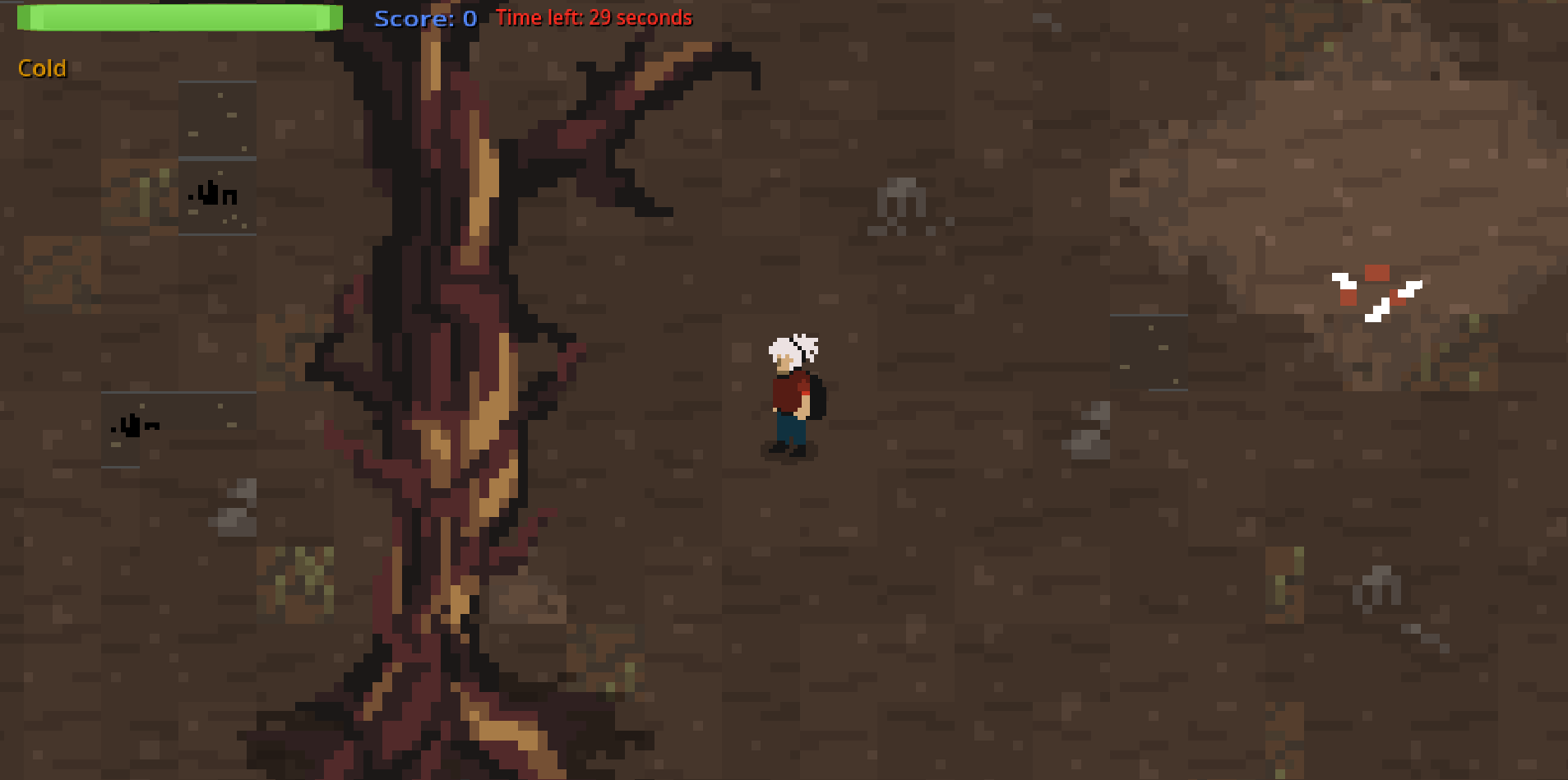
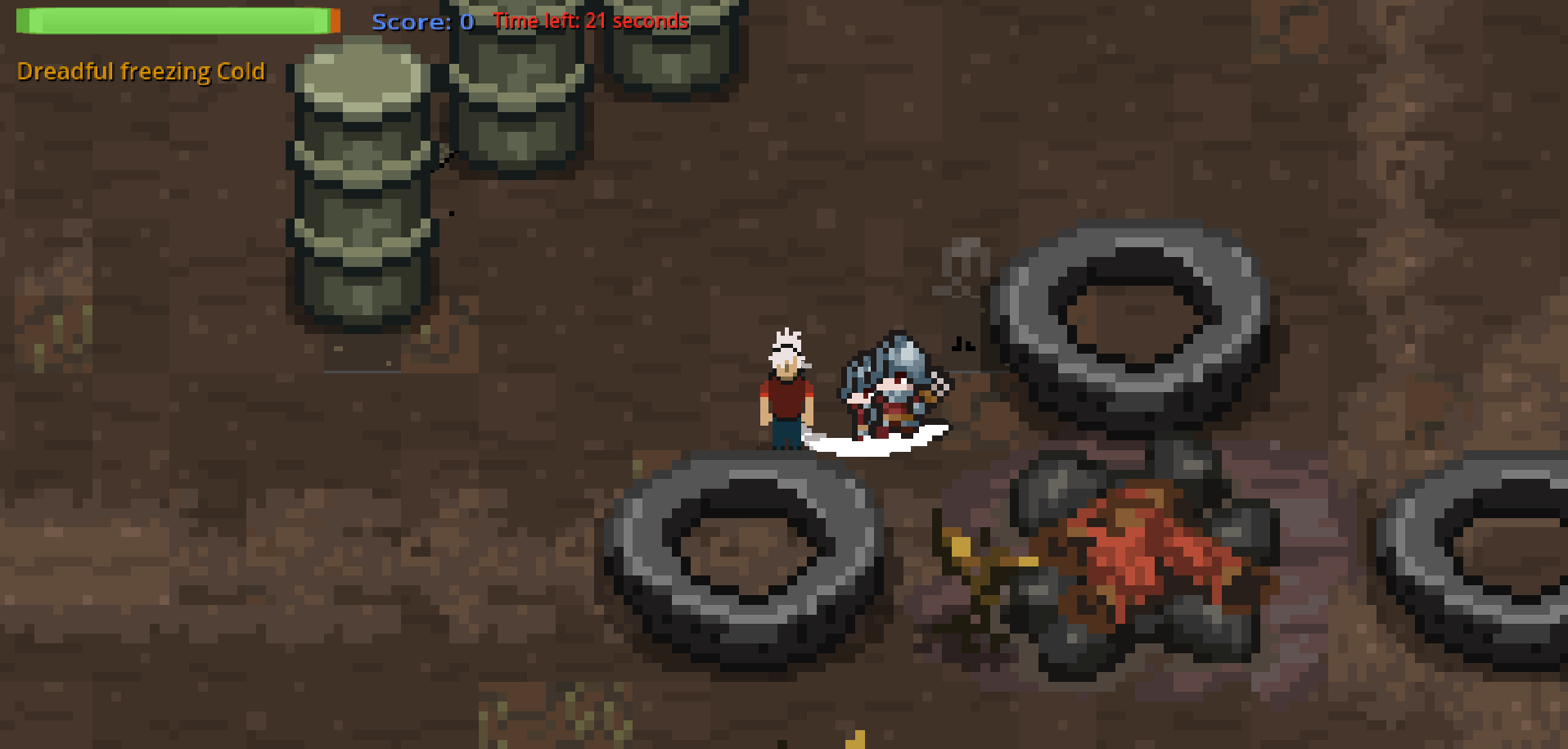
Player's Spawn Location. The "Cold" on top-left indicates that the player is distant from the trash location and needs to search far away.
-
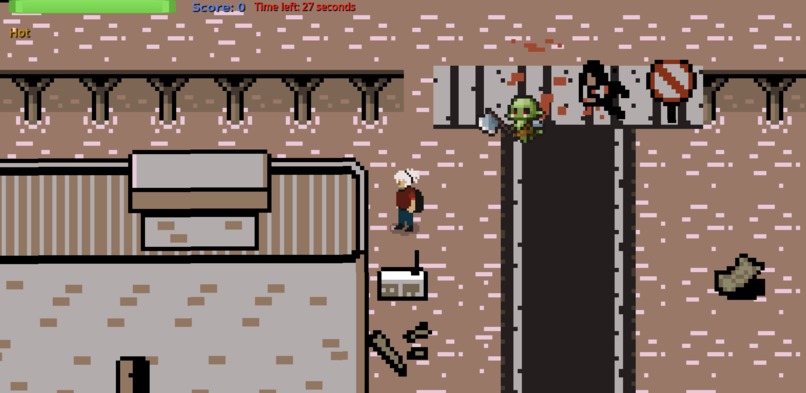
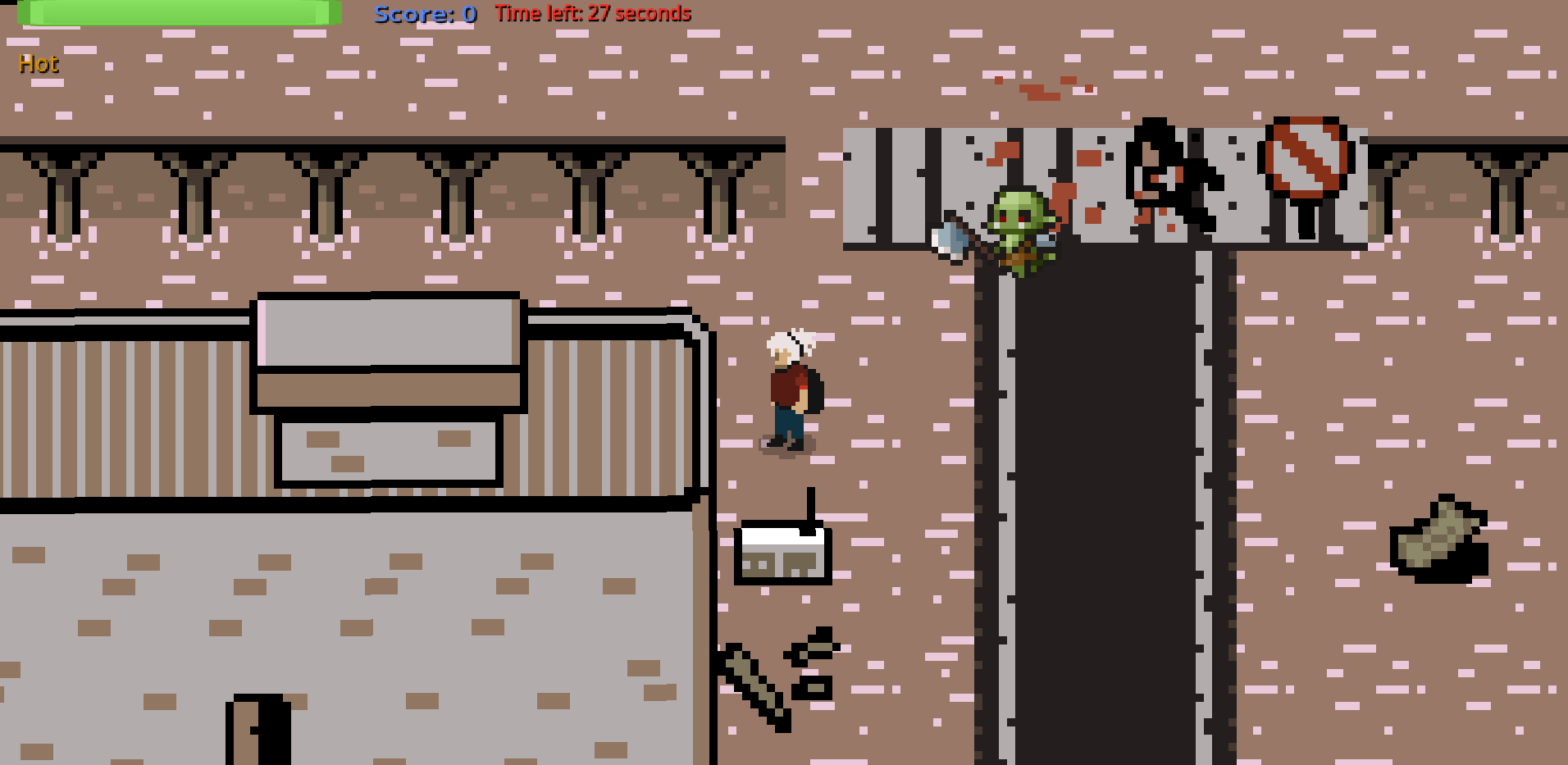
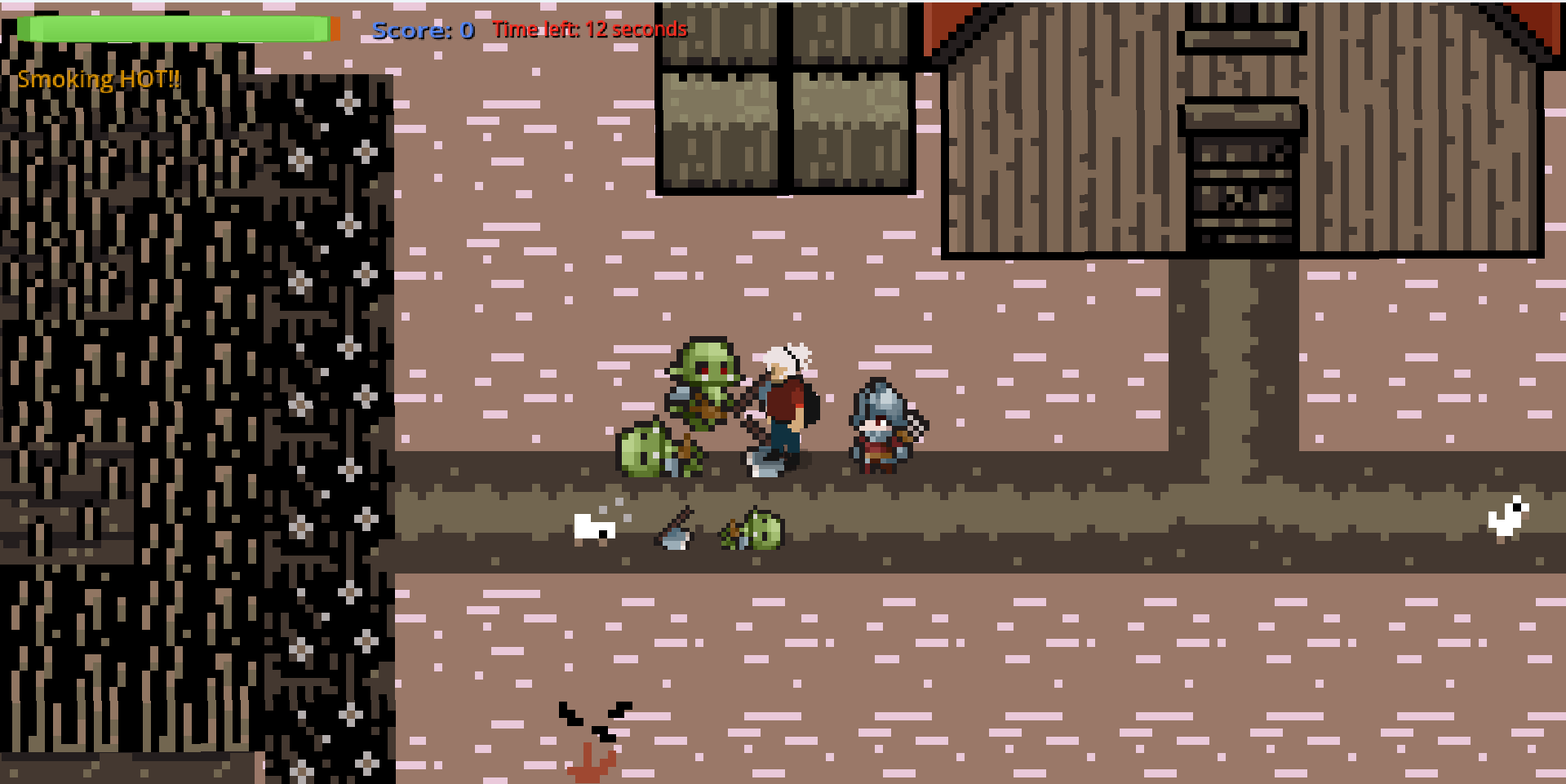
Player in village. "Hot" on top left indicates that the player is searching close to the trash location. An orc is approaching to attack.
-
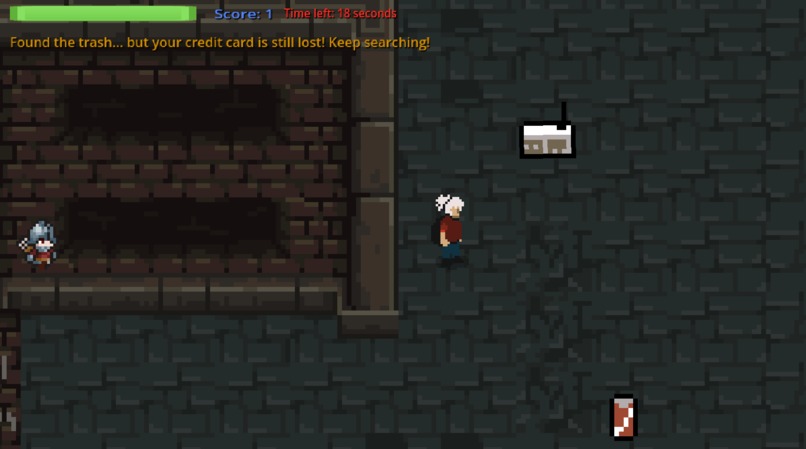
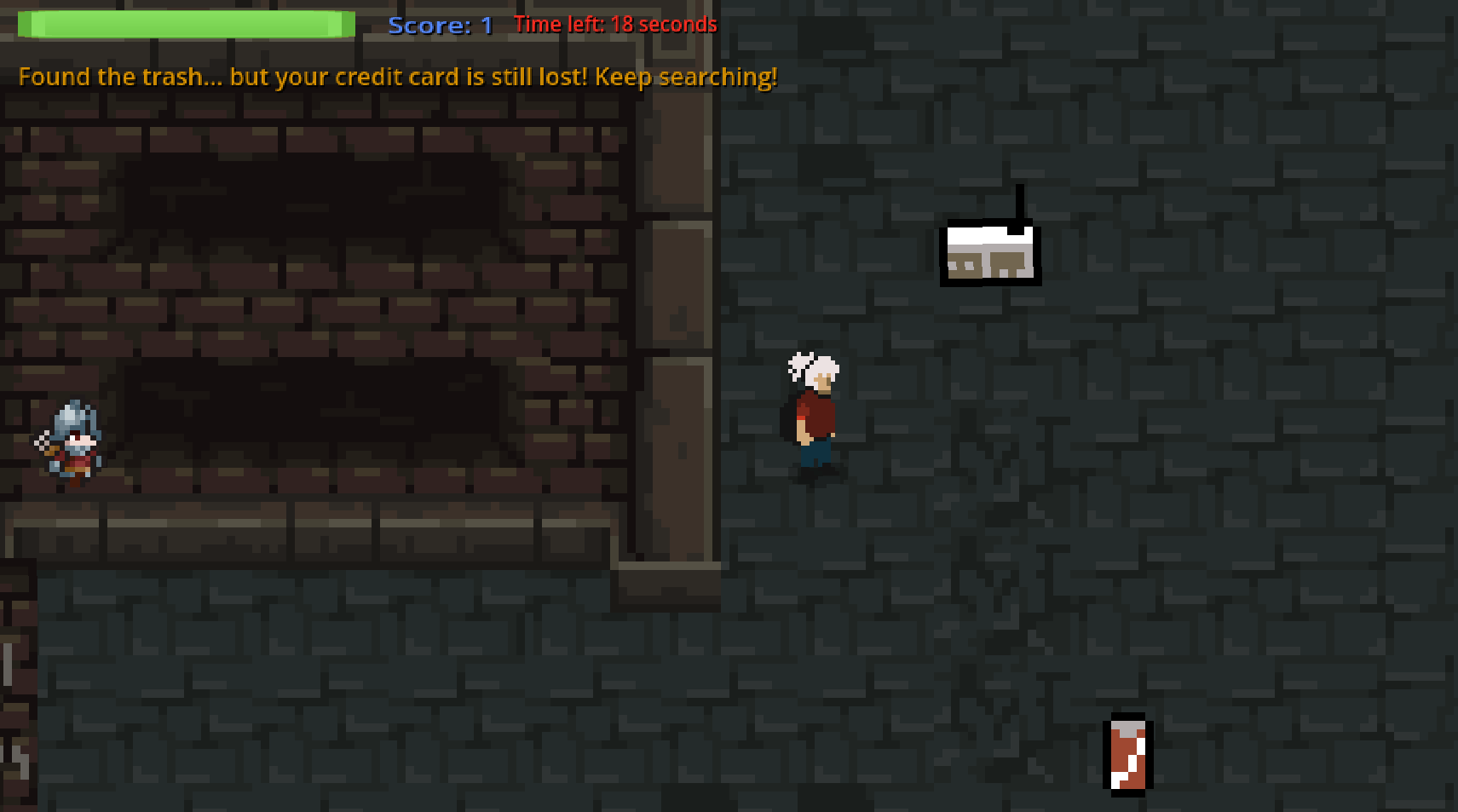
Player remembers and picks trash at the spot she littered. However, her credit card is not there and she needs to repeat the search process.
-
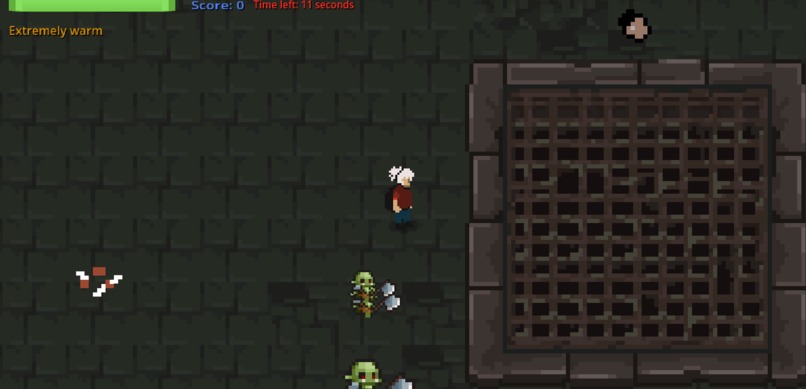
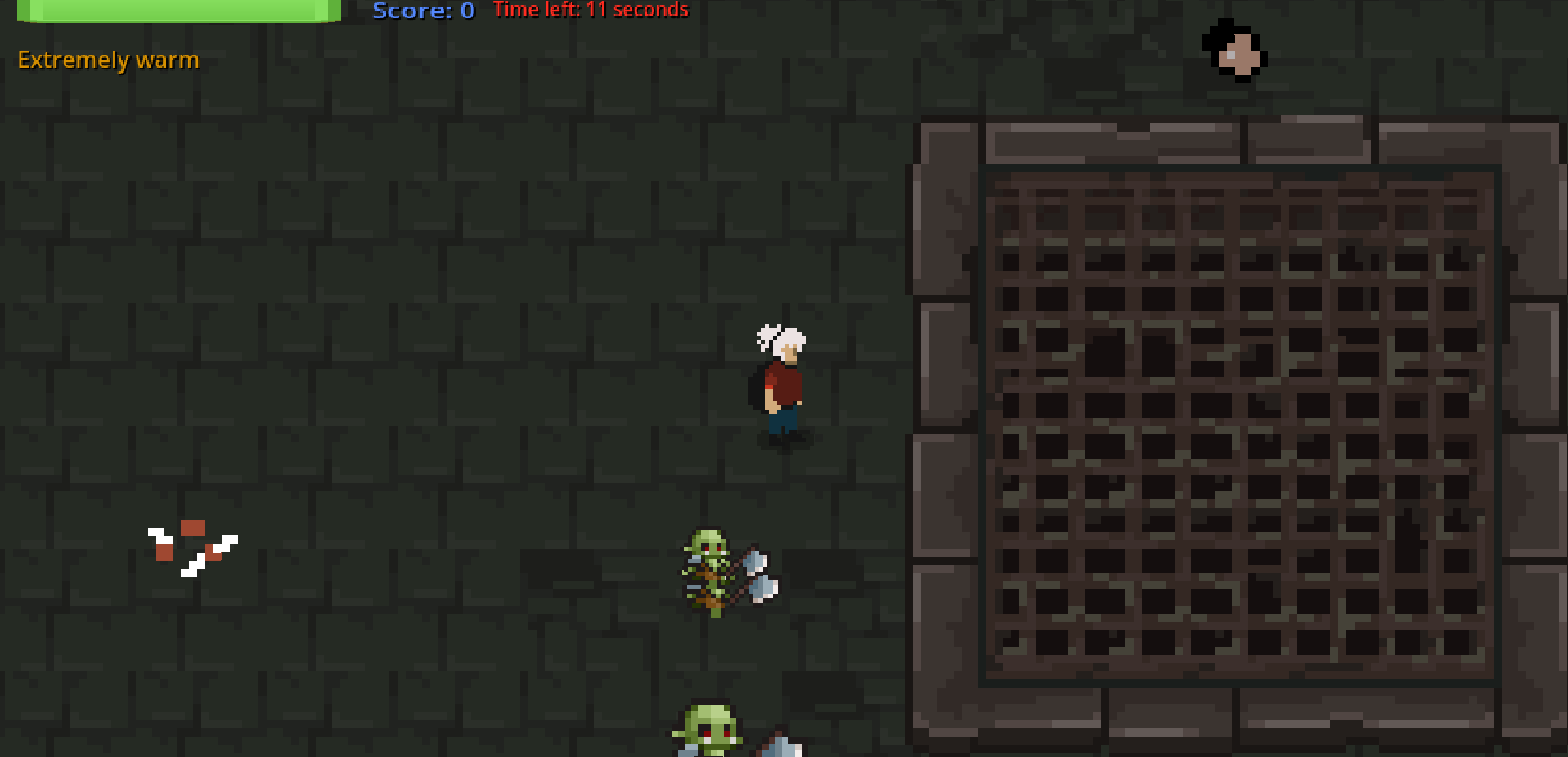
Orc Spawn Location. Region where mutant creatures are born due to long-term chemical contamination.
-
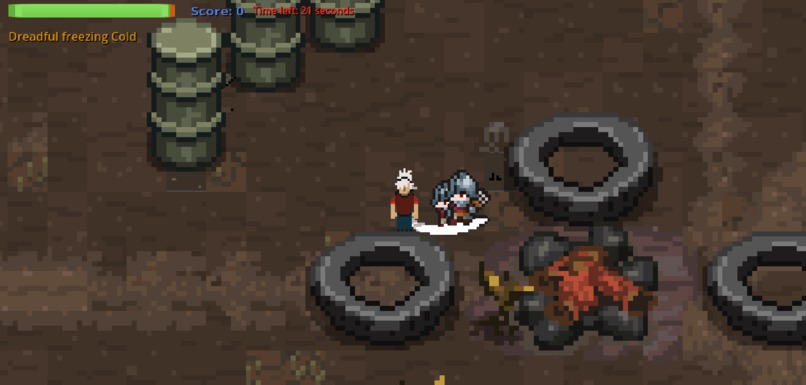
Soldier Spawn Location. Region where industrially corrupt humans neglecting waste disposal arise. 21 seconds for player to find trash spot.
-
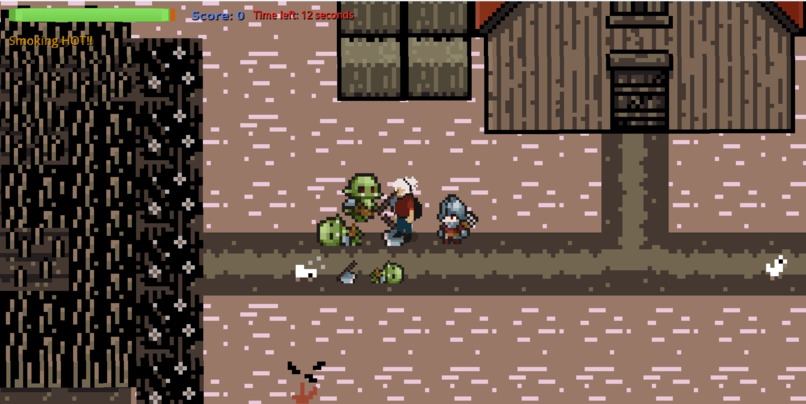
Player engages in fight to eradicate evil forces against nature. Symbolizes need for courage and dedication for creating pollution policies.
Inspiration
Being avid gamers, we wanted to combine our passion with a topic that has extensive implications in the real world: pollution and society. Although it may seem discouraging for an individual to face the entire impact of society on the environment, if more were able to adopt a mindset of sustainability and advocate for this philosophy in legislation, we would become part of a beneficial legacy of sustainable action. With this game, we hope that others will see this pursuit and join us in activism to spread awareness about these serious social issues of pollution!
What it does
Our game follows the main character on an island that is decaying from decades of pollution. As lifeless as the town looks, there are monsters lurking: mutants created from the environmental conditions of the area. In a hopeless effort to restore the town, the mission of the game is to find trash to pick up and throw away while fighting these foes. The game uses a "hot or cold" esque system, where the user is warmer the closer they are to a trash location.
How we built it
The game was built on Godot 4.3 and collaboration was facilitated through GitHub. All assets of images, sounds, pixel art, fonts, etc were shared by open-source sites. All of the character assets, enemy assets, and tilemap pixel art were shared by itch.io for free. Sounds were shared for free by chosic.com and mixkit.
Challenges we ran into
Since code was distributed into different tasks, pushing to the main branch became a huge issue when the same scene was edited by two people at the same time. This would lead to a significant amount of time being used to integrate each change, slowing down development. We were able to overcome the issues of integrating .tscn files by making different Godot scenes every time. We eventually learned that making new scenes and scripts on different GitHub branches and merging them into the main branch was an efficient strategy.
Accomplishments that we're proud of
Three out of the four members had no prior experience with Godot, and two with no experience in game development. With the help of online resources and collaboration, we were able to create something with a central message we are proud of despite the lack of experience. Moreover, the game itself resulted in becoming a fast-paced, combative, action type. This style symbolizes our determination to take urgent action and deterministic steps toward cleaning and preserving the environment for future generations.
What we learned
None all our members were perfect in all aspects: some specialized in Godot functionality while others focused on GitHub management, graphics, game pitch, etc. However, our members got a better understanding of Godot map creation, scripting, and the intricacies of GitHub by interacting with the software. Collaborating as a group allowed us to all learn and teach crucial skills to execute an organized plan and to develop a valuable product.
What's next for Trash Island
Now, with more game development experience under our belt, the game will be expanded and fleshed out to contain a more impactful plot. Land pollution is only a small component of the tremendous domain of social-environmental issues. Therefore, we intend to release Versions 1.3 and 1.4 which bring awareness to other problems such as water pollution, air pollution, sound pollution, etc. Tackling more fields of the dangers of our planet will not only make the game more interesting with many subgames, but also will spread knowledge of a wider range of topics.


Log in or sign up for Devpost to join the conversation.