-
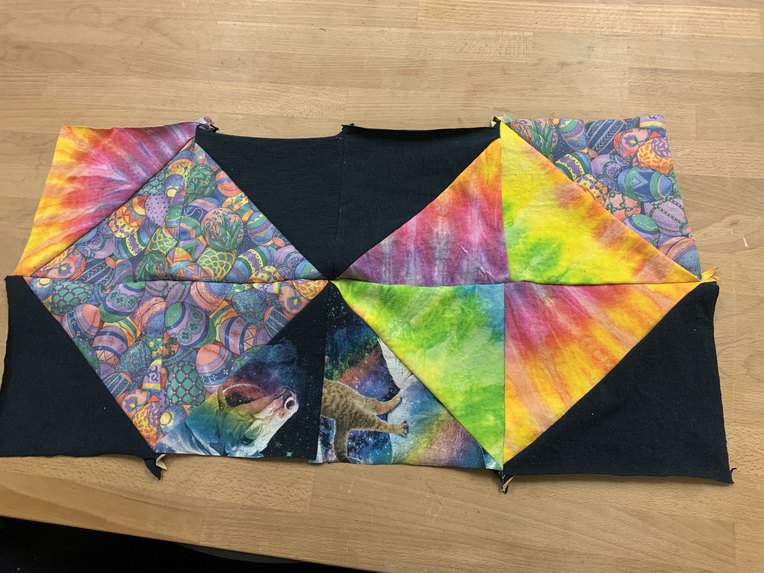
Assembled quilt panel
-
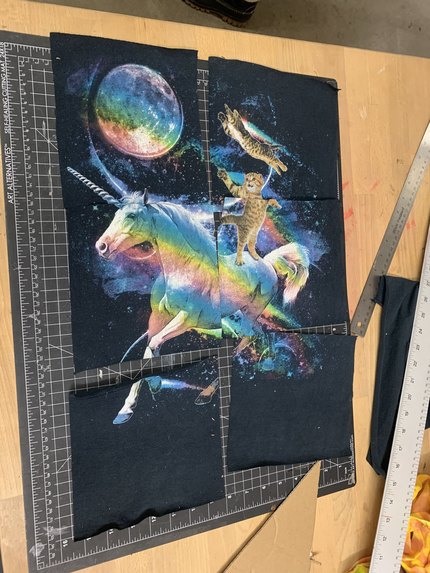
Pieces of a reused shirt
-
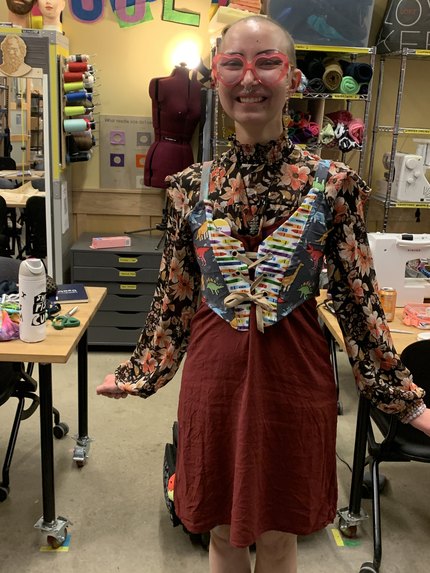
Final corset
-
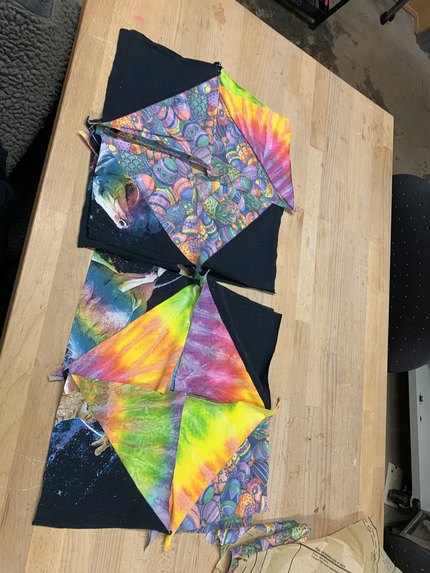
Plan for quilt pattern
-
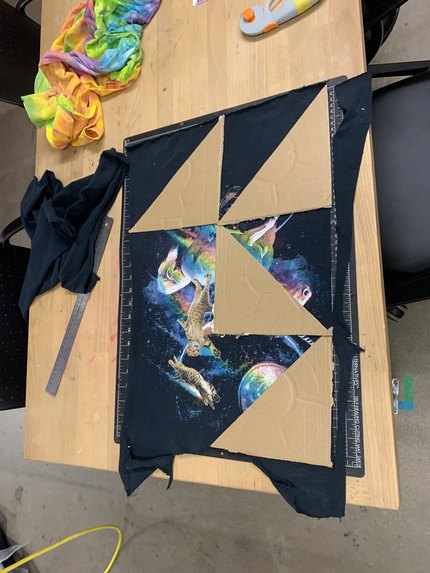
Quilt templates
-
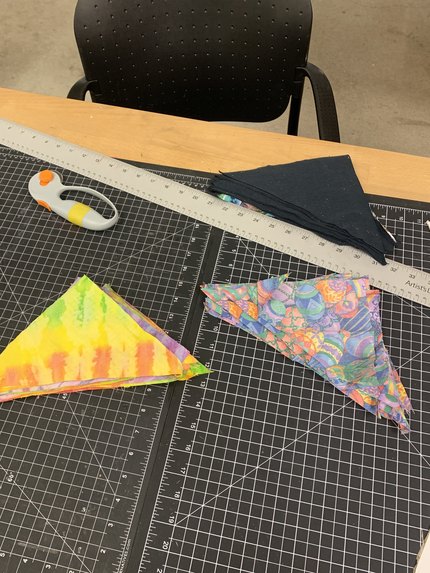
Cut triangles for quilt


Inspiration
When it comes to reuse of fabrics, we can thing of no better example than the beautiful quilts that were made by enslaved people. The history of quilting goes far beyond this period, but some of the best artworks were created using only the scraps of fabric that an enslaved woman could acquire in her situation. Many women did not even consider their own pieces to be artwork at the time, but now many garments are displayed in museums where people can acknowledge the innovative artworks that they truly are. The skirt designer has always found quilt and patch-work to be a rich history that is crucial to the current state of fashion, but fast-fashion is pushing away the intricacy that was once used. Of course, this hackathon is in no way similar to the historic examples previously mentioned, and we would never want to diminish the tragic history behind this medium. We hope only to bring attention to the important origins that are so often overlooked, and to hopefully make something with the same beauty shown in the pieces we were inspired by.
What it does
Since this is an entry for the reusability track, there is no aspect of electronics that need to be explained. However, it is worth mentioning that our unique designs combine several different colorful patterns to show just how eye catching a sustainable outfit can be. I find any appeals that fast-fashion may have to be entirely overshadowed by the complete lack of individuality. Both designers strongly believe that slow-fashion is not only a more sustainable option, but also the only real way to bring something unique to the world in terms of style and fashion, and we hoped to demonstrate that in our pieces.
How we built it
The quilted portion of the skirt was made with a very specific process. First, the reused shirts were cut down into usable sheets of material, removing all heavy seams and sleeves. Then the fabric was cut into several triangles, roughly 8" x 8" in size, several templates made of recycled carboard were used to keep consistent sizing. Once all the triangles were cut, they were paired together and made into squares. With the squares a pattern could then be designed, at which point all square panels were sewn together to match the design. The panels were made just big enough to match the sewing patterns, so there was minimal waste. The quilted portion was then used as standard fabric to complete the skirt. The corset was made with scrap fabric from the designer's previous projects or created by other teams at the event. The designer created the pattern by disassembling a broken corset and using it for reference. In fact, the previous corset was entirely repurposed, with the original boning and some fabric used in the new one. The only things not reused were the grommets. The ribbon used for lacing was actually some scrap ribbon that was lying around, which was used so it wasn’t wasted and thrown out. The corset was sewn together and completed within a manner of 4 short hours.
Challenges we ran into
Initially we thought it would be cool to use the fabric scraps left behind by other teams, but ultimately were unable to due to the time constraints. Neither team member could commit to the entirety of the second day, so in order to best utilize our time we decided to take fabric from used clothing instead. Additionally, the skirt was originally supposed to be made entirely of a quilted material. Again, the limited amount of time was an enemy to the tedious and repetitive nature of quilting. To prevent compromising the quality but still keep the original idea in tact, the top and bottom portions of the skirt were instead made with a standard flannel material. With the corset, the maker of the corset had recently beat cancer (as of Friday) and had been diagnosed with mild tremors. These tremors created a major obstacle for utilizing the machine and threading needles when needed. Additionally, there were many machine malfunctions, since they brought their personal machine which is a 14 year old Singer. The time crunch provided additional challenges, but the corset designer was able to create it in roughly four hours.
Accomplishments that we're proud of
Neither members of the team have ever created any sort of quilted piece. The skirt maker developed their own design and templates to create the quilted material, and despite any misalignments in the pattern they are quite proud of what they were able to make in their first attempt. One of the members, having recently beat cancer, is very impressed with themselves and their determination and power through their tremors. They’re also very excited to have made new friends and have met new people! It was difficult to open up but they’re very glad they did!
What we learned
Quilting and patchwork are not mediums to be taken lightly. The process from beginning to end is super time consuming and mistakes are easily made. Yet, at the same time it is one of the most fulfilling art mediums to be experienced. To make an article of clothing, where everything down to the material used is unique, brings a sense of pride that is very hard to attain without putting in the hours needed. The experience with designing a quilt pattern also provided an insight to how different, and more unique patterns could be created in the future.
What's next for Trash in, cash out!
The designer of the skirt will hopefully start a new quilt project soon, ideally in the form of a dress. The larger portions of material used for the skirt will allow for more complex patterns, and a lack of time-constraints will enable them to create a much more clean and elaborate result. The corset maker will start sewing more often. They will start and continue to sew their own cosplay and hopefully start on something a little more intricate and professional. They want to start on their own new projects and expand their patterns and their abilities when it comes to sewing and cosplay. They want to incorporate more patch work and more recycled material into their projects.
Built With
- fabric
- patchwork
- quilting
- sewing
- upcycling

Log in or sign up for Devpost to join the conversation.